
A Realistic, Research-Backed Plan To Stay Fit And Healthy During The Holidays Without Giving Up A Single Cookie
Jack A. Yanovski, M.D., Ph.D.
Principal Investigator, NICHD Unit on Growth & Obesity
Although an average holiday weight gain of less than a pound may seem unimportant, that weight was not lost over the remainder of the year.
Summary (TL;DR)
Most women brace for five to ten pounds of holiday weight gain — and then feel like a failure when they can’t “fix it” by January 1st. The real research tells a different story: the average holiday weight gain is closer to one pound. The real danger isn’t the stuffing or the eggnog; it’s that this one pound rarely comes back off, and it quietly compounds year after year.
This guide reframes how to stay fit and healthy during the holidays around that fact, with a mindful-eating framework, an at-home and travel-friendly exercise plan, a real look at holiday stress and sleep, and a self-compassion strategy that works better than willpower when you do overindulge.
There’s a specific kind of dread that shows up every November: the sense that the next six weeks are a minefield of buffet tables, spiked cider, and a scale you’re already avoiding.
If that feeling is familiar, you’re not imagining it, and you’re not lacking willpower. The holidays genuinely do disrupt routines, sleep, and stress levels all at once — and diet culture has spent decades telling women to expect catastrophic weight gain and then treat every party as a moral test.
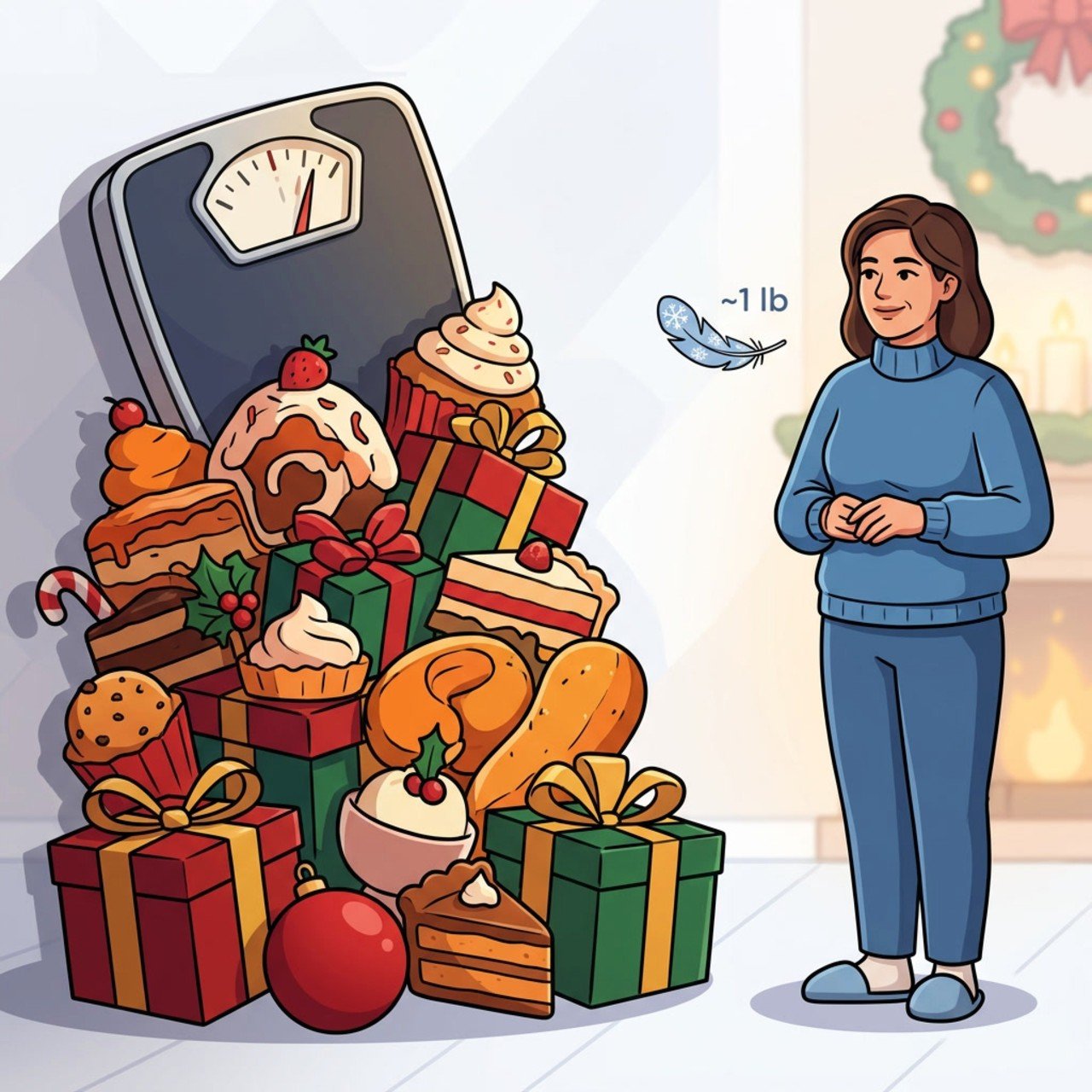
Here’s the part almost nobody tells you: researchers at the National Institute of Child Health and Human Development tracked 195 adults through an entire holiday season and found the average gain was about one pound — not the five to ten pounds most of us brace for (NICHD, 2000).
The catch is that this modest gain rarely gets undone. A year later, the study’s participants were still about 1.4 pounds heavier than when they started, and a gain in that range, left unaddressed year after year, is how ten to fourteen extra pounds quietly accumulate over a decade.
That single fact changes the whole assignment. Protecting the habits that stop that one pound from becoming permanent matters far more than white-knuckling your way through six weeks of parties — and it still leaves plenty of room for the pie. If you’ve ever wondered why staying active matters beyond the number on the scale, our piece on why every woman should stay fit covers the bigger picture this guide builds on.
Medical & Referral Disclaimer
This article is for informational and educational purposes only and is not a substitute for professional medical advice, diagnosis, or treatment. Always consult your physician or a qualified health provider before starting any new diet or exercise program, particularly if you have an existing health condition.
Key Takeaways
- The average holiday weight gain is about one pound, not five to ten — but that pound tends to stick around permanently unless you address it directly.
- Mindful eating techniques (smaller plates, slower pace, choosing your favorites over eating everything) outperform restriction for holiday meals.
- You don’t need 10,000 steps a day — research in women shows meaningful benefits starting around 4,400 steps, plateauing near 7,500.
- Cortisol from holiday stress and lost sleep both independently drive cravings and fat storage, so stress management is a legitimate weight-management tool, not a luxury.
- Self-compassion after overeating reduces subsequent overeating better than guilt does — the “I already ruined it” spiral is the actual risk, not the cookie.

The Truth About Holiday Weight Gain (And Why It’s Not What You Think)
How much weight do people actually gain over the holidays? About one pound on average, according to the NICHD’s year-long tracking study of 195 adults — far less than the five-to-ten-pound figure most women expect (NICHD, 2000).
Researchers measured participants every six weeks before, during, and after the winter holidays, then followed up a full year later. The gain itself was small. What wasn’t small was the follow-through: none of it came back off on its own. A year out, the group was still 1.4 pounds above baseline.
That distinction matters because it points you at the right target. If the myth were true — five to ten pounds in six weeks — the only rational response would be panic and restriction.
Since the reality is closer to one pound, the smarter response is a short list of maintenance habits, held loosely, for about six weeks, plus one non-negotiable: actually losing that pound in January instead of letting it become the new baseline.
| Holiday Weight Gain: Myth vs. Reality | What People Expect | What The Research Shows |
|---|---|---|
| Average weight gained, Thanksgiving–New Year | 5–10 lbs | ~1 lb (NICHD, 2000) |
| Does it come off on its own by spring? | Assumed yes | No — participants were still up 1.4 lbs one year later |
| Real long-term risk | “Ruining” six weeks of eating | The pound never being addressed, repeating annually |
| Most useful response | Strict dieting through December | Light-touch maintenance habits + a plan to lose the gain in January |
Mindful Eating During The Holidays: Practical Strategies That Actually Work
What is mindful eating? It’s the practice of staying aware and present while you eat — noticing hunger, fullness, and flavor instead of eating on autopilot — so you can fully enjoy a meal with moderation rather than restriction or guilt (Harvard Health).

How To Make Healthier Food Choices At Holiday Meals
Load your plate with vegetables and lean protein first, then add smaller portions of the richer dishes, so you don’t arrive at dessert already overfull on food you didn’t even want. If you want a deeper walkthrough of this habit outside the holidays, our guide to making healthier food choices covers the same principle year-round.
Portion Control And Avoiding Overeating
Harvard Health’s mindful-eating guidance has three tactics that hold up especially well at a holiday table: pick the smaller plate when one’s available, chew slowly enough to actually taste each bite, and permit yourself to leave food on your plate — what the researchers call “resigning from the Clean Plate Club” (Harvard Health). None of these require counting a single calorie.
How To Indulge In Moderation Without Feeling Deprived
Indulging in moderation means picking a handful of treats you genuinely love and enjoying them fully — not grazing on everything within reach out of obligation.
- Pick the one or two treats you genuinely love at each event, and skip the ones you’d only eat because they’re there.
- Try healthy sugar swaps in your own holiday baking — unsweetened applesauce for oil, or almond flour cut in for half the white flour — without sacrificing flavor.
- Eat a protein- and fiber-rich snack before parties so you’re not arriving starving and making decisions on an empty stomach.
- Treat “in moderation” as a real plan, not a euphemism for restriction — one plate, one drink, one dessert, fully enjoyed, is not a setback.
Alcohol deserves its own line item here, since holiday cocktails add up faster than most people expect. A single piña colada can run close to 500 calories, while a vodka soda or a traditional martini stays closer to 100–125 (MedlinePlus, National Library of Medicine).

| Drink | Serving Size | Approx. Calories |
|---|---|---|
| Daiquiri | 2 fl oz | 112 |
| Traditional martini | 2.25 fl oz | 124 |
| Mojito | 6 fl oz | 143 |
| Cosmopolitan | 2.75 fl oz | 146 |
| Whiskey sour | 3.5 fl oz | 160 |
| Margarita | 4 fl oz | 170 |
| Piña colada | 9 fl oz | 490 |
A practical hydration strategy pulls double duty here: alternating each holiday drink with a glass of water supports the roughly 11.5 to 15.5 cups of total daily fluid most healthy adults need (Mayo Clinic), and it naturally slows down how fast you’re drinking and eating. For a full breakdown of daily fluid targets, see our guide on how much water you should drink.
Exercise Strategies To Stay Fit During The Holidays
Build A Winter Fitness Routine You’ll Actually Keep
You don’t need a gym membership to protect your fitness through December. High-intensity interval training (HIIT) — short bursts of intense effort alternated with recovery — can deliver a complete aerobic-and-strength workout in about 30 minutes, which matters when your schedule is already full of shopping trips and family obligations (Harvard T.H. Chan School of Public Health).
On milder days, a brisk 20-minute walk outside works just as well for your goals and your mood. New to structured workouts? Our beginner workout routines for women are designed to fit into exactly this kind of packed schedule.
How Many Steps Do You Actually Need?
Somewhere between 4,400 and 7,500 steps a day — nowhere near the mythical 10,000.
A National Institutes of Health–funded study of nearly 17,000 older women found that those averaging about 4,400 steps a day had a 41% lower mortality risk than those averaging 2,700, with the benefit continuing to improve up to roughly 7,500 steps, where it leveled off (NIH Research Matters).
Set your daily step goal there, not at an arbitrary five-digit number that makes a busy holiday week feel like a failure before it starts.



Strength Training Benefits For Women During The Holidays
Two 20-minute strength sessions a week — squats, lunges, push-ups, resistance bands, whatever you have access to — is enough to meet the CDC’s recommendation of muscle-strengthening work for all major muscle groups at least twice weekly (CDC).
For women specifically, strength training protects bone density and preserves the lean muscle that keeps your metabolism running — both of which matter more, not less, when routines get disrupted (Mayo Clinic).
Staying Active While Traveling
Staying active on the road just means choosing movement over convenience a few times a day — no gym required.
- Book accommodations with a fitness center when you can, or look up a nearby gym offering day passes.
- Pack a resistance band — it weighs nothing and turns any hotel room into a strength-training space.
- Walk instead of taking a cab or rideshare for anything under a mile while you’re out sightseeing or running errands.
- A 10-minute bodyweight circuit beats a skipped workout every time — consistency matters more than duration.
- Warm up before jumping into an unfamiliar hotel-room routine; a rushed cold start is one of the most common ways people derail their own momentum. Our guide on how to avoid common workout injuries covers the basics.
Nutrition Fundamentals That Make The Holidays Easier
Calorie Deficit Basics, Without Obsessing Over Numbers
A calorie deficit simply means consuming somewhat fewer calories than your body uses. During the holidays, aim to protect a modest deficit or maintenance level across the week as a whole rather than at every single meal, so one indulgent dinner doesn’t need to be “earned back” the next day through skipped meals or extra punishing workouts.
Why Protein Intake Matters More During The Holidays
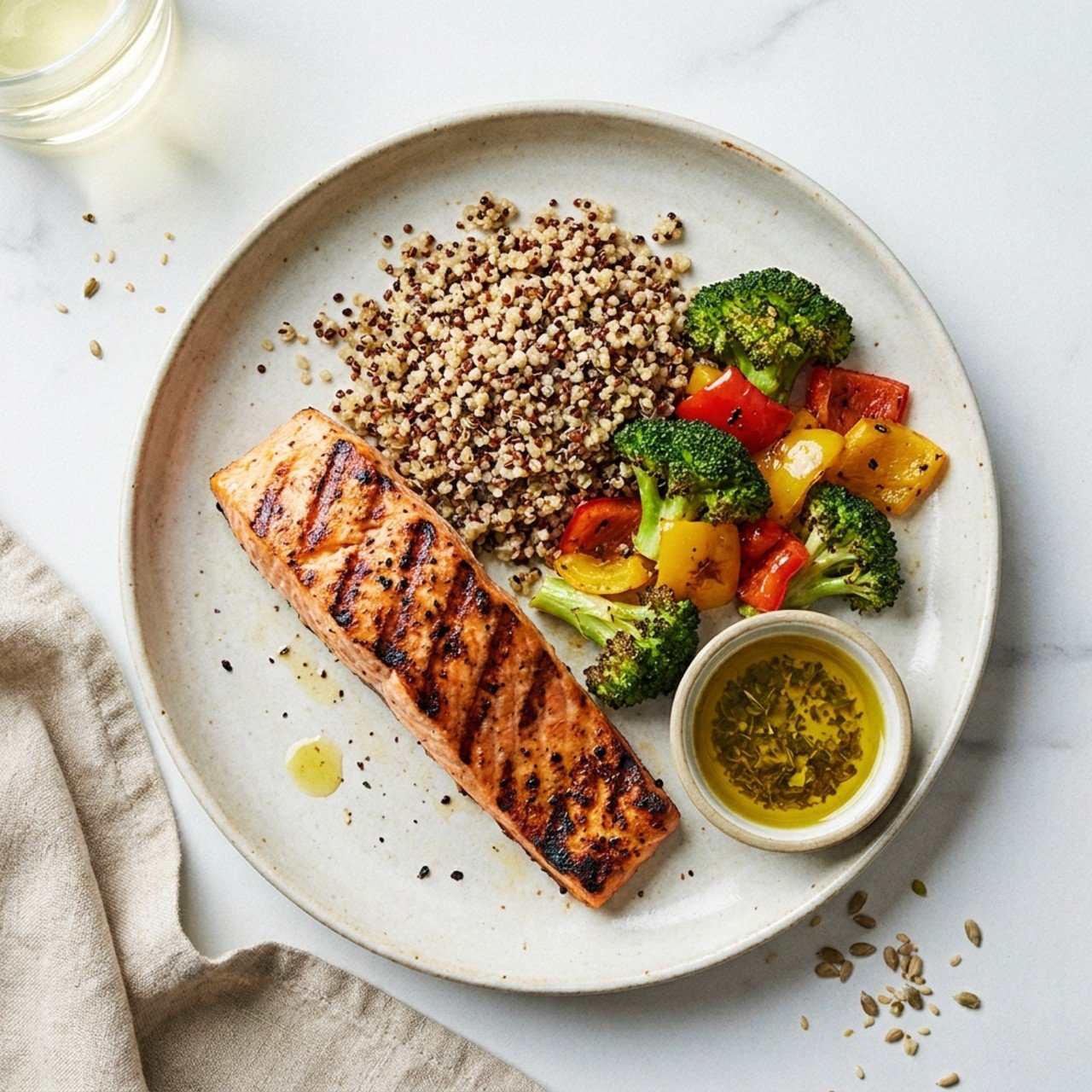
Protein is the nutrient most directly tied to feeling satisfied after a meal, which is exactly what you want at a buffet table.
Sports-nutrition research recommends 1.4 to 2.0 grams of protein per kilogram of body weight per day for most active adults, with roughly 20 to 40 grams per meal spaced every three to four hours for the best effect on appetite and muscle maintenance (Journal of the International Society of Sports Nutrition).
Starting a holiday meal with turkey, ham, or a protein-forward appetizer before the sides arrive is a simple way to apply this.
Hydration Strategies For Holiday Parties
The simplest hydration strategy for holiday parties is a glass of water on arrival and one between every drink or course.
Thirst signals are commonly mistaken for hunger signals, and holiday environments — heated indoor spaces, salty appetizers, alcohol, all known contributors to fluid loss — make it easy to end up under-hydrated without noticing; staying ahead of that with a simple water habit keeps you closer to the fluid target above and naturally moderates intake at the same time.
Should You Try Intermittent Fasting During The Holidays?
If you already fast, there’s little reason to stop for the holidays; if you don’t, this is a reasonable one to save for January.
Intermittent fasting has real research behind it — the National Institute on Aging reports improvements in glucose regulation, inflammation, and stress resistance tied to the metabolic switch that happens during a fasting window (National Institute on Aging) — but most of the supporting research involves relatively short trials in middle-aged adults, and the holidays, with their unpredictable meal timing and social gatherings, are rarely the easiest season to start a brand-new fasting protocol.

Managing Holiday Stress Without Letting It Sabotage Your Goals
How Holiday Stress And Cortisol Drive Weight Gain
Holiday stress drives weight gain through cortisol, which raises blood pressure and insulin production while suppressing immune function (Cleveland Clinic).
The blood-sugar drop that follows is exactly what triggers a sudden craving for something fatty or sugary right after a stressful afternoon of hosting or gift-wrapping. Higher cortisol is also specifically linked to carrying extra weight around the waist, not just overall weight gain.
How Sleep Deprivation Fuels Cravings
Sleep deprivation fuels cravings by lowering leptin (your fullness signal) and raising ghrelin (your hunger signal) at the same time — a double hit that makes overeating more likely the next day (Sleep Foundation).
Protecting your normal bedtime through the holidays is one of the more effective, and most overlooked, weight-management tools available to you this season.
Simple Stress-Management Techniques For Busy Holidays
The techniques that work best during the holidays are the ones that take five minutes or less: breathing, brief meditation, and protecting your bedtime.
- Five minutes of slow, deep breathing before a stressful family gathering measurably calms the nervous system.
- A short daily meditation — even five minutes, eyes closed, focused on your breath — interrupts the stress-cortisol cycle before it compounds. See our rundown of the benefits of daily meditation for a simple way to start.
- Protect a consistent bedtime as firmly as you’d protect a work meeting; sleep debt is one of the few holiday stressors that’s fully within your control.
- Movement itself is a stress-management tool, not just a calorie tool — see the mental health benefits of exercise for why a short workout can do as much for holiday stress as a nap.
The Diet-Guilt Trap — And How Self-Compassion Beats Willpower
This is the part most holiday-fitness advice skips entirely, and it might be the most important section in this guide. A frequently cited 2007 experiment by researchers Claire Adams and Mark Leary gave restrictive eaters a “forbidden” food, then split them into groups — one that received a brief self-compassion message about the food not needing to derail anything, and one that didn’t.
The self-compassion group went on to eat noticeably less afterward, behaving more like people who don’t diet at all, while the group left with their guilt intact kept eating more.
A 2018 systematic review in the journal Mindfulness lists that study among a small but growing body of research linking self-compassion to healthier eating behavior, while cautioning that the overall evidence base is still limited (Springer, 2018 systematic review).
In plain terms: guilt is what tends to turn one cookie into the whole plate, not the cookie itself. If you overindulge at a holiday party, the instinct to punish yourself the next day — skipping meals, over-exercising, spiraling into “I already ruined it” — is more likely to produce further overeating than simply resetting at your next meal without ceremony.
How To Bounce Back After Overindulging
Skip the self-criticism, skip the punishing workout, and skip skipping your next meal. Just return to your normal pattern of eating and movement at the very next opportunity.
One dinner, or even one full day, does not undo weeks of consistent habits — but a guilt spiral that turns into three days of restriction followed by a rebound absolutely can.
Staying Connected During The Holidays Without Losing Your Fitness Goals
Staying fit during the holidays was never only about food and exercise — the people you spend this season with matter just as much to your overall well-being. The good news is that social time and fitness goals don’t have to compete for the same slot on your calendar.
Combine Social Time With Movement
The easiest way to combine social time with movement is to default to activities that involve both at once, instead of treating them as competing plans.
- Suggest a post-dinner walk with family instead of everyone collapsing onto the couch — it aids digestion and gets your step count in at the same time.
- Turn a friend catch-up into a walking meeting or a group fitness class instead of a coffee shop visit.
- Host an active gathering — ice skating, a hike to see holiday lights, a casual pickup game — as an alternative to another food-centered event.
Accountability Partners And Virtual Check-Ins
A five-minute video check-in with your usual workout partner recreates the same accountability that keeps you consistent the rest of the year, even when the holidays have you in different cities.
Sharing a daily step count or a quick workout photo in a group chat with friends who share your goals costs almost nothing and meaningfully increases follow-through during the exact weeks when routines tend to fall apart.
Get The Free Guide That Makes This Easier All Year, Not Just In December
Everything in this guide — the mindful eating, the realistic step goals, the stress and sleep habits — works because it’s sustainable, not because it’s restrictive.
If you want that same approach mapped out for the other eleven months of the year, join the women already using our free guide, 10 Actions That Support Permanent Weight Loss: no fad diets, no extreme plans, just the research-backed habits built for how women’s bodies actually work.
Get your free copy here and walk into next January without a single pound to undo.
The Bottom Line
The holidays were never actually the threat they’re made out to be — the real average weight gain is about a pound, not the ten you’ve been dreading.
What matters is what happens to that pound afterward, and that comes down to a handful of unglamorous habits: eating mindfully instead of restrictively, moving your body in whatever way fits your schedule, protecting your sleep, and meeting the moments you overindulge with self-compassion instead of guilt.
None of it requires giving up your grandmother’s pie recipe.
Glossary Of Key Terms
- Calorie Deficit: A state in which an individual consumes fewer calories than the body uses; the guide suggests maintaining a modest deficit or maintenance level over a week rather than at every single meal.
- Cortisol: A hormone released in response to stress that increases insulin production and blood pressure; it is linked to fat storage around the waist and cravings for sugary or fatty foods.
- Ghrelin: A hormone that signals hunger to the brain; levels of ghrelin increase when an individual is sleep-deprived.
- High-Intensity Interval Training (HIIT): A workout involving short bursts of intense effort alternated with recovery periods, capable of delivering aerobic and strength benefits in approximately 30 minutes.
- Leptin: A hormone that signals fullness or satiety; sleep deprivation causes leptin levels to drop, making it harder to feel satisfied after eating.
- Mindful Eating: The practice of remaining present and aware while eating, focusing on hunger cues, fullness, and flavor to enjoy food without autopilot consumption or guilt.
- Protein-Forward: A dietary strategy of prioritizing high-protein foods (like turkey or ham) at the beginning of a meal to improve satiety and manage appetite.
- Resistance Band: A portable fitness tool that provides tension for strength training; recommended for maintaining muscle-strengthening routines while traveling.
- Self-Compassion: A psychological approach to dietary "slips" that involves treating oneself with kindness rather than guilt; research shows this leads to better long-term eating behavior.
- Step Plateau: The point identified in research (around 7,500 steps for women) where the health benefits of additional walking begin to level off.
FAQ
How Much Weight Do People Really Gain Over The Holidays?
About one pound on average, according to a year-long NICHD study — far less than the five-to-ten-pound figure most people expect. The real risk is that this pound is rarely lost afterward.
What Are The Best Strategies To Avoid Overeating At Holiday Meals?
Drink a glass of water before eating, fill half your plate with vegetables and protein first, and use a smaller plate when one’s available. Portion control, not abstinence, is the goal.
How Can I Maintain A Workout Routine While Traveling For The Holidays?
Book accommodations with a gym when possible, pack a resistance band, and default to bodyweight exercises or a brisk walk. A short workout always beats a skipped one.
Can I Enjoy Festive Treats And Still Stay Fit?
Yes. Choosing one or two treats you genuinely love and eating them without guilt is more effective in the long term than trying to avoid all indulgence, which tends to backfire.
How Many Steps Should I Aim For Each Day During The Holidays?
Research in women shows meaningful benefits starting around 4,400 steps a day, with the benefit levelling off near 7,500 — a far more realistic target than 10,000.
How Can I Deal With Social Pressure To Eat More At Family Gatherings?
A polite, firm “I’m full, but it was delicious” is a complete sentence. Most relatives respect a clear, kind boundary far more than we expect.
How Do I Bounce Back If I Overindulge During The Holidays?
Skip the guilt and skip the punishing workout. Research shows that self-compassion after a slip-up leads to less overeating afterward than self-criticism does — simply return to your normal routine at your very next meal.