

How To Start Intermittent Fasting For Women Over 50 Without Wrecking Your Hormones
David A. Sinclair
Biologist and professor of genetics
If you're interested in a long and healthy life, your diet probably needs to look a lot more like a rabbit's lunch than a lion's dinner.
Summary (TL;DR)
If you've tried intermittent fasting for women and found it harder than the blogs promised, you're not imagining things.
The research base for intermittent fasting (IF) was built mostly on male subjects, and the studies done specifically on women — particularly women over 50 — show real biological differences in how fasting affects hormones, metabolism, and body composition.
Estrogen decline shifts where you store fat. Cortisol regulation becomes more fragile after menopause. Muscle mass is already under threat from sarcopenia, which accelerates with age and hormonal change. A fasting protocol that works well for a 35-year-old man can land very differently for a 52-year-old woman.
That doesn't mean intermittent fasting doesn't work. It means the standard advice needs revising for your actual biology — and that's what this guide covers.
Medical & Referral Disclaimer
This article is for informational purposes only and does not constitute medical or dietary advice. Consult your healthcare provider before starting any fasting protocol, particularly if you have existing health conditions, take medications that require food, or have a history of disordered eating. The information presented reflects current research as of 2025 and may not account for your individual health needs or circumstances.
Key Takeaways
- Start at 14:10, not 16:8. For most women over 50, a 14-hour fasting window delivers the metabolic benefits without the cortisol and sleep disruption of longer fasts.
- Estrogen decline changes your fasting biology. Lower estrogen means higher cortisol sensitivity — aggressive fasting stacks onto an already stressed hormonal system.
- Protein is the most important nutritional variable. Hit 1.2–1.6g/kg/day within your eating window. This is what separates fat loss from muscle loss.
- The 2022 NEJM trial found no significant weight advantage for TRE over calorie restriction. IF is a tool for easier deficit eating, not a metabolic bypass.
- Sleep-anchored fasting is the most sustainable approach. Let the overnight hours carry most of the fasting window, and you only need to delay breakfast by 2–3 hours.
- The WISE Framework (Window selection, Intuitive protein-first eating, Sleep-anchored fasting, Exercise integration) provides a structured starting point designed for this stage of life.
- Bone health matters. Any fasting protocol for women over 50 needs deliberate calcium, vitamin D, and magnesium planning during the eating window.

What Is Intermittent Fasting?
Intermittent fasting is a pattern of eating that alternates between defined fasting windows and eating windows. It doesn't restrict which foods you eat, only when. Common protocols range from a 12-hour overnight fast to a full 24-hour fast once or twice per week.
Unlike a standard diet, IF doesn't require calorie counting or eliminating food groups. The premise is that extended periods without food trigger metabolic adaptations — lower insulin levels, increased fat oxidation, and cellular cleanup processes — that calorie restriction alone doesn't consistently produce.
As you'll see, the evidence on that claim is more nuanced than most IF content admits.
How Does Intermittent Fasting Work Differently For Women Over 50?
Women over 50 respond to fasting differently than younger women or men because declining estrogen, reduced muscle mass, and altered cortisol patterns change how the body handles an extended fast. The same fasting window that helps a younger person lose fat can raise cortisol and disrupt sleep in a postmenopausal woman.
The Hormone Factor: Why Estrogen Decline Changes Everything
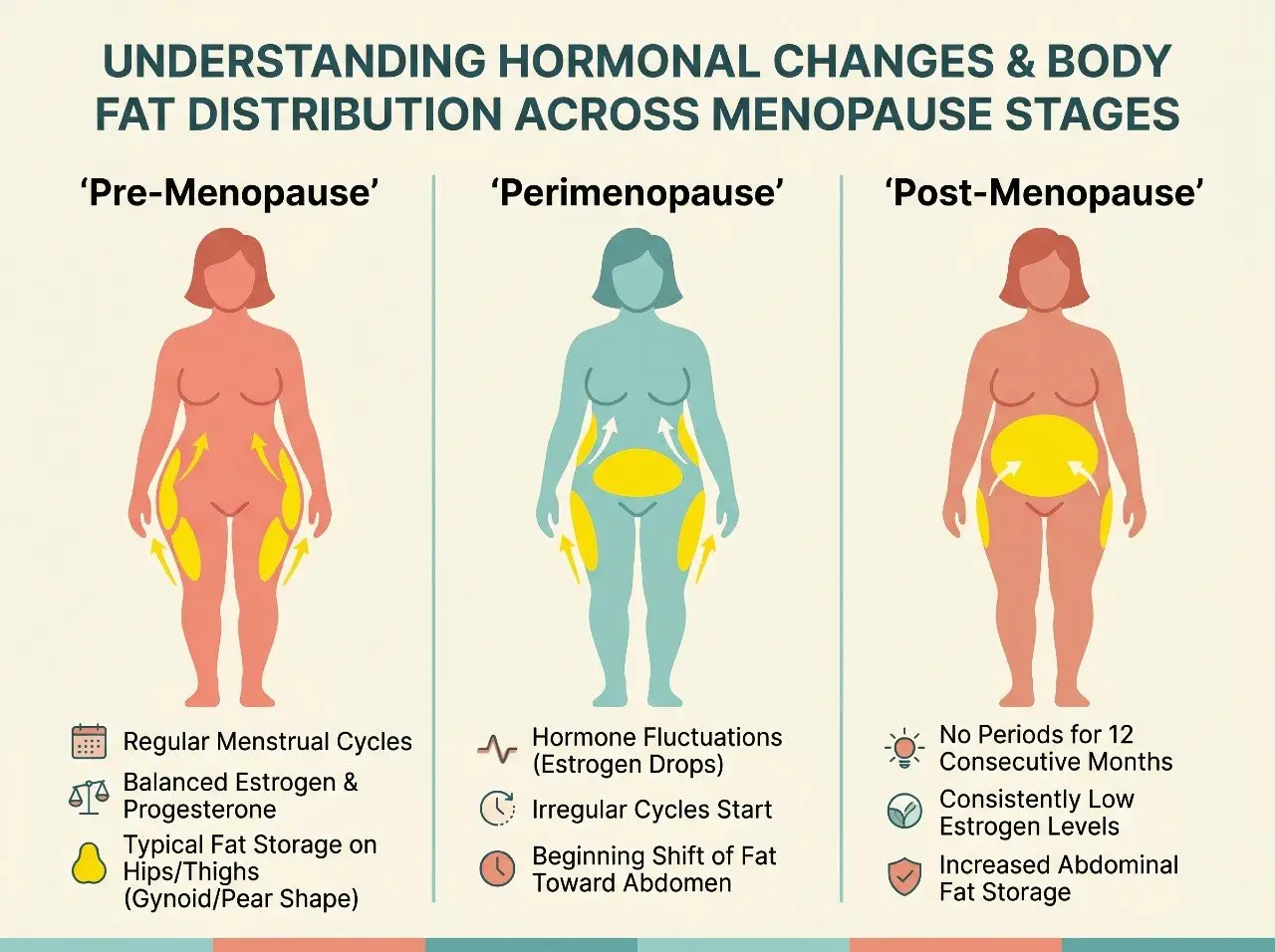
Estrogen isn't just a reproductive hormone. It influences insulin sensitivity, where fat is stored, and how your body responds to metabolic stress.
After menopause, estradiol levels drop by approximately 85–90% — from around 200 pg/mL during the reproductive years to under 15 pg/mL postmenopause, according to The Menopause Society. This shift causes:
- Fat to redistribute from the hips and thighs toward the abdomen (visceral fat)
- Reduced insulin sensitivity, making blood sugar harder to regulate
- Increased sensitivity to cortisol
That last point is where many women run into trouble with standard IF protocols. When you fast, cortisol rises to mobilize glucose for energy. In younger women, estrogen helps buffer this stress response. Without adequate estrogen, an extended fast can keep cortisol elevated for longer, and chronically elevated cortisol actively promotes abdominal fat storage.
Metabolism Changes After Menopause: What The Numbers Say
Resting metabolic rate declines gradually with age — roughly 100–250 calories per day less by age 70 compared to age 50, driven by muscle loss, hormonal changes, and reduced spontaneous activity. This narrower energy margin means the caloric gap required for fat loss is smaller, and nutritional mistakes are harder to recover from.
How Muscle Mass Fits Into This Picture
Skeletal muscle is a metabolically active tissue. Every pound of muscle burns roughly 6 calories per day at rest. As muscle mass declines after menopause — by an estimated 1–2% per year without intervention — resting caloric expenditure drops accordingly. Fasting protocols that don't actively protect muscle mass accelerate this process.
Is Intermittent Fasting Safe For Women Over 50?
Intermittent fasting is generally safe for healthy women over 50 using a 12–14-hour fasting window. Longer fasts require more caution, particularly for women with thyroid conditions, blood sugar regulation issues, low bone density, or a history of disordered eating.
Who Should Get Medical Clearance First
Speak with your doctor before starting any fasting protocol if you:
- Take medication that requires food
- Have type 1 or type 2 diabetes (fasting significantly affects blood glucose)
- Have a personal or family history of eating disorders
- Are you managing hypothyroidism or adrenal fatigue
- Have low bone density or have been diagnosed with osteoporosis
- Experience significant menopausal symptoms, including severe night sweats or sleep disruption
According to Mayo Clinic, intermittent fasting may offer short-term improvements in blood sugar, weight, cholesterol, and blood pressure — but it isn't appropriate for everyone, and other eating patterns may work equally well depending on your individual health goals. (Mayo Clinic, 2025).
Bone Health: The Overlooked Risk
Postmenopausal women already experience accelerated bone density loss due to estrogen decline. Any IF approach that significantly reduces total daily food intake risks insufficient calcium, vitamin D, and magnesium consumption. A fasting protocol for women over 50 should include deliberate attention to bone-supporting nutrients during the eating window — not as an afterthought.
The Calcium Math
The recommended daily calcium intake for women over 50 is 1,200mg. Getting that from a compressed eating window requires planning. One cup of plain Greek yogurt (300mg) at breakfast, sardines on salad at lunch (350mg), and a fortified plant milk with dinner (300mg) gets you close. It's doable, but it doesn't happen automatically.
The Best Intermittent Fasting Protocols For Women Over 50
The most effective IF protocol for women over 50 is one you can sustain without disrupting sleep, spiking cortisol, or losing muscle. For most women in this group, that means starting at 14:10 — not the commonly promoted 16:8.
IF Protocol Comparison: Which Window Fits Your Stage?
| Protocol | Fasting Window | Eating Window | Best For | Key Consideration for Women 50+ |
|---|---|---|---|---|
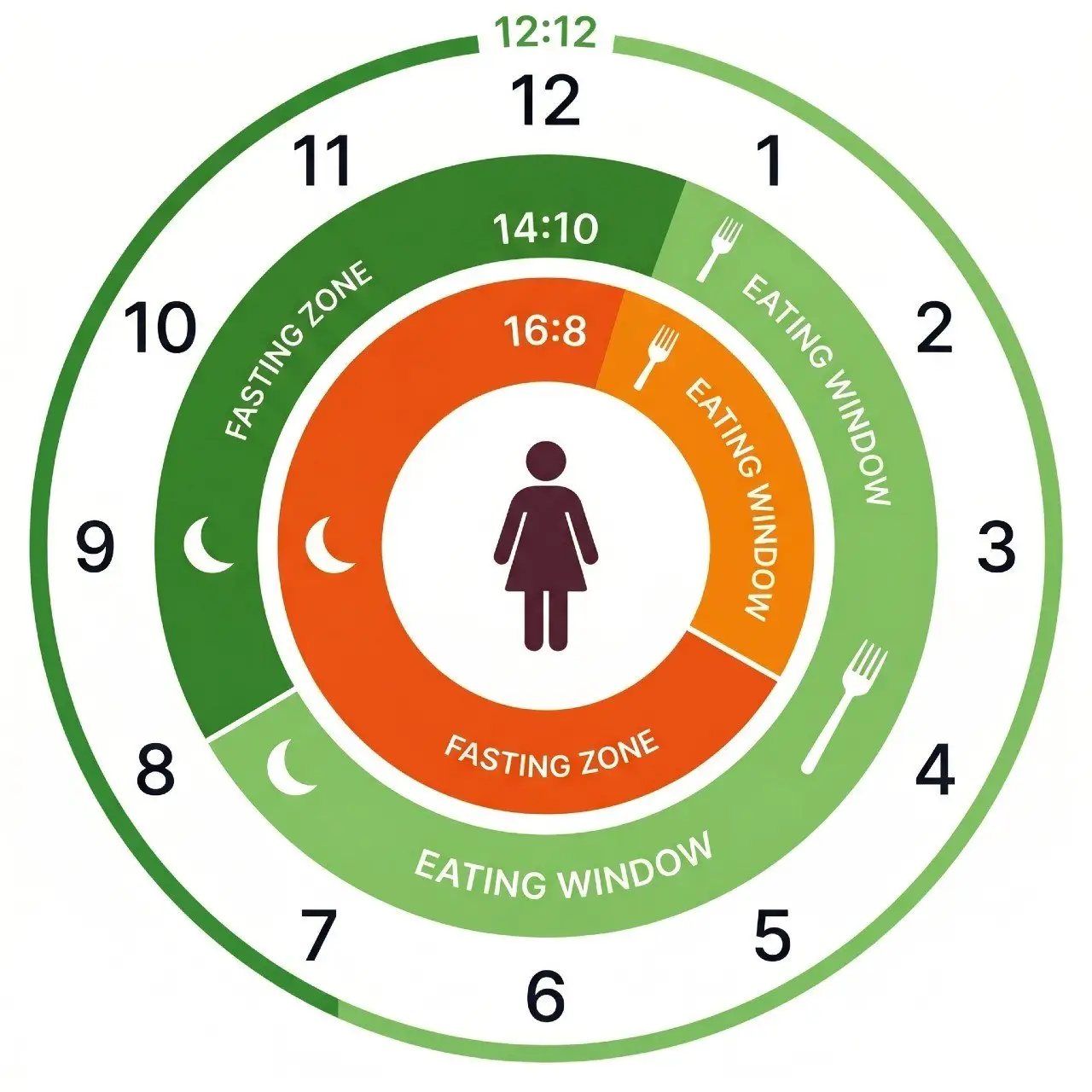
| 12:12 | 12 hours | 12 hours | Beginners, maintenance | Lowest cortisol impact; ideal starting point |
| 14:10 | 14 hours | 10 hours | Most women over 50 | Metabolic benefits without hormone disruption — the recommended default |
| 16:8 | 16 hours | 8 hours | Women with stable sleep and no cortisol issues | Cortisol risk is real; extend to here only after 6–8 weeks at 14:10 |
| 18:6 | 18 hours | 6 hours | Not recommended as a starting point | High cortisol and muscle loss risk; protein goals are very hard to meet |
| 5:2 | 2 days at ~500 cal | 5 normal-eating days | Women who dislike daily timing restrictions | Feasible but requires protein focus on fast days |
| OMAD | 23 hours | 1 hour | Not recommended for 50+ | Insufficient window to meet protein and micronutrient needs |
The 12:12 Method: Start Here
If you've never fasted deliberately, 12:12 is the obvious entry point. You're likely already doing something close to this if you finish dinner by 7 PM and eat breakfast at 7 AM. The metabolic effects are real — lower overnight insulin, modest fat oxidation — and the cortisol and sleep impact is minimal.
The 14:10 Method: The Optimal Window for Most Women Over 50
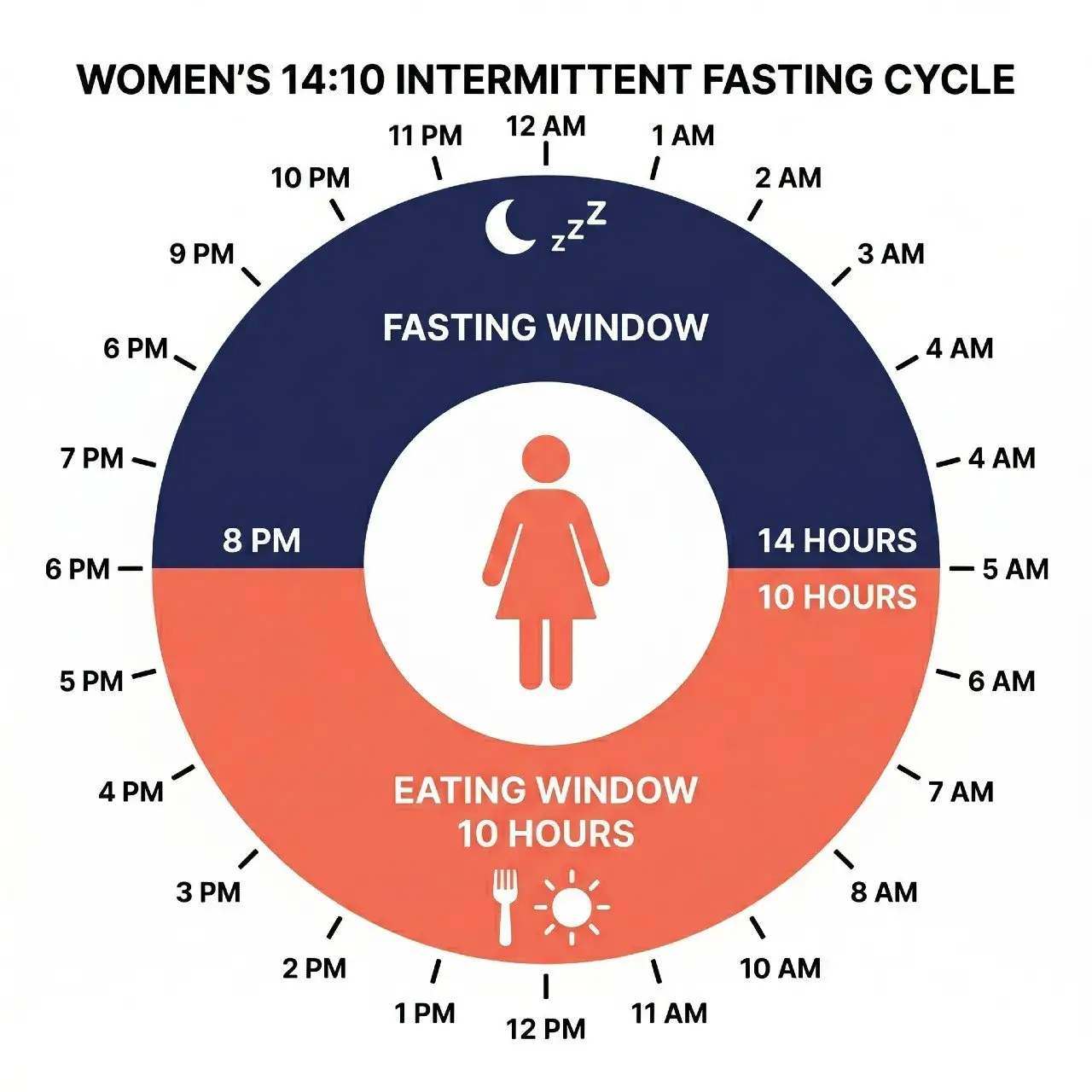
This is where the evidence and practical experience align. A 14-hour fast with a 10-hour eating window produces measurable improvements in insulin sensitivity and fat oxidation, allows adequate time to hit protein targets, and doesn't impose the cortisol load of longer fasts.
A Practical 14:10 Day
- 7:00 PM — Close eating window (finish dinner)
- 7:00 PM – 9:00 AM — Fasting window (14 hours, most of which is sleep)
- 9:00 AM — Breakfast with protein-first meal (eggs, Greek yogurt, cottage cheese)
- 9:00 AM – 7:00 PM — Eating window (10 hours)
This schedule aligns with natural cortisol rhythms. Cortisol peaks between 6–8 AM and tapers through mid-morning. You're not extending the fast into periods of declining cortisol when the body is already winding down its stress response.
The 16:8 Method: More Than Most Women Over 50 Need To Start
The 16:8 protocol dominates IF content for good reason — it has a solid research base and works well for many people. But the evidence specifically in postmenopausal women is thinner than most bloggers acknowledge. Start at 14:10 for 6–8 weeks. If energy is stable, sleep is unaffected, and hunger during the fasting window is manageable, extending to 16:8 is a reasonable next step.
The 5:2 Method: A Valid Alternative
Two days per week at approximately 500 calories, five days of normal eating. Research by Harvie et al. from the Genesis Breast Cancer Prevention Centre studied this approach specifically in women and found results comparable to daily calorie restriction. It suits women who find daily timing restrictions unsustainable. The non-negotiable: those 500-calorie fast days need to be structured around protein, not just low-calorie foods.
Join Our Mailing List
Join thousands of women inside our community and receive our free guide, 10 Actions That Support Permanent Weight Loss — the exact behavioural shifts that make the difference between a two-week attempt and a lasting transformation.
No restriction plans. No guilt. Just what actually works — for real women with real lives.
What Are The Real Benefits Of Intermittent Fasting For Women Over 50?
The strongest evidence supports IF's effects on insulin sensitivity, blood pressure, and cellular repair. Weight loss results are real but more modest than most IF content suggests — and they're not automatic.
Insulin Sensitivity And Blood Sugar Control
The most compelling trial on this is still Sutton et al. (2018) in Cell Metabolism (PMID 29754952). Early time-restricted eating — an eating window ending by 3 PM — improved insulin sensitivity, blood pressure, and oxidative stress markers in participants with prediabetes, even without weight loss. The "even without weight loss" finding matters: it suggests that the timing of food intake itself has metabolic effects independent of caloric intake.
For women over 50, where insulin resistance is a primary driver of weight gain and type 2 diabetes risk, this is meaningful.
Weight Loss And Belly Fat Reduction
IF can reduce body weight and visceral abdominal fat in postmenopausal women. But the honest framing is that IF works by making it easier to eat in a caloric deficit without constant tracking — not through a metabolic mechanism that overrides energy balance.
For a deeper look at what drives belly fat after menopause specifically, see: What Foods Cause Belly Fat In Perimenopause
Autophagy And Cellular Repair
Fasting activates autophagy — the process by which cells break down and recycle damaged components. Yoshinori Ohsumi won the 2016 Nobel Prize in Physiology or Medicine for this work. Meaningful autophagy activation appears to require at least 14–16 hours of fasting, which is one reason longer fasting windows remain attractive despite the cortisol concerns.
In practical terms, autophagy may reduce chronic inflammation, support immune function, and slow some cellular aging processes. The human evidence is still accumulating, but the mechanism is solid.

Cognitive Function And Brain Health
Research reviewed by the National Institute on Aging suggests that caloric restriction and fasting may support brain health partly through BDNF (brain-derived neurotrophic factor) upregulation. For women over 50 who notice brain fog as a menopause symptom, this is a legitimate area of interest — though human evidence remains preliminary and the effect sizes in existing studies are modest.
Does Intermittent Fasting Cause Muscle Loss In Women Over 50?
Yes, if protein intake is insufficient, IF can accelerate muscle loss. This is a real risk for women over 50, where sarcopenia is already an active process. The answer isn't to avoid fasting — it's to prioritize protein during every eating window and pair fasting with resistance training.
Women over 50 need 1.2–1.6 grams of protein per kilogram of body weight daily to maintain muscle mass. A 145-pound (66 kg) woman needs 79–106 grams of protein every day. This needs to happen within the eating window.
The 14:10 window handles this better than 16:8. More eating time means more opportunity to hit that protein target without forcing every meal to be enormous.
See also: Lean Body Formula For Women Over 40.
What To Eat During Your Eating Window
What you eat during your eating window matters as much as the fasting window itself. For women over 50, protein and bone-supporting micronutrients need to be included in every meal.
Eating Window Food Guide For Women Over 50
| Category | Prioritize | Limit | Why It Matters for 50+ |
|---|---|---|---|
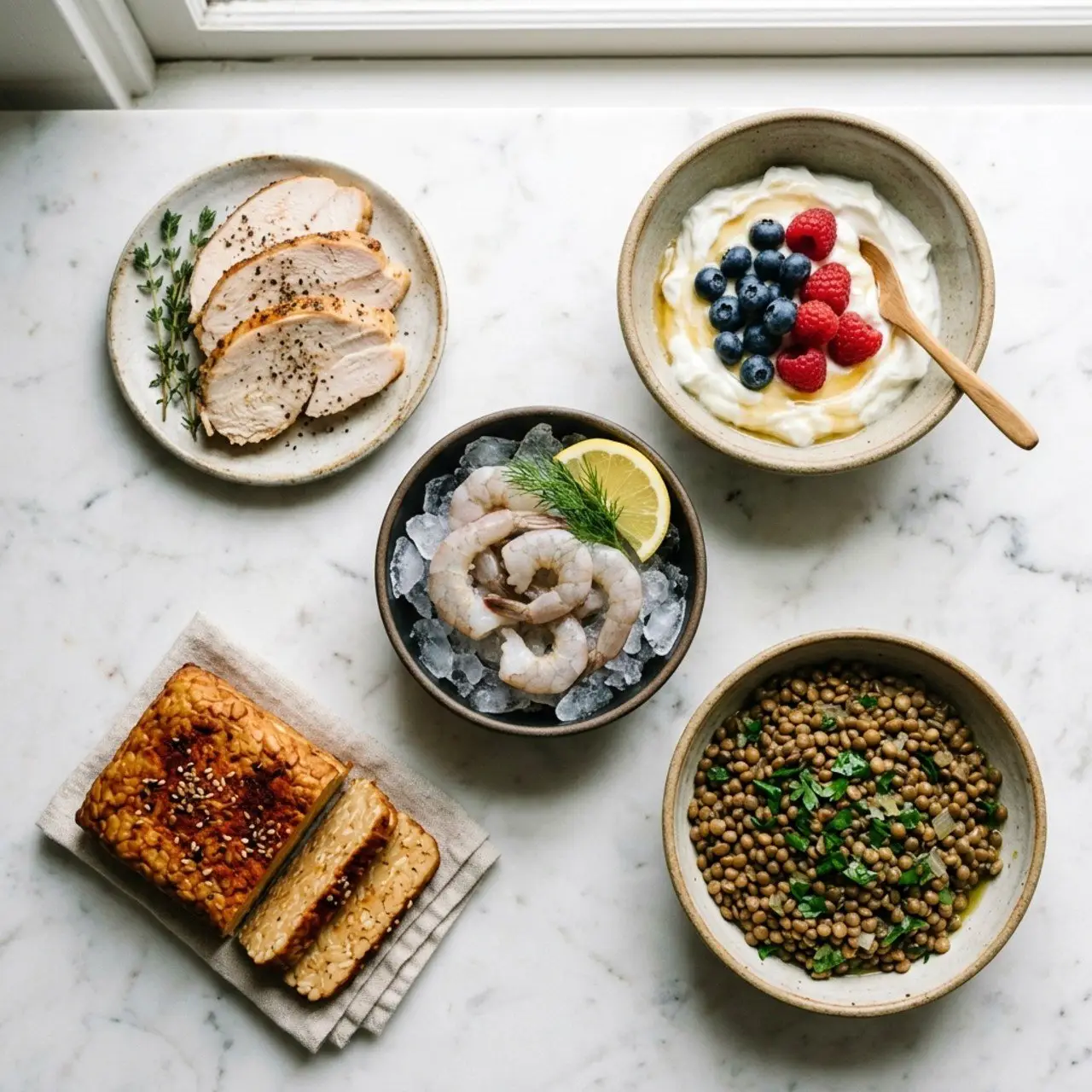
| Protein | Eggs, salmon, chicken, Greek yogurt, legumes, cottage cheese, sardines | Processed deli meats | Prevents muscle loss; needs 1.2–1.6g/kg/day |
| Healthy Fats | Olive oil, avocado, nuts, fatty fish | Seed oils, fried foods | Supports hormone production; reduces inflammation |
| Carbohydrates | Vegetables, berries, sweet potatoes, oats, legumes | Refined sugar, white bread | Fiber supports gut microbiome and blood sugar stability |
| Calcium Sources | Dairy, sardines with bones, fortified plant milk, kale, bok choy | — | Bone density protection is non-negotiable post-menopause |
| Hydration | Water, herbal tea, mineral water, black coffee | Sugary drinks, alcohol | Alcohol disrupts cortisol patterns and sleep quality |
| Avoid | — | Ultra-processed snacks, fast food, high-sugar packaged foods | Drive insulin spikes and chronic inflammation |
Protein Is The First Priority
Most women over 50 consistently undereat protein. The official RDA of 0.8g/kg was designed to prevent deficiency in sedentary adults, not to support muscle preservation during aging and hormonal change. Sports nutrition researchers and gerontologists now consistently recommend 1.2–1.6g/kg for older women, particularly those doing resistance training.
For calorie and portion context specific to smaller women, see: How Many Calories Should A Petite Woman Eat
Break Your Fast With Protein First
Starting the eating window with a high-carbohydrate meal causes a rapid blood sugar spike followed by an insulin surge. For women over 50 with reduced insulin sensitivity, this pattern compounds over time. Opening with protein and fat — eggs, Greek yogurt, nuts, smoked salmon — produces a flatter, more stable metabolic response and reduces mid-morning hunger.
Practical First-Meal Options
- 2 eggs scrambled with avocado and a side of cottage cheese (~40g protein)
- Greek yogurt with mixed nuts and berries (~25g protein)
- Smoked salmon with cream cheese on a whole-grain cracker with a hard-boiled egg (~35g protein)
The WISE Framework: A Protocol Designed For Women Over 50
The WISE Framework is a four-part approach to intermittent fasting that addresses the hormonal and metabolic reality of women after 50. It prioritizes hormone health and sustainability over aggressive fasting windows.
W — Window Selection (Start Conservative, Extend Gradually)
Start at 12:12 or 14:10, not 16:8. Run this for 4–6 weeks before considering extending. The criteria for extending: stable energy throughout the fasting window, no sleep disruption, and hunger that is manageable rather than intense. Most women find 14:10 is where they stay long-term — and that's a fine outcome.
How To Choose Between 12:12 and 14:10
If you have existing cortisol issues (high stress, poor sleep, adrenal fatigue symptoms), start at 12:12 for the first 3–4 weeks. If you're generally healthy and sleep reasonably well, 14:10 from week one is appropriate.
I — Intuitive, Protein-First Eating
The eating window isn't a free-for-all, and it isn't rigid calorie counting either. It's a priority hierarchy: protein first, then fats and vegetables, then everything else. This protects muscle without requiring tracking apps or food scales. Eat until satisfied — but always start with protein.
The One-Plate Rule
For every meal: half the plate should be protein and vegetables, a quarter healthy fats, a quarter complex carbohydrates. It's not a formula — it's a default that steers most meals in the right direction without overthinking.
S — Sleep-Anchored Fasting
Let sleep carry most of the fasting window. If you finish eating by 7 PM and wake up at 6 AM, you've been fasting for 11 hours before you even get out of bed. A 14:10 window then only requires delaying breakfast until 9 AM. This approach keeps cortisol patterns intact — you're not extending the fast into late morning when cortisol is naturally declining, and the body is entering a lower-stress mode.
This is also the most sustainable approach for women managing night sweats and sleep fragmentation. The protocol fits around sleep rather than fighting it.
E — Exercise Integration
Time resistance training to fall within your eating window, or within 1–2 hours before breaking your fast, so you have access to protein immediately after for muscle repair. Low-intensity fasted exercise — a morning walk, yoga, light cycling — is fine and can actually support fat oxidation. Fasted resistance training is counterproductive: you need fuel to lift well and protein immediately after to rebuild.
The Best Diet For Women Over 40 covers the nutrition side of this in detail.




The Contrarian Take: Why 16:8 Is The Wrong Starting Point For Most Women Over 50
The IF content landscape is saturated with 16:8 promotion. It's a clean, memorable protocol with a solid research base in younger and male populations. But here's what the content usually leaves out.
Liu et al. (2022) in the New England Journal of Medicine (PMID 35443107) ran a 12-month randomized trial comparing time-restricted eating plus calorie restriction against calorie restriction alone. The result: weight loss of 8.0 kg versus 6.3 kg — a difference that was not statistically significant (P = 0.11). 139 participants, a year of tracking, and time restriction didn't add meaningful weight loss over simply eating less.
This is not evidence that IF doesn't work. It's evidence that the fasting window itself is not the active ingredient for most people. What IF does well is reduce total calorie intake without constant tracking — by compressing the eating window, you naturally eat less. The timing is the delivery mechanism. The deficit is the actual mechanism.
The second issue is cortisol. Research on HPA axis function in postmenopausal women consistently shows a blunted cortisol recovery pattern — meaning cortisol spikes take longer to resolve. An aggressive fast is a physiological stressor. It raises cortisol.
For women already managing disrupted sleep, high life stress, and the hormonal changes of menopause, adding 16 hours of fasting-induced cortisol elevation is a real burden with a real cost: more abdominal fat storage, more sleep disruption, and an increased likelihood of abandoning the protocol entirely.
The position is grounded in evidence: start with 14:10, prioritize protein, add resistance training twice a week, and eat real food. That combination outperforms an aggressive fast on every practical metric that matters to women over 50 — muscle preservation, sleep quality, sustainable adherence, and hormonal stability.
For more on managing cortisol and its effect on body composition: What's The Best Diet For Cortisol-Related Weight Gain,
How Long Until You See Results With Intermittent Fasting?
Most women over 50 see noticeable changes within 4–8 weeks: improved energy, reduced bloating, and more stable blood sugar between meals. Meaningful fat loss typically takes 3–6 months and requires an eating pattern that supports a genuine caloric deficit alongside the fasting window.
Track these markers alongside weight — they're often more informative:
- Morning energy levels (rate 1–10 each day)
- Sleep quality and duration
- Hunger intensity during the fasting window (should decrease after week 2–3)
- How clothes fit, not just the scale
- Blood sugar, if you monitor it
- Mood and cognitive sharpness through mid-morning
The expectation gap is the biggest single problem with IF for women in this age group. Blogs promise rapid transformation. The reality is that 14:10 changes when you eat. You still need to eat well, sleep enough, and move regularly for results to accumulate.
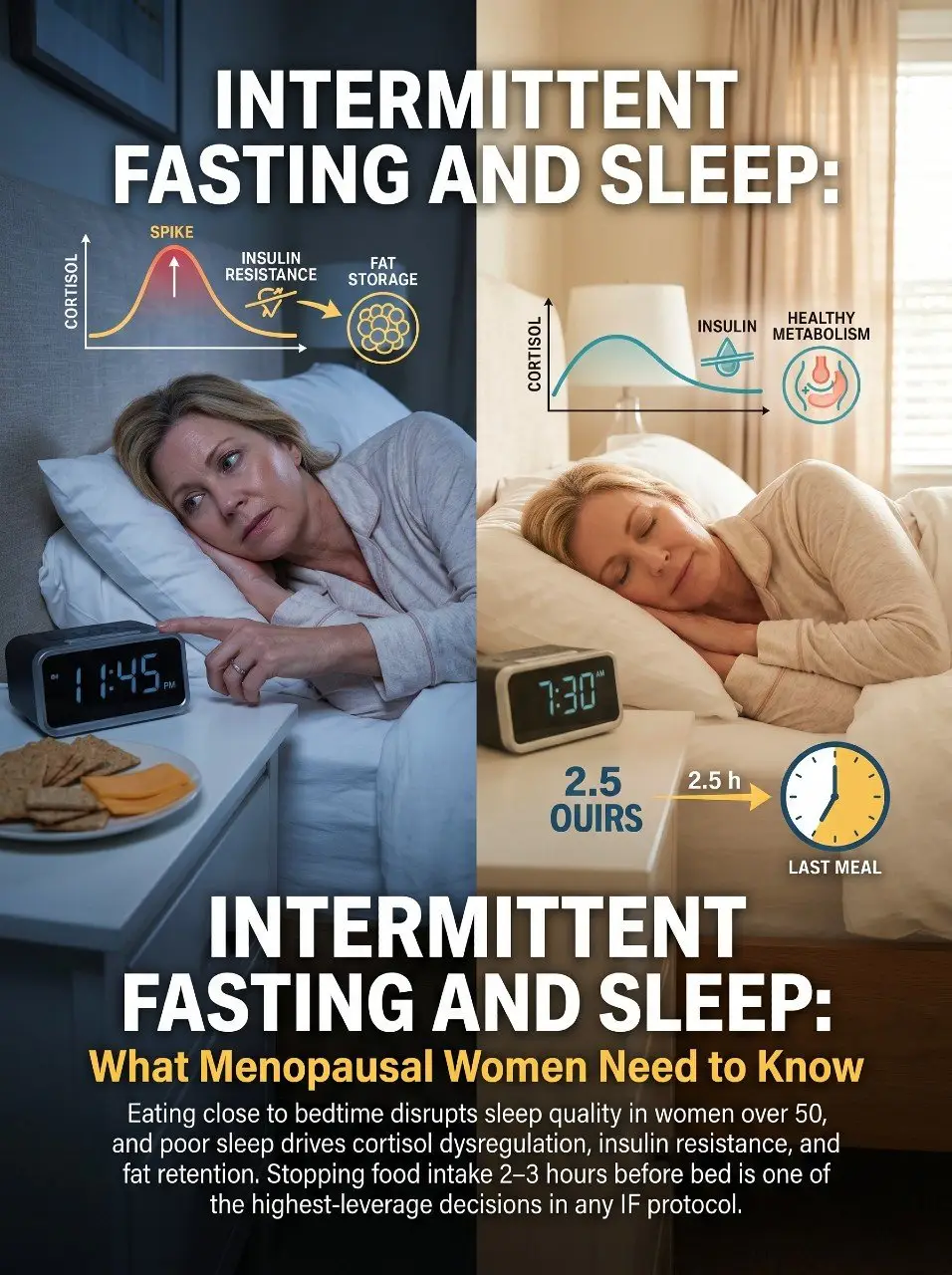
Intermittent Fasting And Sleep: What Menopausal Women Need To Know
Eating close to bedtime disrupts sleep quality in women over 50, and poor sleep drives cortisol dysregulation, insulin resistance, and fat retention. Stopping food intake 2–3 hours before bed is one of the highest-leverage decisions in any IF protocol.
Night sweats and sleep fragmentation are already common in perimenopause and postmenopause. Alcohol, high-sugar meals, and late-night eating worsen these symptoms measurably. The eating window cutoff at 7–8 PM creates a natural sleep-protective buffer that most women report noticing within the first two weeks.
For additional reading on caloric timing and metabolic health in older adults, the NIH National Institute on Aging maintains an accessible overview of the current evidence.
Dealing with bot verification can be a pain, especially when you're just trying to focus on your health. If you're ready to cut through the noise and get straight to simple, effective strategies for feeling great in your 40s and beyond. Grab your free guide here.
Related Articles
The Bottom Line
Intermittent fasting for women over 50 can support weight management, insulin sensitivity, and cellular health — and the evidence for these benefits is real. But the protocol matters. The 16:8 window that works for the rest of your household may not be right for your hormonal and metabolic reality.
Start at 14:10. Prioritize protein at every meal. Anchor your fast to sleep. Add resistance training. Give it 6–8 weeks before you evaluate results or consider extending the fasting window. That's the approach the evidence supports — and it's the one most likely to still be working 12 months from now.
Glossary Of Key Terms
FAQ
The 14:10 protocol — a 14-hour fast with a 10-hour eating window — is the appropriate starting point for most women over 50. A 7 PM dinner cutoff with a 9 AM breakfast is a practical example. This window provides metabolic benefits without the cortisol disruption of longer fasts.
Extended fasting windows of 16 or more hours can elevate cortisol, which postmenopausal women are already less able to clear efficiently. A 12–14-hour fasting window carries minimal hormonal risk for most healthy women. If you experience increased anxiety, worsening sleep, or persistent fatigue after starting IF, shorten your fasting window.
It can, if protein intake is insufficient. Women over 50 need 1.2–1.6 grams of protein per kilogram of body weight per day to maintain muscle mass. Pair IF with resistance training at least twice a week. A 14:10 window gives you more time to hit protein targets than a 16:8 does.
Yes, but primarily through the caloric deficit it facilitates. IF makes eating in a deficit more manageable without constant tracking. Visceral fat reduction typically requires 3–6 months of consistent protocol adherence combined with adequate protein and regular exercise.
Expect noticeable changes in energy and bloating within 4–8 weeks. Scale changes typically take 8–12 weeks. Significant body composition changes — fat loss while preserving muscle — usually take 3–6 months and require protein intake and resistance training alongside the fasting window.
For many women over 50, yes — particularly as a starting point. Start at 14:10 and extend to 16:8 only after 4–6 weeks if sleep is stable and energy is consistent. Women managing significant stress, poor sleep, thyroid conditions, or adrenal fatigue should be especially cautious about longer windows.
Water, plain black coffee, herbal tea, and sparkling mineral water are appropriate. These have no meaningful insulin effect. Avoid anything with calories, sweeteners, or milk — these can interrupt the metabolic state of the fast.
You Know Why. Now Learn Exactly How
Join thousands of women inside our community and receive our free guide: 10 Actions That Support Permanent Weight Loss — the practical, sustainable habits that translate everything you just read into real, lasting results.
No fad diets. No extreme plans. Just what the research actually supports — written for real women.