
Achieving A Flat Stomach Starts With Knowing What’s Actually Pushing Your Belly Out
Roy T. Bennett
Author of 'The Light in the Heart'
Believe in yourself. You are braver than you think, more talented than you know, and capable of more than you imagine.
Summary (TL;DR)
You eat well most of the time. You move. Maybe you’ve even lost weight. And still, the lower part of your belly sits there like it didn’t get the memo. If that sounds familiar, you’re far from alone.
One of the most-upvoted replies in a big Reddit thread on exactly this came from a woman with a BMI of 20.5 who said she, her mom and her grandma all have the same lower-belly “pooch.”
That frustration isn’t in your head, and it isn’t a willpower problem. Achieving a flat stomach is confusing because three different things can make your belly stick out, and most advice treats them as one. Crunches won’t fix bloating. And no diet changes a core that’s been stretched by pregnancy or slumped at a desk for twenty years.
So this guide does something different. Instead of another list of “flat belly tips,” it helps you diagnose what’s actually going on with your midsection first, then matches each cause to what the research says works. Ready to find out which one is yours?
Medical & Referral Disclaimer
This article is for informational and educational purposes only. It is not a substitute for professional medical advice, diagnosis or treatment. Always consult your physician or a qualified health provider before starting any new diet or exercise program, and see a doctor about any bloating, pain or change in your stomach that is new, frequent or getting worse.
Key Takeaways
- Work out whether your belly is mostly bloat, fat or core before you pick a fix.
- Spot reduction doesn’t work. Belly fat reduction comes from an overall caloric deficit plus regular exercise.
- After 40, visceral fat tends to rise around menopause, which makes waist size a more useful number than the scale.
- Strength training, cardio and HIIT all reduce visceral fat. The best one is the one you’ll keep doing.
- Bloating responds to salt, fiber pacing and your cycle. Persistent bloating needs a doctor, not a diet.
- A healthy flat stomach still has a natural curve below the belly button.

What Does A “Flat” Stomach Actually Look Like On A Real Woman?
A healthy flat stomach on a real woman usually still has a soft curve below the belly button, and it changes shape through the day. “Flat” means no constant bloat, a waist in a healthy range and a core that holds you upright, not a permanently concave six-pack.
Here’s what social media leaves out. Stomachs move. They’re flatter in the morning, rounder after dinner and different across your cycle. As women in that Reddit thread pointed out, the flat-stomach photo is real. It’s just one angle, one pose and one moment.
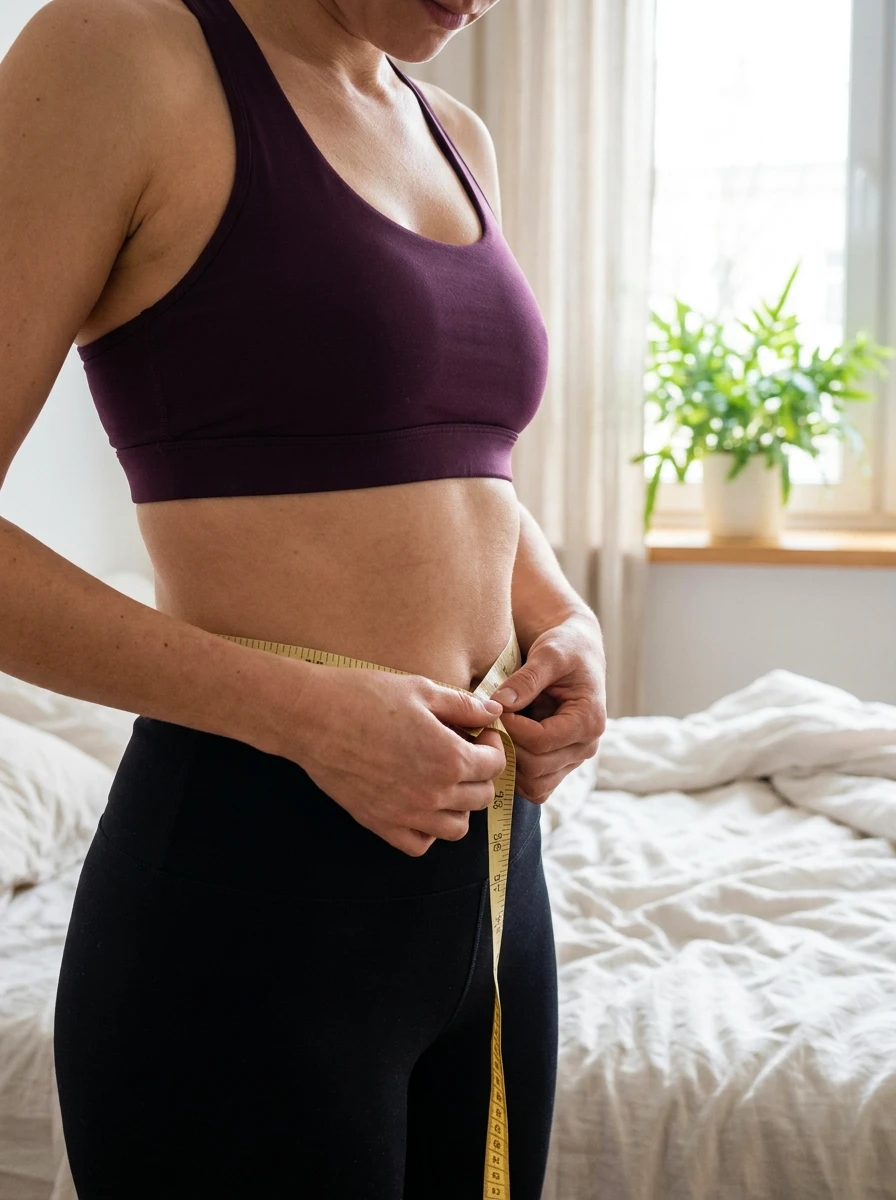
A more useful target is your waist measurement. The National Heart, Lung, and Blood Institute says a waist of more than 35 inches raises a woman’s risk of heart disease and type 2 diabetes. That’s a health marker. It doesn’t care whether your lower abs show in a bikini.
Why Does Your Stomach Change After 40?
Your stomach changes after 40 because fat storage shifts. In a four-year study, all midlife women gained fat under the skin, but only those who went through menopause gained significant visceral fat deep in the belly, while activity and daily energy burn dropped too.
That study, from the Pennington Biomedical Research Center, followed women through the menopausal transition with CT scans. The researchers found physical activity fell significantly about two years before menopause and stayed low, while 24-hour energy expenditure dropped too.
Put simply, your metabolic rate and daily movement drift down at the same time your body starts storing more fat around your organs.
That isn’t “it’s all your hormones.” Hormone balance is part of the picture, but so are sleep, stress, muscle mass and how much you move. Those are the parts you can change. For a deeper look at the hormone side, see our guide to cortisol belly vs hormonal belly.

The B.F.C. Belly Check: Bloat, Fat Or Core?
The B.F.C. Belly Check is a three-step way to find what’s pushing your stomach out: Bloat (it changes during the day), Fat (it stays put, and you can pinch it) or Core (it pushes forward even when you’re lean). Many women over 40 have a mix of two.
Run the checks in order. Bloat first, because it’s the fastest to change and it can hide everything else. Then fat. Then core. Here’s how the three compare:
| Check | Typical Signs | When It’s Worst | What Helps Most | What Won’t Help |
|---|---|---|---|---|
| Bloat | Tight, full, “pregnant” feeling; flatter in the morning | Evenings, after salty or large meals, before your period | Less sodium, slower fiber increases, regular meals, daily movement | More crunches |
| Fat | Soft, pinchable or deep and firm; stays the same all day | Constant; often grows around menopause | Caloric deficit, strength training, cardio or HIIT, sleep | Ab-only workouts, detox teas |
| Core | Belly pushes forward when standing; gap or doming along the midline after pregnancy | Standing, lifting, late in the day as you tire | Deep core training, posture work, a pelvic health physio | Aggressive sit-ups too early after birth |
Check 1: Is It Bloat?
It’s probably bloat if your stomach is flat when you wake up and noticeably rounder by evening. Bloating can make your stomach look bigger than it is, and in a controlled trial, a high-salt diet raised the risk of bloating by 27%.
That trial, a secondary analysis of the DASH-Sodium study, fed 412 adults (average age 48, 57% women) set diets for 30-day periods. More than a third reported bloating before the study even started.
High sodium raised the risk of bloating on both the high-fiber and the standard diet. The high-fiber DASH diet also increased bloating, by 41%, although the effect was smaller in women than in men. The researchers suggest cutting salt may partly offset it.
So a high-fiber diet is still good for you, but going from 10 grams to 30 overnight is a recipe for a puffy afternoon. Your cycle matters too. A survey of 156 healthy women found 73% had at least one gut symptom in the days before or during their period.

Gut-friendly habits for reducing bloating:
- Watch the salt: Check labels on packaged soups, sauces, deli meats and bread, and notice how you feel after restaurant meals. Cooking at home more often is the simplest lever.
- Add fiber in steps: Increase by a few grams a week, not all at once, and spread it across meals.
- Keep hydration habits steady: Drink regularly through the day, especially as fiber goes up. Our guide on how much water you should drink breaks it down.
- Track it against your cycle: If bloat peaks the same week every month, that’s useful information, not failure.
- Walk after meals: Gentle daily movement is one of the easiest habits to add to an active lifestyle, and it counts toward your weekly exercise too.
The NHS lists a swollen tummy or feeling bloated roughly 12 or more times a month as a possible sign of ovarian cancer, and most cases are in women over 50. That’s rare, but it’s why frequent, new or worsening bloating belongs with your doctor.
Check 2: Is It Fat?
It’s probably fat if your belly looks the same morning and night and you can pinch a layer under the skin, or it feels firm from deeper visceral fat. Both kinds come down to whole-body fat loss, not ab exercises.
This is where most women get misled. In a randomized trial, sedentary adults did seven abdominal exercises, five days a week, for six weeks. Their belly fat, waist measurement and skinfolds didn’t change significantly.
Abdominal exercises build core strength. They don’t burn the fat sitting on top of the muscle, so real waist trimming has to come from whole-body fat loss. We dig into the myth and the truth about spot reduction.
Three quick ways to check where you stand on fat:
- Tape measure: Measure your waist just above the hip bones, after you breathe out. Over 35 inches is the health threshold to watch.
- Pinch test: If you can grab a soft fold below the belly button, there’s subcutaneous fat to lose.
- Morning vs evening: If the size barely changes through the day, it’s not mainly bloat.

Check 3: Is It Your Core And Posture?
It may be your core if your belly pushes forward when you stand but flattens when you lie down, or if you see a ridge or gap down the middle when you sit up. Pregnancy and posture both change how well your abdominal wall holds things in.
Diastasis recti, a separation of the two sides of the “six-pack” muscle, is common. In a Norwegian study of 300 first-time mothers, 60% had it six weeks after birth, and 32.6% still did a year later.
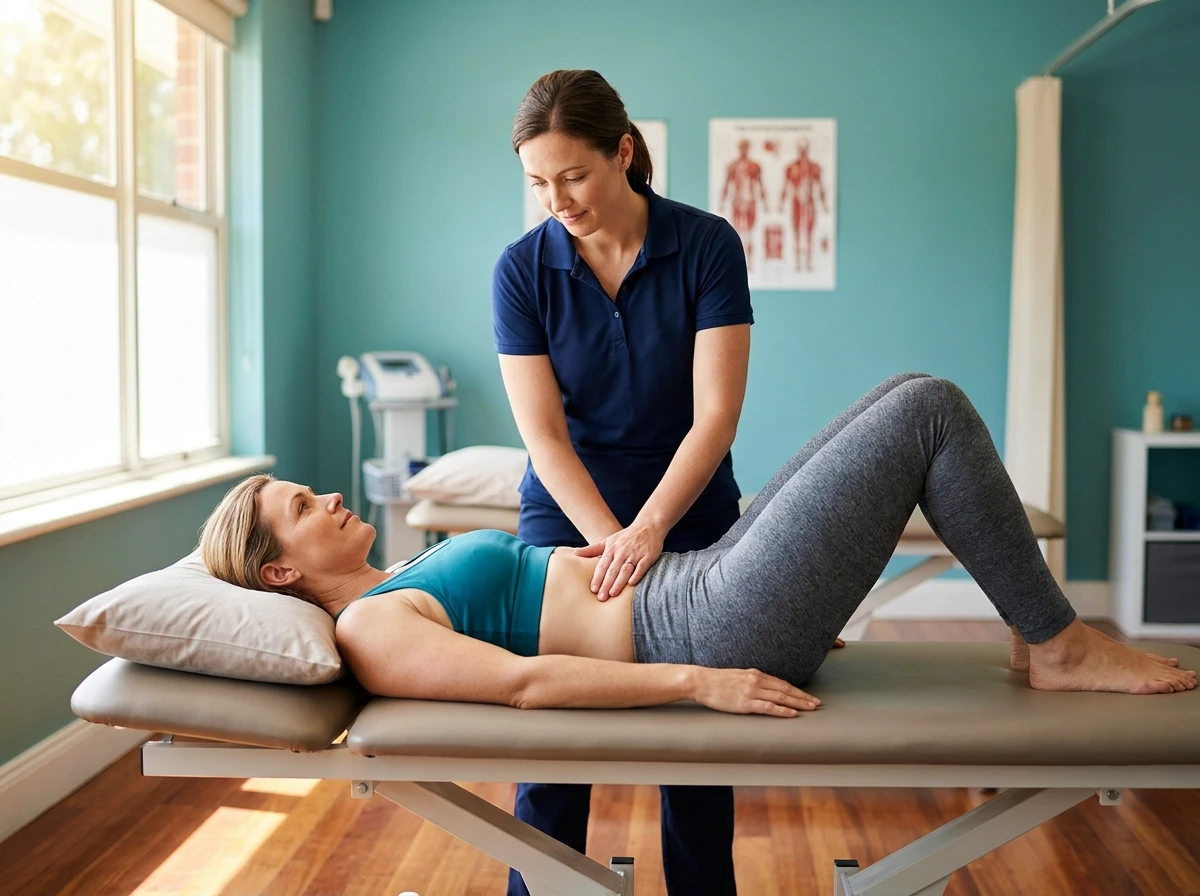
If you’ve had children, a C-section or a separation you can feel, a women’s health or pelvic floor physiotherapist can assess it properly. That’s a better first step than another ab challenge.
Posture matters too. Several women in that Reddit thread said fixing an anterior pelvic tilt, where the pelvis tips forward and the lower back arches, made their lower belly look flatter.
That’s anecdote rather than trial data, so treat it as something to get checked, not a guaranteed fix. Training your deep core with slow, controlled moves like dead bugs and planks with a neutral pelvis is a sensible place to start.
What Actually Reduces Belly Fat After 40?
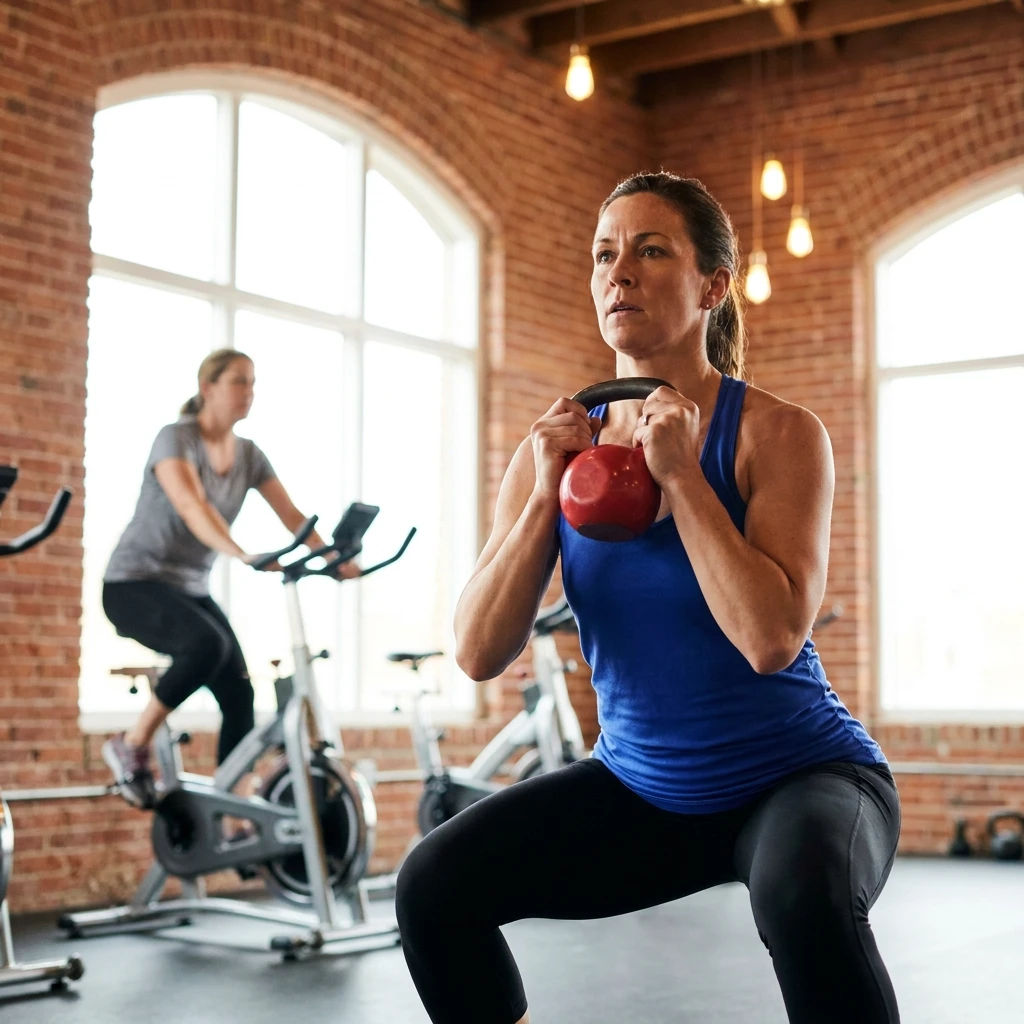
A steady caloric deficit plus regular exercise is what reduces belly fat after 40. A 2026 review of 61 trials found every exercise type cut visceral fat, with HIIT working at the lowest weekly dose and cardio needing more total volume.
The review, published in Nutrition & Metabolism, pooled 4,136 people with overweight or obesity. Here’s how each option ranked for visceral fat:
| Exercise Type | Effect On Visceral Fat (SMD) | Weekly Dose Where Results Became Significant | Good Fit If You... |
|---|---|---|---|
| HIIT (short hard intervals) | -0.84 (largest) | About 400 MET-min | Are short on time and your joints tolerate intensity |
| Cardio + strength training | -0.54 | About 1,100 MET-min | Want fat loss and muscle together |
| Cardio routine alone | -0.53 | About 1,100 MET-min | Love walking, cycling or swimming |
| Strength training alone | -0.41 | Not reported separately | Want to protect muscle and metabolic rate |
SMD (standardized mean difference) is a way of comparing results across studies, and a more negative number means a bigger drop in visceral fat. MET-minutes combine intensity and time, so harder sessions count for more per minute. You don’t have to chase the top row.
All four worked. If HIIT wrecks your knees or your mood, brisk walking plus two strength sessions a week is still a proven combination. Our breakdown of strength training vs cardio for fat burning goes deeper, and what the research ranks for women over 40 covers specific moves.
Eat For A Smaller Waist, Not A Smaller Plate
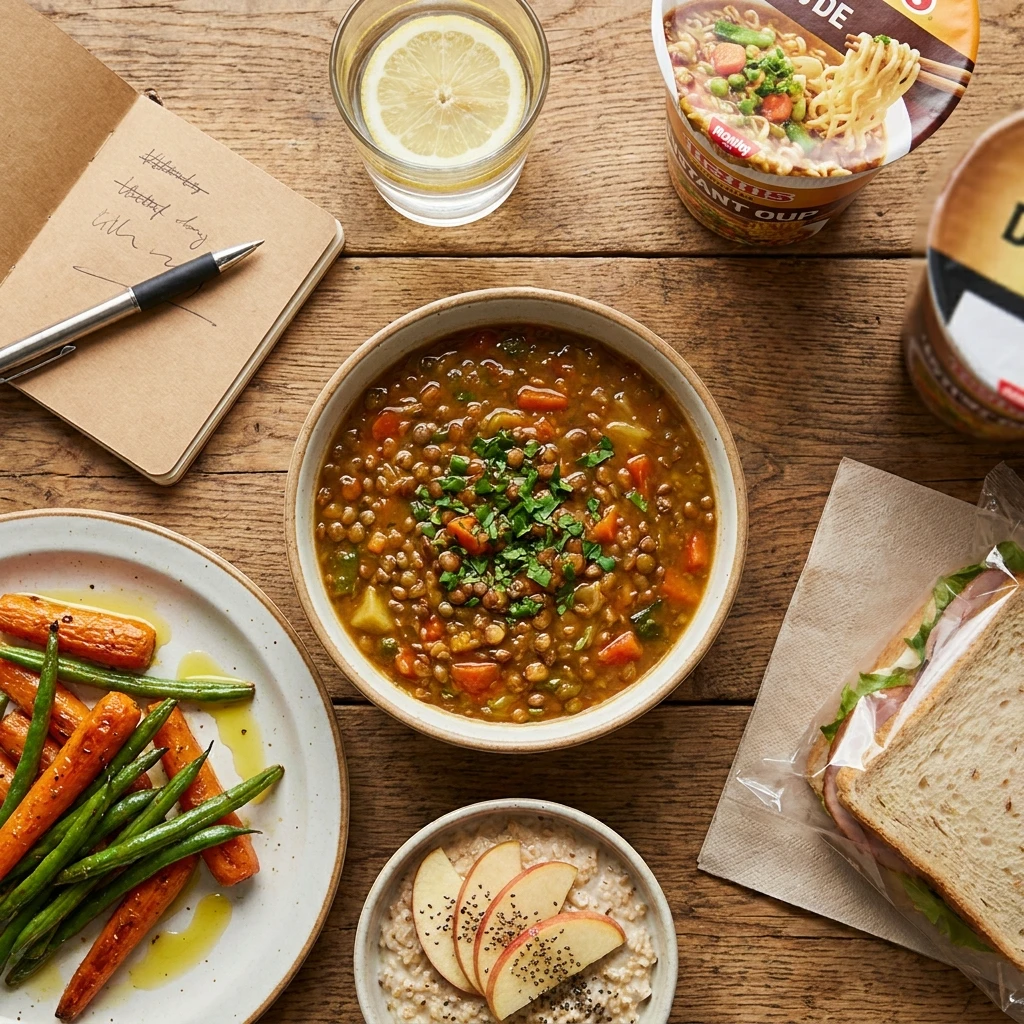
Eating for a smaller waist means a modest caloric deficit built from fiber-rich whole foods, enough protein and healthy fats, with portion control you can live with. Clean eating alone isn’t enough if the total is still more than you burn.
Several women in that Reddit thread said they ate “pretty clean” and only saw their waist move once they checked how much they were eating. Healthy food still has calories.
Fiber deserves special mention. In the five-year IRAS Family Study, every extra 10 grams of soluble fiber a day was linked to a 3.7% slower rate of visceral fat gain, independent of BMI changes.
That’s an association, not proof, but it lines up with fiber’s role in gut health and fullness. Oats, beans, lentils, apples and chia are easy soluble-fiber sources (just remember to add them gradually).
What about intermittent fasting? A 2026 network meta-analysis in Nutrition Reviews found time-restricted eating and the 5:2 diet reduced visceral fat compared with no diet change.
But when time-restricted eating was compared with plain calorie restriction, its advantage was small and not statistically significant, and the authors called the advantages over calorie restriction limited. Fasting works when it helps you eat less. It isn’t a special belly-fat switch.
And protein? It’s important for keeping muscle, but it isn’t magic for the waist. In a six-month trial in women aged 65 and over, doubling protein intake on a low-GI diet did not shrink waist size more than standard protein. Healthy fats aren’t the enemy either. Olive oil, nuts, seeds, avocado and oily fish help keep meals satisfying.
Simple fat loss tips that fit a real week:
- Build plates around protein and plants: A palm-sized portion of protein, half a plate of vegetables, then a fist of whole grains or starchy veg.
- Use portion control, not restriction: Smaller plates and serving once from the kitchen beat banning foods.
- Swap refined carbs for fibrous ones: Oats instead of sugary cereal, beans in soups, whole fruit instead of juice.
- Keep alcohol occasional: It adds calories without filling you up, which makes a gentle deficit harder to hold.
For a full eating plan, see our sustainable flat stomach diet, or try weight loss without counting calories if tracking isn’t for you.
Sleep And Stress: The Waistline Levers Most Women Skip
Sleep and stress affect your waist more than most women expect: short sleep was linked to more visceral fat gain over five years in younger adults, and women who store fat centrally released more cortisol under stress. Neither is destiny, but both are worth fixing.
In the IRAS sleep analysis, adults under 40 who slept five hours or less gained more visceral and subcutaneous fat over five years than those sleeping six to seven hours. The study reported that link for the under-40 group, so treat it as a clue for midlife, not a rule.
A separate study found that premenopausal women with more central fat secreted more cortisol in response to lab stress tests and reported more chronic stress. Both are associations, so they can’t prove cause. Still, they suggest stress reduction and a protected bedtime earn a place in your plan. Read more in cortisol and belly fat.
Is Pilates For Core Worth It?
Pilates is worth it for core strength, control and posture, and it modestly helps fat loss. In a meta-analysis of 11 trials, Pilates reduced body weight and body fat percentage, but it didn’t significantly change waist circumference on its own.
That 2021 meta-analysis found an average body fat drop of about 4 percentage points. One 51-year-old in the Reddit thread said she finally saw flat abs after adding Pilates, an hour of walking a day, more sleep and more protein. Notice it was the combination, not one class. See the benefits of Pilates for fat loss in a starter plan.
Want a simple plan you’ll actually keep? Our free PDF, 10 Actions That Support Permanent Weight Loss, turns the research into ten small habits. No restriction plans. No guilt. Get the free guide here.
Expert Commentary: What The Research Actually Shows
The research shows that midlife belly changes are real, measurable and mostly about where fat is stored, not just how much. It also shows that the tools that work are unglamorous: steady exercise, a modest deficit, fiber, sleep and time.
The Pennington researchers put it plainly in their conclusion (SAT is fat under the skin, VAT is visceral fat): “Middle-aged women gained SAT with age, whereas menopause per se was associated with an increase in total body fat and VAT.”
In plain English, getting older adds fat under the skin, and menopause adds fat deep inside. That’s why the advice that worked at 30 can feel like it stopped working at 48.
The ab trial found “no significant effect of abdominal exercises” on body fat or waist measurements, and the 2026 review concluded that every exercise type reduced visceral fat. Together they point one way: train your abs for strength and posture, and train your whole body, in a gentle deficit, for belly fat reduction.
The Contrarian Take: Your Belly Problem Might Not Be A Fat Problem
Many “belly fat” complaints after 40 are only partly fat. Bloat and a tired, stretched core often explain the part that won’t budge, which is why women keep dieting harder and still don’t see the change they want.
Think about the woman with a BMI of 20.5 and a lower-belly pooch. More dieting is unlikely to be her answer. She may be looking at a normal curve, daily bloat, a pelvic tilt or all three. Another woman in the thread said the only time she’d had a truly flat stomach was when her body fat dropped below what was healthy for her age. That’s worth hearing.
If you treat a bloat problem with crunches, or a core problem with calorie cuts, you’ll work hard and see little. The B.F.C. Belly Check exists so your effort goes where it pays off.
Your 4-Week B.F.C. Starter Plan
A good four-week start is to fix bloat triggers first, then add structured exercise and food changes, then build core control. Measure your waist weekly at the same time of day, because that tracks progress better than the scale.
| Week | Focus | Daily Movement | Food Focus | Core And Recovery |
|---|---|---|---|---|
| 1 | Bloat | 20-minute walk after one meal | Cut obvious high-salt foods; note bloat by time of day and cycle | Set a fixed bedtime |
| 2 | Fat | Walks plus 2 full-body strength sessions | Protein and vegetables at every meal; +3 to 5 g fiber | Plank on forearms, build hold time slowly |
| 3 | Fat | Add 1 short interval session if joints allow | Portion control at dinner; one soluble-fiber food daily | Dead bugs and bird dogs, slow and controlled |
| 4 | Core | Keep weeks 2 and 3 going | Keep what worked; drop what didn’t | One Pilates class or video; book a physio if you suspect diastasis |
Need a structured lower abs workout to plug into weeks 2 to 4? Try our flat stomach workout plan or the gentler flat stomach exercises for beginners. For general flat-stomach tips beyond the B.F.C. method, our guide on how to get a flat stomach covers the basics.
The Bottom Line
Achieving a flat stomach after 40 isn’t about doing more crunches or eating less and less. It’s about working out what’s actually pushing your belly out. Check for bloat first, then fat, then your core.
Match each one to the fix that works for it: less salt and slower fiber for bloat, a modest deficit plus regular exercise for fat, and deep core and posture work for the rest. Set a realistic target, too: a waist under 35 inches, a belly that feels comfortable and a core that carries you well. That’s your lean body formula.
Your B.F.C. check tells you where to aim. Our free guide helps you stick with it. 10 Actions That Support Permanent Weight Loss is a short PDF of habits you can start this week, built for women whose bodies have changed since their 30s. Send me the free guide.
Glossary Of Key Terms
- Visceral Fat: Fat stored deep in the abdomen around the organs. It’s closely linked to heart disease and type 2 diabetes risk.
- Subcutaneous Fat: The soft fat just under the skin that you can pinch.
- Bloating: A feeling of fullness, pressure or trapped gas in the abdomen, sometimes with visible swelling.
- Caloric Deficit: Eating fewer calories than your body uses, which leads to fat loss over time.
- Spot Reduction: The idea that exercising one body part burns fat from that area. Research doesn’t support it.
- Diastasis Recti: A separation of the two sides of the rectus abdominis muscle, common during and after pregnancy.
- Anterior Pelvic Tilt: A posture where the pelvis tips forward, increasing the lower-back arch and pushing the belly out.
- HIIT: High-intensity interval training, short bursts of hard effort with rest in between.
- MET-Minutes: A way to measure exercise volume that combines intensity and time.
- Soluble Fiber: Fiber that dissolves in water to form a gel, found in oats, beans, lentils and apples.
FAQ
Can You Get A Flat Stomach After 40?
Yes, for most women, though “flat” may look different than it did at 25. Visceral fat tends to rise around menopause, so a modest caloric deficit, regular exercise, enough sleep and bloat control matter more than they used to. A healthy result usually keeps a soft lower-belly curve.
Why Is My Lower Belly Not Flat Even Though I’m Slim?
A lower-belly curve is normal anatomy for many women, and genetics affect where you store fat. Daily bloating, an anterior pelvic tilt or diastasis recti after pregnancy can also push the lower belly out. Run the B.F.C. Belly Check to see which applies to you.
Do Ab Exercises Burn Belly Fat?
No. In a six-week randomized trial, abdominal exercises done five days a week didn’t significantly reduce belly fat or waist size. Ab work builds core strength and posture. Belly fat comes down through whole-body fat loss.
How Do I Know If It’s Bloat Or Fat?
Bloat changes during the day. You’re usually flatter in the morning and bigger after meals or before your period. Fat stays the same size morning and night, and you can often pinch it. If your stomach changes a lot within a day, start with bloat.
What Is The Fastest Way To Reduce Bloating?
Cutting back on salty foods is one of the best-supported changes, since high sodium raised bloating risk by 27% in a controlled trial. Add fiber gradually, eat regular meals and walk after eating. See a doctor if bloating is frequent, new or getting worse.
Is Intermittent Fasting Good For Belly Fat?
It can help if it makes it easier for you to eat less. A 2026 meta-analysis found time-restricted eating and the 5:2 diet reduced visceral fat compared with no change, but the authors found only limited advantages over ordinary calorie restriction.
How Long Does It Take To Get A Flatter Stomach?
Bloat can change within a single day, which is why mornings and evenings look so different. Fat loss from the midsection is slower and builds over weeks to months of consistent exercise and eating habits. Track your waist weekly rather than checking the mirror daily.