
Healthy Eating Habits That Last Start With Adding Good Food, Not Cutting Everything You Love
Michael Pollan
Journalist & author of In Defense Of Food
Eat food. Not too much. Mostly plants.
Summary (TL;DR)
You know what healthy food looks like. You’ve known for years. And yet the week still goes sideways: a good Monday, a hectic Wednesday, and by Friday evening you’re standing at the kitchen counter wondering what happened.
That isn’t a knowledge problem, and it isn’t a character flaw. A popular r/loseit post came from someone who yo-yo dieted for a decade before realizing the goal is “not just to get healthy but to stay healthy.” Another, with more than 8,000 upvotes, asked what many women wonder: why can I eat balanced meals all day and then lose it in the evening?
This guide answers both: 10 research-backed healthy eating habits, a simple method for making them stick, and an honest look at why “clean” food rules and evening willpower battles backfire. No crash diets. No food guilt.
Medical & Referral Disclaimer
This article is for informational and educational purposes only. It is not a substitute for professional medical advice, diagnosis or treatment. Always consult your physician or a qualified health provider before starting any new diet or exercise program, especially if you are pregnant, managing a health condition, taking medication or have a history of disordered eating.
Key Takeaways
- Healthy eating habits work best when you add good food first instead of banning foods you enjoy.
- Build most meals around the half-plant plate: half vegetables and fruit, a quarter whole grains, a quarter protein.
- Ultra-processed diets led people to eat about 500 more calories a day in a controlled NIH trial.
- Eating while distracted is linked with eating more, both at the meal and later on.
- Expect new habits to take around two months, and don’t quit over one off day.
What Are Healthy Eating Habits?
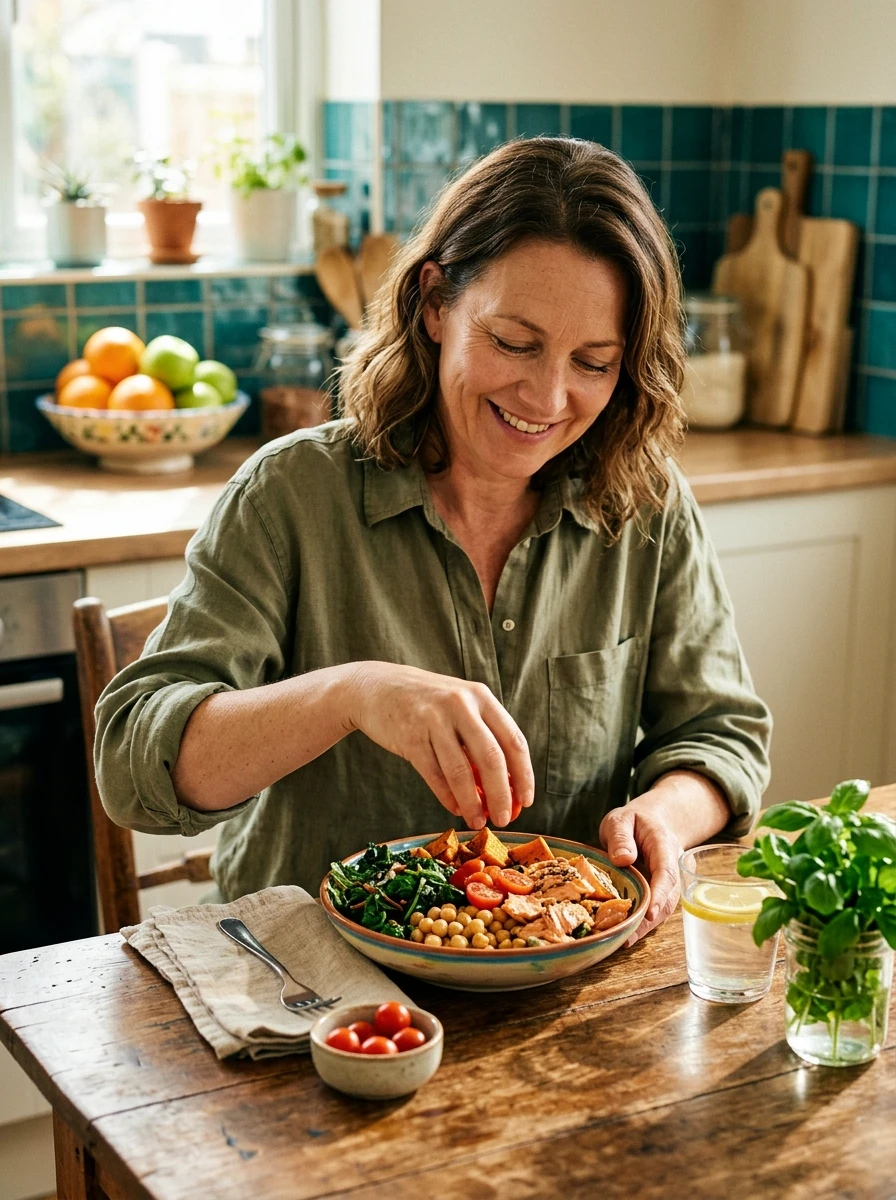
Healthy eating habits are the food choices you repeat so often they become automatic, like filling half your plate with plants or eating protein at breakfast. They matter more than any single “perfect” meal, because what you do most days is what shapes your long-term health.
A diet is something you go on. A habit is something you just do, like brushing your teeth. That’s why the best healthy eating habits feel almost boring. They’re small, and they survive a busy week.
They’re also personal. Your body is pretty good at telling you what works. A meal that leaves you energized for hours is useful information. So is one that leaves you sluggish and hungry an hour later. Paying attention to these cues is the start of a healthy relationship with food, and it beats copying a plan written for someone else’s life.
Why Generic Healthy Eating Advice Misses Women
Generic advice misses women because women’s nutrient needs change with life stage. A balanced diet for women at 35 isn’t quite the same as one at 55: iron needs drop sharply after 50, while calcium needs go up.
According to the NIH Office of Dietary Supplements, women aged 19 to 50 need 18 mg of iron a day, more than double the 8 mg men need. After 50, that falls to 8 mg. Calcium needs move the other way, rising from 1,000 mg to 1,200 mg a day for women 51 to 70.
So if you’re in your 40s or heading into perimenopause, the habits that served you at 30 may need a small update. For a deeper dive, see our guide to the best diet for women over 40.
| Nutrient | Women 19 To 50 | Women 51 And Over | Easy Food Sources |
|---|---|---|---|
| Iron | 18 mg a day | 8 mg a day | Beans, lentils, lean red meat, spinach, fortified cereals |
| Calcium | 1,000 mg a day | 1,200 mg a day (51 to 70) | Yogurt, milk, cheese, fortified plant milks, canned salmon with bones |
| Protein | At least 0.8 g per kg of body weight | At least 0.8 g per kg of body weight | Eggs, fish, poultry, Greek yogurt, tofu, beans |
| Fiber | 25 to 35 g a day | 25 to 35 g a day | Vegetables, fruit, oats, whole grains, beans |
| Added sugars | Daily Value of 50 g (on 2,000 calories) | Daily Value of 50 g (on 2,000 calories) | Check the “Includes Added Sugars” line on labels |
Protein follows the National Academy of Medicine minimum, fiber follows Harvard’s Nutrition Source, and added sugars follow the FDA label.
The A.D.D. Method: Add, Don’t Delete
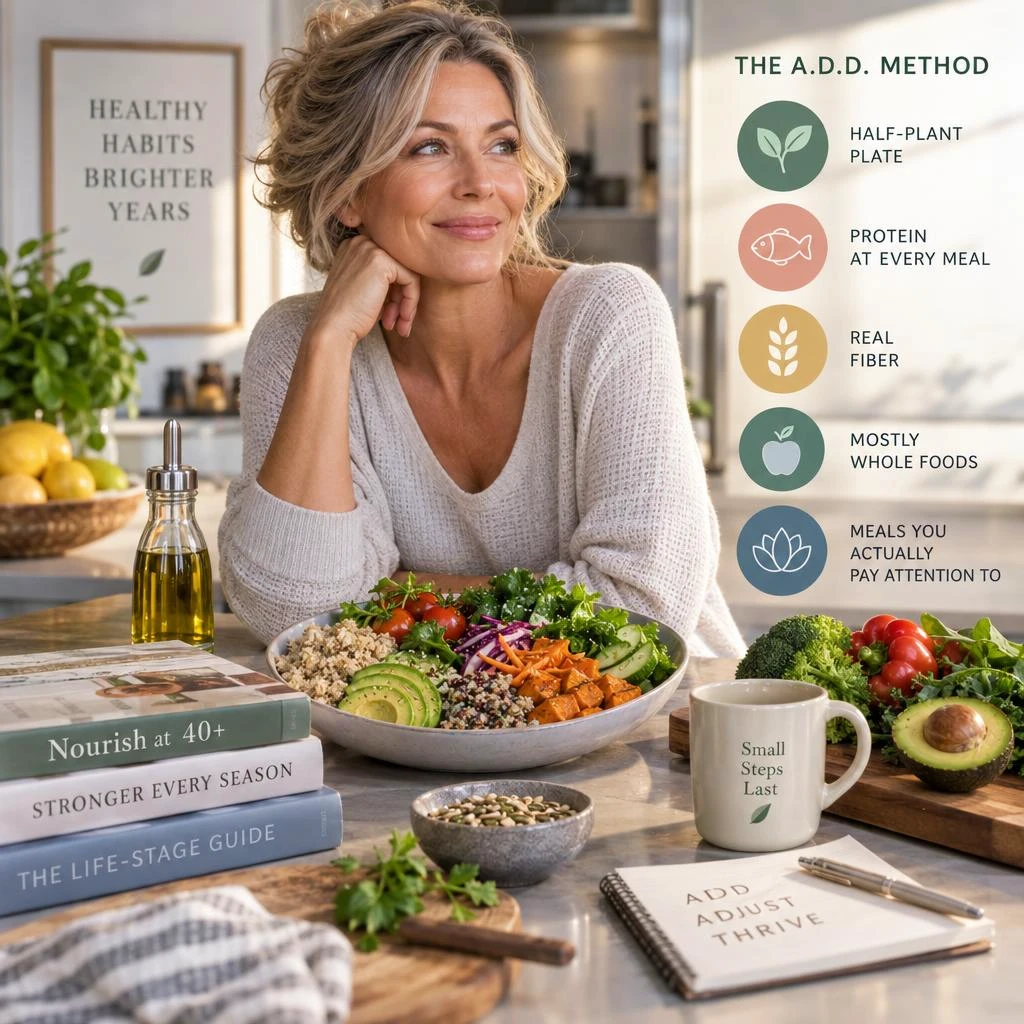
The A.D.D. Method means you add one healthy food or habit before you remove anything. Adding feels like a win, not a loss, so it’s easier to repeat until it becomes automatic. Cutting can wait, and often it happens on its own.
Most diets start with a list of banned foods. That’s backwards. Bans feel like loss, and loss makes Friday night feel like a fight you’re bound to lose. The A.D.D. Method flips the order, and healthy bodies already point this way.
The American Heart Association talks about making small, simple changes to your overall eating pattern, such as adding beans to dishes to bulk up protein and fiber. Kaiser Permanente advises starting slowly, because small changes are easier to make than big ones.
How long does it take? In the UCL study, a new behavior took an average of 66 days to become automatic, and missing one opportunity didn’t significantly affect the process. One takeaway pizza doesn’t reset the clock.
| Instead Of Cutting... | Add This First | Why It Helps |
|---|---|---|
| All snacks | Fruit with yogurt or a handful of nuts | Gives you a go-to option, so you’re not relying on restraint |
| Carbs | Half a plate of vegetables at dinner | Fills the plate with fiber before you even think about portions |
| Late-night eating | A protein-rich breakfast | Linked with less evening snacking in a small trial (see below) |
| Takeout | One simple home-cooked dinner a week | Cooking at home gives you control over ingredients and portions |
10 Healthy Eating Habits That Actually Stick
The 10 healthy eating habits that stick best are simple to repeat: a half-plant plate, protein at every meal, real fiber, mostly whole foods, label checks, screen-free meals, livable portions, fermented foods, enough sleep and joyful shared meals.
You don’t need all 10 this week. Pick one, run it through the A.D.D. Method, and add the next when the first feels automatic.
1. Build A Half-Plant Plate
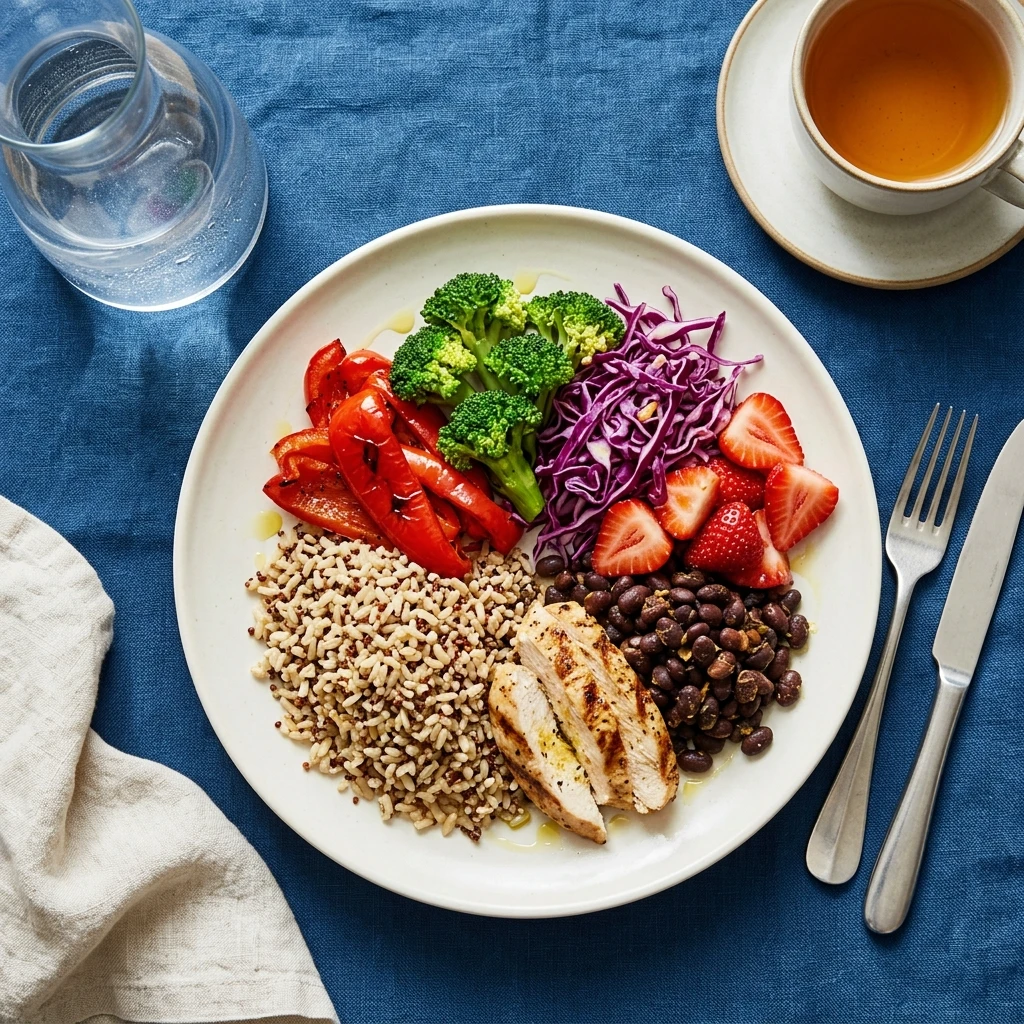
A half-plant plate means vegetables and fruit fill half of your plate at most meals. It’s the simplest visual guide to a balanced diet for women, and it quietly crowds out less nutritious food without any banning.
Harvard’s Healthy Eating Plate sets it out plainly. Here’s what a well-rounded meal looks like:
- Vegetables and fruit: half your plate. Go for color and variety.
- Whole grains: a quarter of your plate, like brown rice, quinoa or whole-wheat pasta.
- Healthy protein: a quarter of your plate, like fish, poultry, beans or nuts. Limit red meat and avoid processed meats.
- Healthy fats: plant oils like olive oil, in moderation. Our guide to healthy fats in weight loss explains why they keep you full.
- Drinks: water, coffee or tea instead of sugary drinks.
How much produce is enough? In a large analysis of two US cohorts plus 24 other studies, about five servings a day (two fruit, three vegetables) was linked with the lowest risk of death, with no extra benefit beyond that. It’s observational, but it’s a target you can actually hit.
2. Anchor Every Meal With Protein
Eating protein at every meal can help you feel full. The National Academy of Medicine sets a minimum of 0.8 grams per kilogram of body weight a day, and spreading it across meals makes that easy to reach.
For a 150-pound (68 kg) woman, that minimum is about 54 grams a day. Think eggs or Greek yogurt at breakfast, beans or chicken at lunch, and fish or tofu at dinner. Protein also matters for evening cravings (more below). For a rough calorie anchor, see how many calories you should be eating.
3. Get Your Fiber From Real Food
Real-food fiber from vegetables, fruit, beans and whole grains supports digestive health and keeps meals satisfying. Harvard’s Nutrition Source recommends at least 25 to 35 grams a day, yet most Americans get only about 15.
The A.D.D. Method. Add oats at breakfast, beans to a salad or an apple as a snack. Go up gradually, though, because a sudden jump in fiber can leave you bloated.
4. Choose Mostly Whole Foods Over Ultra-Processed Ones
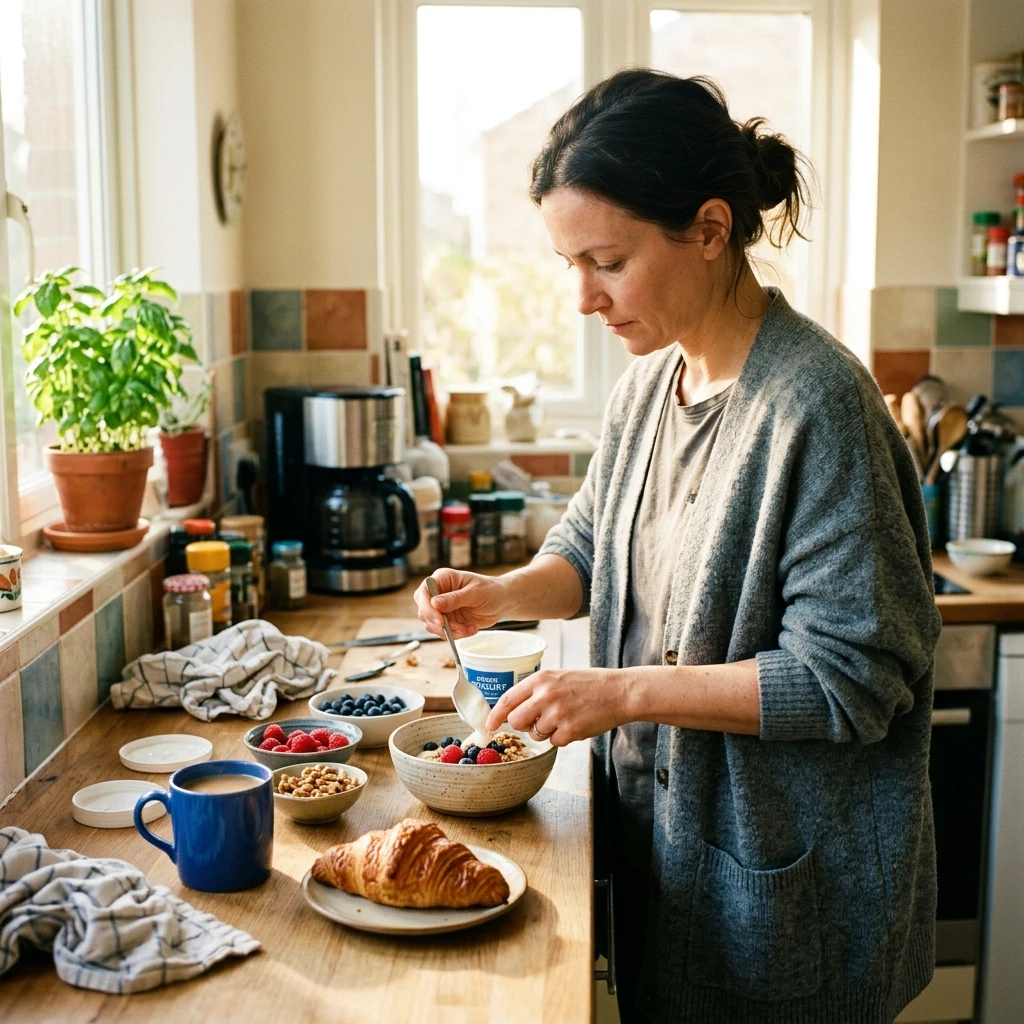
Choosing mostly whole foods helps because ultra-processed foods make it easy to overeat without noticing. In a tightly controlled NIH trial, people ate about 500 more calories a day on an ultra-processed diet than on an unprocessed one.
In the 2019 inpatient study, 20 adults ate each diet for two weeks, with meals matched for calories, sugar, fat, fiber and salt, and ate as much as they liked. They gained about 2 pounds on the ultra-processed diet and lost about the same on the whole-food one.
Mostly is the point. Canned beans, frozen vegetables and plain yogurt are processed, and they’re brilliant. Whole foods nutrition just means most of what you eat looks like where it came from.
Planning meals this way also means less food waste. That’s a win for your budget. And it’s a win for the planet, too. If cost is a worry, our healthy eating on a budget system shows how to make it work.
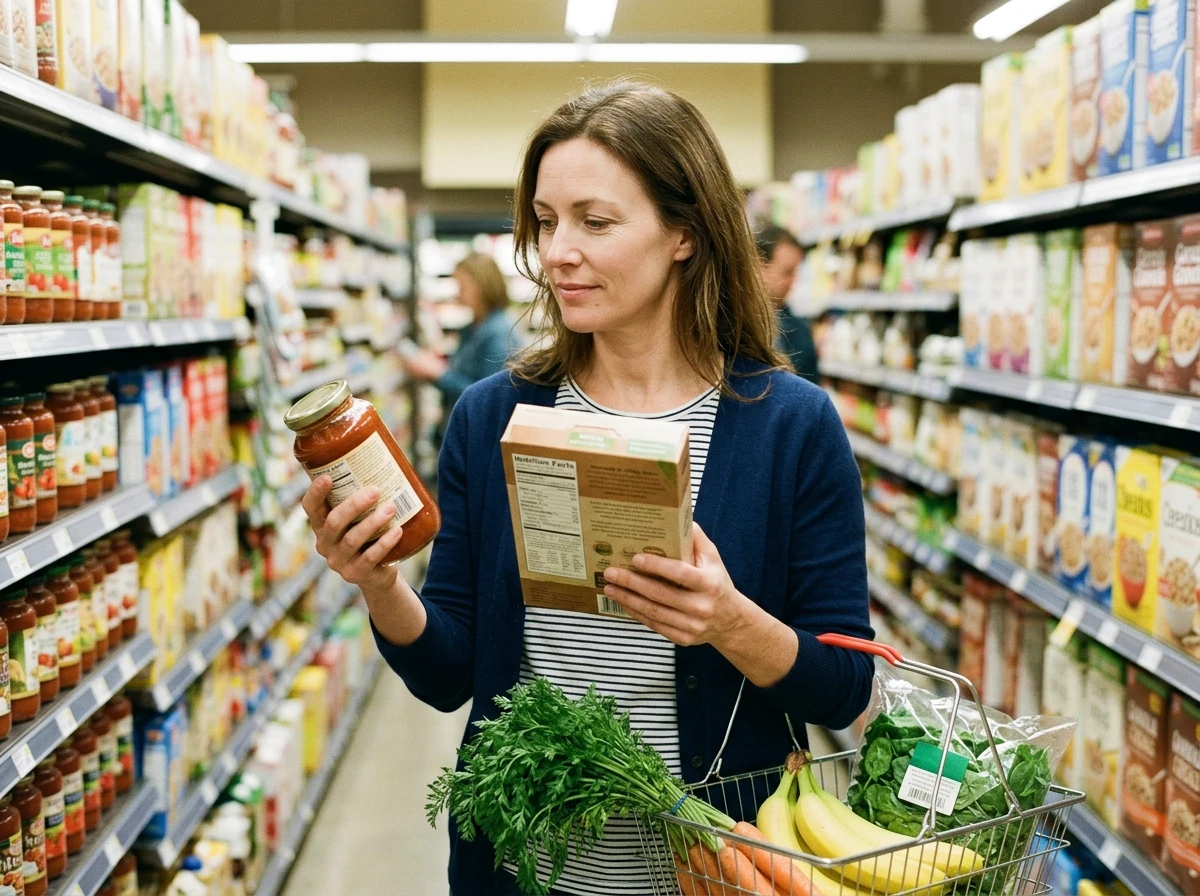
5. Read Labels For Hidden Sugars
Reading labels helps you spot hidden sugars in foods that don’t taste sweet, like sauces, breads and “healthy” granola. The FDA’s Daily Value for added sugars is 50 grams a day on a 2,000-calorie diet, and the label now lists added sugars separately.
Look for the “Includes Added Sugars” line on the Nutrition Facts label. Then scan the ingredients. Sugar goes by many names, including:
- High-fructose corn syrup
- Cane sugar, brown sugar and coconut sugar
- Dextrose, maltose and sucrose
- Honey, maple syrup and agave
- Fruit juice concentrate
You don’t need to fear any of these. Just know where they hide. Drinks are common culprits, as our list of healthy drinks that aren’t actually healthy shows.
6. Eat Without A Screen
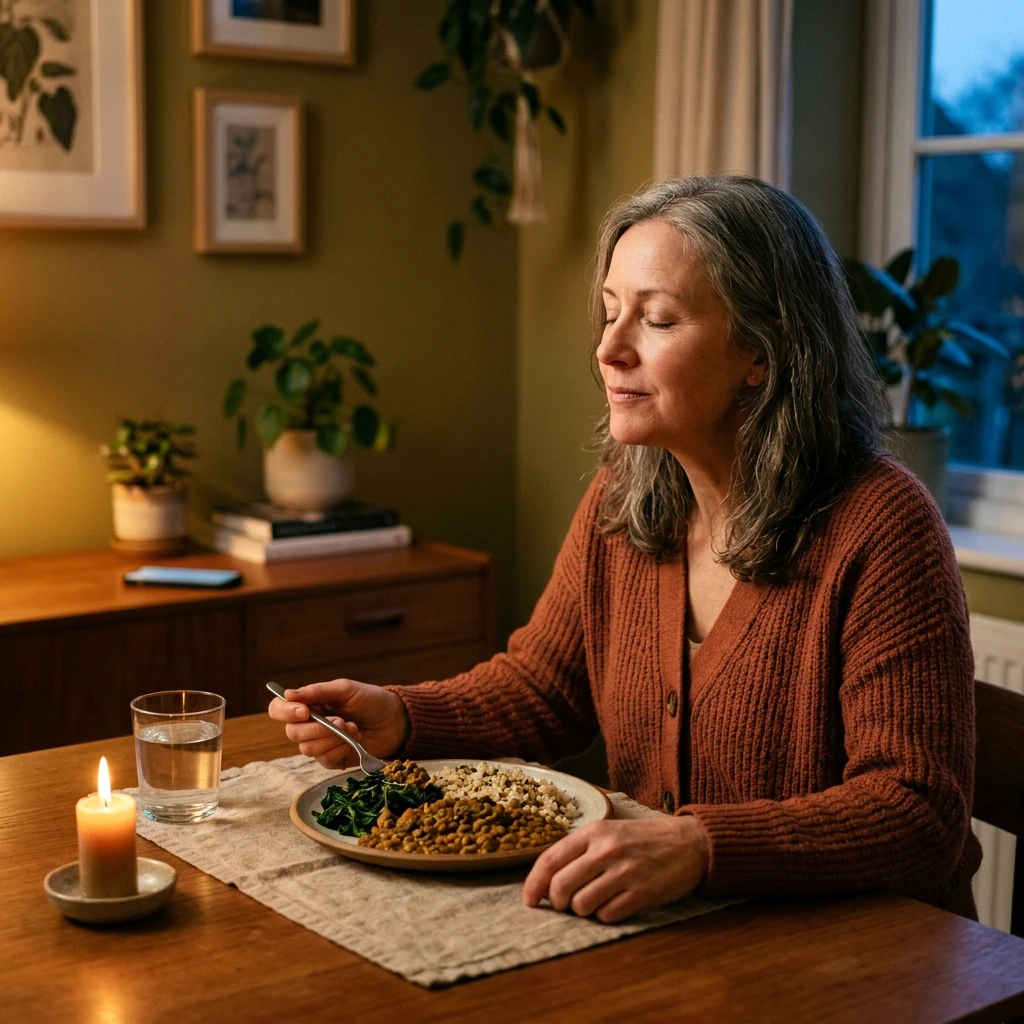
Eating without a screen may help you eat less without trying, partly because you remember the meal better. A meta-analysis of 24 studies linked distracted eating with eating more at the meal, and even more later on.
In the 2013 review, distraction had a moderate effect on intake at the meal and a bigger one at the next meal, while remembering what you ate reduced later intake. That’s mindful eating practices in a nutshell. So put your phone away and pay attention to eating.
Start with one mindful mealtime a day, screen-free. If stress or emotions drive your eating, our guide to using mindfulness to break the cycle of emotional eating goes deeper.
7. Use Portions You Can Live With
Livable portions are portions that leave you satisfied, not stuffed and not starving. The plate model does most of the work for you, so you can skip weighing and counting and still keep portions in check.
A few portion control tips that tend to stick:
- Serve, don’t graze: put snacks on a plate or in a bowl instead of eating from the package.
- Plate vegetables first: fill half the plate before you add anything else.
- Pause before seconds: wait 10 minutes and check whether you’re still hungry.
- Prep once, eat twice: meal prep strategies like a Sunday double batch make healthy meal planning easier, and our 7-day meal plan with 60 minutes of prep lays it out.
8. Add Fermented Foods For Your Gut
Fermented foods like yogurt, kefir, sauerkraut and kimchi are an easy way to support digestive health. In a 17-week randomized study, a diet high in fermented foods steadily increased gut microbiome diversity and lowered inflammatory markers.
The 2021 study in Cell had just 18 people per group, so it’s promising, not final. Still, a spoonful of sauerkraut at lunch is a low-effort A.D.D. move.
9. Protect Your Sleep To Protect Your Appetite
Protecting your sleep is a healthy eating habit, because short sleep makes you hungrier. A meta-analysis found people ate an extra 385 calories a day after partial sleep deprivation, with no matching increase in the calories they burned.
That’s from an analysis of 11 sleep studies, where tired people also ate more fat and less protein. If your eating falls apart after rough nights, the fix may be in the bedroom, not the fridge. Our guide on how to stop being tired all the time covers the basics, and these energy-boosting foods help on the days you’re running low.
10. Keep Food Social And Joyful
Joyful, shared meals belong in healthy eating. Food connects us to family, culture and celebration, and a habit that makes room for birthdays and traditions is one you’ll actually keep.
Cook a family recipe. Try a new spice. Get the kids involved in making dinner, which can make them curious about what’s on the plate. A relaxed food atmosphere matters for your healthy relationship with food as much as any nutrient. One healthy cooking tip worth keeping: make the vegetable side the dish you’re proudest of.
Want the habits behind lasting weight loss in one place? Grab the free PDF guide, 10 Actions That Support Permanent Weight Loss. No restriction plans. No guilt. Just what actually works for real women with real lives.
Clean Eating, Intuitive Eating Or Flexible Dieting: Which Builds Better Habits?
Flexible approaches tend to build better habits than rigid ones. Intuitive eating is linked with less disordered eating and better body image, flexible dieting with lower BMI and more weight loss success, and rigid “clean” rules with a higher risk of all-or-nothing cycles.
| Approach | Core Idea | What Research Links It With | Watch Out For |
|---|---|---|---|
| Clean eating | Eat “pure,” unprocessed food and avoid “unclean” food | Definitions vary. In a survey of 1,266 young people, 30% defined it partly by avoiding or restricting food | Moral rules, guilt and food fear |
| Intuitive eating | Eat in response to hunger and fullness, without dieting rules | Less eating pathology and better body image in a 97-study meta-analysis (mostly cross-sectional) | Can be hard to start after years of dieting |
| Flexible dieting | Guidelines with wiggle room, no forbidden foods | Lower BMI, fewer binges and more weight loss success than rigid rules, which are linked with more binge eating | Still needs some structure |

Our take: borrow from intuitive eating and flexible dieting together. Listen to your hunger, keep a few simple guidelines like the half-plant plate, and drop the forbidden-foods list.
That’s what diet culture recovery looks like day to day. For the gentler side of clean eating habits, our clean eating habits that actually transform your health keep the good bits without the rules.
Expert Commentary: What The Research Actually Shows
Not all of this evidence is equally strong. The NIH ultra-processed food trial was a randomized inpatient study, about as controlled as nutrition science gets, though it involved only 20 people. The sleep and mindful eating findings come from meta-analyses that pool many trials.
Other findings are earlier-stage. The fermented food study was small, the fruit and vegetable data are observational, and the intuitive eating meta-analysis was mostly cross-sectional, so it can’t say which comes first, intuitive eating or feeling better.
What lines up is the pattern, because no single superfood decides your metabolic health: mostly whole foods, plenty of plants, enough protein and fiber, attention at meals and decent sleep. Not exciting. Just consistent, which is why these healthy living tips are worth building into your daily wellness habits.
The Contrarian Take: Strict “Clean” Rules Often Backfire, And Evenings Aren’t A Willpower Problem
Two popular beliefs keep women stuck: the healthiest eater is the strictest one, and evening overeating means you need more discipline. The research points elsewhere on both.
How Strict Food Rules Can Feed The All-Or-Nothing Cycle
Strict food rules tend to go with more binge eating, while flexible control is linked with lower BMI and better weight loss success. A rule you can’t bend tends to break, and then the whole day goes with it.
In a large German study of more than 54,000 people in a weight loss program, rigid control of eating went with higher body weight and more frequent, more severe binge episodes. Flexible control went with lower BMI, fewer binges and a higher chance of losing weight over a year. These are associations, not proof of cause.
“Clean” eating can slide into rigid territory fast. In a 2020 survey of 1,266 US teens and young adults, 30% included avoidance and restriction in their definition of clean eating. The researchers warned some definitions may reflect disordered eating. Sustainable weight loss needs room for a slice of birthday cake.
Why Evening Overeating Can Start At Breakfast
Evening overeating often comes from an under-fueled day, not a lack of discipline. In a small trial, young women who usually skipped breakfast snacked less on high-fat foods in the evening after a 35-gram protein breakfast, but not after a lower-protein one.
The 2013 study involved 20 women averaging 19 years old, so treat it as a clue, not a rule. But if breakfast is coffee and lunch is a small salad, your body has a lot of catching up to do by evening.
Try this for a week: a protein-rich breakfast, a real lunch and one planned afternoon snack. Healthy snacks for women can be simple, like Greek yogurt with berries or an apple with peanut butter.
Our list of healthy snacks for weight management has more. If you’ve seen “blood sugar balance” all over social media, this is the practical, food-first version of that idea.
What Is The 3-3-3 Rule For Healthy Eating?
The 3-3-3 rule isn’t an official healthy eating guideline. Different websites use the name for different things, from meal timing to grocery lists, and none of the versions come from a health authority’s dietary guidance.
If a rule of threes helps you plan, fine. Just don’t treat it as science. The half-plant plate is a better-tested shortcut.
Your First 4 Weeks Of Healthy Eating Habits
Here’s a simple A.D.D. starter plan. Add one new focus a week and keep the earlier ones going. Habits take around two months to feel automatic, so these four weeks are the runway, not the finish line.
- Week 1, Add Plants: make one meal a day a half-plant plate.
- Week 2, Add Protein At Breakfast: eggs, Greek yogurt or tofu.
- Week 3, Add A Screen-Free Meal: eat dinner at the table with your phone in another room.
- Week 4, Add A Fermented Food And A Label Check: try one fermented food and check added sugars on two regular buys.
Planning is a top-notch move here: stick the week’s habit on the fridge so you don’t have to remember it. If a week goes sideways, pick it back up the next day. Once the new lifestyle habits feel settled, our guide to the worst eating habits for metabolism covers the patterns worth phasing out next.
The Bottom Line
Healthy eating habits aren’t about willpower, perfect meals or banned foods. They’re a few small things you repeat until they’re automatic: a half-plant plate, protein at every meal, real fiber, mostly whole foods and meals you actually pay attention to.
Start with the A.D.D. Method. Add one habit this week, give it time, and let the less helpful stuff fade on its own. Your needs will shift with age, so revisit the life-stage table every few years.
Ready to turn one good week into a lifelong routine? Get the free 10 Actions That Support Permanent Weight Loss guide and pair it with the A.D.D. Method. It’s the same no-guilt, add-first approach in 10 actions you can start tonight.
Glossary Of Key Terms
- A.D.D. Method: Add, Don’t Delete. A habit-building approach where you add one healthy food or behavior before removing anything.
- Bio-Individuality: The idea that nutritional needs differ from person to person.
- Fermented Foods: Foods made with live microbes, such as yogurt, kefir, sauerkraut and kimchi.
- Flexible Dieting: Eating with guidelines but no forbidden foods.
- Hidden Sugars: Added sugars in foods that don’t taste obviously sweet, often listed under other names on labels.
- Intuitive Eating: Eating in response to internal hunger and fullness cues rather than external diet rules.
- Mindful Eating: Paying full attention to the experience of eating, including taste, smell and fullness.
- Nutrient-Dense Foods: Foods with a high amount of vitamins, minerals, fiber or protein relative to their calories.
- Portion Control: Serving amounts that leave you satisfied, not stuffed.
- Ultra-Processed Foods: Industrial foods built mostly from extracted ingredients and additives, like many packaged snacks. The opposite of whole food nutrition.
FAQ
What Are The 10 Healthy Eating Habits?
Build a half-plant plate, eat protein at every meal, get fiber from real food, choose mostly whole foods, read labels for hidden sugars, eat without a screen, use livable portions, add fermented foods, protect your sleep and keep meals joyful.
How Long Does It Take To Build A Healthy Eating Habit?
In UCL research, a new habit took an average of 66 days to become automatic, and missing one day didn’t significantly affect the process. Plan for about two months per habit.
How Can I Start Eating Healthy Without Dieting?
Use the A.D.D. Method: add one healthy habit before you cut anything. Start with a half-plant plate at one meal a day, then add a protein breakfast. Small additions are easier to keep than big bans.
Is Clean Eating Healthy?
It depends on the definition. Eating mostly whole foods is healthy. But 30% of young people in one survey defined clean eating partly through restriction, and rigid food rules are linked with more binge eating.
Why Do I Eat Well All Day And Then Overeat At Night?
Sometimes because you under-ate earlier. In a small trial, young women who usually skipped breakfast snacked less on high-fat foods in the evening after a protein-rich breakfast. Short sleep raises intake too.
Is Intuitive Eating Good For Weight Loss?
Most intuitive eating research looks at eating behavior and wellbeing rather than weight. A meta-analysis of 97 studies linked it with less disordered eating and better body image. Many women combine it with a few flexible guidelines.
Do Your Nutrition Needs Change After 50?
Yes. According to the NIH, women’s iron needs drop from 18 mg to 8 mg a day after 50, while calcium needs rise from 1,000 mg to 1,200 mg. Protein and fiber stay important at every age.