

The Healthy Eating Benefits No One Warned You About (Especially After 40)
Beyond The Scale: How Healthy Eating Benefits Your Fitness Journey
KARL LAGERFELD
German fashion designer
Dieting is the only game where you win when you lose!
Summary (TL;DR)
After 40, declining oestrogen changes how your body stores fat, handles blood sugar, maintains muscle, and processes nutrients. The healthy eating benefits that matter most at this stage go far beyond the scale — they include hormonal balance, gut health, cognitive clarity, and metabolic resilience. This guide explains exactly what shifts biologically after 40, which foods directly counter those shifts, and what a practical 40+ nutrition reset actually looks like.
Did you know skipping breakfast can increase your risk of type 2 diabetes by 21%? This shows how big a role our food choices play in our health.
What we eat affects how we feel in our bodies more than we think. Harvard Health Letter found that eating breakfast regularly can lower the risk of obesity, diabetes, and heart disease. These findings show that healthy eating benefits are much more than just losing weight.
Your journey to wellness begins with knowing that nutrition is key to fitness and preventing disease. A balanced diet gives your body the energy and nutrients it needs for daily activities and exercise. By making better food choices and moving more, you can greatly reduce your risk of serious health problems.
The benefits of healthy eating spread throughout your body. Your energy goes up, your physical performance gets better, and your life quality improves. This shows that food is truly medicine, helping you live an active and healthy life for the long term.
Medical & Referral Disclaimer
This article is for informational and educational purposes only. It is not a substitute for professional medical advice, diagnosis, or treatment. Always consult your physician or a qualified health provider before starting any new diet or exercise programme.
Key Takeaways
- Healthy eating after 40 is fundamentally different. Oestrogen decline reshapes fat storage, insulin sensitivity, gut function, and brain chemistry — meaning generic nutrition advice often misses the mark for this specific life stage.
- Protein needs increase significantly. Research shows women over 40 need 1.0–1.2g of protein per kg of body weight daily — considerably more than the standard 0.8g RDA — to preserve muscle and support metabolism through oestrogen decline.
- Your gut directly regulates your hormones. The oestrobolome — a specific subset of gut bacteria — controls how your body recycles oestrogen, and what you eat determines whether it works for or against you.
- Blood sugar stability is the hidden energy key. Hormonal changes after menopause amplify post-meal glucose spikes, making blood sugar management one of the most impactful dietary levers available to women over 40.
- The Mediterranean diet has specific evidence for this life stage. A 2024 cross-sectional study found women with higher adherence to a Mediterranean-style diet reported significantly fewer and less severe menopausal symptoms, including better mood scores and fewer cognitive complaints.
- “Eat less, move more” is the wrong advice after 40. Severe calorie restriction elevates cortisol, accelerates muscle loss, and worsens the abdominal fat accumulation driven by oestrogen decline. Nutrient density beats calorie restriction every time at this stage.
The Body Shift Framework: Why Healthy Eating Works Differently After 40
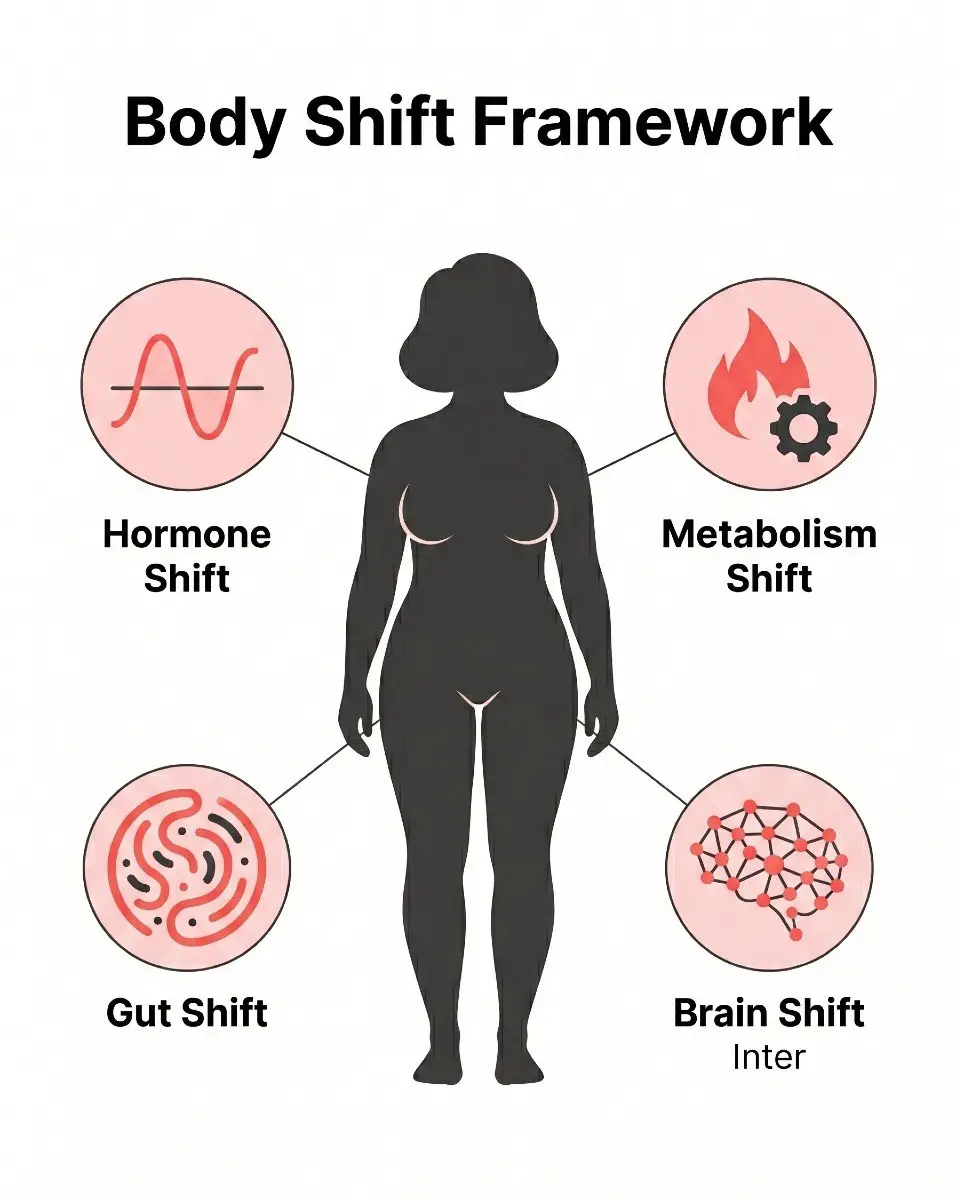
After 40, four biological shifts change how food functions in your body — your hormones, your metabolism, your gut, and your brain all operate differently. Eating to support these specific shifts, rather than following generic nutrition advice, is what produces real results at this stage of life.
“I don’t know what to eat anymore.”
I hear some version of that sentence from women almost every week. And they’re not being dramatic — they genuinely don’t know. Because the eating advice most of us have followed for decades was written for a different body.
The food pyramid, the calorie calculators, the “eat less, move more” mantras: none of it was designed around oestrogen decline, shifting insulin sensitivity, or the gut microbiome restructuring that comes with perimenopause. When you say you’re eating well and still gaining weight, still exhausted, still foggy — you’re not failing at healthy eating. You’re following advice that was never built for your biology.
A 2024 review published in the Nutrients journal confirmed it directly: the decline in oestrogen during perimenopause and menopause is directly linked to increased prevalence of obesity, metabolic syndrome, cardiovascular disease, and osteoporosis — and that targeted nutrition intervention can meaningfully reduce risk across all of them. The research exists. Most of us just haven’t been pointed to it.
Understanding the four biological shifts that change after 40 is the foundation for everything else:
| The Shift | What Changes | What Food Can Do |
|---|---|---|
| Hormone Shift | Oestrogen decline alters fat distribution, mood, and chronic inflammation levels | Phytoestrogens, anti-inflammatory omega-3s, and fibre support hormonal balance and the oestrobolome |
| Metabolism Shift | Insulin resistance rises; muscle mass declines faster; fat redistribution to the abdomen accelerates | Higher protein intake, complex carbohydrates, and strategic meal timing counter both processes |
| Gut Shift | Microbiome diversity declines, impairing oestrogen recycling, immune function, and appetite regulation | Fibre, fermented foods, and polyphenols rebuild microbiome diversity and support gut–hormone signalling |
| Brain Shift | Oestrogen withdrawal affects serotonin, dopamine production, and hippocampal memory function | Omega-3 fatty acids, B vitamins, and antioxidants support neurotransmitter production and reduce neuroinflammation |
These four shifts are interconnected — which means the right food choices can address all of them simultaneously. The sections below take each one apart.
Benefit #1: You Support Your Hormones, Not Fight Them
Most women approach healthy eating in their 40s as a weight loss strategy. Understandable — but it misses the deeper benefit. The most powerful thing food does after 40 isn’t reduce your calorie intake. It helps your endocrine system manage a transition it’s already going through, whether you’re paying attention to nutrition or not.
How Food Talks To Your Hormones After 40
Every meal sends hormonal signals, and after 40, those signals carry more weight than ever. Processed sugars spike cortisol, phytoestrogen-rich foods help buffer the symptoms of oestrogen decline, and anti-inflammatory omega-3s directly reduce the chronic low-grade inflammation that intensifies hormonal symptoms.
Cortisol is one of the biggest wild cards here. When you under-eat — or skip meals, crash-diet, or eat erratically — cortisol rises to compensate for the perceived energy deficit. Elevated cortisol directly promotes abdominal fat storage. So the painful irony of severe calorie restriction in your 40s is that it can worsen exactly the symptom you’re trying to fix. The goal isn’t to eat less. It’s to eat strategically.
Phytoestrogens — the plant-based compounds found in flaxseeds, edamame, lentils, and organic soy — have a mild oestrogenic effect that can help buffer the symptomatic impact of declining oestrogen levels. They’re not a replacement, but they’re a meaningful nutritional lever, especially for women who aren’t on HRT or are in the early perimenopausal phase, where symptoms are still variable.
Anti-inflammatory foods matter more now, too. Specifically: omega-3-rich foods (fatty fish, walnuts, chia seeds) and polyphenol-rich foods (berries, dark leafy greens, olive oil, dark chocolate). Oestrogen has a natural anti-inflammatory function in the body.
As it declines, chronic low-grade inflammation rises, contributing to joint pain, fatigue, mood instability, and the increased cardiovascular risk that comes with menopause. Eating to reduce inflammation is essentially compensating, nutritionally, for a protective function your body is losing.

The Oestrogen–Food Connection You Need To Know
Your gut microbiome contains a group of bacteria called the oestrobolome that controls how your body recycles and eliminates oestrogen. Research confirms that the gut microbiota directly regulates oestrogen levels — meaning what you feed your gut determines how well your hormonal system functions.
This is one of the most underreported mechanisms in women’s nutrition, and it has immediate practical implications. The oestrobolome produces an enzyme called beta-glucuronidase that reactivates oestrogen for circulation.
When gut diversity is low — which happens naturally after menopause, and is accelerated by low-fibre diets, antibiotic use, and chronic stress — this process becomes dysregulated. Oestrogen gets either over-eliminated or recirculated at disruptive levels, both of which worsen hormonal symptoms.
A high-fibre diet is the most direct way to feed the diverse bacterial communities that keep the oestrobolome functioning well. Cruciferous vegetables specifically — broccoli, cauliflower, Brussels sprouts, kale — contain indole-3-carbinol (I3C), a compound that supports healthy oestrogen metabolism and is the subject of ongoing research for its role in hormonal balance.
If you’re eating these foods daily, you’re doing more for your hormonal health than most supplements available over the counter.
Benefit #2: Your Metabolism Gets A Lifeline
The frustration of “I’m eating the same as always and gaining weight” has a biological explanation — two of them, actually. After 40, accelerating muscle loss and rising insulin resistance quietly combine to make the calorie-counting approach progressively less effective. Neither of these is a willpower problem. Both respond directly to what you eat.
Why Protein Becomes The Most Important Macronutrient After 40
The standard protein recommendation of 0.8g per kg of body weight was not designed for perimenopausal women. Evidence shows women over 40 need 1.0–1.2g per kg daily to counter anabolic resistance — the body’s reduced ability to build and preserve muscle as oestrogen declines.
A clinical trial comparing normal protein intake (0.8g/kg) against moderately higher intake (1.2g/kg) over 12 weeks found that the higher-protein group showed significant improvement in muscle mass composition, reduced visceral fat, and lower waist circumference. For a woman weighing 65kg, hitting 1.2g/kg means roughly 78g of protein daily — approximately a palm-sized serving of lean protein at each meal.
Beyond muscle preservation, adequate protein delivers two additional metabolic benefits. First, it has a substantially higher thermic effect than carbohydrates, meaning your body burns more energy just processing it. Second, protein is the most satiating macronutrient — it reduces the casual between-meal eating that’s easy to miss in high-carb, low-protein diets.
Best protein sources for women over 40: eggs, Greek yoghurt, salmon and other oily fish, chicken breast, lentils, edamame, and cottage cheese. Conveniently, most of these are also rich in the micronutrients — B12, choline, calcium, omega-3s — that become harder to absorb adequately as we age.
Blood Sugar Stability: The Fix For That Constant Energy Crash
Menopause amplifies post-meal blood sugar spikes, and the resulting energy crashes, brain fog, and sugar cravings are not willpower problems — they are metabolic. Stabilising blood sugar through diet is one of the highest-leverage changes a woman over 40 can make for daily energy and long-term health.
Oestrogen plays a direct role in insulin sensitivity. As it declines through perimenopause, cells become less responsive to insulin, causing blood sugar to rise higher after meals and fall more sharply — creating the classic energy roller coaster that many women in their 40s attribute to stress or disrupted sleep, when the food environment is actually the primary trigger.
The ZOE PREDICT study, published in eBioMedicine, found that menopausal status was independently associated with worse postprandial metabolic responses — including higher blood glucose peaks and reduced fat clearance after meals — even after controlling for age and body weight. The metabolic disruption is hormonal, not just lifestyle.
The practical dietary fix: pair every carbohydrate with protein or healthy fat to slow glucose absorption; eat fibre-dense foods first at each meal (vegetables before grains); and reduce ultra-processed foods, which strip the natural fibre that buffers glucose spikes.
These are not exotic changes. There are structural shifts in how you build your plate — and they make a measurable difference within weeks.

Benefit #3: Your Gut Stops Working Against You
Gut microbiome diversity naturally declines after menopause, and a less diverse gut is associated with visceral fat accumulation, higher systemic inflammation, and worse hormonal regulation. Rebuilding microbiome diversity through food is one of the most impactful — and most underrated — healthy eating benefits available after 40.
The Gut-Hormone Axis: Why Your Microbiome Changes After Menopause
The relationship between gut health and hormonal health in postmenopausal women is increasingly well-documented. A 2024 study published in the Microbiome journal found that visceral adiposity in postmenopausal women is directly associated with a pro-inflammatory gut microbiome — meaning the composition of your gut bacteria correlates with dangerous abdominal fat accumulation, not just digestive comfort.
This is a self-reinforcing cycle: declining oestrogen disrupts the gut microbiome, which impairs oestrobolome function, which worsens the hormonal picture, which further disrupts the gut. Diet is the most accessible lever available to interrupt it.
What a gut-supportive diet actually looks like after 40:
- Fibre from diverse sources: Aim for 25–30g daily, from a varied mix of vegetables, legumes, whole grains, and fruit. Variety matters more than volume — different fibre types feed different bacterial strains, and diversity drives diversity.
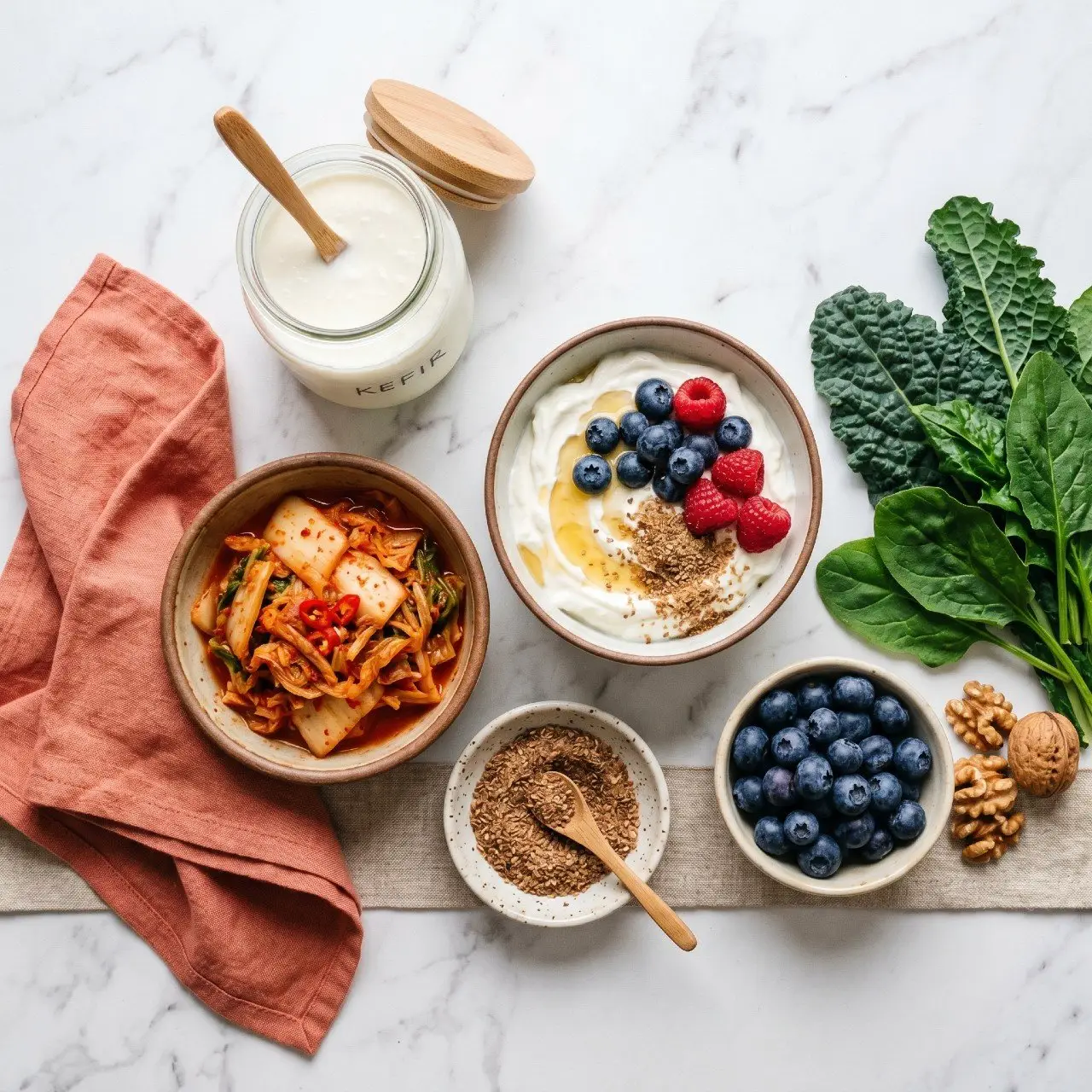
- Fermented foods daily: Natural yoghurt with live cultures, kefir, kimchi, sauerkraut, and miso directly introduce beneficial bacteria. Even small daily servings produce measurable improvements to microbiome composition over weeks.
- Polyphenol-rich foods: Berries, dark chocolate (70%+), green tea, extra virgin olive oil, and red grapes contain compounds that act as prebiotics, selectively feeding beneficial bacteria while suppressing inflammatory strains.
- Limit ultra-processed foods: These are the single greatest disruptor of microbiome balance in the modern diet. Emulsifiers, artificial sweeteners, and refined starches disproportionately affect the bacterial communities responsible for gut barrier integrity and oestrogen metabolism.
The cardiovascular dividend of a high-fibre diet adds further weight: a meta-analysis published in BMC Medicine confirmed that higher dietary fibre intake is significantly associated with reduced cardiovascular disease mortality — a protection that matters increasingly as heart disease risk rises after menopause.
Join Our Mailing List
Join thousands of women inside our community and receive our free guide, 10 Actions That Support Permanent Weight Loss — the exact behavioural shifts that make the difference between a two-week attempt and a lasting transformation.
No restriction plans. No guilt. Just what actually works — for real women with real lives.
Benefit #4: Your Brain Gets Clearer
Brain fog, mood dips, and memory lapses during perimenopause are not just psychological — they have a clear nutritional dimension. Research confirms that a Mediterranean-style diet significantly reduces the severity of these symptoms in perimenopausal and menopausal women.
The Brain Food Connection That Most Women Miss
Oestrogen is neurologically active. It influences serotonin and dopamine production, protects against neuroinflammation, and supports memory systems in the hippocampus.
As it declines, the cognitive and mood symptoms that appear in perimenopause are not coincidental — they are neurochemical consequences of a hormonal withdrawal. And while food cannot replicate oestrogen, it can meaningfully support the systems that oestrogen was helping to maintain.
A 2024 cross-sectional analysis of Australian perimenopausal and menopausal women found that higher adherence to a Mediterranean-style diet was associated with significantly less severe menopausal symptoms, including better mood scores and fewer cognitive complaints.
The European Menopause and Andropause Society (EMAS) has also issued a position statement recommending Mediterranean-style eating for cognitive decline prevention and mood support in perimenopausal women.
The specific brain-supportive foods worth prioritising:
- Oily fish — salmon, mackerel, sardines: Rich in DHA, an omega-3 fatty acid essential for brain cell membrane integrity and consistently associated with lower risk of cognitive decline.
- Eggs: One of the few meaningful dietary sources of choline, a precursor to acetylcholine — the neurotransmitter central to memory and learning.
- Dark leafy greens — spinach, kale, rocket: High in folate and vitamin K, both associated with better cognitive function in ageing research.
- Blueberries and mixed berries: Flavonoids in berries have direct neuroprotective properties, reducing oxidative stress in brain tissue and are associated with improved memory recall in several human studies.
- Walnuts: The only nut with meaningful alpha-linolenic acid (ALA) content, with multiple studies linking regular consumption to better memory performance.

The 40+ Nutrition Reset: What This Looks Like In Practice
You don’t need a perfect diet. You need a better default. The 40+ Nutrition Reset isn’t about restriction — it’s about replacing the generic eating template you’ve been working from with one that’s actually built for how your body functions now.
The gap between knowing what to eat and doing it consistently is where most nutrition plans fall apart. Here are the practical anchors that make the biggest difference, based on the four shifts above:
| Nutrient / Goal | Target For Women Over 40 | Why It Matters At This Stage | Easy Daily Sources |
|---|---|---|---|
| Protein | 1.0–1.2g per kg of body weight | Counters anabolic resistance and muscle loss; supports metabolic rate | Eggs, Greek yoghurt, oily fish, lentils, chicken, cottage cheese |
| Dietary Fibre | 25–30g daily (from varied sources) | Gut diversity, oestrobolome function, blood sugar, cardiovascular protection | Oats, beans, vegetables, berries, flaxseed, wholegrains |
| Omega-3 Fats | 2+ servings of oily fish per week | Brain health, inflammation reduction, cardiovascular and joint protection | Salmon, mackerel, sardines; walnuts and chia for plant-based |
| Calcium | 1,000–1,200mg daily | Bone density declines rapidly after menopause; fracture risk rises | Dairy, fortified plant milk, sardines with bones, tofu, kale |
| Vitamin D | 600–800 IU (supplementation often needed) | Bone health, immune function, mood regulation, calcium absorption | Oily fish, eggs, fortified foods; sunlight (often insufficient alone) |
| B Vitamins | Prioritise B6, B12, and folate | Energy metabolism, mood stability, cognitive function, nerve health | Leafy greens, eggs, meat, legumes, fortified wholegrains |
Making It Work Around Real Life
The biggest barrier to consistent healthy eating isn’t information — it’s decision fatigue. The fewer real-time decisions you have to make about what to eat, the more consistently you eat well. A few structural habits that actually stick:
How To Simplify Healthy Eating
Learn how to make healthy eating simple with these three easy steps! Whether you're just starting or have already established healthy eating habits, these simple principles will help you develop a healthier relationship with food, eating, your body and your weight.
- Anchor protein at every meal — as the centrepiece, not an afterthought. This single habit addresses satiety, blood sugar, and muscle maintenance simultaneously.
- Use a foundation plate template: half the plate non-starchy vegetables, a quarter lean protein, a quarter complex carbohydrate. Not a diet — a default framework that works 80% of the time without counting anything.
- Batch cook one protein and one grain weekly. Roasted chicken thighs and a pot of brown rice or quinoa mean you always have a nutritious base to build from. Everything else is assembly.
- Add before you subtract. Instead of starting with elimination, start by adding: one more handful of vegetables, one extra glass of water, one serving of oily fish. Progress through addition is more sustainable than progress through restriction — and it shifts the mindset from deprivation to nourishment.
To women who are genuinely confused about what to eat after 45: the confusion is understandable, and it’s not a personal failure. Most mainstream nutrition guidance was built on research conducted in younger populations, often male-dominated samples.
The 40+ Nutrition Reset described here is grounded in the growing body of research specifically focused on perimenopausal and postmenopausal women — and it looks meaningfully different from what most of us have been told.
Now, are you ready to take the next step in your health journey? Grab your free guide here to discover how Women's Lean Body Formula can help you reach your goals.
Related Articles
The Bottom Line
The healthy eating benefits that matter most after 40 are not primarily about the number on the scale. They’re about keeping your hormones supported through a transition that touches every system in your body; keeping your metabolism responsive rather than resistant; rebuilding the gut diversity that regulates everything from oestrogen levels to hunger hormones; and protecting the cognitive clarity and mood stability that oestrogen used to help maintain.
None of this requires perfection. It requires a framework that actually accounts for the biology you’re living with. The 40+ Nutrition Reset isn’t another diet — it’s a more honest starting point.
If there’s one place to start today: protein at every meal, fibre every day, and one portion of something fermented. Build everything else from there.
Glossary Of Key Terms
FAQ
After 40, the most significant healthy eating benefits are hormonal support (particularly through gut-oestrogen axis function and anti-inflammatory foods), muscle mass preservation through adequate protein, blood sugar stabilisation, gut microbiome diversity, and cognitive and mood support. These outweigh simple calorie management in terms of long-term health and quality of life.
Yes, meaningfully so. Oestrogen decline changes fat distribution, insulin sensitivity, muscle protein synthesis efficiency, gut microbiome composition, and brain neurochemistry. The calorie-focused eating patterns that worked in your 30s often don’t account for these shifts. Specifically, protein intake should increase, fibre variety should expand, and ultra-processed foods become more disruptive to your metabolism than they were previously.
Current evidence suggests 1.0–1.2g per kg of body weight per day — considerably more than the standard RDA of 0.8g/kg, which was not designed for women navigating oestrogen decline and its associated reduction in anabolic sensitivity. For a 65kg woman, that means 65–78g of protein daily, distributed across meals rather than loaded into one sitting.
Yes — the evidence is growing and increasingly specific. A 2024 study found significantly fewer menopausal symptoms in women adhering to a Mediterranean-style diet. Anti-inflammatory foods reduce the symptoms worsened by oestrogen decline, phytoestrogens offer mild hormonal buffering, and gut-supportive fibre improves oestrobolome function that directly influences oestrogen regulation. Diet is not a replacement for medical treatment, but it is a significant and accessible lever.
Eating too little protein and too many refined carbohydrates — often while believing they are eating healthily. The “eat less, move more” approach, particularly in the form of low-calorie dieting, elevates cortisol, accelerates muscle loss, and worsens abdominal fat accumulation. Nutrient density and adequate protein are far more effective levers than calorie restriction at this life stage.
Blood sugar stabilisation and energy improvements are often noticeable within one to two weeks of consistent dietary changes. Gut microbiome improvements typically begin showing measurable change within four to six weeks of higher fibre and fermented food intake. Muscle mass changes take longer — typically 8–12 weeks of consistent higher protein intake combined with resistance training before differences become measurable.
A well-structured diet should cover most needs, but a few targeted supplements are commonly warranted for women over 40: vitamin D (especially in low-sunlight regions or for women who work predominantly indoors), an omega-3 supplement if regular oily fish intake is low, and magnesium, which many women are deficient in and which supports sleep quality, muscle function, and mood. Always discuss specific supplementation with your GP or a registered dietitian before starting.