Exercises For Flabby Arms: The Science-Backed Arm-Toning Guide That Actually Works
The Complete Guide To Exercises For Flabby Arms, And The One Myth That’s Been Wasting Your Effort
SIMONE BILES
Olympic gymnast
Practice creates confidence. Confidence empowers you.
Summary (TL;DR)
Flabby arms aren’t one problem — they’re three separate mechanisms (excess fat, underused muscle, and looser skin) that get treated like a single fix, and spot reduction (burning fat off just your arms) is scientifically a myth, confirmed by MRI research and a 13-study meta-analysis.
What actually changes how your arms look is the Build-Burn-Bounce Method: build the muscle underneath with the right resistance exercises (triangle push-ups and dips top a real ACE electromyography (EMG) study at 100% and 87% triceps activation), burn fat overall through a modest calorie deficit rather than targeted reps, and support your skin’s bounce-back as estrogen and collagen naturally decline with age.
Springtime is close, sleeveless shirts are back in your wardrobe rotation, and maybe you’re a little more self-conscious about your arms than you’d like to admit.
You’re not imagining it, and you’re not alone — “flabby arms,” “bat wings,” and “saggy arms” are some of the most-searched fitness frustrations among women, and the anxiety behind them is real: sleeveless dresses, swimsuits, and even a tank top under a cardigan can start to feel like something to manage rather than enjoy.
Whether you searched “exercises for bat wings,” “flabby arm fix,” or just “how do I firm up my arms,” here’s what nobody tells you when they hand you a list of effective arm exercises: doing them correctly and still not seeing the change you expected isn’t a sign you’re doing something wrong.
It’s usually a sign you were given an incomplete explanation of what’s actually happening in your arms — and an incomplete plan can’t fix a three-part problem.
Medical & Referral Disclaimer
This article is for informational and educational purposes only. It is not a substitute for professional medical advice, diagnosis, or treatment. Always consult your physician or a qualified health provider before starting any new exercise program, especially if you have joint, shoulder, or wrist concerns, or are pregnant or postpartum.
Key Takeaways
- Spot reduction is a myth. You cannot choose to burn fat specifically from your arms through arm exercises — MRI research and a 13-study meta-analysis both confirm this, regardless of how many reps you do.
- “Flabby” usually means three things at once: excess fat over the muscle, underdeveloped triceps and rear-shoulder muscle, and skin that has lost some elasticity — and each one needs a different fix.
- The exercise ranking has real data behind it. An ACE-sponsored EMG study on 15 women found triangle push-ups and triceps dips activate the triceps far more effectively than lower-ranked options like pushdowns or lying extensions.
- Age changes the equation. Muscle mass naturally declines faster after 65, and skin collagen can drop by up to 30% in the first five years after menopause — which is why the same workout can look different on the same effort at different life stages.
- Consistency beats intensity. Two to three focused sessions a week, done correctly, outperform sporadic all-out arm days.
Why Your Arms Feel “Flabby” In The First Place
“Flabby” is actually three separate, independent processes happening in the same six inches of your upper arm — not one. Understanding which one (or two, or all three) applies to you is the difference between a plan that works and another round of exercises that leave you frustrated.
It Could Be Fat, Muscle, Skin — Or All Three
The three mechanisms behind arm flabbiness are fat storage above the muscle, low muscle tone in the triceps and rear shoulder, and reduced skin elasticity.
They respond to completely different interventions, which is exactly why a single exercise list rarely delivers the full fix. Women also naturally store more fat in the upper arms than men do because of hormonal differences, which is part of why this area can feel disproportionately stubborn.
| Mechanism | What’s Actually Happening | What Helps | Realistic Timeline |
|---|---|---|---|
| Excess Fat | Fat storage sits over the arm muscle; women store proportionally more upper-body fat than men due to hormonal differences | Overall calorie deficit + cardio + full-body strength training (not arm isolation alone) | 8–12+ weeks for visible change, tied to total body fat loss |
| Underdeveloped Muscle | Triceps and rear deltoids are rarely used in daily life, so they stay soft and undefined even at a healthy weight | Targeted resistance training 2–3x/week (see the exercise list below) | 4–6 weeks for the first noticeable firmness |
| Skin Elasticity | Collagen and elastin decline with age and, more sharply, with estrogen loss during perimenopause and menopause | Gradual (not crash) weight change, resistance training to support the tissue underneath, hydration, and time | Ongoing — the slowest-changing of the three, and not something exercise fully controls |
If you’ve done “everything right” and still feel disappointed, this table is usually why: most arm-workout advice only ever addresses the middle row.
Does Age Actually Change How Your Arms Respond?
Yes — and it’s not just about willpower or consistency. Muscle mass and strength peak around age 30 to 35, then decline slowly at first and more sharply after 65 for women, per the National Institute on Aging. That decline can be substantially slowed by staying active, and strength training is one of the most effective tools for doing it.
Skin tells its own story. Research in the journal Dermato-Endocrinology found that in estrogen-deficient women, skin collagen content drops by roughly 2% per postmenopausal year, and by as much as 30% in the first five years after menopause, with elasticity declining around 1.5% per year in early postmenopause.
That’s a real, measurable, hormone-driven change — not a personal failing, and not something a triceps kickback alone can reverse. If you’re in perimenopause or menopause, this is likely a genuine piece of why your arms feel different than they did a decade ago, even at the same weight.
The Push-Up Myth That’s Been Wasting Your Effort
Older arm-workout advice (including, we’ll admit, an earlier version of this very article) claimed certain push-up variations “burn arm fat” — and that claim doesn’t hold up. Untangling exactly why is the single most useful thing you can learn before your next arm workout.
Can You Really “Burn Fat” Off Your Arms With Push-Ups?
No — push-ups (including the diamond/triangle variation) build and activate the triceps muscle extremely well, but they do not selectively burn fat from your arms.
A 2007 study in Medicine & Science in Sports & Exercise tested this directly: after a 12-week, single-arm resistance program, researchers measured fat loss with MRI, the gold-standard method. In women specifically, there was no measurable arm-specific fat loss in the trained arm versus the untrained one.
A broader meta-analysis pooling 13 controlled studies and roughly 1,158 participants reached the same conclusion: the effect of localized training on localized fat loss was statistically negligible. As researchers at the University of Sydney explain, where your body stores and releases fat is largely determined by genetics, not which muscle you happen to be exercising.
So why did the original claim exist at all? It’s a real study, just misread. An ACE-sponsored study testing push-ups for women did find that triangle push-ups produced the highest triceps EMG activation of eight exercises tested — meaning they’re genuinely excellent for building and firming the triceps muscle.
“All across the board, the triangle push-ups elicited the most muscle activity in our subjects,” ACE researcher Brittany Boehler noted. Muscle activation and fat burning are two entirely different things, and the original advice quietly swapped one for the other. That’s the myth: push-ups build the muscle under the flab.
They don’t remove the flab itself. Getting that distinction right is what separates toning from spot reduction — and it’s worth reading in full if this is the first time you’re hearing it, because it changes how you should think about almost every “target this area” workout claim you’ll see online.
Which Arm Exercises Actually Build The Most Muscle?
Triangle push-ups, tricep dips, and tricep kickbacks activate the triceps most effectively, according to the same ACE EMG study. Each result below is measured as a percentage of triangle push-up activation, the highest-scoring exercise in the test.
| Exercise | Tricep EMG Activation (% of Triangle Push-Up) | Equipment |
|---|---|---|
| Triangle (Diamond) Push-Up | 100% | None |
| Tricep Kickback | 87% | Dumbbell or resistance band |
| Tricep Dip | 87% | Chair or bench |
| Overhead Tricep Extension | 76% | Dumbbell |
| Rope Pushdown | 74% | Resistance band or cable |
| Bar Pushdown | 67% | Resistance band or cable |
| Lying Barbell Extension | 62% | Dumbbells or light barbell |
| Close-Grip Bench Press | 62% | Dumbbells or barbell |
This is exactly why the exercise list below leads with push-ups, dips, and kickbacks rather than pushdowns or extensions — it’s not tradition; these are the highest-activation options based on real EMG data.
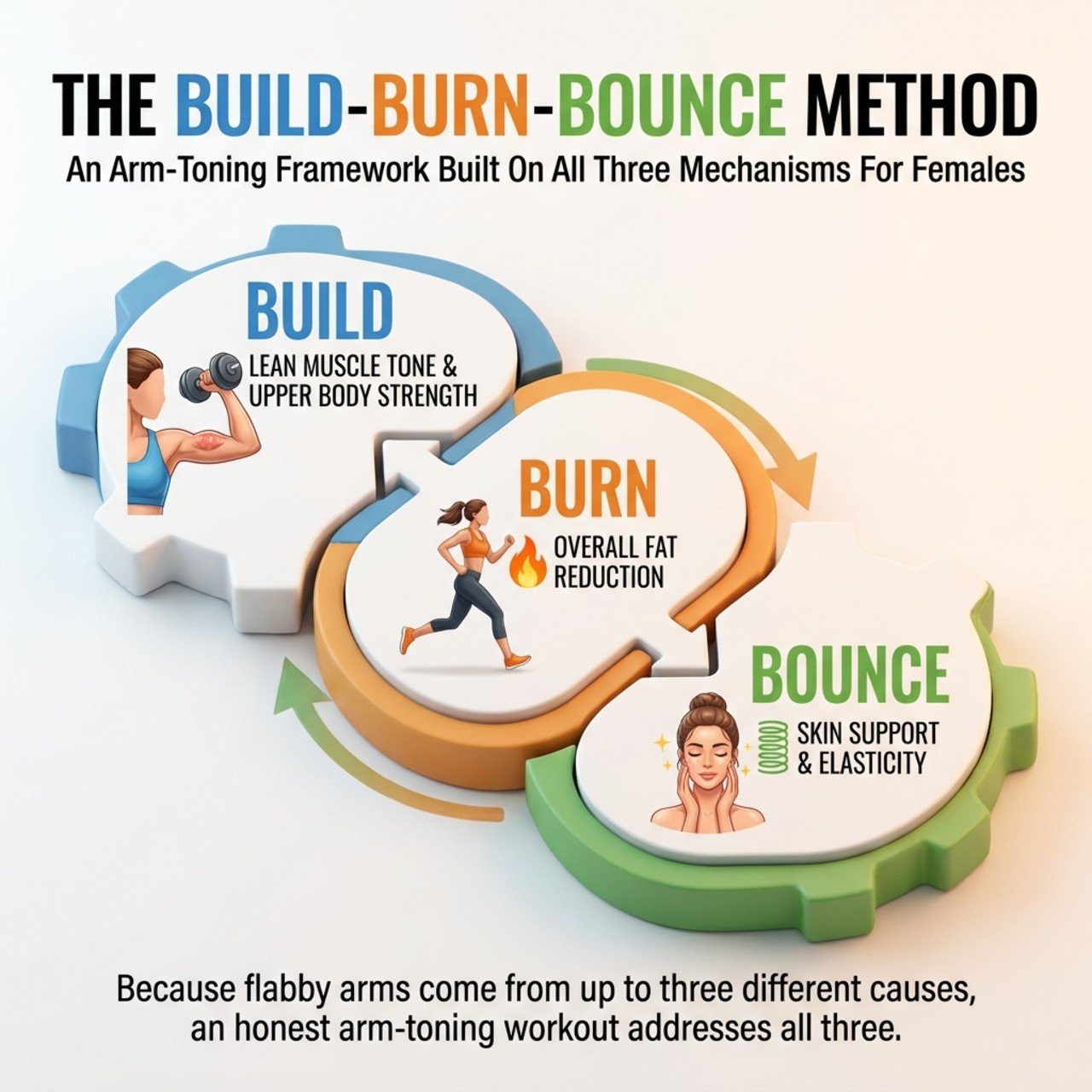
The Build-Burn-Bounce Method: An Arm-Toning Framework Built On All Three Mechanisms
Because flabby arms come from up to three different causes, an honest arm toning workout addresses all three: Build lean muscle tone and upper body strength, Burn the fat overall, and support your skin’s Bounce.
Skip one pillar, and you’re only ever solving a third of the problem — the most likely reason past “arm day” attempts felt like they didn’t work.
Build: 8 Arm Exercises For Flabby Arms, Ranked By What Actually Works
These 8 moves lead with the highest triceps-activation exercises from the table above, then round out the rest of the arm — biceps, shoulders, and the often-ignored rear-shoulder muscle that visibly affects arm silhouette from behind. Aim for 8–12 reps per exercise, 2–3 sets, 2–3 non-consecutive days a week.
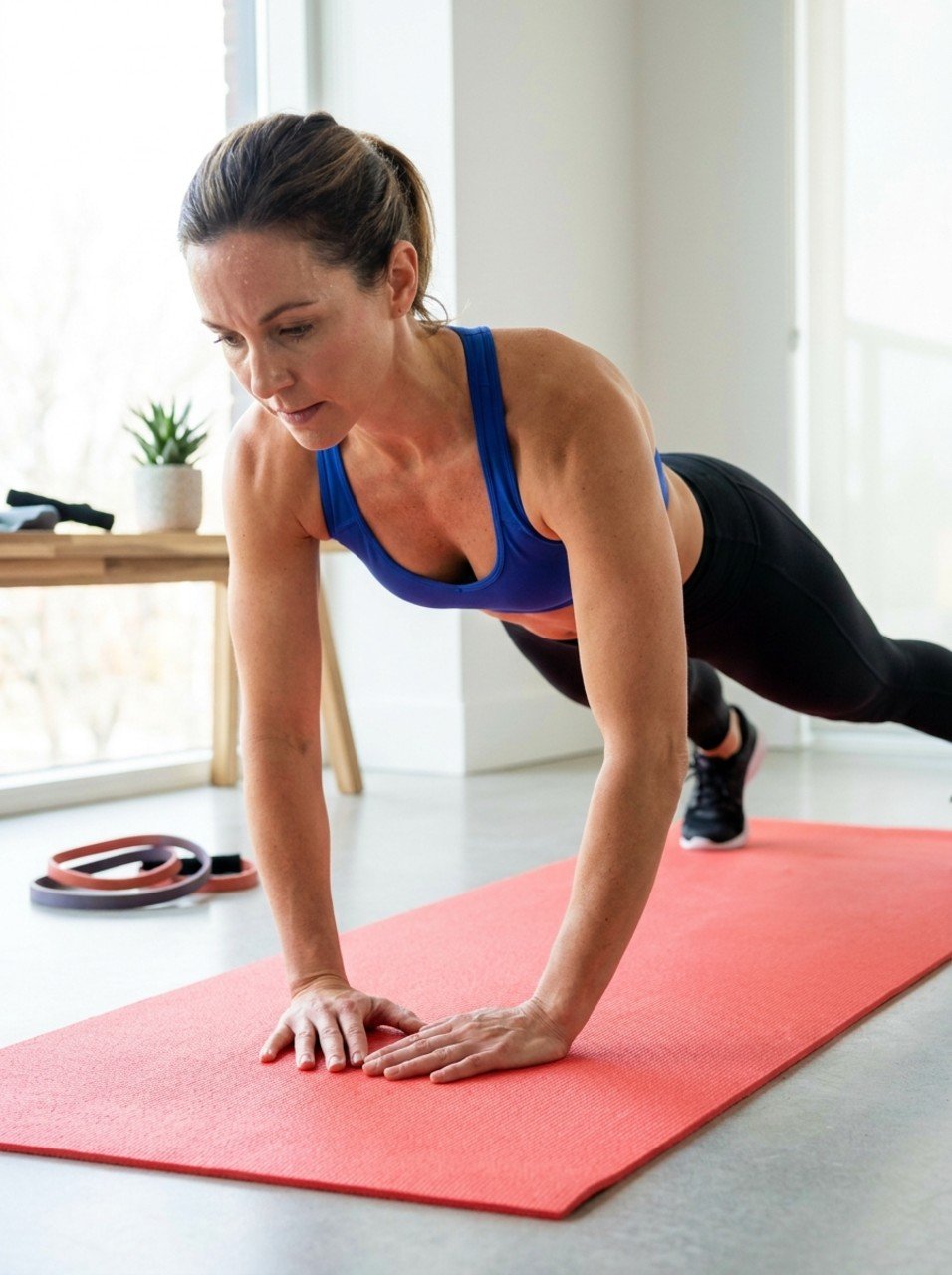
- 1. Triangle (Diamond) Push-Up: Place your hands directly below your shoulders in a triangle shape, thumbs and index fingers touching. Lower your chest toward your hands, elbows tracking back rather than flaring out, then press back up. If a full push-up is too much right now, do it from your knees — the muscle activation benefit still applies.
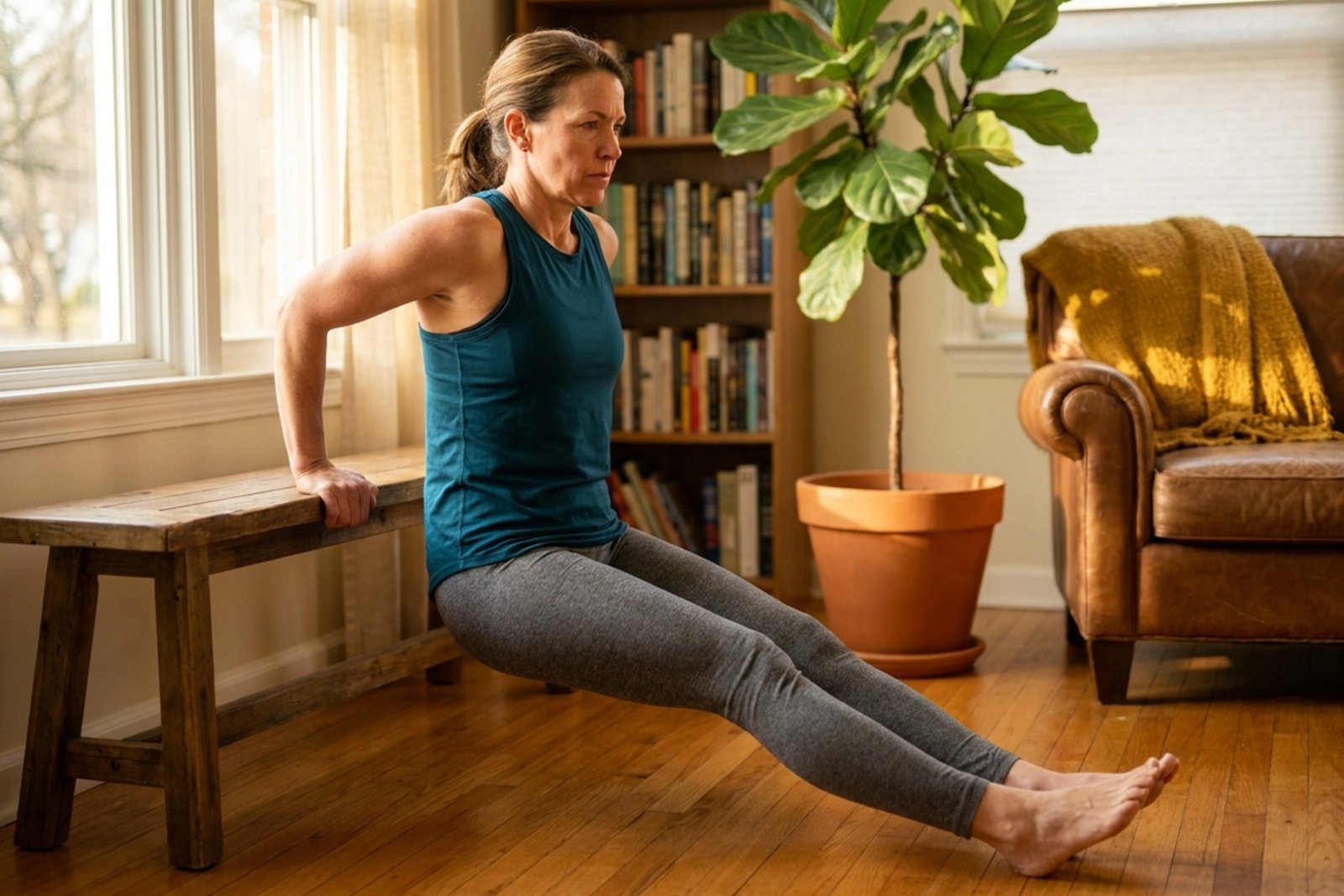
- 2. Tricep Dip: Using a sturdy chair or bench, hands on the edge, slide your hips forward and lower your body by bending your elbows to roughly 90 degrees, then press back up. Keep your shoulders down and away from your ears throughout — rounding them forward is the single most common form mistake here.
- 3. Tricep Kickback: Hinge forward at roughly 45 degrees with a dumbbell, resistance band, or even a full water bottle in hand, upper arm pinned close to your body. Extend your forearm straight back, squeeze, then return with control. This is one of the few exercises where slow and controlled genuinely outperforms fast and loose.
- 4. Overhead Tricep Extension: Holding one weight with both hands, raise it overhead, then lower it slowly behind your head by bending only at the elbow. Keep your upper arms close to your ears, and your core braced so you’re not arching your lower back to compensate.
- 5. Bent-Over Row (or Reverse Fly): Hinge forward with a flat back, dumbbells hanging below your shoulders. Pull the weights up toward your ribs (row) or out to your sides (reverse fly), squeezing your shoulder blades together. This targets the rear deltoid and upper back — the muscle that visibly firms the back of your arm and upper-arm silhouette, and the one almost every “flabby arm” list leaves out entirely.
- 6. Bicep Curl: Standing with a dumbbell or band in each hand, curl the weight up toward your shoulder without swinging your elbows forward, then lower with control. Bicep curls round out a balanced arm-sculpting routine that includes the front of the arm, not just the back.
- 7. Lateral Raise: With a light dumbbell in each hand, raise your arms out to the sides to shoulder height, leading with your elbows rather than your wrists. This shoulder press-family move builds real arm muscle definition at the point where your arm meets your shoulder — often the first place people notice change.
- 8. Side Plank With Reach-Under (or Side Push-Up): From a side plank, thread your top arm underneath your body and back out, or perform a single-arm push-up variation lying on your side. This works the triceps through a different angle while also engaging your core.
What Equipment Do You Actually Need For A Home Arm Workout?
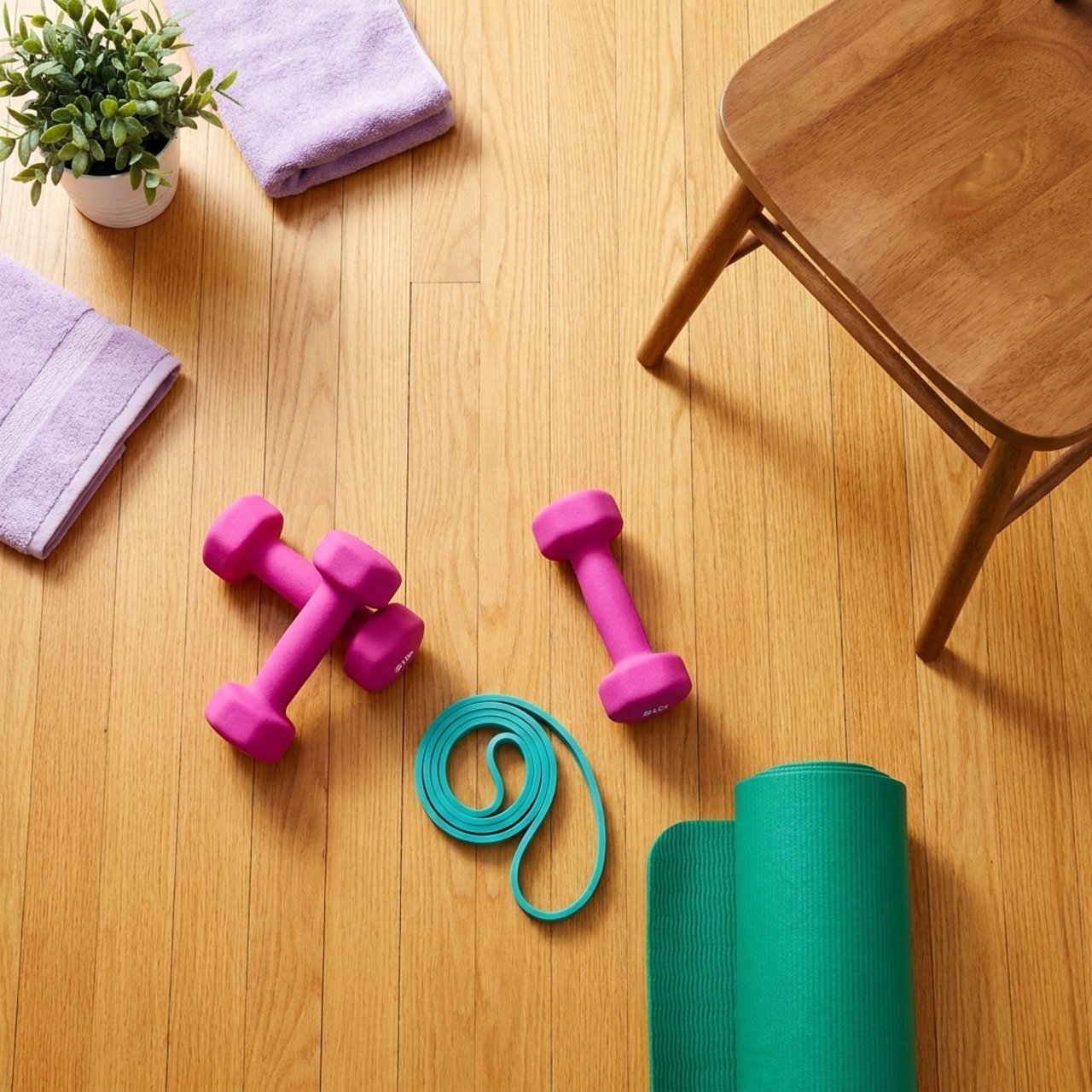
None of these arm sculpting exercises requires a gym, and most don’t require equipment at all. This is a genuinely quick arm workout you can do at home in under 20 minutes.
- No equipment: Triangle push-ups, triceps dips (using a chair), side plank reach-unders — a full effective session using bodyweight alone.
- Dumbbells: A single pair of light-to-moderate dumbbells (start around 5–10 lbs and adjust) covers the full range of dumbbell arm exercises above — kickbacks, triceps extensions, rows, curls, and lateral raises.
- Resistance bands: A lighter, joint-friendlier substitute for dumbbells; resistance band arm workouts work just as well for kickbacks, pushdowns, and rows — a good starting point if you’re newer to strength training or managing a shoulder or wrist sensitivity.
If you’re just getting back into a routine after time off, our beginner workout routine for women walks through how to build up safely, and our correct-form exercise guide covers the general form principles (bracing, joint alignment, breathing) that apply across every move on this list.
Burn: Why You Can’t Skip The Fat-Loss Piece
No amount of arm fat reduction exercises replaces an overall, sustainable approach to fat loss — and for most women, excess fat is at least part of the mix.
This isn’t a call to restrict; it’s the honest missing piece most “5 exercises for flabby arms” lists skip, since a modest, sustained calorie deficit plus regular movement is what reduces fat across your whole body over time, arms included.
A cross-sectional study of 33 women in 2025 found that longer dumbbell resistance-training duration was associated with lower upper-arm fat percentage, consistent with resistance training supporting fat loss as part of an overall routine.
A separate 2025/2026 study on women on a reduced-calorie diet found resistance training produced the greatest fat-mass loss of any modality tested, while being the only approach that also increased lean muscle — the same training that builds your arms protects the muscle you already have while you lose fat elsewhere.
For the deeper mechanics, our full spot-reduction breakdown goes further, and our guide to building permanent weight-loss habits is the practical next step.
Bounce: Supporting Your Skin While You Build And Burn
The skin piece is the one almost no arm-workout guide mentions, and it’s often the real reason results feel slower than expected — especially in perimenopause or beyond.
You can’t out-exercise a hormone-driven decline in collagen production, but you can avoid making it harder on yourself: rapid, large weight swings tend to leave more visible loose skin than slow, steady change, since tissue has more time to adapt. Staying hydrated, prioritizing protein to support the connective tissue you’re building, and giving the process realistic time (months, not weeks) all help.
Building the muscle underneath — exactly what the Build pillar accomplishes — also gives loose skin something firmer to sit against, which is often what women really mean when they say they want their arms “tighter,” not just smaller. If hormonal change is a bigger piece of your picture, our full guide to strength training through perimenopause goes further into adjusting your approach for this stage of life.
Common Mistakes That Slow Down Arm-Toning Results
Most women who feel like arm training “isn’t working” are actually making one of these five fixable mistakes. In practice, they tend to show up in combination, not alone.
- Only doing triceps isolation moves: Skipping the rear-deltoid and upper-back work (like the row or reverse fly above) leaves out a muscle group that visibly shapes how your arm looks from behind.
- Expecting spot reduction: If you’re doing arm exercises specifically hoping to burn arm fat and nothing else changes, you’re working against the actual science — pair arm work with an overall approach, not instead of one.
- Going too heavy, too soon, on kickbacks and extensions: These moves rely on strict form to work the triceps rather than momentum. If you’re swinging the weight, drop down in load and slow the tempo.
- Skipping recovery days: Training the same small muscle group every single day doesn’t accelerate results — it just doesn’t give the muscle time to actually adapt. Two to three focused sessions a week, spaced out, beats daily half-effort sessions.
- Chasing a six-to-eight-week transformation: Muscle firmness shows up first, often within 4 to 6 weeks. Fat loss and skin changes follow their own slower timelines (see the table above) — expecting all three at once can make real progress feel like it “isn’t working.”

I’ve seen this pattern come up again and again: someone does everything “right” for three weeks, doesn’t see the dramatic change they were promised, and assumes their body is somehow the exception. In my experience, it rarely is.
It’s that the plan only ever addressed one of the three mechanisms above, so two-thirds of the problem was still sitting there untouched — and realizing that tends to be the biggest relief people get from this topic.
Get Your Free Weight-Loss Action Plan
Building toned, confident arms is so much easier when it’s part of a bigger plan instead of one isolated workout list — the same way the Build-Burn-Bounce Method above only works because it treats your arms as one piece of your whole body, not a separate project.
If you’re ready to put fat loss, strength, and sustainable habits together into something that actually fits your life, grab our free guide, 10 Actions That Support PERMANENT Weight Loss. It’s the same no-gimmicks, science-backed approach behind everything on this page — delivered straight to your inbox, free, with no restriction plans and no guilt attached.
The Bottom Line
Flabby arms are rarely just about fat, which is why fat-focused advice alone so often falls short of delivering toned upper arms.
Build the triceps and rear-shoulder muscles with the exercises ranked highest by real EMG data, address overall fat if you want to lose arm fat as part of a bigger picture, and give your skin’s elasticity the gradual, gentle timeline it actually needs — especially if hormonal changes are part of your picture.
These arm tightening exercises and arm sculpting moves work best as a set, not cherry-picked individually. Two to three focused sessions a week, done with attention to form rather than speed, build real, firm arm muscles and respect all three mechanisms instead of just one.
Consistency, not intensity, is what makes this stick — and that’s a genuinely good thing, because it means you don’t need an extreme routine to see real change. You need the right exercises, done regularly, alongside honest expectations about what each one can and can’t do.
Glossary Of Key Terms
- Build-Burn-Bounce Method: A holistic three-pillar framework for arm toning that addresses muscle development, overall fat loss, and skin elasticity.
- Calorie Deficit: A state where energy expenditure exceeds energy intake, necessary for reducing fat across the entire body, including the arms.
- EMG Activation: Electromyography; a measurement of muscle electrical activity used to determine the effectiveness of specific exercises in engaging a target muscle.
- Rear Deltoid: The muscle located at the back of the shoulder that contributes to the firmness and silhouette of the upper arm.
- Resistance Training: Physical exercises, such as push-ups or weightlifting, designed to improve strength and increase muscle mass through external or bodyweight resistance.
- Skin Elasticity: The ability of the skin to "bounce back" or sit firmly against the body, which declines with age and hormonal changes like menopause.
- Spot Reduction: The scientifically debunked myth that one can lose fat in a specific area of the body by performing exercises targeting that area.
- Triangle Push-Up: Also known as a diamond push-up; a high-activation exercise where hands are placed close together under the chest in a triangle shape.
- Tricep Dip: A resistance exercise performed using a chair or bench to lower and raise the body, targeting the triceps at the back of the upper arm.
- Triceps: The three-headed muscle located on the back of the upper arm, primarily responsible for arm extension and firmness in the "flabby" area.
FAQ
What Causes Flabby Arms In Women?
Flabby arms usually come from a combination of three things: fat stored above the triceps and rear-shoulder muscles, low natural tone in those muscles from underuse, and a gradual decline in skin elasticity that speeds up with age and, more sharply, with the hormonal changes of perimenopause and menopause. Most people have some mix of all three rather than just one.
Can You Really Get Rid Of Flabby Arms With Exercise Alone?
Exercise plays a central role in toning flabby arms: it builds the muscle underneath and, combined with an overall calorie deficit, contributes to whole-body fat loss that includes your arms — but it can’t selectively target arm fat, and it has limited control over skin elasticity, which is more tied to hormones, age, and genetics. Exercise is a genuinely powerful piece of the picture; it’s just not the only piece.
How Often Should I Do Arm Exercises For Flabby Arms?
Two to three non-consecutive days a week is the evidence-backed sweet spot for the exercises listed above, giving the triceps and shoulder muscles enough recovery time between sessions to actually adapt and strengthen. Training the same small muscle group daily doesn’t speed up results and can increase your risk of overuse strain.
Do I Need Weights, Or Can I Tone Flabby Arms With Just Bodyweight Exercises?
You can build real, measurable triceps strength using bodyweight alone — triangle push-ups topped the ACE EMG activation study at 100%, ahead of every weighted exercise tested. Dumbbells and resistance bands add useful variety and let you progressively increase difficulty over time, but they’re not required to start.
How Long Does It Take To See Results From An Arm-Toning Workout?
Muscle firmness is usually the first visible change, often within 4 to 6 weeks of consistent training. Fat loss and any change in skin appearance follow their own slower, separate timelines — typically 8 to 12+ weeks and several months, respectively — so it’s common to feel firmer before you see a dramatic visual change, and that’s a sign the process is working, not stalling.
Why Do My Arms Look Different Now Than They Did In My 30s, Even At The Same Weight?
This is a real, well-documented pattern, not just a feeling. Muscle mass naturally declines faster after 65 (and more gradually in the years leading up to it), and skin collagen can drop by roughly 2% per year after menopause — up to 30% in the first five years — independent of your weight. Resistance training directly addresses the muscle side of that equation and is one of the few tools that meaningfully slows it.
Are Resistance Bands As Effective As Dumbbells For Toning Arms?
Resistance bands provide effective, joint-friendly tension throughout an exercise's full range of motion and work well for kickbacks, rows, and pushdowns, especially for anyone managing shoulder or wrist sensitivity. Dumbbells make it easier to precisely track and progressively increase load over time, which is useful once bodyweight or band resistance starts to feel too easy — either tool, used consistently, will build real results.