

How To Set Attainable Weight Loss Goals (Even When Every Goal Has Failed Before)
The Right-Size Method For Setting Attainable Weight Loss Goals That Actually Stick
Kristin Neff
Self-compassion researcher
Self-compassion means you are kind and understanding when confronted with your failings.
Summary (TL;DR)
Attainable weight loss goals are not smaller, watered-down versions of ambitious ones. They are goals engineered around how behavior change actually works. Goal-setting research shows vague or oversized goals underperform specific, right-sized ones, and habit-formation research shows the very first version of a new habit needs to be almost embarrassingly small before it sticks.
This guide introduces the Right-Size Method, a four-step framework for setting weight loss goals you can actually keep: shrink the first step, specify the target instead of leaving it vague, track small wins instead of only the scale, and build in room to recover from a slip before it turns into a spiral. Realistic weight loss goals still follow the CDC’s pace of about 1 to 2 pounds a week, but the goal only works if it is sized for the life you actually have, not the one you wish you had more time for.
If you have set a weight loss goal before, felt genuinely motivated for the first two weeks, and then watched it quietly fall apart by week four, you already know the frustrating part: in the moment, it rarely feels like a discipline problem.
It feels more like confusion about what actually went wrong, an all-or-nothing spiral that started with one bad day, or the quiet intimidation of another 90-day plan that assumes you have hours of free time you do not have. That reaction is common, and it is not a personal failing.
The research on goal-setting and behavior change points to something most weight loss content skips entirely: the goal itself is usually the wrong size, not the person setting it. A vague goal, like “get healthier,” or oversized, like “lose 30 pounds by summer, no matter what,” sets up the exact frustration cycle above before food or exercise habits even enter the picture.
Realistic fitness goals and sustainable weight loss both start with getting the size of the very first step right, not with more willpower or a stricter list of rules. This guide walks through the Right-Size Method, a four-step approach to setting attainable weight loss goals built from behavior-change research rather than another generic checklist.
Whatever stage of your weight loss journey you are starting from, and whatever fat loss strategies have or have not worked before, you will get a practical starter plan, two tables showing what a right-sized first goal actually looks like next to an oversized one, and a plan for what to do on the day a goal does not go as planned, because that day is normal too.
Medical & Referral Disclaimer
This article is for informational and educational purposes only and does not constitute medical, nutritional, or psychological advice. It is not a substitute for personalized guidance from a qualified physician, registered dietitian, or licensed mental health professional. Always consult a healthcare provider before starting a new weight loss goal, exercise routine, or significant change to your eating pattern, particularly if you have an existing medical condition, a history of disordered eating, or take medication that affects appetite, metabolism, or weight.
Key Takeaways
- Specific, moderately challenging goals outperform vague ones. Research by Edwin Locke and Gary Latham, published in American Psychologist, found that specific and appropriately difficult goals consistently produced higher performance than simply urging people to do their best.
- The realistic, sustainable pace for weight loss is still about 1 to 2 pounds a week, per the CDC and Mayo Clinic, a benchmark worth anchoring any numeric target to instead of guessing.
- New habits take far longer to feel automatic than the popular “21 days” myth suggests. Research tracking real participants found a median of 66 days, ranging from 18 to 254 days, and simpler daily actions became automatic faster than complex ones.
- A single slip does not have to become a spiral. Psychologists Janet Polivy and C. Peter Herman named this the “what the hell effect,” where one small break from a goal triggers a much bigger one, driven by all-or-nothing thinking, not the food itself.
- Self-compassion after a setback outperforms self-criticism. A systematic review in the Journal of Psychosomatic Research found self-compassion is linked to better emotional recovery from dietary lapses and stronger weight-management self-efficacy.

Why Most Weight Loss Goals Fail Before They Start
Most weight loss goals fail for one of two fairly ordinary reasons: they are too vague to act on, or too large to survive the first bad day. Neither one has much to do with how much willpower you have.
Locke and Latham’s decades of goal-setting research, spanning hundreds of studies and published in American Psychologist, found that specific, difficult goals consistently led to higher performance than urging people to do their best, with effect sizes among the largest in all of applied psychology.
The catch that most weight loss advice misses: “difficult” in that research means appropriately challenging and clearly defined, not oversized and vague at the same time, which is exactly how most New Year’s-style weight loss goals get built.
The Real Reason Big Goals Backfire
A goal that only survives a perfect week is not a realistic weight loss goal; it is a countdown to a familiar spiral.
Polivy and Herman, writing in Frontiers in Nutrition, described a pattern they first identified decades ago and call the “what the hell effect”: once a dieter perceives they have broken a rule, even a small one, the thinking shifts to something like, “what the hell, my diet is already broken, so I might as well eat and enjoy it for now.”
One skipped workout or one off-plan meal, on its own, changes very little about your results. The all-or-nothing story you tell yourself about it is what turns a minor slip into an abandoned goal, and an oversized, rigid goal makes that story much easier to believe.
Introducing The Right-Size Method: An Attainable Weight Loss Goals Framework
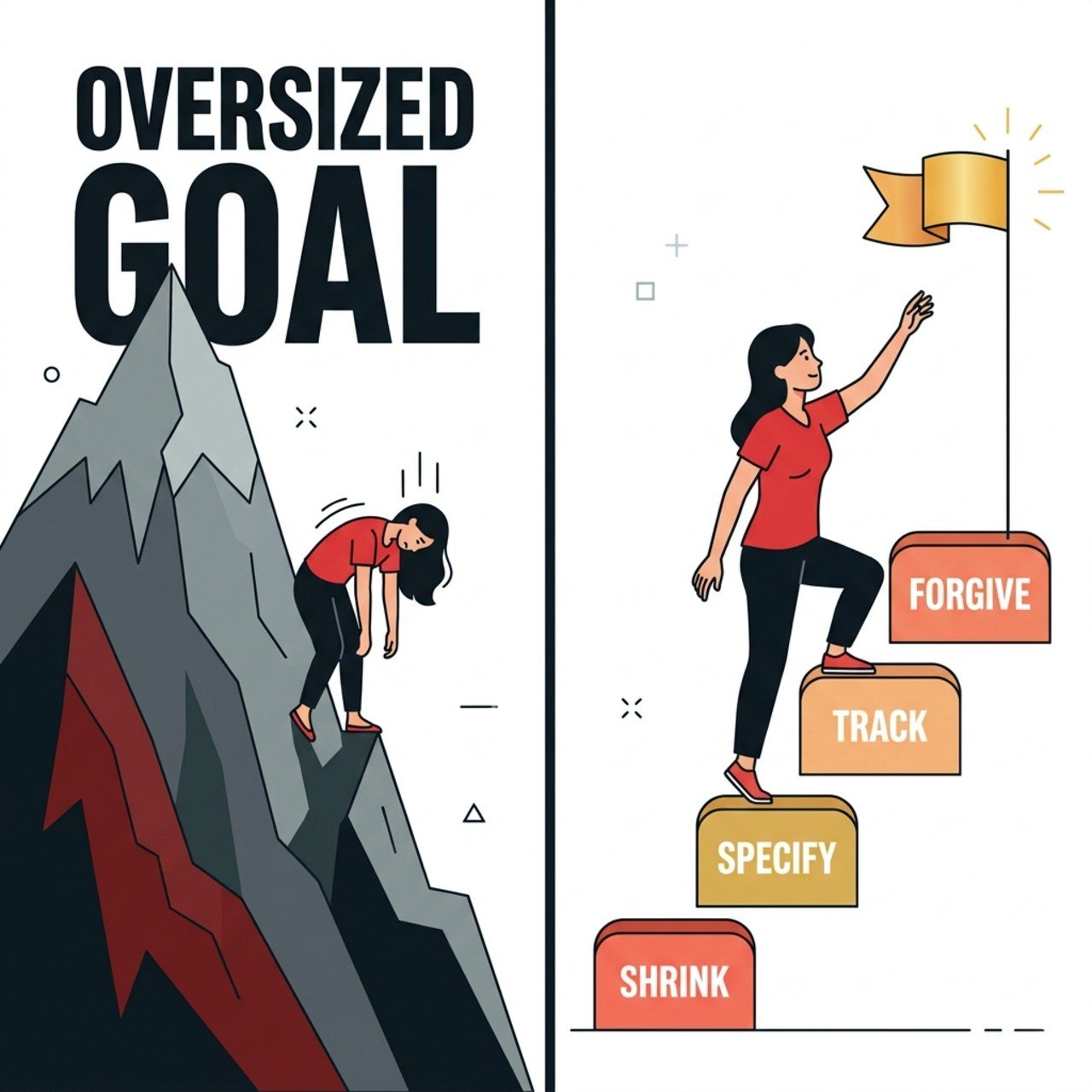
The Right-Size Method is a four-step way to size a weight loss goal so it survives contact with a real week: shrink the step, specify the target, track the win, and forgive the slip.
Each step closes a specific gap in how most goals are typically set, and each one is grounded in published behavior-change research rather than motivational advice alone.
Step 1: Shrink The Step
The fastest way to make any weight loss goal attainable is to make the very first version of it almost too small to fail.
Research following real participants trying to build new habits, led by psychologist Phillippa Lally, found automatic, easy-feeling habits took a median of 66 days to form, with a wide range of 18 to 254 days depending on the person and the behavior.
Simpler daily routine changes, like adding a food or drink, became automatic faster than more complex ones, like a full exercise habit. That is the opposite of how most oversized weight loss goals are structured, which typically ask for a completely new daily routine, a new eating plan, and a new workout schedule, all starting on the same Monday.
Shrinking the step in practice looks less dramatic than most weight loss content promises, and that is the point: swap one sugary drink for water at one meal, add a 10-minute walk after dinner instead of an hour at the gym, or prep just tomorrow’s lunch instead of a week of meal planning at once.
Habit stacking, attaching the new action to something you already do daily, like brushing your teeth or making coffee, gives the small step a natural trigger instead of relying on memory or motivation alone.
Step 2: Specify The Target
Once the first step is small, make the destination specific. A number, a timeframe, and a clear definition of “done” consistently beat a vague goal like “eat healthier” in the research above, and this is where realistic fitness goals, smart goal setting, and sustainable weight loss actually meet.
A healthy eating plan and a balanced diet both work better once the target behind them is specific, not just generally “better.” The CDC recommends a pace of about 1 to 2 pounds a week as a healthy, sustainable target, and Mayo Clinic suggests starting with a modest goal, losing just 5% of your current body weight, rather than a dramatic total from the outset.
To hit that weekly pace, Mayo Clinic notes it generally takes a calorie deficit of about 500 to 750 calories a day below what you burn, through some combination of eating pattern and physical activity, not extreme restriction.
A specific first target sounds like “lose 5% of my current weight over the next 10 to 12 weeks by building the habits in this guide,” not “lose weight this year.” The second one is not a bad intention; it is simply not specific enough to act on tomorrow morning.
Step 3: Track The Win, Not Just The Target
The scale is not the only feedback loop worth watching, and early on, it is often the least motivating one.
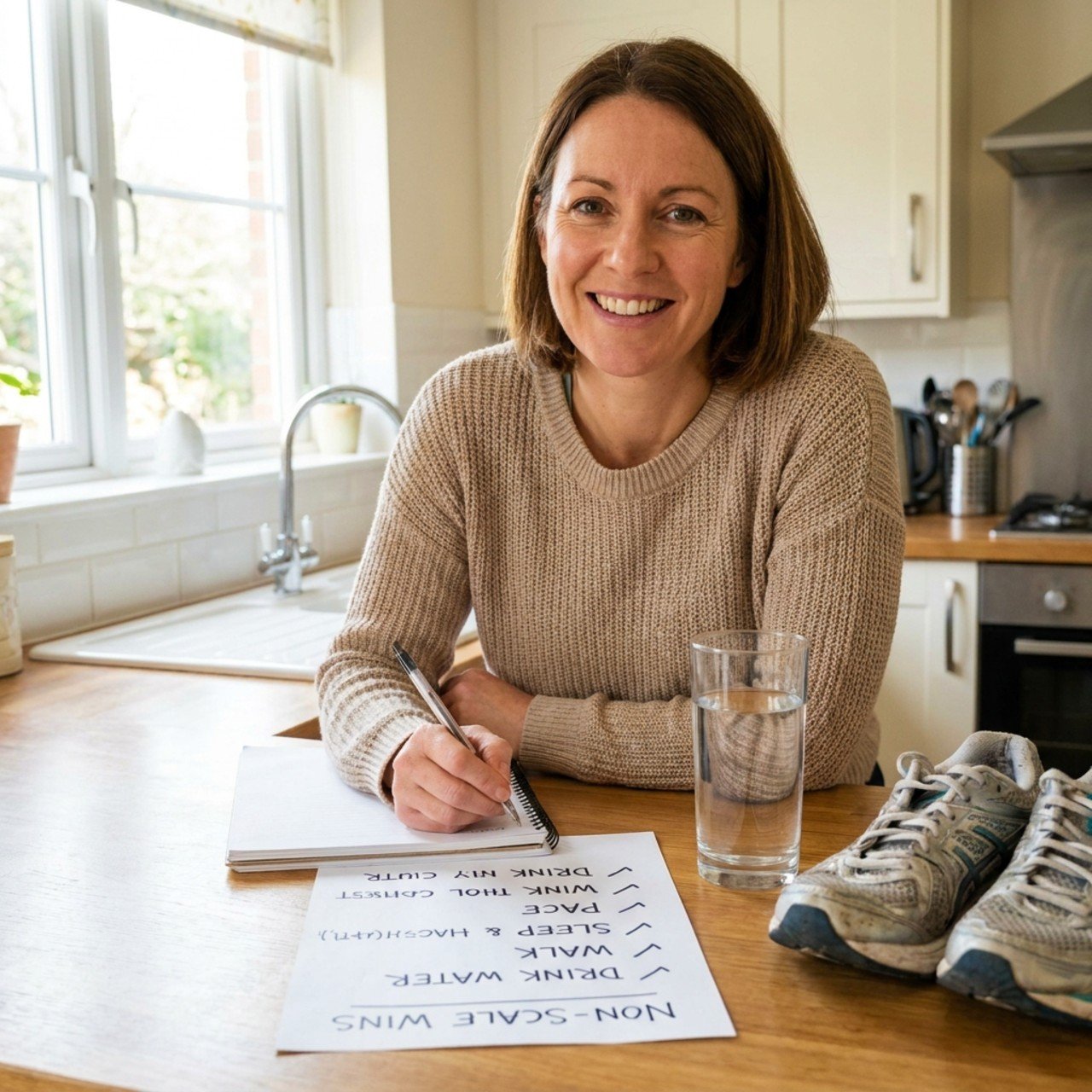
Tracking process wins alongside, or instead of, the number on the scale keeps a goal feeling attainable on the weeks your weight genuinely will not move much, which is most weeks, given how bodies actually lose weight.
- Workouts or walks completed that week, regardless of the scale.
- Meals planned or prepped in advance, since planning is a habit in its own right, separate from the eating itself.
- Water intake or a portion-control habit kept consistently, like using a smaller plate or stopping at comfortably full.
- Energy levels, sleep quality, or mood, which often shift weeks before the scale does.
- How clothes fit, a non-scale victory that reflects body composition changes the scale alone will not show.

Accountability tips built around these process wins, like a simple weekly checklist or a short note to yourself, give a goal tracking system that has something to show for itself on a normal week, not just on the weeks the scale cooperates.
Watching fitness progress this way also does more for a weight loss mindset than the scale alone, since it gives you real evidence of change to point to on the weeks the number will not move.
Step 4: Forgive The Slip
One missed workout, or one off-plan meal, is data, not a verdict on the whole goal. This is the step most weight loss advice treats as an afterthought, and it is the one the research above suggests matters most for whether a goal survives past the first setback.
A systematic review in the Journal of Psychosomatic Research found self-compassion, treating yourself with the same understanding you would offer a friend, was linked to better emotional recovery after a dietary lapse and a stronger sense of being able to keep managing your weight going forward, compared with the shame and self-criticism that usually follow a slip.
That lines up directly with why the “what the hell effect” takes hold in the first place: it is the all-or-nothing story after the slip, not the slip itself, that derails a goal.
| Step | What It Means | What The Research Shows |
|---|---|---|
| 1. Shrink The Step | Make the first version of the habit small enough to do on a bad day | Simpler daily actions became automatic faster (median 66 days) in habit-formation research |
| 2. Specify The Target | Replace a vague goal with a number, a timeframe, and a clear finish line | Specific, appropriately challenging goals outperformed vague ones across decades of goal-setting research |
| 3. Track The Win | Log process wins (workouts, prep, sleep, fit) alongside or instead of the scale | Non-scale progress markers keep a goal visible on the weeks the number does not move |
| 4. Forgive The Slip | Treat a missed day as one data point, not a reason to quit | Self-compassion after a lapse outperformed self-criticism for staying on track, per a systematic review |
How Big Should Your First Goal Actually Be?
If your last weight loss goal looked like the left column below, that is very likely why it did not last, and it was not a discipline problem.
| Category | Typical Oversized Goal | Right-Size First Goal |
|---|---|---|
| Food | Cut out sugar, carbs, and all processed food starting Monday | Swap one specific food or drink at one meal a day for two weeks |
| Exercise | Work out five days a week for an hour | Move for 15 to 20 minutes, one to two days a week, then build from there |
| Weigh-Ins | Weigh yourself daily and judge the whole week by the number | Weigh in weekly, at most, alongside two or three non-scale wins |
| Self-Talk After A Slip | “I already ruined it, might as well keep going” | “That was one meal, not the whole goal, back on track tomorrow” |
A Real First-Week Plan For Setting Attainable Weight Loss Goals
You do not need a 90-day plan to start; you need a few small, specific moves for this week.
- Days 1 to 2: Pick one meal a day and swap one item for a lower-calorie, higher-protein or higher-fiber option. This is a portion control and meal planning habit in miniature, not a full eating plan overhaul.
- Days 3 to 4: Add one 10- to 15-minute walk. Attach it to something you already do, right after a meal or a work call, so it does not depend on remembering.
- Days 5 to 6: Write down your specific number, timeframe, and one non-scale win from the table above that you will track this week, instead of only the scale.
- Day 7: Review the week honestly. If a day went sideways, note it without judgment and start the next week from where you are, not from zero.
When A Goal Has Failed Before, Here Is What Is Actually Different This Time
If your past weight loss goals failed, the honest explanation is rarely a lack of self-discipline. It is that the goal itself was not engineered to survive a real week.
A goal that starts too big, stays too vague, and has no room for a bad day is working against you by design, not because you did not try hard enough. The Right-Size Method changes the design, not your character.
It is also worth naming plainly: even a well-designed, right-sized goal will hit a plateau eventually. That is physiology doing its job as your body adapts, a separate and completely normal problem with its own fix, not a sign the goal itself failed.
Overcoming plateaus is a different conversation from setting the goal in the first place, and treating a plateau as proof the plan does not work is one more version of the all-or-nothing thinking this whole framework is built to interrupt.
How This Fits With The Rest Of Your Weight Loss Goals
This guide is deliberately narrow: it is about right-sizing any weight loss goal so it survives a real week, not about the full mechanics of goal-setting or perimenopause-specific adjustments, both of which deserve their own space.
For the fuller breakdown of what number to aim for and how weight loss goals work differently for women, see our complete guide to weight loss goals. For the full SMART goal-setting framework, tracking methods, and perimenopause-specific adjustments, see our weight loss goal setting guide.
Once your first goal is underway, the habit systems that keep results going are covered in our guide to weight loss tips that actually last, and if your goal leans more toward fitness than the scale, see our tips for achieving fitness goals as a woman.
Ready For Weight Loss Goals Built Around Your Actual Life?
Sizing one goal correctly is a strong start, but a full lifestyle change usually needs more than one right-sized habit working together.
Our free guide, 10 Actions That Support Permanent Weight Loss, pulls nutrition, movement, and mindset into one sustainable set of healthy habits and real motivation for women building a weight loss mindset that actually holds up - not a generic plan borrowed from someone with an extra ten hours a week.
Get your free copy here and set your next goal at the size that will actually get you to long-term results.
The Bottom Line
Attainable weight loss goals are not about lowering your standards; they are about matching the size of the goal to the size of a real week. Real body transformation and healthy living come from that kind of lifestyle change compounding over months, not from a single dramatic goal surviving a single perfect one.
Shrink the first step until it is almost too easy to skip, specify the number and timeframe instead of leaving it vague, track the wins that show up before the scale does, and forgive the slip before all-or-nothing thinking turns it into a spiral.
That is the Right-Size Method, and it holds up on the weeks that go well and the ones that do not, which is the only real test of whether a goal was ever attainable in the first place.
Glossary Of Key Terms
- Right-Size Method: A four-step framework (shrink, specify, track, forgive) designed to engineer weight loss goals around the actual mechanics of behavior change.
- What the Hell Effect: A psychological pattern where a minor lapse in a diet leads to the perception that the goal is ruined, triggering a cycle of overindulgence.
- Self-Compassion: The practice of being kind and understanding toward oneself in the face of failings; research shows it improves emotional recovery from dietary lapses.
- Habit Stacking: A behavioral strategy that involves pairing a new, small habit with an established daily routine to serve as a natural trigger.
- Process Wins: Non-scale progress markers, such as improved sleep, energy, or clothing fit, that reflect health improvements regardless of fluctuations in weight.
- SMART Goal: A goal-setting acronym standing for Specific, Measurable, Attainable, Results-focused, and Time-bound.
- Weight-Management Self-Efficacy: An individual’s belief in their ability to successfully manage their weight and recover from setbacks.
- Calorie Deficit: A state where an individual burns more calories than they consume; a deficit of 500–750 calories daily is recommended for sustainable weight loss.
- Non-Scale Victory (NSV): Successes that are not measured by weight, such as increased physical mobility or improved body composition.
- Plateau: A period during a weight loss journey where the body adapts and weight remains stationary; it is viewed as a normal physiological event rather than a failure of the plan.
FAQ
What Is An Example Of An Attainable Weight Loss Goal?
A specific, right-sized example is: “Lose 5% of my current body weight over 10 to 12 weeks by swapping one meal a day and adding two 15-minute walks a week.” It names a number, a timeframe, and the specific small actions behind it, rather than a vague goal like “lose weight this year.”
How Small Should My First Weight Loss Goal Be?
Small enough that you could realistically do it on a bad day. Habit-formation research suggests starting with one simple daily action rather than several changes at once, since simpler routines become automatic faster than complex ones in studies tracking real participants over several months.
Why Do I Keep Failing At My Weight Loss Goals?
The most common, research-backed reason is goal size, not self-discipline. Vague or oversized goals set up an all-or-nothing pattern where one slip - a missed workout or an off-plan meal - feels like the whole goal is ruined, a pattern psychologists call the “what the hell effect.” Right-sizing the goal and planning for the slip in advance addresses the actual cause.
What Is A Realistic Weight Loss Goal Per Week?
About 1 to 2 pounds a week is the pace both the CDC and Mayo Clinic recommend as safe and sustainable, generally achieved through a calorie deficit of roughly 500 to 750 calories a day.
What Is The Difference Between A SMART Goal And An Attainable Goal?
SMART is a full goal-setting format (Specific, Measurable, Attainable, Results-focused, Time-bound). In contrast, “attainable” in this guide specifically means the goal is sized to survive a real, imperfect week, not just written correctly on paper. A goal can technically be SMART and still be too large to actually stick to.
What Should I Do If I Miss My Weight Loss Goal One Week?
Treat it as one data point, not a verdict. Research on self-compassion and dietary lapses found that responding to a setback with understanding, rather than self-criticism, was linked to better emotional recovery and staying engaged with the goal, compared with the shame spiral the “what the hell effect” tends to trigger.
How Many Weight Loss Goals Should I Set At Once?
Generally, one, or at most one, outcome goal is paired with a small handful of process goals that support it. Setting several unrelated goals at once - a new diet, a new workout plan, and a new sleep schedule - spreads the same limited attention and habit-forming capacity across too many new routines at once.