

Science-Backed Strategies To Lose Weight Designed For Women's Biology — No Crash Diets, No Willpower Myths, No Yo-Yo Cycles
![Socrates (born c. 470 bce, Athens [Greece]—died 399 bce, Athens) was an ancient Greek philosopher whose way of life, character, and thought exerted a profound influence on Classical antiquity and Western philosophy.](https://static.berqwp.com/womensleanbodyformula.com/mw1920-q70-webp/https://womensleanbodyformula.com/wp-content/uploads/2026/04/Socrates.jpg "Socrates, an ancient Greek philosopher")
The secret of change is to focus all of your energy not on fighting the old, but on building the new.
Socrates ‧ Ancient Greek philosopher
Summary (TL;DR)
Discover seven science-backed strategies designed for women to achieve permanent weight loss without restrictive diets or willpower myths. These methods focus on building a sustainable system that addresses hormonal and metabolic realities.
Key strategies include creating a moderate calorie deficit, prioritizing protein intake, and incorporating resistance training. By addressing the root causes of weight regain, this approach helps women break free from yo-yo cycles and achieve lasting results through mindful eating and identity-based habits.
You have lost weight before. Probably more than once. And you have gained it back, which means the problem is not your ability to lose weight. The problem is the approach.
Here is what the research actually says: 80% of people who lose weight through conventional dieting regain it within five years. For women, the rate is higher — driven by hormonal realities, metabolic adaptations, and the psychological toll of restriction-based plans that treat willpower as the solution to a systems problem.
You do not have a willpower problem. You have a systems problem. And the right system — built around how women's bodies actually work — changes everything.
These seven strategies are not a diet. They are the permanent framework that ends the yo-yo cycle.
Medical & Referral Disclaimer
This article is for informational and educational purposes only and does not replace personalised medical or dietary advice. Consult your healthcare provider before making significant changes to your diet or exercise routine.
Key Takeaways
- Permanent fat loss requires a moderate calorie deficit — not extreme restriction that triggers metabolic adaptation.
- Protein is the most important macronutrient for women's weight loss: it preserves muscle, controls hunger, and supports metabolism.
- Resistance training builds the muscle that raises resting metabolic rate — making fat loss easier long-term.
- Whole, low-glycaemic foods improve insulin sensitivity and reduce the blood sugar swings that drive cravings.
- Sleep deprivation and chronic stress directly cause fat storage through hormonal mechanisms — not just behavioural ones.
- Mindful eating addresses the emotional and habitual dimensions of overconsumption that calorie counting ignores.
- Identity-based habits — built around who you are becoming — are the only sustainable path to permanent weight maintenance.
Why Most Weight Loss Approaches Fail Women Specifically
Before the seven strategies, the most important question: why does conventional weight loss advice fail so many women who follow it diligently? The answer is not character. It is biology and system design.
Women's bodies operate under hormonal cycles — oestrogen, progesterone, cortisol, leptin, ghrelin — that fluctuate across the menstrual cycle, shift dramatically during perimenopause, and respond to caloric restriction differently than men's bodies. Programs designed for male physiology — the majority of mainstream fitness advice — misread these signals as failure.
The most common ways conventional approaches fail women:
- Extreme caloric restriction triggers metabolic adaptation: The body downregulates resting metabolic rate in response to severe deficits, making weight loss progressively harder.
- High-cortisol states cause abdominal fat storage: Stress-focused restriction elevates cortisol, directly promoting visceral fat accumulation.
- Muscle mass is sacrificed without resistance training: Low-calorie, cardio-heavy approaches cause muscle loss, reducing the metabolic rate that sustains long-term weight management.
- The psychological toll causes rebound: Restriction-based plans create a binge-restrict cycle driven by biological hunger hormones, not lack of discipline.
Every strategy below directly addresses one or more of these failure modes. Together, they form a coherent system.
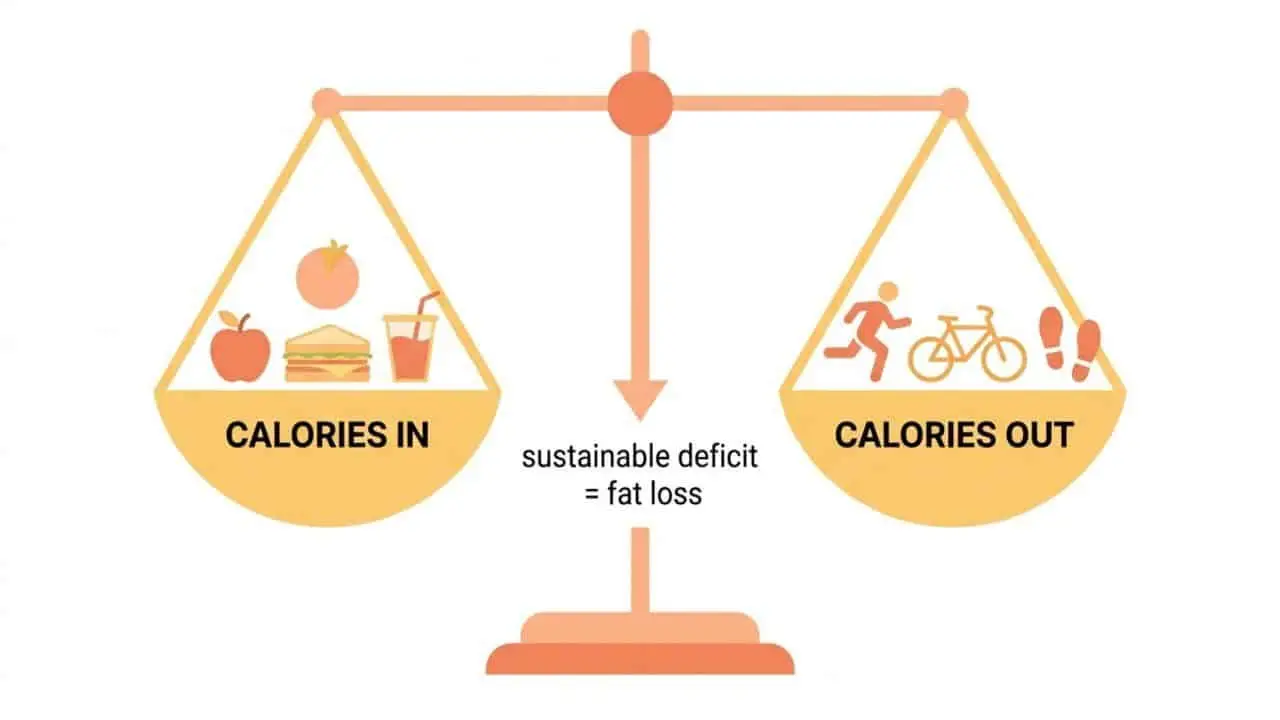
Way #1: Create A Sustainable Calorie Deficit — Not A Crash Diet
A sustainable calorie deficit means consuming slightly fewer calories than your body expends — typically 300-500 calories below your Total Daily Energy Expenditure (TDEE) — allowing steady fat loss while preserving muscle mass and avoiding the metabolic adaptation that makes crash diets self-defeating. This approach produces slower but permanent results, versus the rapid-then-regained pattern of extreme restriction.
The body's metabolic adaptation to severe restriction is one of the most documented phenomena in obesity research. When calories are cut dramatically — below 1,200 per day for most women — the body interprets this as famine and responds by reducing its resting metabolic rate by up to 15-20%. The result: initial rapid weight loss followed by a plateau, then weight regain that often exceeds the original starting weight.
A 300-500 calorie daily deficit avoids triggering this adaptation while creating a meaningful weekly deficit (2,100-3,500 calories) that results in approximately 0.5-1 lb of fat loss per week.
Calorie Deficit By Goal: A Women's Guide
| Goal | Daily Deficit | Weekly Fat Loss | Muscle Risk | Sustainability |
|---|---|---|---|---|
| Very aggressive (crash diet) | 1,000+ cal/day | 2+ lbs | High — muscle loss likely | Low — metabolic adaptation, rebound |
| Aggressive | 750 cal/day | ~1.5 lbs | Moderate with protein | Low-moderate |
| Moderate (recommended) | 500 cal/day | ~1 lb | Low with protein + training | High |
| Conservative | 250-300 cal/day | 0.5 lb | Very low | Very high — ideal for maintenance phase |
| Maintenance | 0 | 0 | None | Permanent |
How to calculate your starting point:
Your approximate TDEE = Body weight in lbs × 14-16 (for moderately active women). Subtract 500 calories. That is your daily sustainable fat-loss target — adjust based on 3-4 weeks of real results.
The most reliable path to sustainable weight loss for women is not the fastest path. It is the path you can stay on.

Way #2: Make Protein The Centre Of Every Meal
Adequate protein intake is the single most important nutritional factor for women's weight loss because it simultaneously preserves lean muscle mass during a calorie deficit, dramatically increases satiety (reducing overall calorie intake naturally), raises the thermic effect of feeding (calories burned digesting food), and supports the hormonal environment that promotes fat rather than muscle loss. Women consistently under-consume protein — and this is one of the primary reasons fat loss stalls.
Research published in the American Journal of Clinical Nutrition consistently shows that higher-protein diets (1.6-2.2g per kg of body weight) produce significantly greater fat loss, greater muscle retention, and greater reduction in hunger compared to standard-protein diets — even at the same calorie intake.
The mechanism is primarily hormonal: protein suppresses ghrelin (the hunger hormone) more effectively than carbohydrates or fats, and stimulates PYY and GLP-1 (satiety hormones) more potently.
Protein Targets For Women's Weight Loss
| Body Weight | Minimum Daily Protein (0.7g/lb) | Optimal for Fat Loss (1.0g/lb) | Example Meals to Hit Target |
|---|---|---|---|
| 130 lbs (59kg) | 91g | 130g | 4 eggs + chicken breast + Greek yoghurt + lentils |
| 150 lbs (68kg) | 105g | 150g | 5 eggs + 6oz salmon + cottage cheese + edamame |
| 170 lbs (77kg) | 119g | 170g | 2 chicken breasts + eggs + protein-rich snacks |
| 190 lbs (86kg) | 133g | 190g | Large protein portions at every meal + shakes if needed |
| 210 lbs (95kg) | 147g | 210g | Protein-first approach at every meal and snack |
Practical Protein Strategies
- Protein-first plating: Eat your protein portion first at each meal. This naturally reduces total calorie intake by filling the stomach before higher-calorie carbohydrates are consumed.
- 30g protein at breakfast: Research from the University of Missouri found that a high-protein breakfast (30g+) reduces cravings and calorie intake for the rest of the day more effectively than any other single dietary change.
- Strategic snacking: Replace carbohydrate-based snacks (crackers, fruit alone, biscuits) with protein-containing ones (hard-boiled eggs, Greek yoghurt, cottage cheese, nuts).

FACT: Resistance training burns calories during the session and raises the metabolic rate for 24-48 hours afterwards — while also building the muscle that permanently elevates baseline calorie expenditure.
Way #3: Prioritise Resistance Training Over Cardio Alone
Resistance training — lifting weights, using resistance bands, or performing bodyweight exercises that challenge muscles against load — is the most important exercise modality for permanent fat loss because it builds and preserves lean muscle mass, which is the primary driver of resting metabolic rate. More muscle means more calories burned at rest, every hour of every day — making fat loss increasingly easier as fitness improves.
The widespread belief that cardio is the primary tool for fat loss is one of the most costly misconceptions in women's fitness. Cardio burns calories during the session. Resistance training burns calories during the session and raises the metabolic rate for 24-48 hours afterwards — while also building the muscle that permanently elevates baseline calorie expenditure.
The Muscle-Metabolism Connection
Every pound of muscle tissue burns approximately 6-10 calories per day at rest. This sounds modest, but consider: a woman who gains 5 lbs of lean muscle through consistent resistance training burns 30-50 additional calories daily without any change in activity — equivalent to a 10,500-18,000 calorie annual deficit, or approximately 3-5 lbs of fat loss per year from muscle gain alone.
For women over 35, this is particularly critical. Women naturally lose 3-5% of muscle mass per decade after 30 — a process called sarcopenia — which progressively reduces metabolic rate and makes weight management harder with age. Resistance training is the most evidence-backed intervention for reversing this trend.
According to the American College of Sports Medicine, women should perform resistance training targeting all major muscle groups at least 2-3 times per week for body composition improvement. Progressive overload — gradually increasing weight or resistance over time — is required to continue stimulating muscle growth.
For structured workout guidance, the fat-burning workouts on this site provide beginner-through-intermediate programming specifically designed for women's fat loss goals.
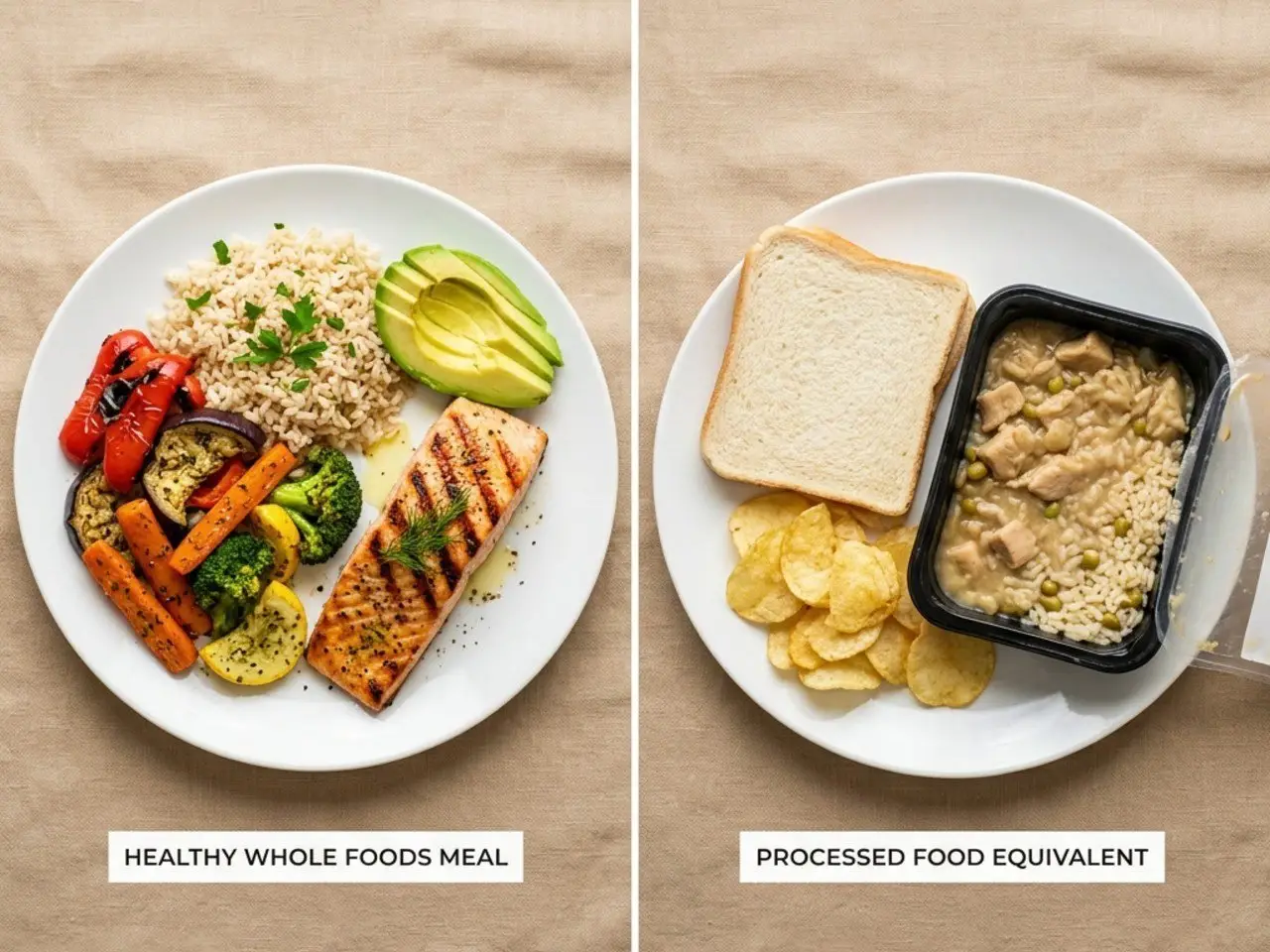
Way #4: Eat Whole, Low-Glycaemic Foods To Stabilise Insulin
Replacing refined carbohydrates and ultra-processed foods with whole, minimally processed, low-glycaemic alternatives improves insulin sensitivity — the body's ability to use glucose efficiently — which directly reduces fat storage, stabilises energy levels, eliminates the blood sugar swings that drive cravings, and supports the hormonal environment conducive to fat loss over fat storage.
[VISUAL 4 — Whole foods vs. processed comparison]
Nano Banana prompt: "Side by side comparison: left side shows a colourful plate of whole foods — brown rice, roasted vegetables, grilled fish, avocado; right side shows ultra-processed equivalent — white bread, crisps, ready meal; both identical portion sizes; clean minimal styling; warm tones"
Insulin is the body's primary fat-storage hormone. When blood sugar rises rapidly — as it does after eating refined grains, sugar, and ultra-processed foods — the pancreas releases a large insulin spike. Chronically elevated insulin creates a hormonal environment that preferentially promotes fat storage, particularly in the abdominal region, and suppresses fat mobilisation.
The glycaemic index (GI) measures how quickly a food raises blood sugar. Low-GI foods (GI under 55) raise blood sugar slowly and steadily, resulting in smaller insulin responses, sustained energy, and significantly better hunger control compared to high-GI foods.
The Insulin-Sensitive Eating Pattern
Eat more of:
- Non-starchy vegetables (all types — minimal glycaemic impact, maximum fibre and micronutrients).
- Legumes (lentils, chickpeas, black beans — low GI, high protein and fibre)
- Whole grains (oats, brown rice, quinoa, barley — significantly lower GI than refined equivalents).
- Lean proteins (minimal insulin response; supports muscle preservation).
- Healthy fats (avocado, olive oil, nuts — minimal insulin impact; promotes satiety).
Reduce significantly:
- Refined grains (white bread, white rice, white pasta — high GI, rapid insulin spike).
- Added sugars (all forms — direct insulin drivers).
- Ultra-processed foods (engineered palatability drives overconsumption).
- Sweetened beverages (fastest and most significant insulin spikers).
For women navigating perimenopause, when insulin sensitivity naturally decreases due to oestrogen decline, adopting a low-glycaemic eating pattern becomes particularly important for both weight management and metabolic health. Understanding how hormones affect weight loss provides the essential context for why this strategy is especially impactful for women in their 40s and 50s.

FACT: Miscalculated decisions come into play when sleep is diminished, stay alert and fresh, so you don’t get lazy and choose bad eating habits.
Way #5: Optimise Sleep And Manage Cortisol
Sleep deprivation and chronic stress cause weight gain through direct hormonal mechanisms — not merely by increasing appetite or reducing motivation to exercise. Insufficient sleep (fewer than 7 hours per night) elevates ghrelin (hunger hormone) by up to 24% and reduces leptin (satiety hormone) by up to 18%, creating a physiological drive to overeat that no amount of willpower consistently overcomes.
This is biology. This is not a weakness.
The cortisol-fat storage connection is equally direct. Chronically elevated cortisol — from work stress, relationship stress, sleep deprivation, or excessive exercise — activates fat storage mechanisms in visceral (abdominal) adipose tissue, suppresses thyroid function, impairs insulin sensitivity, and promotes muscle breakdown. Women under chronic stress are not struggling with willpower. They are fighting against a hormonal environment actively promoting fat storage.
The Sleep-Weight Connection: What The Research Shows
A landmark study from the University of Chicago found that sleep-deprived dieters lost 55% less fat and 60% more muscle compared to well-rested dieters on the identical calorie-controlled diet. The composition of weight loss was dramatically different — not just the amount.
Practical sleep hygiene for weight loss:
- 7-9 hours is the target: Below 6 hours per night, the hormonal disruption to ghrelin and leptin makes calorie control significantly harder.
- Consistent sleep schedule: Irregular bedtimes disrupt circadian cortisol rhythms, elevating baseline stress hormone levels.
- Bedroom temperature: 65-68°F (18-20°C) is the optimal range for deep sleep quality.
- No screens 60 minutes before bed: Blue light suppresses melatonin and delays sleep onset by 60-90 minutes on average.
- Morning light exposure: 10-15 minutes of outdoor morning light sets the circadian clock, improving cortisol timing and sleep quality that night.
Stress Management As A Fat Loss Tool
Managing cortisol is not a soft wellness practice. It is a metabolic necessity for women's fat loss. Pairing your nutrition and exercise strategy with stress reduction — through daily meditation, yoga, nature exposure, or breathwork — directly addresses one of the most significant hormonal barriers to fat loss.

Way #6: Practice Mindful Eating And Identify Emotional Triggers
Mindful eating — the practice of eating with full attention, without distraction, and with awareness of hunger and satiety signals — reduces overall calorie intake by an average of 15-20% without any deliberate restriction, according to research from Harvard Medical School. It also directly addresses emotional eating — the most common driver of unplanned calorie consumption in women under stress.
Most overeating is not hunger-driven. It is habit-driven, stress-driven, or boredom-driven — and it happens on autopilot, most often while distracted by screens. The research is consistent: people eat significantly more when distracted, take longer to register satiety signals, and recall eating less than they actually consumed.
Mindful eating is not a diet. It is the practice of eating with enough awareness that your body's actual hunger and fullness signals — not external rules — guide how much you eat.
The Mindful Eating Framework
Before eating:
- Ask: Am I physically hungry, or am I stressed/bored/tired? Identifying the trigger prevents automatic eating.
- Rate your hunger on a 1-10 scale. Begin eating at 4-5 (genuinely hungry). Stop at 6-7 (satisfied, not full).
During eating:
- Eliminate screens entirely. Eating while watching television increases consumption by an average of 25% in controlled studies.
- Eat slowly — put the fork down between bites. It takes 15-20 minutes for satiety hormones to register after eating begins.
- Notice flavours, textures, and satisfaction. This is not a ritual — it is the mechanism by which your brain registers the eating experience as satisfying.
Identifying emotional eating patterns:
Many women carry eating patterns shaped by stress, reward associations, or difficult emotions. Understanding how emotional and psychological factors contribute to weight gain is essential context for any woman whose eating patterns feel driven by something beyond physical hunger.

Way #7: Build Identity-Based Habits That Make Weight Loss Inevitable
The most important driver of permanent weight maintenance is not a diet plan or exercise programme — it is identity. Women who successfully maintain fat loss long-term describe themselves as "someone who moves daily" or "someone who eats to fuel my body" — not as someone on a diet. This shift from behaviour-based to identity-based self-concept changes the decision-making process at every meal and every workout, removing the need for constant willpower.
Behaviour change research, most prominently articulated by James Clear in Atomic Habits, shows that habits driven by identity ("I am the kind of person who...") are significantly more durable than habits driven by desired outcomes ("I want to..."). The reason: identity-based habits are self-confirming — each small action reinforces the identity, making the next action easier.
Building Your Weight Loss Identity In Practice
Step 1: Choose your identity statement
Not: "I want to lose 30 lbs." But: "I am becoming a woman who takes care of her body every day."
Every subsequent choice — a workout, a meal decision, a glass of water — becomes a vote for or against that identity. No single choice is decisive. The pattern of choices, accumulated over weeks and months, is what transforms identity from aspiration to fact.
Step 2: Engineer your environment for the new identity
- Remove ultra-processed foods from easy access (you cannot white-knuckle past them every evening).
- Prepare workout clothes the night before (removes the morning friction point).
- Meal prep weekly, so nutritious food is always the path of least resistance
- Find at least one accountability structure (a partner, a class, a programme) that makes consistency social.
Step 3: Define what "good enough" looks like
Research on sustainable weight loss consistently shows that the pursuit of perfection — 100% adherence to a plan — produces worse long-term outcomes than consistent 80% adherence. A missed workout is not failure. Missing two months is a failure. One bad meal changes nothing. Six months of consistently bad meals change everything.
The standard we advocate: 70% completion is still a win. The goal is sustainable progress, not perfect execution.
What Do You Do When You Hit A Weight Loss Plateau?
A weight loss plateau — when progress stalls despite continued effort — is a normal physiological response to sustained calorie deficit, not a sign that the approach has stopped working. The body adapts to reduced calorie intake by decreasing non-exercise movement, reducing body temperature slightly, and improving metabolic efficiency. These adaptations can be addressed with targeted adjustments.
When the scale stalls for more than 2-3 weeks:
- Reassess your calorie target: As body weight decreases, TDEE decreases. The same calorie intake that produced a 500-calorie deficit at 180 lbs may produce only a 200-calorie deficit at 160 lbs. Recalculate.
- Increase protein: Ensures muscle is being preserved, not lost — muscle loss is the most common cause of stalling metabolic rate.
- Add or increase resistance training: Muscle building requires progressive challenge — if the same workout is performed with the same weights for months, muscular demand has plateaued.
- Consider a diet break: One to two weeks at maintenance calories (not surplus) allows stress hormones and hunger hormones to normalise, often restarting fat loss when the deficit is resumed.
- Check sleep: Even a few consecutive nights of poor sleep can stall fat loss through hormonal mechanisms, regardless of dietary adherence.
Understanding why physical activity is essential — even more than weight loss for long-term health outcomes provides motivational context that extends beyond the plateau: the goal is health and vitality, not just a number on the scale.
Join Our Mailing List
Join thousands of women inside our community and receive our free guide, 10 Actions That Support Permanent Weight Loss — the exact behavioural shifts that make the difference between a two-week attempt and a lasting transformation.
No restriction plans. No guilt. Just what actually works — for real women with real lives.
Your Next Step: The Women's Fat Loss Report
You now have the seven strategies that end the yo-yo cycle — built on the biology of women's bodies, not the assumption of unlimited willpower.
The Lean Body Formula Special Report builds on every principle in this article: the specific actions, the nutrition framework, and the mindset tools that turn these strategies into a complete, permanent system — written by a woman, for women, based on what the science actually supports.
Join thousands of women in our free community and claim your copy — completely free.
No extreme plans. No false promises. Just what actually works.
Related Articles
- How To Lose Pregnancy Weight Fast 3 Effective Ways
- How To Lose Weight During Perimenopause Without Starving Yourself
- 3 Tips Helping Women Lose Weight
- Ultimate Guide To Lose Weight Without Dieting
- 4 Best Exercises For Women To Lose Weight
- Why Weight Training Is Important To Weight Loss
- 5 Powerful Tips To Motivate Themselves To Lose Weight
The Bottom Line
Permanent fat loss is not achieved by finding the right diet. It is achieved by building the right system — one designed for a woman's biology, her real life, and her long-term health rather than a short-term number on the scale.
The seven strategies work because each addresses a different failure mode of conventional dieting:
- A moderate deficit avoids metabolic adaptation.
- Protein preserves muscle and controls hunger hormonally.
- Resistance training raises the metabolic rate that sustains fat loss.
- Whole foods stabilise insulin and eliminate blood sugar-driven cravings.
- Sleep and stress management address the hormonal barriers to fat loss.
- Mindful eating resolves the habitual overconsumption that calorie counting misses.
- Identity-based habits create the self-concept that makes consistency automatic.
Start with one or two. Add more when the first feels natural. Within six months, you will have built a foundation that is not a diet — it is a life.
Glossary Of Key Terms
FAQ
Research on long-term weight maintenance shows that women who successfully keep weight off for more than five years typically spend 12-24 months in a gradual fat-loss phase, losing 0.5-1 lb per week. The slow pace that frustrates most dieters is precisely what enables permanence: gradual loss preserves muscle mass, avoids metabolic adaptation, and allows time for new behaviours to become automatic habits. Expecting 1 lb per week for 6-12 months is realistic and sustainable; expecting 3-4 lbs per week is not.
The most common causes of weight regain are: (1) metabolic adaptation from excessive caloric restriction, which permanently lowers resting metabolic rate; (2) muscle mass loss during dieting that reduces the calorie-burning capacity of the body; (3) the psychological rebound effect of restriction, which creates overcompensatory eating once the "diet" ends; and (4) return to the food environment and habits that produced the original weight gain, without sustainable behavioural replacement. The strategies in this article address all four mechanisms.
Research consistently supports 0.7-1.0g of protein per pound of body weight (1.6-2.2g per kg) for women in a calorie deficit. At this intake level, muscle mass is protected during fat loss, hunger is reduced through hormonal mechanisms (lower ghrelin, higher GLP-1 and PYY), and the thermic effect of protein increases daily calorie expenditure. Most women eating conventional Western diets consume 50-70g of protein per day — approximately half the optimal level for fat loss.
Intermittent fasting can be an effective tool for creating a calorie deficit and improving insulin sensitivity for some women — particularly those who find time-restricted eating more manageable than continuous calorie tracking. However, the research on intermittent fasting specifically in women shows more variable results than in men, potentially due to hormonal sensitivity to fasting signals. Women with a history of disordered eating, those who are pregnant or breastfeeding, and those in perimenopause should approach extended fasting protocols with caution and medical guidance.
Perimenopause (typically 40-51 years old) is associated with declining oestrogen, which reduces insulin sensitivity, promotes visceral fat storage (particularly in the abdomen), reduces muscle mass, disrupts sleep, and often increases stress reactivity — all of which work against conventional fat-loss approaches. Women in perimenopause typically need to increase protein intake, prioritise resistance training above cardio, improve sleep quality, and manage stress more actively than younger women to achieve the same results from the same dietary effort.
The most common and costly weight loss mistakes for women are: (1) cutting calories too aggressively, triggering metabolic adaptation; (2) not eating enough protein, causing muscle loss that slows metabolism; (3) focusing only on cardio and neglecting resistance training; (4) ignoring sleep and stress, which directly cause fat storage; (5) using the scale as the only success metric, which misses muscle gain; and (6) adopting a diet they cannot maintain indefinitely, setting up the yo-yo cycle.
You Know Why. Now Learn Exactly How
Join thousands of women inside our community and receive our free guide: 10 Actions That Support Permanent Weight Loss — the practical, sustainable habits that translate everything you just read into real, lasting results.
No fad diets. No extreme plans. Just what the research actually supports — written for real women.
Awesome blog! I like it a lot! Thanks and keep up the great work!
Thank you for a good word…