

Fresh And Healthy Food Is Just Too Expensive (Or Is It?)
How To Eat Nutritious Healthy Food On A Real Budget, Without Giving Up Taste Or Results

Healthy does not mean starving yourself, ever. Healthy means eating the right food in the right amount.
Karen Salmansohn ‧ Self-help book author and award-winning designer
Summary (TL;DR)
A 2025 Pew Research survey found that 69% of Americans say higher food prices make healthy eating harder. That frustration is real and valid. But the belief that healthy food is simply too expensive is largely a shopping strategy problem, not a budget problem.
Eggs, lentils, oats, frozen vegetables, and canned fish are among the cheapest, most nutrient-dense foods you can buy. With a smarter system, eating well can cost significantly less than your current grocery habit.
You're standing in the produce section doing the mental maths. A bag of spinach: $4.99. A frozen pizza: $3.49. The pizza wins. Again.
Sound familiar?
If you've ever walked away from the fresh vegetable aisle feeling like eating healthy food is a luxury you can't quite justify, you're not alone. A 2025 Pew Research Center survey of over 5,000 U.S. adults found that 90% of Americans say the price of healthy food has gotten more expensive in recent years. And 69% say those price increases are making it harder to eat well.
That frustration is real. But here's the thing: the belief that healthy food is inherently too expensive is, in many cases, a framing problem more than a money problem.
This post pulls the lens back. It looks at what the research actually says about food costs, which genuinely nutritious foods are the most affordable on the planet, and lays out a practical system called the Budget Nutrition Blueprint for eating well without blowing your grocery budget.
Medical & Referral Disclaimer
This article is for educational and informational purposes only. It is not a substitute for professional medical advice, diagnosis, or treatment. Individual nutritional needs vary. Always consult a qualified healthcare professional or registered dietitian before making significant changes to your eating habits, particularly if you have existing health conditions.
Key Takeaways
- 90% of Americans say healthy food has become more expensive; 69% say it makes healthy eating harder (Pew Research, 2025).
- Ultra-processed foods cost around 55 cents per 100 calories vs. $1.45 for unprocessed whole foods, but that comparison ignores nutritional value entirely.
- Frozen vegetables retain 90–95% of their fibre and comparable vitamins to fresh, making them one of the best-value healthy food buys available.
- Lentils, eggs, oats, beans, and canned fish are among the cheapest protein sources per gram of any food category.
- Meal planning is linked to lower grocery spend, less food waste, and better diet quality in multiple studies.
- 100 grams of daily protein can be achieved for under $3 using budget-friendly whole foods.
- The real cost of ultra-processed food is not on the price tag: a 2024 umbrella review linked high UPF intake to 32 separate health conditions.
- The problem is rarely the budget. It's the shopping strategy.
Video Overview
Is Healthy Food Actually More Expensive Than Junk Food?
It depends entirely on how you measure. Per calorie, ultra-processed foods are cheaper. Per nutrient delivered, healthy whole foods often cost the same or less. And, per long-term health outcome, the "cheap" junk food option is far more expensive than anything in the produce aisle.
This isn't just a perspective shift. It's backed by USDA Economic Research Service data showing that when you measure food cost by serving or by nutrient density rather than by calorie, the price gap between healthy and unhealthy food narrows significantly or disappears altogether.
The comparison that makes junk food look cheap is the calorie-for-calorie comparison. Ultra-processed foods cost around 55 cents per 100 calories, compared with $1.45 for unprocessed whole foods. If you're trying to fill up on the cheapest possible calories, processed food wins every time.
But that's not the goal.
Why does healthy food seem more expensive? Because we typically compare the wrong things: the premium end of the healthy food category (organic berries, cold-pressed juice, artisan grain bowls) against the budget end of the junk food category (value-meal deals, 99-cent snack packs). That is a rigged race. A more honest comparison is a bag of dried lentils, a carton of eggs, and a bag of frozen broccoli against a multi-ingredient ready meal or a fast food combo. Run those numbers and the whole picture changes.
The Pew Research finding that 46% of lower-income Americans say rising food costs make it a lot harder to eat healthily is real and important. Economic inequality genuinely affects food access. But for the majority of people who feel healthy eating is out of reach, the barrier is more often knowledge and habit than income.
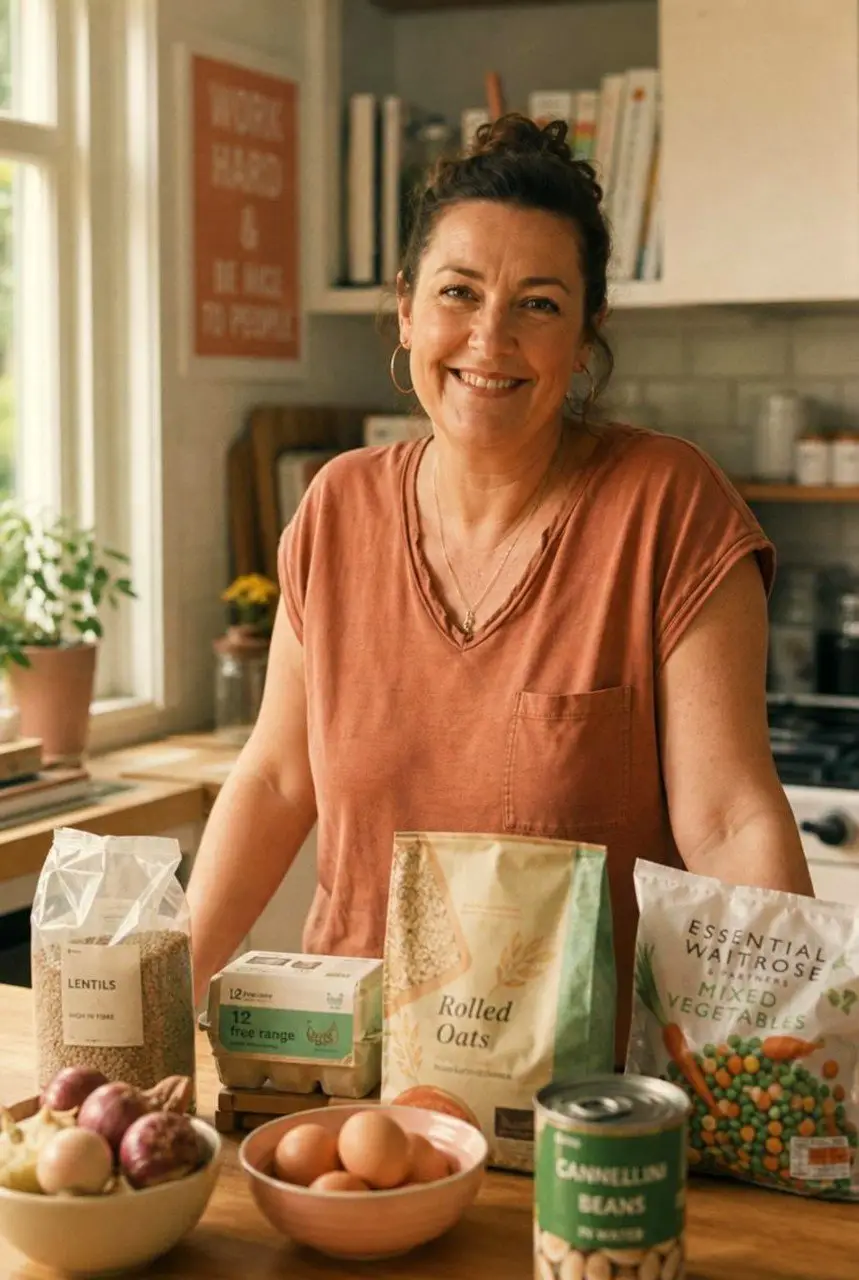
The Hidden Price You Pay For Cheap Processed Food
Let's talk about the cost that never appears on the price tag.
A 2024 umbrella review analysed 45 meta-analyses covering nearly 10 million people. Its finding: diets high in ultra-processed foods are associated with 32 different health conditions. That list includes obesity, type 2 diabetes, cardiovascular disease, several cancers, anxiety, depression, and all-cause mortality.
What is the long-term cost of eating ultra-processed food? The financial cost of food-related chronic disease is enormous. A 2024 analysis estimated the cost of food-related chronic disease in the UK alone at £268 billion, a figure comparable to the entire government health budget. Multiply that across the US and global populations, and the "cheap" food becomes the most expensive food system ever built.
This isn't about guilt or moralising. It's about the full picture.
The research is clear that ultra-processed foods are nutritionally not equivalent to whole foods, even when their macro numbers look similar on paper. Processing strips food of the fibre, phytochemicals, and structural properties that whole foods provide, and adds ingredients (emulsifiers, artificial flavours, refined sugars) that disrupt gut microbiome health and metabolic regulation.
So the comparison is never really $3.49 pizza vs. $4.99 spinach. It's a $3.49 pizza now vs. a pattern of eating that increases your risk of the diseases that cost the most to treat and that take the most from your quality of life.
That reframe matters. It doesn't make the spinach free. But it changes the calculation. And it doesn't avoid the habits that slow your metabolism over time.
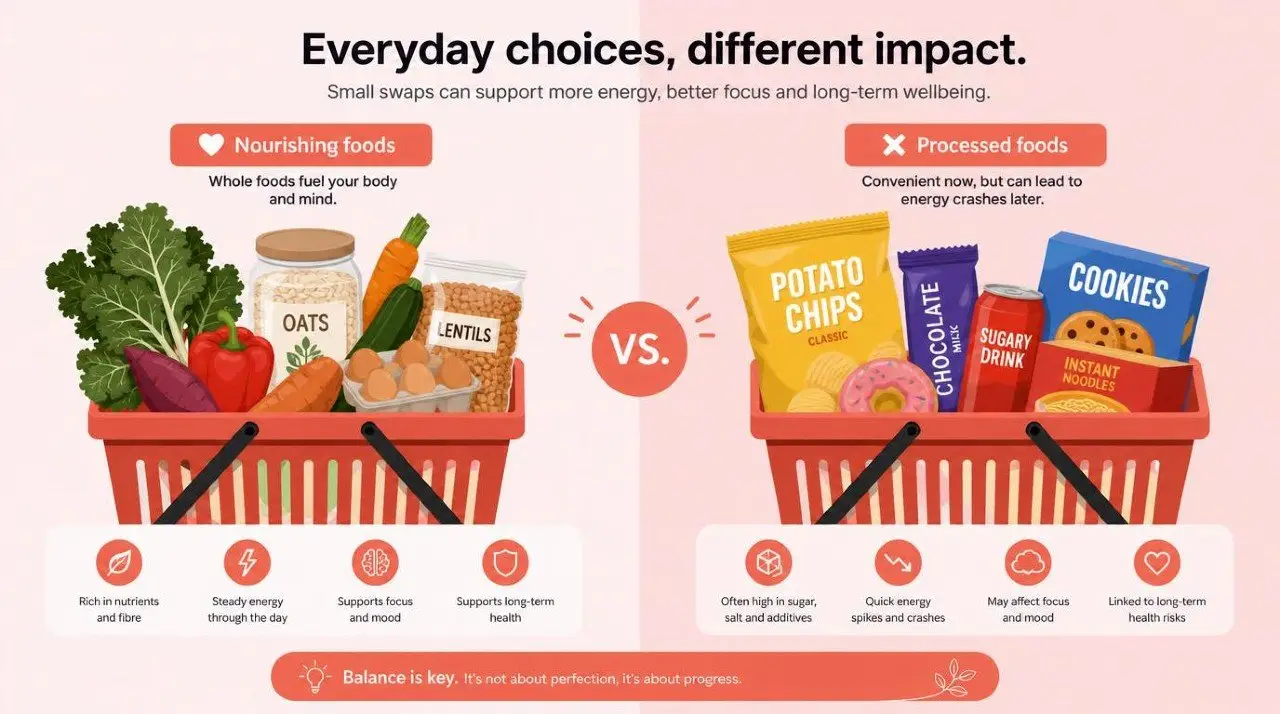
Which Healthy Foods Are Genuinely Cheap?
The cheapest, most nutritious foods in existence are not premium health products. They are humble, shelf-stable staples: lentils, eggs, oats, frozen vegetables, canned beans, canned fish, and plain Greek yogurt. Most cost well under $2 per serving and deliver more nutrition per dollar than almost anything else in the supermarket.
What are the cheapest healthy foods to buy on a budget? Here's an honest breakdown, based on widely available US retail pricing:
| Food | Approximate Cost | Protein Per Serving | Why It Earns Its Place |
|---|---|---|---|
| Dried lentils | $0.20–0.30/serving | 18g | Cheapest protein per gram of any food |
| Eggs (whole) | $0.25–0.50/egg | 6g per egg | Complete protein, versatile, hormone-supportive |
| Rolled oats | $0.15–0.25/serving | 5g | Fibre, slow-release energy, gut health |
| Canned chickpeas | $0.30–0.50/serving | 7g | Protein, fibre, iron, easy to cook |
| Frozen broccoli | $0.40–0.60/serving | 3g | Vitamin C, K, folate, sulforaphane |
| Canned tuna (in water) | $0.80–1.20/serving | 20g | Lean protein, omega-3s |
| Plain Greek yogurt (full-fat) | $0.50–0.80/serving | 15g | Protein, probiotics, calcium |
| Frozen spinach | $0.30–0.50/serving | 3g | Iron, magnesium, folate |
| Brown rice | $0.15–0.25/serving | 4g | Whole grain, energy, fibre |
| Canned salmon | $1.00–1.50/serving | 22g | Omega-3s, calcium, vitamin D |
| Peanut butter (natural) | $0.25–0.40/serving | 8g | Healthy fats, protein, portable |
| Cottage cheese | $0.50–0.70/serving | 14g | Casein protein, calcium |
A day's worth of genuinely nutritious eating from this list costs around $5–8 in most US markets. That is cheaper than most fast food combos. A high-protein nutrition strategy built from these foundations is not a sacrifice. It's a smart system.
What should women eat in the morning on a budget? Eggs with frozen spinach, or a bowl of oats with Greek yogurt and a spoonful of peanut butter, are two of the best hormone-balancing breakfast options you can make for under $2.
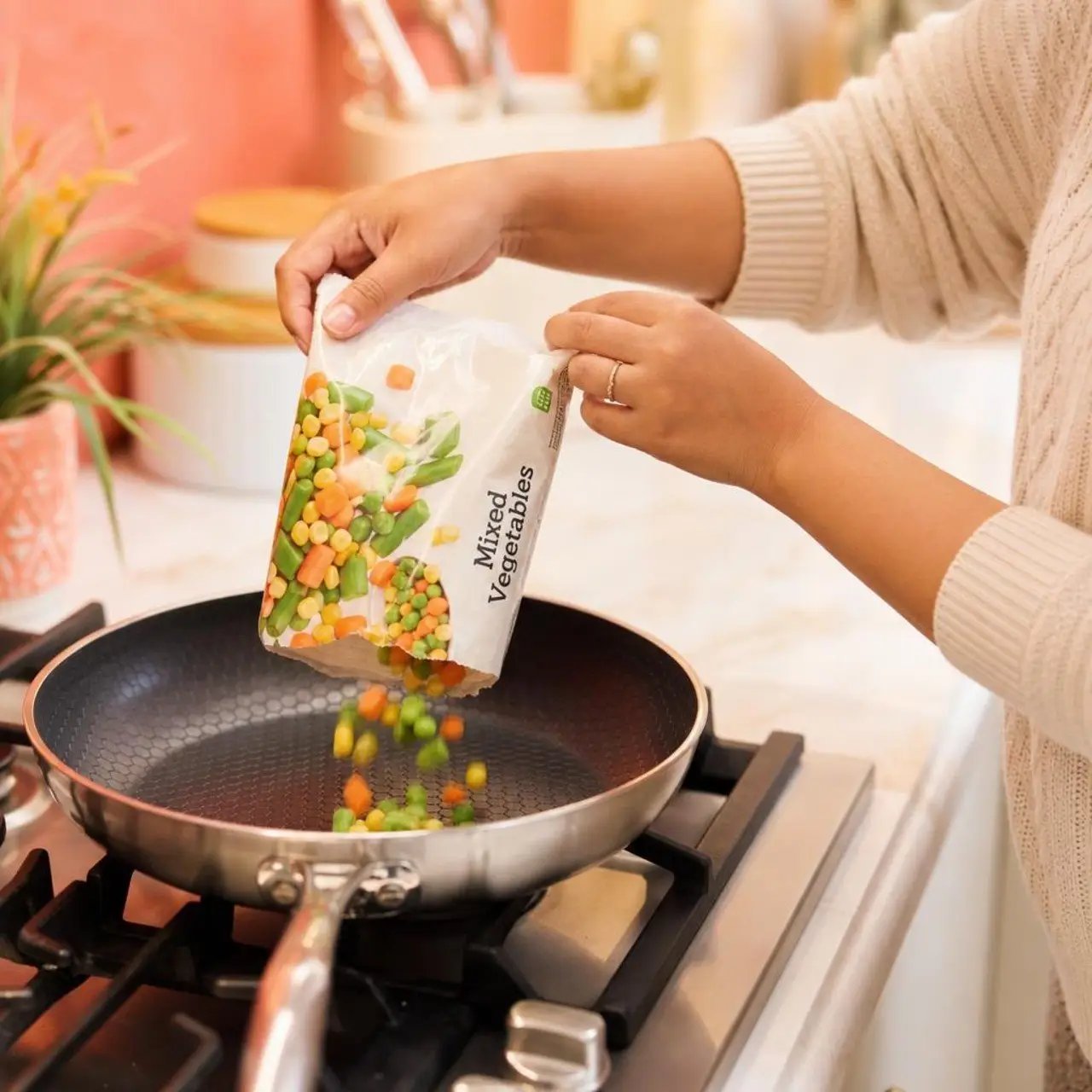
Is Frozen Or Canned Food Actually Nutritious?
Yes, and in some cases, more nutritious than the fresh produce you've had sitting in the fridge for five days. Research consistently shows that frozen vegetables retain 90–95% of their fibre and comparable vitamin levels to fresh. Canned legumes and fish are equally valid choices, provided you choose low-sodium versions.
This one surprises a lot of people. We've been conditioned to think fresh is best. But the research tells a more nuanced story.
A study published in the Journal of Food Composition and Analysis compared vitamin levels in fresh, fresh-stored (after five days in the refrigerator), and frozen produce. The finding: frozen produce was comparable in vitamins to fresh on the day of purchase, and in many cases, more nutritious than fresh produce that had been refrigerated for five days. The University of Reading confirms that frozen foods retain fibre at rates of 90–95% compared to fresh.
Why does frozen food retain nutrients? Because produce destined for freezing is typically frozen within hours of harvest, at peak ripeness. Fresh produce, by contrast, is often picked before peak ripeness, transported for days, and stored before it reaches you. The vitamin C in your "fresh" broccoli may have been declining for a week before you eat it.
Does canned food count as healthy food? Mostly yes, with caveats. Canned beans, lentils, and tomatoes are nutritionally excellent. Look for versions labelled "no added salt" or "low sodium." Canned fish (tuna, salmon, sardines in water) are outstanding sources of lean protein and omega-3 fatty acids. The main things to check: sodium content and the presence of added sugars, which appear in some canned fruits.
The practical takeaway: frozen and canned are not compromise choices. They're smart choices that make eating healthy food consistently easier and cheaper.
Why Meal Planning Is the Biggest Budget Lever You Have
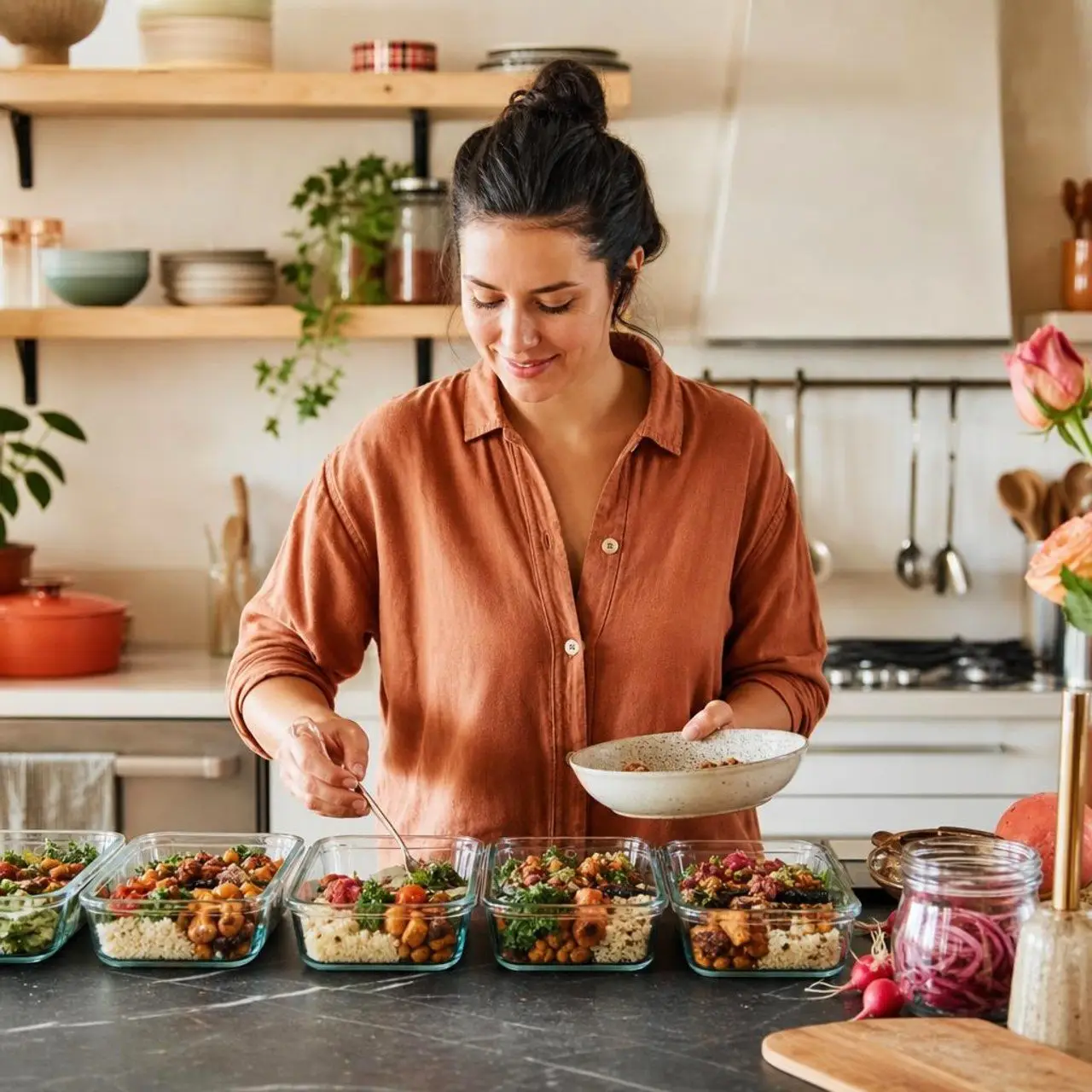
Most people try to solve the "healthy food is expensive" problem at the checkout. The real solution happens before you leave the house.
Meal planning is one of the most evidence-backed tools available for eating healthier at a lower cost. Research published in PMC tracking over 40,000 French adults found that people who planned their meals ate a wider variety of nutrient-dense foods and had significantly better diet quality than those who did not. A separate 2024 PMC study found that low-income households who implemented meal planning could stretch their budgets while maintaining adequate nutrition.
How does meal planning save money? In three specific ways: you buy only what you need (so less food is wasted), you shop with a list (so you make fewer impulsive purchases), and you cook in batches (so the cost-per-meal drops substantially). Brown University Health estimates that meal planning directly reduces grocery bills and cuts food waste, which the average American household wastes at a rate of nearly 30–40% of purchased food.
Here's what a realistic week of healthy eating can look like on a budget:
| Meal | Ingredients | Approx. Cost |
|---|---|---|
| Breakfast (5x) | Oats, Greek yogurt, frozen berries | $1.20/day |
| Lunch (5x) | Lentil soup (batch cooked), whole grain bread | $1.50/day |
| Dinner (5x) | Frozen stir-fry vegetables, brown rice, eggs or canned tuna | $2.50/day |
| Snacks (5x) | Apple, peanut butter, cottage cheese | $1.80/day |
| Daily total | ~$7.00/day | |
| Weekly total | ~$49/week |
That's a week of genuinely nutritious, protein-adequate, whole-food eating for around $50. Less than most people spend on coffee and takeaway lunches alone.
More meal prep ideas for women can help you build the batch-cooking habit that makes this sustainable. And many of the budget-friendly healthy snacks that fit this framework are easier to prepare than they look.
Join Our Mailing List
Join thousands of women inside our community and receive our free guide, 10 Actions That Support Permanent Weight Loss — the exact behavioural shifts that make the difference between a two-week attempt and a lasting transformation.
No restriction plans. No guilt. Just what actually works — for real women with real lives.
The Budget Nutrition Blueprint: A Practical System For Eating Well For Less
I want to share something that changed how I think about grocery shopping entirely. For a long time, I looked at my grocery bill and assumed that eating well meant spending more. Then I started tracking cost-per-meal instead of cost-per-item, and the maths shifted completely.
A bag of lentils costs around $2 and provides six hearty servings of protein. A roast chicken stretches across three meals. A bag of frozen vegetables costs less than a can of soda and lasts a week. The problem was never the budget. The problem was the strategy.
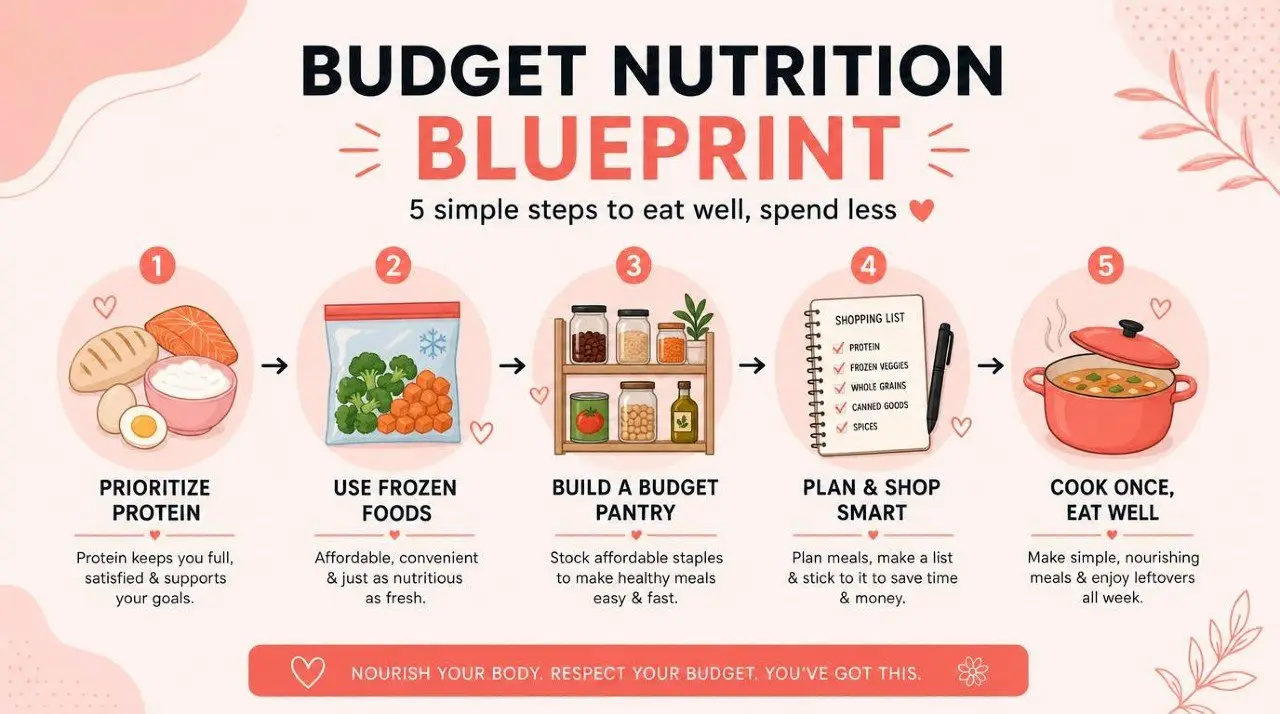
Here's the Budget Nutrition Blueprint: five shifts that change your grocery economics without touching your nutrition.
1. Build Your Protein Base With The Cheapest Sources First
Protein is the most important macronutrient for body composition, hunger management, and metabolic health, especially for women over 40. And the cheapest sources of it are right at the bottom of most shopping lists. Start your meal planning with eggs, lentils, canned fish, beans, and Greek yogurt as your protein anchors. These form the foundation around which every meal is built.
2. Go Frozen For Produce, Fresh For What You'll Use Today
Use frozen vegetables as your primary produce choice and save fresh items for what you'll eat within 48 hours. Frozen broccoli, spinach, peas, and mixed vegetables are as nutritious as fresh and far less likely to go to waste. This single habit alone cuts food waste costs sharply.

3. Build A Rotating Pantry Of Shelf-Stable Staples
Dried lentils, oats, canned tomatoes, canned beans, brown rice, and whole grain pasta are all inexpensive, long-lasting, and highly nutritious. When you have these stocked, putting together a healthy meal becomes a five-minute task rather than a shopping trip. Buy in bulk when they're on offer.
4. Plan Before You Shop And Never Shop Hungry
Write out five dinners before you go to the store. Build your shopping list around those meals. That's it. This single step eliminates most impulse purchases and most food waste. Check what you already have before you buy anything. Many households waste money buying duplicates of items they already own.
5. Cook Once, Eat Three Times
Batch cooking is the single highest-leverage kitchen habit for eating healthily on a budget. A pot of lentil soup, a batch of hard-boiled eggs, a tray of roasted vegetables: each of these takes 30 minutes and provides multiple meals. The cost per serving drops sharply when you cook in bulk.
A sustainable, healthy diet isn't built on willpower or expensive superfoods. It's built on systems like this one.
Want practical, evidence-based nutrition guidance designed specifically for women? Join our newsletter for weekly insights on healthy eating, fat loss, and hormone health for women. Real food, real results.
Related Articles
The Bottom Line
Here's what the evidence actually says about healthy food and cost. Yes, healthy diets are more expensive than ultra-processed food baskets when measured by calories. But no, eating nutritiously does not have to break the budget, and the long-term cost of not eating well is far higher than any premium on produce.
Eggs, lentils, oats, frozen vegetables, canned beans, and Greek yogurt are not consolation prizes. They are some of the most powerful foods you can put in your body, and they are genuinely affordable. The shift from "healthy food is too expensive" to "I don't yet have the right system" is one of the most valuable mindset changes you can make for your long-term health.
You don't need a bigger grocery budget. You need a better strategy.
Glossary Of Key Terms
FAQ
The cheapest genuinely nutritious foods are dried lentils, eggs, rolled oats, canned chickpeas and beans, frozen vegetables (broccoli, spinach, peas), canned tuna and salmon, plain Greek yogurt, brown rice, and natural peanut butter. Most cost well under $1 per serving. Lentils in particular are the cheapest source of protein per gram of virtually any food available in a standard supermarket. Building your meals around these staples rather than fresh premium produce makes healthy eating accessible at almost any budget level.
Yes, and sometimes more so. Research published in the Journal of Food Composition and Analysis found that frozen produce was nutritionally comparable to fresh on the day of purchase, and more nutritious than fresh produce stored in the refrigerator for five days.
Frozen produce is typically frozen within hours of harvest, locking in nutrients at peak ripeness. Fresh produce, by contrast, may have spent days in transit and cold storage before reaching you. Frozen broccoli, spinach, peas, and mixed vegetables are excellent, affordable choices.
Focus your budget on the most affordable nutrient-dense foods: oats, eggs, dried lentils, canned beans, frozen vegetables, brown rice, and Greek yogurt. Meal plan before you shop so you buy only what you need. Cook in batches: a pot of lentil soup, a tray of roasted vegetables, and a batch of hard-boiled eggs gives you a week's worth of lunch and dinner foundations for under $15.
Limit fresh produce to items you'll eat within 48 hours and use frozen for everything else. The sample weekly plan in this article comes in at around $49 per person, based on standard US retail pricing.
You can make significant progress without much cooking at all. No-cook healthy food options include Greek yogurt with frozen fruit (thawed overnight), canned tuna on whole grain crackers, hard-boiled eggs (many supermarkets sell these pre-cooked), cottage cheese with canned peaches (in juice, not syrup), and peanut butter with oat cakes. Frozen meals can also be nutritious if you choose carefully: look for options with recognisable whole food ingredients, under 600mg of sodium, at least 15g of protein, and minimal added sugar.
For women, the priority protein sources on a budget are eggs (6g protein per egg, around 25–50 cents each), lentils (18g per cooked cup, under 30 cents per serving), Greek yogurt (15g per serving, under $1), canned tuna (20g per serving, around $1), cottage cheese (14g per serving, under $1), and canned salmon (22g per serving, around $1.50). These foods also support muscle retention, hormone production, and satiety, which are particularly important for women over 40. A high-protein nutrition strategy built around these sources is both affordable and highly effective.
A nutritious home-cooked meal for one person typically costs between $1.50 and $4.00 when built around whole food staples. For example: lentil and vegetable soup costs roughly $1.00 per bowl; a two-egg omelette with frozen spinach costs around $1.20; a tuna and chickpea salad with brown rice costs approximately $2.50; and a simple stir-fry with frozen vegetables, eggs, and brown rice costs around $1.80. These are far below the average cost of a fast food meal ($8–12) or a restaurant meal ($15–25), and they are considerably more nutritious by virtually every measure.
Yes, significantly. Organic produce typically costs 20–100% more than conventional alternatives, depending on the item. The good news is that you don't need to buy organic to eat nutritiously. Conventional eggs, lentils, oats, canned fish, and frozen vegetables are all excellent choices regardless of organic certification.
If you do want to prioritise organic for any items, focus on the produce you eat in the largest quantities and highest frequency: berries, leafy greens, and apples are commonly cited as produce categories where pesticide residue is highest in conventional versions. For everything else, conventional is fine and much more affordable.