
Stop Fighting Your Feelings — Use Them As Fuel With This Science-Backed Mood-Based Workout System
Dr. John Ratey
Spark: The Revolutionary New Science of Exercise and the Brain
Exercise is the single best thing you can do for your brain in terms of mood, memory, and learning.
The Executive Summary
Discover mood-based workouts, a system syncing exercise to your emotional and energy levels for better fitness consistency. Instead of pushing through, match your workout to how you feel, acknowledging that life, hormones, and stress impact your capacity.
High-emotion states benefit from high-intensity workouts like kickboxing, while low-moods respond to low-impact activities. This approach reduces burnout and creates sustainable habits, making intuitive movement a smarter way to exercise. Remember, rest is also crucial! Syncing workouts improves consistency, performance, and long-term sustainability.
You've tied your sneakers. You've packed your bag. And somewhere between the car park and the gym door, the motivation evaporated.
Sound familiar?
Here's what most fitness advice gets wrong: it assumes you should feel the same every day. The same energy, the same drive, the same capacity for intensity. And when you don't — when life, hormones, sleep, or stress changes the equation — the standard advice is just to push through.
You don't have a motivation problem. You have a mood-matching problem.
Mood-based workouts — matching your exercise type and intensity to how you actually feel on a given day — are one of the most underutilised tools for long-term fitness consistency. And for women, whose energy and capacity fluctuate meaningfully across the hormonal cycle, it is not just a nice-to-have. It is a smarter system.
This guide shows you exactly how to do it.
Medical & Referral Disclaimer
This article is for informational purposes only and does not constitute professional medical or psychological advice. If you are experiencing significant mood disturbances, anxiety, or depression, please consult a qualified healthcare professional.
Key Takeaways
- Syncing your workout to your current mood improves consistency, performance, and long-term sustainability.
- Women's energy levels fluctuate across the menstrual cycle — honouring that is biology, not weakness.
- High-emotion states (anger, excitement) can fuel high-intensity workouts — with safety awareness.
- Low-mood states (sadness, fatigue) respond well to low-impact movement that triggers endorphin release.
- Intuitive movement is not an excuse to skip exercise — it is a smarter way to show up consistently.
- Rest is a valid — and necessary — part of any sustainable fitness routine.
What Are Mood-Based Workouts And Why Do They Work?
Mood-based workouts are a form of intuitive exercise where the type, intensity, and duration of physical activity is chosen to align with your current emotional and energy state — rather than following a rigid predetermined plan. This approach improves consistency, reduces burnout, and creates a healthier long-term relationship with movement.
The concept sits at the intersection of exercise science and psychology. Research consistently shows that emotional state directly affects physical performance: stress hormones alter muscle tension, mood influences perceived effort, and energy availability is tied to hormonal and psychological factors that change daily.
For women in particular, mood-based workouts acknowledge a simple reality: your body is not a machine running on a fixed schedule. Hormonal fluctuations across your cycle influence your energy, strength, pain tolerance, and emotional state — which means that forcing the same workout on a high-cortisol Tuesday as you do on a rested, motivated Saturday is working against your biology, not with it.
Why Intuitive Movement Builds Lasting Fitness Habits
The number one reason women abandon exercise programs is not laziness. It is the mismatch between how a program demands they feel and how they actually feel. When every session must be maximum intensity regardless of internal state, the system eventually breaks.
Mood-based workouts solve this by expanding the definition of a "successful workout." Any movement that matches your current capacity and moves you forward — even gently — is a win. That philosophy builds sustainable exercise habits that compound over months and years, rather than sprinting and crashing in cycles.
What Does Science Say About The Connection Between Mood And Exercise?
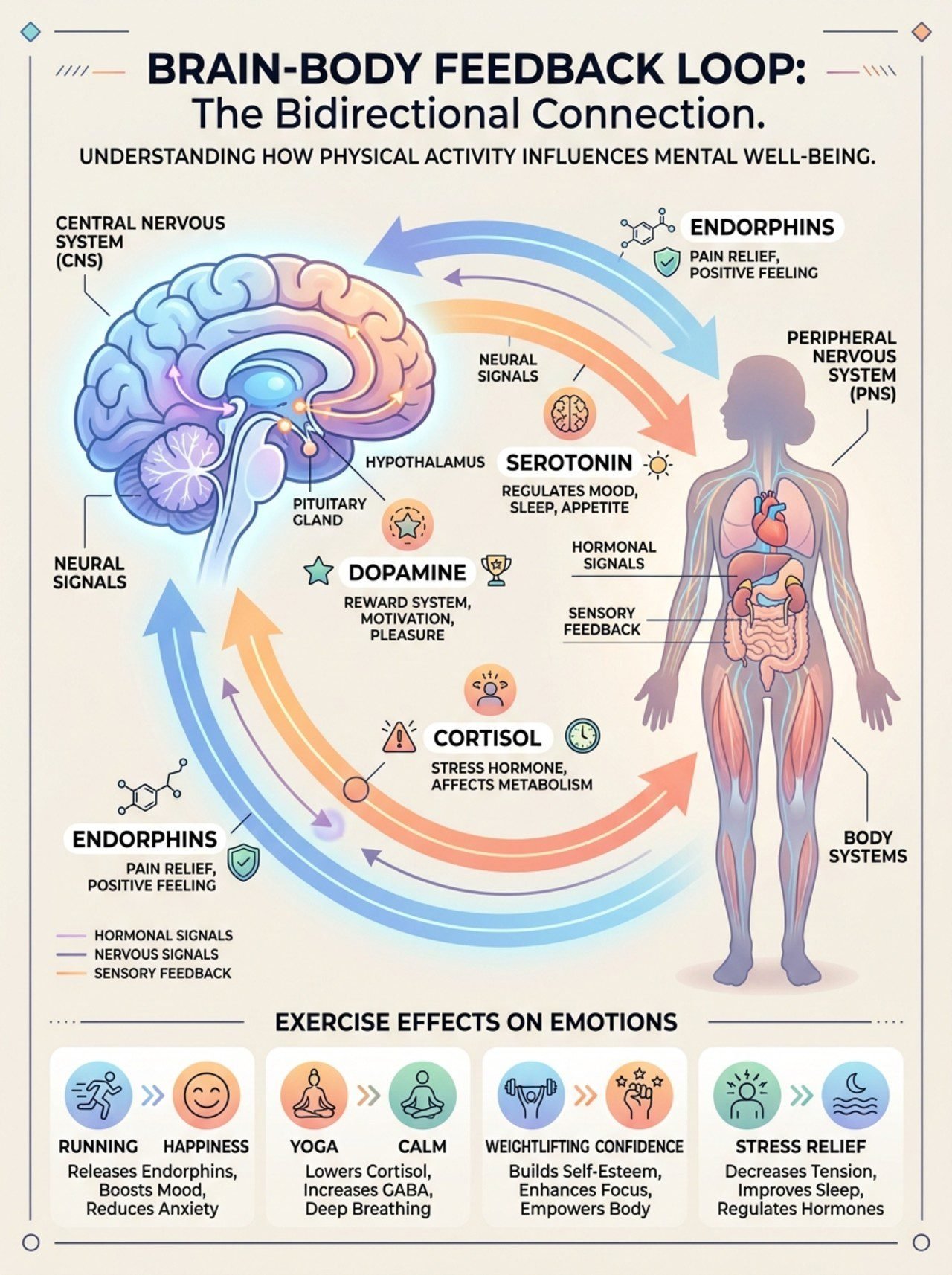
The scientific evidence for the mood-exercise relationship is extensive and compelling. Exercise triggers neurochemical changes — including endorphin release, serotonin production, and cortisol regulation — that directly alter mood. Conversely, emotional state measurably affects workout capacity and recovery.
According to the American Psychological Association, regular physical activity is one of the most effective evidence-based strategies for managing stress, anxiety, and low mood. The mechanism is neurochemical: exercise triggers the release of endorphins (the body's natural mood elevators), increases serotonin availability, and reduces circulating cortisol — the primary stress hormone.
Importantly, the relationship runs both ways. Your current emotional state — whether you are anxious, energised, depleted, or elated — affects which type of exercise will feel good, perform well, and benefit you most.
The Key Hormones At Work
| Neurochemical | Exercise Effect | Best Triggered By | Mood Benefit |
|---|---|---|---|
| Endorphins | Released during moderate-to-high intensity movement | Running, HIIT, cycling, kickboxing | Pain relief, euphoria, mood lift |
| Serotonin | Increased by rhythmic, sustained movement | Walking, jogging, swimming, cycling | Calm, emotional stability, contentment |
| Cortisol | Reduced by gentle movement and mindfulness-based exercise | Yoga, Pilates, stretching, walking | Stress reduction, tension relief |
| Dopamine | Boosted by goal-setting and accomplishment | Any exercise with measurable progress | Motivation, reward, focus |
| BDNF | Elevated by aerobic exercise | Running, swimming, cycling | Mental clarity, memory, neuroplasticity |
Understanding these mechanisms helps you see mood-based workouts not as indulgence, but as precision health optimization.
Research from the National Institute of Mental Health confirms that regular physical activity — even in modest amounts — significantly reduces symptoms of both anxiety and depression in women. The dose matters less than the consistency.
How Do You Know Which Workout Matches Your Mood?
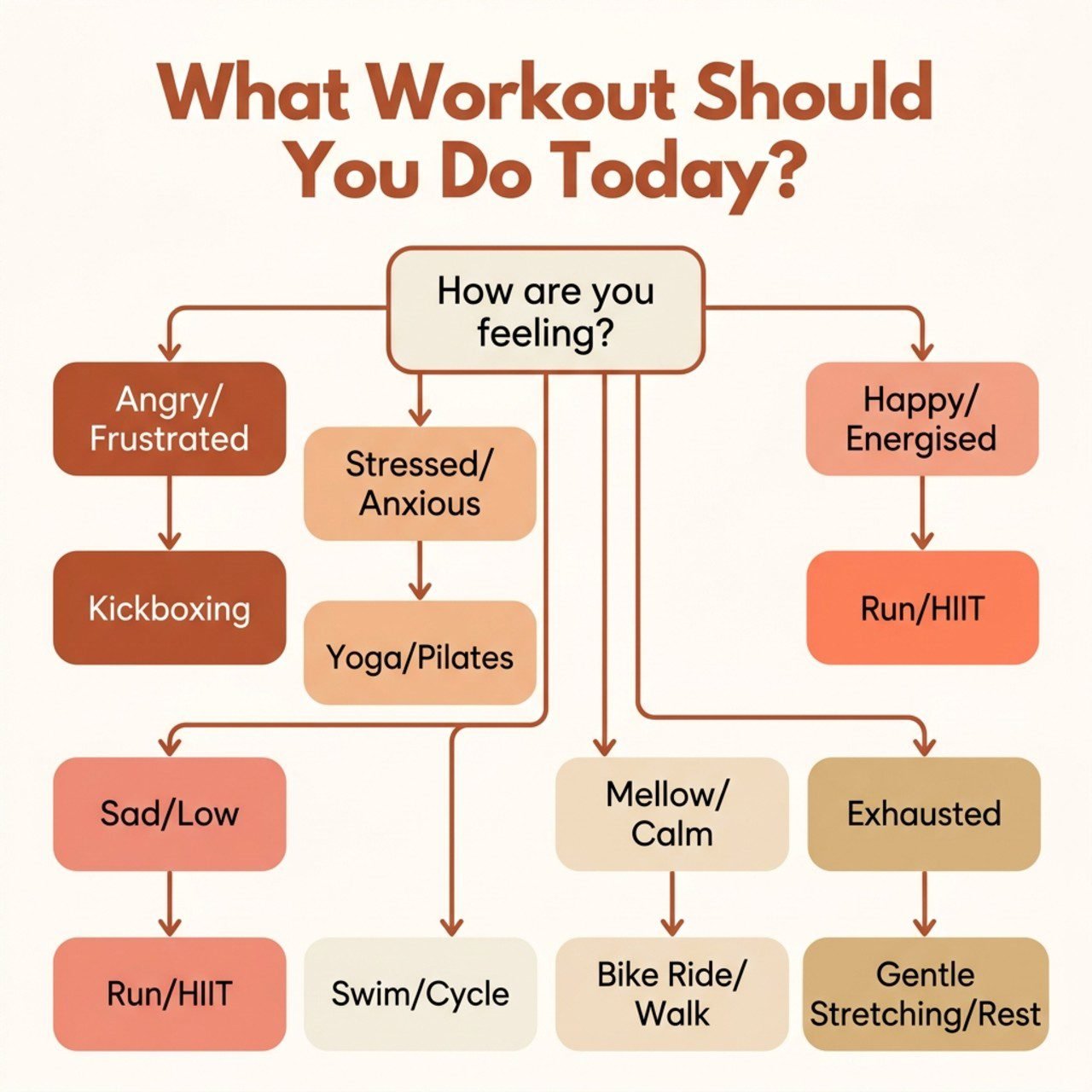
The right mood-based workout is determined by two factors: your current emotional state and your available energy level. High-emotion states (anger, excitement) pair with high-intensity workouts. Low-emotion states (sadness, calm) pair with low-impact movement. Stress and anxiety call for cortisol-lowering, mindfulness-based activity. Rest is valid when both energy and motivation are genuinely depleted.
Here is your complete mood-to-workout matching reference:
| Current Mood | Energy Level | Best Workout Match | Avoid |
|---|---|---|---|
| Angry / Frustrated | High | Kickboxing, boxing, martial arts | Nothing — channel it |
| Stressed / Anxious | Moderate | Yoga, Pilates, tai chi, walking | High-intensity classes |
| Happy / Motivated | High | Jogging, HIIT, group fitness | Overcommitting to too much |
| Sad / Low | Low-moderate | Swimming, gentle cycling, walking | Forcing high-intensity |
| Mellow / Contemplative | Low-moderate | Cycling, hiking, stretching | High-pressure environments |
| Excited / Buzzing | Very high | HIIT, boot camp, circuit training | Reckless intensity without warm-up |
| Exhausted / Depleted | Very low | Yin yoga, stretching, slow walk | Guilt-driven training sessions |
Use this as a starting point, not a rigid prescription. Your body's daily signals are the final word.


TIP: If your mood is angry, try kickboxing. If you have the steam to blow off, this high-intensity workout is perfect.
What Is the Best Workout When You're Feeling Angry Or Frustrated?
When anger or frustration is high, kickboxing, boxing, and martial arts-inspired workouts are the optimal mood-based choice. These high-intensity activities provide a structured, safe outlet for emotional energy — converting stress hormones into physical work and triggering the endorphin response that naturally dissipates anger.
There is a reason punching things feels good: the physical expression of high-arousal negative emotion through structured movement releases the neurochemical tension anger creates. Kickboxing, shadow boxing, and martial arts circuits are particularly effective because they combine physical exertion with focused mental attention — leaving little cognitive space for the frustration to simmer.
How To Channel Anger Safely
The key is structure over recklessness. High emotional arousal can mask pain signals and encourage overexertion, so approach these sessions with awareness:
- Warm up fully — a 5-minute light cardio warm-up before any punching or kicking movement.
- Set a time boundary — 20-30 minutes of intense work is sufficient for emotional release without injury risk.
- Listen for your stop signals — joint pain, dizziness, or any sharp sensation means stop immediately.
- Cool down intentionally — 5 minutes of walking and stretching brings the nervous system back to baseline.
Pairing this kind of high-intensity fat-burning workout with an emotionally fuelled session means you're not just releasing anger — you're turning it into genuine fitness progress.
What Should You Do When You're Stressed Or Anxious?
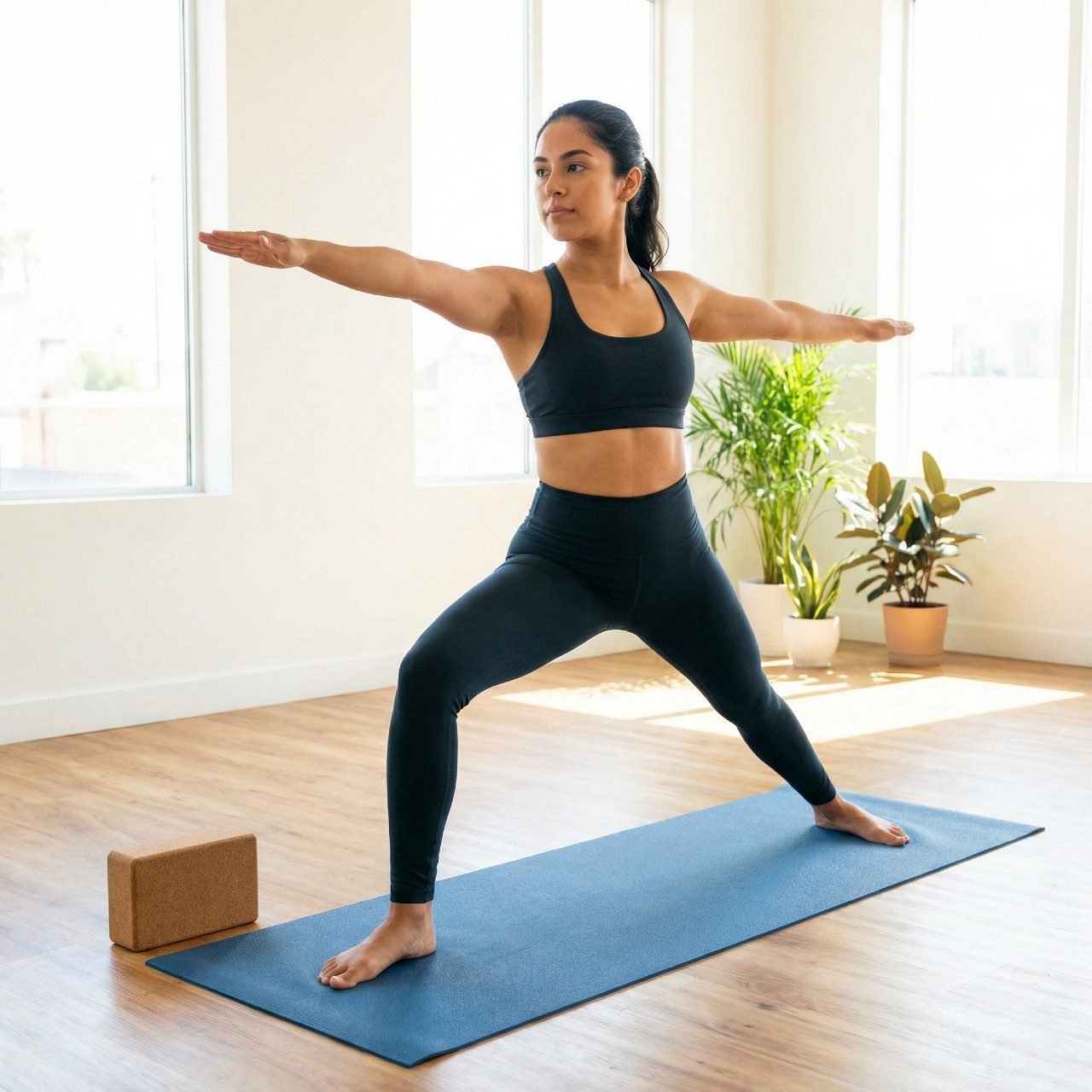
When stress and anxiety levels are high, yoga, Pilates, tai chi, and mindful walking are the evidence-based choices for mood enhancement. These practices directly lower cortisol, activate the parasympathetic nervous system, and restore the physiological calm that stress disrupts.
Here is what is happening in your body when you are stressed: cortisol and adrenaline are elevated, your muscles are tensed, your breathing is shallow, and your nervous system is in mild fight-or-flight mode. Forcing a high-intensity workout in this state does not reduce stress — it adds more physiological load to a system that is already overstimulated.
Yoga for stress works because it directly addresses every one of these mechanisms:
- Breathwork (pranayama) activates the vagus nerve, switching the nervous system from sympathetic (fight-or-flight) to parasympathetic (rest-and-digest).
- Slow movement reduces muscle tension without adding cortisol load.
- Present-moment focus interrupts the rumination loops that characterise anxiety.
- Poses like Child's Pose, Legs-Up-The-Wall, and Savasana lower blood pressure and heart rate measurably.
For women experiencing work stress, perimenopause-related anxiety, or general overwhelm, yoga is not "less than" a real workout. It is precision stress management delivered through movement.
Stress-Busting Movement Options
- Hatha or Yin yoga: 20-60 minutes, deeply restorative.
- Pilates: Core-focused, controlled, meditative.
- Tai chi: Slow, flowing movement with strong evidence for anxiety reduction.
- Walking in nature: Even 20 minutes outdoors measurably reduces cortisol — no gym required.
What's The Best Workout When You're Happy And Energised?
When mood is positive, and energy is high, jogging, running, and HIIT classes are the ideal match — capitalising on available neurochemical resources to deliver maximum cardiovascular benefit, endorphin amplification, and mood-boosting momentum.
Positive emotional states are associated with higher pain tolerance, greater motivation, improved exercise performance, and better recovery — making them the ideal windows for slightly more demanding workouts.
Why Running Works So Well On "Good Days"
A jog or run on a happy day is one of the most rewarding workout pairings available. Running at a comfortable conversational pace:
- Amplifies the serotonin boost already present in a positive mood.
- Delivers cardiovascular health benefits — including improved sleep quality, the next night.
- Provides mental clarity through rhythmic, meditative movement.
- Burns calories effectively in a way that feels effortless because motivation is high.
For women working toward weight loss goals, capitalising on high-motivation days with effective cardio sessions is a powerful component of sustainable weight loss — not because those are the only productive sessions, but because they compound positive momentum.
How To Avoid The "Good Day" Trap
High motivation can lead to overcommitment — adding extra miles or intensity beyond your current fitness level. Enjoy the energy, but stay within sustainable bounds. Fitness progress is built through consistency, not single heroic sessions.


TIP: If you have a bike and feel mellow, hop on. Take in the fresh air and sights while enjoying an aerobic activity.
What Is the Best Exercise When You're Feeling Sad Or Emotionally Low?
When mood is low and energy is depleted, low-impact cardiovascular exercise — particularly swimming and gentle cycling — provides the most accessible path to endorphin release without the physical or psychological demands of high-intensity training. Water-based exercise carries additional sensory benefits for emotional regulation.
This is not a weakness. This is biology.
When mood is low, cortisol is often elevated, motivation is suppressed by reduced dopamine, and the prospect of a demanding workout can feel genuinely impossible. The solution is not to force maximum effort. It is to lower the barrier to entry until movement feels accessible — and then let the neurochemistry do its work.
Swimming is remarkably effective for low moods for several reasons:
- The sensory environment of water has a measurably calming effect on the nervous system — reducing arousal without requiring conscious effort.
- Buoyancy reduces physical effort — tired bodies move through water with less perceived exertion.
- Rhythmic, breath-linked movement — like swimming strokes — mirrors the neurological pattern of meditative practices.
- The endorphin release from even 20 minutes of gentle swimming is significant.
Research on how depression affects weight and motivation consistently shows that the bidirectional relationship between mood and movement means even a short, gentle swim can interrupt a downward spiral.
Low-Mood Movement Menu
- Gentle swimming: 20-30 minutes, any stroke, any pace
- Easy cycling (indoor or outdoor): Low resistance, conversational pace, scenic route if possible
- Walking: Even 10 minutes outdoors — the minimum effective dose for mood improvement
- Gentle yoga: Restorative rather than vigorous; no pressure on performance
The goal on low days is simple: move enough to trigger endorphin release. You do not need to earn your workout. You just need to begin.
What Should You Do On Mellow, Low-Key Days?
On mellow, contemplative days, cycling, hiking, or a gentle walk are the ideal intuitive movement choices. These activities honour your calm state rather than disrupting it — delivering aerobic benefit, serotonin maintenance, and the restorative power of rhythmic, unhurried movement in a way that feels nourishing rather than effortful.
Mellow days are not failures. They are your nervous system asking for steady-state maintenance rather than high-demand output.
A bike ride on a mellow day — particularly outdoors — pairs the gentle cardiovascular benefit of cycling with the mood-elevating effects of fresh air, varied scenery, and freedom of movement. There is a reason cycling is one of the best exercises for women's long-term health — it is accessible at almost any energy level, joint-friendly, and sustainable indefinitely.
Making The Most Of Mellow Days
- Embrace the pace: Mellow movement at 40-60% effort still delivers meaningful cardiovascular and metabolic benefit
- Go outside when possible: Nature exposure amplifies the mood-regulation effects of low-intensity exercise
- Use the headspace: Mellow-day rides and walks are ideal for audio learning, podcasts, or simple mental decompression
- Count it fully: A 30-minute gentle bike ride is real exercise. It counts. Never talk yourself out of credit for showing up.

What Workout Matches An Excited, High-Energy Mood?
When excitement and high motivation create a "buzzing" energy state, HIIT classes, boot camps, and circuit training are the ideal match — converting that neurochemical abundance into maximum fitness output and capitalising on elevated dopamine and adrenaline for performance that exceeds your typical baseline.
Excitement and anticipation are associated with elevated dopamine and mild adrenaline — the same neurochemical state that elite athletes deliberately cultivate before competition. When you happen to feel this way naturally, it is a significant fitness opportunity.
Getting The Most From An Excited-State HIIT Session
High-intensity interval training works by alternating short bursts of maximum effort with brief recovery periods. In an excited state, your perceived exertion ceiling is higher, and your recovery between intervals is faster — which means you can genuinely push harder and get more from the session.
Practical guidelines:
- Still warm up for 5 minutes — excitement does not replace physiological preparation.
- Set a clear time boundary (20-30 minutes of true HIIT is sufficient).
- Track performance markers — excited states are ideal for setting personal records.
- Cool down thoroughly — adrenaline can mask post-session fatigue.
Group fitness classes are particularly well-matched to excited moods — the social energy amplifies the state, and the structured format keeps intensity appropriate.
Join Our Mailing List
Join thousands of women inside our community and receive our free guide, 10 Actions That Support Permanent Weight Loss — the exact behavioural shifts that make the difference between a two-week attempt and a lasting transformation.
No restriction plans. No guilt. Just what actually works — for real women with real lives.
When Is Rest The Right Choice — And How Do You Tell The Difference?
Rest is the right choice when physical and emotional depletion are genuine — when sleep deficit, illness recovery, grief, or extreme stress have actually reduced your body's capacity to benefit from exercise. The distinction between productive rest and avoidance is honest self-assessment: is your body genuinely depleted, or is your mind creating friction that movement would actually dissolve?
This is one of the most important distinctions in mood-based fitness, and one that the wellness world consistently blurs.
Genuine depletion signals that call for rest:
- Resting heart rate is elevated 10+ beats above normal.
- Active illness or fever.
- Muscle soreness that is not yet resolved from previous sessions (DOMS still present).
- Mental health crisis or acute grief that would make movement unsafe.
- Sleep of fewer than 5 hours the previous night (movement will add stress, not reduce it).
Mind-generated friction that movement will actually help:
- Low motivation without a physical reason.
- General "I don't feel like it" without accompanying physical symptoms.
- Mild anxiety or low mood (these improve with gentle movement).
- Habitual avoidance patterns.
The honest question is: Will I feel better after 20 minutes of gentle movement than before? For most moods, in most circumstances, the answer is yes. Reserve true rest days for genuine physical need — and use them fully, without guilt, when they're warranted.
Workout Recovery As Active Practice
Rest days are most effective when they include active recovery — gentle movement that enhances tissue repair without adding training stress:
- 15-20 minutes of yoga or stretching
- An easy 20-minute walk
- Foam rolling and mobility work
- Breathing exercises or meditation
Active recovery accelerates the cellular repair that makes your harder workouts more effective. It is not skipping — it is a different kind of showing up.

Your Next Step: Build A Body Practice That Lasts
You now have a complete system for matching movement to emotion — one that works with your biology, respects your real life, and gives you a productive answer for every single mood state.
The women who stay consistently active are not the ones with the most willpower. They are the ones with the most flexible, forgiving, and intelligent relationship with movement.
Join thousands of women inside our free community and receive the Lean Body Formula Special Report — 10 research-backed actions that support permanent weight loss, written specifically for women's bodies.
No punishment. No extremes. Just what the science actually supports — for real women living real lives.
Related Articles
- Practical Strategies To Build Sustainable Workout Motivation For Working Moms
- How Long Does It Take To See Results From Working Out As A Beginner Woman
- Will Working Out Change Breast Size For Women
- Tips Avoiding Yoga Injuries
- The Key Differences Between A Fad Diet And A Real Diet That Works
- High Protein Diet Plan For Sustainable Weight Loss For Women
- 5 Ways Slow Ageing Process
The Bottom Line
Let your mood move you forward. The most sophisticated fitness program in the world fails if you do not show up consistently. Mood-based workouts solve the consistency problem at its root — not by demanding you override how you feel, but by making how you feel the starting point.
For women, whose energy, motivation, and physical capacity shift across the hormonal cycle, across seasons of life, and across the daily demands of work, family, and everything in between, an intuitive, mood-informed approach to movement is not a compromise. It is a precision strategy.
You do not need to match a fitness ideal built for a different body on a different schedule. You need a system designed to meet you exactly where you are. Every mood is a workout. Every mood has a match. Start there — and keep going.
Embrace Inspiration
Like What You Read? Be Sociable, Comment, And Share It! Thanks.
Glossary Of Key Terms
FAQ
Yes — significantly. Emotional state directly influences cortisol levels, muscle tension, pain tolerance, and perceived effort during exercise. Research consistently shows that negative moods without appropriate activity matching can reduce performance and increase injury risk, while positive emotional states measurably enhance athletic output. Mood-based workout matching is not guesswork — it is applied exercise psychology.
For stress relief workouts, yoga, Pilates, and tai chi are the most evidence-supported choices because they directly lower cortisol, activate the parasympathetic nervous system, and incorporate breathwork that interrupts the physiological stress response. Walking in nature for 20+ minutes is also strongly evidence-backed for cortisol control. High-intensity exercise is generally not recommended when anxiety is acute.
Yes. According to the National Institute of Mental Health, regular physical activity has significant antidepressant effects — comparable to medication in cases of mild-to-moderate depression. The key mechanisms are endorphin release, serotonin regulation, and the confidence-building effect of consistent self-care. For depression fitness, low-impact exercise like swimming and walking is an ideal starting point because its accessibility reduces the barrier to beginning.
When energy is genuinely low, the goal is minimum effective dose movement — enough to trigger neurochemical benefit without overtaxing your resources. A 20-minute walk, a 15-minute gentle yoga session, or easy swimming all qualify. Research shows that even brief low-impact exercise on low-energy days significantly improves mood and energy levels within 15-20 minutes of beginning, which means the hardest part is simply starting.
Hormonal fluctuations across the cycle create predictable shifts in energy, strength, and emotional state. The follicular phase (days 1-14) is typically higher energy and better suited to higher-intensity training. The luteal phase (days 15-28) — when progesterone rises and oestrogen drops — often brings fatigue, lower mood, and reduced pain tolerance, making it the ideal time for lower-intensity, mood-supportive movement like yoga, walking, and gentle cycling. Aligning workout intensity with your cycle is one of the most effective forms of mood-based training for women.
Yes — if "skipping the gym" means choosing more appropriate movement rather than no movement. Mood-based workouts frequently involve home or outdoor exercise (yoga, cycling, walking, swimming) that delivers equal or greater benefit compared to a mismatched gym session. The goal is consistent daily movement in a form that supports your current state — not adherence to a specific venue or format.
You Know Why. Now Learn Exactly How
Join thousands of women inside our community and receive our free guide: 10 Actions That Support Permanent Weight Loss — the practical, sustainable habits that translate everything you just read into real, lasting results.
No fad diets. No extreme plans. Just what the research actually supports — written for real women.