


How To Stay Motivated For Women: 4 Science-Backed Strategies That Actually Work
Proven Strategies To Stay Motivated For Women Seeking Long-Term Health And Sustainable Fitness Habits

It's not about perfect. It's about effort. And when you bring that effort every single day, that's where transformation happens.
Jillian Michaels ‧ Celebrity fitness coach and bestselling author
Summary (TL;DR)
Most women don't have a motivation problem. They have a systems problem. This article covers the CORE Framework — four evidence-based strategies built around how women's bodies and brains actually work: Commit through scheduling, set Objectives tied to your biology, Rewire your inner narrative, and Embed habits into your identity. You don't need to feel ready to start. You just need one of these, applied this week.
You know the feeling. January 2nd — new gym bag, fresh playlist, total certainty that this time is different. By week three, the bag is on the floor, and the playlist hasn't been touched.
I've been there more times than I care to count. When I first started my fitness journey, I was convinced the problem was me — that I simply lacked the discipline other women seemed to have. Years of research and thousands of reader conversations later, I can tell you that the story is wrong.
Up to 70% of gym members stop going within six months, according to research published in Frontiers in Psychology. That's not a character flaw epidemic. That's a systems problem — and systems can be fixed.
Here's the thing most fitness content won't say out loud: motivation isn't the starting point. It's the result. Waiting to feel motivated before you work out means waiting for a feeling that only arrives after you start. Every system that works is built on that single principle.
What follows are the four strategies that changed everything for me, and for the women I've worked with. None of them requires the willpower you don't have. All of them are backed by research. And every one is built specifically around how your body and brain work as a woman, not a generic human, not a man.
You're not starting over. You're starting smarter.
Medical & Referral Disclaimer
The content in this article is for general educational purposes and does not constitute medical or clinical advice. Consult your healthcare provider before starting a new fitness programme, particularly if you have underlying health conditions, are pregnant, have recently given birth, or are navigating perimenopause or menopause. Information about menstrual cycle phases reflects general biological patterns and may not apply uniformly to all women, including those using hormonal contraceptives.
Key Takeaways
- Motivation follows action — you don't need to feel ready to start. The 5-Minute Rule works precisely because you don't wait.
- The CORE Framework (Commit, Objectives, Rewire, Embed) replaces willpower with a system that works even on hard days.
- Your hormones are your training guide, not your enemy — cycle-syncing your workouts removes the "failure" days from the equation.
- Habit stacking beats willpower because it removes the decision entirely.
- Every completed session is a vote for the person you're becoming — intensity matters less than consistency.
- Never miss twice — one missed session is a blip; two in a row is the beginning of a pattern.
- 70% of gym members quit within six months. The women who stay aren't more motivated — they have better systems.

Why Women Struggle to Stay Motivated For Fitness
Women lose workout motivation primarily because of a mismatch between generic fitness advice and female physiology. Hormonal fluctuations across the menstrual cycle affect energy, mood, and perceived effort during exercise. Most fitness programs ignore these shifts entirely, which makes women feel like they're failing when their biology is simply doing what it does.
There's also the social layer. A 2024 study published in PLOS ONE found that many women experience significant self-consciousness exercising in gym settings — reporting that they "can't win" whether they're perceived as too serious or not serious enough. That psychological friction costs real energy. Energy that should go into the workout.
Then there's dopamine. Your brain releases dopamine in anticipation of a reward, not just after it. According to research published on PMC (National Institutes of Health), regular physical activity promotes dopamine expression over time, which progressively makes showing up feel more rewarding. But you need several consistent weeks before that loop kicks in properly. Most people quit just before they reach it.
Here's the implication: the weeks when motivation feels hardest are often the exact weeks when quitting costs the most. Get through them — even imperfectly — and you hit the biological turning point where fitness starts to feel like something you want rather than something you're forcing.
The CORE Framework: 4 Ways Women Stay Motivated for Fitness
The CORE Framework is a four-part system designed specifically for women, addressing the scheduling, biological, psychological, and behavioral dimensions of workout consistency in sequence.
- C — Commit through scheduling (not mood)
- O — Objectives grounded in your biology
- R — Rewire your inner narrative
- E — Embed habits into your identity
Each strategy targets a distinct failure point. Together, they replace willpower — which is emotion-dependent and unreliable — with structure, which is not. Here's how to build each layer.
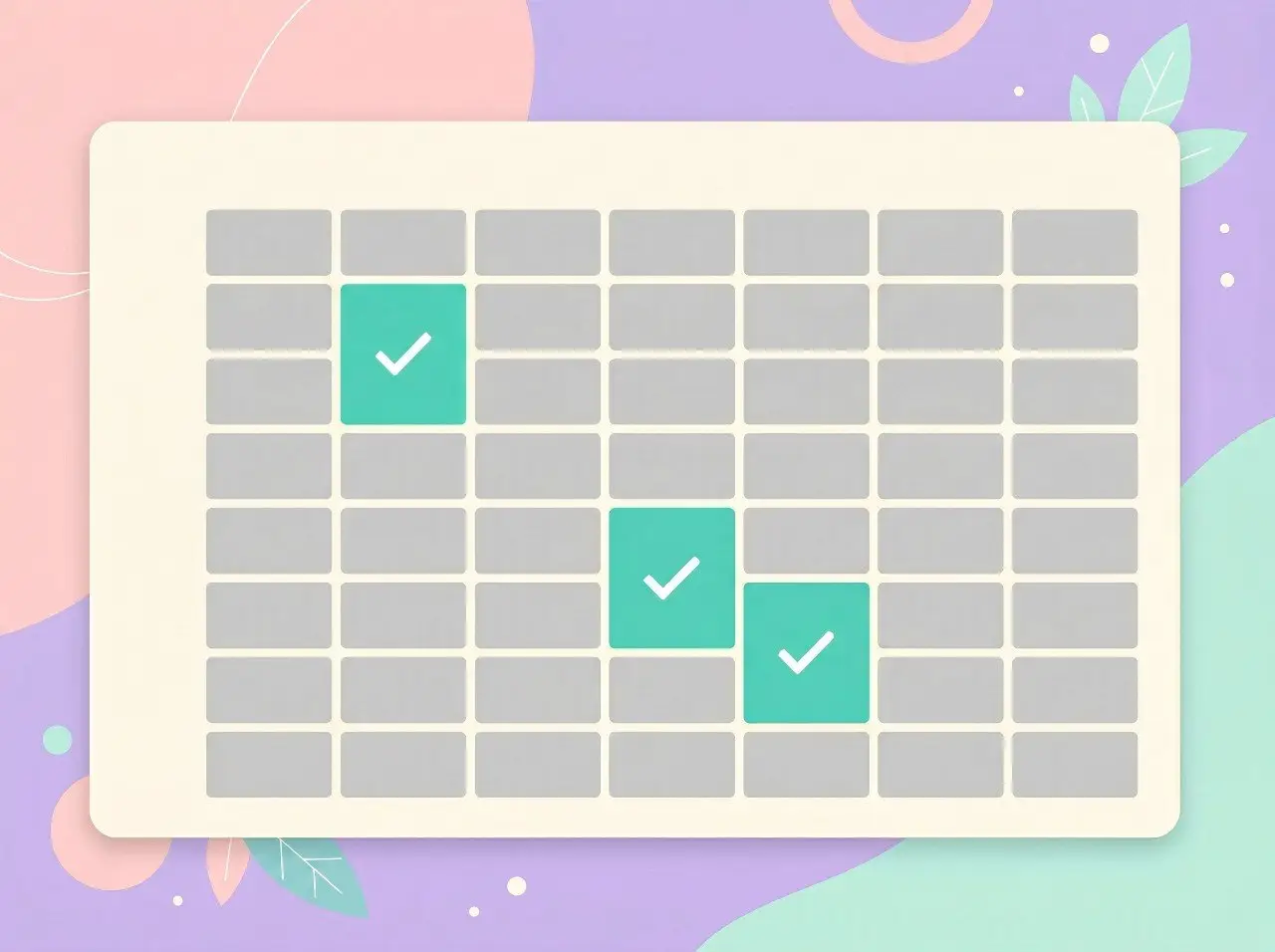
C — Commit Through Scheduling: Build a Workout Calendar You'll Actually Keep
Treating workouts as fixed calendar appointments — not aspirational to-do list items — is the single most reliable scheduling approach for women. Research shows that people who commit to specific exercise times are far more likely to follow through than those who plan to "find time" during the day.
Here's the hard truth about motivation and scheduling: motivation is an emotion. Emotions fluctuate. Your calendar doesn't.
Every woman I've worked with who has maintained a consistent fitness routine does one thing in common: she treats her workout like a meeting she cannot cancel. Not "I'll go if I have time today." It's "Wednesday at 6:30 am is my session." That's the shift.
Your 3-Part Scheduling System:
- Block it in your calendar right now — not "sometime this week." A specific day, time, and duration. Three sessions per week, 30-60 minutes each. If your calendar is full, something else moves.
- Start smaller than feels meaningful — two sessions per week, done consistently, outperforms five sessions attempted sporadically. Frequency builds the neural pathway. Intensity can come later.
- Track completions visibly — a tick on a paper calendar, a check in a journal, a streak in an app. The format doesn't matter. Seeing an unbroken run of completed sessions activates your brain's reward circuitry and makes you genuinely reluctant to break the chain.
One thing I had to learn the hard way: elaborate programmes collapse. The women who sustain fitness habits long-term aren't doing the most sophisticated training. They're doing the least complicated thing they can actually repeat, week after week, month after month.
Why Consistency Beats Intensity Every Time
A landmark study from University College London, published in the European Journal of Social Psychology (Lally et al., 2010), found that habits take an average of 66 days to become automatic — not the widely cited 21 days, which was never based on habit research.
The range in the study ran from 18 to 254 days, depending on the person and behaviour. Crucially, the researchers also found that missing a single day didn't reset the process — consistency over time matters far more than perfection. High-intensity programmes that burn women out in week two never get close to that threshold. The workout you finish is always better than the workout you planned.
→ See also: How To Motivate Yourself To Finish Workouts, Not Just Start Them.
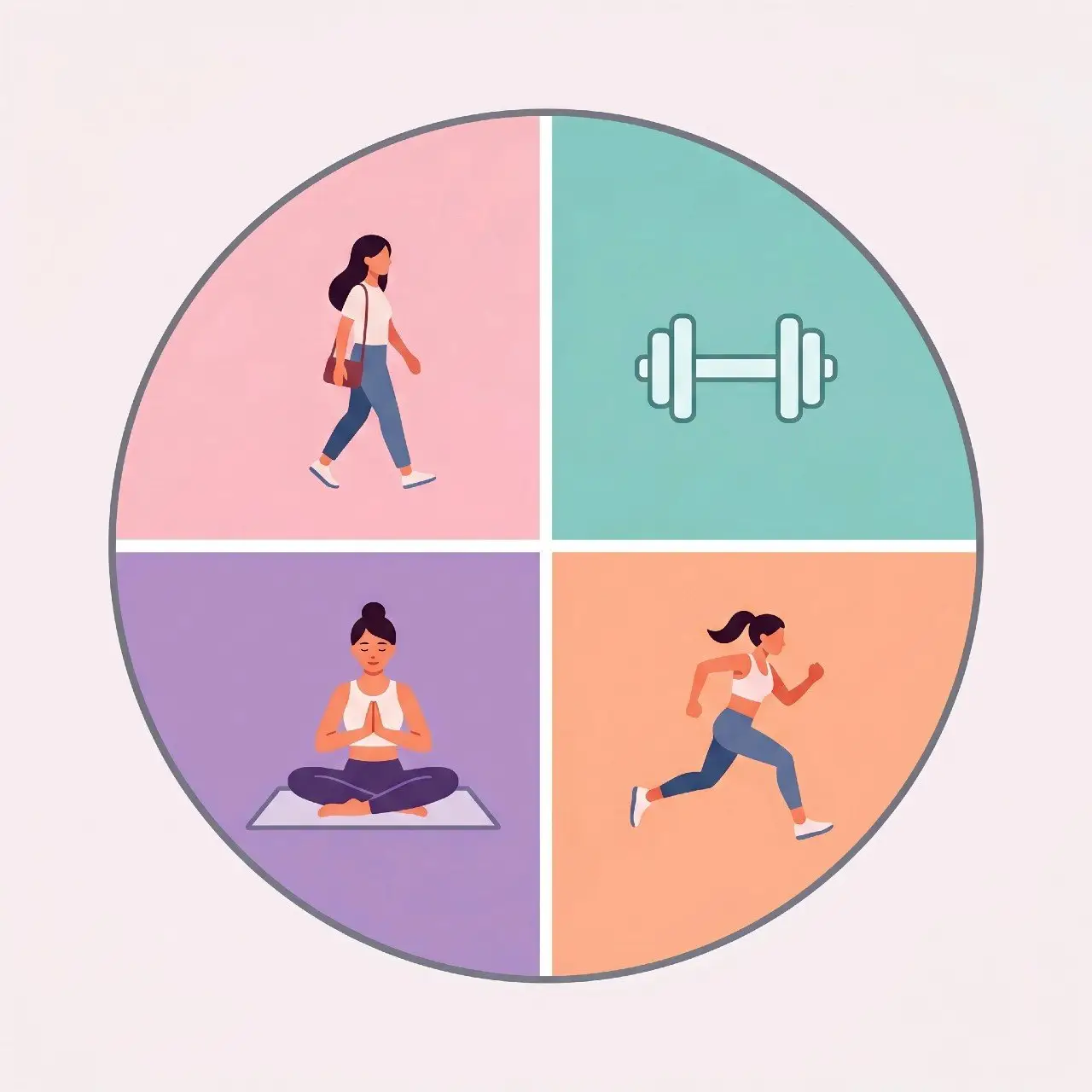
O — Objectives Grounded In Your Biology: Set Goals That Actually Fit You
The SMART-F framework — which adds a Female-specific dimension to the standard SMART structure — is the most effective goal-setting approach for women who want to stay motivated long-term. It accounts for hormonal cycles, realistic energy windows, and the life demands that generic goal advice consistently ignores.
Most goal-setting advice hands women targets designed around male physiology: linear progress, constant high output, and ignoring how you feel. That doesn't work because your energy levels are not linear. They cycle. And fighting that cycle is genuinely exhausting.
Here's what changes when you plan with your biology instead of against it:
The SMART-F Goal Framework for Women
| Goal Element | Generic Version | SMART-F Version for Women |
|---|---|---|
| Specific | "Exercise more" | "Strength train 3× weekly — Monday, Wednesday, Friday" |
| Measurable | "Get fit" | "Complete 12 workouts in the next 30 days" |
| Achievable | "Work out daily" | "3-4 sessions per week with intentional rest days" |
| Relevant | "Lose weight" | "Build lean muscle to support metabolism through perimenopause" |
| Time-Bound | "Eventually" | "Reassess progress in 8 weeks from today" |
| Female-Specific (F) | Follow a generic plan | "Schedule HIIT in follicular phase (days 6-13); lighter movement in luteal phase (days 17-28)" |
The F row is the one that changes everything. When you plan harder sessions during your high-energy follicular phase and allow lower-intensity movement during the luteal phase, you stop setting yourself up to fail — and start collecting wins instead.
→ See also: Cycle Syncing for Weight Loss: How to Eat and Work Out With Your Menstrual Cycle.
The 3-Goal Stack That Prevents Burnout
Don't set one goal. Set three layers:
- Minimum — the floor, not the ceiling. "Three 20-minute sessions this week, no matter what."
- Target — your realistic weekly aim. "Complete all three scheduled sessions in full."
- Stretch — only if everything goes smoothly. "Add a 20-minute walk on Saturday if time allows."
The structure means you always succeed at some level. Small, consistent wins feed the dopamine loop that pulls you back the following week — and the week after.

R — Rewire Your Inner Narrative: The Mindset Shift That Changes Everything
Identity-level thinking — shifting from "I'm trying to work out" to "I'm someone who moves her body" — has a stronger effect on long-term exercise adherence than any motivational technique alone. The way we describe ourselves to ourselves shapes the behaviors we repeat. Change the label, and the behavior gradually follows.
Let me be direct with you: the most persistent obstacle to my own fitness consistency was never my schedule or my energy. It was the story running on repeat in my head. "I'm not a workout person." "I always quit around Week 3." "I've tried this before."
These aren't facts. They're deeply grooved thought patterns. And they do real damage every time you put your shoes on.
Identity Reframes That Actually Stick
| Old Internal Story | Identity-Based Reframe |
|---|---|
| "I'm not consistent" | "I'm building my consistency right now" |
| "I always quit" | "I'm someone who starts again — every single time" |
| "I don't have time" | "I choose how I use my time, and I'm choosing my health" |
| "I'm too tired" | "Twenty minutes of movement will give me more energy than the couch will" |
| "I'll start Monday" | "I start today — even if it's just ten minutes" |
This isn't toxic positivity. It's identity-based behavior change — the same principle James Clear articulates in Atomic Habits: 'Every action you take is a vote for the type of person you wish to become. No single instance will transform your beliefs, but as the votes build up, so does the evidence of your new identity.'
A 15-minute walk on a tired Thursday isn't failure — it's evidence that you're someone who moves her body. That evidence accumulates. Over weeks and months, it becomes your identity."

The 5-Minute Rule That Neutralizes Resistance
No motivation today? Commit only to five minutes. Put on your shoes. Press play. Give yourself full permission to stop after five minutes.
Here's what the science says: the brain has a documented drive to complete tasks once they've been started — a phenomenon psychologists call the Zeigarnik Effect. By lowering the entry threshold below the level where resistance triggers, you sidestep the wall entirely. Most of the time, five minutes becomes twenty. Sometimes thirty.
Contrarian take grounded in real evidence: Most fitness content tells you to get motivated first, then work out. The behavioral science says the opposite — action creates motivation, not the other way around. This isn't a pep talk. It's supported by self-perception theory (Bem, 1972), BJ Fogg's behavior design research, and the dopamine evidence cited earlier. Don't wait to feel ready. Start, and readiness arrives.
→ See also: The Psychology of Weight Loss: What's Really Going On in Your Brain.
E — Embed Habits Into Your Identity: Stop Starting, Start Stacking
Habit stacking means attaching a new fitness behavior to an existing automatic daily habit. Because the anchor habit already runs without conscious effort, the new fitness behavior drafts along behind it — requiring far less willpower to initiate. Over time, the two fuse into a single automatic unit of behavior.
Habit stacking is the closest thing I've found to a workout motivation shortcut. Instead of creating new mental bandwidth for "I need to exercise today," you attach movement to something you already do without thinking.
Step 1: Write down your five most automatic daily habits. Morning coffee. Brushing teeth. Lunchtime. Checking your phone after work. Evening TV.
Step 2: Attach a specific, low-effort fitness behavior to each one. It doesn't need to be intense. It needs to be consistent.
The Habit Stacking Cheat Sheet
| Anchor Habit | Fitness Habit to Stack | Why It Works |
|---|---|---|
| Morning coffee | 10 minutes of stretching or mobility work | You'll never skip coffee — so you'll rarely skip this |
| Shower before bed | Lay out tomorrow's workout gear | Removes morning decision fatigue and friction |
| Work lunch break | 20-minute brisk walk outside | Built-in protected time that already exists in your schedule |
| Weekend meal prep | Write next week's workout schedule while food cooks | Same planning mindset, same moment |
| Evening TV or streaming | Resistance band work or foam rolling on the floor | Movement without adding a single minute to your day |
Step 3: Pick ONE stack. Run it for two weeks before you add a second. The women who build the most durable fitness habits aren't doing the most — they're doing the most repeatable thing for long enough that it stops requiring effort.
→ See also: Fitness Habits for Women to Stay Young | Sustainable Workout Motivation for Working Moms.
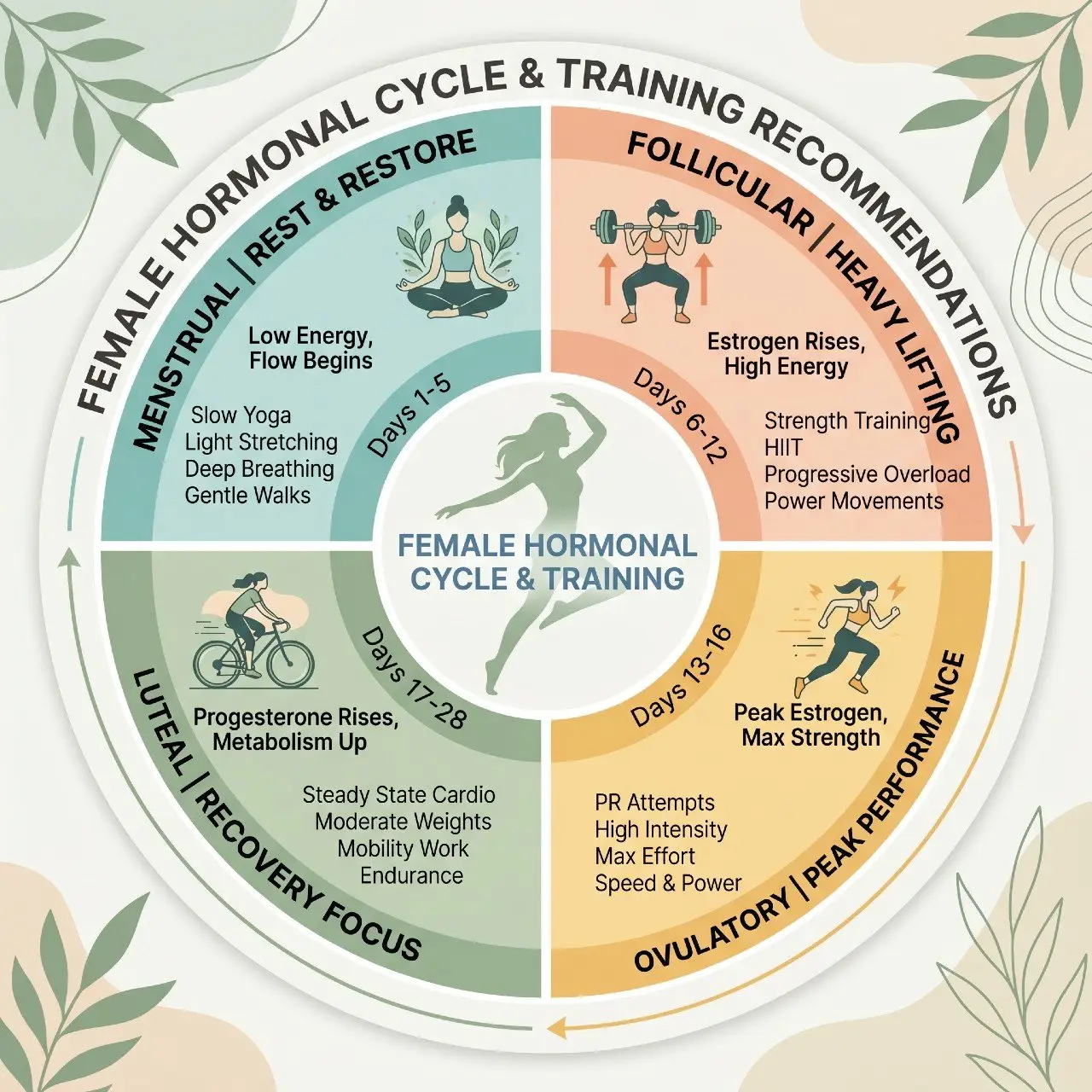
The Hormone Factor: How Your Menstrual Cycle Affects Your Motivation To Work Out
Your workout motivation fluctuates across the month because your hormones fluctuate. During the follicular phase, rising oestrogen boosts energy and drive. During the luteal phase, progesterone rises and serotonin drops — increasing fatigue and reducing the desire to exercise. Planning workouts around these shifts, rather than against them, is one of the highest-leverage changes a woman can make to her fitness consistency.
This is the section of generic fitness content that skips. And skipping it costs women enormous amounts of motivation and self-blame.
"During the luteal phase, serotonin drops and fatigue increases. This isn't weakness — it's biology." When you feel less like training on Day 22 of your cycle, you're not failing. Your body is doing exactly what it's designed to do. The question is whether your workout plan accounts for it.
The Cycle-Syncing Motivation Map
| Cycle Phase | Approx. Days | Hormone Pattern | Energy Level | Best Workout Type | Motivation Approach |
|---|---|---|---|---|---|
| Menstrual | 1–5 | Oestrogen & progesterone low | Low, introspective | Yoga, gentle walks, light mobility | Self-compassion — rest IS training |
| Follicular | 6–13 | Oestrogen rising | High, optimistic | HIIT, strength training, new challenges | Set new goals; try harder sessions this week |
| Ovulatory | 14–16 | Oestrogen peaks | Peak energy and confidence | High-intensity cardio, classes, social workouts | Group training, personal records |
| Luteal | 17–28 | Progesterone rises, serotonin drops | Declining, fatigue building | Pilates, steady-state cardio, moderate strength | Routine-driven — habits carry you here, not feelings |
The luteal phase is where most women fall off their routines. It's also where your scheduled workouts need to be the lightest and your expectations the most forgiving. Showing up to a 30-minute Pilates session during your luteal phase when you don't feel like it is, honestly, a bigger win than smashing a HIIT class in your follicular phase when you're firing on all cylinders. Both matter. But one is harder.
→ See also: Why One-Size-Fits-All Workout Programs Miss the Mark for Women.
7 Practical Strategies For Low-Motivation Days
Even the best system has dip days. These evidence-based strategies fill the gap between your planned routine and the days when everything inside you is saying no.
1. Change into your gear — that's the only commitment. Research on environmental cueing shows that athletic wear alone primes the brain for movement and significantly lowers the activation energy needed to actually start. Don't decide whether to work out. Just put on the clothes. Decide after.
2. Build a motivation library. A folder of saved photos, voice notes recorded on your best days, quotes that actually mean something to you. Three minutes inside it can shift your state when nothing else will. Keep it on your phone and use it without shame.
3. Find an accountability structure that works for your personality. A 2025 study in Scientific Reports (Nature) found that self-efficacy — your belief that you can succeed — predicts exercise adherence better than motivation alone. Accountability partners, communities, and coaches build self-efficacy by giving you evidence that you show up. → Fitness Motivation for Women Who Work From Home
4. Anchor to your why, not your what. "I train because I want energy for my kids and to feel strong in my own skin" survives hard weeks. "I train to lose ten pounds" does not. Purpose-driven motivation is more resilient than outcome-driven motivation — because purpose doesn't disappear when the scale doesn't move.
5. Reframe a missed session immediately. One missed workout is nothing. The dangerous moment is letting the internal voice say, "I've already failed this week." Replace it: "One session missed is irrelevant. My next workout is the only one that matters." The rule is never miss twice.
Join Our Mailing List
Join thousands of women inside our community and receive our free guide, 10 Actions That Support Permanent Weight Loss — the exact behavioural shifts that make the difference between a two-week attempt and a lasting transformation.
No restriction plans. No guilt. Just what actually works — for real women with real lives.
6. Move because you love your body, not to punish it. The PLOS ONE study (2024) found that women who view exercise as a reward for their body — rather than a consequence of eating — show dramatically higher long-term adherence. That framing shift matters more than most people realize.
7. Celebrate small wins deliberately. Your brain needs evidence that it's succeeding. Log every completed session. Acknowledge every good decision. This isn't soft — it's dopamine management. Consistent micro-celebrations reinforce the reward loop that makes the following week's workouts easier to initiate.
Ready to put the CORE Framework into action? Many women find it helps to have a step-by-step guide as they're building these habits, especially when it comes to scheduling and rewiring. Grab your free guide here for a detailed walkthrough to stay motivated using these science-backed strategies.
Related Articles
- 5 Powerful Tips To Motivate Themselves To Lose Weight
- Can Diet Really Help With Emotional Eating And Stress Related Weight Gain In Women
- 3 Reasons Women Stay Healthy Weight
- Why One Size Fits All Workout Programs Miss The Mark For Women
- Fitness Habits For Women To Stay Young
- What Should Women Eat In The Morning For Hormone Balance And Fat Loss
The Bottom Line
Staying motivated as a woman isn't about finding willpower you don't have. It's about building smarter systems around the body and brain you do have.
You've already proved you want this. You're here, reading this — and that counts for more than you think. Now build the structure that carries you through the weeks when the feeling isn't there.
Here's your assignment before your next workout: choose one strategy from this article. Book one specific workout session in your calendar right now. Lay out your gear tonight. Show up tomorrow — even for five minutes.
She's not waiting for you to be ready. She's ready for you right now.
Glossary Of Key Terms
FAQ
Low energy killing your workout motivation is most often tied to your menstrual cycle phase, sleep quality, or a programme that's currently too demanding. Check your cycle first — if you're in the luteal phase (days 17-28), your body is producing less energy and serotonin. Schedule lighter movement, not guilt. A 10-minute walk on a luteal-phase Tuesday is a real win.
Habit stacking — attaching a new fitness behavior to an existing automatic daily habit — is the most durable approach available. Start with one anchor habit and one fitness behavior. Run it for 66 days before adding anything else. The women who sustain fitness habits longest aren't doing the most complicated thing — they're doing the most repeatable thing.
Research from University College London (Lally et al., European Journal of Social Psychology, 2010) puts the average habit formation timeline at 66 days. During that period, motivation will fluctuate — which is normal. The goal during those weeks is not to feel motivated. It's to show up anyway. After 66 days, showing up starts to happen automatically. Motivation follows consistency; it doesn't precede it.
The most common reason is a mismatch between workout intensity and hormonal reality. Women who maintain the same demands on themselves throughout the entire menstrual cycle hit energy walls in the luteal phase and interpret them as personal failure — when they're actually biology. Other causes: goals too ambitious for your current life, no scheduled workout times, relying on motivation (emotional, unreliable) rather than scheduling (structural, reliable).
Yes — and consistently so. Progress tracking activates your brain's reward circuits by giving you visible evidence of achievement. A simple tick on a calendar works. Add a one-line note about your energy before and after each session, and within a few weeks, you'll have personal data showing that movement improves how you feel, which builds the intrinsic motivation that external encouragement can't sustain long-term.
Use the Never Miss Twice rule. One missed session is irrelevant. The moment you notice you've missed, do something within the next 24 hours — a 10-minute walk counts. The goal is to vote for the identity of "someone who works out," not to punish yourself for a single blip. Women who recover fastest from missed sessions are the ones who refuse to make them mean anything.
Meaningfully so. A 2024 study in Frontiers in Psychology found that women show higher motivation from appearance-based goals, social connection, and health outcomes, while men show higher motivation from competition and challenge. Women also experience hormonal energy cycles, gym intimidation, and societal body pressures that generic fitness advice consistently ignores. → Why One-Size-Fits-All Workout Programs Miss the Mark for Women.
Sleep deprivation reduces dopamine sensitivity, raises cortisol, and makes workouts feel significantly harder than they are. Women who are consistently underslept are working against a physiological headwind every time they try to exercise. If your motivation is chronically low despite a solid schedule, sleep quality is worth examining before adding more motivational strategies. → How Sleep Affects Weight Loss in Women and What to Do About It.