

No Time To Exercise? Here's What The Science Says You Actually Need
Too Busy To Exercise? Surprising Hacks That Prove You Have Time
Peter Attia
Physician & longevity expert
Exercise is by far the most potent longevity 'drug'. No other intervention does nearly as much to prolong our lifespan and preserve our cognitive and physical function.
Summary (TL;DR)
Busy women don't need hour-long gym sessions to lose fat and build strength. Research shows that as few as two 20-minute resistance training sessions per week, combined with intentional daily movement, can deliver most of the health and body composition benefits of much longer programs. This guide gives you the science-backed minimum effective dose of exercise and three practical frameworks for fitting movement into a schedule that never seems to have room for it.
The evidence-backed guide for busy women who want real results without living at the gym.
You meant to exercise this week. You really did. Monday came and went. Tuesday brought a work deadline. Wednesday was the school run and the conference call that ran an hour over. By Thursday, you had mentally written off the whole week and told yourself you'd start fresh on Monday. Again.
Sound familiar? If the idea that you "don't have time to exercise" has become a running story in your life, you are far from alone. And here is the part nobody in the fitness industry wants you to know: you probably need a lot less exercise than you think. Not as an excuse to do nothing, but because the research on the minimum effective dose of exercise is genuinely surprising, and it reframes the entire conversation.
The question is not "how do I find a spare hour every day?" The right question is "what is the least amount of intentional movement that actually moves the needle?" When you answer that correctly, suddenly the excuse that you have no time to exercise starts to lose its grip.
Medical & Referral Disclaimer
This article is for informational and educational purposes only. It is not a substitute for personalized medical or fitness advice. Always consult your healthcare provider or a certified fitness professional before beginning a new exercise program, particularly if you have underlying health conditions, are in perimenopause, or are recovering from injury.
Key Takeaways
- Two sessions per week of resistance training is enough to meaningfully improve strength and preserve lean muscle in women over 40, including during perimenopause.
- "Exercise snacks," brief bouts of 1 to 5 minutes of movement spread throughout the day, are confirmed by a 2024 meta-analysis to improve cardiometabolic health in adults.
- NEAT (non-exercise activity thermogenesis) can account for up to 2,000 extra calories burned per day between the most active and least active individuals of the same body size.
- Three 10-minute exercise sessions produce the same cardiovascular, blood pressure, and blood sugar benefits as one continuous 30-minute session.
- A 10-minute walk after a meal significantly lowers postprandial blood glucose spikes, which supports fat loss and reduces cravings.
- Women in perimenopause who skip strength training lose muscle and bone density simultaneously, two losses that compound each other over time.
- Consistency with a minimal plan beats perfection with an ambitious plan, every single time.
Video Overview
Does Exercise Really Have To Take An Hour To Work?
No. And the research behind this is more convincing than the fitness industry would like you to believe.
A systematic review on physical activity bout duration and health outcomes found that accumulating three 10-minute bouts of exercise throughout the day produces the same cardiorespiratory fitness, blood pressure, and blood glucose improvements as one continuous 30-minute session of equal intensity. Same total time. Same benefits. Just split up.
A 2024 systematic review and meta-analysis confirmed that "exercise snacks," brief bouts of physical activity lasting 1 to 5 minutes performed multiple times per day, are effective for improving cardiometabolic health in adults. Not as a consolation prize. As a legitimate, evidence-based strategy, the 60-minute gym narrative has simply drowned out.
Here is the thing the fitness industry rarely says out loud: it has a financial incentive to make exercise feel like it requires a gym membership, a class booking, and a two-hour time block. The body does not share that incentive. Your heart rate does not know whether it rose during a formal session or a brisk stair climb. It responds to the stimulus. Your only job is to provide it consistently.
Three 10-minute windows scattered across your day (a walk after breakfast, a movement snack at lunch, a short strength circuit after dinner) can produce real results. Especially when you stop waiting for a perfect, uninterrupted hour and just start stacking.

What Is The Minimum Effective Dose Of Exercise For Women?
The minimum effective dose (MED) of exercise is the smallest amount of structured movement that produces a meaningful, measurable result. For women focused on fat loss and body composition, current evidence points to 2 resistance training sessions per week at moderate to high intensity, each lasting 20 to 30 minutes, as the threshold below which significant gains are unlikely. Above this threshold, results improve, but the biggest leap happens simply by going from zero to two.
A 2024 randomized controlled trial published in Scientific Reports found that menopausal women who performed a minimal dose resistance training protocol (two sessions per week, performing 2 sets of 8 to 12 repetitions in three exercises plus isometric planks) achieved significant improvements in muscle strength. Bench press performance improved by 17.2% and leg press by 22% over the study period. No gym required. No hour-long sessions.
A 2024 overview of resistance exercise minimal dose strategies published in Sports Medicine concluded that moderate to high-intensity loads (50 to 90% of one-rep maximum) performed twice weekly with single sets of 8 to 12 repetitions can meaningfully improve muscle strength in the general population.
Here is what the minimum effective dose looks like across different goals:
| Goal | Minimum Frequency | Session Length | Key Modality |
|---|---|---|---|
| Muscle strength (beginner) | 2x per week | 20-30 minutes | Resistance training (50-90% 1RM) |
| Bone density (perimenopause) | 2-3x per week | 20-30 minutes | Resistance + impact exercise |
| Cardiovascular health | 3x 10-min sessions/day | 10 minutes each | Brisk walking, stair climbing |
| Fat loss support | 2x strength + daily NEAT | 20-30 min + movement | Resistance + low-intensity activity |
| Blood sugar regulation | Daily | 10 minutes post-meal | Light walking |
This table does not permit doing the minimum forever. It is permission to start where you actually are, and that matters more than any ambitious plan you never execute.
The Movement Menu: Three Tiers For Fitting Exercise Into Any Schedule
Most exercise advice assumes you have already cleared the first hurdle: deciding to do something. This section is for everyone still standing at the hurdle.
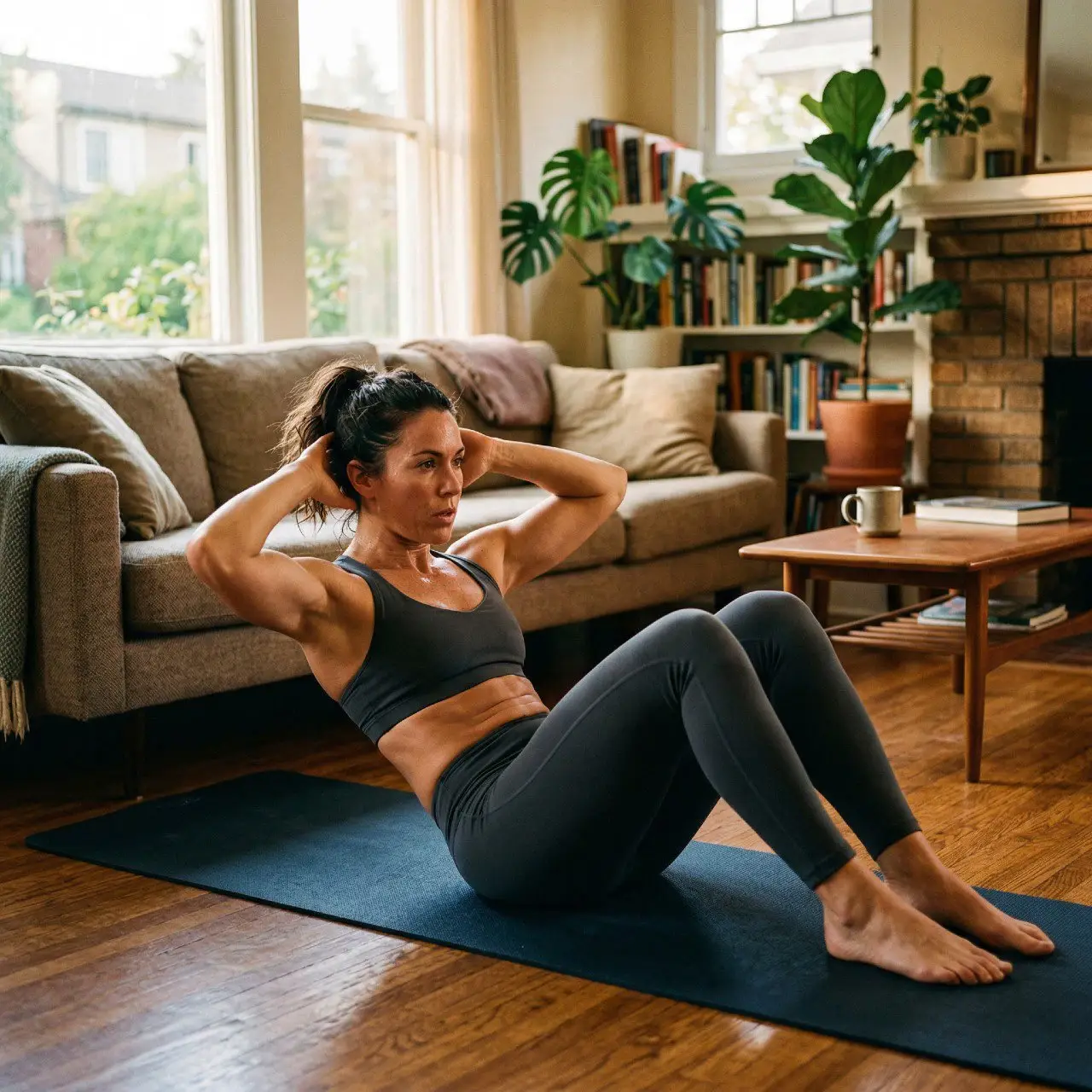
The Movement Menu is a three-tier framework built around one idea. Match the movement to the time you actually have, not the time you wish you had. You don't need to reach Tier 3 to see results. You need to stop spending your week exclusively at zero.
Tier 1: Movement Snacks (1 to 5 minutes, no equipment, anytime)
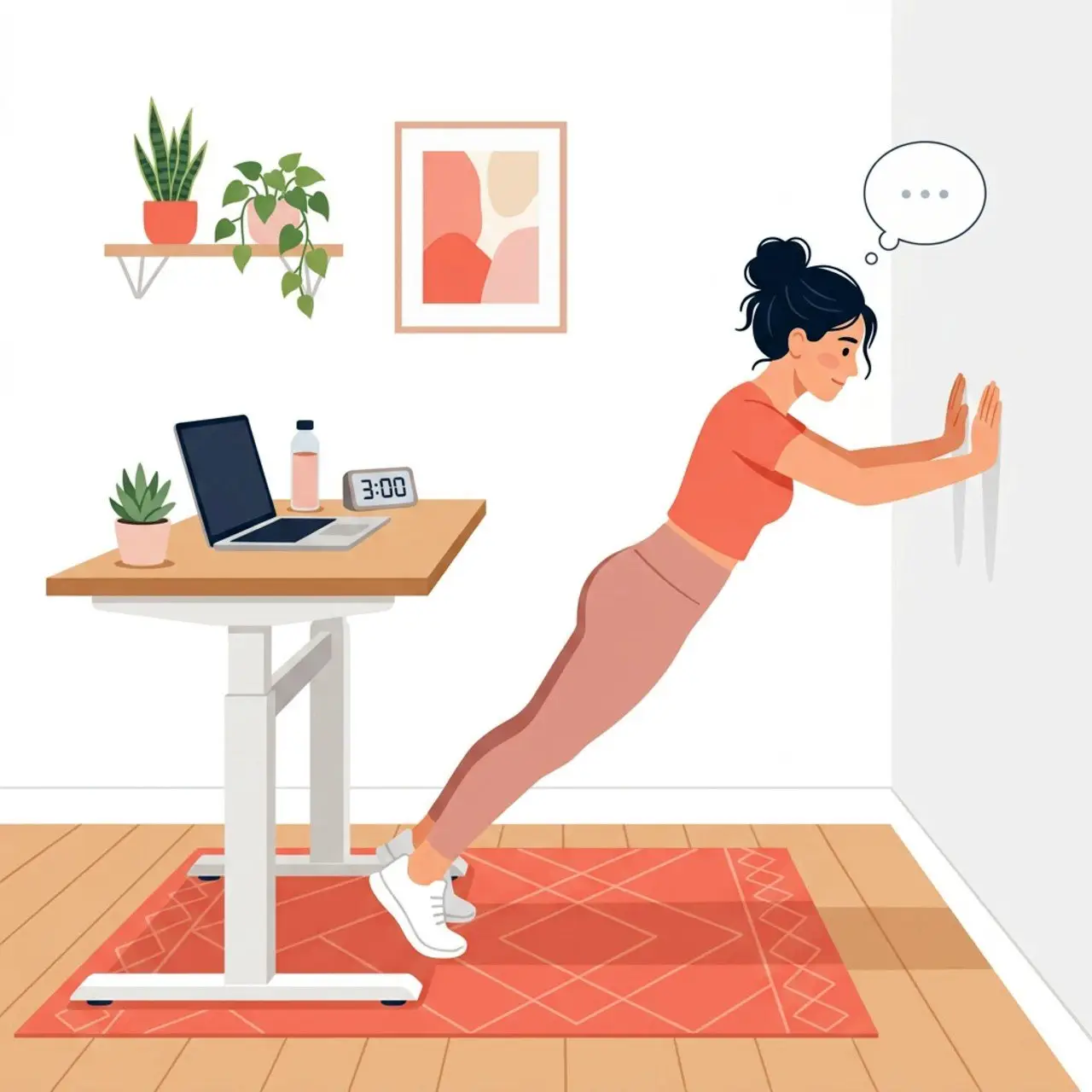
These are your minimum viable exercise units. A set of ten squats while waiting for the kettle. A three-minute walk around the block after lunch. Ten wall push-ups between calls. Individual movement snacks feel insignificant. Stacked across a day, they are not.
A 2024 study in Frontiers in Public Health found that female university employees who performed short resistance exercise snacks on working days for 12 weeks improved their muscle mass compared to controls. These were not gym-goers. They were desk workers adding brief movement to their existing schedule.
Tier 2: NEAT Maximization (daily habits, no scheduled workout required)
NEAT stands for non-exercise activity thermogenesis, the calories your body burns through all movement that is not structured exercise. Walking to a meeting instead of sitting on a call, taking the stairs, pacing during phone conversations, and standing while working all contribute to NEAT. And NEAT adds up faster than almost any other factor in your daily calorie burn.
Tier 3: Minimum Effective Dose Workouts (20 to 30 minutes, 2x per week)
This is your anchor. Two short strength-focused sessions per week, each lasting 20 to 30 minutes, using bodyweight, dumbbells, or resistance bands. This tier is where the significant changes in body composition happen over time. For a complete beginner-friendly approach, our fat-loss workouts for beginners give you a practical starting structure.
The key insight: you do not have to do all three tiers simultaneously to start. Begin with Tier 1 this week. Add Tier 2 next week. Introduce Tier 3 when you are ready. Progress, not perfection.
What Are Exercise Snacks, And Can They Replace A Gym Workout?
Exercise snacks are brief, structured bouts of physical activity lasting 1 to 5 minutes, repeated multiple times throughout the day. They are not the same as gym workouts and are not designed to replace them entirely. However, for improving cardiovascular health, blood sugar regulation, and daily calorie burn, the science shows they are remarkably effective, particularly for people who are currently doing nothing.
The evidence is no longer preliminary. A 2024 systematic review and meta-analysis published in the International Journal of Behavioral Nutrition and Physical Activity confirmed that exercise snacks are effective for improving cardiometabolic health in adults and represent a feasible, safe strategy for interrupting sedentary behaviour.
On the strength side, a 2024 study of female university employees found that performing short resistance exercise snacks (10 minutes of structured movement on working days) for 12 weeks improved muscle mass. The women were not doing traditional gym workouts. They were doing targeted movement between desk sessions.
Here is a practical exercise snack menu you can start using today:
| Exercise Snack | Duration | What It Targets | When To Do It |
|---|---|---|---|
| 10 bodyweight squats + 10 wall push-ups | 2-3 minutes | Legs, chest, core | Between meetings |
| Brisk stair climbing (3 flights up and down) | 3-4 minutes | Cardiovascular, glutes | Mid-morning or afternoon |
| 10-minute post-meal walk | 10 minutes | Blood sugar, fat storage | Within 20 minutes of eating |
| Standing calf raises + desk push-ups | 2 minutes | Lower legs, upper body | During phone calls |
| Plank hold + side lunges (3 rounds) | 4-5 minutes | Core, legs, stability | Before sitting down to lunch |
| Marching in place + arm circles | 2 minutes | Full body activation | First thing in the morning |
For motivation strategies that make it easier to actually start (and finish) these snacks, our guide on how to motivate yourself to finish workouts covers the psychology behind consistency.
How Does NEAT Burn More Calories Than You Think?
Most women trying to lose weight focus almost entirely on their formal exercise sessions and completely overlook the movement that fills the rest of their day. This is a significant gap, because NEAT (non-exercise activity thermogenesis) accounts for a far larger portion of your daily calorie burn than most people realize.
Research published in Endotext via NCBI shows that NEAT can vary by up to 2,000 calories per day between individuals of similar body size, primarily driven by differences in occupational and lifestyle activity. Two women with identical heights, weights, and exercise routines can burn vastly different numbers of calories per day simply based on how much they move outside the gym.
Published research via PMC estimates that if individuals with obesity adopted the daily movement patterns of leaner individuals, the increased NEAT could account for an additional 350 calories burned per day. Over a year, that is the equivalent of approximately 18 kilograms of body weight.
Here is the critical issue for busy women: when you are under stress and not sleeping well, both common during perimenopause, your body unconsciously reduces NEAT. You sit more. You pace less. You take the lift instead of the stairs. These small reductions add up and can quietly cancel out hundreds of calories from your formal exercise efforts.
The practical solution is to make NEAT conscious and deliberate. This means:
Walking or standing during phone calls instead of sitting. Parking further from the entrance. Taking the stairs any time you have the option. Setting a reminder to stand up every 45 minutes if you work at a desk. Doing one household task on your feet rather than sitting. None of these feels like exercise. All of them contribute meaningfully to your energy expenditure across the week.
If you are not sleeping well, which also suppresses movement motivation, read our guide on how sleep affects weight loss in women for strategies that support both rest and recovery.
What Kind Of Exercise Should Busy Women Over 40 Prioritize?
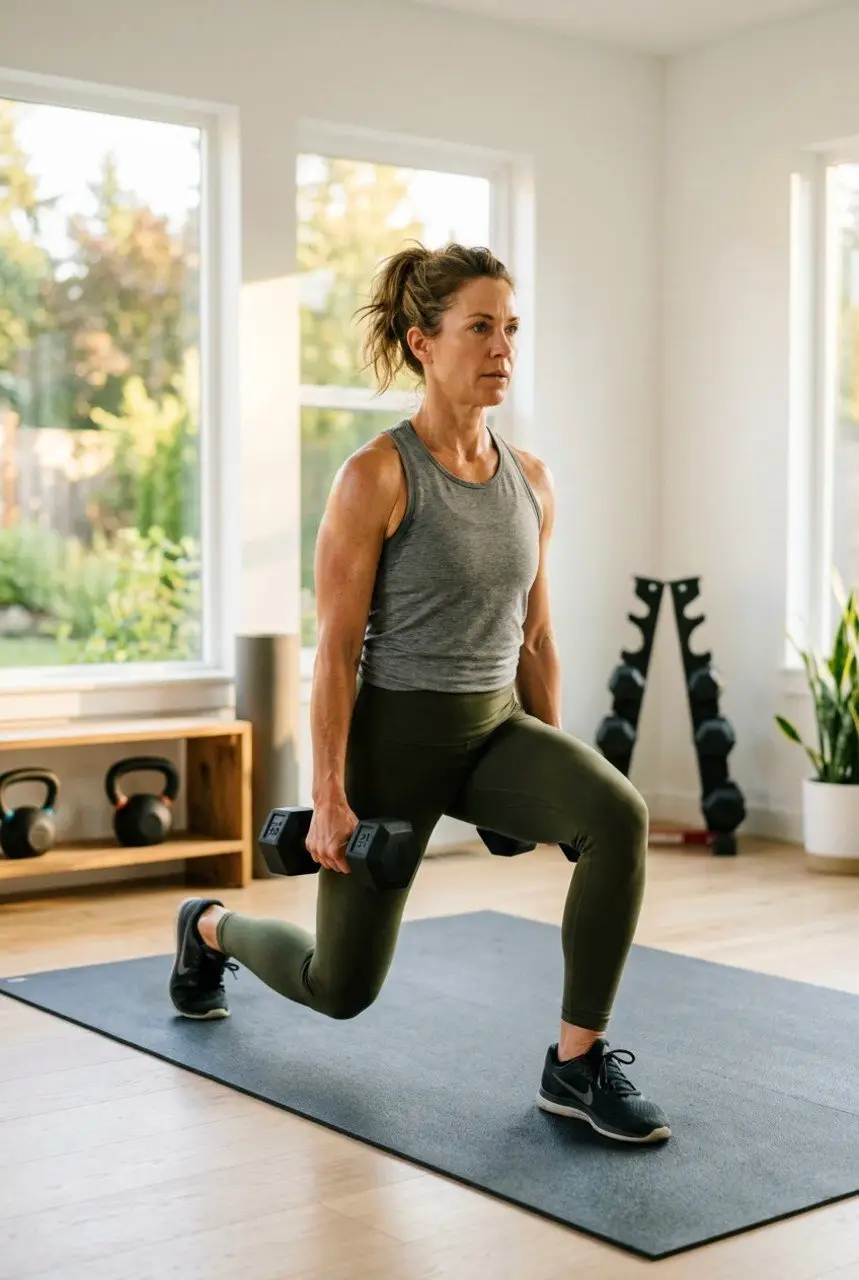
If you have limited time and are a woman over 40, strength training should be your non-negotiable. Not because cardio has no value, but because resistance training delivers the broadest set of benefits for the fewest sessions per week.
After 40, estrogen begins to decline. This accelerates the loss of both muscle mass and bone density. The rate of muscle loss (sarcopenia) in sedentary women is estimated at 3 to 8% per decade after age 30, and this rate increases after menopause. A 20-week controlled trial confirmed that resistance training significantly alters body composition in middle-aged women, with the effects depending partly on menopausal status.
Strength training does something cardio alone cannot: it builds and preserves the lean muscle tissue that keeps your metabolism elevated, improves your insulin sensitivity, protects your bones, and makes everyday life feel easier. A 2024 review confirmed that moderate to high-intensity resistance exercise performed twice weekly can produce meaningful strength improvements even in programs that are considered "minimal dose."
If you are also dealing with perimenopause and are not sure how exercise fits into your broader strategy, our detailed guide on how to lose weight during perimenopause covers the full picture, including exercise, nutrition, and sleep.
For the woman who has limited time, here is the priority order:
- Two short resistance training sessions per week (20 to 30 minutes, bodyweight or weights).
- Daily NEAT maximization (intentional movement outside formal exercise).
- Post-meal walks for blood sugar management (10 minutes after each main meal).
- Optional: short cardio snacks when time allows.
A 2025 study in Scientific Reports found that a 10-minute walk immediately after a meal significantly lowered peak blood glucose levels compared to not walking. This single habit, done after lunch and dinner, can meaningfully impact fat storage and appetite regulation over time.
For a deeper look at what strength training actually looks like for women your age, our guide to strength training for women over 40 covers the key principles and starting protocols.
Join Our Mailing List
Join thousands of women inside our community and receive our free guide, 10 Actions That Support Permanent Weight Loss — the exact behavioural shifts that make the difference between a two-week attempt and a lasting transformation.
No restriction plans. No guilt. Just what actually works — for real women with real lives.
How Do You Stay Consistent With Exercise When Life Gets Busy?
Consistency is not a character trait. It is an environmental design problem, and one that can actually be solved.
The women who exercise consistently when life is full don't have more discipline. They have fewer decision points. They have removed friction from the start of the habit, made their defaults work in their favour, and quietly given up on the idea that motivation arrives before action. It rarely does. Action comes first, and motivation tends to follow, not the other way around.
A 2024 systematic review published in PMC on exercise snacking and sedentary behaviour interruption concluded that brief, frequent movement is not just effective but feasible, meaning real women in real schedules can actually do it and stick to it. This is the evidence base for the approach.
Three systems that actually create consistency with exercise:
- The Non-Negotiable Anchor. Pick one 20-minute strength session per week and treat it the way you treat a medical appointment. It is non-negotiable. You reschedule it, you never cancel it. One session is better than zero. Once that anchor is solid, adding a second becomes dramatically easier.
- The Five-Minute Entry Rule. On days when you have no motivation and no time, commit only to five minutes of movement. Five minutes of squats, walking, or stretching. The research on habit formation consistently shows that the barrier to beginning is far higher than the barrier to continuing. Starting is the hardest part. Five minutes almost always turns into more, and on the rare days it doesn't, five minutes is still infinitely better than nothing.
- The Schedule Stack. Attach your exercise habit to something that already happens every day. Walk while your coffee brews. Do squats while you wait for the shower to warm up. Stretch while the kids watch their evening programme. You are not finding new time. You are borrowing minutes from existing routines. For more motivation strategies built specifically around busy-parent schedules, our guide on sustainable workout motivation for working moms goes deep on what actually works.
Want practical, evidence-based strategies like this in your inbox? Join our newsletter for guidance built around real women and real schedules.
Related Articles
The Bottom Line
You don't need an hour. You don't need a gym membership. You don't need to gut your entire schedule to start moving the needle.
Two short strength sessions per week. Daily movement stacked into the day you already have. A 10-minute walk after dinner. That is enough to protect your muscles, support your metabolism, and shift your body composition over time. That is the minimum effective dose of exercise, and it fits into even your messiest weeks.
The only exercise plan that doesn't work is the one you never start because the bar was set too high. So lower the bar. Start with five minutes. Add from there.
Your body responds to consistency faster than it responds to perfection. The gap between where you are and where you want to be is genuinely smaller than the fitness industry has led you to believe.
Glossary Of Key Terms
FAQ
The minimum evidence-based threshold for meaningful results is two resistance training sessions per week, each lasting 20 to 30 minutes at moderate to high intensity. This alone, combined with daily NEAT (intentional non-gym movement), can support fat loss and body composition improvements over time. You do not need to hit five days per week to start seeing results.
A 2024 study of menopausal women found that minimal dose resistance training performed twice weekly significantly improved muscle strength without requiring hour-long sessions. More is better once you have the minimum established, but the minimum is far more achievable than most fitness content suggests.
For many goals, yes. A 2019 review found that three 10-minute bouts of moderate-intensity exercise produce the same cardiovascular, blood pressure, and blood glucose improvements as one continuous 30-minute session. A 2024 meta-analysis confirmed that exercise snacks, which are brief movement bouts of 1 to 5 minutes performed throughout the day, are effective for cardiometabolic health.
Where short sessions fall short is in building maximum muscle mass, for which progressive overload over longer sessions is more effective. But for fat loss, cardiovascular health, and metabolic function, short and frequent beats are long and inconsistent every time.
Resistance training is the highest-return investment of exercise time for women over 40. Muscle mass declines at an estimated 3 to 8% per decade from age 30, and this rate increases after menopause. Resistance training directly counteracts both muscle loss and the associated decline in bone density.
A 20-minute strength session twice a week using bodyweight or dumbbells preserves lean tissue, elevates your resting metabolic rate, and improves insulin sensitivity. When time is the constraint, prioritize two short strength sessions over longer but less frequent cardio workouts.
Exercise snacks are brief, structured bouts of physical activity lasting 1 to 5 minutes, repeated multiple times throughout the day. They are specifically designed for people who cannot block out time for conventional workouts. A 2024 systematic review and meta-analysis confirmed they are effective for improving cardiometabolic health in adults and feasible as a long-term strategy.
A 2024 study of female university employees showed that consistent resistance exercise snacks on working days improved muscle mass over 12 weeks. Think of them as a movement savings account. Small, regular deposits add up to something meaningful over time.
Walking is one of the most underrated fat loss tools available, particularly when done after meals. A 2025 study in Scientific Reports found that a 10-minute walk immediately after glucose intake significantly reduced peak blood glucose levels, which lowers the insulin response, reduces fat storage signals, and reduces post-meal cravings.
Daily step count also boosts NEAT, which can account for a difference of hundreds of calories burned per day between active and sedentary women of similar size. Walking alone is not equivalent to resistance training, but daily walking combined with two short strength sessions per week is a genuinely powerful combination.
The most effective approach is to lower the entry barrier dramatically. Start with the Five-Minute Rule: commit only to five minutes of movement. Research on habit formation consistently shows that the beginning is the hardest part. Five minutes almost always extends further on its own, and on the days it doesn't, five minutes is still a win.
Habit stacking, attaching your exercise to an existing daily routine, such as walking while the coffee brews or squatting while your shower warms up, removes the decision entirely. Consistency with an imperfect plan consistently outperforms intention toward a perfect plan you can never quite execute.
Without regular resistance training during perimenopause, women lose muscle mass and bone density simultaneously, and both losses compound each other over time. Declining estrogen accelerates muscle breakdown, increases fat storage around the abdomen, and reduces bone mineral density. Sarcopenia (muscle loss) also lowers your resting metabolic rate, making it progressively easier to gain fat even without eating more.
Regular strength training, even at a minimal dose of twice per week, directly counteracts all three of these processes. The investment of two 20-minute sessions per week during perimenopause pays dividends in body composition, metabolic health, and bone strength for decades afterwards.