
Why Strength Training For Women Over 40 Is The Most Powerful Anti-Ageing Tool You Have
Dr. Kenneth Cooper
Father of Aerobics
You don't stop exercising because you grow old — you grow old because you stop exercising.
The Executive Summary
For women over 40, strength training is a powerful tool to combat age-related changes. After 40, women experience muscle loss, reduced bone density, and a slower metabolism.
Resistance training reverses muscle decline, improves bone density, and aids weight management without drastic calorie cuts. Women do not bulk easily. The article includes an 8-week beginner program and emphasizes progressive overload to build lean muscle and avoid plateaus.
Most women who avoid the weights section have been told — directly or indirectly — that lifting will make them look bulky. It won't. And that myth has cost an enormous number of women the most effective tool available for reshaping their bodies, protecting their bones, and managing their weight without permanent calorie restriction.
After 40, the stakes are higher. Estrogen begins to decline. Muscle loss accelerates. Metabolism slows — not dramatically, but measurably. The strategies that worked in your 30s start delivering diminishing returns. That is not failure on your part. The underlying biology has changed, and the approach needs to match it.
Strength training addresses those biological shifts directly. No other single intervention has as much evidence behind it for women over 40 who want a leaner body, stronger bones, better hormonal balance, and a metabolism that doesn't require increasingly drastic measures to manage.
This guide covers the full picture: why lifting matters more after 40, how to start without getting injured, what to eat to support it, and an 8-week beginner program you can run from home or a gym.
Medical & Referral Disclaimer
This article is for informational and educational purposes only. It is not a substitute for professional medical advice, diagnosis, or treatment. Always consult your physician or qualified health provider before starting any new diet or exercise program.
Key Takeaways
- Women do not bulk from lifting weights — female testosterone levels are 15–20x lower than men's, making significant bulk physiologically difficult without years of deliberate, specialized effort.
- After 40, women lose 3–8% of muscle mass per decade without intervention. Strength training is the only strategy proven to directly reverse this decline.
- Each additional pound of lean muscle burns approximately 6 calories at rest daily — a compounding metabolic advantage that makes long-term weight management significantly easier.
- Strength training improves bone density, reducing osteoporosis and fracture risk at precisely the time when declining estrogen accelerates bone loss.
- Progressive overload — gradually increasing workout difficulty over time — is the core mechanism that produces results. Without it, the body adapts and plateaus.
- Two to three sessions per week produce measurable strength and body composition gains; recovery between sessions (48–72 hours per muscle group) is where the actual adaptation occurs.
Why Is Strength Training Especially Important For Women Over 40?
Strength training is especially important for women over 40 because it directly counters the three most significant physical changes that begin in midlife: accelerating muscle loss (sarcopenia), declining bone density, and slowing metabolic rate. No other form of exercise addresses all three simultaneously.
These are not cosmetic issues. They are metabolic and structural ones with long-term health consequences — and they are measurably reversible through consistent resistance training.
What Is Sarcopenia And Why Does It Matter?
Sarcopenia is the progressive, age-related loss of muscle mass and strength. Women begin losing muscle at roughly 1% per year after age 30, with the rate accelerating after 40 — particularly during the hormonal changes of perimenopause and menopause.
Research published in the Journal of Cachexia, Sarcopenia and Muscle estimates that women lose 3–8% of muscle mass per decade, with losses of up to 15% per decade in some cases after 70. Each lost pound of muscle reduces resting metabolic rate, making weight management progressively harder — even without any change in eating habits.
The reversal is straightforward: progressive resistance training. Studies consistently show that women of any age can rebuild muscle, improve strength, and increase metabolic rate through structured lifting programs.
Strength Training vs. Cardio For Women Over 40
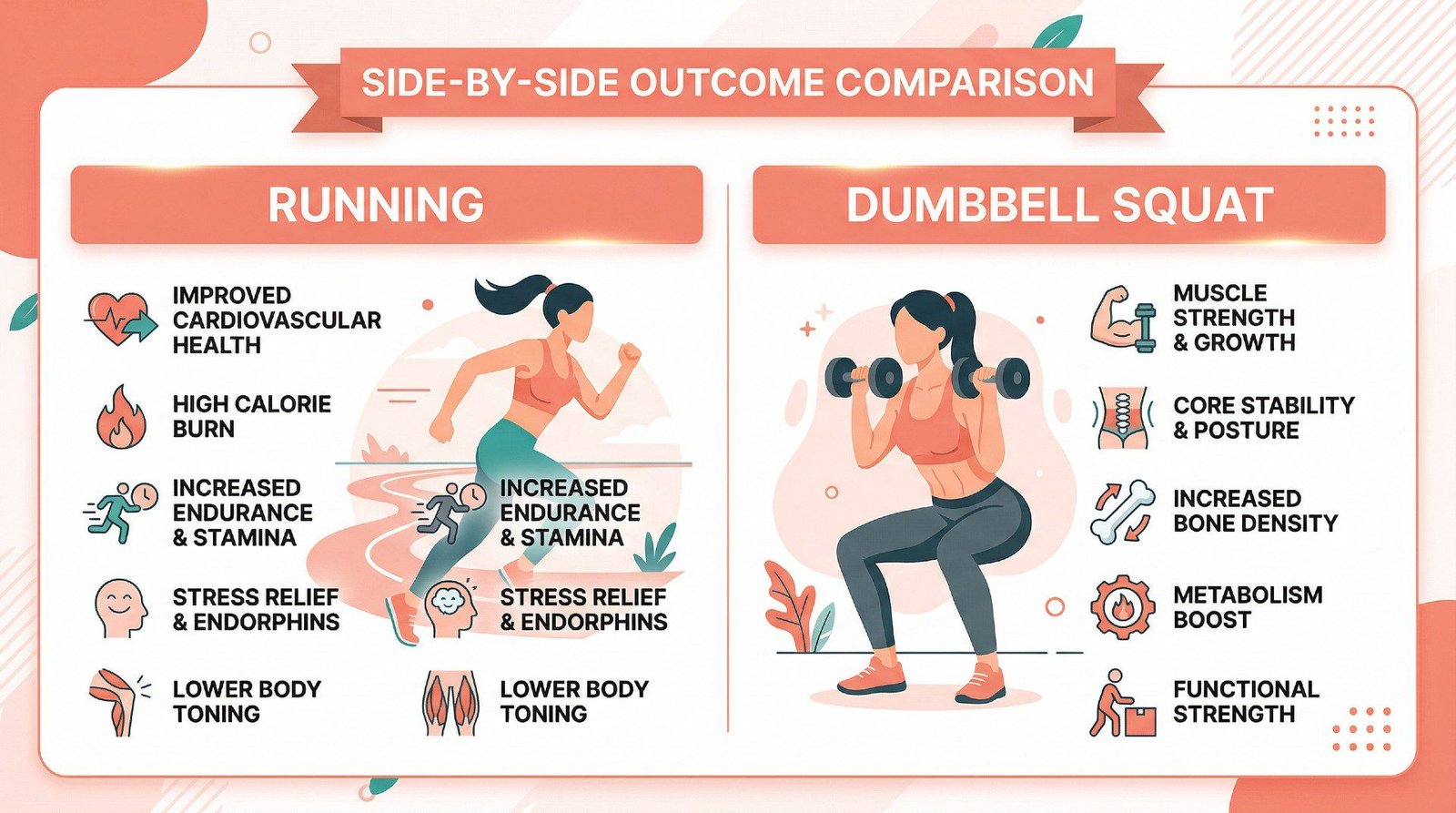
Cardio has its place — particularly for cardiovascular health and stress reduction. But for women over 40 who want to change body composition, manage weight long-term, and protect bone density, cardio alone falls short.
| Goal | Cardio | Strength Training |
|---|---|---|
| Fat burning during exercise | High | Moderate |
| Resting metabolic rate increase | Minimal | Significant |
| Muscle preservation | None | Direct |
| Bone density | Low-moderate | High |
| Insulin sensitivity improvement | Moderate | High (24–48 hrs post-session) |
| Cortisol impact | Can raise if excessive | Moderate, manageable |
| Long-term weight maintenance | Limited | Strong evidence |
For most women over 40, the ideal approach is 2–3 strength sessions per week as the foundation, with low-intensity cardio (walking, swimming) supporting recovery and cardiovascular health. See our guide to fat loss workouts for beginners for how to structure both.
Will Strength Training Make Women Over 40 Look Bulky?
Strength training does not make women look bulky. The female body lacks the testosterone levels required for significant muscle hypertrophy — women produce 15–20 times less testosterone than men, making the kind of muscle mass associated with "bulk" physiologically inaccessible without years of specialized training, high caloric surplus, and often pharmacological support.
This is not a minor caveat. It is a fundamental biological reality that makes the bulk fear largely unfounded for women training 2–3 times per week.
The Hormonal Reality Behind Women's Muscle Growth
Testosterone is the primary anabolic hormone driving muscle hypertrophy. Men produce 270–1,070 ng/dL. Women produce 15–70 ng/dL. This difference means women's muscles grow more slowly, reach lower absolute mass ceilings, and respond to training with increased definition rather than increased size — provided they are not eating a significant caloric surplus specifically designed to support mass gain.
What women who lift consistently and eat adequate protein actually experience:
- Muscles become firmer and more defined.
- Body fat decreases relative to lean mass.
- Shape changes (higher glutes, more defined arms, flatter abdomen).
- Clothes fit differently — often smaller in size despite the same or higher scale weight.
What "Toned" Actually Means
"Toned" is not a physiological state — it is a description of visible muscle beneath low body fat. You cannot tone a muscle without building it, and you cannot reveal that muscle without losing the fat covering it. Strength training builds the muscle; a moderate caloric deficit removes the covering.
This combination — resistance training, adequate protein, and a modest caloric deficit — is exactly what produces the aesthetic that most women over 40 describe as their goal. It is also the most metabolically sustainable approach to body composition change.

What Are The Full Benefits Of Strength Training For Women Over 40?
Strength training for women over 40 delivers benefits across six health domains: body composition, bone density, metabolic health, hormonal balance, joint function, and mental health. The research base is extensive and consistent — this is among the most evidence-backed lifestyle interventions available.
Bone Density And Osteoporosis Prevention
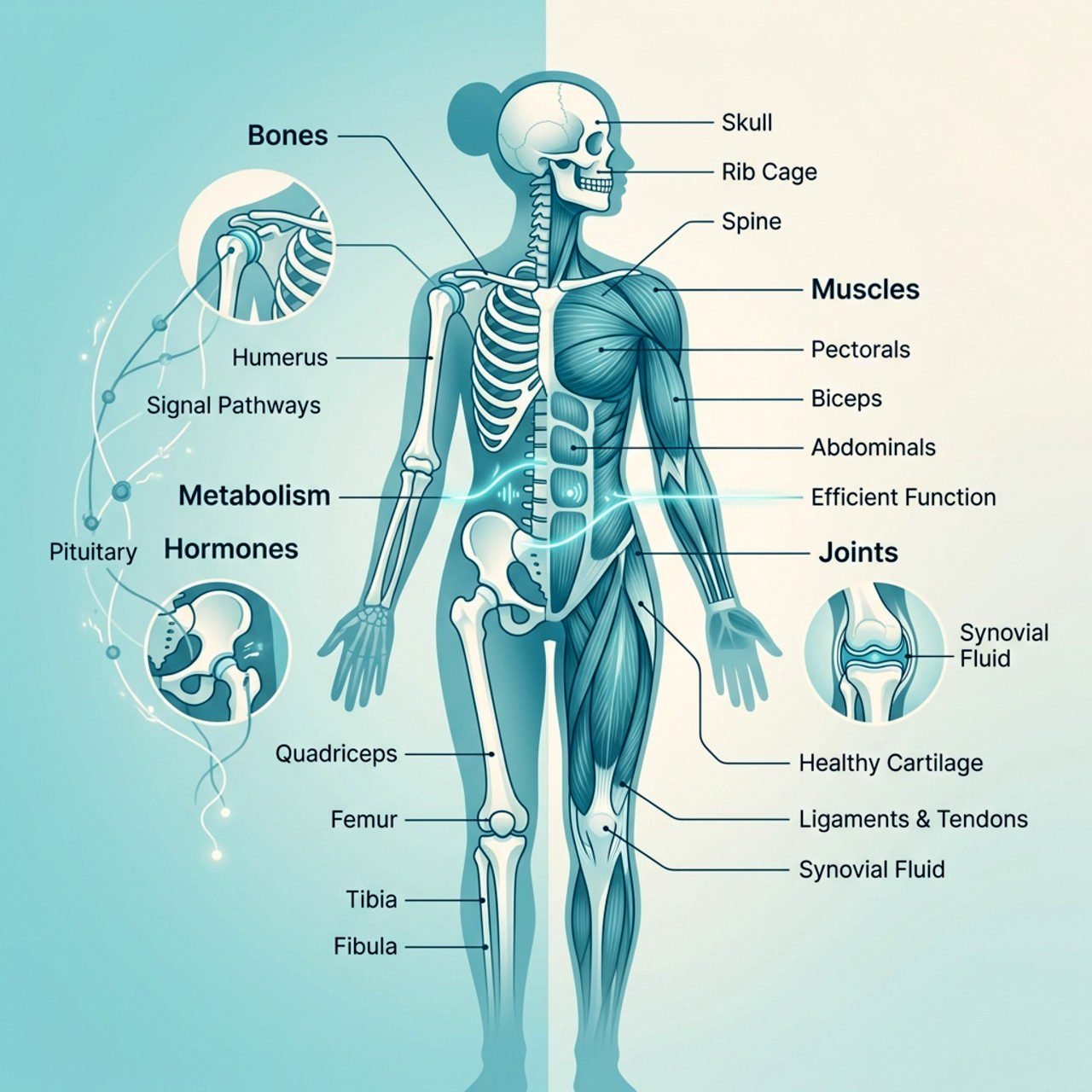
Estrogen plays a critical role in maintaining bone density. As estrogen declines during perimenopause and menopause, bone resorption accelerates — increasing osteoporosis and fracture risk significantly. One in two women over 50 will experience an osteoporosis-related fracture in their lifetime.
Strength training is one of the few interventions proven to actively increase bone mineral density through mechanical loading. The compressive and tensile forces placed on bones during resistance exercises stimulate osteoblast activity — the cells responsible for building new bone tissue. This is something cardio and dietary calcium alone cannot replicate.
Metabolic Rate And Sustainable Weight Management
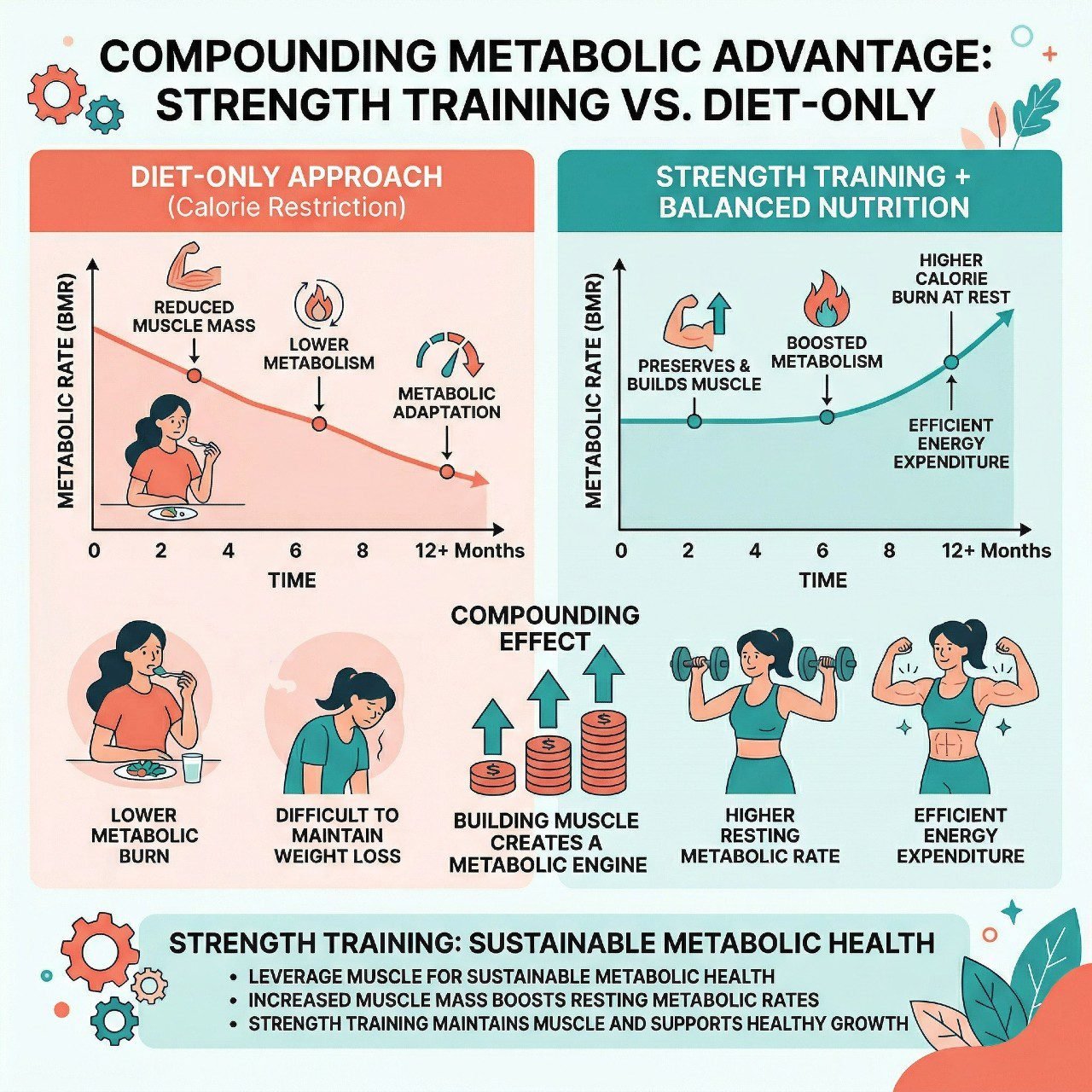
Each pound of lean muscle tissue burns approximately 6 calories per day at rest. That sounds modest — but the compounding effect of building 5–10 pounds of lean muscle (achievable for most women over 12–24 months) represents an additional 30–60 calories burned daily without any change in activity.
More significantly, the post-exercise energy expenditure from strength training (EPOC — excess post-exercise oxygen consumption) continues burning additional calories for 24–48 hours after each session. This makes strength training more metabolically durable than steady-state cardio for weight management.
This is a core reason why strength training is central to sustainable fat loss strategies rather than a supplement to them.
Hormonal Balance During Perimenopause
Resistance training improves insulin sensitivity for 24–48 hours post-session, directly addressing one of perimenopause's most significant metabolic changes. It also stimulates growth hormone and IGF-1 — anabolic hormones that support fat metabolism, muscle repair, and skin elasticity.
For women dealing with the hormonal volatility of perimenopause, consistent strength training creates measurable improvements in mood, energy, sleep quality, and hot flash frequency. For a full picture of how hormones affect weight loss in women, including the estrogen-cortisol interaction, see our dedicated guide.
Joint Health And Functional Strength
A common misconception is that lifting weights damages joints. The opposite is true when performed with correct form and progressive loading. Resistance training strengthens the tendons, ligaments, and connective tissue surrounding joints — reducing injury risk both in exercise and daily life.
Functional strength — the ability to carry groceries, climb stairs, lift grandchildren, and get up from the floor — is directly built through compound strength training movements. Maintaining this functional capacity is one of the strongest predictors of independence and quality of life after 60.
Comprehensive Benefits Overview:
| Benefit | Mechanism | Onset | Evidence Level |
|---|---|---|---|
| Increased lean muscle | Muscle protein synthesis | 4–8 weeks visible | Very strong |
| Higher resting metabolism | Greater lean mass, EPOC | 8–12 weeks | Strong |
| Improved bone density | Mechanical loading stimulates osteoblasts | 6–12 months | Very strong |
| Better insulin sensitivity | Glucose uptake in muscle tissue | 24–48 hrs per session | Strong |
| Reduced visceral fat | Hormonal and metabolic effects | 8–16 weeks | Strong |
| Improved mood and cognition | Endorphins, BDNF production | Immediate + cumulative | Moderate–Strong |
| Reduced hot flash frequency | Thermoreceptor adaptation, hormonal shifts | 12–16 weeks | Moderate |
| Joint stability | Strengthened connective tissue | 6–12 weeks | Strong |
How Should Women Over 40 Start Strength Training?
Women over 40 should start strength training by mastering four foundational movement patterns — squat, hinge, push, and pull — with light to moderate loads, two times per week, focusing on form before adding resistance. Beginning with 2 sessions per week allows adequate recovery while building the neuromuscular foundations that prevent injury and enable long-term progress.
The most common beginner mistake is starting too hard, getting injured or exhausted, and quitting. Begin conservatively. Results come from consistent sessions over months, not from any single heroic effort.
The Progressive Overload Principle — The Engine Of Results
Progressive overload means gradually increasing the demand placed on your muscles over time. Without it, the body adapts to whatever you're doing and stops changing.
Progressive overload can be achieved by:
- Increasing the weight lifted
- Adding one more rep per set
- Adding one more set per exercise
- Reducing rest time between sets
- Improving range of motion or control
You do not need to increase difficulty every session — aim for small progressions every 1–2 weeks. Track your workouts, so you know where you started and where you are.
Four Movement Patterns Every Woman Over 40 Should Train
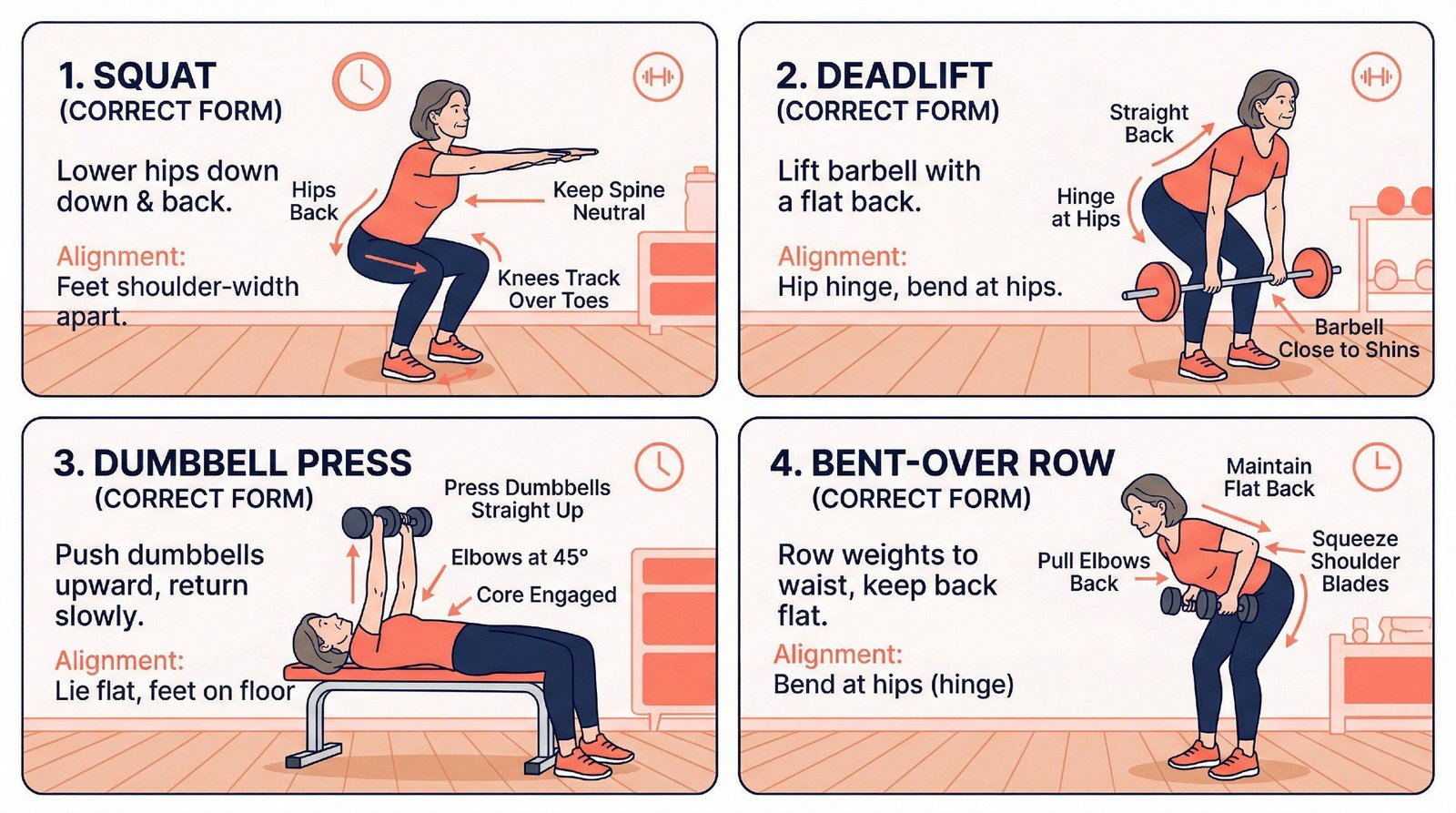
The Essential Compound Movements
1. Squat pattern — targets quads, glutes, hamstrings, core
- Beginner: bodyweight squat, goblet squat with a dumbbell.
- Intermediate: barbell back squat, Bulgarian split squat.
2. Hip hinge pattern — targets hamstrings, glutes, lower back
- Beginner: Romanian deadlift with dumbbells, kettlebell deadlift.
- Intermediate: conventional barbell deadlift.
3. Push pattern — targets chest, shoulders, triceps
- Beginner: incline push-up, dumbbell chest press.
- Intermediate: flat bench press, overhead dumbbell press.
4. Pull pattern — targets back, biceps, rear shoulders
- Beginner: resistance band row, dumbbell bent-over row.
- Intermediate: lat pulldown, assisted or full pull-up.
Training these four patterns twice per week covers the entire body, builds functional strength, and creates the balanced muscle development that produces visible body composition changes.
8-Week Beginner Strength Training Program for Women Over 40:
| Week | Sessions/Week | Sets × Reps | Load | Focus |
|---|---|---|---|---|
| 1–2 | 2 | 2 × 10–12 | Light (RPE 5–6/10) | Form and movement pattern mastery |
| 3–4 | 2 | 3 × 10–12 | Moderate (RPE 6–7/10) | Building work capacity |
| 5–6 | 2–3 | 3 × 8–10 | Moderate-heavy (RPE 7/10) | Progressive overload begins |
| 7–8 | 3 | 3–4 × 6–8 | Heavy (RPE 7–8/10) | Strength foundation established |
RPE = Rate of Perceived Exertion. RPE 7 means 3 reps left in the tank at the end of the set.
Sample Session (Weeks 3–4):
- Goblet squat: 3 × 10
- Romanian deadlift (dumbbells): 3 × 10
- Dumbbell chest press: 3 × 10
- Bent-over dumbbell row: 3 × 10 each side
- Plank: 3 × 20–30 seconds
Rest 60–90 seconds between sets. Total session time: 35–45 minutes.
What Equipment Do Women Over 40 Need For Home Strength Training?
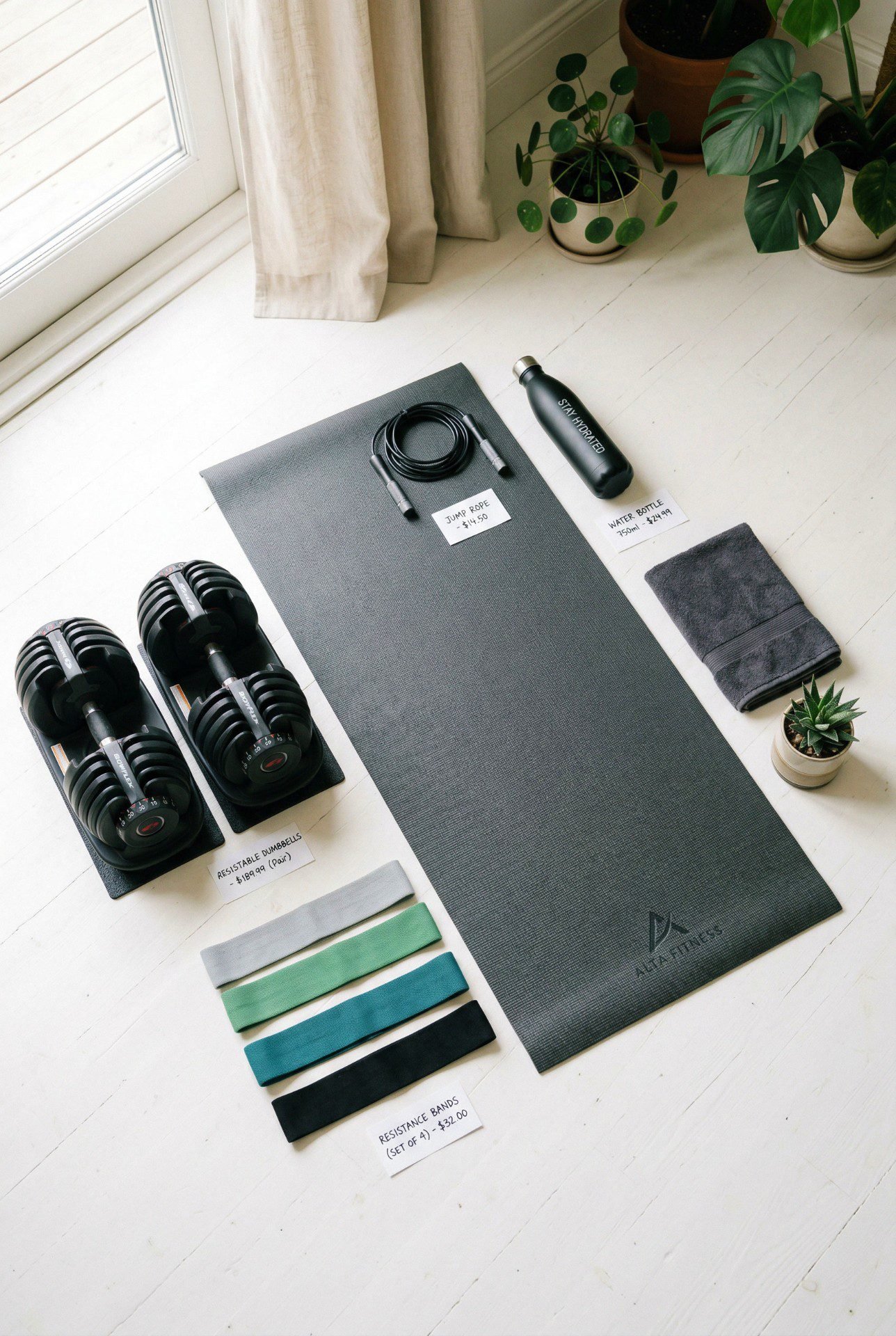
Women over 40 can build a fully effective home strength training setup for under $150 — a pair of adjustable dumbbells, a set of resistance bands, and a mat cover the vast majority of beginner-to-intermediate programming. A home gym removes the travel barrier and gym intimidation that prevent many women from training consistently.
The Minimal Effective Home Gym
Under $150 — starter setup:
- Adjustable dumbbell set (5–25 lbs) — the single most versatile piece of equipment.
- Long resistance band set (3 resistance levels) — rows, pull-aparts, assisted movements.
- Exercise mat — necessary for floor work and joint protection.
Under $400 — expanded setup:
- Add a kettlebell (25–35 lbs) for swings and single-leg deadlifts.
- Pull-up bar (door frame) for rows and progression toward pull-ups.
- Resistance loop bands for glute activation work.
Not required for results:
- Bench (a firm sofa arm or stability ball works for press variations).
- Barbell (adds options, but is not necessary until the intermediate level).
- Gym membership.
For women who prefer gym training, our guide on how to start at the gym without feeling intimidated addresses the psychological barriers directly.
How Does Nutrition Support Strength Training For Women Over 40?
Nutrition for women over 40 doing strength training should prioritize protein (0.7–1.0g per pound of body weight), support recovery through anti-inflammatory whole foods, and maintain a moderate caloric deficit if fat loss is the goal — or caloric maintenance if the primary goal is muscle building. Protein timing around training windows amplifies muscle protein synthesis.
Without adequate protein, strength training produces minimal body composition change. The workout creates the stimulus; protein provides the raw material for adaptation.
Protein Requirements For Muscle Building After 40
Women over 40 need more protein than general dietary guidelines suggest, for two reasons: declining anabolic hormones make muscle protein synthesis less efficient, and higher intake is needed to prevent muscle breakdown during caloric deficits.
Target range: 0.7–1.0g protein per pound of body weight daily
For a 150-pound woman: 105–150g of protein per day.
Distribute this across 3–4 meals rather than concentrating it at one sitting — your muscles can only utilize approximately 30–40g for protein synthesis in a single meal.
For morning protein strategies that start the day right, see what women should eat in the morning for hormone balance and fat loss.
Best Protein Sources for Women Over 40 Who Lift
- Greek yogurt (plain, 2%) — 17g per 170g serving; calcium supports bone health.
- Salmon — 22g per 85g; omega-3s support muscle recovery and reduce inflammation.
- Chicken breast — 31g per 100g; versatile, lean.
- Eggs (whole) — 6g each; choline supports liver function and hormonal metabolism.
- Cottage cheese — 11g per 100g; slow-digesting casein supports overnight muscle repair.
- Tofu (firm) — 8g per 100g; phytoestrogens provide additional perimenopause benefit.
- Lentils — 9g per 100g cooked; fiber supports gut health and estrogen clearance.
Full preparation strategies and protein-per-serving data are in our 5 Powerful Protein Foods for Dieting guide.
Pre- And Post-Workout Nutrition
Pre-workout (60–90 minutes before):
- 20–30g protein + moderate carbohydrates.
- Example: Greek yogurt + banana, or eggs on whole-grain toast.
- Goal: fuel the session and prime muscle protein synthesis.
Post-workout (within 60 minutes):
- 25–40g protein + some carbohydrates to restore glycogen.
- Example: protein shake + fruit, or chicken + rice.
- Goal: maximize the muscle protein synthesis window opened by training.
What to avoid around training:
- High-fat meals immediately before (slows digestion, can cause nausea).
- Training fasted consistently (increases cortisol, reduces performance over time).
For women managing busy schedules, our Healthy Diet Meal Plans for Busy Lives includes prep-ahead templates that make pre- and post-workout nutrition automatic rather than effortful.
How Should Women Over 40 Approach Recovery From Strength Training?
Women over 40 typically need 48–72 hours of recovery between training the same muscle group — slightly more than younger women, due to lower estrogen levels, which slow collagen synthesis and tissue repair. Recovery is not downtime; it is when adaptation actually occurs. Training without adequate recovery produces stagnation or injury, not results.
Why Recovery Changes After 40
Three physiological factors lengthen recovery time after 40:
- Lower estrogen — estrogen supports collagen synthesis and tissue repair. Its decline slows the recovery process.
- Lower growth hormone output — GH pulses, which peak during deep sleep and facilitate muscle repair, decrease with age.
- Greater inflammation response — post-exercise inflammation resolves more slowly in older muscle tissue.
This does not mean training less — it means training smarter. Two to three sessions per week with full recovery between them outperform five sessions with insufficient recovery.
Active Recovery Strategies For Women Over 40
Sleep — the most important recovery tool:
- 7–9 hours, consistent sleep and wake times.
- Growth hormone secretion peaks during deep sleep stages.
- Poor sleep directly impairs muscle protein synthesis; see our guide on managing fatigue if sleep quality is an issue.
Active recovery (non-training days):
- Walking (20–40 minutes) — improves circulation and reduces muscle soreness without additional training stress.
- Gentle yoga or stretching — reduces perceived soreness, maintains flexibility; see our yoga injury prevention tips before adding yoga to your routine.
- Swimming — full-body active recovery with zero joint impact.
Nutritional recovery support:
- Magnesium glycinate (300–400mg before bed) — reduces muscle soreness and improves sleep quality.
- Tart cherry juice — evidence supports a reduction in delayed onset muscle soreness (DOMS).
- Adequate hydration — 2–3L water daily; muscle tissue is approximately 75% water.
What to watch for — signs of under-recovery:
- Persistent soreness that doesn't resolve in 72 hours.
- Declining strength over 2+ consecutive sessions.
- Disrupted sleep and elevated resting heart rate.
- Persistent fatigue that doesn't respond to rest.

How Does Strength Training Support Long-Term Weight Management And Prevent Weight Regain?
Strength training is one of the most powerful strategies for keeping weight off permanently because it raises the resting metabolic rate, preserves the lean mass that calorie restriction erodes, and improves insulin sensitivity — the three physiological factors most responsible for weight regain after dieting.
Most women who regain weight after dieting do so because the diet method reduced their muscle mass along with fat, lowering their metabolism and making the same amount of food now a surplus.
Why Muscle Is The Key To Permanent Fat Loss
The yo-yo dieting cycle has a clear physiological cause: calorie restriction without resistance training causes the body to lose roughly equal parts fat and muscle. When weight loss ends and eating normalizes, fat returns easily — but muscle does not return automatically. The net result is a higher body fat percentage and lower metabolic rate than before the diet began.
This is the biology behind why women regain weight after dieting — and why the solution is building muscle, not restricting more aggressively.
Strength training breaks this cycle:
- Muscle tissue preserved during a caloric deficit maintains metabolic rate.
- Higher resting metabolism means maintenance calories are higher — creating more dietary flexibility.
- Improved insulin sensitivity means carbohydrates are processed efficiently rather than stored as fat.
- Stronger muscles support more physical activity in daily life, increasing total daily energy expenditure.
The Compound Effect Of Lean Muscle On Weight Maintenance
The metabolic math of muscle becomes meaningful over years, not weeks. A woman who builds 8 pounds of lean muscle over 18 months of consistent training:
- Burns an additional 48 calories per day at rest.
- Burns additional calories through EPOC after each session (estimated 100–200 calories per session).
- Maintains higher exercise tolerance, enabling more active daily movement.
- Develops a baseline of physical strength that makes sedentary regression less likely.
These are not dramatic single-day differences. They are the accumulation that separates women who keep weight off from those who don't — and they are built through consistent strength training, not periodic diet cycles.
For the full framework on sustainable fat loss and permanent weight management, see our Ultimate Guide to Sustainable Fat Loss.
Join Our Mailing List
Join thousands of women inside our community and receive our free guide, 10 Actions That Support Permanent Weight Loss — the exact behavioural shifts that make the difference between a two-week attempt and a lasting transformation.
No restriction plans. No guilt. Just what actually works — for real women with real lives.
Your Next Step
Strength training is not something you add to your life after you've lost the weight. It is the strategy that makes sustainable weight loss possible in the first place — and keeps it off permanently.
You do not need a gym membership, an expensive trainer, or more time than you currently have. Two sessions a week, 40 minutes each, with a pair of dumbbells and a commitment to progressive overload, is enough to rebuild the muscle your body has been quietly losing for years.
Start with the 8-week beginner program in this guide. Add protein to every meal. Sleep 7–9 hours. Then come back in three months and compare.
For a complete nutrition and fat loss framework built specifically around female physiology — covering what to eat, how to structure your week, and the mindset that makes all of it stick — download the Lean Body Formula Special Report, free with email signup.
Related Articles
The Bottom Line
The body you want to live in after 40 is built in the weights section, not taken away in the kitchen. Strength training is the one intervention that simultaneously addresses every major physical challenge midlife brings — muscle loss, slowing metabolism, declining bone density, hormonal disruption, and weight regain after dieting.
Not one of those challenges responds well to eating less and doing more cardio. All of them respond to progressive resistance training, adequate protein, and consistent recovery. You do not need to overhaul your entire life to begin. Two sessions a week, a pair of dumbbells, and a commitment to adding a little more challenge each week is the complete foundation. The rest builds from there.
Forty is not a finish line. For most women, it is the point where a smarter, more sustainable approach to fitness finally replaces the ones that were never designed for their biology in the first place.
Strength training gives you a body that functions better, looks leaner, and ages with more resilience — and it compounds over years in a way that no diet ever does. Start with the 8-week program in this guide, hit your protein targets, and give it twelve weeks before you judge the results.
Embrace Inspiration
Like What You Read? Be Sociable, Comment, And Share It! Thanks.
Glossary Of Key Terms
FAQ
Two to three sessions per week is optimal for most women over 40 beginning a strength training program. This allows adequate recovery between sessions (48–72 hours per muscle group) while providing sufficient stimulus for measurable strength and body composition gains. More is not always better — recovery is where adaptation actually occurs.
Women of any age can build muscle with consistent resistance training and adequate protein. While the process is somewhat slower after 40 due to lower estrogen and anabolic hormone levels, research confirms significant muscle gains are achievable even in women in their 60s, 70s, and 80s. It is never too late to start.
Strength improvements typically appear within 2–4 weeks as your nervous system adapts to the new movements. Visible changes in body composition generally take 6–12 weeks. The full picture of what consistent training produces takes 6–12 months to develop. For a detailed breakdown, see how long it takes to see results from working out as a beginner.
In most cases, yes — with appropriate exercise selection and load. Resistance training strengthens the connective tissue supporting joints and often reduces joint pain over time. Low-impact options (resistance bands, machines with a guided range of motion, water resistance training) are ideal starting points. Always consult your physician before beginning if you have an existing joint condition.
Yes, if needed — but order matters. Perform strength training before cardio to ensure your muscles are fresh and glycogen stores are full for the resistance work. Cardio after lifting has minimal impact on strength adaptations; lifting after long cardio sessions significantly reduces strength performance.
Strength training alone, without any dietary change, typically produces modest weight loss — but substantial changes in body composition. Women often find they weigh the same but wear smaller clothing sizes because they've gained muscle and lost fat simultaneously. For faster results, combine strength training with a moderate increase in protein intake and a small caloric deficit.
You Know Why. Now Learn Exactly How
Join thousands of women inside our community and receive our free guide: 10 Actions That Support Permanent Weight Loss — the practical, sustainable habits that translate everything you just read into real, lasting results.
No fad diets. No extreme plans. Just what the research actually supports — written for real women.