

Why Strength Training For Women Is The Single Most Powerful Thing You Can Do Right Now
Mahatma Gandhi
Political leader & philosopher
Strength does not come from physical capacity. It comes from an indomitable will.
Summary (TL;DR)
During perimenopause, declining estrogen accelerates muscle loss at up to 3% per year and shifts fat storage toward the abdomen. Strength training is the single most evidence-backed tool to reverse this. This guide explains exactly why your body needs resistance training now, what a smart beginner programme looks like, and how to avoid the most common mistakes. You don't need to live in the gym. Two to three sessions per week, done consistently, are enough to change the trajectory.
You're doing everything you used to do. You're eating reasonably well. You're staying active. But the scale is creeping up, your energy is unpredictable, and the body you knew in your late 30s seems to be running on a completely different set of rules.
It's not your imagination. And it's not a lack of effort.
During perimenopause, estrogen starts its long decline. That single hormonal shift changes how your body stores fat, how quickly it builds and keeps muscle, and how efficiently it burns calories at rest. The result feels deeply unfair — because it is. You haven't changed. Your biology has.
So many women I hear from describe the same thing: working harder than ever, seeing less in return. There's a particular kind of frustration that comes with doing all the right things and still not moving the needle. If that sounds familiar, this article is for you.
Here's the good news: strength training for women in perimenopause is one of the most thoroughly researched interventions in women's health. The evidence is clear, consistent, and genuinely encouraging. You're not too old. You're not too late. And you don't need to become a weightlifter to benefit.
Medical & Referral Disclaimer
This article is for educational and informational purposes only and does not constitute medical advice or a personalised exercise prescription. Exercise needs vary by individual, and health conditions common during perimenopause may require specific guidance. Always consult your GP, gynaecologist, or a qualified exercise professional before starting a new training programme, particularly if you have bone density concerns, joint issues, or cardiovascular risk factors.
Key Takeaways
- Women can lose up to 10–20% of lean muscle mass before menopause if they remain sedentary during perimenopause.
- Estrogen is essential for satellite cell function — the stem cells that repair and grow muscle tissue.
- Resistance training 2–3 times per week is the evidence-backed minimum for meaningful results in perimenopausal women.
- Strength training can reduce hot flash frequency and severity, according to a 2024 meta-analysis in Maturitas.
- Up to 80% of women develop some degree of insulin resistance during perimenopause — muscle mass directly counters this.
- Protein intake should reach 1.2–2.2g per kg of body weight daily to support muscle protein synthesis.
- Recovery takes longer during perimenopause — rest days are not optional, they are part of the programme.
- Progressive overload matters far more than starting weight — where you begin is far less important than that you begin.
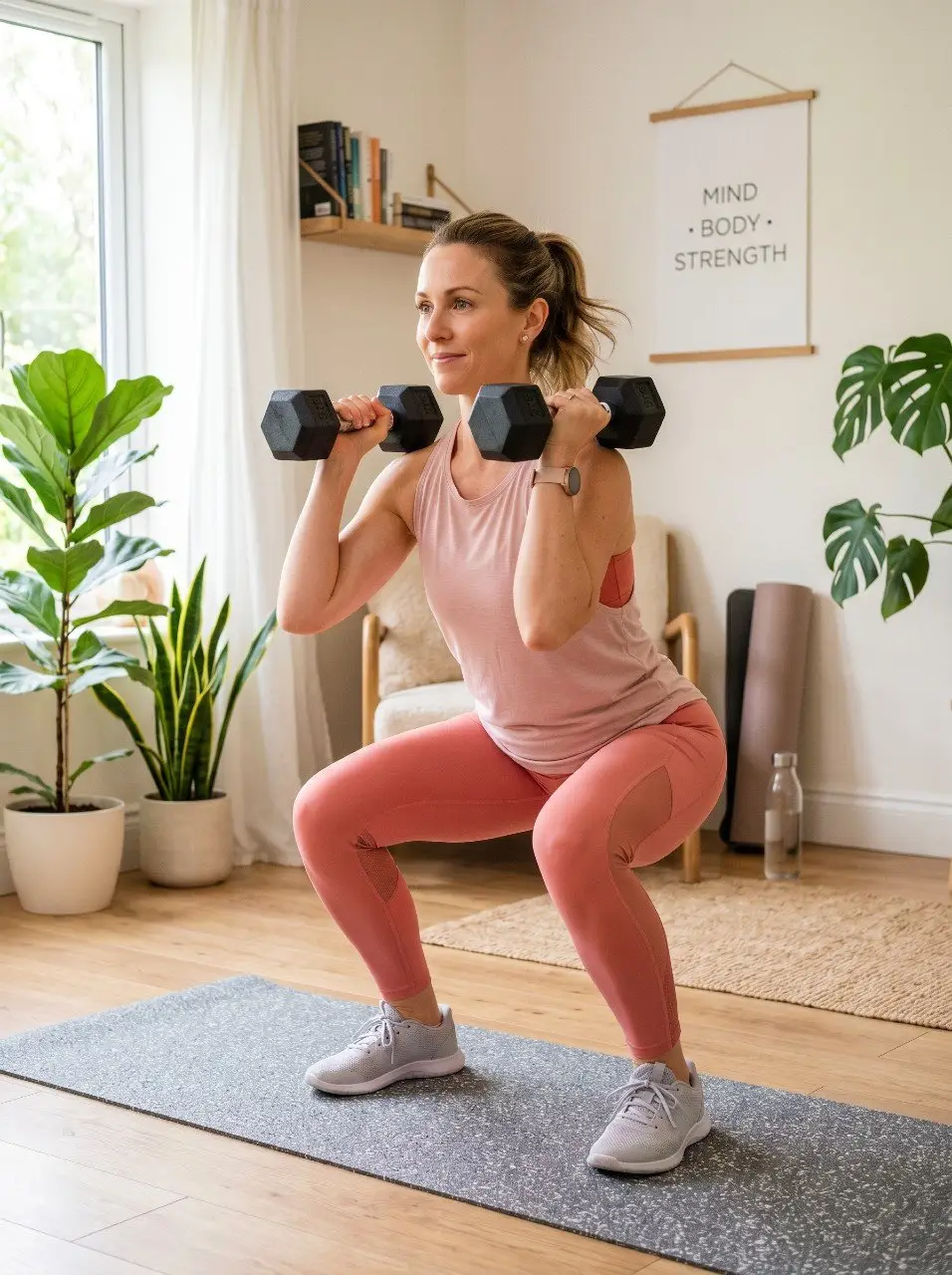
What Perimenopause Does To Your Muscles (And Why It Matters)
Perimenopause typically begins in a woman's early-to-mid 40s, though it can start earlier. It's the hormonal transition that precedes menopause, driven primarily by fluctuating and eventually declining estrogen.
Here's what most people don't realise: estrogen isn't just a reproductive hormone. It plays a direct role in muscle maintenance. Estrogen supports satellite cells — the stem cells responsible for repairing and regenerating muscle fibres. When estrogen is removed from animals in research settings, their ability to regenerate these cells drops by up to 60%.
In practical terms, this means muscle breakdown accelerates while muscle building slows. A 2026 review in the Journal of Cachexia, Sarcopenia and Muscle found that perimenopausal women experience a 2.5% reduction in lean mass compared to premenopausal women, with postmenopausal women seeing up to 5.7% less. Without intervention, women can lose 10–20% of lean muscle mass by the time menopause fully arrives.
Muscle loss doesn't just affect how you look. It directly slows your resting metabolic rate, reduces bone protection, increases injury risk, and makes blood sugar management harder. Less muscle means fewer calories burned at rest — which is a major reason why weight loss stalls in perimenopause, even when nothing about your eating habits has changed.
Is Strength Training Safe During Perimenopause?
Yes. Not only is it safe — it's one of the most strongly recommended interventions by sports medicine and menopause researchers.
A 2025 systematic review in Quality in Sport found that resistance training in perimenopausal women was consistently associated with improved muscle mass, strength, functional capacity, and bone mineral density with no significant adverse effects in supervised programmes. High-intensity protocols at or above 70% of one-rep max showed the greatest improvements in bone density at critical skeletal sites.
That said, safe doesn't mean start heavy and figure it out later. A few principles matter from the beginning:
Start with bodyweight or light resistance to learn movement patterns before adding load. Prioritise form over weight, always. Allow at least 48 hours between sessions targeting the same muscle groups. And pay attention to what your body tells you during recovery — perimenopausal hormone fluctuations can extend how long your muscles need to repair.
If you have been told you have osteopenia or low bone density, strength training is still appropriate and often specifically recommended. Ask a physiotherapist or exercise physiologist to guide the loading.

Five Reasons Strength Training Is Non-Negotiable During Perimenopause
1. It Rebuilds The Metabolic Engine You're Losing
Muscle is a metabolically active tissue. It burns calories around the clock, even when you're sitting on the sofa. As estrogen declines and muscle mass drops, your resting metabolic rate falls with it. This is the core biological mechanism behind perimenopausal weight gain — not age, not slowing down, not some mysterious willpower failure.
A 20-week controlled trial published in BMC Women's Health found that women who trained twice a week showed significant reductions in visceral adipose tissue compared to controls. Visceral fat — the deep abdominal fat wrapped around internal organs — is the metabolically dangerous type linked to cardiovascular and metabolic risk. Strength training targets it directly.
2. It Protects Your Bones Before The Window Closes
Bone density peaks in your late 20s, and estrogen plays a key role in maintaining it. As estrogen drops during perimenopause, bone loss accelerates. Osteoporosis isn't something that just happens to elderly women — the foundation is laid in your 40s.
Weight-bearing and resistance exercise create mechanical stress on bone, which signals bone-forming cells (osteoblasts) to work. The Quality in Sport 2025 review confirms that high-intensity resistance training can maintain and increase bone mineral density in perimenopausal women. Major menopause societies now recommend resistance training by name for bone protection.
3. It Fights Insulin Resistance Directly
Up to 80% of women develop insulin resistance during perimenopause. Insulin resistance means your cells become less responsive to insulin's signal to absorb glucose, so blood sugar stays elevated and more of what you eat is stored as fat — particularly around the abdomen.
Muscle is the primary site for glucose disposal in the body. More muscle mass means better glucose absorption, which directly improves insulin sensitivity. This is also why understanding what foods cause belly fat in perimenopause becomes far more manageable once your muscles are working in your favour.
A review of lifestyle interventions for menopausal women found that combined resistance and aerobic training improves both glycaemic control and body composition.
4. It Reduces Hot Flashes And Lifts Your Mood
This one surprises most women. A 2024 meta-analysis found that resistance training is associated with decreased frequency and severity of hot flashes in postmenopausal women.
The mechanism likely involves resistance training's effect on the thermoregulatory system and its ability to lower circulating cortisol. And cortisol and belly fat have a well-documented relationship — elevated cortisol also amplifies vasomotor symptoms.
Strength training also increases brain-derived neurotrophic factor (BDNF), which supports cognitive function and mood regulation. Recent meta-analyses confirm that resistance training reduces anxiety and is considered a core treatment option for mild to moderate depression — both of which spike during the hormonal volatility of perimenopause.
5. It Rebuilds The Sense Of Control That Perimenopause Can Take Away
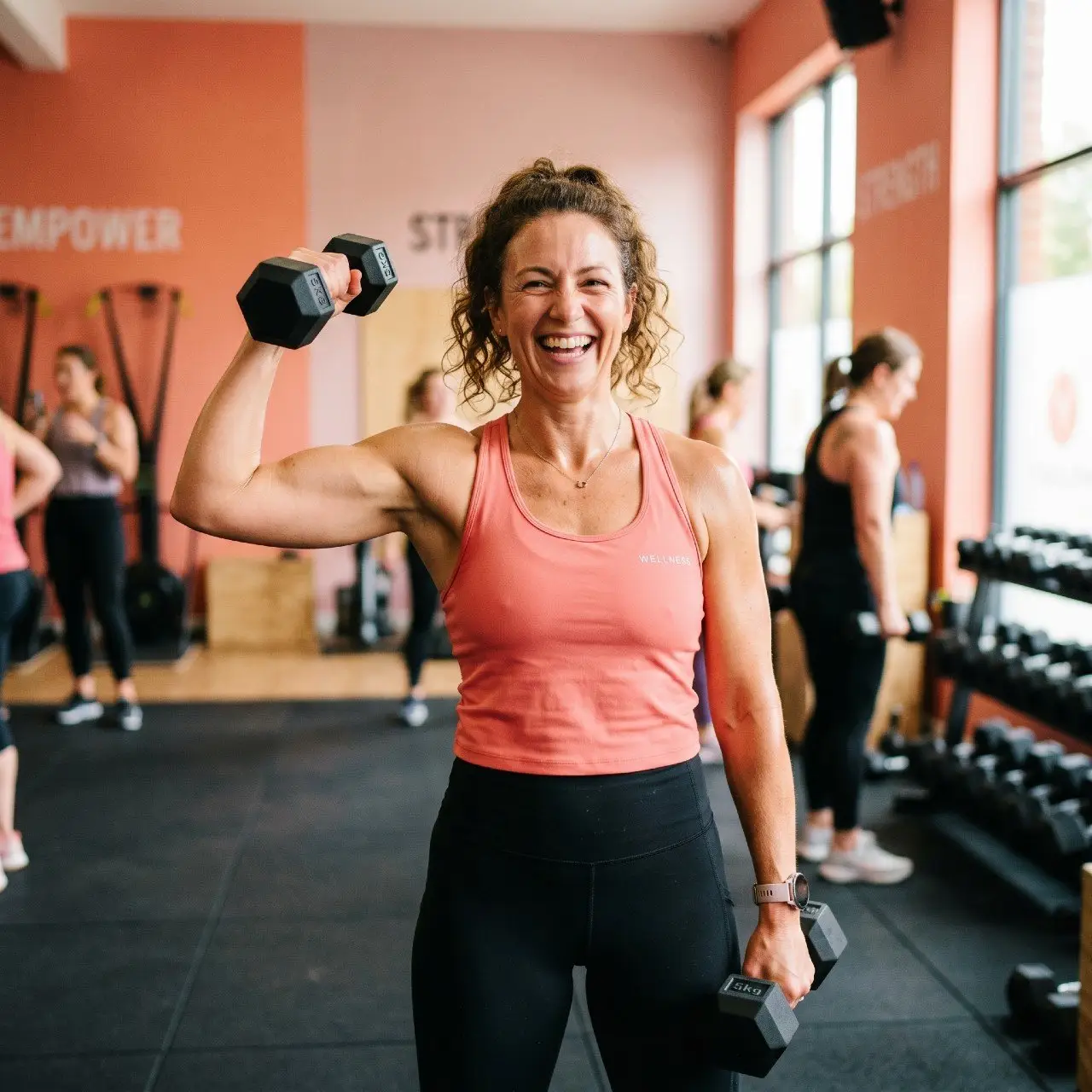
This is harder to put numbers on, but it's real. There's something specific that happens when you feel yourself getting stronger. It doesn't matter if you're lifting 5 kg dumbbells or 25 kg. Progressive strength — doing more than you could last week — creates a genuine sense of agency in a season of life that can feel like your body is out of your control.
Many women name gym intimidation as one of the biggest barriers to starting. It's worth noting that, directly, building fitness confidence takes time, and almost every woman who lifts has a version of "I had no idea what I was doing" at the beginning. That's normal. It passes.
How To Build Your Perimenopause Strength Training Programme
How Many Days Per Week Should You Strength Train?
Two to three sessions per week is the evidence-backed sweet spot for perimenopausal women.
Fewer than two sessions per week show minimal adaptive benefit. More than four per week, without careful programming and adequate recovery, risks overtraining, which during perimenopause can actually elevate cortisol and worsen symptoms. Stanford Lifestyle Medicine recommends 2–3 sessions as the starting framework, with each session lasting 30–45 minutes.
You don't need an hour. You need consistency.
The PRESS Method: A Perimenopause-Specific Training Framework
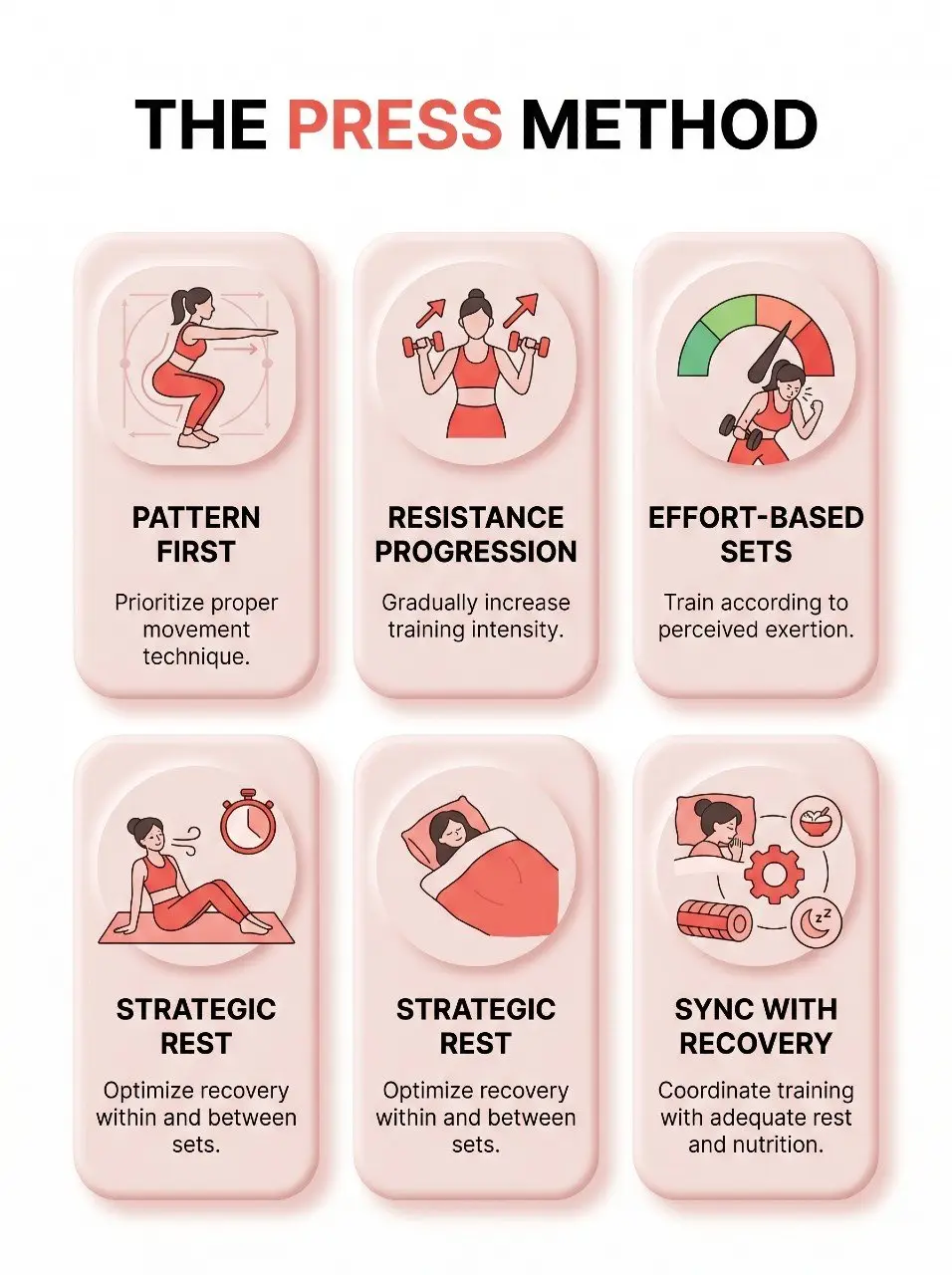
Most general training advice was designed for younger men or competitive athletes. The PRESS Method is a framework built around how perimenopausal bodies actually respond to training:
| Phase | What It Means | How To Apply It |
|---|---|---|
| P — Pattern First | Learn movement patterns before adding load | Bodyweight squats, hinges, push/pull for weeks 1–4 |
| R — Resistance Progression | Add load gradually, around 5–10% per week | Move from bodyweight to resistance bands to dumbbells |
| E — Effort-Based Sets | Work to near-failure, not absolute failure | Last 2–3 reps hard but form-intact |
| S — Strategic Rest | 48 hours between sessions targeting the same muscles | Never train the same muscle group two days in a row |
| S — Sync With Recovery | Adjust intensity based on how you feel that day | High-symptom days: lower intensity, not zero training |
The second S is what most programmes miss. During perimenopause, your hormones can be markedly different day to day. Adjusting intensity based on your body's response isn't quitting — it's intelligent training. The women who sustain results over 6–12 months are the ones who build this flexibility in.
Which Exercises Should You Prioritise?
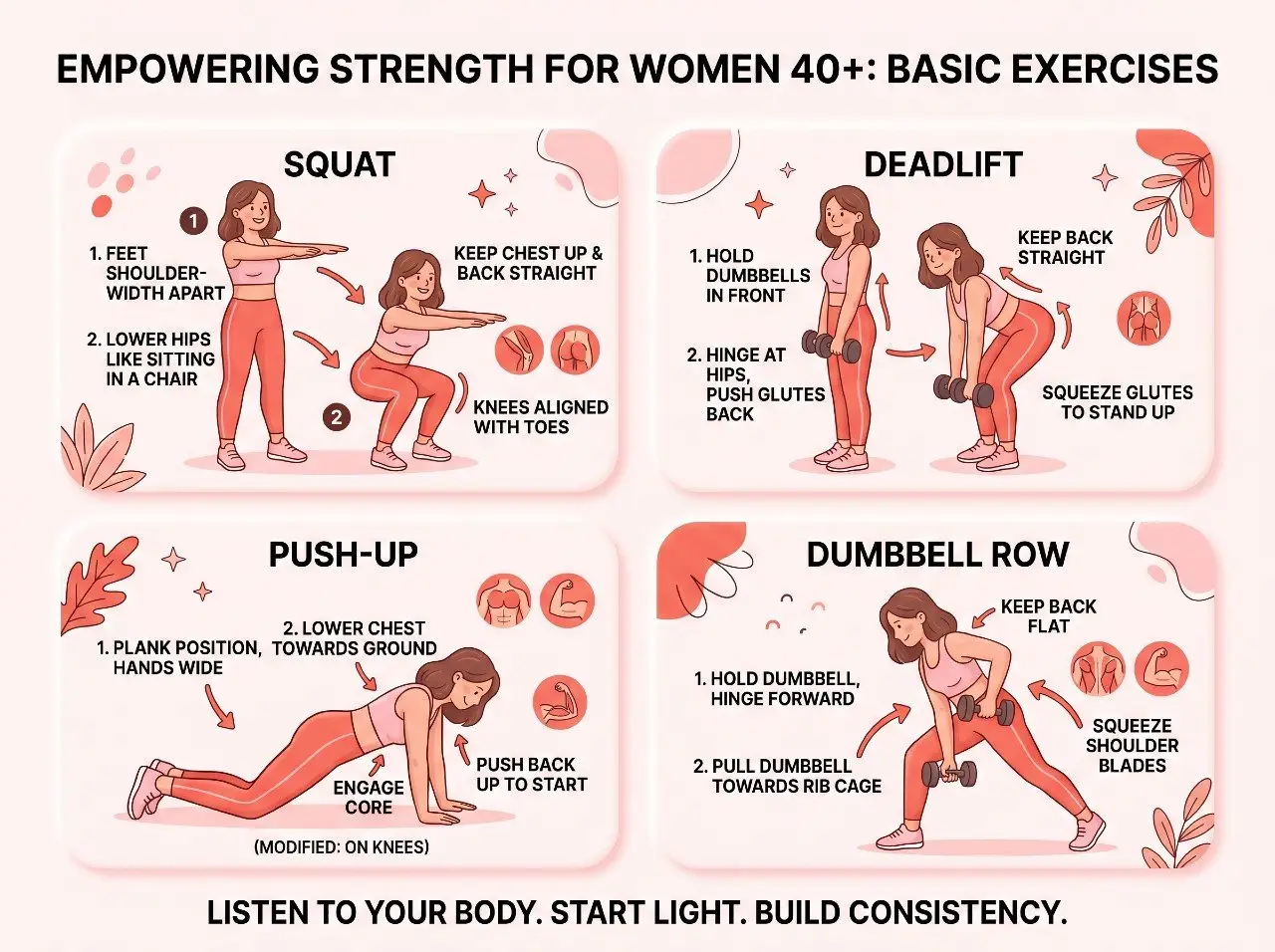
Focus on compound movements — exercises that work multiple muscle groups simultaneously. They deliver the most hormonal and metabolic return per training minute.
| Exercise Category | Examples | Primary Benefit |
|---|---|---|
| Lower body push | Squats, goblet squats, leg press | Quad and glute strength, metabolic drive |
| Lower body hinge | Deadlifts, Romanian deadlifts, kettlebell swings | Posterior chain, hip stability |
| Upper body push | Push-ups, dumbbell bench press, overhead press | Chest, shoulders, triceps |
| Upper body pull | Dumbbell rows, lat pulldowns, resistance band pulls | Back, biceps, posture |
| Core stability | Dead bug, bird dog, pallof press | Spinal stability — not crunches |
Isolation exercises like bicep curls or leg extensions have their place, but they shouldn't anchor your programme. Build the foundation with compound movements first.
Sets, Reps, And Weight
- Weeks 1–4: 2 sets of 10–15 reps. The last 3 reps should feel genuinely challenging but controlled.
- Weeks 5–8: 3 sets of 8–12 reps. Increase weight when you can complete all reps with clean form.
- Ongoing: Progressive overload — slightly more weight, more reps, or shorter rest over time. This is the whole game.
Rest 2–3 minutes between sets. This isn't laziness — adequate inter-set rest is associated with greater strength gains and helps keep cortisol in check.

The Protein And Recovery Gap Most Women Don't Know About
How Much Protein Do You Actually Need?
This is probably the biggest gap between what perimenopausal women are eating and what their muscles actually need.
General nutritional guidelines still sit around 0.8g of protein per kg of body weight per day. That figure was set to prevent deficiency, not to support muscle building in a body navigating declining anabolic hormones.
For perimenopausal women who strength train, the research points to 1.2–2.2g of protein per kg of body weight daily. A woman weighing 65 kg needs roughly 78–143g of protein per day. Most women eating a standard Western diet get somewhere between 50 and 60g. That's a meaningful gap that directly limits muscle adaptation.
Spreading protein evenly across meals is more effective than loading it all at dinner. Aim for 20–30g of protein per meal, and prioritise eating within 2 hours of your training session to maximise muscle protein synthesis. Pairing your training with a high-protein nutrition strategy is one of the highest-leverage moves you can make.
Why Recovery Is As Important As The Training Itself
Perimenopausal hormone fluctuations can both extend the time muscles need to repair and reduce the anabolic (muscle-building) response to training. In your 30s, you might have recovered from a hard session in 24 hours. In perimenopause, that same session may take 48–72 hours.
Watch for these signs that you're not recovering adequately: performance declining across multiple sessions, disrupted sleep despite physical tiredness, elevated resting heart rate, unusual irritability, and prolonged muscle soreness.
Sleep is also directly tied to muscle recovery — growth hormone, which stimulates muscle repair, is predominantly released during deep sleep. The relationship between sleep and weight loss runs through exactly this mechanism: poor sleep impairs both recovery and fat regulation simultaneously.
Join Our Mailing List
Join thousands of women inside our community and receive our free guide, 10 Actions That Support Permanent Weight Loss — the exact behavioural shifts that make the difference between a two-week attempt and a lasting transformation.
No restriction plans. No guilt. Just what actually works — for real women with real lives.
The Contrarian Take: More Cardio Is Not The Answer
Here's where I'll push back against the advice many perimenopausal women receive: running more, cycling harder, and adding more classes is not the path forward.
Long sessions of moderate-intensity cardio elevate cortisol. During perimenopause, when cortisol regulation is already disrupted by fluctuating estrogen, chronically elevated cortisol accelerates muscle breakdown, increases visceral fat, and worsens sleep.
The perimenopause paradox is well-documented: many women who increase their cardio in response to perimenopausal weight gain make things worse, not better. Cardio isn't bad. Walking, cycling, and swimming have genuine cardiovascular and mood benefits. The problem is treating cardio as the primary fat-loss tool when your hormonal environment is fundamentally different from your 30s.
The evidence-backed formula looks like this: strength training 2–3 times per week as the foundation, with 1–2 moderate cardio sessions as support and deliberate recovery built in. If you want to understand how to lose weight in perimenopause without the exhausting cycle of overexercising and under-recovering, building muscle is always the starting point.
Ready to go deeper? Join the Women's Lean Body Formula newsletter for weekly, evidence-based strategies on strength, nutrition, and hormonal health — written specifically for women.
Related Articles
The Bottom Line
Perimenopause is not a reason to slow down. It's a reason to train smarter.
Strength training for women during perimenopause addresses the root causes of the changes you're experiencing — muscle loss, bone decline, insulin resistance, metabolic slowdown, mood disruption — in a way no other single intervention does.
Two to three sessions per week, built around compound movements, with adequate protein and strategic recovery, is the framework that research consistently supports.
You don't need to be strong before you start. You don't need perfect technique from day one. You don't need a full gym or a complicated programme. You need to show up, add a little more than last time, and trust the process.
Start where you are. Build from there. Your strongest decade might be the one you're standing in right now.
Glossary Of Key Terms
FAQ
No — and this is worth saying clearly, because it stops too many women from starting. Women have significantly lower testosterone than men, which is the primary hormonal driver of large muscle hypertrophy. What strength training does for women in perimenopause is build lean, defined muscle — the kind that makes clothes fit better and the body look more toned.
Building the bulk seen in competitive bodybuilders requires years of dedicated training, very high caloric intake, and often pharmacological support. Two to three sessions per week with dumbbells won't produce that outcome. What you will notice: a firmer, more defined physique, better posture, and more energy throughout the day.
Most women notice strength gains within 3–4 weeks. These early gains are largely neurological — your brain gets better at recruiting muscle fibres before the muscle itself grows. Visible changes in body composition typically take 8–12 weeks of consistent training, and the changes compound meaningfully over 6 months.
Research consistently shows that perimenopausal women who maintain resistance training for 12 or more weeks see significant improvements in muscle mass, visceral fat reduction, and metabolic markers. Consistency over time matters far more than intensity in any single session.
Yes, with appropriate modifications and professional guidance. Resistance training is actually one of the primary recommendations for both joint health and low bone density, because mechanical loading stimulates bone formation and strengthens connective tissue around joints.
If you have been diagnosed with osteopenia or osteoporosis, consult a physiotherapist or exercise physiologist before starting. They can design a programme that applies the right mechanical stress to stimulate bone without fracture risk. For joint pain, low-impact starting options include seated exercises, resistance bands, or pool-based resistance work.
A small meal or snack containing both carbohydrate and protein 1–2 hours before training supports energy and performance. After training, prioritise 20–30g of protein within 2 hours to maximise muscle protein synthesis. This is the most critical protein timing opportunity of the day for perimenopausal women — the anabolic response to training is already reduced, so fuelling the recovery window matters.
Greek yogurt, eggs, a protein shake, or a palm-sized serving of lean protein all work. Total daily protein intake (1.2–2.2g per kg of body weight) is the bigger picture, but the post-training window is where to be most intentional.
Yes — but build flexibility into your programme from the start. On genuinely low-energy days, a shorter 20-minute session, lighter weights, or a bodyweight-only workout still delivers meaningful benefit. The goal is consistency over perfection. Missing sessions entirely because you're waiting for perfect energy is the most common training mistake perimenopausal women make.
Research shows that exercise progressively improves perimenopausal fatigue over time — but you have to get through the first few weeks when it feels hardest. Start with two sessions per week and honour your body's honest response.
The evidence here is genuinely promising. A 2024 meta-analysis found that resistance training is associated with reduced frequency and severity of hot flashes and vasomotor symptoms in menopausal women. Proposed mechanisms include improved thermoregulatory control, reduced cortisol levels, and better sleep quality — all of which improve with consistent resistance training.
Most studies showing vasomotor benefits used 8–12 week programmes, so results aren't immediate. For women looking for non-pharmacological tools alongside HRT or instead of it, strength training is one of the most evidence-supported options available.
No. A set of adjustable dumbbells, a resistance band set, and a mat give you everything needed to run a highly effective programme at home. The exercises with the strongest evidence base — squats, hinges, pushing, pulling — can all be done without a gym. A gym offers advantages: more weight variety, equipment range, and a motivational environment.
But the access barrier of needing a membership has stopped far too many women from starting at all. Home-based resistance training produces the same muscle and metabolic adaptations as gym-based training when done with consistent progressive overload. Start at home if that's what gets you going.
You Know Why. Now Learn Exactly How
Join thousands of women inside our community and receive our free guide: 10 Actions That Support Permanent Weight Loss — the practical, sustainable habits that translate everything you just read into real, lasting results.
No fad diets. No extreme plans. Just what the research actually supports — written for real women.