
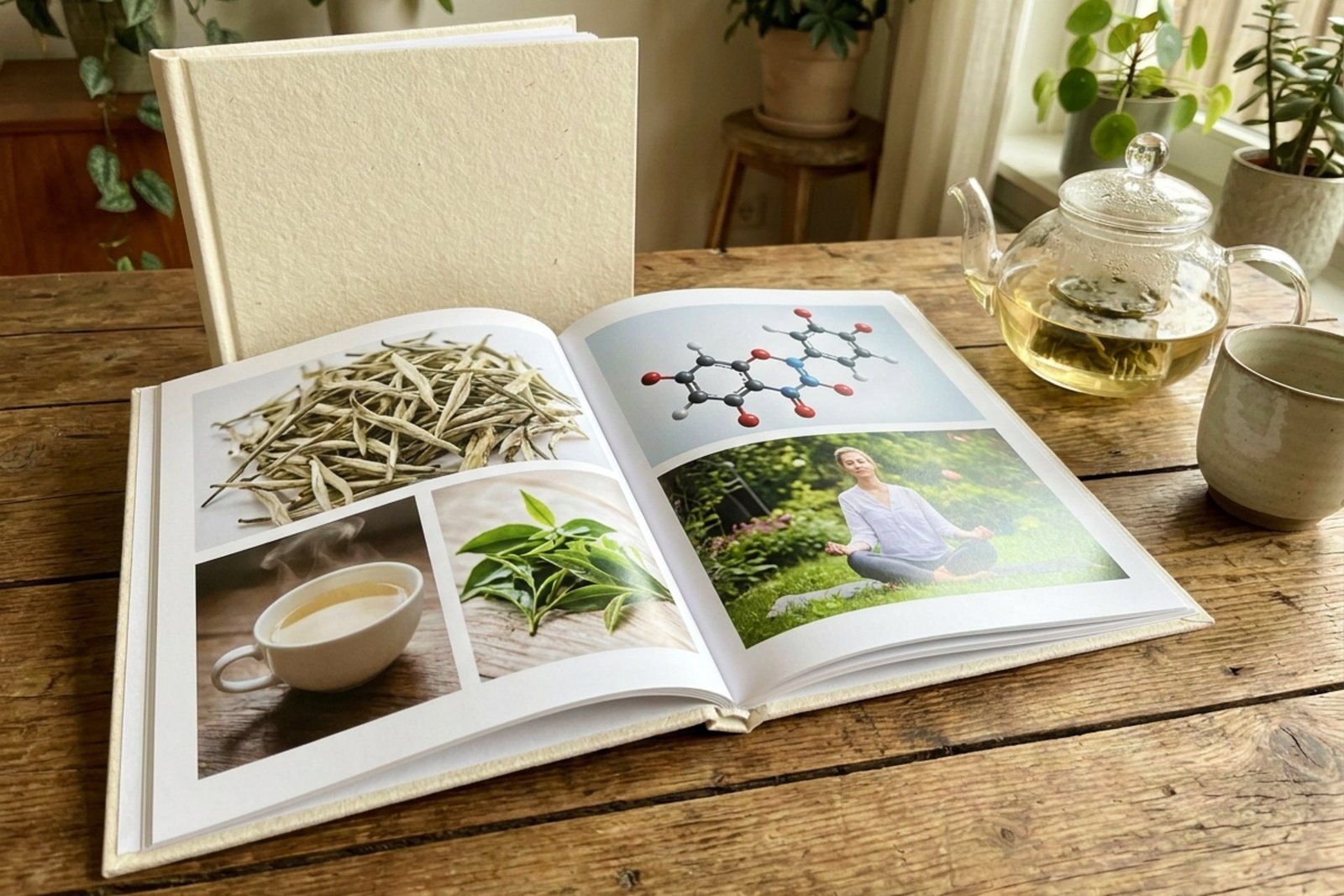
White Tea Benefits: What The Research Actually Shows (And What It Doesn’t)
The Honest Guide To White Tea Benefits — Calmer Caffeine, Real Antioxidants, And The Claims That Are Quietly Oversold

If you are cold, tea will warm you; if you are too heated, it will cool you; If you are depressed, it will cheer you; If you are excited, it will calm you.
William Ewart Gladstone ‧ British statesman and Liberal politician
Summary (TL;DR)
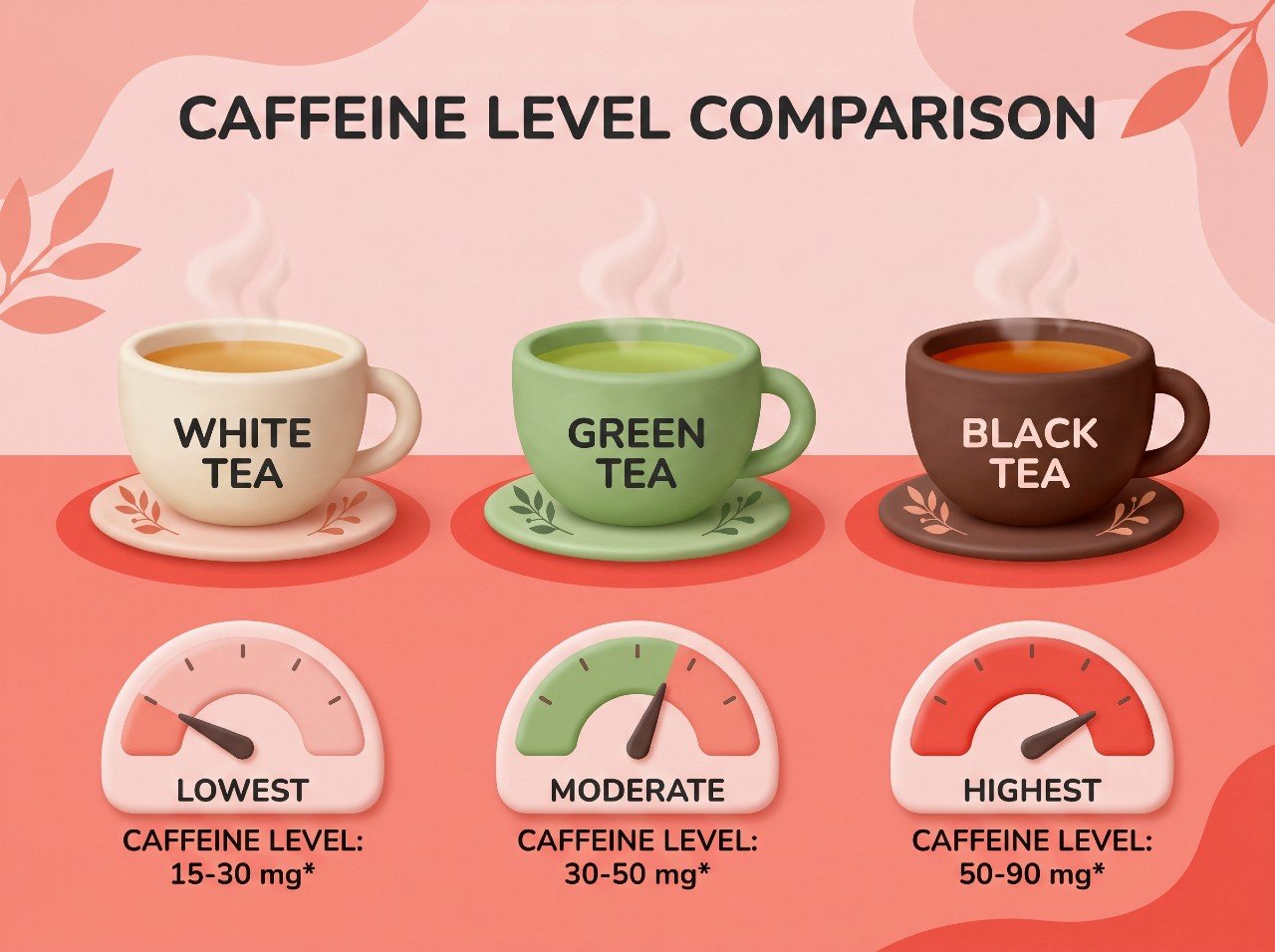
White tea is the least processed of all teas, which leaves it with a high concentration of antioxidants (mainly EGCG) and the lowest caffeine of the “true” teas — roughly 15–30 mg per cup. The solid, repeatable benefits are real but modest: a genuine antioxidant load, fluoride and polyphenols that support oral health, and a gentle, jitter-free lift.
The bigger claims you’ll see everywhere — that it melts fat or fights cancer — come almost entirely from lab dishes and animal studies, not from women drinking tea. So treat white tea as a smart, calming swap, not a weight-loss shortcut. I drink two cups mid-morning instead of my third coffee, and that’s exactly the job it’s good at.
Here’s the frustrating thing about reading up on white tea: every page tells you it’s a miracle, and not one of them tells you where that idea actually comes from. One site says it burns fat. The next says it fights cancer. By the third, you’re half-convinced a teabag can do what a year of effort can’t, and some quiet part of you already knows that’s too good to be true.
I’ve been writing about women’s nutrition for over a decade, and tea is one of those topics where the gap between the headline and the evidence is enormous. So I went back to the original studies, the actual papers and not the listicles quoting the listicles, to sort the real white tea benefits from the ones that got passed around until they sounded like fact.
The good news: white tea genuinely earns a place in a healthy routine. The honest news: it earns that place for calmer, quieter reasons than the internet wants you to believe. This guide gives you both, so you can stop second-guessing your kettle and just enjoy the cup.
Medical & Referral Disclaimer
This article is for informational and educational purposes only and is not a substitute for professional medical advice, diagnosis, or treatment. White tea contains caffeine and plant compounds that can interact with certain medications and conditions. Always consult your physician or a qualified health provider before making changes to your diet, especially if you are pregnant, breastfeeding, or managing a health condition.
Key Takeaways
- Least processed = most antioxidants. White tea is picked young and barely handled, so it keeps a high share of its catechins — especially EGCG, which sits higher in white tea than in green.
- The calmest caffeine in your cupboard. At roughly 15–30 mg per cup, it’s the lowest-caffeine true tea — ideal if coffee leaves you wired or wrecks your sleep.
- Oral health is a quiet strength. Its fluoride and polyphenols have measurable effects on the bacteria behind plaque.
- The fat-burning and cancer claims are lab findings, not life findings. They come from cells in dishes and animals, at doses you can’t drink. Promising — not proven in people.
- Best used as a swap, not a strategy. White tea supports a healthy lifestyle; it doesn’t replace one.
What Is White Tea?
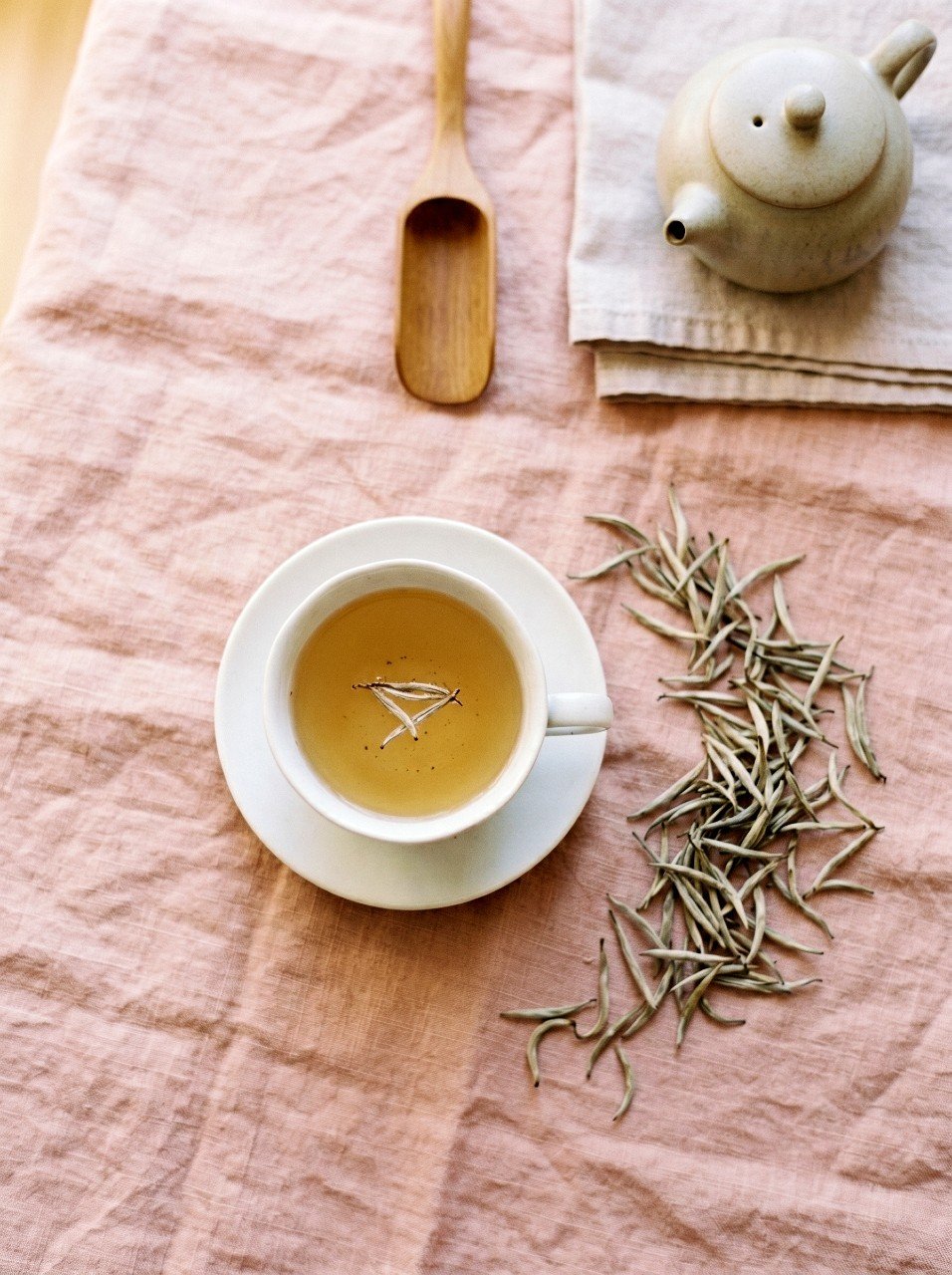
White tea is the least processed tea you can buy. It’s made from the young buds and first leaves of the Camellia sinensis plant — the same plant that gives us green and black tea — picked while fine silvery-white hairs still cover the buds, then simply withered and dried.
No rolling, no oxidising, no roasting. That “leave it alone” approach is the whole point: less handling means more of the original plant compounds survive into your cup.
Green tea gets steamed or pan-fired and shaped. Black tea gets bruised and fully oxidised, which is what turns it dark and converts its delicate catechins into heavier compounds. White tea skips nearly all of that.
As the researchers behind one of the most-cited white tea papers put it, “the minimal processing of white tea yields a higher concentration of polyphenol antioxidants.” That single fact — minimal processing — is the root of almost every benefit on this page.
It’s also why the good stuff is genuinely expensive: those tiny buds have to be hand-picked, which is slow, fiddly, labour-intensive work. You’re paying for the gentleness.
Health Benefits Of White Tea
Let’s go through the four benefits you’ll see attached to white tea everywhere — and, for each one, separate what the research actually shows from what it’s been stretched to mean.
1. It’s Genuinely Rich In Antioxidants
White tea is rich in antioxidants called catechins — and it carries a particularly high level of EGCG, the most studied catechin of all. Because the leaves are barely processed, more of these compounds stay intact, which is why white tea’s antioxidant content holds its own against, and sometimes beats, green tea.
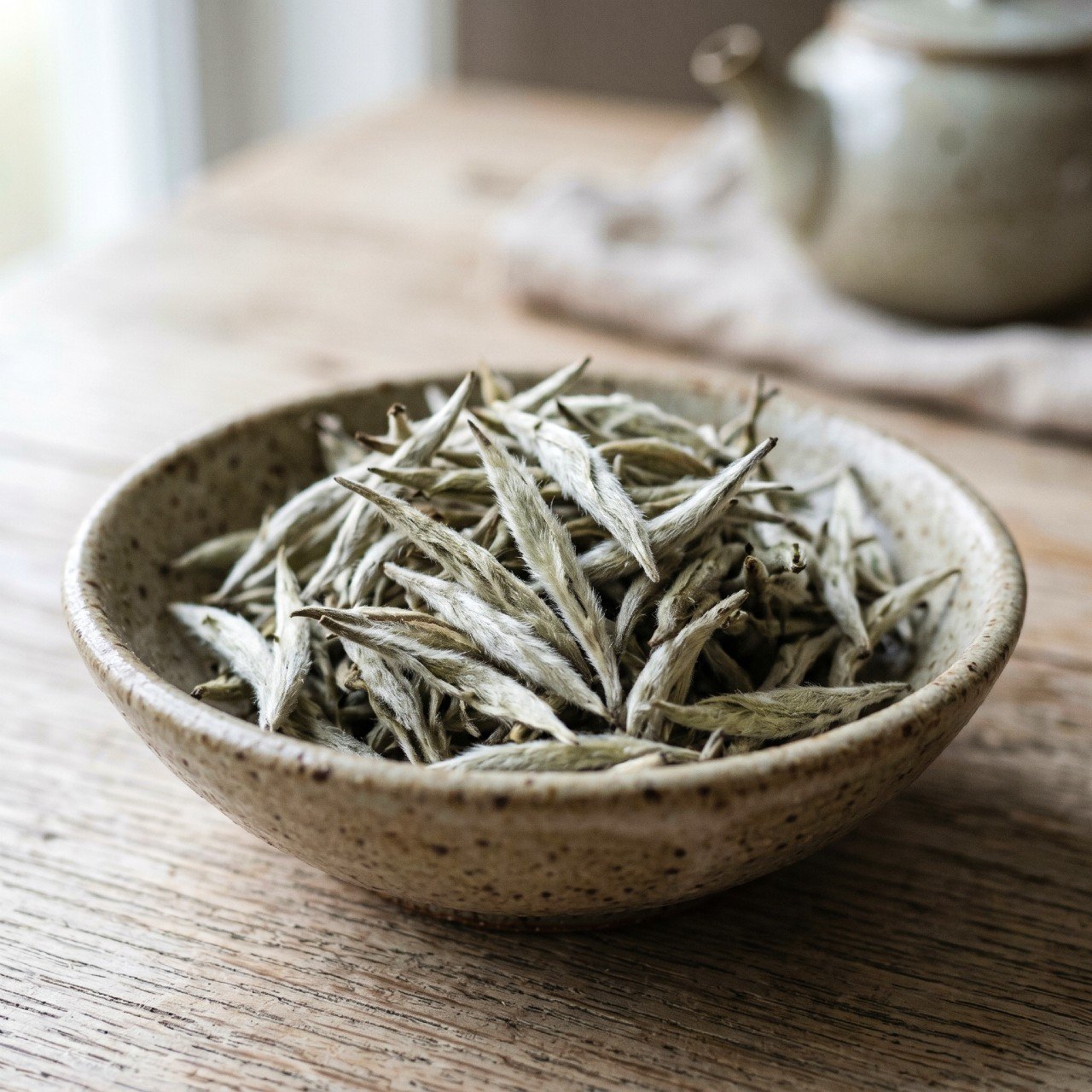
This is the benefit of the firmest footing. Antioxidants help neutralise free radicals — the unstable molecules involved in everyday cellular wear-and-tear and ageing. The standout here is EGCG (epigallocatechin-3-gallate), and the lab data is consistent: in the AACR study comparing the two teas head-to-head, EGCG “is found in higher concentrations in white tea than in green tea”.
What that means in real life is refreshingly simple. A daily cup or two is a pleasant, near-zero-calorie way to add antioxidants to your diet — the same logic that makes berries and leafy greens worth eating. It won’t single-handedly slow ageing. But as a habit, it quietly stacks in your favour. No drama. Just a good cup that’s also doing you a small, real favour.
2. It Supports A Healthier Smile
White tea naturally contains fluoride plus polyphenols and tannins, and together they go after the bacteria that cause plaque. In lab and clinical testing, white tea has been shown to slow the growth of the very microbes linked to gum disease and tooth decay — making your daily cup a quiet ally for your teeth.
This one surprises people, and it’s one of the better-supported benefits. The plant naturally takes up fluoride, the same mineral added to toothpaste to fight cavities. On top of that, white tea’s polyphenols are directly antibacterial.
A clinical paper reviewing tea and oral health notes that tea’s antibacterial action, its inhibition of acid production, and its fluoride content combine to give it a real anticariogenic (anti-cavity) effect, with measurable reductions in dental caries.
Researchers have even tested it directly: a study on a white tea mouthrinse looked at its ability to inhibit the bacteria behind plaque and gum disease. The honest caveat — the same one that applies to any tea — is that the tannins can stain teeth over time. A glass of water afterwards keeps it in check.

3. It May Gently Support Weight Management — Here’s The Honest Version
White tea may give weight management a small, supportive nudge — not a shove. Its catechin-and-caffeine combination is the same pairing shown to modestly raise calorie burn, and in a lab dish, white tea extract slowed the formation of new fat cells. But those effects are gentle and partly test-tube findings. White tea supports a healthy routine; it doesn’t replace one.
This is where the internet gets carried away, so let’s be precise. Two separate threads of research get blended into one big “white tea burns fat” headline — and they deserve to be untangled.
Thread one: the metabolism nudge. White tea’s catechins and caffeine are the same duo studied in green tea, where a landmark trial found that a catechin-rich extract increased 24-hour energy expenditure by about 4%. That’s real, but small — and it was measured using a concentrated green tea extract, not cups of white tea. Treat the 4% as the ceiling, not the promise.
Thread two: the fat-cell study. This is the source of the dramatic “stops your body making fat” line. In a 2009 study, researchers found that white tea extract reduced fat accumulation in human fat cells and stimulated the breakdown of existing fat — impressive, until you read the methods.
This happened in vitro: isolated cells in a dish, bathed in concentrated extract. Nobody lost weight in that study, because there were no people in it. It tells us white tea is biologically interesting. It does not tell us a mug of it will shrink your waistline.

So here’s the honest takeaway. White tea can be a genuinely useful part of a weight-management routine — mostly because it’s a warm, satisfying, near-zero-calorie drink that can stand in for sweeter options and curb mindless snacking. Lean on that. Pair it with the things that actually move the needle: protein, sleep, strength work, and a realistic calorie intake. The tea helps the system; it isn’t the system.
4. The Cancer Research Is Promising — And Still Early
White tea shows real anti-cancer potential in the lab, where its extract has triggered the death of cancer cells and shown stronger antimutagenic activity than green tea. But “in the lab” is the whole story: these are cell and animal studies, not proof that drinking white tea prevents cancer in people. It’s a promising research direction — not a medical claim, and not a reason to skip screening.
This is the boldest claim you’ll see, so it needs the most care. The underlying science is genuinely interesting. In the AACR study, white tea extract triggered apoptosis — programmed cell death — in lung cancer cells, and notably did so without harming the healthy cells alongside them.
Earlier work, the same paper cites, found white tea had stronger antimutagenic activity than green tea and suppressed pre-cancerous changes in the colons of rats.
And here’s the line the listicles never quote, written by the researchers themselves: the belief that white tea beats green “is primarily founded on the higher EGCG content,” an advantage that “might be lost when the tea extracts are standardized to contain the same amount of EGCG.” Translation: even the scientists are cautious about overselling it.
So what should you do with that? Enjoy white tea as one small, pleasant brick in a healthy-living wall — never as a substitute for the things that genuinely lower risk: not smoking, moving your body, eating well, and keeping up with your screenings.

White Tea vs Green vs Black: The At-A-Glance Comparison
If you’re choosing a daily brew, the practical differences matter more than the marketing. Here’s how the three true teas actually stack up.
| Feature | White Tea | Green Tea | Black Tea |
|---|---|---|---|
| Processing | Least (withered & dried only) | Light (steamed/pan-fired) | Most (fully oxidised) |
| Caffeine per cup (approx.) | 15–30 mg (lowest) | 25–45 mg | 40–70 mg |
| EGCG / catechins | Very high (EGCG often highest) | High | Lower (converted in oxidation) |
| Flavour | Delicate, subtle, slightly sweet | Grassy, vegetal | Bold, malty |
| Best for | Calm, jitter-free sipping | Daytime focus | A coffee-style morning lift |
Caffeine values are typical ranges per 8 oz cup; actual content varies with leaf amount, water temperature, and steep time. See white tea caffeine ranges.
How I Actually Use White Tea (And A Simple Test For Any “Superfood”)
I’ll be honest about my own routine, because it’s the whole reason I rate white tea. I drink two cups mid-morning instead of my third coffee — for the calmer caffeine. That third coffee used to leave me wired and oddly anxious by lunch.
The white tea gives me a softer, steadier lift without the crash or the racing heart. That’s not a clinical endpoint. It’s just a swap that makes my day better, and it costs me nothing.
And that’s the right altitude for white tea. So whenever a drink or food gets crowned a “superfood,” I run it through a quick three-question test — you can use it on anything:
| The Question | How White Tea Scores |
|---|---|
| 1. Was it tested in people, or just in a dish? | Mixed. Oral health and caffeine effects involve people; the fat-cell and cancer findings are cell/animal studies. |
| 2. Was the dose something you could realistically consume? | Often no. The dramatic results use concentrated extracts, not a couple of brewed cups. |
| 3. Does it help even if every bold claim turned out to be hype? | Yes. It’s a calming, antioxidant-rich, near-zero-calorie drink. That alone justifies the cup. |
White tea passes question three with room to spare — which is exactly why I drink it without needing the miracle headlines to be true.
How To Brew White Tea For Maximum Benefit
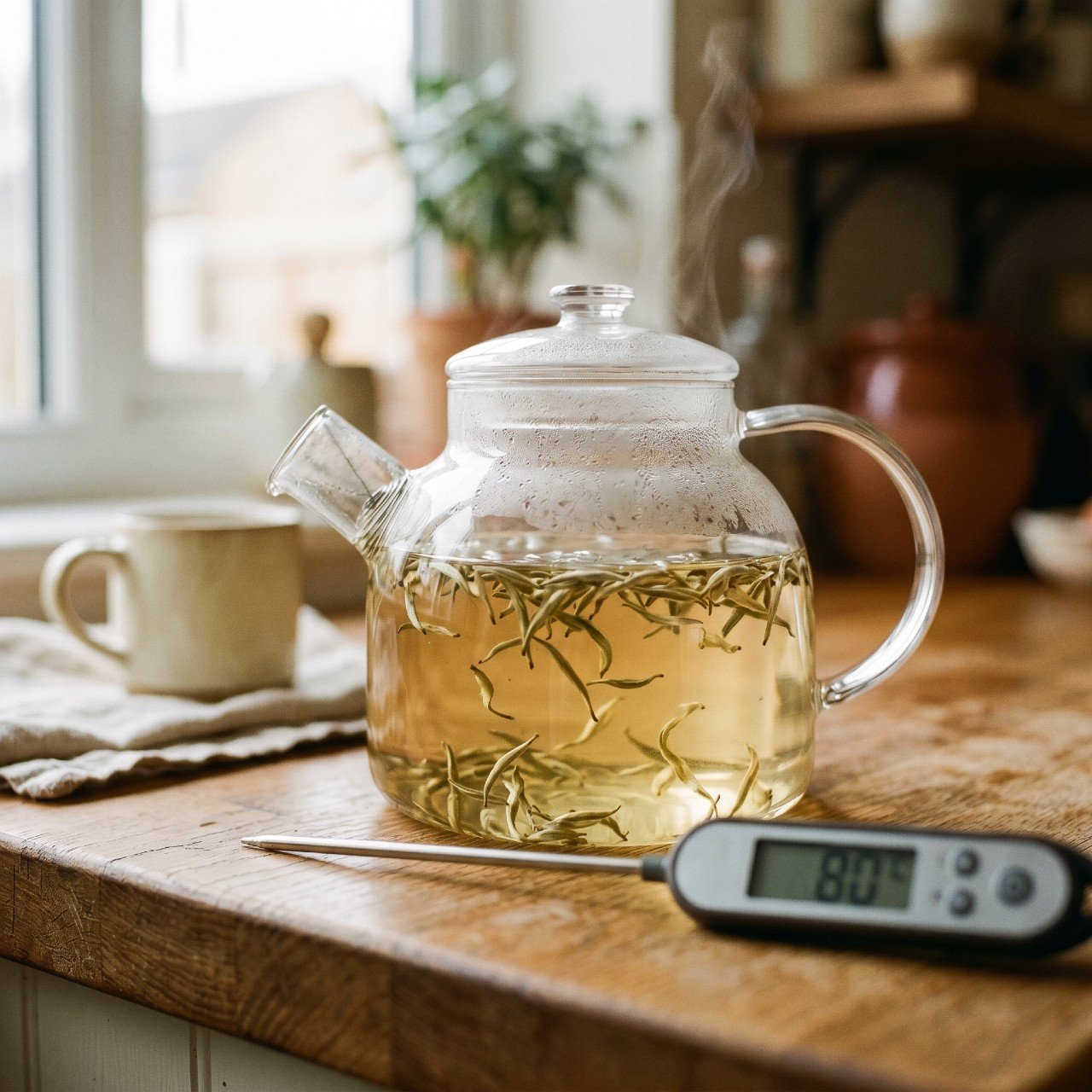
Brew white tea gently. Use water just below boiling — around 75–85°C (167–185°F) — and steep for two to three minutes. Boiling water scorches the delicate leaves and turns the cup bitter; gentler heat protects both the subtle flavour and the antioxidants you’re drinking it for.
A few simple habits get the most from your leaves: let just-boiled water cool for a minute or two before pouring, don’t over-steep (longer isn’t stronger, it’s just more bitter), and feel free to re-steep good-quality buds two or three times. Hot or iced, both work — the flavour is subtle and refreshing either way, which is part of why it’s such an easy daily habit to keep.
If you’re tired of wellness advice that over-promises and under-delivers, you’ll feel right at home with us. Get our free guide — real, women-first strategies that work the way your body actually does, with none of the hype.
The Bottom Line
White tea is a genuinely good drink that’s been handed a slightly inflated reputation. Strip away the hype, and you’re left with something better than a miracle: something dependable. It’s rich in antioxidants, kind to your teeth, the gentlest caffeine in the cupboard, and a warm, near-zero-calorie companion to a healthy lifestyle.
The fat-burning and cancer headlines? Promising lab science — worth watching, not worth banking on. So drink white tea for what it reliably gives you today, not for what a test tube hinted it might do. Make it the easy swap, the calm cup, the small good habit you don’t have to think about. That’s a benefit you can actually feel.
Glossary Of Key Terms
- Anticariogenic: A substance or action that helps prevent the formation of dental caries (cavities).
- Apoptosis: A process of programmed cell death that occurs in multicellular organisms, often studied in cancer research.
- Camellia sinensis: The species of evergreen shrub or small tree whose leaves and leaf buds are used to produce all "true" teas, including white, green, and black.
- Catechins: A type of natural phenol and antioxidant (specifically a flavan-3-ol) found in high concentrations in tea leaves.
- EGCG (Epigallocatechin-3-gallate): The most abundant and potent catechin found in tea, known for its significant antioxidant properties.
- In vitro: Research or procedures performed in a controlled environment outside of a living organism, such as in a laboratory dish or test tube.
- Oxidation: A chemical reaction involving the loss of electrons; in tea production, it is the process that turns green leaves dark and alters their flavor and chemical composition.
- Polyphenols: A large family of naturally occurring organic compounds characterized by multiple phenol units; they act as antioxidants in the body.
- Tannins: A class of astringent, polyphenolic biomolecules found in tea that can contribute to flavor and may cause surface staining on teeth.
- Withering: The process in tea production where freshly harvested leaves are left to dry and lose moisture, a primary step in making white tea.
FAQ
Is White Tea The Healthiest Tea Of Them All?
White tea has the highest concentration of antioxidants because it’s the least processed, which is why it’s often called the “healthiest.” That’s a fair claim for antioxidant content. But “healthiest” depends on what you need — green tea is better studied in people, and the best tea is honestly the one you’ll actually drink every day.
What Makes White Tea Different From Green And Black Tea?
Processing. All three come from the same plant, but white tea is simply withered and dried, green tea is steamed or pan-fired, and black tea is fully oxidised. Because white tea is handled the least, it keeps more of its original catechins — giving it a delicate flavour and a high antioxidant load.
Does White Tea Really Help You Lose Weight?
Only gently, and only as a helper. Its catechin–caffeine combination can modestly support metabolism, and lab studies show its extract can slow fat-cell formation — but those are small or test-tube effects. White tea works best as a low-calorie swap for sugary drinks within a sensible eating and exercise plan, not as a fat-burner on its own.
How Much White Tea Should I Drink A Day?
For most people, two to three cups a day is plenty to enjoy the benefits. Because white tea is naturally low in caffeine, you can usually drink it more freely than green or black tea without the jitters or sleep disruption.
Does White Tea Contain Caffeine?
Yes, but the least of any true tea — typically around 15–30 mg per cup, versus 25–45 mg in green tea and 40–70 mg in black. That’s what makes it such a good afternoon or evening choice, and a calmer stand-in for that extra coffee.
What’s The Best Way To Brew White Tea?
Use water just below boiling (around 75–85°C) and steep for two to three minutes. Boiling water makes it bitter and damages the antioxidants; gentle heat protects both flavour and benefit.
Why Is White Tea So Expensive?
Because real white tea has to be hand-harvested from the tiny young buds of the plant — slow, labour-intensive work. It’s also rarer than other teas, and that scarcity pushes the price up.