
5 Practical Ways To Cut Junk Food From Your Diet And Reclaim Your Health

We eat junk because it's cheap, and it lights up the pleasure centres of our brain. And we do drugs because it's an effective way to feel good or escape something.
Linda Tirado
To achieve a leaner physique and improve long-term vitality, mastering how to stop eating junk food is a critical skill for any health-conscious individual. This guide explores effective strategies to curb junk food cravings by shifting your focus toward nutrient-dense, whole foods and establishing sustainable, healthy eating habits.
By understanding the psychological triggers behind emotional eating and optimising your grocery shopping routine, you can successfully reduce your intake of highly processed foods and align your daily choices with your specific weight loss goals.
We've all been there. It's late, you're tired, and that bag of chips or box of cookies seems like the perfect solution. There's a reason we reach for these items: they're often cheap, convenient, and engineered to light up the pleasure centres of our brains, making us come back for more. This cycle can feel hard to break, leaving many of us feeling stuck and frustrated with our eating habits.
The good news is that you have the power to take control. While the advice to "eat more good food and less junk food" sounds simple, the real power lies in the conscious, daily choices you make. My goal is to show you that this process is one of the most powerful things you can do for your health.
This guide is designed to give you the practical tools to make those choices easier and more intuitive. It will guide you through five practical and sustainable ways to minimise junk food in your diet. These aren't quick fixes but lasting strategies to help you build a healthier relationship with food and get rid of unhealthy cravings for good.
Key Takeaways
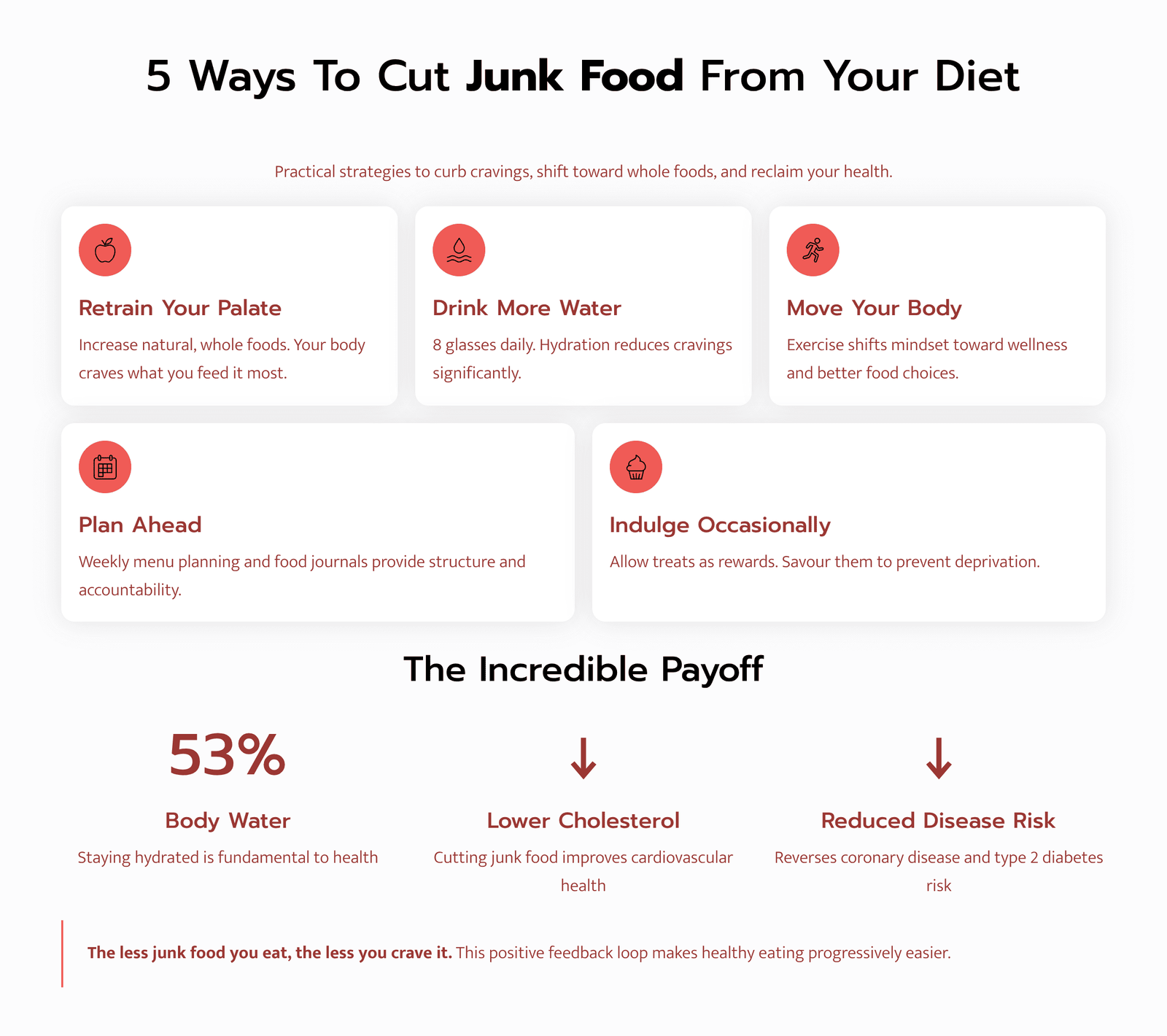
- Retrain your palate by increasing your intake of natural, whole foods. Consistently consuming fruits and vegetables helps your body begin to crave these nutrient-dense options over processed snacks.
- Stay hydrated to effectively manage hunger and cravings. Drinking approximately eight glasses of water a day is a simple but powerful tool to reduce the desire for unhealthy food.
- Use physical activity to shift your mindset toward wellness. Regular exercise not only improves physical health markers like blood pressure and flexibility but also naturally encourages better dietary choices.
- Implement a simple plan to avoid relying solely on willpower. Tools such as weekly menu planning and keeping a food journal provide the daily structure and accountability needed to stay on track.
- Practise moderation rather than total deprivation. Allowing for occasional, savoured treats prevents the frustration of rigid dietary systems and makes a healthy lifestyle more sustainable for the long term.
- Recognise the significant medical benefits of reducing junk food. Cutting out highly processed items leads to lower cholesterol, restored blood sugar levels, and a reduced risk of coronary disease and type 2 diabetes.
- Capitalise on the "positive feedback loop" of healthy eating. The less junk food you consume, the less you will find yourself craving it, making the journey progressively easier and more intuitive.
Takeaway #1: Retrain Your Cravings With Natural Foods
One of the most effective ways to reduce your desire for junk food is to increase your intake of natural, whole foods. When you consistently feed your body fruits and vegetables, you might find that your body begins to crave them more often. Essentially, your body will start to want more of what you feed it and less of what you don't.
Fruits and vegetables naturally contain less sodium, fat, and calories than most processed snacks. By making them a daily habit, you not only nourish your body with essential vitamins and minerals but also retrain your palate. Getting rid of processed foods is a fantastic way to improve your overall health and reset your cravings.

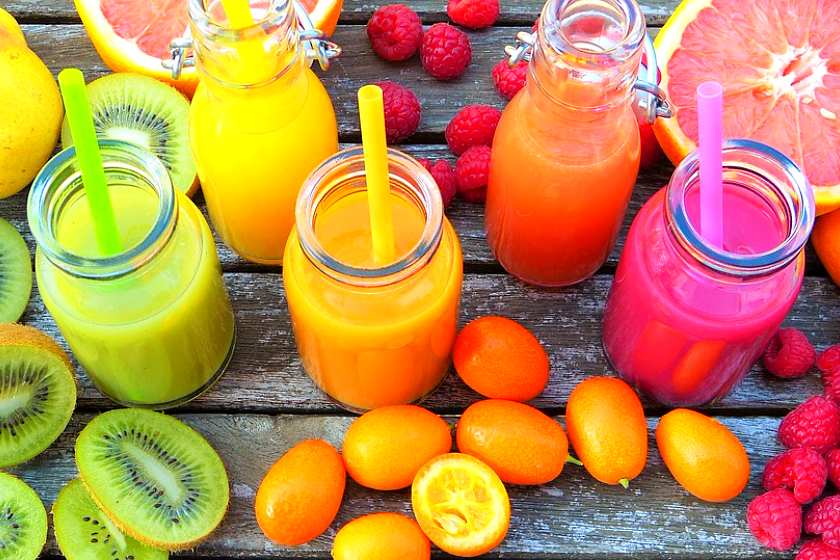
TIP: When you eat fruits and vegetables daily that contain less sodium, fat and calories than many other foods, your body may want these instead.
Takeaway #2: The Simplest Trick? Drink More Water
Sometimes the simplest solutions are the most effective. One of the best ways to reduce cravings for junk food is to drink more water. The human body is made up of an average of 53% water, so staying properly hydrated is fundamental to your overall health and well-being.
When you feel a craving coming on, try drinking a glass of water first. Think about drinking eight glasses a day to keep your body hydrated, which can help significantly reduce your cravings for unhealthy snacks. Choosing to drink more water is a simple, positive action you can take for your body every single day.
Join Our Mailing List
See how easily you can get fitter.
Sign up to get your free PDF report on 10 Actions That Support Weight Loss sent to your inbox!
Takeaway #3: Move Your Body To Change Your Mind
Incorporating regular physical activity into your routine can have a profound effect on your food choices. When you start exercising, you may find that you naturally want to eat things that are better for you and support your health goals. Moving your body not only helps you physically but also shifts your mindset toward wellness.
Fact: Getting and keeping your body moving is sure to make you feel great and also offers some health benefits in the process.
Beyond changing your cravings, regular exercise offers numerous health benefits. It can help you lose weight faster or maintain your current weight, and it’s possible you can reduce your blood pressure and increase your flexibility.
Fat Blasting Workout
The truth is, if you get your body moving, you'll feel great, and it'll also be good for your health.
Takeaway #4: Success Starts With A Simple Plan
One of the most effective ways to address the issue of consuming less junk food is to have a clear plan of action. Instead of relying on willpower in the moment, a little bit of forethought can help you make healthier choices consistently throughout the day.
Your plan doesn't need to be complicated. It could be as simple as writing out a menu plan for the week, ensuring you have healthy meals and snacks on hand. Another effective strategy is keeping a food journal where you track what you eat. Just be sure to make daily entries to stay on track and hold yourself accountable.


TIP: Keep writing your menu plan for or keeping track of what you eat in a food journal. That may tackle many health problems in your life.
Takeaway #5: Don't Deprive, Indulge... Occasionally
This may sound counter-intuitive, but allowing yourself to have your favourite junk food occasionally can be a key to long-term success. The goal is to reduce junk food, not to create a rigid system of deprivation that's bound to fail. Think of it as a reward system for your achievements.
When you do decide to have a treat—perhaps for going a week without junk food or meeting a weight loss goal—take the time to truly enjoy it. Savour every single bite. This approach helps you maintain a balanced, sustainable relationship with food, preventing feelings of deprivation and making it easier to stick to your healthier habits for a lifetime.
Join Our Mailing List
See how easily you can get fitter.
Sign up to get your free PDF report on 10 Actions That Support Weight Loss sent to your inbox!
The Incredible Payoff: What Happens When You Stop Eating Junk Food?
Choosing to reduce your intake of junk food is one of the most powerful acts of self-care you can practice. The positive changes that occur in your body are profound and begin almost immediately.
- Promotes weight loss: The most direct benefit is that eliminating junk food significantly cuts your total daily calorie intake. This simple change is a primary driver of weight loss and helps you reach a healthier body weight.
- Reduces risk of major diseases: Making this dietary shift can help reverse the risk of coronary disease. It also helps restore blood sugar levels to a healthy range, which brings the risk of type 2 diabetes down significantly.
- Improves key health markers: Cutting back on junk food leads to reduced cholesterol. Lowering your cholesterol is a critical factor in improving your overall cardiovascular health and protecting your heart for the long term.
As you begin this journey, your body starts to adapt wonderfully. Remember this key insight: The good news is that the less junk food you eat, the less you crave it. This creates a positive feedback loop, making it easier to stick with your new, healthier habits. The next step is to find a realistic approach that works for you.
The Bottom Line
You now have a clear understanding of what junk food is, the serious ways it can impact your health, and the incredible benefits that come from reducing it in your diet. This knowledge is your foundation for building a healthier life.
Breaking free from the cycle of eating junk food can feel daunting, especially since these foods are designed to make you want to eat more and more of them. But remember this powerful truth: the less junk food you eat, the less you will crave it.
You can begin to break free from unhealthy eating habits and build a foundation for lasting health by retraining your palate with natural foods, staying hydrated, moving your body, planning and allowing for the occasional treat. So, what small change will you commit to today to start reclaiming your health?
Embrace Inspiration:
Like What You Read? Be Sociable, Comment, And Share It! Thanks.
Glossary Of Key Terms
• Junk Food: Foods high in excess fat, simple carbohydrates, and processed sugar, such as salted snacks, candy, fried fast food, and sugary beverages, which may lead to a higher risk of obesity and cardiovascular diseases.
• Whole Foods: Natural foods, specifically fruits and vegetables, that contain less sodium, fat, and calories than most processed snacks and are rich in essential vitamins and minerals.
• Cravings: A strong desire for certain foods, particularly unhealthy ones. The text notes that the less junk food you eat, the less you will crave it.
• Deprivation: A state of lacking something desired. The article advises against creating a rigid system of deprivation, suggesting occasional treats to ensure long-term sustainability.
• Hydration: The state of having sufficient water in the body. Proper hydration, achieved by drinking about eight glasses of water daily, is fundamental to health and can help reduce cravings.
• Menu Plan: A proactive strategy of writing out a plan for the week's meals and snacks to ensure healthy choices are readily available.
• Food Journal: A tool for accountability where one keeps a daily record of all food consumed to stay on track with health goals.
• Positive Feedback Loop: The cycle described wherein eating less junk food leads to fewer cravings for it, which in turn makes it easier to continue the healthier eating habit.
• Coronary Disease: A major health condition whose risk can be reversed by reducing junk food intake and losing weight.
• Type 2 Diabetes: A chronic health problem whose risk is significantly lowered by cutting out junk food and restoring blood sugar levels to a healthy range.
• Cholesterol: A key health marker related to cardiovascular health. Reducing junk food consumption leads to reduced cholesterol.
• Calorie Intake: The total number of calories a person consumes daily. Eliminating junk food significantly cuts this total, which is a primary driver of weight loss.
• Moderation: An approach to eating that focuses on making healthier choices most of the time rather than eliminating junk food, which helps prevent deprivation and supports a balanced lifestyle.
FAQ
Foods commonly considered junk foods include salted snack foods, gum, candy, sweet desserts, fried fast food, and sugary carbonated beverages. Many foods, such as hamburgers, pizza, and tacos, can be considered either healthy or junk food depending on their ingredients and preparation methods.
To effectively reduce junk food cravings, try eating balanced meals with a good mix of protein, healthy fats and fibre, which can keep you full and satisfied. It can also help to identify triggers for junk food cravings, such as stress or boredom, and find healthier ways to cope with these feelings. Keeping healthy snacks, such as nuts, fruit or yoghurt, handy when you have a craving is also a good strategy.
Frequent consumption of junk food increases the intake of excess fat, simple carbohydrates, and processed sugar, which may lead to a higher risk of obesity and cardiovascular diseases, among other chronic health problems.
This dip in body weight reverses the risk of any coronary disease, reduced cholesterol, and restoration of blood sugar levels, bringing the risk of type 2 diabetes down. Eliminating junk food can significantly reduce the total number of calories we consume in a day, which leads to weight loss.
Making healthy food more appealing can be achieved by experimenting with flavours and spices, trying new cooking methods such as grilling or roasting for added texture and flavour, and presenting food in an attractive and colourful way. Including a variety of foods in your diet can also prevent boredom and make healthy eating more enjoyable.
While it's beneficial to limit junk food, it may not be realistic or necessary for everyone to cut it out completely. It's often more sustainable to focus on moderation and making healthier choices most of the time. Allowing yourself the occasional treat can prevent feelings of deprivation and help you maintain a balanced approach to eating.
Join Our Mailing List
See how easily you can get fitter.
Sign up to get your free PDF report on 10 Actions That Support Weight Loss sent to your inbox!
Thanks for sharing