

Evidence-Based Health Benefits Of Almonds
Almonds For Women: What The Research Actually Says About Health Benefits And Fat Loss
Dr. Adam Drewnowski
Professor of epidemiology
Almonds represent a powerful nutrient package and are one of the most researched foods in the world.
Summary (TL;DR)
Almonds are one of the most research-backed snack foods on the planet — and for women trying to manage their weight, they may be more powerful than the calorie label suggests. A 28g serving contains 6g protein, 4g fibre, and healthy fats your body doesn’t fully absorb. USDA research shows you actually absorb 19–25% fewer calories from almonds than the label states.
A 2025 expert consensus — reviewing nearly 30 years of data — concluded that daily almond consumption supports heart health, weight management, and gut health. For women in perimenopause, the magnesium and vitamin E content offer specific benefits you won’t find in most snack foods.
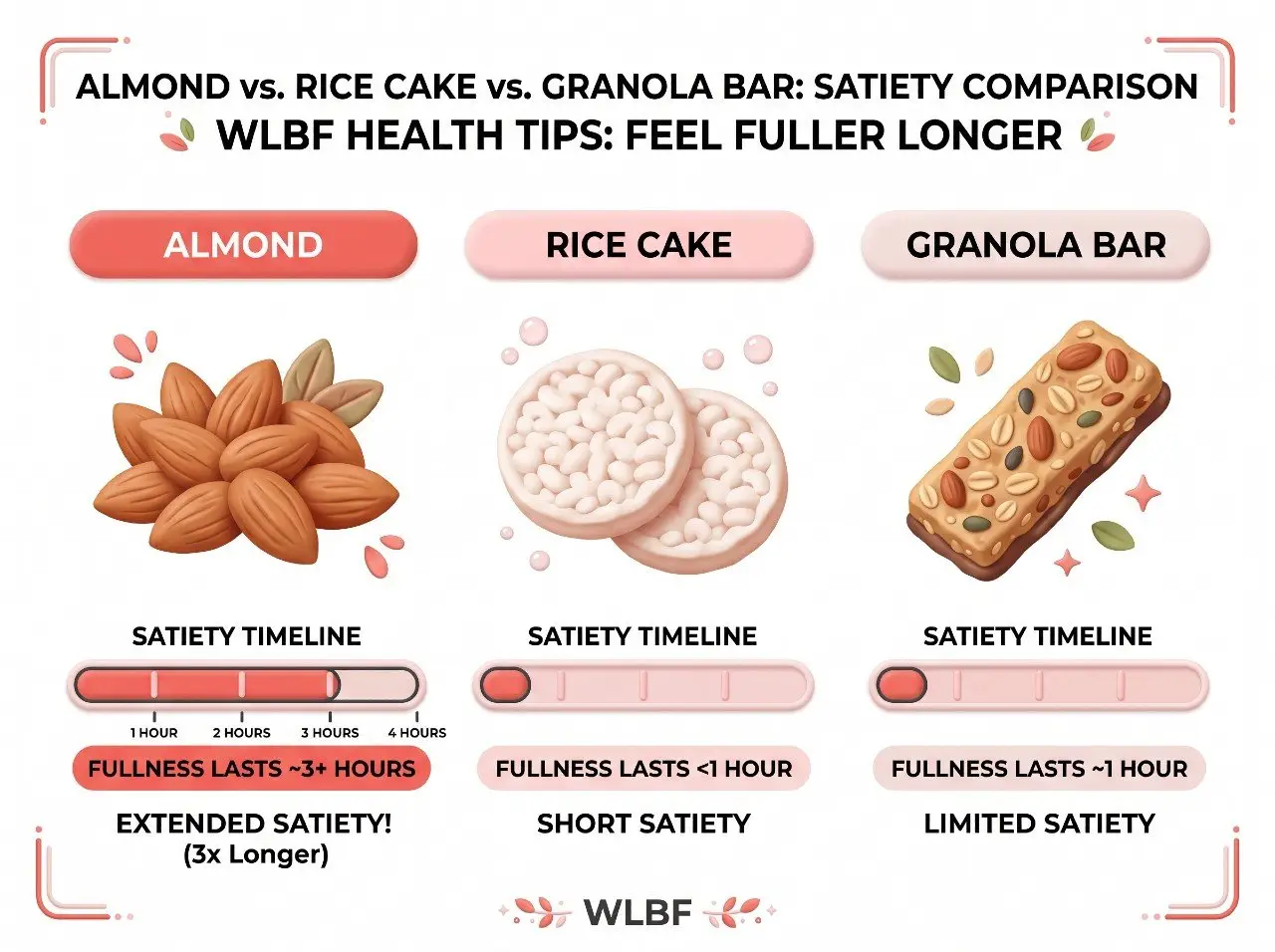
Honestly, I used to skip almonds entirely when I was trying to lose weight. Too many calories, I thought. Too easy to overeat. I’d walk past them in the supermarket and reach for a rice cake instead — which, looking back, did absolutely nothing for my hunger levels and sent my blood sugar on a rollercoaster by mid-afternoon.
The thing is, almonds have been misunderstood for years. We’ve been trained to fear calorie-dense foods, and almonds — at around 160 calories per small handful — look like a diet trap on paper. But the research tells a very different story. Once you understand why, you’ll stop second-guessing that little bag of almonds in your desk drawer.
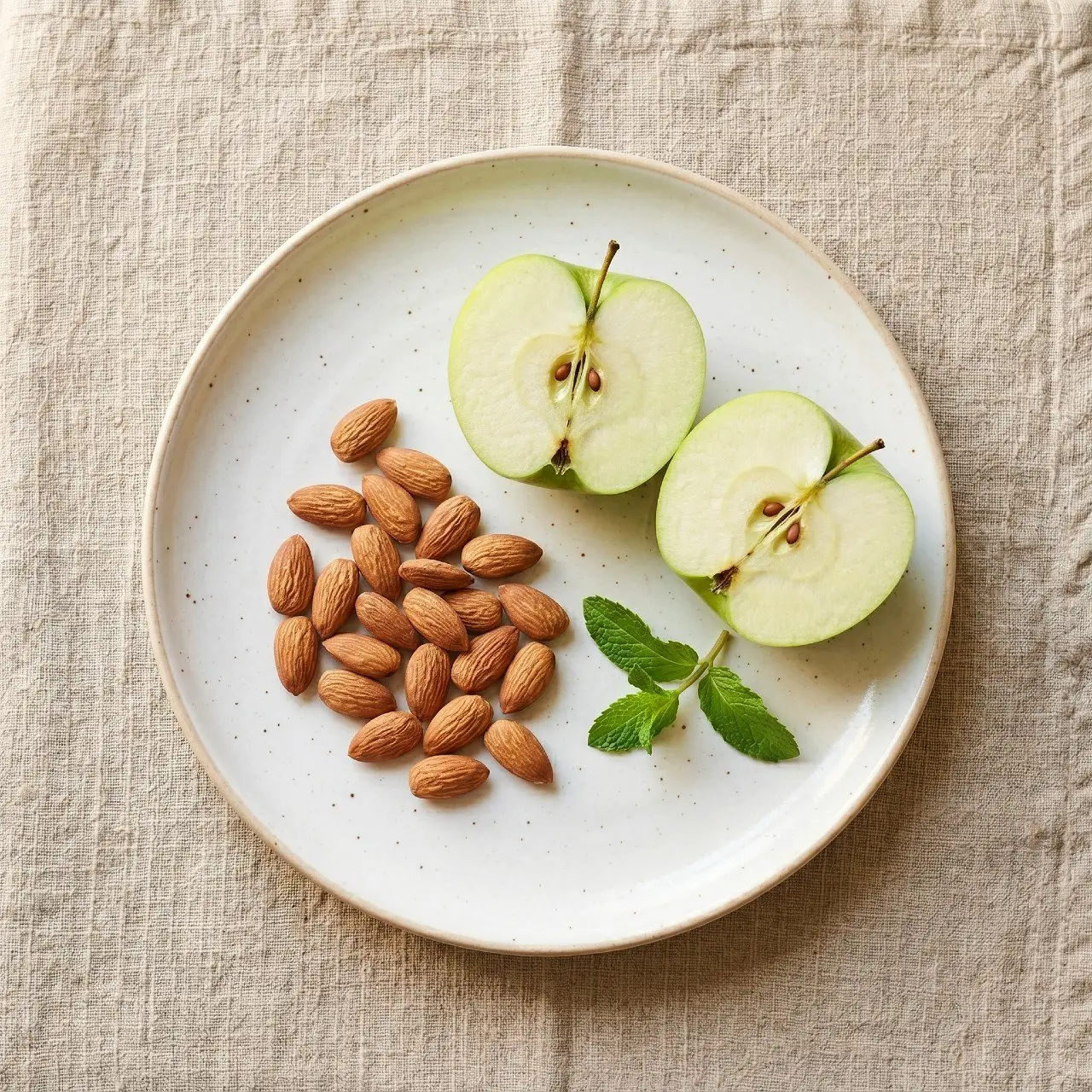
These days, I pair 20 almonds with an apple mid-morning, and it genuinely kills my 3 pm cravings. Not just “takes the edge off” — it actually eliminates them. That mid-afternoon desperate reach for biscuits or chocolate? Gone. After years of working in women’s health and nutrition, I’ve come to understand exactly why that happens — and the science behind it is fascinating.
Medical & Referral Disclaimer
This article is for informational and educational purposes only. It is not a substitute for professional medical advice, diagnosis, or treatment. Always consult your physician or qualified health provider before starting any new diet or exercise programme.
Key Takeaways
- Almonds contain 19–25% fewer absorbable calories than the nutrition label shows, due to their unique cellular structure.
- A 28g serving provides 6g protein, 4g fibre, and 13g of unsaturated fat — a combination that actively supports satiety.
- A 2025 expert review of nearly 30 years of almond research unanimously concluded that daily almond consumption supports heart health, weight management, and gut health.
- A June 2025 Oregon State University clinical trial found that 45 almonds daily reduced cholesterol, waist circumference, and gut inflammation over 12 weeks.
- Almonds have a glycaemic index of 0–2, making them one of the best blood sugar-stabilising snacks available.
- For women in perimenopause, almonds’ magnesium content supports sleep quality and cortisol regulation — two factors that directly affect belly fat.
The Calorie Count On The Packet Is Wrong (In A Good Way)
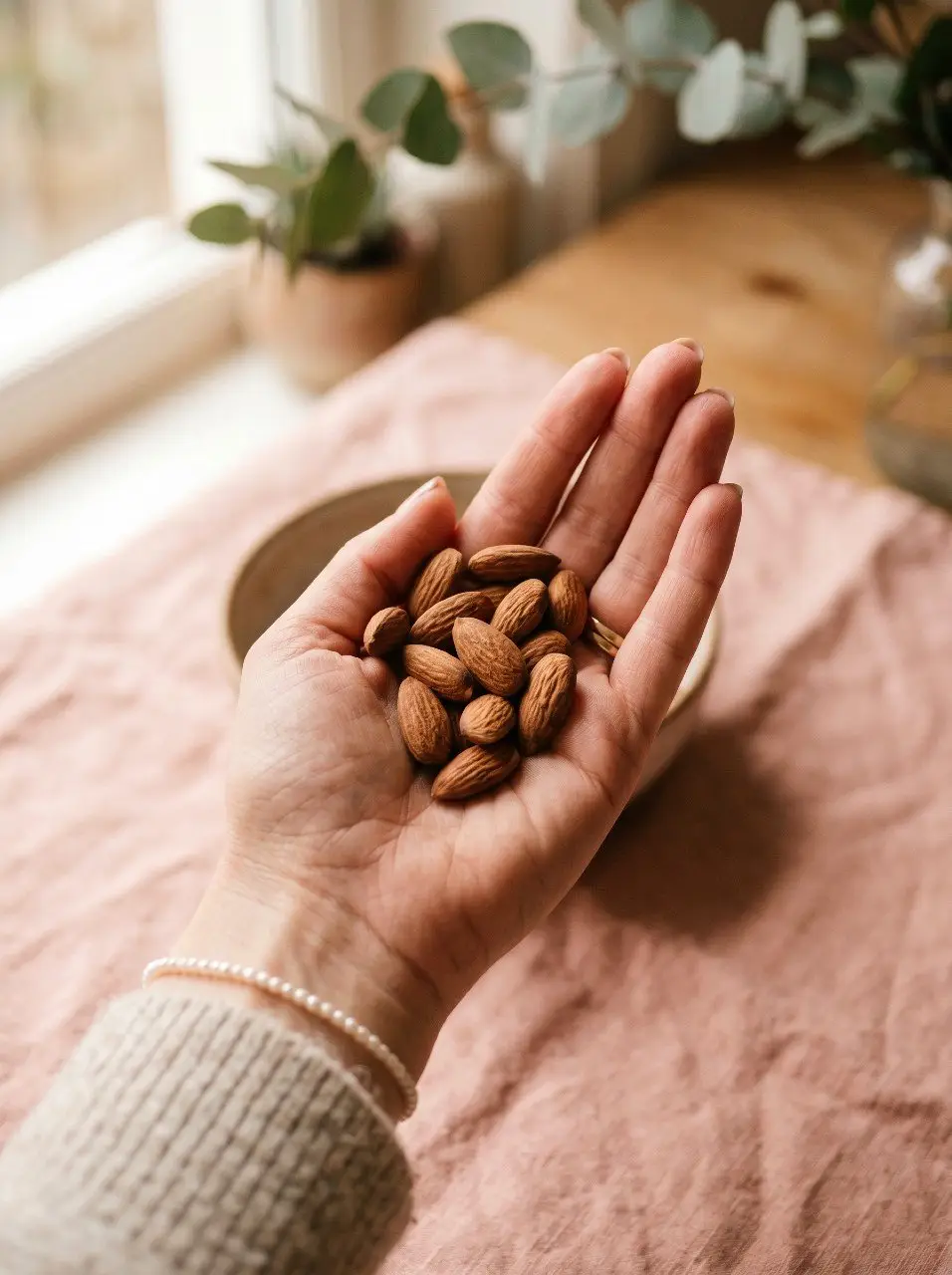
The calorie figure on your almond packet overstates what your body actually absorbs by 19–25%. USDA research confirmed that a 28g serving delivers approximately 129 calories — not the 160 calories on most labels — because almonds’ intact cell walls prevent full fat absorption.
Here’s something that surprises almost every woman I share it with: the calorie figure on your almond packet likely overstates what your body actually absorbs — by nearly a quarter.
USDA researchers, using a method that measures actual absorbed energy rather than the standard Atwater factors used for food labelling, found that whole almonds deliver approximately 129 calories per 28g serving — not the 160 calories listed on most labels. That’s a 19% gap for roasted almonds, and up to 25% for whole unroasted almonds.
Why? It comes down to almonds’ natural cellular structure. The fat inside each almond is encapsulated within intact cell walls. During digestion, those walls don’t fully break down, meaning a meaningful portion of the fat simply passes through unabsorbed.
This is unique to almonds — it’s not how processed snack foods behave, and it’s one of the reasons that studies consistently find almond eaters don’t gain the weight you’d expect from a calorie-dense food.
So if you’ve been avoiding almonds because of their calorie count, you’ve been working with inaccurate data. The “fattening nut” reputation was always based on a measurement method that doesn’t reflect human physiology.
What Almonds Actually Do To Your Body
Healthy Fats That Work For You, Not Against You
Almonds’ fat is predominantly oleic acid — a monounsaturated fatty acid also found in olive oil. This fat slows gastric emptying, keeping you fuller for longer, and is consistently associated with reduced LDL cholesterol levels in clinical trials.
Almonds are excellent for weight management because the fat they contain is predominantly monounsaturated fatty acid (MUFA) — specifically oleic acid, the same heart-protective fat found in olive oil and avocado. This matters not just for heart health but for satiety: fat slows gastric emptying, which is a technical way of saying food stays in your stomach longer and you feel full for longer.
This is why eating almonds at 10 am can still influence your hunger levels at 1 pm. The fats aren’t spiking and crashing your energy — they’re providing a long, steady burn.
MUFAs have also been consistently associated with reductions in LDL (“bad”) cholesterol levels, which is why almonds show up repeatedly in cardiovascular research.
Protein And Fibre: The Satiety Double-Act
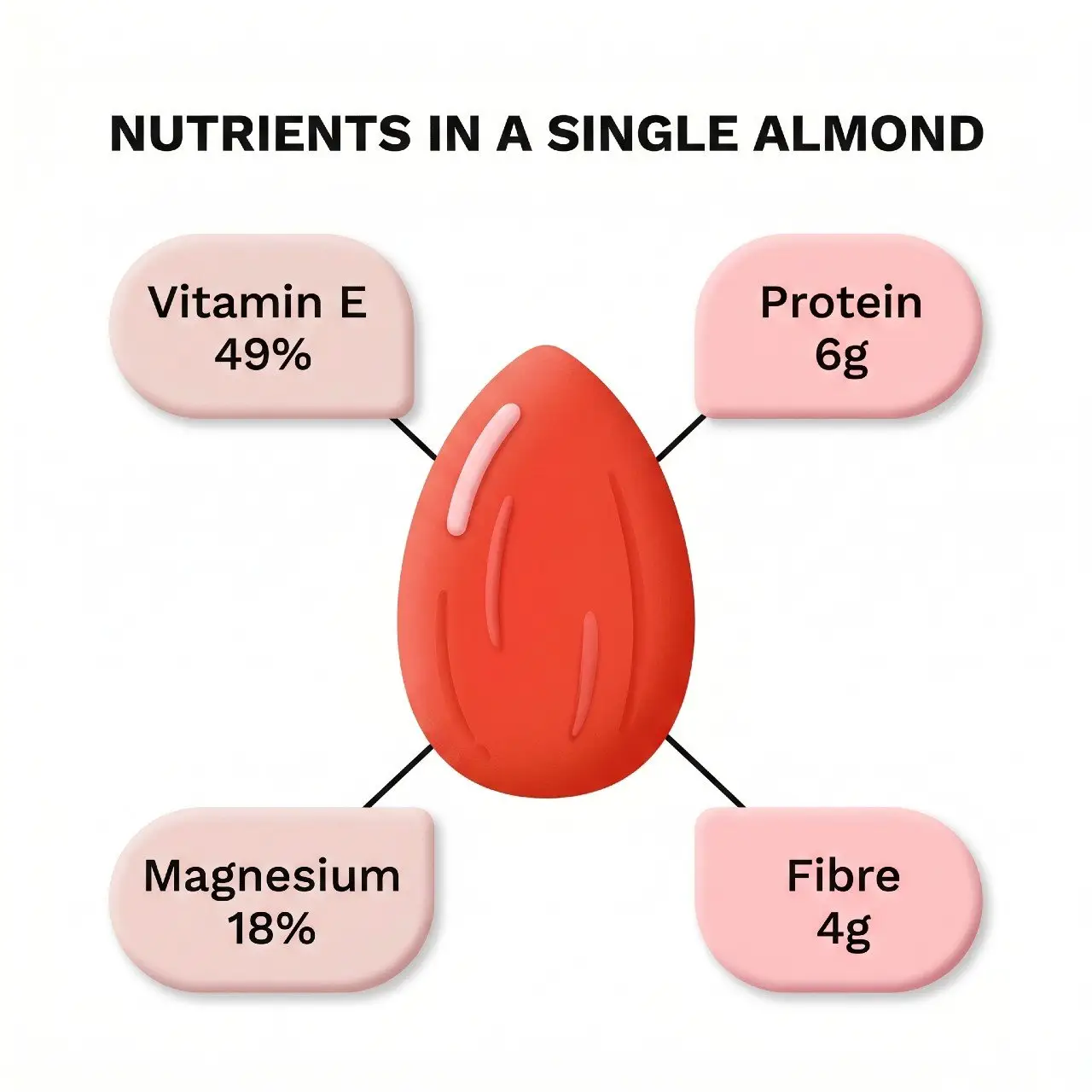
A 28g almond serving (23 nuts) delivers 6g protein and 4g fibre. In a 140-person RCT, the almond group showed 47% smaller insulin responses and 45% higher pancreatic polypeptide (satiety hormone) compared to a calorie-equivalent carb snack.
A 28g serving of almonds (roughly 23 nuts) delivers 6g of protein and 4g of fibre. That combination matters a great deal for appetite control.
A randomised controlled trial published in the European Journal of Nutrition — involving 140 overweight adults — compared almond snacking directly against an isocaloric carbohydrate snack bar.
The almond group showed significantly more favourable appetite-regulating hormone responses: 47% smaller C-peptide response (meaning less insulin spike), 39% higher glucagon levels, and 45% higher pancreatic polypeptide — both hormones that signal fullness and regulate energy balance.
The carb snack bar, gram-for-gram equivalent in calories, produced none of these beneficial hormonal shifts. That’s not a small difference. That’s your body responding completely differently to the same number of calories, depending on the food source.
The Blood Sugar-Stabilising Effect
Almonds have a glycaemic index of 0–2 — essentially zero. Eating them alongside higher-carb foods or as a standalone snack significantly lowers the blood glucose response, reducing cravings and supporting steady energy levels throughout the day.
Almonds have a glycaemic index of 0–2 — essentially zero. This is why pairing almonds with higher-carbohydrate foods (like an apple, or a meal containing bread or rice) helps blunt the overall blood sugar rise of that meal.
A randomised crossover study involving 100 participants found that almonds as a snack produced a statistically and practically significantly lower blood glucose response curve compared to a popular biscuit snack, and participants also consumed fewer calories at the next meal. The blood sugar effect and the appetite suppression effect were both significant.
This matters for weight loss because blood sugar instability is one of the primary drivers of cravings — particularly that 3 pm energy crash that sends you hunting for something sweet or salty. Almonds address the root cause rather than the symptom.

Almonds And Perimenopause: Why This Matters More After 40
During perimenopause, fluctuating oestrogen, increased cortisol sensitivity, and disrupted sleep all drive weight gain — particularly around the abdomen. Almonds address all three mechanisms: magnesium supports sleep and cortisol regulation, vitamin E combats oxidative stress from declining oestrogen, and the very low GI offsets declining insulin sensitivity.
One area where almonds are genuinely underappreciated is their specific value for women navigating perimenopause — typically the late 30s through late 40s, though it varies considerably.
During this transition, three things happen that directly affect weight and body composition: oestrogen levels fluctuate and decline, cortisol sensitivity increases (meaning stress affects fat storage more strongly), and sleep quality often deteriorates — which in turn raises ghrelin (hunger hormone) and lowers leptin (satiety hormone), creating the perfect conditions for weight gain even without eating more.
Almonds address all three of these mechanisms, at least in part.
Magnesium, Cortisol, And Sleep
Almonds are one of the best dietary sources of magnesium, providing around 76mg per 28g serving — approximately 18% of the daily recommended intake.
Magnesium plays a key role in regulating the HPA (hypothalamus-pituitary-adrenal) axis, which controls cortisol production. It also supports GABA production — the neurotransmitter that promotes relaxation and sleep onset.
A 2024 randomised controlled trial found that magnesium supplementation significantly improved deep and REM sleep stages in adults with self-reported sleep problems.
If you’re waking at 3 am or struggling to fall asleep during perimenopause, your magnesium intake is worth examining — and food sources are always preferable to supplements where possible.
Vitamin E And Hormonal Skin Health
One ounce of almonds provides 7.3mg of vitamin E — approximately 50% of the daily recommended intake, and the highest vitamin E content of any tree nut. Vitamin E functions as a fat-soluble antioxidant that protects cell membranes from oxidative damage.
During perimenopause, declining oestrogen accelerates oxidative stress in skin tissue, contributing to dryness, loss of elasticity, and increased inflammation. Dietary vitamin E doesn’t replace topical skincare, but it does address the internal environment.
Blood Sugar Stability During Hormonal Flux
As oestrogen declines, insulin sensitivity tends to decrease — meaning the same carbohydrate load that your body handled easily at 35 may now cause a larger blood sugar swing at 45.
The blood sugar-stabilising properties of almonds become even more valuable in this context. Incorporating them as a between-meal snack helps maintain the steady glucose levels that support energy, mood, and — critically — reduced fat storage around the abdomen.
Vitamins And Minerals: The Full Picture
A 28g almond serving delivers meaningful amounts of eight key micronutrients, including 49% of your daily vitamin E, 27% of your daily manganese, and 33% of your daily copper — nutrients involved in energy production, collagen synthesis, and cardiovascular protection.
The health benefits of almonds extend well beyond their macronutrient profile. Per 28g serving, almonds contain a meaningful dose of micronutrients that are often chronically under-consumed by women.
| Nutrient | Amount Per 28g | % Daily Value |
|---|---|---|
| Vitamin E | 7.3mg | 49% |
| Magnesium | 76mg | 18% |
| Manganese | 0.6mg | 27% |
| Copper | 0.3mg | 33% |
| Riboflavin (B2) | 0.3mg | 23% |
| Phosphorus | 136mg | 11% |
| Calcium | 76mg | 6% |
| Potassium | 208mg | 4% |
The B vitamins — riboflavin, niacin, and biotin — are involved in cellular energy production. This is why people often report feeling more physically energised when they include nuts regularly in their diet. These nutrients activate metabolic pathways that convert food into usable energy rather than stored fat.
Manganese and copper, less talked-about but genuinely important, support enzyme function and collagen synthesis, which matters for joint health and skin integrity, both of which become increasingly relevant as women move through their 40s.
What The Latest Research Actually Says
In 2025, a group of the world’s leading nutrition scientists unanimously concluded that daily almond consumption reduces LDL cholesterol by ~5%, supports modest weight loss at 50g+ per day, promotes beneficial gut bacteria, and does not cause weight gain. A separate June 2025 clinical trial confirmed reduced waist circumference and cholesterol in 12 weeks.
The research on almonds has accumulated substantially over the past decade, and in 2025, a group of the world’s leading nutrition scientists did something unusual: they sat down together to review nearly 30 years of almond research and produce a unified consensus paper published in Current Developments in Nutrition.
Their unanimous conclusions:
- Daily almond consumption reduces LDL cholesterol by an average of approximately 5% in pooled results
- Consuming at least 50g of almonds per day is associated with modest weight loss in some participants — and crucially, it does not cause weight gain
- Almonds support beneficial gut bacteria, with potential metabolic health implications
- Almonds reduce diastolic blood pressure in small but significant amounts
“What’s remarkable is the consistency of the evidence: adding 50 grams of almonds per day to the diet does not lead to weight gain — in fact, some studies show a slight reduction in body weight.”
— France Bellisle, PhD, Laval University & University of Paris, co-author of the 2025 consensus paper
Then, in June 2025, Oregon State University’s Linus Pauling Institute published a 12-week clinical trial specifically in people with metabolic syndrome — the cluster of conditions (abdominal obesity, high blood pressure, high blood sugar, poor cholesterol) that affects nearly 40% of US adults. Participants who ate 45 almonds (2oz) daily showed:
- Significant reductions in total cholesterol and LDL cholesterol
- Reduced waist circumference
- Decreased markers of gut inflammation
- Marked increases in vitamin E levels
The control group eating an equivalent calorie serving of crackers showed none of these improvements. Same calories, completely different biological outcome.

Almonds vs Common Snacks: A Direct Comparison
One of the most useful ways to understand the health benefits of almonds is to compare them directly to the snacks most women reach for when hunger hits mid-morning or mid-afternoon.
| Snack (Per ~160 cal serving) | Protein | Fibre | GI | Blood Sugar Impact | Satiety Duration |
|---|---|---|---|---|---|
| Almonds (28g / ~23 nuts) | 6g | 4g | 0–2 | Very low | 2–3 hours |
| Rice cakes (3–4 cakes) | 2g | 0.5g | 82 | High spike | 30–45 mins |
| Granola bar (1 bar) | 3g | 1g | 55–70 | Moderate–high | 45–60 mins |
| Plain crackers (10–12) | 2g | 0.5g | 70–80 | High spike | 30 mins |
| Apple (medium) | 0.5g | 4g | 36 | Moderate | 45–60 mins |
| Almonds + apple | 6.5g | 8g | Very low (blended) | Low | 3+ hours |
The almonds-plus-apple combination is what I reach for mid-morning — and the data makes the case. The fibre of the apple combined with the protein and healthy fat of the almonds creates a genuine 3-hour satiety window that the other options simply don’t match.
The apple’s natural sugars, which would otherwise cause a modest blood sugar rise, are blunted by the almonds.
How To Eat Almonds For Maximum Benefit
Knowing the research is one thing; applying it practically is another. A few evidence-based guidelines are worth following:
- Stick to the 23-almond serving. A standard 28g serving (roughly 23 almonds) provides optimal benefits without meaningfully exceeding calorie targets. It’s also the serving size used across the clinical trials discussed here.
- Eat them before hunger peaks, not after. The hormonal benefits of almonds work best when they’re consumed as a structured snack 2–3 hours after a meal, not when you’re already ravenous. Reactive snacking tends to result in overeating; proactive snacking keeps appetite hormones regulated.
- Pair with a moderate-GI fruit. The apple-and-almonds combination is nutritionally optimal, but any moderate-GI fruit (pear, peach, berries) works well. The fat and protein from almonds reliably blunts the fruit’s blood sugar response.
- Choose whole almonds over processed forms. The calorie bioaccessibility advantage — the 19–25% reduction in absorbed calories — depends on the intact cellular structure of whole almonds. Once almonds are sliced, slivered, or made into almond butter, that cellular wall is disrupted, and the bioaccessibility advantage largely disappears.
- Raw or roasted both work; salted is the main thing to watch. The research showed slightly higher calorie reduction in whole unroasted almonds vs. whole roasted (25% vs. 19%), but both are well within the healthy range. Lightly salted almonds are fine; heavily salted or flavoured varieties add unnecessary sodium or sugar.
Related Articles
The Bottom Line
Almonds have been unfairly cast as a “fattening” food for too long, and that reputation is based on a calorie measurement method that doesn’t reflect how your body actually digests them.
The real picture — built from multiple randomised controlled trials and a 2025 expert consensus reviewing nearly 30 years of research — is that almonds support weight management, cardiovascular health, blood sugar stability, and gut health when consumed daily.
For women over 40, the benefits are even more specific: the magnesium content addresses the sleep and cortisol issues that become increasingly common during perimenopause, the vitamin E content (50% of daily value per ounce) supports both heart health and skin integrity, and the blood sugar-stabilising effect helps counteract the declining insulin sensitivity that accompanies hormonal transition.
The most practical takeaway? Twenty almonds and an apple, mid-morning. It’s not a magic solution — but it’s one of the most well-evidenced small habits you can build into a weight management strategy. And unlike a rice cake, it’ll still be working for your hunger levels three hours later.
Glossary Of Key Terms
FAQ
Almonds provide a uniquely relevant set of benefits for women, particularly those over 40. A 28g serving delivers 6g protein, 4g fibre, 50% of your daily vitamin E, and 18% of your daily magnesium — nutrients that support satiety, hormonal balance, cardiovascular health, and skin integrity. A 2025 expert review of nearly 30 years of research concluded unanimously that daily almond consumption supports heart health, weight management, and gut health.
Yes, the evidence is consistent. Almonds don’t cause weight gain — and at intakes of 50g or more per day, some studies show modest weight loss. The mechanism is multi-layered: almonds stabilise blood sugar, trigger favourable appetite-regulating hormones, slow gastric emptying, and deliver 19–25% fewer absorbable calories than the label states due to their unique cellular structure.
Clinical trials consistently use a 28g serving — approximately 23 almonds — as the standard daily dose, and this is the serving associated with the cardiovascular and satiety benefits in the research. The 2025 expert consensus paper noted that consumption of at least 50g (roughly 45–46 almonds) per day was associated with modest weight loss in some participants. For most women, 23–46 almonds daily is a practical and evidence-based target.
Almonds are particularly valuable during perimenopause for three specific reasons. First, their magnesium content supports sleep quality and helps regulate cortisol — both of which are disrupted during hormonal transition and directly affect abdominal fat storage. Second, their vitamin E content (50% of the daily value per ounce) addresses the increased oxidative stress from declining oestrogen. Third, their very low glycaemic index helps compensate for the declining insulin sensitivity that typically occurs in perimenopause.
Mid-morning or mid-afternoon — approximately 2–3 hours after your last meal, before hunger peaks. Eating almonds proactively (as a structured snack) maximises their appetite hormone benefits and prevents the reactive overeating that happens when you wait until you’re already very hungry. Pairing almonds with a moderate-GI fruit like an apple creates a 3+ hour satiety window backed by the nutritional data.
Both are beneficial. USDA research found whole unroasted almonds have a slightly higher calorie reduction advantage (25% fewer absorbed calories) compared to whole roasted almonds (19%), but both offer substantially better bioaccessibility than processed almond products. The key distinction is whole vs. processed: almond butter, sliced almonds, and almond flour don’t carry the same cellular-structure benefit. Lightly salted is fine; avoid heavily flavoured or sugar-coated varieties.
No — and that framing misses the point. Almonds work best as a strategic between-meal snack that prevents the blood sugar dips and hormone-driven hunger spikes that lead to poor food choices at main meals. A 23-almond serving is approximately 160 calories (though your body absorbs closer to 130). That’s a snack, not a meal — and used in that context, it’s one of the most evidence-backed snack choices available.