
The 4 Most Compelling Reasons A Woman Should Exercise Starting Now
Edward Stanley
Make Time to Move
Those who think they have no time for bodily exercise will sooner or later have to find time for illness.
Summary (TL;DR)
Every woman should exercise regularly because it's about more than just weight. Physical activity protects cardiovascular health and maintains bone density, especially as women age.
Exercise also regulates hormones, improves mood, and boosts energy. Strength training builds lean muscle, which helps manage metabolism. Even a little consistent exercise delivers measurable mental and physical health benefits, no gym required.
For most women, the decision to exercise begins and ends with the scale. Either you're trying to lose weight, or you feel you don't need to because your weight feels manageable. Either way, weight drives the decision — and that framing sells short what exercise actually does for the female body.
The scale measures one thing. Exercise changes everything else.
It changes how your bones age. How your hormones behave. How your heart performs under pressure. How do you handle stress at 6 pm after a full day? How well you sleep. How much energy do you carry into tomorrow? These are the benefits that accumulate quietly over months and years — and they are far more significant, long-term, than any number on a scale.
This article breaks down the four most important evidence-based reasons every woman should make regular physical activity a non-negotiable — at any age, at any starting point, with whatever time she actually has.
Medical & Referral Disclaimer
This article is for informational and educational purposes only. It is not intended as medical advice and should not replace consultation with a qualified healthcare professional. Women with pre-existing health conditions, injuries, or those who are pregnant or postpartum should consult their physician before beginning or modifying an exercise program. Individual results vary based on health status, consistency, and other factors.
Key Takeaways
- Regular exercise does far more than manage weight — it protects bones, balances hormones, supports cardiovascular health, and measurably improves mood and energy.
- Women lose bone density faster than men, particularly around menopause — and weight-bearing exercise is one of the few interventions proven to slow and reverse that loss.
- Exercise lowers cortisol, raises endorphins, and improves sleep quality — three mechanisms that directly reduce stress, anxiety, and the fatigue most women report as their biggest daily challenge.
- Strength training is especially critical for women over 40: every pound of lean muscle raises resting metabolic rate, counteracting the hormonal slowdown that accelerates after perimenopause.
- The mental health benefits of exercise are dose-responsive — even 20–30 minutes of moderate activity three times a week produces clinically measurable reductions in anxiety and depression.
- You do not need a gym, expensive equipment, or hours of free time — consistency matters far more than intensity, especially when starting from zero.
Why Should Every Woman Exercise Regularly?
Every woman should exercise regularly because physical activity simultaneously protects cardiovascular health, maintains bone density, regulates hormones, manages weight, and improves mental health — benefits that compound over decades and are particularly critical during the hormonal transitions of perimenopause and menopause. No single medication or supplement delivers this breadth of benefit.
The World Health Organization recommends at least 150–300 minutes of moderate-intensity aerobic activity per week for adults, plus muscle-strengthening activities on 2 or more days. Most women fall significantly short of these targets — and the health consequences are measurable and preventable.
How Does Exercise Help Women Manage Weight and Metabolism?
Exercise supports women's weight management by increasing caloric expenditure during activity, raising resting metabolic rate through lean muscle development, and improving insulin sensitivity — making the body more efficient at using food for fuel rather than storing it as fat. These effects compound over time and become increasingly important after 40 when metabolism naturally slows.
Weight control is the reason most women begin exercising — but understanding how exercise affects metabolism changes how you approach it.
Why Muscle Burns More Calories Than Fat
Muscle tissue is metabolically active: each pound burns approximately 6 calories per day at rest, compared to roughly 2 calories for fat tissue. This difference seems small per pound, but the compounding effect of building or preserving 5–10 pounds of lean muscle meaningfully elevates basal metabolic rate (BMR) over time.
This is why strength training produces better long-term weight management than cardio alone. Cardio burns calories during the session; resistance training raises the baseline rate at which you burn calories 24 hours a day.
Use our calorie calculator to find your current BMR and understand how your activity level affects your daily energy needs.
How Exercise Affects Metabolism After 40 and During Menopause
Metabolic rate declines gradually from the late 30s, with the decline accelerating during perimenopause as estrogen and progesterone levels fall. This is not inevitable weight gain — it is a hormonal shift that changes the equation. The response is not eating less (which raises cortisol and accelerates muscle loss), but building and preserving muscle through resistance training.
Research from the Journal of Clinical Endocrinology & Metabolism confirms that women who engage in regular resistance training during menopause preserve significantly more lean mass and experience smaller increases in visceral fat than sedentary women. For more on the hormonal dimension, see our guide on hormones and weight loss for women.
Best Exercise Types for Women's Weight Management
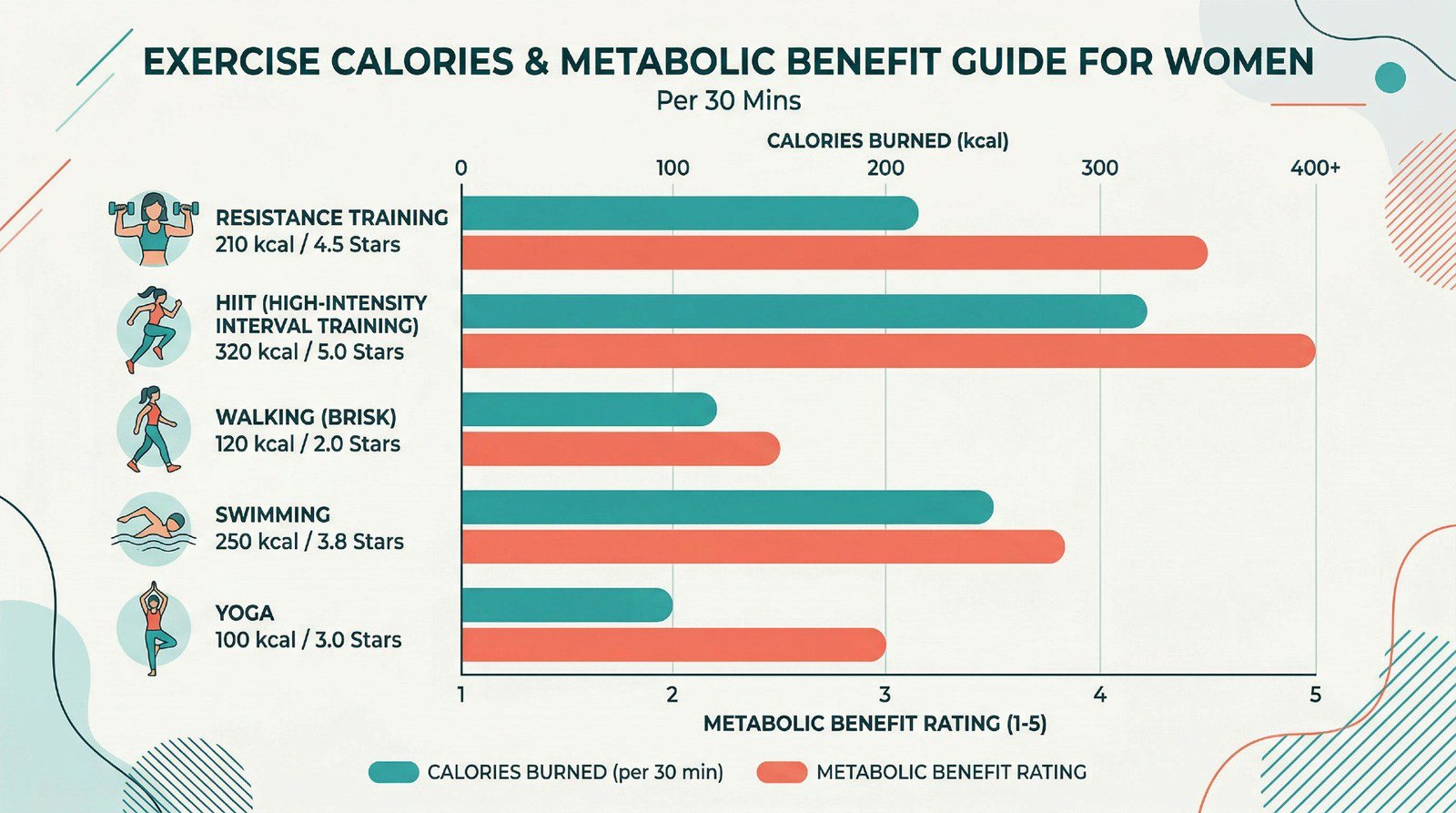
- Resistance training (weights, bands, bodyweight) — builds muscle, raises BMR, improves insulin sensitivity
- HIIT (High-Intensity Interval Training) — burns calories efficiently in short sessions, significant EPOC effect
- Brisk walking — low-impact, sustainable, directly reduces visceral fat
- Swimming — full-body, joint-friendly, strong caloric burn; see our guide on swimming for weight loss
- Yoga and Pilates — build core stability, improve flexibility, lowers cortisol
Exercise and Weight Management — At a Glance:
| Exercise Type | Calories (30 min, ~150 lb woman) | Raises BMR? | Joint Impact | Best For |
|---|---|---|---|---|
| Resistance training | 90–133 | Yes — significantly | Low | Long-term metabolism, body composition |
| HIIT | 240–360 | Yes — short-term EPOC | Moderate | Efficient fat burning, time-limited women |
| Brisk walking | 120–150 | Minimal | Very low | Daily movement, stress reduction, visceral fat |
| Swimming | 180–250 | Minimal | None | Joint issues, full-body conditioning |
| Yoga / Pilates | 80–180 | Minimal | Very low | Cortisol reduction, core strength, flexibility |
How Does Exercise Protect Women's Bone Density?
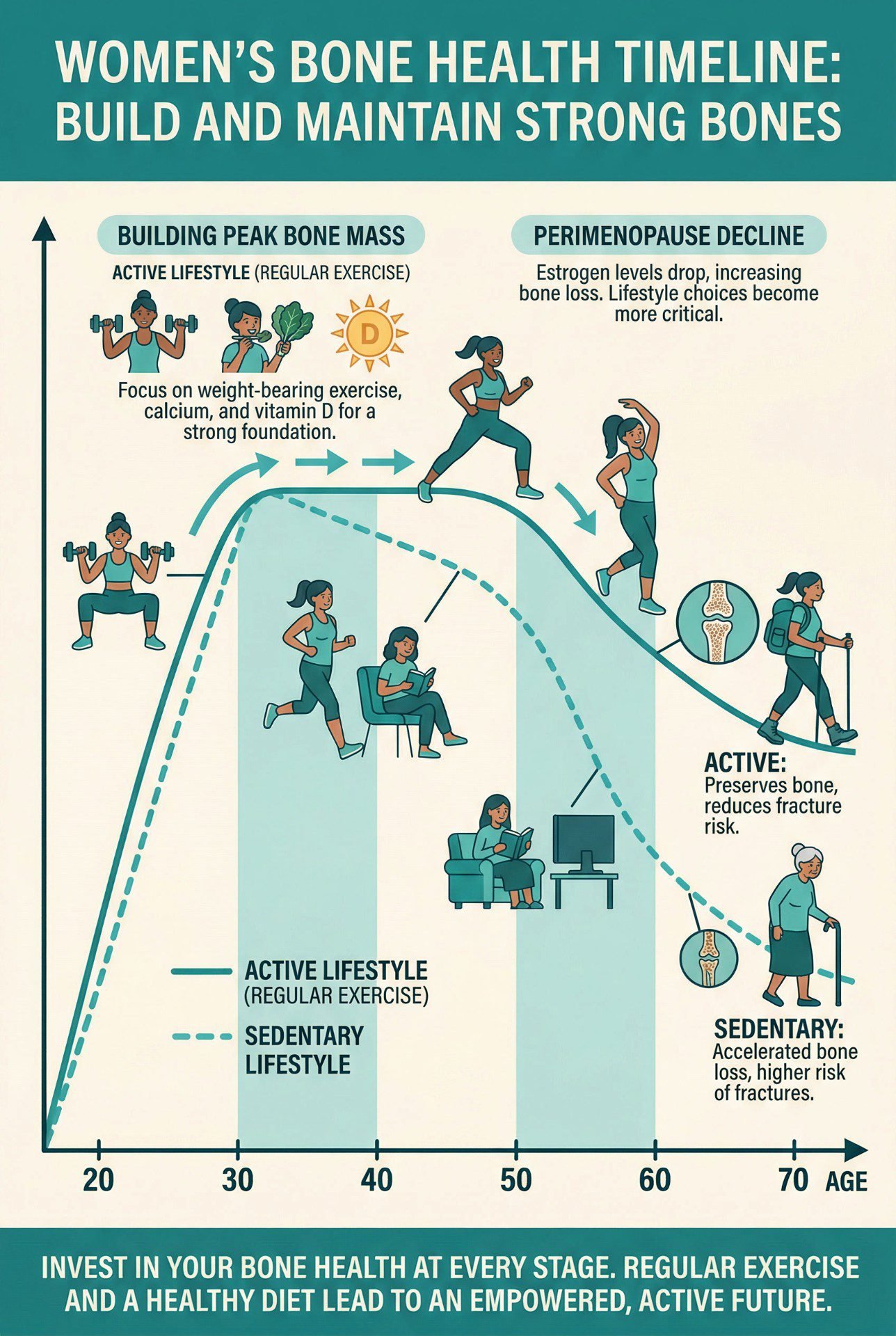
Exercise protects women's bone density by stimulating osteoblasts — the cells responsible for building new bone tissue — through mechanical loading. Weight-bearing and resistance exercises are particularly effective, and regular physical activity is one of the few strategies proven to both slow bone loss and increase bone mineral density in women of all ages.
This is not a cosmetic benefit. Osteoporosis affects approximately 1 in 5 women over 50, and one in two women will experience an osteoporosis-related fracture in their lifetime. Exercise is the most accessible preventive strategy available.
Why Women Lose Bone Density Faster Than Men
Women's bone density peaks in their late 20s, then begins a slow decline. The rate of loss accelerates dramatically during perimenopause and menopause, when estrogen — a key protector of bone tissue — declines rapidly. Women can lose up to 20% of their bone density in the five to seven years following menopause.
Men experience bone loss too, but at a slower rate and from a higher baseline. The estrogen-bone connection is uniquely consequential for women, which makes exercise-based bone protection a women-specific priority, not a general health platitude.
Which Exercises Build Bone Density In Women?
Not all exercise is equally effective for bone. Bone responds to mechanical loading — the stress placed on it during weight-bearing movement. Swimming and cycling, while excellent cardiovascular exercises, provide minimal bone-building stimulus because the body is supported or seated.
Most effective for bone density:
- Resistance training — direct loading of the spine, hips, and wrists (the most common fracture sites).
- Jumping and plyometrics — impact forces are particularly potent bone stimulators.
- Weight-bearing cardio — running, hiking, dancing, stair climbing
- Yoga — isometric loading supports bone maintenance in the wrists and spine.
Research published in Osteoporosis International found that women who performed resistance training and impact exercise maintained significantly higher bone mineral density at the hip and spine than those who performed only non-impact exercise.
Exercise vs. HRT For Bone Protection
Hormone replacement therapy (HRT) is an effective option for slowing menopausal bone loss and may be appropriate for some women. But exercise provides bone benefits across all life stages — before, during, and after menopause — without pharmacological side effects.
The two are not mutually exclusive. For women on HRT, exercise amplifies bone protection. For women not pursuing HRT, exercise is the most evidence-supported non-pharmacological alternative.
For structured beginner-friendly programs, see our fat loss workouts for beginners — many of which are specifically designed to be joint-friendly while building bone-supporting muscle.
How Does Exercise Support Hormonal Health In Women?
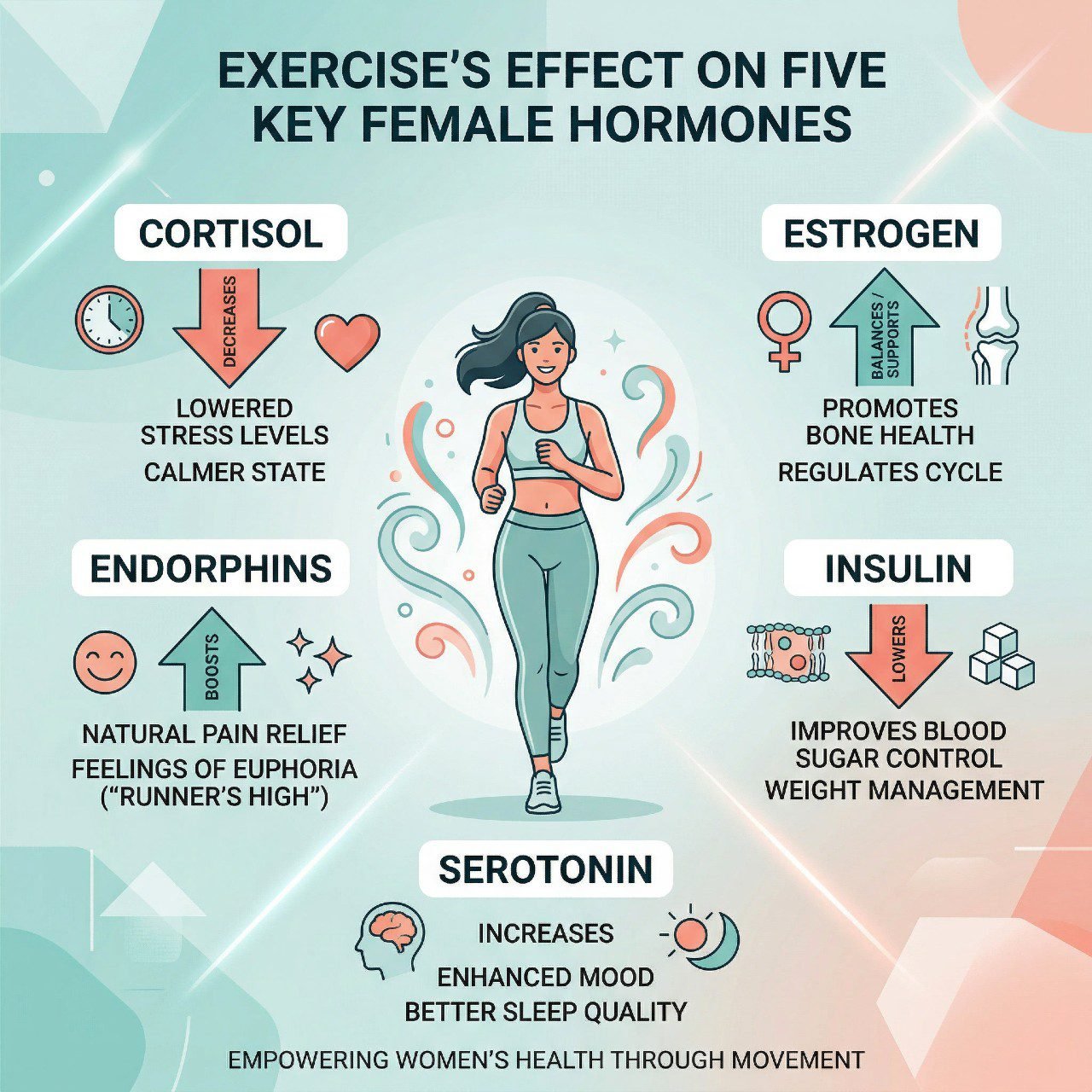
Exercise supports hormonal health in women by lowering cortisol, improving insulin sensitivity, modulating estrogen metabolism through the liver, stimulating endorphin and serotonin release, and — in perimenopausal women — reducing the frequency and severity of hot flashes. No hormone is unaffected by regular physical activity.
This is perhaps the most underappreciated benefit of exercise for women — and one that generic fitness content rarely addresses with the depth it deserves.
Exercise, Cortisol, And Estrogen Balance
Cortisol — the primary stress hormone — rises during physical or emotional stress and falls during recovery. Chronically elevated cortisol disrupts estrogen and progesterone balance, promotes visceral fat storage, and worsens insulin resistance. The pattern reinforces itself: stress elevates cortisol, cortisol promotes fat gain, fat tissue produces additional estrogen metabolites, and hormonal disruption deepens.
Regular moderate exercise breaks this cycle. Low-to-moderate intensity activity — walking, yoga, swimming — measurably reduces cortisol and improves the body's cortisol-reset capacity. High-intensity exercise without adequate recovery can temporarily elevate cortisol, which is why exercise type and volume matter for hormonal outcomes.
Exercise And Insulin Sensitivity
Insulin resistance — the reduced ability of cells to respond to insulin — is a direct contributor to weight gain, particularly around the abdomen. It becomes more common as women age and during the hormonal changes of perimenopause.
Exercise improves insulin sensitivity for 24–48 hours after each session by driving glucose into muscle cells without requiring insulin. This effect is cumulative: women who exercise consistently maintain significantly better insulin sensitivity than sedentary peers, and have a meaningfully lower risk of type 2 diabetes and metabolic syndrome.
Exercise For Perimenopause Symptoms
For women navigating perimenopause, exercise is one of the most evidence-supported strategies for managing symptoms. A randomized trial published in Maturitas found that resistance training reduced hot flash frequency in postmenopausal women compared to control groups.
Additional benefits for perimenopausal women:
- Improved sleep quality (disrupted by night sweats and hormonal fluctuation).
- Reduced anxiety and mood instability.
- Preservation of lean muscle during the accelerated muscle-loss phase.
- Support for bone density during the peak loss period.
Our comprehensive guide on how to lose weight during perimenopause covers the full exercise and nutrition strategy for this life stage.
Best Exercise Types For Women's Hormonal Health
| Goal | Best Exercise | Frequency | Notes |
|---|---|---|---|
| Lower cortisol | Walking, yoga, swimming | Daily or 5x/week | Moderate intensity; avoid over-exertion |
| Improve insulin sensitivity | Resistance training, HIIT | 2–3x/week | Benefits last 24–48 hrs post-session |
| Reduce hot flash frequency | Resistance training | 2–3x/week | 12+ weeks to see full effect |
| Boost serotonin/endorphins | Any aerobic activity | 3–5x/week | Even 20 minutes is effective |
| Support bone density | Weight-bearing + impact | 2–3x/week | Consistency over intensity |
How Does Exercise Improve Mental Health And Mood In Women?
Exercise improves mental health in women by triggering the release of endorphins, serotonin, and dopamine — neurochemicals that reduce anxiety, elevate mood, and improve stress resilience. The mental health benefits of regular physical activity are comparable to medication for mild-to-moderate depression in several clinical studies, and they accumulate with consistency.
For women specifically — who report higher rates of anxiety, depression, and stress-related burnout than men — this is not a secondary benefit. It may be the most important one.
The Endorphin And Serotonin Effect
Endorphins are the body's natural pain-relieving and mood-elevating chemicals. Their release during and after exercise is responsible for what is commonly called the "runner's high" — a state of reduced anxiety and elevated wellbeing that follows physical activity.
Serotonin, the neurotransmitter most closely associated with mood stability, also increases significantly with regular aerobic exercise. This is the same pathway targeted by SSRI antidepressants — making exercise one of the few lifestyle interventions with a direct neurochemical mechanism for improving mood.
A 2019 meta-analysis in JAMA Psychiatry covering 266 studies and 1.2 million participants found that people who exercised regularly had 43.2% fewer poor mental health days than those who did not.
Exercise As Stress Relief For Women
Women's stress is often multi-sourced and continuous: professional demands, family responsibilities, caregiving, and the invisible load of managing household logistics. This sustained stress chronically elevates cortisol, which, as discussed above, has direct physical consequences, including weight gain, disrupted sleep, and hormonal imbalance.
Exercise provides a structured cortisol reset. Even a 20-minute walk lowers circulating cortisol and activates the parasympathetic nervous system — the "rest and digest" state that counteracts the chronic "fight or flight" of modern stress.
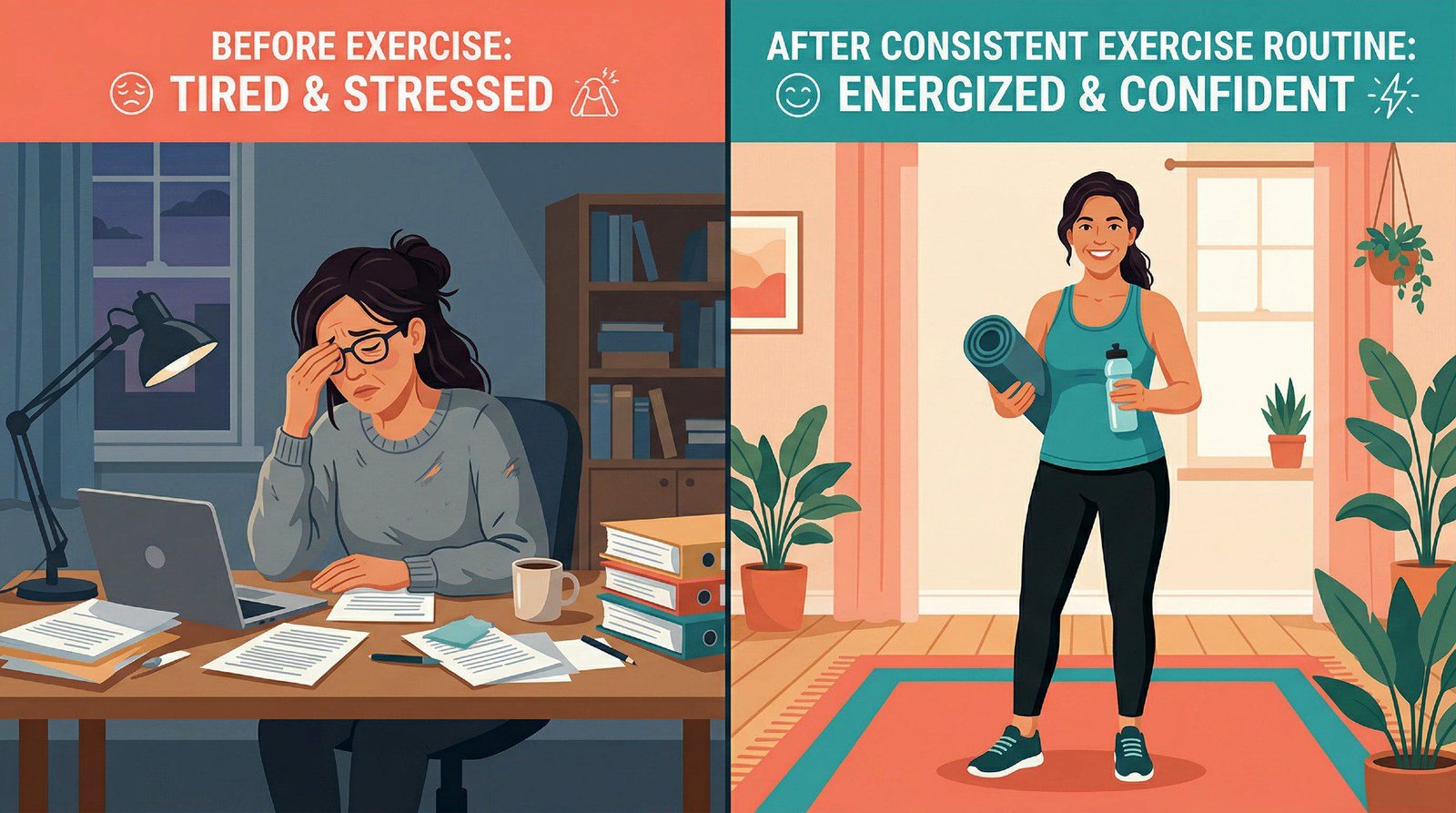
The women in our audience who say, "I know I should exercise, but I don't have time" are often the ones who would benefit most, because exercise is not competing with their energy. It is creating it. For more on breaking this cycle, see our guide on why you feel tired all the time.
Exercise, Sleep Quality, And Self-Confidence
Sleep: Regular physical activity improves sleep onset, sleep duration, and sleep quality — all of which are commonly disrupted in women managing high stress, perimenopause, or anxiety. A meta-analysis in Sleep Medicine Reviews found that moderate-intensity exercise improved sleep quality across all age groups.
Self-confidence: The relationship between exercise and self-confidence is bidirectional. Exercise produces measurable changes in body composition and functional capacity, which build genuine self-efficacy. It also provides a context in which women prove to themselves, repeatedly, that they can do difficult things. That evidence accumulates.
Energy levels: Exercise increases mitochondrial density in muscle cells — effectively upgrading your body's energy production capacity. Sedentary women who begin regular moderate activity consistently report feeling more energetic within 4–6 weeks, not less. The fatigue that many women associate with exercise is a startup cost, not the steady state.
For strategies to address emotional patterns that sometimes undermine fitness consistency, see our guide on using mindfulness to break the cycle of emotional eating.
Time To Take Fitness To The Next Level?
Now that you know the top reasons to exercise, what's your next step? We've created a free guide to help beginners get started with a simple, effective workout routine. Grab your free guide here to start feeling the benefits.
Your Next Step
You now have four evidence-based reasons — weight and metabolism, bone density, hormonal health, and mental wellbeing — and the research behind each. The question is not whether exercise works. It is what you do with that knowledge today.
Start small. A 20-minute walk three times this week is not a compromise — it is a beginning. From there, the evidence compounds in your favor.
For the complete nutrition and fat loss framework built specifically for the female body — and the habits that make exercise and healthy eating stick long-term — download the Lean Body Formula Special Report, free with email signup.
Related Articles
The Bottom Line
Four reasons. One consistent conclusion: your body was built to move, and every system in it works better when you do. Weight management, bone strength, hormonal balance, and mental health — none of these operate in isolation, and none of them is indifferent to whether you exercise or not.
The research is not ambiguous. Biology is not complicated. What often gets in the way is not knowledge — it is the gap between knowing and doing, and the mistaken belief that starting requires more time, more energy, or more readiness than you currently have.
You do not need to be at your ideal weight to begin. You do not need a gym, a perfect plan, or a version of yourself who already has this figured out. You need twenty minutes, three times this week, and the decision to treat movement as non-negotiable — not because it punishes you into a smaller body, but because it is one of the most effective acts of care you can offer yourself.
Start there. Build from there. The four benefits covered in this article do not arrive all at once, but they arrive — quietly and cumulatively — in women who simply keep showing up.
Embrace Inspiration:
Like What You Read? Be Sociable, Comment, And Share It! Thanks.
Glossary Of Key Terms
FAQ
Women face specific biological vulnerabilities that exercise directly addresses: accelerated bone loss during menopause, greater lifetime risk of osteoporosis, higher rates of anxiety and depression, and hormonal transitions (perimenopause, menopause) that significantly affect metabolism, mood, and body composition. Exercise is one of the few interventions with evidence across all of these.
Weight-bearing and resistance exercise stimulates osteoblasts — bone-building cells — through mechanical loading. Regular strength training and impact exercise slow bone loss during perimenopause and can increase bone mineral density, reducing fracture risk. Swimming and cycling, while beneficial cardiovascularly, do not provide a significant bone-building stimulus.
In most uncomplicated pregnancies, moderate exercise is not only safe but recommended by ACOG guidelines. Walking, swimming, yoga, and prenatal strength training support healthy weight gain, reduce gestational diabetes risk, improve mood, and support easier labor. Always consult your obstetrician for personalized guidance.
Yes — and it is one of the most important tools available. Menopause lowers estrogen (which supports fat burning and muscle maintenance) and slows metabolic rate. Resistance training directly counters both effects by building lean muscle that raises BMR, while improving insulin sensitivity that menopausal hormonal shifts reduce.
The evidence-based combination is: resistance training 2–3x per week (for muscle, bone, metabolism, and hormonal health) plus daily moderate-intensity movement such as walking (for cardiovascular health, cortisol reduction, and visceral fat). Yoga or flexibility work 1–2x per week supports recovery and stress reduction. See our beginner workout guide for where to start.
Yes, consistently. Regular moderate exercise increases mitochondrial density, improving cellular energy production. It also lowers cortisol and supports deeper sleep stages. Most women report measurable energy improvements within 4–6 weeks of establishing a consistent routine — not from pushing harder, but from moving regularly.
You Know Why. Now Learn Exactly How
Join thousands of women inside our community and receive our free guide: 10 Actions That Support Permanent Weight Loss — the practical, sustainable habits that translate everything you just read into real, lasting results.
No fad diets. No extreme plans. Just what the research actually supports — written for real women.
Great insight! Women must concentrate on their health since they sacrifice so much for family.
hello
Health and wellness have always been important to us no matter where we are in the world.
I will follow all of your tips,
and some problem my fitness that’s why I didn’t work properly .
I want to lose weight.
Tell me the best tips on how I can lose weight?
Great reading for me to know more benefits of women exercise. I really enjoy this article. Thank you for sharing it.
Always welcome. Thank you for a good word!