
Plant-Based Diets For Women Over 40: What The Evidence Actually Says
What Decades Of Research — And Real Women's Experience — Actually Show About Plant-Based Diets For Women

Sorry, there's no magic bullet. You gotta eat healthy and live healthy to be healthy and look healthy. End of story.
Morgan Spurlock
Summary (TL;DR)
A plant-based diet can meaningfully lower your risk of heart disease, type 2 diabetes, and menopausal symptoms — but only if you plan it properly. For women over 40, the evidence is actually more compelling than the generic wellness advice suggests: studies on 100,000+ postmenopausal women show real, measurable reductions in cardiovascular events and diabetes risk.
That said, it's not right for everyone, and going in without a plan is a recipe for fatigue, nutrient gaps, and giving up by week three. This guide breaks down what the evidence actually says, what the wellness industry glosses over, and how to start without overhauling your entire life.
Let me be upfront about something: plant-based diets are not right for everyone. And they're definitely not a magic fix that you can half-heartedly try for two weeks and expect results from. I've spent years reading the research on this — peer-reviewed studies, not wellness blogs — and the honest picture is more nuanced than most articles let on.
What got me frustrated doing this research wasn't finding bad science. It was finding selectively cited science. You'll see the same handful of studies passed around endlessly ("vegetarians live longer!") without the context that makes them meaningful. The actual evidence is interesting and worth knowing — but it requires sitting with some complexity.
What I can tell you is this: for women specifically, especially those of us navigating the hormonal shifts of perimenopause and beyond, there are some genuinely compelling reasons to eat more plants. Not necessarily to go fully vegan overnight, but to shift the balance. Here's what the data says.
Medical & Referral Disclaimer
This article is for informational and educational purposes only and is not a substitute for professional medical advice, diagnosis, or treatment. Always consult your physician or a qualified health provider before making significant dietary changes, particularly if you have a pre-existing condition or are managing symptoms related to menopause.
Key Takeaways
- A plant-based diet emphasises fruits, vegetables, whole grains, legumes, nuts, and seeds — it doesn't necessarily mean eliminating all animal products.
- Women who adhere to plant-predominant diets show a 23% lower risk of type 2 diabetes in studies following 145,000+ postmenopausal women.
- A 12-week randomised trial found that a whole-food plant-based diet with soy reduced moderate-to-severe hot flashes by 84% in menopausal women.
- Plant foods are naturally high in fibre, low in saturated fat, and cholesterol-free — but nutritional planning matters, especially for protein and B12.
- The biggest obstacle isn't willpower — it's not having a realistic starting point. Small, sustainable shifts outperform dramatic overhauls every time.
What A Plant-Based Diet Actually Is (And What It Isn't)
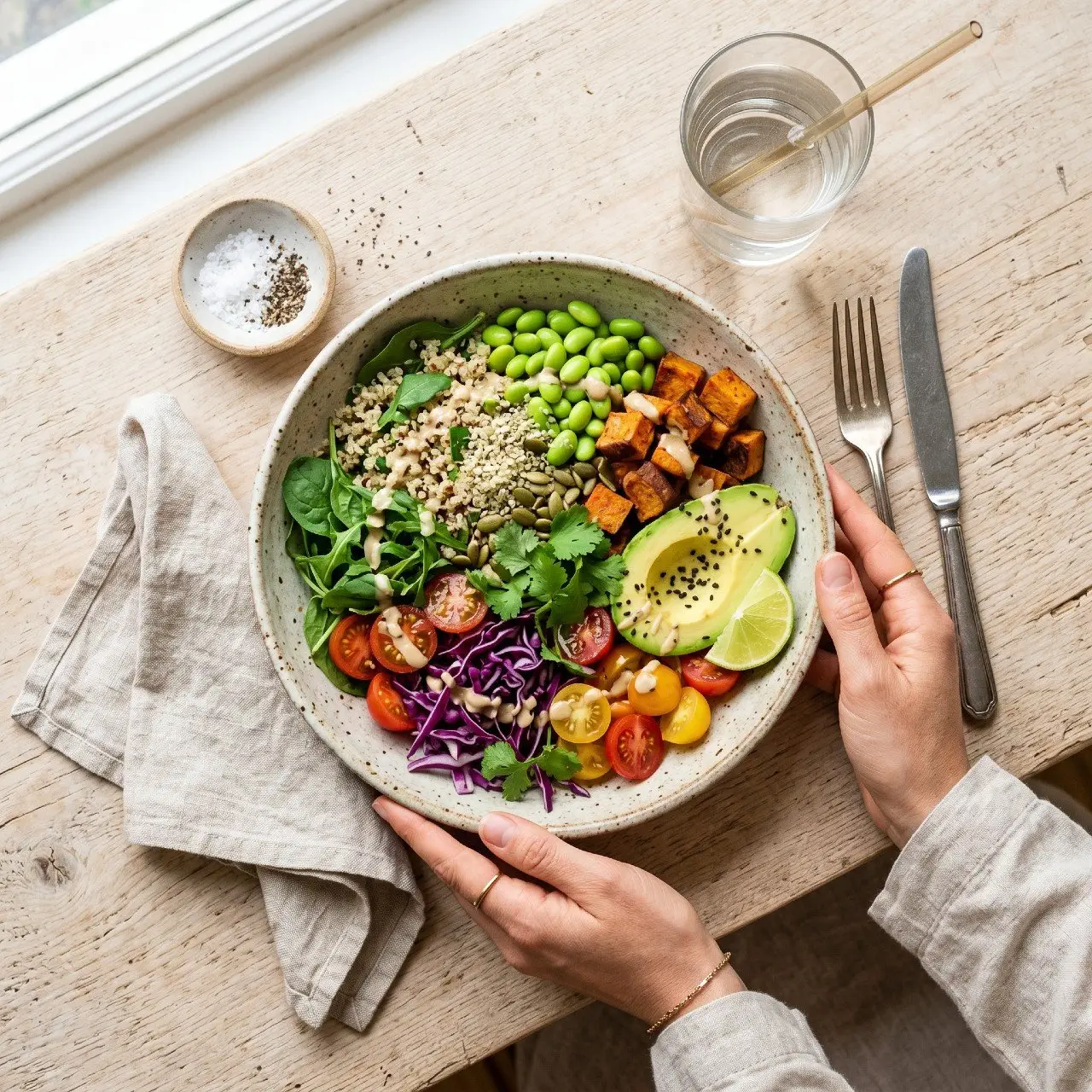
A plant-based diet doesn't automatically mean vegan. That's the first thing worth clearing up, because the conflation of the two is what makes a lot of women dismiss it before they've even considered it.
A plant-based approach means the majority of your calories come from plant sources — fruits, vegetables, whole grains, legumes, nuts, and seeds. You may still eat animal products, just in smaller proportions. A vegan diet, by contrast, eliminates all animal products for ethical or health reasons.
| Diet Type | Animal Products | Focus |
|---|---|---|
| Vegan | Eliminated entirely | Ethical + health |
| Whole-food plant-based | Minimised or excluded | Health optimisation |
| Plant-predominant / flexitarian | Reduced, not eliminated | Proportion + quality |
| Mediterranean | Moderate (fish, dairy) | Balance + longevity |
For most women over 40, the plant-predominant or flexitarian approach is the most sustainable entry point — and honestly, it's the approach most of the positive research is based on. You don't need to go all-in to see benefits.
The Heart Disease Evidence — And Why It Actually Matters For Women
A plant-based diet can meaningfully reduce your risk of dying from heart disease — and the evidence is stronger than most people realise. A combined analysis of more than 76,000 people found that vegetarians were 25% less likely to die from heart disease than meat-eaters.
That's not a trivial number. Heart disease is the leading cause of death for women — not just men — and women's risk increases sharply after menopause as estrogen protection drops away.
The mechanism isn't mysterious. Plant-based diets tend to be lower in saturated fat, higher in soluble fibre (which binds to cholesterol in the gut), and richer in potassium — all of which directly support cardiovascular health.
A 2022 cross-sectional study in PMC comparing flexitarians, vegans, and omnivores found that flexitarians showed cardiovascular risk factor profiles closer to vegans than to omnivores, which is encouraging if the idea of going fully plant-based feels like too much.
What this means practically: you don't need to eliminate meat. Shifting toward more whole grains, legumes, and vegetables — and eating meat as a side rather than the centrepiece — can move your cardiovascular markers in the right direction.
Plant-Based Eating And Type 2 Diabetes Risk
Women who eat more plants have a measurably lower risk of developing type 2 diabetes — and the evidence here is particularly robust for postmenopausal women.
A large prospective analysis of 145,299 postmenopausal women in the Women's Health Initiative found that higher adherence to a plant-based dietary pattern was associated with a 23% lower relative risk of type 2 diabetes over a 16-year follow-up — even after adjusting for BMI.
A separate meta-analysis of nine prospective cohort studies confirmed the same 23% reduction in T2D risk for those with greater adherence to plant-based patterns versus low adherence.
Why does this matter for women over 40 specifically? Because insulin sensitivity tends to decrease during perimenopause, the visceral fat accumulation that often accompanies hormonal changes further elevates T2D risk. A diet high in viscous fibre (oats, lentils, beans) and low in saturated fat and dietary cholesterol directly targets the mechanisms driving that increased risk.
One nuance worth noting: "unhealthy" plant-based diets — high in refined carbohydrates, white bread, fruit juice, and processed plant foods — did not show the same protective effect. A bag of crisps is technically plant-based. Quality matters.

The Perimenopause Angle: What Most Articles Leave Out
This is where the research gets genuinely interesting — and where most generic plant-based articles completely drop the ball. For women in perimenopause and menopause, a specific type of plant-based eating may do something remarkable: significantly reduce hot flashes.
A randomised controlled trial published in Menopause — the Women's Study for the Alleviation of Vasomotor Symptoms (WAVS) — found that a whole-food, plant-based diet combined with half a cup of whole soybeans daily reduced moderate-to-severe hot flashes by 84% over 12 weeks. Nearly 60% of women became completely free of moderate-to-severe hot flashes during the study.
The mechanism involves phytoestrogens — naturally occurring plant compounds, particularly isoflavones in soy, that have a mild estrogen-like effect in the body. Gut bacteria convert soy isoflavones into equol, a compound that some research suggests can directly reduce hot flash frequency and severity.
The phytoestrogen picture:
| Food Source | Phytoestrogen Type | Practical Amount |
|---|---|---|
| Edamame / whole soy | Isoflavones | ½ cup daily (as per WAVS trial) |
| Flaxseeds | Lignans | 1–2 tbsp ground, daily |
| Tempeh | Isoflavones | 85g serving |
| Lentils | Isoflavones + lignans | 1 cup cooked |
| Sesame seeds | Lignans | 1 tbsp daily |
Worth noting: not every woman responds to phytoestrogens equally. Individual gut microbiome composition affects how well you convert isoflavones to equol — roughly 30–50% of Western women are "equol producers." If you try the soy approach and don't notice a difference in symptoms after 8–10 weeks, that may be why.
Lower Blood Pressure — A Quieter Benefit
Eating more plants tends to increase your potassium intake, which directly lowers blood pressure by counteracting sodium's effect on the vascular system.
This is a benefit most vegetarians acquire almost automatically when they switch — not through any specific effort, but because potassium-rich foods (leafy greens, legumes, sweet potatoes, avocados) become dietary staples.
For women over 40, this matters because blood pressure tends to rise after menopause, increasing cardiovascular risk. The dietary shift toward more potassium and less sodium doesn't require a complete dietary overhaul — it can happen incrementally as you eat more plants.
Plant-Based Diets And Weight Management
It's genuinely harder to overconsume calories on whole plant foods. That's not a value judgement — it's physics. Vegetables, legumes, and whole grains are high in water, fibre, and bulk relative to their caloric density, which means you feel full on fewer calories. That's why most vegetarians tend to be leaner.
Moving away from meat and processed animal products tends to produce modest, sustainable weight loss for most women — not dramatic, but real. And for women in perimenopause, where the hormonal shifts actively promote fat storage (particularly around the abdomen), reducing caloric density while maintaining satiety is a genuinely useful strategy.
The caveat — and it's worth repeating — is that processed plant-based foods don't offer this advantage. Plant-based burgers, vegan cheese, and refined grain products can be just as calorie-dense as what they're replacing. The weight management benefit comes from whole, minimally processed plant foods, not from anything with "plant-based" on the label.
Common Fears And Honest Answers
The research is one thing. The reality of actually starting is another. Here are the concerns I hear most — and what the evidence actually says.
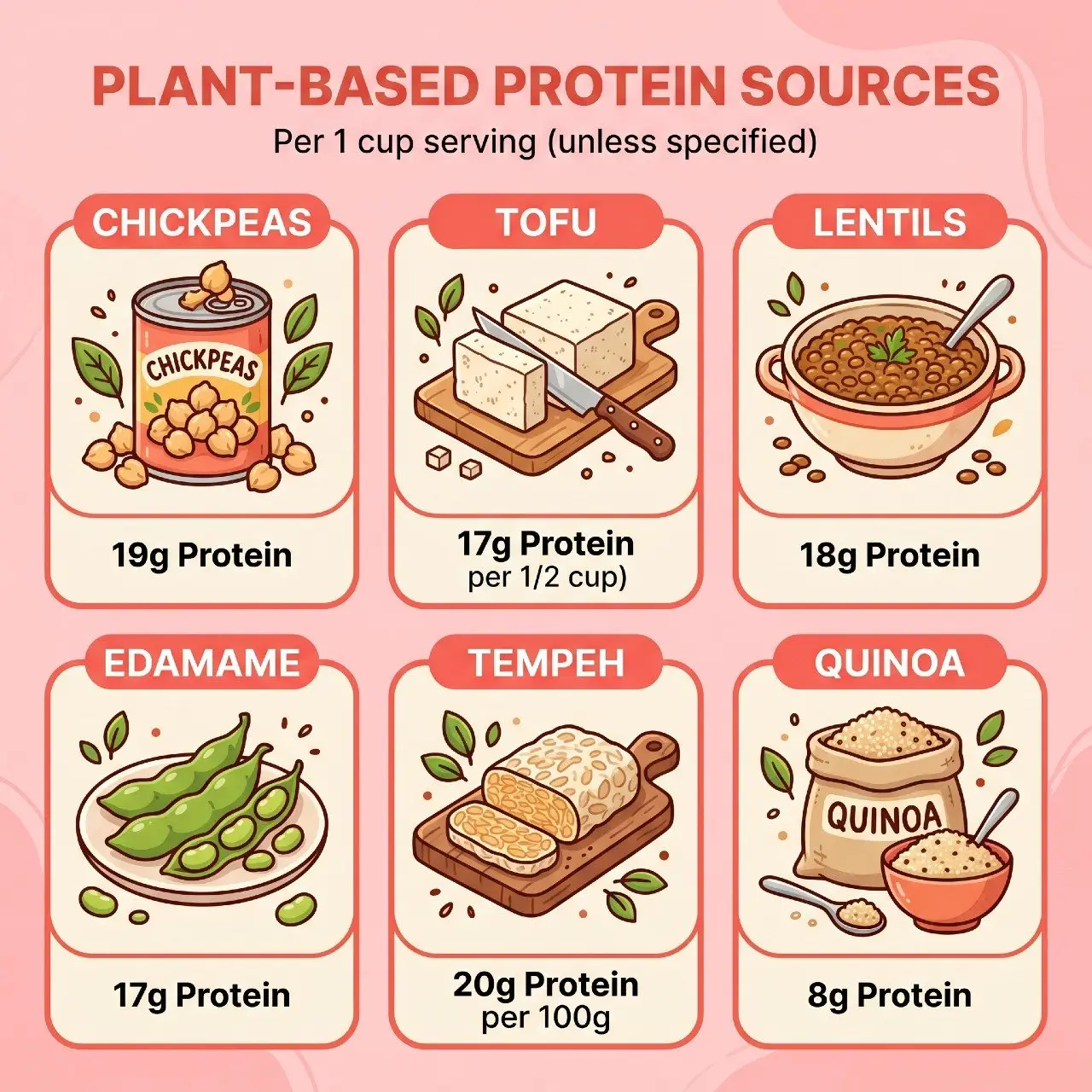
"I won't get enough protein." This is the #1 worry, and it's legitimate — but solvable. Women over 40 genuinely do need adequate protein to preserve muscle mass as estrogen declines. The good news: a 2024 systematic review and meta-analysis found no significant difference in muscle mass outcomes between plant-based and omnivorous diets when protein intake was adequate.
The keyword is adequate. You need to actively combine protein sources — lentils, tofu, tempeh, edamame, chickpeas, quinoa — and you may need to eat more total volume to hit your numbers. This takes planning. It's not impossible.
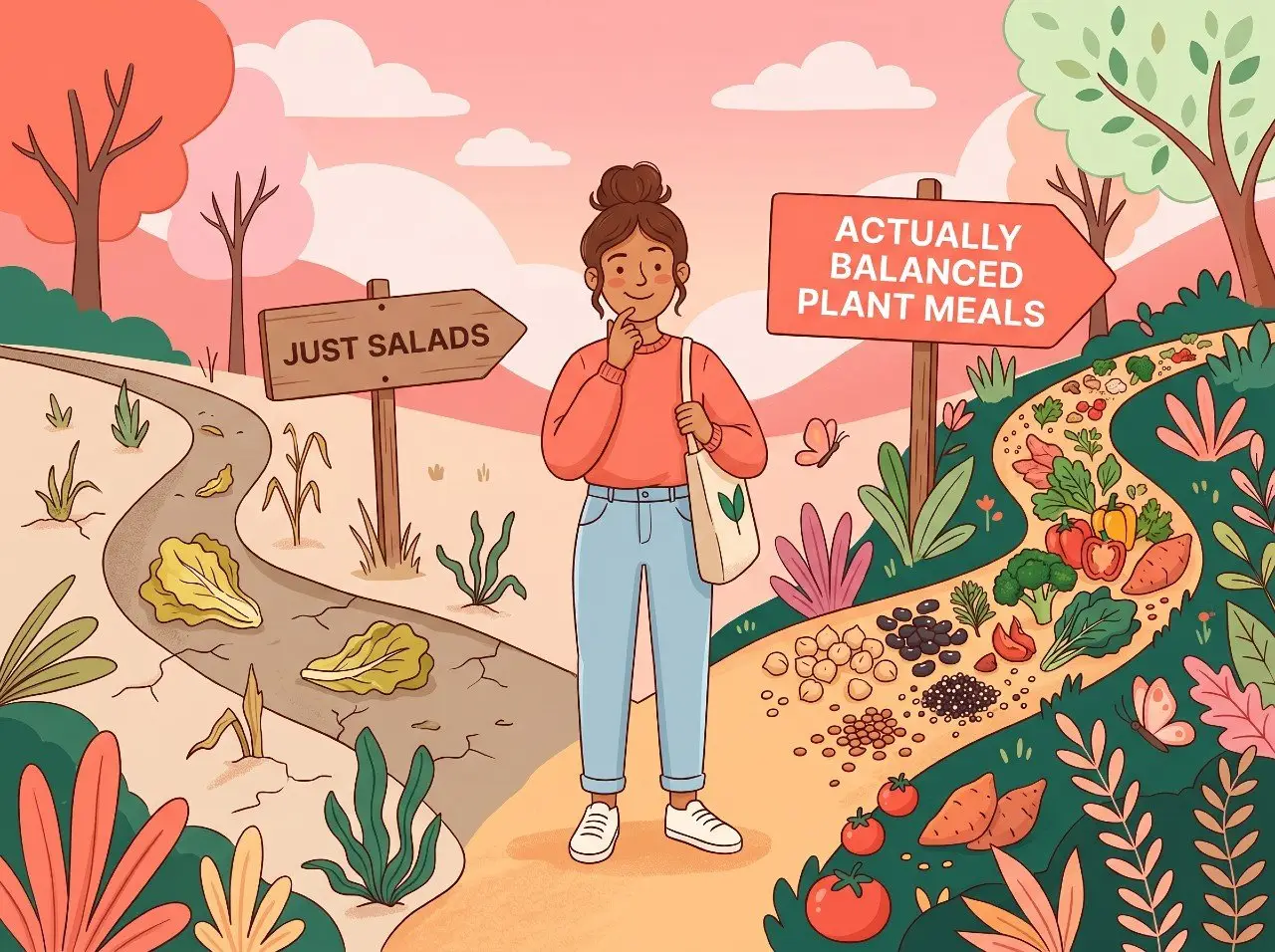
"I'll be hungry all the time." Only if you under-eat on protein and fat. A plant-based plate loaded with legumes, healthy fats (avocado, nuts, olive oil), and complex carbohydrates is extremely satiating. The women who struggle with hunger are usually eating salads-and-not-much-else rather than genuinely balanced plant-based meals.
"It's too complicated and expensive." The simplest plant-based foods — dried lentils, tinned chickpeas, oats, frozen vegetables, eggs if you include them — are among the cheapest foods in any supermarket. The expensive version of plant-based eating is the Instagram version. The real version is lentil soup and stir-fried vegetables.
"I tried it and felt terrible." Fatigue, brain fog, and low energy in the early weeks usually point to one of three things: not enough protein, not enough iron (found in legumes and dark leafy greens, but needs vitamin C for absorption), or not enough B12 (which requires supplementation on a fully plant-based diet). These are fixable nutritional gaps, not signs that plant-based eating is wrong for you.
"It's all-or-nothing." It really isn't. The research showing cardiovascular and metabolic benefits doesn't require complete meat elimination. The Women's Health Initiative data, the flexitarian cardiovascular study, both show meaningful benefits from more plants, not necessarily only plants.
Join Our Mailing List
Join thousands of women inside our community and receive our free guide, 10 Actions That Support Permanent Weight Loss — the exact behavioural shifts that make the difference between a two-week attempt and a lasting transformation.
No restriction plans. No guilt. Just what actually works — for real women with real lives.
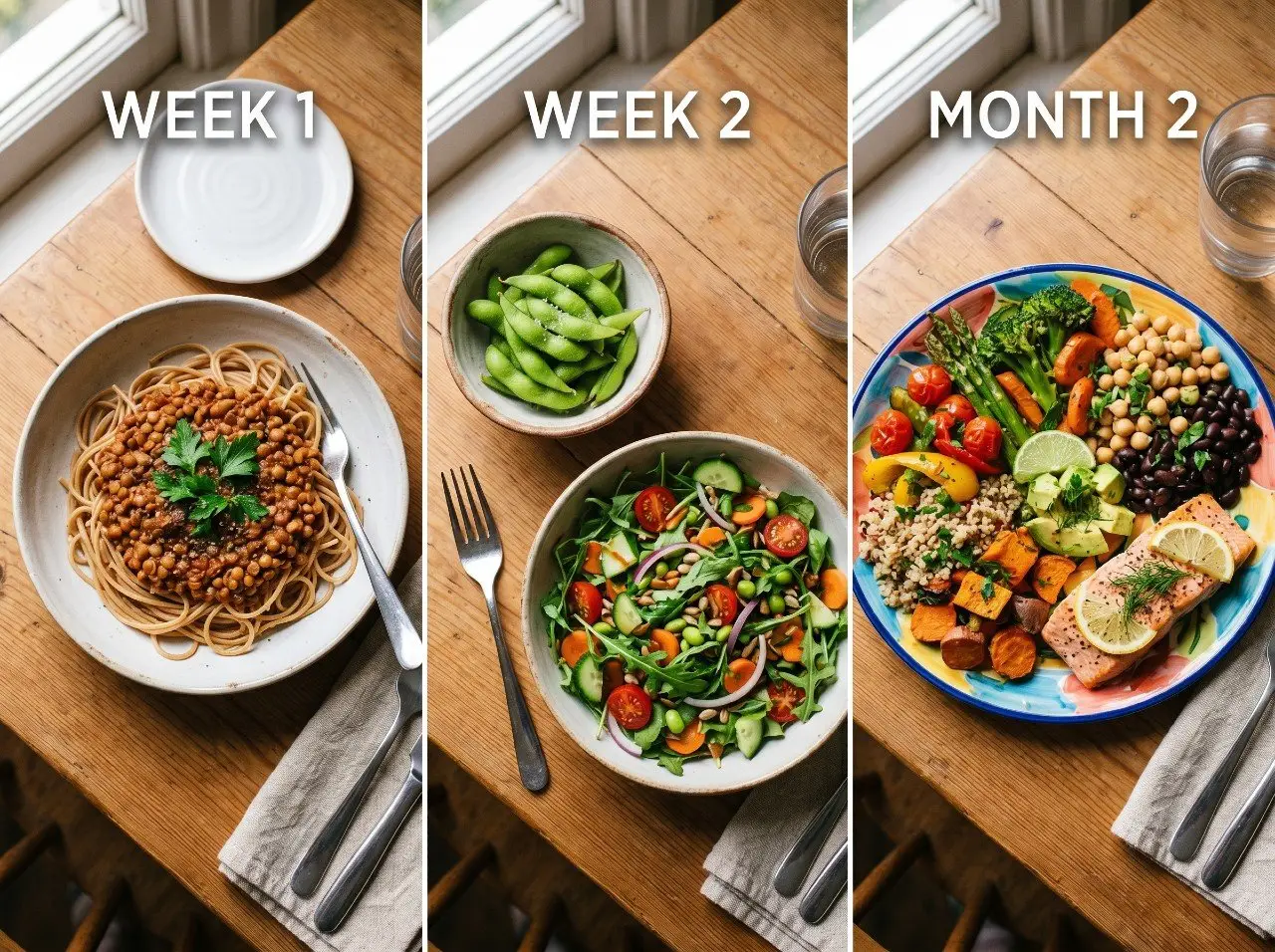
The WLBF Plant-Shift Framework: A Realistic Starting Point
Rather than a dramatic overhaul, here's a tiered approach based on the evidence:
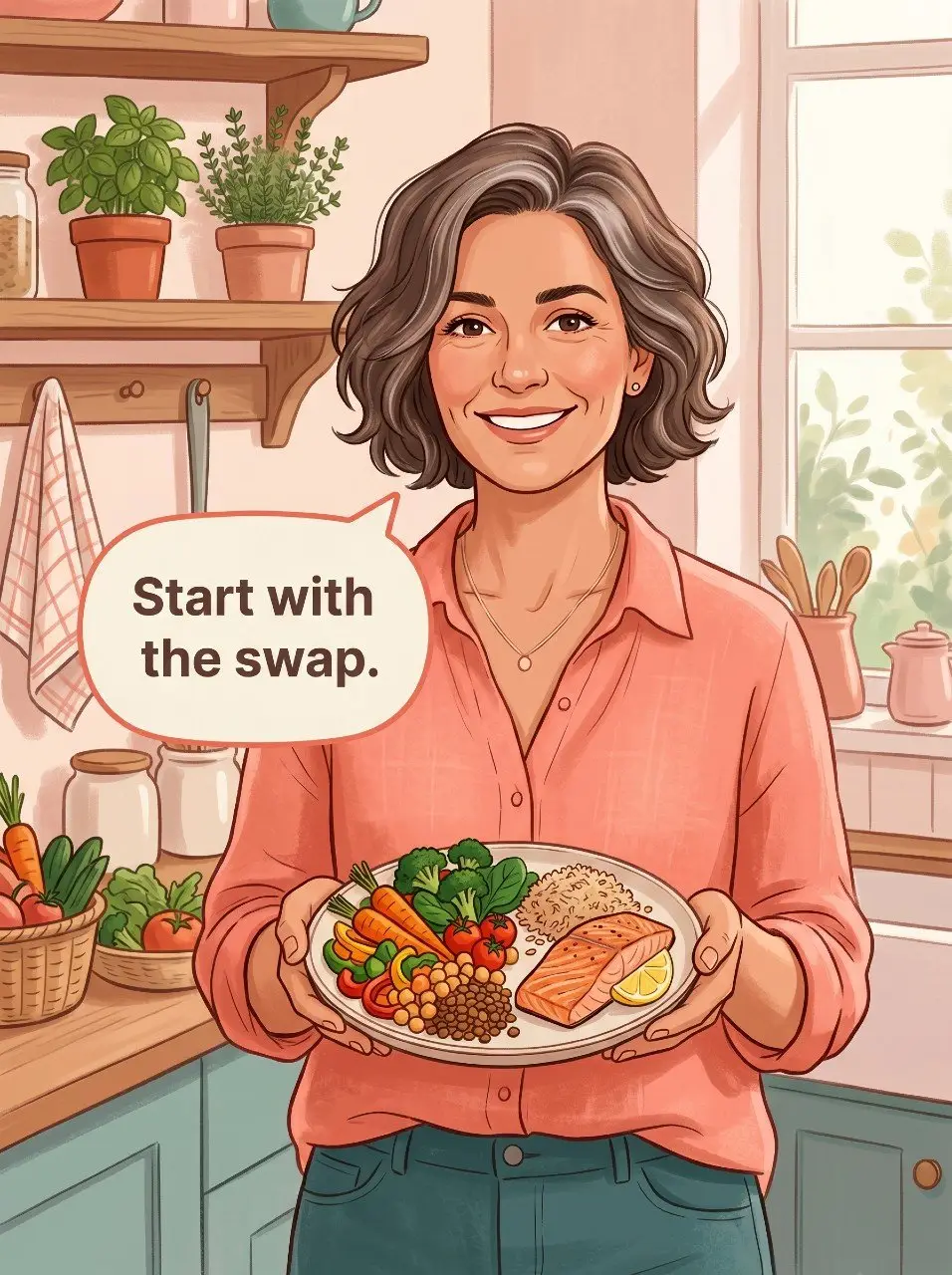
- Week 1–2: The Swap. Replace one meat-based meal per day with a plant-based protein source. Lentil bolognese instead of beef. Chickpea curry instead of chicken. Scrambled tofu instead of eggs (or keep the eggs — your call). Don't change anything else yet.
- Week 3–4: The Add. Add one serving of soy-based food daily if you're in perimenopause (edamame, tempeh, tofu, miso). Add a tablespoon of ground flaxseed to oats or smoothies. These small additions directly target the hot flash mechanism from the WAVS trial.
- Month 2+: The Proportion Shift. Aim for meals where plants take up 75% of the plate, and animal proteins (if any) take up 25%. You're now eating a plant-predominant diet with measurable evidence behind it — without having upended your entire relationship with food.
This isn't a diet plan — it's a proportion shift. And proportion shifts stick because they don't feel like deprivation.
Related Articles
The Bottom Line
A plant-based diet is one of the more evidence-backed approaches to improving heart health, reducing diabetes risk, managing weight, and — specifically for women in perimenopause — reducing hot flashes. The research is real, and the effect sizes are meaningful.
But it's not automatic. A badly planned plant-based diet is just a different way to eat poorly. The women who benefit are the ones who plan for protein, eat mostly whole foods, and don't expect the label to do the work.
You don't have to go all-in overnight. Start with one swap. Add the soy. See how you feel. The evidence says the direction is worth moving in — the pace is entirely up to you.
Glossary Of Key Terms
FAQ
No — and the distinction matters. A vegan diet eliminates all animal products for ethical or health reasons. A plant-based diet means the majority of your food comes from plant sources. You can follow a plant-based approach while still eating some meat, fish, dairy, or eggs — you're just eating them less, and eating plants more. Most of the positive health research involves plant-predominant patterns rather than strict veganism.
Prioritise soy-based foods (edamame, tofu, tempeh), ground flaxseeds, leafy greens, legumes, and whole grains. Soy isoflavones have the strongest evidence for reducing hot flashes. At the same time, legumes and whole grains support blood sugar regulation and cardiovascular health — both of which become more relevant as estrogen declines.
It can — but the mechanism is caloric density, not anything magic. Whole plant foods are high in fibre and water relative to their calories, which makes it genuinely harder to overeat. That said, processed plant-based products don't offer this advantage. The weight loss benefit comes from whole foods, not from anything with "plant-based" on the label.
By eating a variety of protein-rich plant sources throughout the day: lentils, chickpeas, black beans, tofu, tempeh, edamame, quinoa, and nuts. You don't need to combine specific proteins at every meal (the old "complete protein" rules have largely been revised), but you do need adequate total protein — around 1.2–1.6g per kilogram of body weight for active women over 40. Tracking your intake for a week when you start is genuinely useful.
On a fully plant-based (vegan) diet, B12 supplementation is non-negotiable — it's only reliably found in animal products. Iron and omega-3 (via algae-based DHA/EPA) are worth monitoring. On a plant-predominant diet that still includes some animal products, supplementation is less critical but still worth reviewing with your GP, especially if you're in perimenopause.
The evidence is more promising than most people realise. The WAVS randomised controlled trial found an 84% reduction in moderate-to-severe hot flashes with a whole-food, plant-based diet plus daily soy over 12 weeks. The effect is attributed to soy isoflavones and their conversion to equol by gut bacteria. Individual response varies — roughly 30–50% of Western women are equol producers — but it's a low-risk dietary change worth trying.
Not planning for protein and fat. Women who struggle on plant-based diets are usually eating high-carb, low-protein meals — a plate of vegetables and rice, or salads without beans or nuts. The fatigue, hunger, and early dropout that follow aren't signs the diet doesn't work; they're signs of a planning gap. Prioritise protein at every meal and include healthy fats (avocado, olive oil, nuts), and most of those issues disappear.