

Should I Eat Before Or After Working Out As A Woman — Backed By Sports Science, Cycle Biology, And A 30-Day Self-Test
T. COLIN CAMPBELL
Biochemist & nutrition researcher
First, nutrition is the master key to human health. Second, what most of us think of as proper nutrition – isn't.
Summary (TL;DR)
Should you eat before or after working out as a woman? Both — but not equally, and not the same way men do. Women run lower on stored carbohydrate (glycogen) and burn relatively more fat during exercise, so training fasted more often backfires for us than it does for men.
Eat a small carb-plus-protein snack 30–90 minutes before, then get 30–40g of protein within about 45 minutes after. The "before vs after" debate is the wrong fight. What matters is that protein and carbs show up around your session — and that the amounts shift with your menstrual cycle. Aim higher on protein in the luteal phase (the week or so before your period).
Here's what nobody tells you when you Google this at 6 am, standing in your kitchen, deciding whether the banana is a good idea or a betrayal.
Most of the advice you'll find was tested on men. The classic "anabolic window" studies, the fasted-cardio-burns-more-fat claims, the "just train on an empty stomach" influencer takes — overwhelmingly male subjects.
Women have different glycogen storage, different fat metabolism, and a hormonal cycle that changes how we use fuel from one week to the next. So when you feel shaky and lightheaded doing a fasted spin class while your male friend swears by it, you're not weak or doing it wrong. Your physiology is genuinely different.
I tracked my own training for 30 days across a full cycle to test this, and the pattern was hard to ignore. More on that below. First, the short version of what the research actually says — and why the question "before or after" has a quietly annoying answer: usually both.
Medical & Referral Disclaimer
This article is for general educational purposes and isn't medical or personalized nutrition advice. Individual needs vary with health status, training load, age, and medical conditions. If you have a history of disordered eating, amenorrhea (missing periods), diabetes, or any chronic condition, talk to a registered dietitian or physician before changing how you eat around exercise. The self-test described is one person's anecdotal experience, not clinical evidence.
Key Takeaways
- Eat before and after — the debate is a false choice. Fuel a small amount before, prioritize 30–40g protein after.
- Women shouldn't default to fasted training. Lower glycogen and hormonal sensitivity make under-fueling riskier for women than men.
- Post-workout protein is the higher-leverage habit: 30–40g within ~45 minutes, more as you age.
- Cycle-sync your fueling. Lean into carbs and tolerate fasted sessions in the follicular phase; eat before and load protein in the luteal phase.
- Total daily protein (1.6–2.0 g/kg) outranks split-second timing — but eating around training keeps your daily intake on track.
- Watch for under-fueling signs (lost periods, constant fatigue, stalled progress) — these point to RED-S, not "discipline."
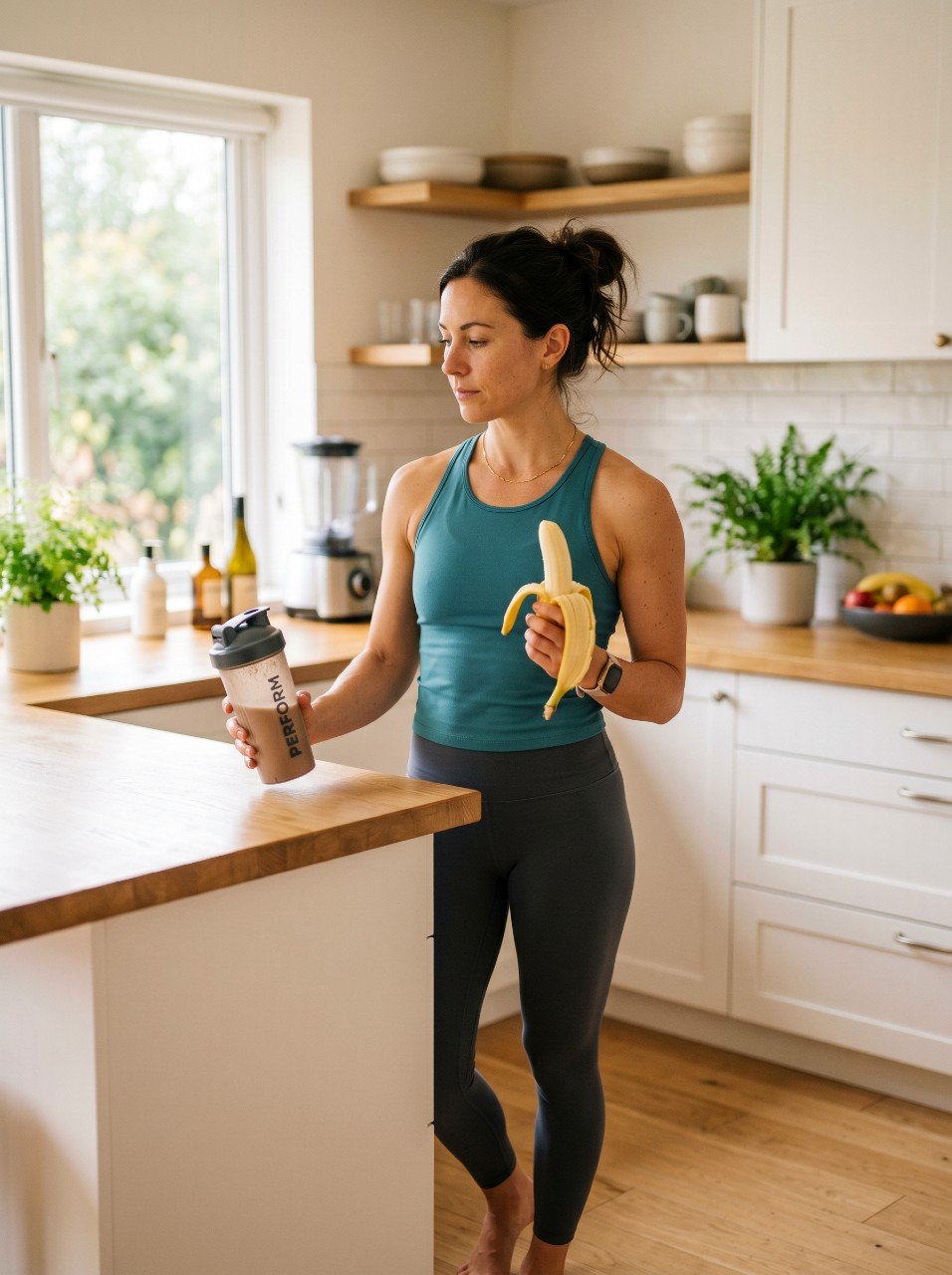
The Real Question Isn't Before Or After — It's "Did Protein And Carbs Show Up Around Your Workout?"
For years, the fitness world argued about the "anabolic window" — the idea that you had a frantic 30–45 minutes after lifting to slam protein or lose your gains. That panic has mostly been debunked.
The International Society of Sports Nutrition position stand on nutrient timing found that muscle protein synthesis stays elevated for three to four hours after a quality protein dose, and that total daily protein matters more than split-second timing.
But — and this is the part that gets lost — that research was built largely on male subjects, and it assumes you ate beforehand. The window is wider than people feared. It is not infinite, and for women, it appears to close a little faster.
So reframe it. You are not choosing before or after. You are making sure your muscles have amino acids, and your brain has fuel across the whole training block: the hour before, during (for long sessions), and the hour or two after.
Why Women Can't Just Copy The Fasted-Training Advice
Three female-specific factors change the math:
- Lower glycogen reserves. Women store less muscle glycogen than men relative to body size, so we hit the "empty tank" feeling sooner during hard or long sessions.
- Higher fat oxidation at rest. We already burn proportionally more fat during moderate exercise, so fasted cardio offers women less of the "extra fat burn" bonus it's sold on — and you usually make up any deficit later in the day anyway.
- Hormonal sensitivity to under-fueling. Chronic training-while-underfed is linked to menstrual disruption and bone loss (part of what's called RED-S, Relative Energy Deficiency in Sport). Women are diagnosed with this far more often than men.
Exercise physiologist Dr. Stacy Sims, who studies female-specific performance, puts it bluntly on the Huberman Lab podcast: women should generally avoid training fully fasted, and should prioritize protein soon after exercise — she recommends roughly 35g of quality protein within about 45 minutes post-session for reproductive-age women.
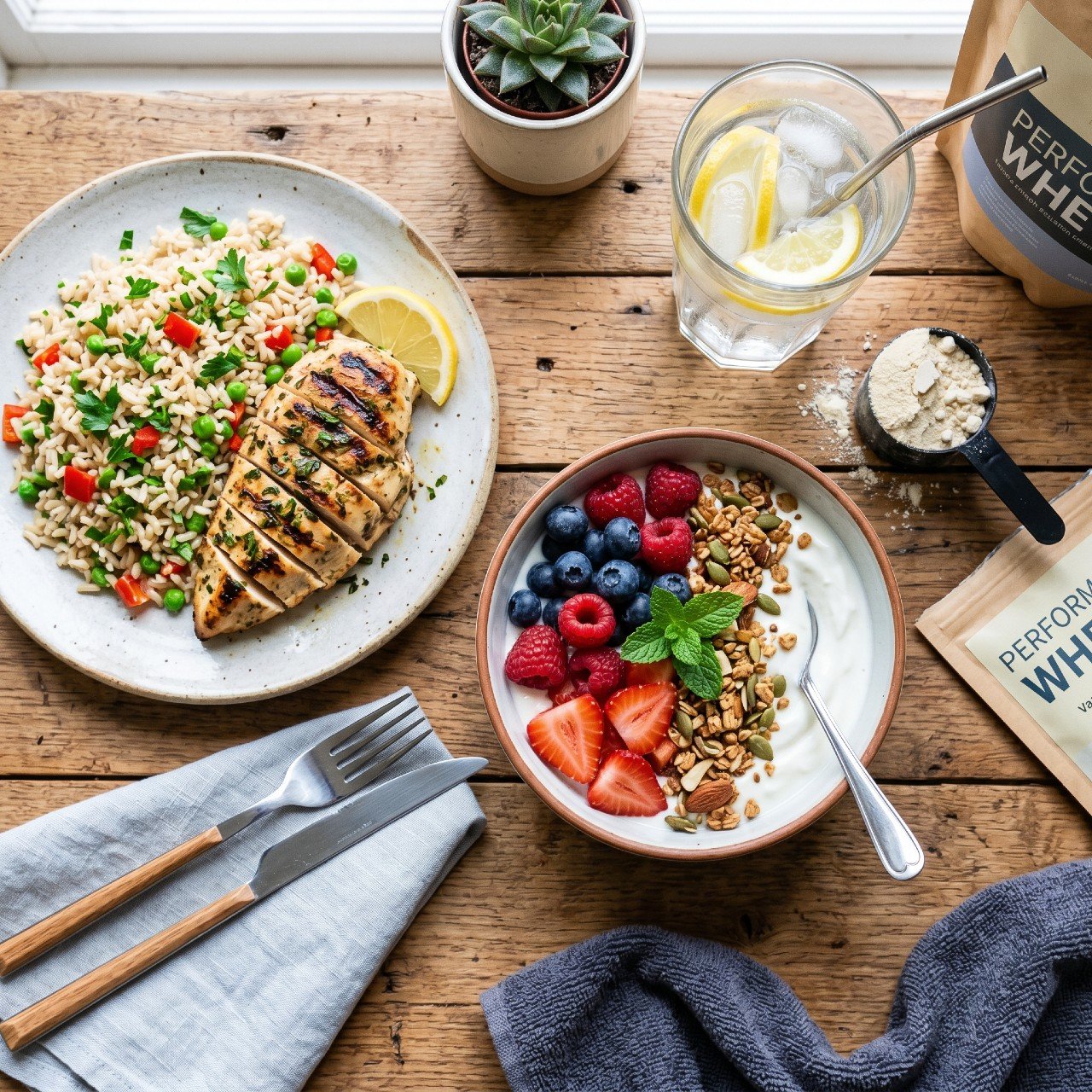
What To Eat Before Working Out As A Woman
You're fueling two things: blood sugar (so you don't crash) and muscle protein (so you have amino acids on board). You don't need much. You need something.
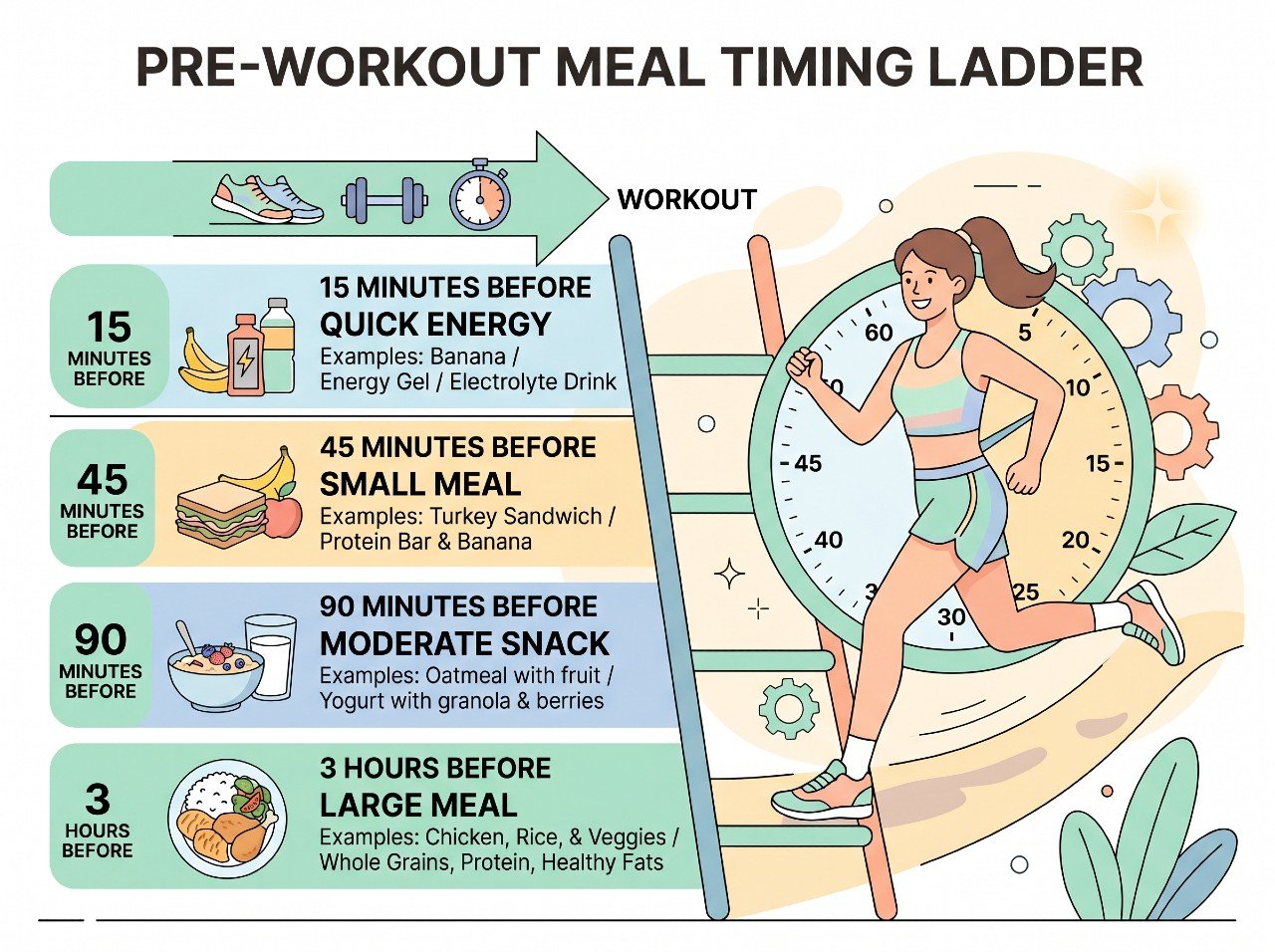
The Timing Ladder
How long before you train decides how much and what kind of food your stomach will tolerate.
| Time Before Workout | What To Eat | Example For Women |
|---|---|---|
| 2–3 hours | Full balanced meal: carbs + protein + a little fat | Oatmeal, eggs, berries; or chicken, rice, veg |
| 60–90 minutes | Smaller carb + protein combo | Greek yogurt with fruit; toast with eggs |
| 30–45 minutes | Quick-digesting carb + light protein | Banana with a scoop of protein; rice cakes + nut butter |
| Under 15 minutes | Fast carb only, if anything | Half a banana, a few dates, a sip of sports drink |
Healthline's pre-workout nutrition guide lines up with this: a complete meal 2–3 hours out, or quick-digesting carbs closer to go-time.
When Training Fasted Is Actually Fine
Not every session needs a pre-meal. Fasting is reasonable for women when:
- It's a short, easy session (under ~45 minutes of low-intensity work — a walk, light yoga, easy mobility).
- You genuinely feel fine and aren't dizzy, shaky, or weak.
- You'll eat protein promptly afterward.
Fasting is a bad idea when you're doing heavy strength work, intervals, or anything over an hour — especially in the luteal phase, when your body is already running hotter and burning more fuel.
What To Eat After Working Out As A Woman
This is the side of the equation women should usually weigh more heavily. Post-workout, your muscles are primed to absorb amino acids and rebuild, and for women, that uptake window appears to run a touch shorter than the male data suggests.
The ISSN position stands put the muscle-maximizing dose at 20–40g of high-quality protein, with each dose ideally containing around 10g of essential amino acids and 700–3,000mg of leucine.
For women specifically, Stacy Sims nudges that toward the upper end — pre-menopausal women aiming for ~30g within 30–45 minutes of exercise, climbing toward 40g (and higher in some of her guidance) as you reach peri- and post-menopause and "anabolic resistance" sets in: muscles get less responsive, so they need a bigger signal.
Build Your Post-Workout Plate
- Protein (non-negotiable): 30–40g. Whey or a blended shake, Greek yogurt, eggs, chicken, tofu, cottage cheese, or a protein-forward smoothie.
- Carbs (refill the tank): especially after long or hard sessions — fruit, rice, potatoes, oats. Heavier carb refeed matters most if you train again within 24 hours.
- Fluids and sodium: women lose meaningful sodium in sweat; rehydrate with water and a pinch of salt or an electrolyte mix.
A Quick Word On The "Anabolic Window" Myth
You will not lose your progress if dinner is 90 minutes after lifting, rather than 20 minutes. The window is hours, not minutes. The reason I still tell women to eat protein reasonably soon is practical, not panicked: it blunts post-exercise hunger, supports recovery before the next session, and stops the all-too-common pattern of training hard and then under-eating for the rest of the day.
The Cycle-Sync Layer: Why The Answer Changes Across The Month
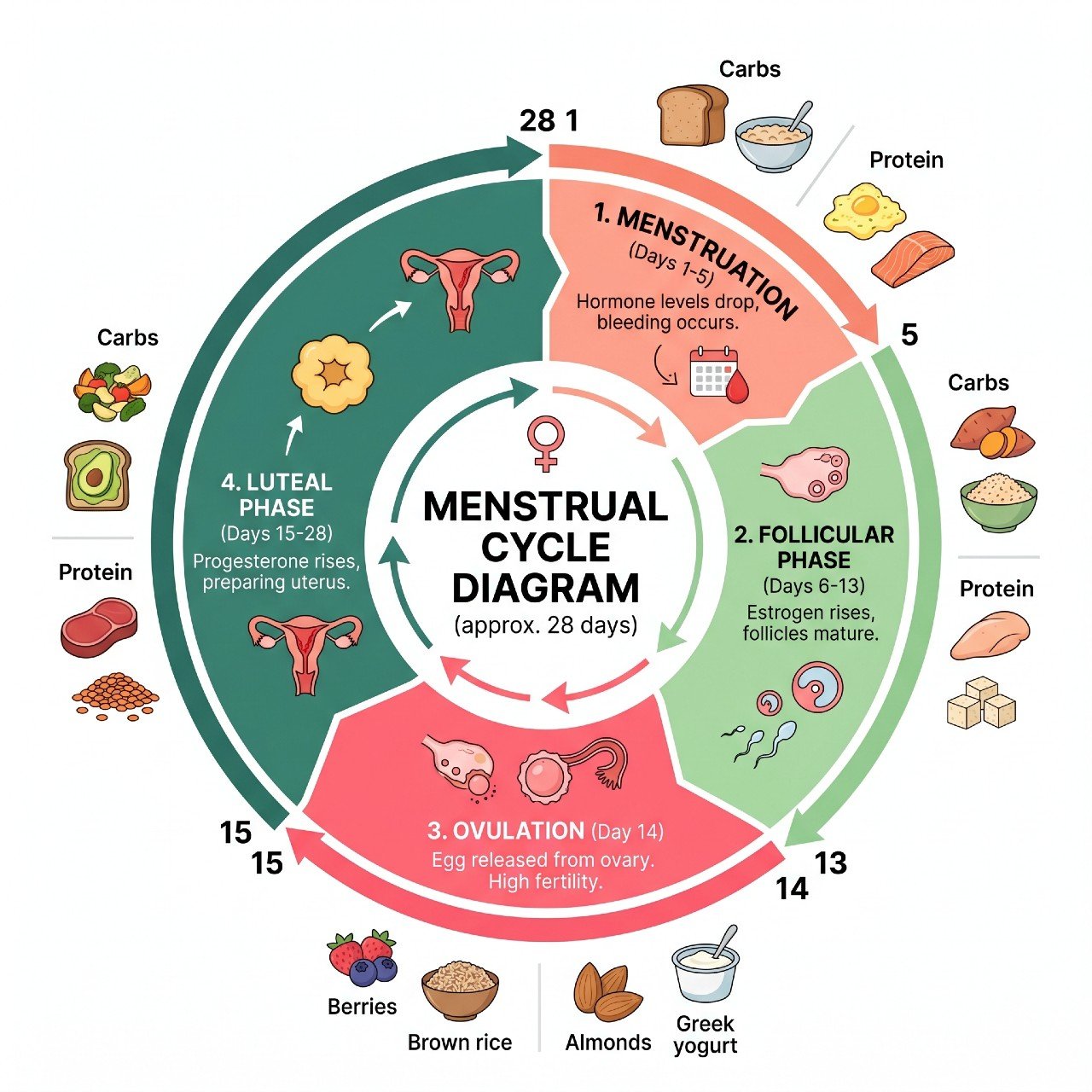
Here's the piece that makes female fueling genuinely different from a smaller version of male fueling. Your menstrual cycle shifts how you store and burn fuel, and your "before or after" strategy can flex with it.
| Cycle Phase | Roughly When | Fuel Tendency | Eating Strategy |
|---|---|---|---|
| Follicular (incl. menstruation) | Day 1 to ovulation (~day 14) | Better carb access, easier recovery, higher pain tolerance | Carbs fuel hard training well; you tolerate slightly leaner pre-fueling and even occasional short fasted sessions |
| Ovulation | ~Mid-cycle | Peak strength for many | Fuel fully before key strength/PR attempts |
| Luteal | After ovulation to next period | Higher body temp, more fuel burned, harder recovery, more protein needed | Eat before training; prioritize post-workout protein at the high end (35–40g); add carbs |
The research basis: some studies suggest daily protein needs are higher in the luteal phase — a woman might target roughly 1.6 g/kg of body weight in the follicular phase and aim for 1.8–2.0 g/kg in the luteal phase, per Sims' cycle-based guidance.
During the high-hormone luteal window, muscle protein synthesis becomes a little less efficient, which is exactly why getting protein in promptly after training matters more in those two weeks.
If you're new to cycle tracking, a period-tracking app or a basic calendar is enough to start spotting your own patterns. You don't need a lab.
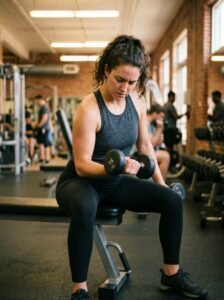
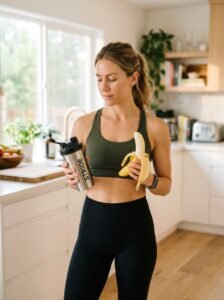
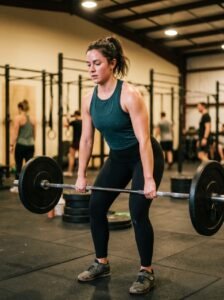
My 30-Day Self-Test: What Actually Changed
I'm one person, not a study — treat this as a worked example, not proof. I tracked four metrics across one full cycle: session energy (1–10), post-workout hunger, next-day soreness, and whether I hit my protein target. Two-week block fasted-ish (just black coffee before), two-week block fueled (small carb+protein snack before, 35g protein within 45 min after).
What stood out:
- Energy during luteal-phase fasted sessions was the worst data point by a mile — I averaged a 4/10 and cut two workouts short. Fueled luteal sessions averaged 7/10.
- Follicular-phase fasted sessions felt fine. Honestly, barely different from fueled — a 6 vs 7. This is the week the "train fasted" crowd is probably right for me.
- Post-workout protein within 45 minutes killed the afternoon snack spiral. On fueled days, I stopped grazing at 4 pm. That alone changed my total daily intake more than the timing of any single meal.
The takeaway I actually kept: fasted is a follicular-phase luxury, not a luteal-phase one. Your data may differ — which is the whole point. Run your own two weeks.
Eat Before Or After Working Out As A Woman
Should women eat before or after working out? Both. Eat a small carbohydrate-and-protein snack 30–90 minutes before training to stabilize blood sugar, then consume 30–40g of high-quality protein within about 45 minutes after to support muscle repair.
Women have lower glycogen stores and a shorter effective post-workout protein window than men, so fully fasted training is more likely to hurt performance for women — especially during heavy or long sessions.
Protein needs rise in the luteal phase (1.8–2.0 g/kg) versus the follicular phase (1.6 g/kg). Total daily protein matters more than exact timing, but for women, eating around the workout beats skipping it.
Now that you're up to speed on bot verification, why not take the next step in optimizing your gym routine? Grab your free guide here to unlock personalized workout plans and nutrition tips tailored for women.
Related Articles
The Bottom Line
Stop framing it as before or after. For women, the winning pattern is a light fuel-up beforehand and a solid protein hit afterward, dialed up or down depending on where you are in your cycle.
Skip the fasted-training dogma you inherited from male-default fitness culture — your body stores and burns fuel differently, and it's telling you so every time you feel shaky on an empty stomach. Feed the work. Then watch your energy, recovery, and strength catch up.
Glossary Of Key Terms
FAQ
Usually no. Women already burn proportionally more fat during moderate exercise, so fasted cardio's "extra burn" is smaller for us, and any deficit tends to even out over the day. Fasting is fine for short, easy sessions in the follicular phase — but not for heavy lifting, intervals, or long workouts.
A full meal 2–3 hours before, or a quick carb-and-protein snack 30–90 minutes before. Closer to go-time, keep it small and carb-focused (banana, dates, rice cakes) so you don't feel heavy.
About 30–40g of high-quality protein within roughly 45 minutes, leaning to the higher end if you're over 40 or in your luteal phase. The ISSN sets the muscle-maximizing range at 20–40g.
You don't have to, but many women feel and perform better when they do. The simplest version: eat more carbs around hard training in the follicular phase, and bump protein in the luteal phase. Track one cycle and see if it matches your own energy patterns.
No. The "anabolic window" is hours, not minutes — muscle protein synthesis stays elevated for three to four hours. Eating protein reasonably soon is about recovery and appetite control, not panic.
If it's an easy session, a few sips of water and going is fine, then eat protein after. For hard morning training, have a fast-digesting carb beforehand (half a banana, a couple of dates) and prioritize a 30–40g protein breakfast afterward.