Weight Loss Meal Prep Ideas For Women Over 40 That Keep You Full

Proper nutrition is the difference between feeling exhausted and getting the most out of a workout.
Summer Sanders ‧ Sports commentator and former Olympic swimmer
Summary (TL;DR)
The best weight loss meal prep ideas for women focus on 25-30 g of protein per meal, a few repeatable bases, and portion-control containers, not the lowest-calorie recipes you can find.
After 40, hunger tends to rise, and lean mass starts to slip, so a protein-first prep plan does more than a “diet food” one.
- The P.R.E.P. Method gives beginners a simple system: Protein anchor, Repeatable bases, Enliven with sauces, Portion into containers.
- Eleven recipes below list protein and calories per serving, calculated from USDA FoodData Central.
- One 90-minute session plus a short midweek top-up covers a full working week.
You’ve seen the photos. Twenty matching glass containers, colour-coded lids, a Sunday that looks like a restaurant kitchen. Then you try it, end up with five boxes of dry chicken and limp broccoli, and you’re raiding the biscuit tin by 4 pm. Or you prep faithfully every week, eat the “clean” salads, and the scale still won’t move.
Neither is a willpower problem. A lot of meal prep advice is written for 25-year-olds trying to eat as little as possible, and after 40, a box of leaves won’t hold you until dinner.
As I see it, losing weight after 40 means moving away from restrictive dieting toward a strategy that works with your biology, because the age-related changes in hormones and muscle mass can make plain calorie-cutting slow or ineffective.
This guide gives you a beginner-friendly meal prep system, eleven high-protein meal prep recipes with the numbers worked out, a grocery list, and a step-by-step first week. Let’s get your fridge working for you.
Medical & Referral Disclaimer
This article is for informational and educational purposes only. It is not a substitute for professional medical advice, diagnosis, or treatment. Always consult your physician or qualified health provider before starting any new diet or exercise program, especially if you have a medical condition, take medication (including weight-loss medication), or have a history of disordered eating.
Key Takeaways
- Weight loss meal prep for women works best when protein comes first. Aim for about 25-30 g per meal; the recipes below land between 26 and 36 g.
- Meal planning is linked to better diet quality. In a study of 40,554 adults, women who planned meals had lower odds of obesity.
- Hunger often rises during the menopause transition, so filling, protein-rich meals beat low-calorie “diet” boxes.
- Most cooked meal prep keeps 3-4 days in the fridge, so plan a short midweek top-up or freeze Thursday and Friday’s portions.
What Is Weight Loss Meal Prep And Why Does It Work?
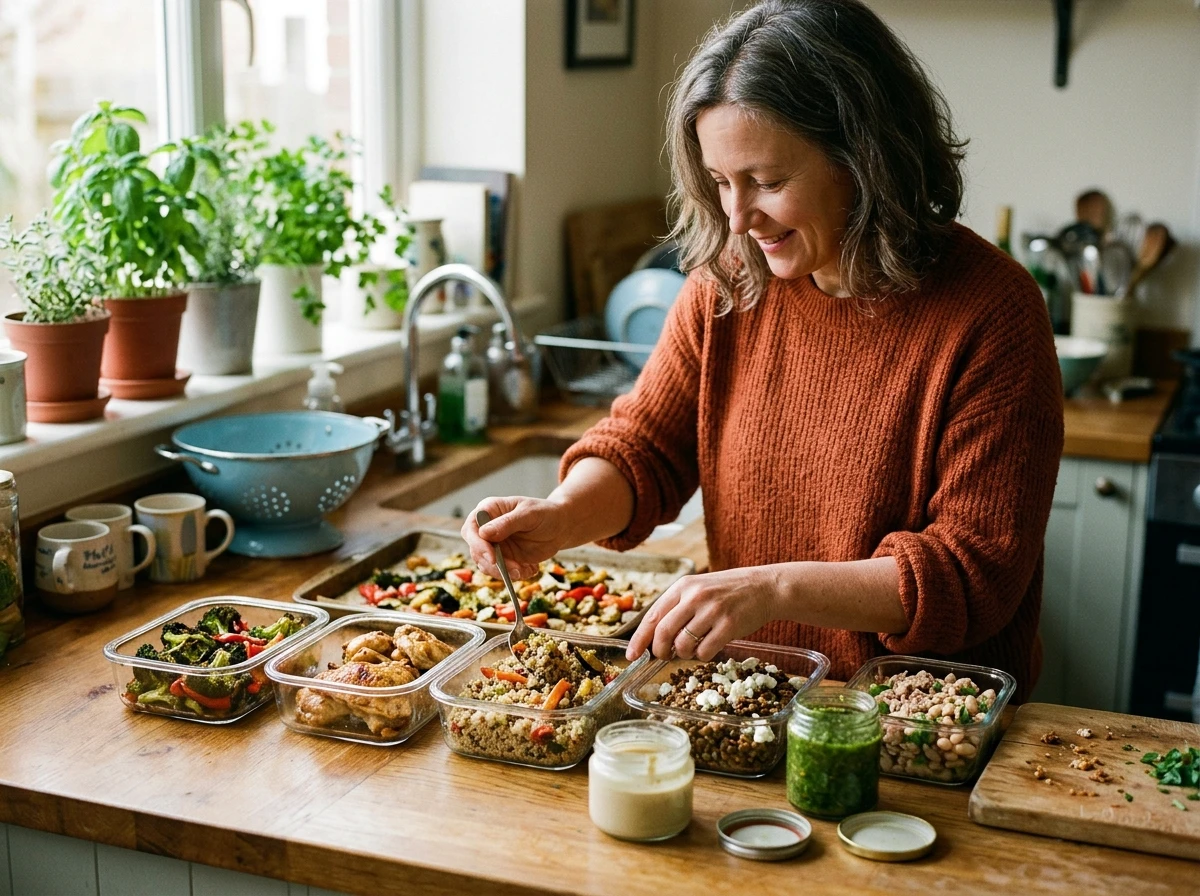
Weight loss meal prep means cooking and portioning some or all of your meals ahead of time, so the filling, balanced choice is the easy one when you’re tired or busy. It works mainly by taking daily food decisions off your plate and keeping your portions consistent.
The research backs the planning part. In the French NutriNet-Santé study of 40,554 adults, people who planned their meals had better diet quality and more food variety. Women who planned meals had 21% lower odds of obesity (odds ratio 0.79).
It’s an observational study, so it shows a link rather than proof that planning causes weight loss, but it fits what most of us know from experience: the meal you didn’t plan is usually the one that goes wrong.
For the psychology of why planning works, see the benefits of meal planning. This guide is the hands-on part: what to cook, how much and when.
| Benefit | How Meal Prep Delivers It | What It Means For Weight Loss |
|---|---|---|
| Time Savings | One batch cooking session replaces five or six separate cooking sessions | Less reliance on takeaways and ready meals on busy evenings |
| Budget Control | A fixed grocery list and planned leftovers cut impulse buys and food waste | Fewer unplanned snacks come home in the shopping bag |
| Portion Control | Food goes straight into containers at the right serving size | Consistent portions without weighing every meal |
| Consistent Nutrition | Protein, vegetables and whole grains are already cooked and ready | Easier to hit protein and fibre every day |
For more ways to keep costs down, see our guide to eating healthy on a budget, and the Mayo Clinic Health System’s tips on reducing food waste in your kitchen.
Why Does Meal Prep Need To Change After 40?
Because your appetite and body composition shift during the menopause transition, while most meal prep plans assume nothing has changed. The meals that kept you full at 30 may leave you hungry at 45.
Three findings explain why:
- Hunger goes up: In the Canadian MONET study, which followed 94 women through menopause, desire to eat, hunger and expected food intake all increased during the menopausal transition and stayed higher afterwards.
- Muscle goes down, fat goes up: In the SWAN (Study of Women’s Health Across the Nation) cohort, the rate of fat gain roughly doubled and lean mass began to decline about two years before the final period.
- Your metabolism isn’t “broken”: A large study of daily energy expenditure found it stays stable from age 20 to 60 once you account for lean mass. That’s good news, because the levers you can pull (protein, muscle, portions) are the ones that matter.
Put together, the job of weight loss meal prep after 40 is to protect muscle and manage hunger, not to shave every possible calorie. That’s where most plans go wrong.
The Contrarian Take: Protein First, Not Low-Cal First
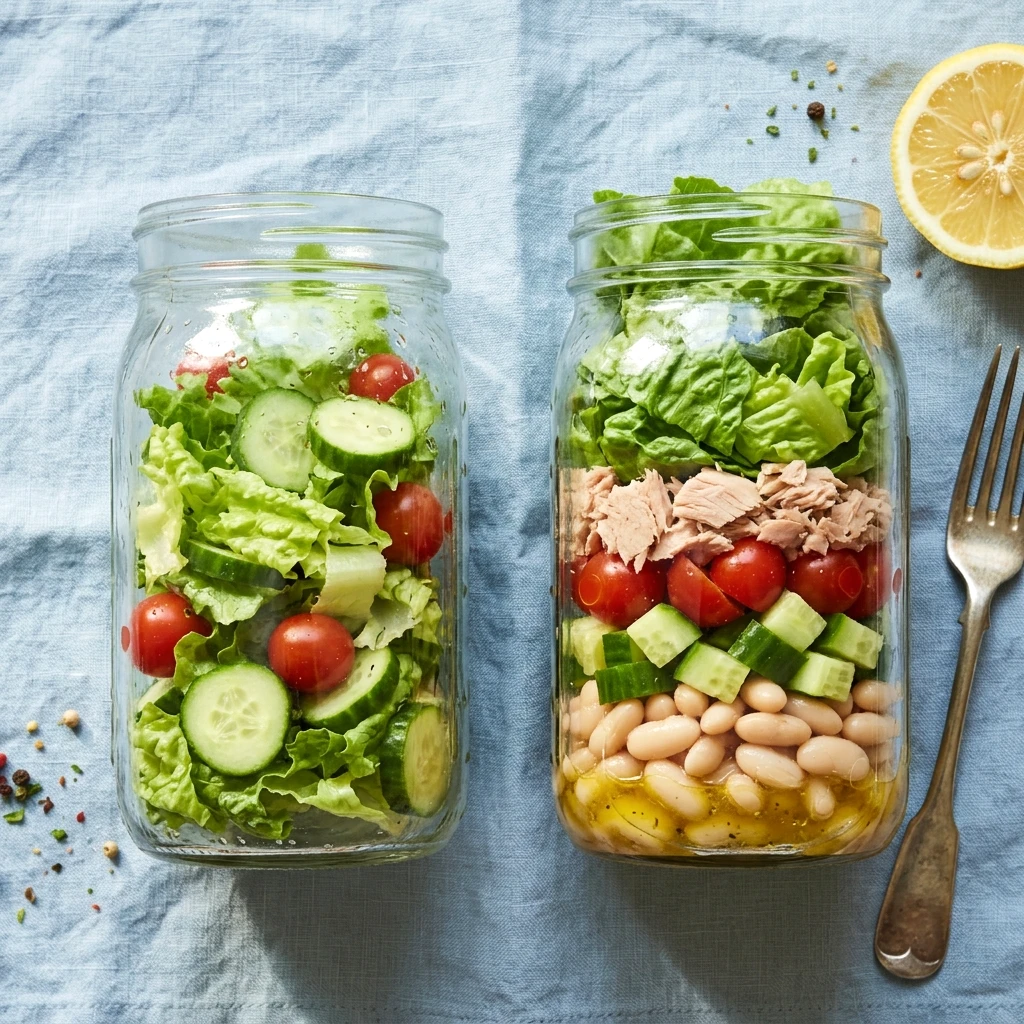
Low-calorie “clean eating” prep, like a mason jar of leaves and cucumber, tends to under-fuel women over 40 and sets up the 4 pm snack attack. Build each box around protein first, then add vegetables and a measured amount of carbs and fat.
A review of higher-protein diets in The American Journal of Clinical Nutrition found that, during calorie restriction, higher-protein diets led to greater fat loss and better preservation of lean mass than lower-protein ones.
The authors suggest about 25-30 g of protein per meal. The International Society of Sports Nutrition goes further and recommends that people cutting calories eat three to four meals with 20-40 g of protein each.
Protein isn’t magic, though. The same review found only a modest boost in fullness, and the benefits held mainly for people who stuck with the plan. That’s the real case for meal prep: it makes the higher-protein choice the default every day.
So yes, keep the mason jar salads and other low-calorie recipes. Just put a can of tuna and a handful of beans in the jar. Good fat loss nutrition is about what a meal adds, not only what it leaves out.
The P.R.E.P. Method: A Beginner’s Meal Prep System
The P.R.E.P. Method is a four-step weekly meal prep system: anchor every meal with Protein, cook Repeatable bases, Enliven them with rotating sauces, and Portion everything into containers. It turns a handful of ingredients into a week of meals without cooking a new recipe every night.
| Step | What You Do | Beginner Target | Why It Helps |
|---|---|---|---|
| Protein Anchor | Cook 2 proteins in bulk (e.g. chicken and lentils) | 25-30 g protein per meal | Supports fullness and lean mass during a calorie deficit |
| Repeatable Bases | Roast one tray of vegetables, cook one grain or starch | Half the box vegetables, a quarter starch | Fibre and volume for very few calories |
| Enliven With Sauces | Make 3 sauces and rotate them | 1 serving (about 1 tablespoon of nut butter or tahini, or 2 teaspoons of oil) | Stops food boredom without new recipes |
| Portion Into Containers | Pack only the meals you’ll actually eat this week | Start with 5 lunches, not 21 meals | Consistent portions and less food waste |
P: Anchor Every Meal With Protein
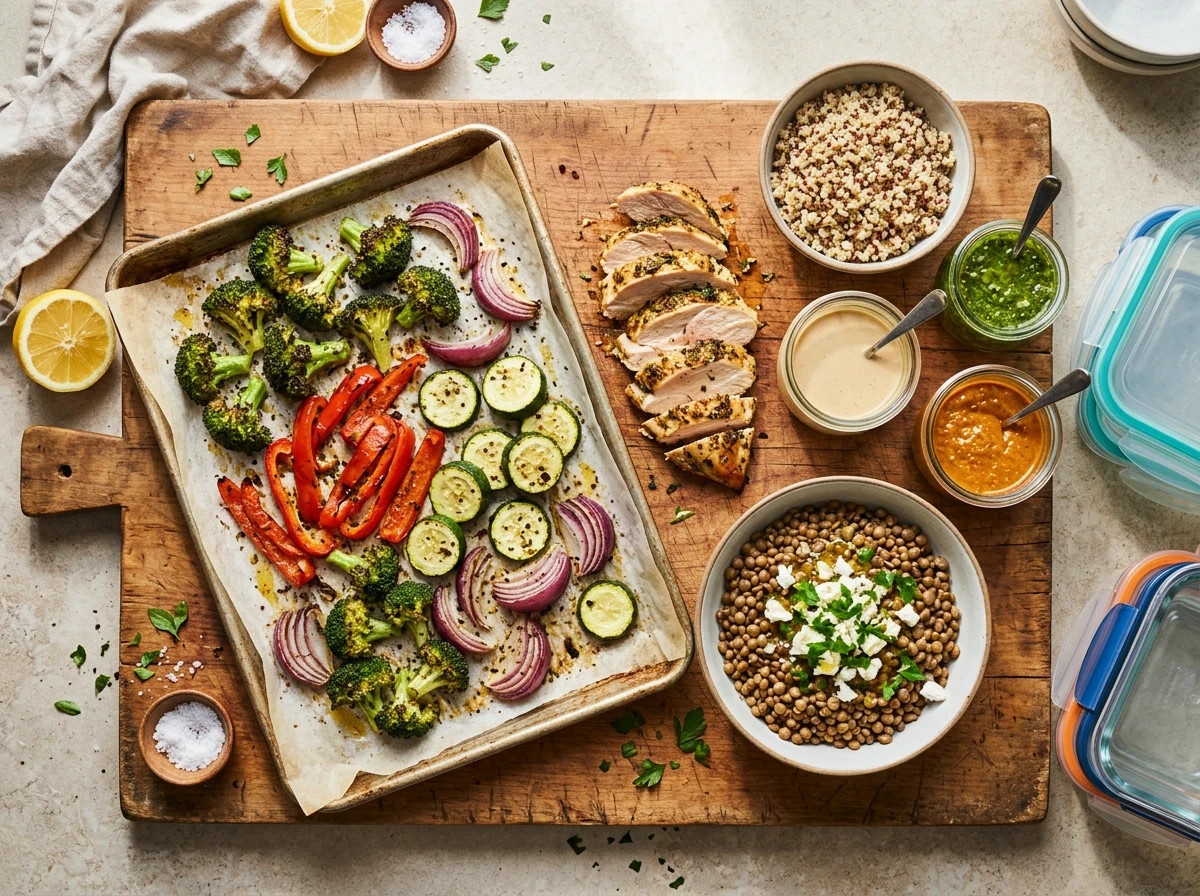
Pick two proteins per week, one animal and one plant-based, and cook enough for five to six servings. Two is enough for variety and still quick to cook.
Good lean protein recipes start with chicken breast, 93% lean turkey mince, salmon, eggs, Greek yoghurt and cottage cheese. Good plant-based proteins include lentils, firm tofu, edamame and beans. For a longer list, Medical News Today has a useful guide to lean protein sources.
R: Cook Repeatable Bases
A base is anything that bulks out the box: one sheet pan of roasted vegetables and one pot of grains or potatoes. Keep these plain and let the sauces do the flavour work.
Sheet pan meals are the beginner’s best friend, and the simplest of all batch cooking tips: one tray, one temperature, five portions. Toss broccoli, peppers, courgette and onion in a teaspoon of oil per serving, roast at 200°C (400°F) for 25-30 minutes, and you’ve got the vegetable half of five boxes.
E: Enliven With Three Rotating Sauces
Sauces are what stop meal prep from tasting the same by Wednesday. The same chicken and quinoa bowl becomes Middle Eastern with tahini-lemon, Thai-style with peanut-lime, or Mediterranean with salsa verde.
Sauces are also where calories hide: each one below is about 90-100 kcal per serving, so portion them into small pots.
P: Portion Into Containers
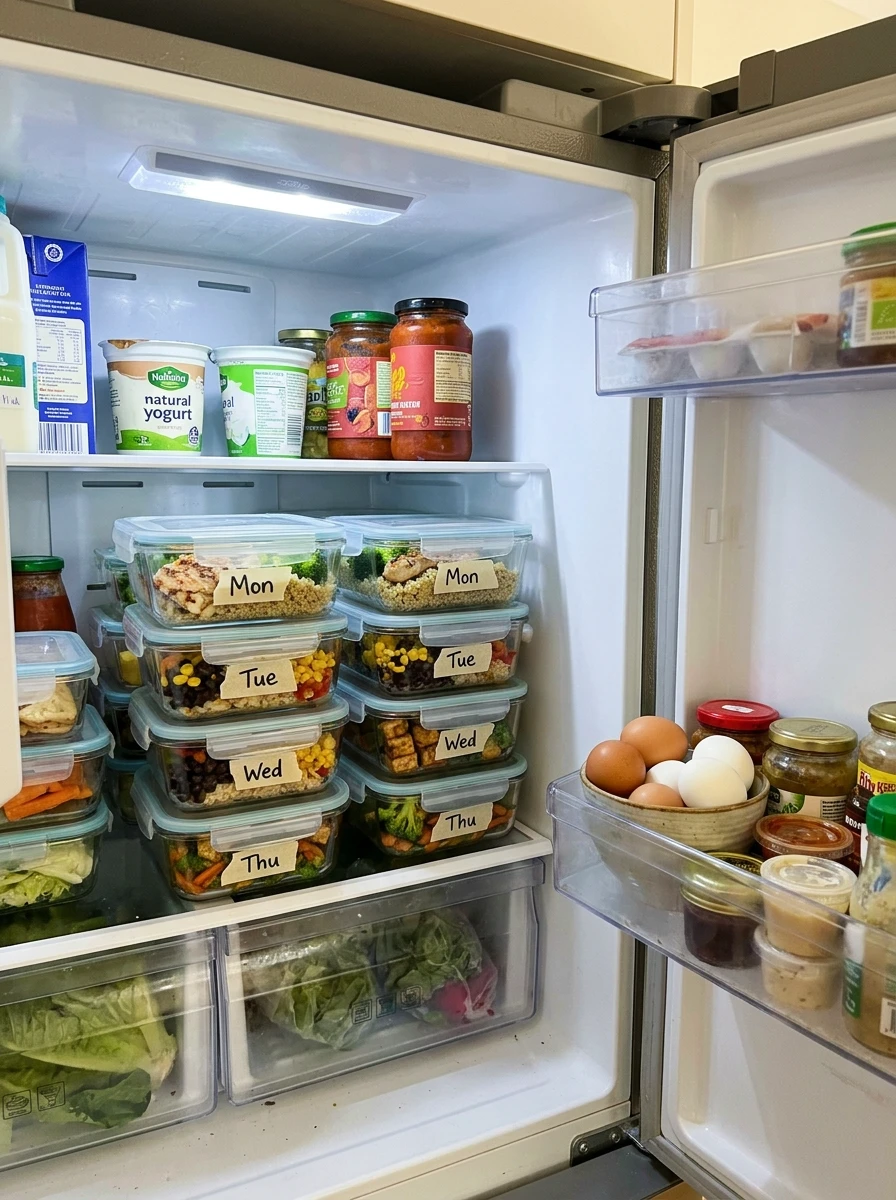
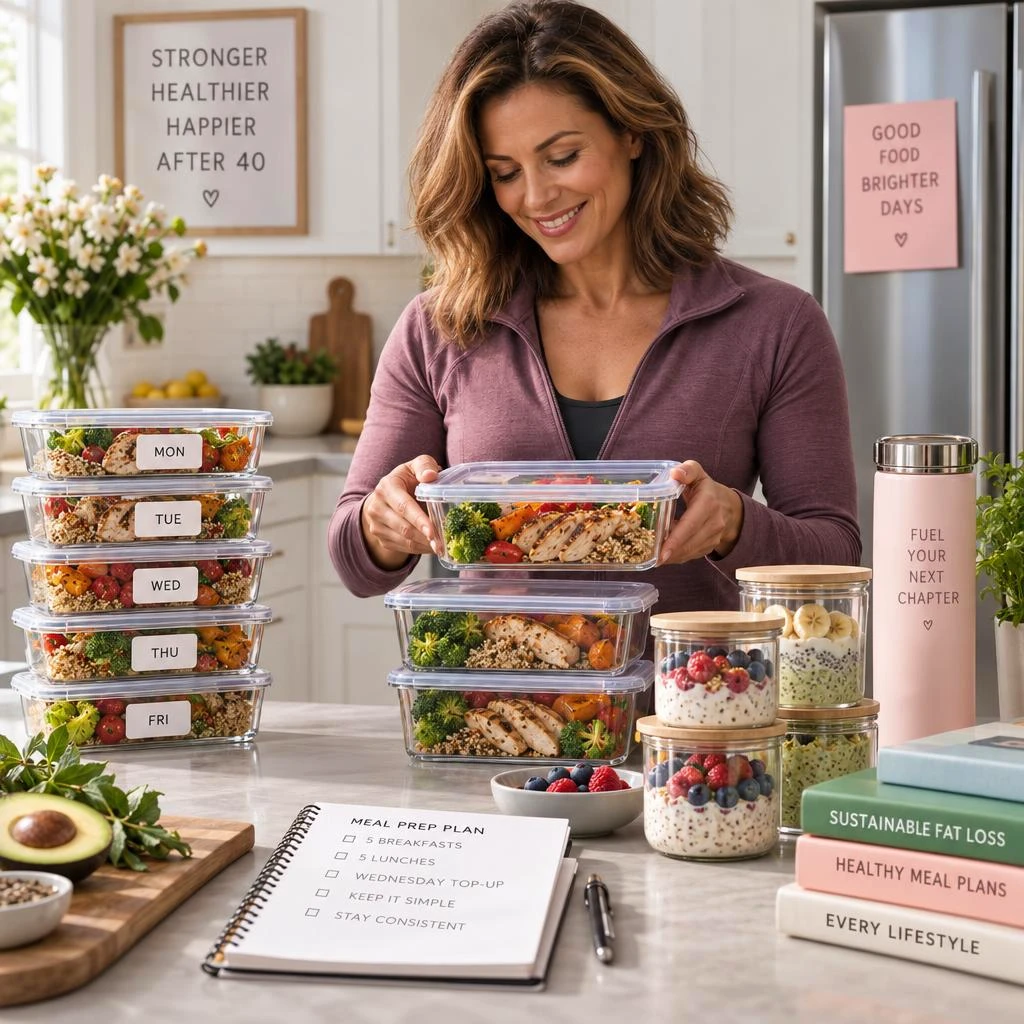
Portion control containers do the measuring for you: fill them once on prep day and every meal that week is the right size. You don’t need a matching set of twenty.
- Buy for the meals you’ll actually prep: Five lunch containers, a few breakfast jars and three small sauce pots are plenty for week one.
- Choose glass if you reheat at work: It doesn’t stain or hold smells, and it goes straight from fridge to microwave.
- Keep sauces separate: Dressing on the side keeps salads crisp until you eat them.
- Label with the day: A strip of masking tape with “Thu” on it stops you eating the newest box first.
Your First Week: A Beginner Meal Prep Plan
Start with lunches and breakfasts only, using one 90-minute session on Sunday and a 30-minute top-up on Wednesday. Dinners can come in week two, once the routine feels easy. Think of it as weekly menu planning with training wheels.
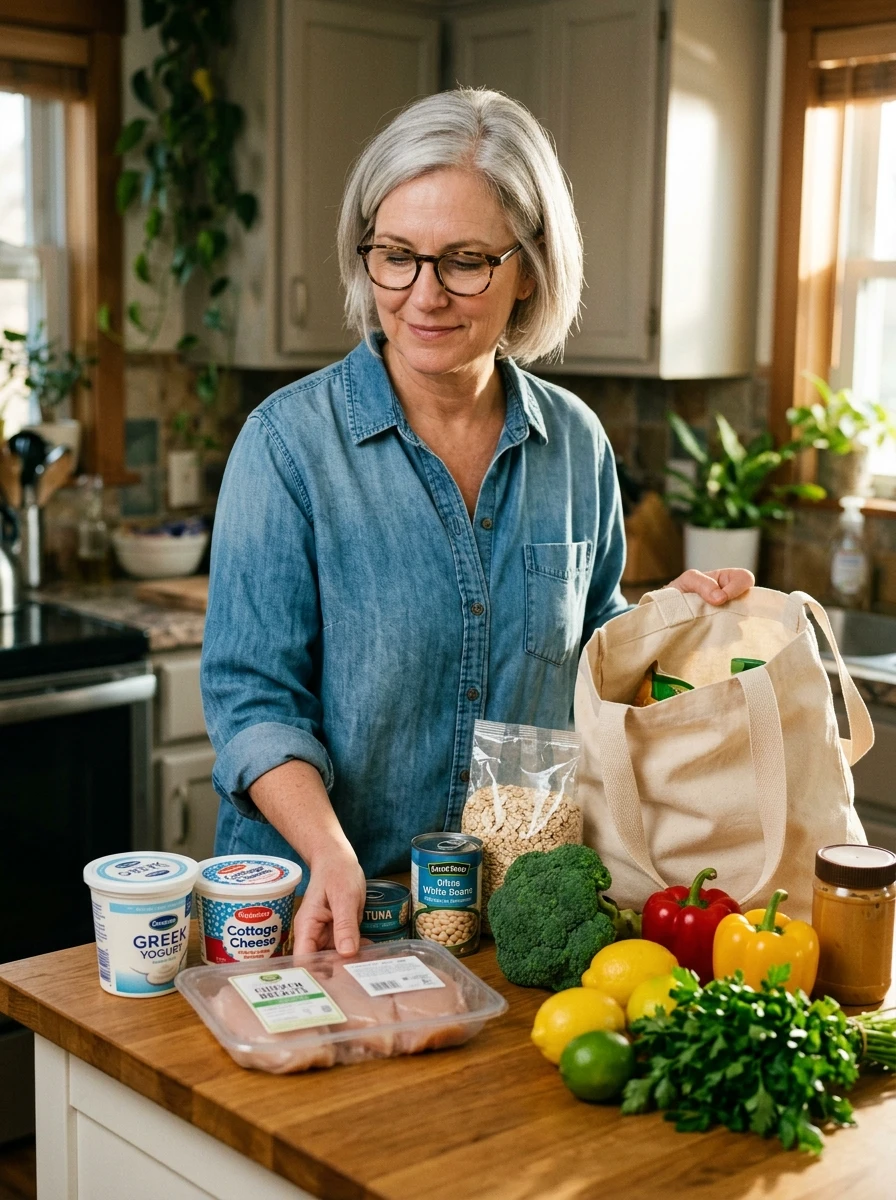
Here are the grocery list essentials for five lunches, five breakfasts and three snack boxes:
- Proteins: 600 g chicken breast, 2 cans of tuna in water, 1 can of lentils or 300 g dried, 500 g plain non-fat Greek yoghurt, 500 g cottage cheese
- Bases: Quinoa or brown rice, rolled oats, 2 heads of broccoli, 3 peppers, cucumbers, cherry tomatoes, romaine or mixed salad leaves
- Sauce makers: Tahini, natural peanut butter, low-sodium soy sauce or tamari, lemons, limes, fresh parsley, extra virgin olive oil
- Extras: Frozen edamame, frozen berries, chia seeds, a can of white beans
| Time | Sunday Session (90 Minutes) |
|---|---|
| 0-10 min | Oven on. Start the quinoa. Chop vegetables onto a sheet pan. |
| 10-40 min | Roast chicken and vegetables on two trays. Cook lentils if using dried. |
| 40-60 min | Make three overnight oats jars for Monday to Wednesday. Whisk the three sauces into small pots. |
| 60-80 min | Cool everything, then portion lunches for Monday to Wednesday. |
| 80-90 min | Pack snack boxes, label, and wipe down. Done. |
| Wednesday (30 min) | Assemble Thursday and Friday’s lunches (fresh tuna mason jars work well) and make two more overnight oats jars. |
Don’t skip the Wednesday top-up: most cooked leftovers and egg dishes are only safe for 3-4 days in the fridge, so freeze half the egg muffins on Sunday.
Weight Loss Meal Prep Ideas For Breakfast
The best healthy breakfast prep for weight loss gives you 25 g or more of protein before 10 am, because that’s when a pastry is hardest to resist. All three of these keep for 3-4 days.
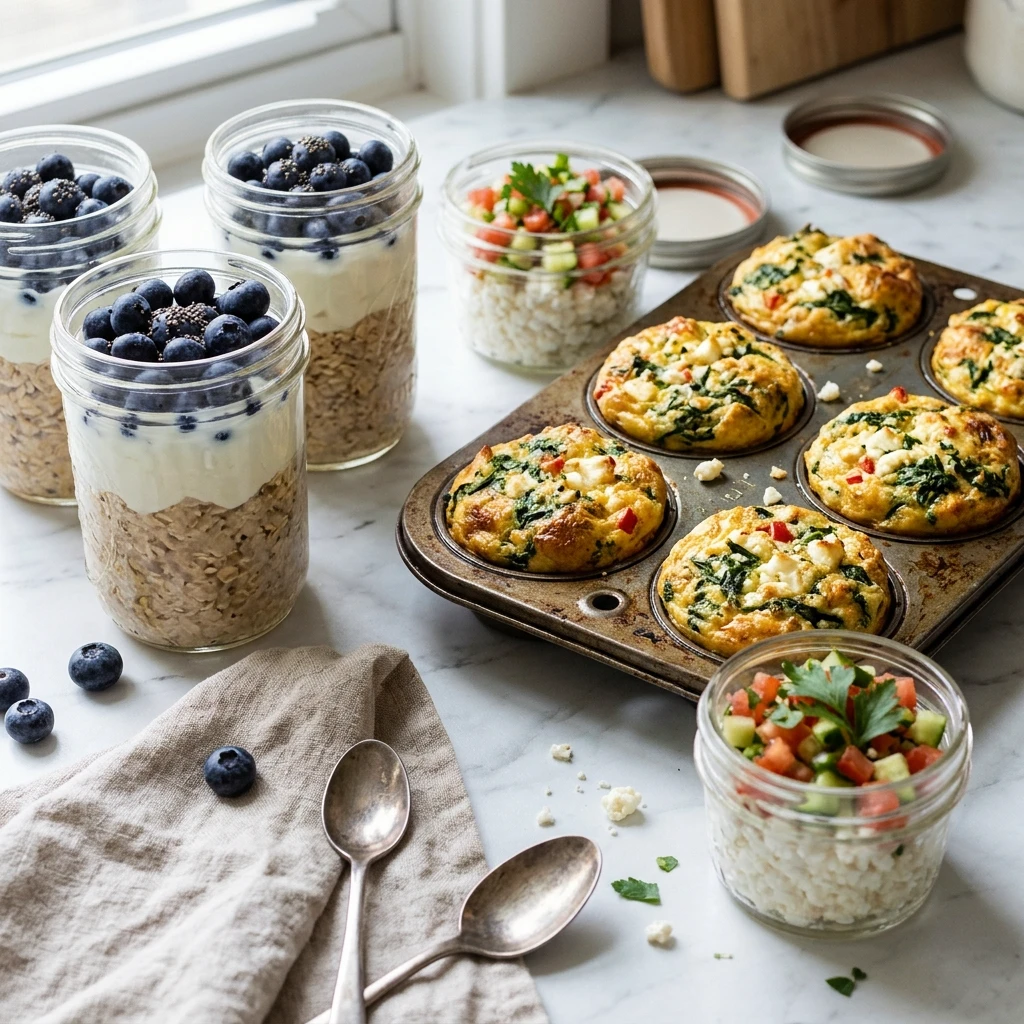
1. Protein Overnight Oats (26 g Protein, 365 kcal)
Mix 40 g rolled oats, 150 g plain non-fat Greek yoghurt, 100 ml skimmed milk and 10 g chia seeds in a jar. Top with 75 g blueberries. Refrigerate overnight and eat cold, or warm for a minute in the microwave.
2. Spinach And Feta Egg Muffins (28 g Protein, 268 kcal Per 3 Muffins)
Whisk 2 eggs with 100 g liquid egg whites per serving. Stir in chopped spinach, red pepper and 20 g crumbled feta. Bake in a muffin tin at 180°C (350°F) for 20 minutes. Reheat for 30-45 seconds and eat with fruit.
3. Savoury Cottage Cheese Jar (26 g Protein, 283 kcal)
Layer 230 g cottage cheese with chopped tomato, cucumber, parsley, a teaspoon of olive oil and a sprinkle of chia seeds. It tastes like a Greek salad you can eat with a spoon, and it’s ideal for anyone who doesn’t like sweet breakfasts.
Healthy Meal Prep Recipes For Lunch And Dinner
Lunch meal prep and quick prep dinners follow the same formula: one protein, a base of vegetables and grains, and a sauce kept in its own pot. Each of these is macro-friendly and fits in a standard container.
Customisable Meal Prep Bowls And Easy Lunches
4. Chicken, Quinoa And Roast Veg Bowl (35 g Protein, 382 kcal). 120 g raw chicken breast, roasted with 120 g broccoli and 60 g red pepper in 7 g olive oil, over 100 g cooked quinoa. Rotate the sauce daily.
5. Lentil, Feta And Edamame Bowl (28 g Protein, 364 kcal). 150 g cooked lentils, 80 g edamame and 25 g feta over salad leaves with tomato and cucumber. It also has 18 g of fibre, the most of any recipe here. Use salsa verde.
6. Tuna And White Bean Mason Jar Salad (29 g Protein, 278 kcal). Dressing at the bottom (7 g olive oil plus lemon juice), then 80 g white beans, cucumber, tomato and 110 g drained tuna, with leaves on top. Shake into a bowl at lunchtime. This is the protein-first version of the classic mason jar salad.
Batch Cooking For Weight Loss: Sheet Pan And Stir-Fry Dinners
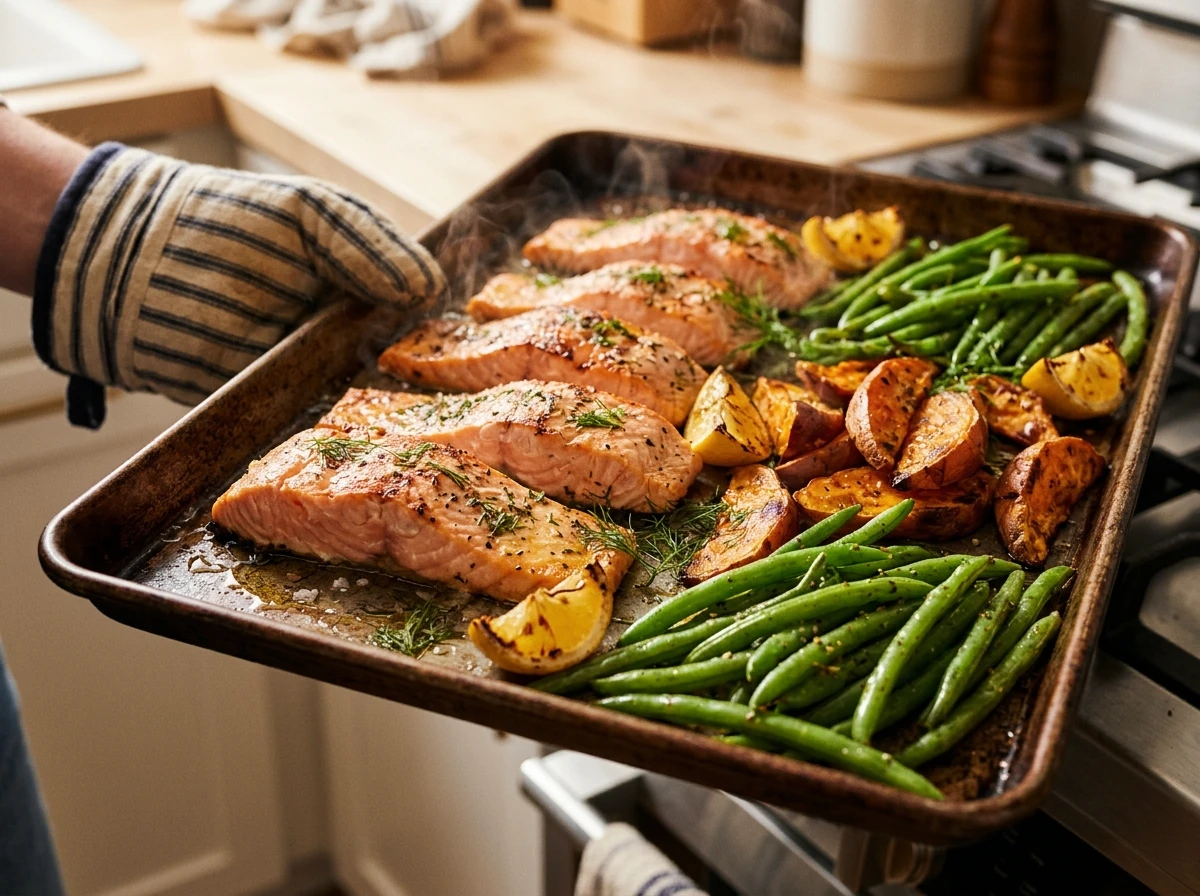
7. Sheet Pan Salmon, Sweet Potato And Green Beans (30 g Protein, 464 kcal). 125 g salmon fillet, 150 g sweet potato wedges and 100 g green beans on one tray with 5 g oil. Roast the sweet potato for 15 minutes first, then add the salmon and beans for 12-15 minutes.
8. Taco Tuesday Turkey Burrito Bowl (31 g Protein, 440 kcal). 120 g 93% lean turkey mince browned with taco spices, then 60 g black beans, 50 g sweetcorn, 75 g cooked brown rice, salsa, shredded lettuce and 30 g avocado. Add the avocado on the day.
9. Peanut-Lime Tofu Stir-Fry (36 g Protein, 489 kcal Without Sauce). 170 g firm tofu, pressed, cubed and pan-fried in 5 g oil, with 150 g frozen stir-fry vegetables over 75 g brown rice. This is the highest-protein plant-based option. With the peanut-lime sauce it’s about 586 kcal, so it works best as dinner.
Snack Prep Ideas For Sustainable Weight Loss
The most useful healthy snack prep is protein-rich and pre-portioned, so a snack stays a snack instead of turning into a second lunch. Both of these have about 16-17 g of protein for under 200 kcal.
10. Cottage Cheese And Berry Box (17 g Protein, 163 kcal). 150 g cottage cheese with 80 g raspberries.
11. Egg And Edamame Box (16 g Protein, 187 kcal). One hard-boiled egg, 75 g edamame and carrot sticks. Hard-boiled eggs keep for a week in the fridge, so boil six at once.
For more ideas, see our full guide to healthy snacks for weight management.
Recipe Nutrition At A Glance
Every recipe in this guide provides at least 16 g of protein per serving, and every main meal provides 26-36 g. The figures below are calculated per serving from USDA FoodData Central values for the listed ingredients and exclude sauces unless stated.
| Recipe | Meal | Protein (g) | Calories (kcal) | Fibre (g) |
|---|---|---|---|---|
| Protein Overnight Oats | Breakfast | 26 | 365 | 9 |
| Spinach And Feta Egg Muffins (3) | Breakfast | 28 | 268 | 2 |
| Savoury Cottage Cheese Jar | Breakfast | 26 | 283 | 3 |
| Chicken, Quinoa And Roast Veg Bowl | Lunch | 35 | 382 | 7 |
| Lentil, Feta And Edamame Bowl | Lunch | 28 | 364 | 18 |
| Tuna And White Bean Mason Jar | Lunch | 29 | 278 | 6 |
| Sheet Pan Salmon And Sweet Potato | Dinner | 30 | 464 | 7 |
| Turkey Burrito Bowl | Dinner | 31 | 440 | 10 |
| Peanut-Lime Tofu Stir-Fry | Dinner | 36 | 489 | 11 |
| Cottage Cheese And Berry Box | Snack | 17 | 163 | 5 |
| Egg And Edamame Box | Snack | 16 | 187 | 6 |
| Sauce: Tahini-Lemon (15 g tahini) | Add-on | 3 | 91 | 1 |
| Sauce: Peanut-Lime (15 g peanut butter) | Add-on | 4 | 97 | 1 |
| Sauce: Salsa Verde (10 g olive oil) | Add-on | 0 | 95 | 1 |
Brands and cooking methods vary, so treat these as a guide. To estimate your own daily needs, try our weight management calorie calculator.
How Long Does Meal Prep Last In The Fridge?
Most cooked meal prep lasts 3-4 days in a fridge at 4°C (40°F) or below, so cook for three days and top up or freeze the rest. These limits come from the US government’s FoodSafety.gov cold food storage chart.
| Food | Fridge | Freezer |
|---|---|---|
| Cooked meat or poultry leftovers | 3-4 days | 2-6 months |
| Soups and stews | 3-4 days | 2-3 months |
| Egg casseroles and bakes (e.g. egg muffins) | 3-4 days | 2-3 months |
| Hard-boiled eggs | 1 week | Do not freeze |
| Egg, chicken or tuna salads | 3-4 days | Does not freeze well |
Reheat leftovers until they’re steaming hot all the way through, and move anything you won’t reach in time into the freezer on day two.
Why Am I Meal Prepping And Still Not Losing Weight?
Usually because something outside the containers is adding up: oversized sauce portions, weekend meals, drinks or grazing while you cook. The boxes are often fine; the gaps around them aren’t.
Run through this list before you change anything else:
- Check your sauces and oils: Two extra servings of the peanut-lime sauce a day add about 1,350 kcal across a week.
- Look at the weekend: Five perfect weekdays can be undone by two unplanned days. Prep two weekend lunches too.
- Count your drinks: Lattes, juices, wine and smoothies don’t feel like meals, but they count.
- Are you hungry by mid-afternoon? If so, raise the protein at breakfast and lunch before you cut anything.
- Measure your waist, not just your weight: If you’re lifting weights, the scale can stall while your waist shrinks.
Still stuck? Read about insulin resistance in perimenopause and talk to your doctor, and add two or three strength sessions a week (here’s why weight training matters for weight loss).
The Bottom Line
The weight loss meal prep ideas for women that actually work after 40 are the ones that keep you full: about 25-30 g of protein per meal, repeatable bases, sauces for variety, and portions decided in advance. Start small with five lunches and five breakfasts, add a Wednesday top-up, and build from there.
You don’t need a perfect Instagram fridge or a whole Sunday in the kitchen. You need a system you’ll still be using in March, because sustainable dieting, not restriction, is what tends to show up on the scale a year from now.
If you’d like a broader view of how eating fits into lasting results, our guide to sustainable fat loss is the next step, and our healthy meal plans for every lifestyle show full-day menus.
Your fridge is set up. Now make the habits stick. Meal prep gets you through Wednesday; habits get you through the next six months. Our free guide covers the 10 research-backed habits behind lasting weight loss for women, and it takes about ten minutes to read. Send me the free habits guide.
Glossary Of Key Terms
- Meal Prep: Cooking and portioning meals or meal components in advance, usually for three to five days.
- Batch Cooking: Cooking a large quantity of one food at once to use across several meals.
- Calorie Deficit: Eating less energy than your body uses, which is needed for fat loss.
- Lean Mass: Everything in your body that isn’t fat, including muscle, bone and organs.
- Menopause Transition: The years of changing hormones before the final menstrual period, often called perimenopause.
- Macros: Short for macronutrients: protein, carbohydrate and fat.
- Satiety: The feeling of fullness and satisfaction after eating that delays the next meal.
- Whole Foods Diet: An eating pattern built mostly from minimally processed foods such as vegetables, fruit, whole grains, beans, fish, eggs and dairy.
- Nutrient-Dense Foods: Foods with lots of vitamins, minerals, fibre or protein relative to their calories.
- Portion Control Containers: Containers sized to hold one serving, used to keep meal portions consistent.
FAQ
What Is The Best Meal Prep For Weight Loss For Women?
The best meal prep for weight loss for women combines a protein source of about 25-30 g per meal, vegetables, a measured portion of whole grains or starch, and a sauce kept separate. Chicken and quinoa bowls, lentil bowls, egg muffins and Greek yoghurt overnight oats all fit this pattern.
How Do I Start Meal Prepping As A Beginner?
Start with lunches and breakfasts for week one. Choose two proteins, one tray of roasted vegetables, one grain and three sauces; cook for 90 minutes on Sunday, and top up on Wednesday.
How Much Protein Should Each Meal Prep Container Have?
Research on higher-protein diets suggests about 25-30 g of protein per meal, and the International Society of Sports Nutrition recommends 20-40 g per meal for people cutting calories. That’s roughly 120 g of raw chicken breast, 170 g of firm tofu or a can of tuna plus a handful of beans.
How Long Does Meal Prep Last In The Fridge?
According to FoodSafety.gov, most cooked meat, poultry and egg dishes last 3-4 days in a fridge kept at 4°C (40°F) or below. Hard-boiled eggs last up to a week. Freeze anything you won’t eat within that window.
Can I Lose Weight Meal Prepping Without Counting Calories?
Yes, for many people. Portion control containers set your serving sizes in advance, so you can follow a calorie deficit meal plan without tracking every meal. If progress stalls, check sauces, oils, weekend meals and drinks first. Our guide to weight loss without counting calories explains the approach.
Is Meal Prep Different For Women Over 40?
The basics are the same, but protein matters more. Studies following women through menopause found that hunger tends to rise and lean mass starts to decline, so filling, protein-rich meals usually work better than very low-calorie ones.
How Do I Stop Getting Bored Of My Meal Prep?
Prep components instead of finished meals and rotate three sauces, so Wednesday’s lunch doesn’t taste like Monday’s. Swap one protein each week.