

How To Balance Work, Life, And Fitness Tips For Busy Women Balancing Career And Fitness Without Quitting Either One

Work is a rubber ball. If you drop it, it will bounce back. The other four balls – family, health, friends, integrity – are made of glass. If you drop one of these, it will be irrevocably scuffed, nicked, perhaps even shattered.
Gary Keller ‧ Founder of Keller Williams Realty & Author of The One Thing
Summary (TL;DR)
You don’t need more free time to balance work, life, and fitness — you need fewer decisions competing for the time you already have. The fastest wins: treat one 20–25 minute workout block like a real meeting on your calendar, use short, higher-intensity sessions instead of chasing an hour you don’t have, and put an actual boundary around when work stops for the day. Everything below breaks down how, with the research behind each piece.
Sound familiar? You get through a ten-hour day, finally sit down, and the guilt kicks in – you didn’t work out, you ate standing at the counter, and you told yourself you’d “start Monday” three Mondays in a row.
If that’s where you are right now, we want to say this clearly before anything else: it’s not that you lack discipline. Most fitness advice was written for someone with a spare hour and a quiet house, and that’s not the life most working women actually have.
We don’t think the fix is to try harder with the same approach. Gallup’s December 2024 workplace research found that 51% of working women report feeling stressed a lot of the day, compared with 39% of men – and that gap isn’t about resilience; it’s about load. Once you see work-life balance as a structural problem instead of a personal failing, the whole approach to fitting in fitness changes.
That’s what this guide is for: real, research-backed wellness strategies for balancing work, life, and fitness that assume you’re busy, not that you’re doing it wrong – plus the specific places where “common knowledge” about exercise is outdated and working against you.
Medical & Referral Disclaimer
This article is for informational and educational purposes only. It is not a substitute for professional medical advice, diagnosis, or treatment. Always consult your physician or a qualified health provider before starting any new diet or exercise program, especially if you have an existing health condition.
Key Takeaways
- Work-life balance isn’t a time-management failure for most women – Gallup data shows working women report significantly higher daily stress and family-responsibility load than men, which changes what “balance” actually requires.
- You do not need to exercise every day to get real cardiovascular benefit. Research on the “weekend warrior” pattern shows concentrating your activity into one or two sessions a week works about as well as spreading it out.
- Shorter, higher-intensity workouts can beat longer ones on time – Harvard’s School of Public Health notes high-intensity interval training (HIIT) sessions deliver comparable results in roughly 40% less time than standard moderate-intensity training.
- Burnout has a real, three-part official definition from the World Health Organization – knowing it helps you tell the difference between “rough week” and “I need to change something now.”
- Small, scheduled, non-negotiable blocks of time beat vague intentions to “find time” – treating a workout like an appointment is the single biggest behavior change in every tip below.

Why Balancing Work, Life, And Fitness Feels Harder Than The Tips Ever Admit
Work-life balance feels unusually hard for women right now because the data backs up what you already suspect: the load isn’t evenly split.
Gallup’s workplace research found working women are considerably more likely than men to say they think about work during personal time, handle family responsibilities during the workday, and feel expected to be the default parent for anything unplanned – from a sick kid to a school call. None of that shows up on a to-do list, but all of it eats the exact hours you’d otherwise use for a workout, dinner prep, or ten minutes of quiet.
If you’re also navigating the energy dips and sleep disruption that often show up with perimenopause, all of this compounds – which is exactly why we build WLBF’s advice around how women’s bodies actually work at every life stage, not a generic template borrowed from someone half your age.
That matters here because most “just make time” fitness advice assumes an even playing field that Gallup’s own numbers say doesn’t exist: 44% of women have considered reducing their work hours specifically over childcare demands (versus 24% of men), and 64% of women with children strongly agree they’re the default parent for unexpected childcare, versus just 22% of men.
If you’ve ever felt like you’re managing two full-time jobs while everyone around you seems to be managing one, this is why. The physical activity numbers tell the same story from a different angle.
The CDC’s December 2025 surveillance report found that only about a quarter of women of reproductive age currently meet both the aerobic and muscle-strengthening activity guidelines, while nearly half report insufficient leisure-time activity to meet either one. That’s not a motivation gap across an entire demographic – it’s what happens when the hours simply aren’t there.

| The Reality | What The Data Actually Shows |
|---|---|
| Feeling stressed most of the day | 51% of working women, vs. 39% of men (Gallup, Dec. 2024) |
| Considered cutting work hours over childcare | 44% of women, vs. 24% of men (Gallup, Dec. 2024) |
| Seen as the default parent for the unexpected | 64% of women strongly agree, vs. 22% of men (Gallup, Dec. 2024) |
| Meeting full weekly activity guidelines | Just 25.1% of women of reproductive age (CDC, Dec. 2025) |
| Reporting insufficient leisure-time activity | 47.2% of women of reproductive age (CDC, Dec. 2025) |
We’re not sharing this to pile on – we’re sharing it so the rest of this article doesn’t read like it’s ignoring your actual week. If weight loss itself feels stuck for the same reason, our guide on losing weight when busy life keeps getting in the way tackles that side of it directly. The strategies below are built around that reality, not around a version of your life that doesn’t exist.
Time Management Tips For Busy Women
The fastest way to protect time for fitness is to stop treating it as leftover time and start treating it as scheduled time. Everything else – delegating, saying no, batching tasks – exists to protect that block once it’s on the calendar. A few practical starting points:
- Prioritise ruthlessly, not exhaustively: a daily list of everything you could do just breeds guilt by evening. Pick the two or three things that actually move the needle and let the rest wait.
- Delegate before you’re desperate: hand off what someone else can genuinely do, at work and at home, before you’re too depleted to ask. Waiting until you’re at your limit to ask for help usually means you don’t ask at all.
- Set boundaries you actually enforce: a boundary you don’t hold isn’t a boundary, it’s a suggestion. Decide in advance what you’re saying no to this week, before the request lands in your inbox.
- Stop multitasking your way through the day: switching between tasks feels productive and measurably isn’t – you lose time to the switch itself. One task, finished, beats three tasks half-done.
- Build in real breaks: five minutes away from your desk keeps the other fifty-five productive. Treat a straight, unbroken eight-hour stretch as the exception, not the goal – it drains you faster than it produces.
None of this is about becoming more disciplined. It’s about removing decisions from a day that already has too many of them, so the ones that matter – including the workout you keep meaning to do – actually happen.

Incorporating Fitness Into A Busy Schedule
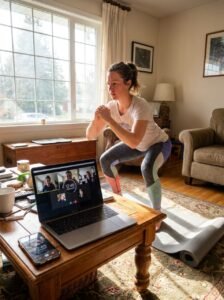
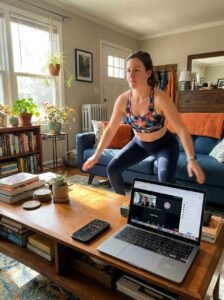
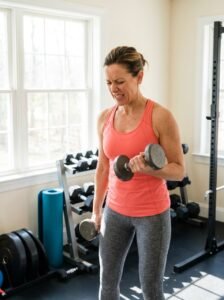
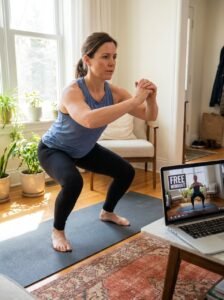
You can get real fitness results in far less time than most advice assumes, if you use the right kind of workout.
The Harvard T.H. Chan School of Public Health’s Nutrition Source reports that high-intensity interval training (HIIT) sessions deliver comparable results to standard moderate-intensity training in roughly 40% less time. That single fact changes the math on “I don’t have an hour” – because you don’t need one.
The Minimum Effective Dose, Not The Perfect Routine
Here’s the part most fitness content leaves out: you don’t need to work out every day, or even most days, to get a meaningful benefit.
A study covered by the American Heart Association in April 2025 found that people who concentrated their full 150 recommended weekly minutes of activity into just one or two sessions – the so-called “weekend warrior” pattern – saw a 32% lower risk of death from any cause compared to inactive people, with no meaningful difference from people who spread the same total activity across the week. The total volume mattered far more than the schedule.
That’s permission, not a loophole: if your realistic week has room for two solid 45-minute sessions instead of five short ones, you’re not falling short of some ideal. You’re doing something the research says works. (If you want ready-made options either way, our workout plans and tips hub has both formats covered.)
Time-Efficient Workouts That Actually Fit A Real Week
With that in mind, here’s where to look for time you’re not using yet:
- Treat the workout like a meeting: put it on the calendar with a start and end time, and protect it the way you’d protect a call with your boss.
- Default to short and intense over long and steady: a 20–25 minute HIIT circuit or a set of bodyweight moves – squats, lunges, push-ups – needs no equipment and no commute to a gym.
- Use your commute: walking or biking even part of the way to work turns dead time into activity time without adding a single extra minute to your day.
- Reclaim your lunch break: a 15-minute walk outside does more for your afternoon energy than the extra 15 minutes at your desk usually does.
- Try exercise snacking on your worst days: when even 20 minutes isn’t happening, three or four short movement bursts – a flight of stairs, a few minutes of bodyweight squats – still add up.
- Recruit your household: a family walk or a workout with a friend solves two problems at once – movement and the accountability that makes it stick.
| The Old Rule | What The Research Actually Supports |
|---|---|
| You need to work out every single day | The “weekend warrior” pattern – 150 weekly minutes concentrated into 1–2 sessions – showed a 32% lower all-cause mortality risk, statistically similar to spreading the same minutes across the week (AHA, 2025) |
| A “real” workout takes an hour | HIIT sessions deliver comparable results in roughly 40% less time than standard moderate-intensity training (Harvard T.H. Chan School of Public Health) |
| You need a gym membership to see results | Bodyweight training – squats, lunges, push-ups – builds real strength anywhere, with zero equipment |
| Missing a day means starting over | Consistency is measured in weeks and months, not unbroken streaks – one missed session changes nothing about your long-term trend |

Stress Management Techniques For Working Women
Avoiding burnout starts with knowing what you’re actually managing, not just powering through it.
The World Health Organization defines burnout as a syndrome from chronic, unmanaged workplace stress with three specific dimensions: energy depletion or exhaustion, growing mental distance or cynicism about your job, and reduced professional effectiveness. That framework is genuinely useful, because the techniques that help aren’t interchangeable – different habits target different dimensions.
- Make time for self-care (targets exhaustion): a bath, a book, ten minutes of quiet – this directly restores the energy the WHO’s first dimension describes as depleted, rather than just distracting from it.
- Set boundaries (targets cynicism): turning off work email after hours and declining requests that don’t fit your week protects the part of you that starts to resent the job when it never actually stops.
- Practice mindfulness (targets exhaustion and cynicism): a few minutes of focused breathing, or losing yourself in something hands-on like cooking or gardening, interrupts the mental spiral that both dimensions feed on. Even a short daily meditation habit measurably helps here.
- Stay active (targets reduced effectiveness): even a short walk or a quick HIIT circuit measurably improves focus and mood, which is exactly what the third burnout dimension erodes.
- Connect with others (targets all three): time with friends, family, or a fitness community is one of the few things that pushes back on exhaustion, cynicism, and low effectiveness at once – isolation tends to make every dimension worse.

Signs You’re Heading Toward Burnout, Not Just Having A Rough Week
It’s genuinely hard to tell the difference between a hard stretch and something that needs real intervention – here’s what tends to separate them, mapped to the WHO’s three dimensions:
- Exhaustion that sleep doesn’t fix: you wake up tired even after a full night, repeatedly, for weeks – not just after one bad night.
- A creeping sense of “why bother”: work that used to feel fine now feels pointless or actively draining, and you notice yourself checked out in meetings you’d normally engage in.
- Small tasks start taking longer: things that used to be automatic now require real effort, and mistakes creep in that wouldn’t have happened three months ago.
- Physical symptoms with no other explanation: frequent headaches, jaw tension, or getting sick more often than usual can be your body flagging chronic stress before your mind catches up.
- You’ve stopped doing the things that used to help: if self-care, movement, and connection have all quietly dropped off, that’s often the clearest sign you need more than a good weekend – it may be worth a conversation with a healthcare provider.
Maintaining Work-Life-Health Balance: Healthy Habits For Busy Women
A handful of small daily defaults do more for sustainable balance than any single big overhaul. None of these requires extra time so much as a slightly different default:
| Healthy Habit | Why It Works For A Busy Week |
|---|---|
| Drink Enough Water | Even mild dehydration affects energy and focus. Keep a bottle at your desk so drinking enough becomes automatic instead of another thing to remember. |
| Default To Whole, Unprocessed Foods | Fruit, vegetables, lean protein, and whole grains you can grab fast. Pre-portion energy-boosting snacks like nuts or cut vegetables so the better option is also the fastest one. |
| Protect 7–8 Hours Of Sleep | Sleep debt undermines focus, mood, and workout recovery faster than almost anything else on this list – a consistent bedtime routine matters more than any supplement. |
| Build In Daily Self-Care | Even five to ten minutes – reading, stretching, sitting outside – counts. The goal is consistency, not duration. |

Strategies For Work-Life-Fitness Harmony
Harmony between work, life, and fitness comes from realistic targets, not perfect ones. A few things that make the biggest difference:
Set Goals You’ll Actually Keep
Commit to a workout count you can realistically hit most weeks – two is a real number, not a failure to hit five. “Don’t aim for perfection; aim for progress” isn’t just a nice sentiment here – it’s the entire strategy. If goal-setting itself feels like the sticking point, we’ve got a deeper walkthrough in our guide to setting weight-loss goals that actually stick.
Pick Something You Don’t Dread
The workout you’ll actually repeat beats the “optimal” one you’ll quit in two weeks. If you dread it, that’s useful information, not a character flaw – try something else before you give up on movement altogether.
Make It Non-Negotiable, Not Optional
Schedule your workouts with the same seriousness as any other appointment. The version of “priority” that only survives a light week isn’t really a priority.
Get Support Instead Of Going It Alone
Trying to hold work, life, and fitness together solo is harder than it needs to be. A friend, a family member, or even a community that’s solved the same “no time” problem can be the difference between quitting in week two and still going in month six.

The Importance Of Self-Care For Busy Women
Self-care isn’t the thing you do after everything else is handled – it’s part of what makes everything else possible.
You don’t need a long list of self-care ideas, just a few that you’ll actually use. In the years we’ve spent talking with women about this, the pattern is consistent: the women who stick with healthy habits long-term aren’t the ones who eventually found more time. They’re the ones who stopped waiting for “more time” and started treating small, consistent self-care as non-negotiable instead.
That can look like five minutes of meditation, a short walk, a proper meal instead of a granola bar eaten at your desk, or simply going to bed on time. None of it requires a free afternoon. It requires deciding it matters enough to protect – the same decision that makes room for the workouts and the boundaries covered above.
You Know Why. Here’s The System That Makes It Stick
Everything in this guide works better with a plan behind it instead of willpower alone. That’s exactly what our free guide, 10 Actions That Support Permanent Weight Loss, gives you – the specific, sustainable habits that 280+ articles and 10+ years of research have shown actually hold up in a real, busy week, not just a highlight reel.
No fad diets. No extreme plans. No pretending you have more free time than you do. Just what the research supports, written for women juggling exactly what you’re juggling right now.
Related Articles
The Bottom Line
Balancing work, life, and fitness as a busy woman isn’t about finding hours that don’t exist – it’s about using the ones you have differently. The research backs that up at every turn: you don’t need daily workouts; you need enough weekly volume.
You don’t need an hour, you need the right 20–25 minutes. And you don’t need to carry more of the mental load quietly – the data shows most working women already are, and naming that is the first step to changing it.
That’s what prioritizing your health and holistic health actually look like at this stage of your fitness journey – not a wellness retreat, just one scheduled block this week, treated like any other appointment.
Glossary Of Key Terms
FAQ
Treat exercise like an appointment you can’t skip, not something you’ll get to if the day allows it. Pick a specific time block, even just 20–25 minutes, and protect it the way you’d protect a work meeting. Delegating a task or saying no to one nonessential request is often what actually creates the space.
Start with boundaries, not more effort: set real limits between work and personal time, schedule breaks like you would meetings, and ask for help before you’re depleted. A supportive environment matters too – both at home and at work – so don’t treat asking for it as optional.
Prioritise and plan deliberately rather than trying to do everything well simultaneously. Delegate what you can, set clear limits on your working hours, and protect time for both self-care and family. Open communication with your employer about flexibility genuinely changes what’s possible here.
Set expectations you can actually meet, prioritise ruthlessly, and get comfortable delegating. Protect time for yourself – through exercise, a hobby, or time with people you care about – and build a routine that accounts for your real energy levels, not an idealized version of your week.
Set up a dedicated workspace and clear working hours, and communicate those hours to your household so “working from home” doesn’t quietly become “always available.” Prioritising tasks and building a real daily schedule – including when work stops – makes remote balance far more achievable.
Work-life integration blends work and personal life flexibly instead of strictly separating them, which suits nonstandard or remote schedules better than rigid balance ever could. Done well, it lets you move between roles throughout the day rather than feeling torn between two competing full-time jobs.
Start with your existing support network – family, friends, or colleagues – and be specific about what you need instead of hoping someone notices. Talk to your employer directly about flexibility or workload. Asking for help isn’t a sign you’re failing; it’s a proactive step toward the balance you’re actually working toward.
You Know Why. Now Learn Exactly How
Join thousands of women inside our community and receive our free guide: 10 Actions That Support Permanent Weight Loss — the practical, sustainable habits that translate everything you just read into real, lasting results.
No fad diets. No extreme plans. Just what the research actually supports — written for real women.