The Contrarian Truth About Healthy Fats In Weight Loss (And Why Low-Fat Diets Let You Down)
DR. WALTER WILLETT
Professor Of Epidemiology And Nutrition
No, it’s a myth that eating specifically high-fat foods makes you fat.
Summary (TL;DR)
Healthy fats in weight loss aren’t the enemy diet culture made them out to be. The largest low-fat diet trial ever run found that cutting fat across the board didn’t protect women from heart disease, breast cancer, or long-term weight gain any better than eating normally. What actually moves the needle is fat quality.
Monounsaturated fats, polyunsaturated fats, and omega-3 fatty acids from foods like avocados, extra-virgin olive oil, nuts, seeds, and fatty fish enhance satiety, support hormone balance, and improve insulin sensitivity. They also unlock fat-soluble vitamins your body can’t absorb without them. Aim for 20–35% of your daily calories from fat, keep saturated fat under 10%, and use the simple one-thumb portioning method below to stop guessing and start seeing results.
If you’ve ever stood in a grocery aisle turning a bottle of salad dressing over to check whether “fat-free” really is the smarter choice, you’re not alone, and you’re not wrong to be confused.
For the better part of three decades, women were told, with total confidence, that dietary fat was the single biggest obstacle between them and a healthy weight. Butter became margarine. Whole milk became skim. Salad dressing became a suspicious substance, rationed in teaspoons. That message was everywhere, and it came from people who genuinely believed it was true.
Here’s what rarely gets said out loud: when that hypothesis was finally tested on a massive scale, in a randomized trial involving tens of thousands of women followed for years, it didn’t hold up. Not a little. Not at all, on the outcomes that mattered most. That’s not an invitation to swing to the opposite extreme and eat fat without limits; it’s an invitation to ask a better question than “how do I eat less fat,” namely: which fats, how much, and why.
This article walks through what the actual research says about healthy fats and weight management: the mechanisms, the numbers, and a simple framework for putting it into practice without overhauling your entire kitchen. If you’ve felt intimidated by conflicting fat advice or frustrated that “doing everything right” by old low-fat rules never quite delivered, this is the article that explains why, and what to do instead.
Medical & Referral Disclaimer
This article is for informational and educational purposes only. It is not a substitute for professional medical advice, diagnosis, or treatment. Always consult your physician or a qualified health provider before starting any new diet or exercise program, especially if you have a pre-existing health condition.
Key Takeaways
- Fat isn’t the reason you’re not losing weight: caloric density and fat quality are. The Women’s Health Initiative, the biggest randomized low-fat diet trial in history, found no significant drop in heart disease, breast cancer, or colorectal cancer risk after eight years of low-fat eating.
- Monounsaturated, polyunsaturated, and omega-3 fats support weight management through satiety, hormone regulation, and metabolic health, not despite their calories but because of how they’re used.
- Swapping saturated fat for monounsaturated fat measurably improves insulin sensitivity, a hormonal lever that affects how easily your body stores versus burns fat.
- You need fat to absorb vitamins A, D, E, and K. A fat-free salad is a vitamin-poor salad, regardless of how many vegetables are on it.
- 20–35% of daily calories from fat is the evidence-based range for most women, with saturated fat capped at under 10%.
What Decades Of “Fat-Free” Advice Got Wrong
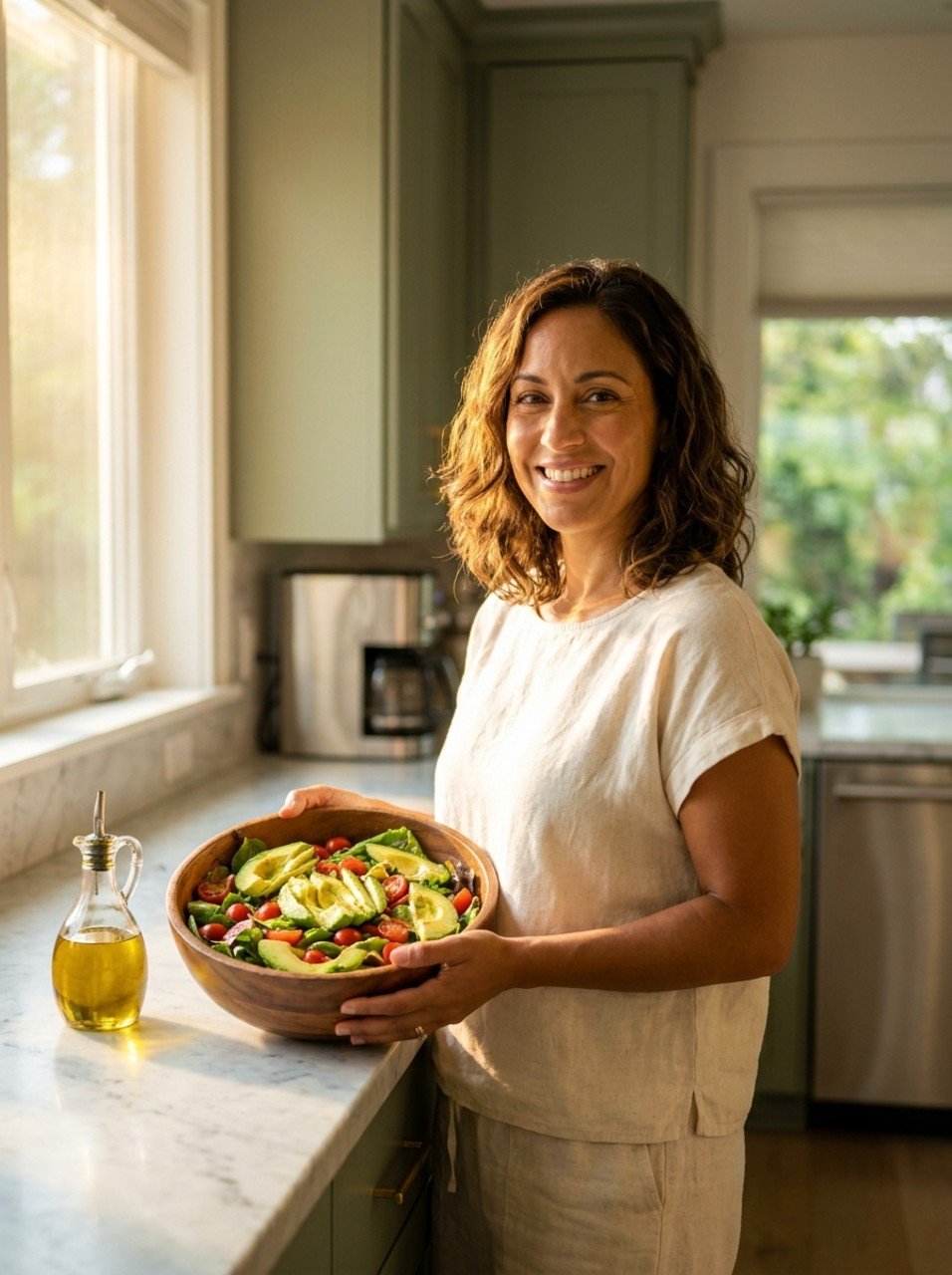
If you grew up watching your mother measure out fat-free cottage cheese and swap butter for margarine, here’s the uncomfortable truth: that advice was tested on a massive scale, and it didn’t work.
The Women’s Health Initiative Dietary Modification Trial, one of the largest and most expensive diet studies ever run, put nearly 49,000 postmenopausal women on a low-fat diet for eight years.
The result: no significant reduction in cardiovascular disease, no statistically significant drop in breast cancer risk, and no meaningful protection against colorectal cancer. By year eight, the low-fat group’s weight was “generally the same” as the group who ate however they normally did.
That’s not a fringe finding you have to dig for. It’s the conclusion of the diet-heart research establishment’s own flagship trial. Compare that to the PREDIMED trial, which put participants on a higher-fat Mediterranean diet supplemented with extra virgin olive oil or nuts.
That group saw a 31% relative reduction in major cardiovascular events compared to a low-fat control, a result strong enough that researchers stopped the trial early because it would have been unethical to keep the control group on the low-fat plan.
So if cutting fat isn’t what protects your heart or your waistline, what does? The evidence keeps pointing to the same answer: fat quality, not fat elimination. That’s the frame this entire article works from, and it’s the one most weight-loss advice still hasn’t caught up to.
Meet Your Three Fat-Loss Allies: Understanding Healthy Fats
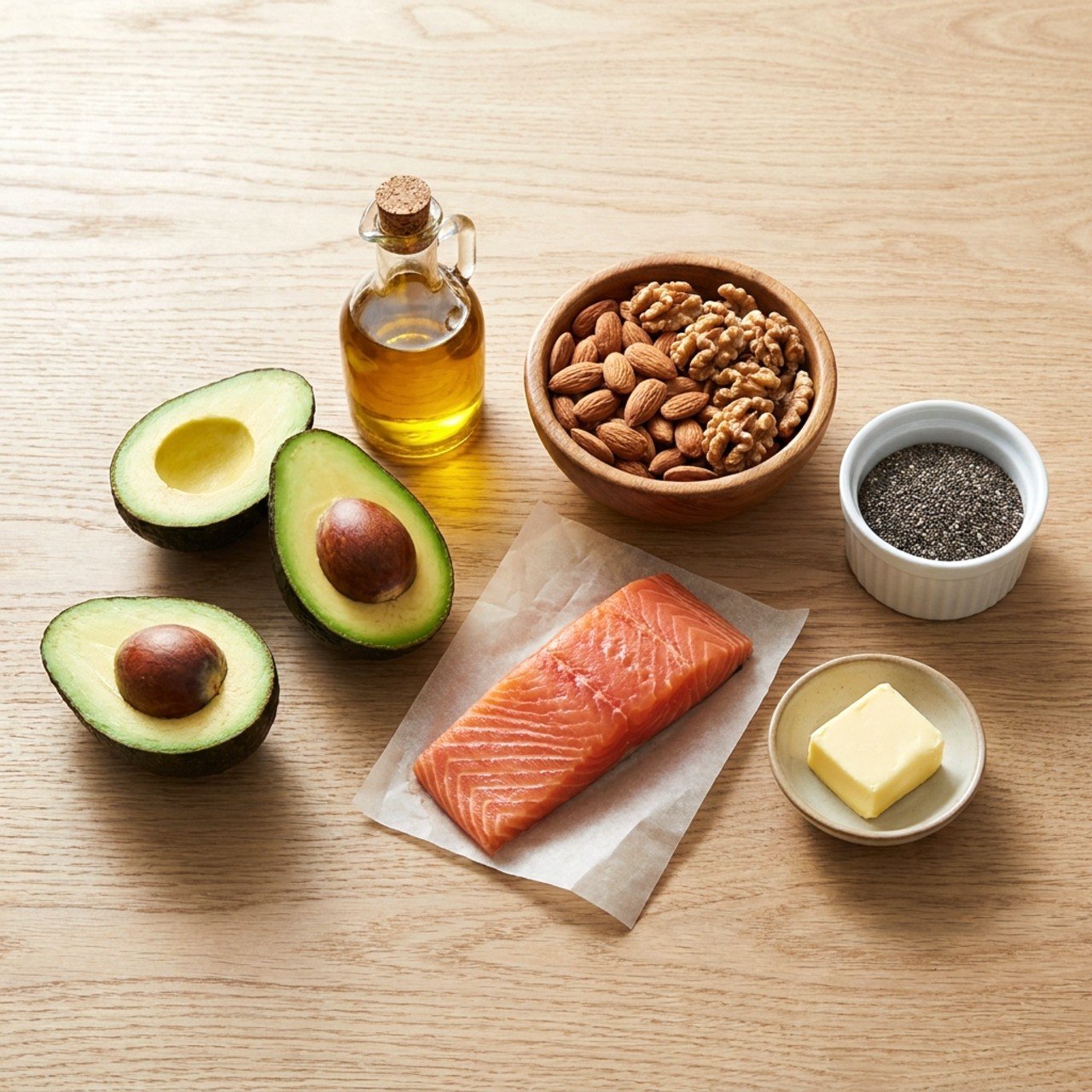
Healthy dietary fats fall into three main categories: monounsaturated fats, polyunsaturated fats (which include omega-3 fatty acids), and, more loosely, medium-chain triglycerides like MCT oil.
Each supports weight management differently, but all three share fundamentals: they supply concentrated energy, they help build cell membranes and hormones, and they don’t cause the rapid blood sugar spikes typical of refined carbohydrates.
| Type Of Healthy Fat | Best Food Sources | Primary Weight-Loss Role |
|---|---|---|
| Monounsaturated Fats (MUFA) | Extra virgin olive oil, avocados, almonds, cashews | Improves insulin sensitivity; anchors the Mediterranean diet |
| Polyunsaturated Fats (PUFA) | Walnuts, sunflower seeds, soybean oil, fatty fish | Supports healthy triglycerides and lipid profile |
| Omega-3 Fatty Acids | Salmon, mackerel, chia seeds, flaxseeds, walnuts | Cardiovascular protection; supports hormone balance |
| Medium-Chain Triglycerides (MCT Oil) | Coconut oil, MCT oil, grass-fed butter (small amounts) | Rapidly metabolized for energy; may reduce next-meal intake |
Notice what’s missing from the “avoid” column: nothing here demands you fear fat. It demands you get selective, the same macronutrient balance principle behind every evidence-based eating pattern, from Mediterranean to keto-friendly fats-first approaches.
How Healthy Fats Actually Help You Lose Weight
Healthy fats support weight loss through four measurable mechanisms, not vague “wellness” claims, but physiological ones you can act on today.
They Regulate Hunger And Extend Satiety And Fullness
Fat digests slowly, which is exactly why it curbs the 3 pm vending-machine spiral. This is also where caloric density becomes your friend instead of your enemy: a small amount of fat-rich food (a quarter avocado, a tablespoon of nut butter) delivers outsized fullness relative to its volume.
In a 2019 study published in the journal Nutrients, participants who drank a medium-chain triglyceride (MCT) beverage ate roughly 17–20% fewer calories at their next meal and over the following 24 hours than those who had a conventional long-chain fat, without reporting feeling any hungrier in between. The fat itself was quietly doing the appetite-control work.
The Metabolism Boost Reality Check
You’ll see “fat burning foods” lists everywhere promising a metabolism boost from a single ingredient. The honest version: no single food burns fat on its own, but MCT oil comes closer than most because of how it’s processed.
Medium-chain triglycerides skip the slower digestion route regular fats take and get shuttled straight to your liver for rapid use as energy instead of being packaged for storage, which is where MCT’s reputation for a mild metabolism boost comes from. It’s a real, mechanistic effect, just a modest one, not a substitute for the fundamentals above.
They Support Hormone Balance And Metabolic Health
Dietary fat is a raw material for hormone production. Per the National Institutes of Health, all classes of steroid hormones, including cortisol, estrogen, and testosterone, are derivatives of cholesterol, which your body builds largely from dietary fat.
Chronically cutting fat too low doesn’t just make meals less satisfying; it can undercut the hormonal signaling your body relies on to regulate appetite and energy use in the first place (if you’re curious how this plays out meal-by-meal, we cover it in more depth in what to eat in the morning for hormone balance and fat loss).
They Improve Insulin Sensitivity
This is the mechanism most weight-loss content skips entirely, and it’s arguably the most important one. In the landmark KANWU study, published in Diabetologia, researchers directly swapped saturated fat for monounsaturated fat in participants’ diets and measured what happened to insulin sensitivity.
The saturated-fat diet significantly impaired insulin sensitivity (a 10% drop). The monounsaturated-fat diet caused no such decline. Better insulin sensitivity means your body is more efficient at using glucose for energy instead of shuttling it into fat storage.
That’s a genuine, mechanistic reason why the type of fat on your plate matters more than the total grams.
They Unlock Fat-Soluble Vitamins
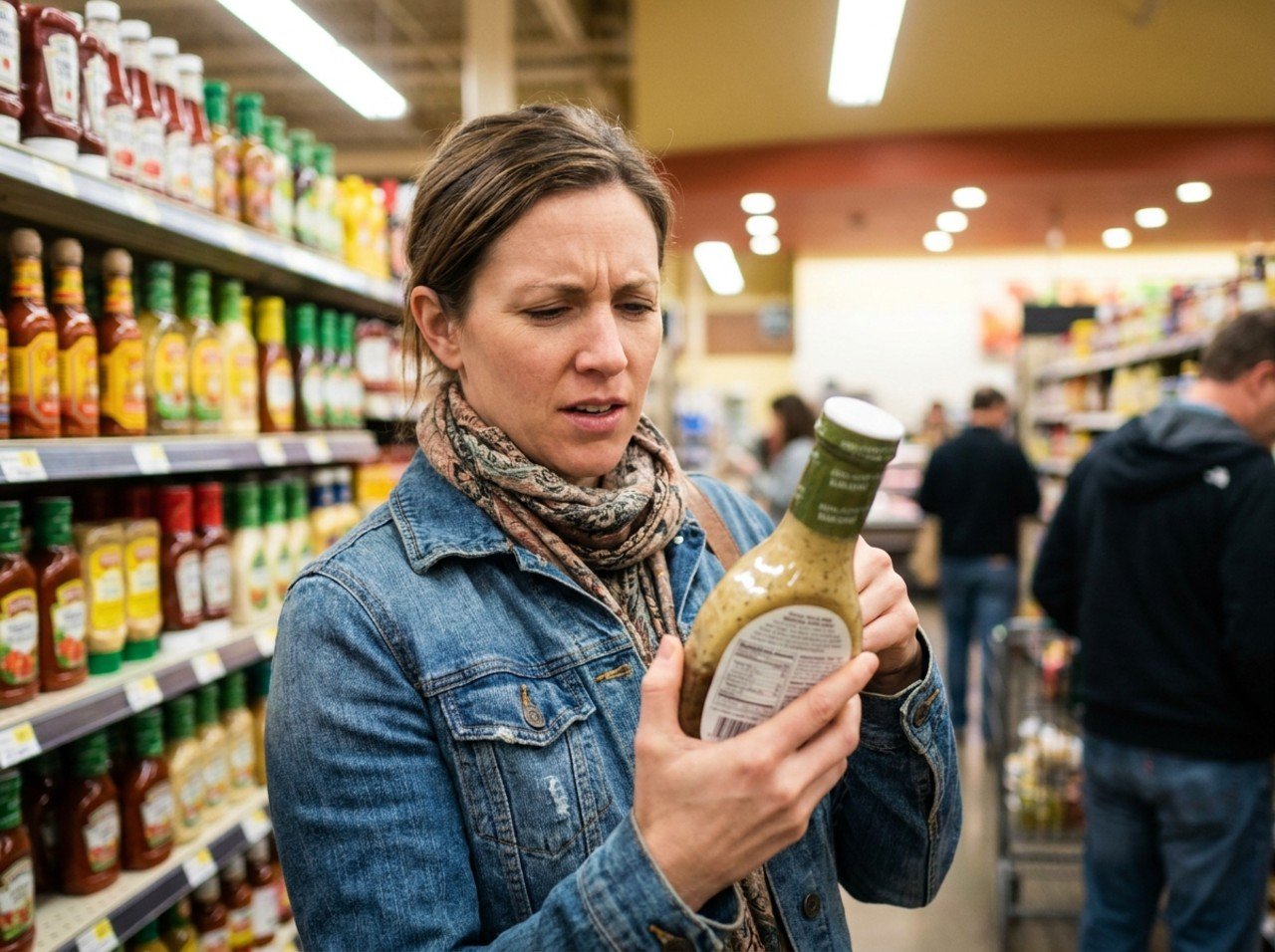
Vitamins A, D, E, and K are fat-soluble, meaning your digestive system needs dietary fat present to absorb them at all. Researchers at Purdue University demonstrated this directly: salads eaten with a fat-free dressing delivered dramatically less carotenoid absorption than the same salad eaten with a monounsaturated-fat-rich dressing.
The MUFA dressing hit full absorption at just 3 grams of fat, while other fat types needed nearly 20 grams to match it. In plain terms: that beautiful fat-free salad you’re proud of may be delivering a fraction of the nutrition you think it is.
- Slower digestion means fewer energy crashes and less reactive snacking between meals.
- Better lipid profile. A 2017 American Heart Association presidential advisory found that replacing saturated fat with polyunsaturated fat lowered cardiovascular events by roughly 30%, a risk reduction comparable to statin therapy, supporting healthier triglycerides and cardiovascular health long after the scale stops moving.
- Reduced inflammation from omega-3s may support recovery from workouts, which keeps you consistent instead of sidelined. The National Institutes of Health sets the adequate intake for omega-3s (as ALA) at 1.1 grams a day for adult women, roughly what you’d get from a tablespoon of chia or flaxseed.

How Much Fat You Actually Need For Weight Loss
According to the Dietary Guidelines for Americans, adults should get 20 to 35% of daily calories from total fat, with saturated fat capped under 10% of calories (the American Heart Association recommends an even tighter 5–6% for anyone actively managing cholesterol).
On a 2,000-calorie diet, that’s roughly 400–700 calories, or 44–78 grams of fat a day. Because fat is calorie-dense, more than double the calories per gram of protein or carbohydrate, portion awareness matters even with the “good” sources.
| Healthy Fat Source | Serving Size | Calories | Fat Type |
|---|---|---|---|
| Avocado | ½ medium | 117 | Monounsaturated |
| Extra Virgin Olive Oil | 1 tablespoon | 120 | Monounsaturated |
| Almonds | ¼ cup | 132 | Monounsaturated |
| Chia Seeds | 1 tablespoon | 60 | Omega-3 (ALA) |
| Salmon | 3 oz cooked | 175 | Omega-3 (EPA and DHA) |
| MCT Oil | 1 teaspoon | 40 | Medium-Chain Triglyceride |
| Grass-Fed Butter | 1 teaspoon | 34 | Saturated (use sparingly) |
Calorie counts per USDA FoodData Central.
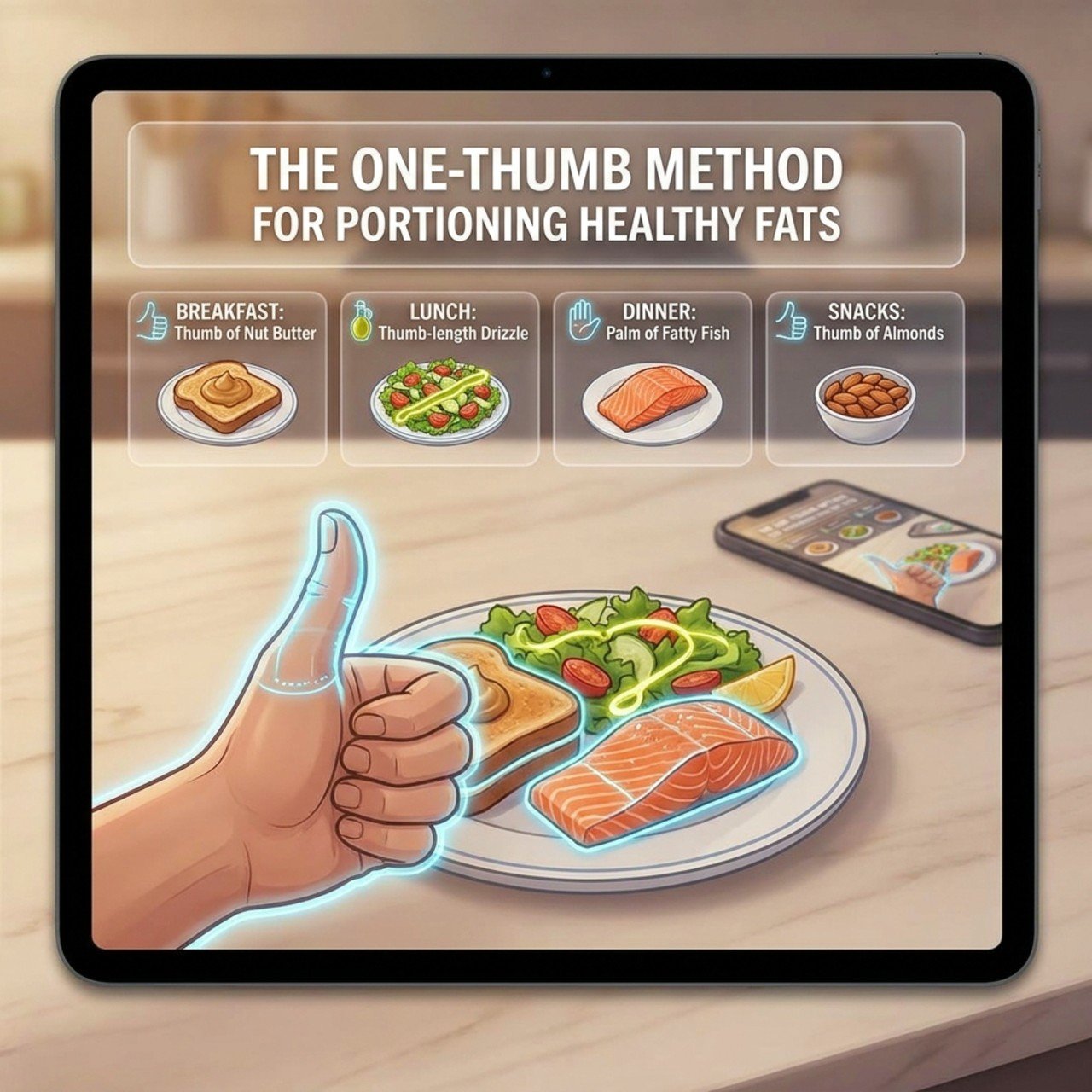
An Original Framework: The One-Thumb Method For Portioning Healthy Fats
Counting grams gets exhausting fast, so here’s the shortcut I actually give my own coaching clients: at most meals, one thumb-sized portion of concentrated fat (a thumb of avocado, a thumb-length drizzle of olive oil, a thumb of nut butter) keeps most women comfortably inside that 20–35% range without ever opening a nutrition app.
- Breakfast: one thumb of nut butter or a quarter avocado on whole-grain toast.
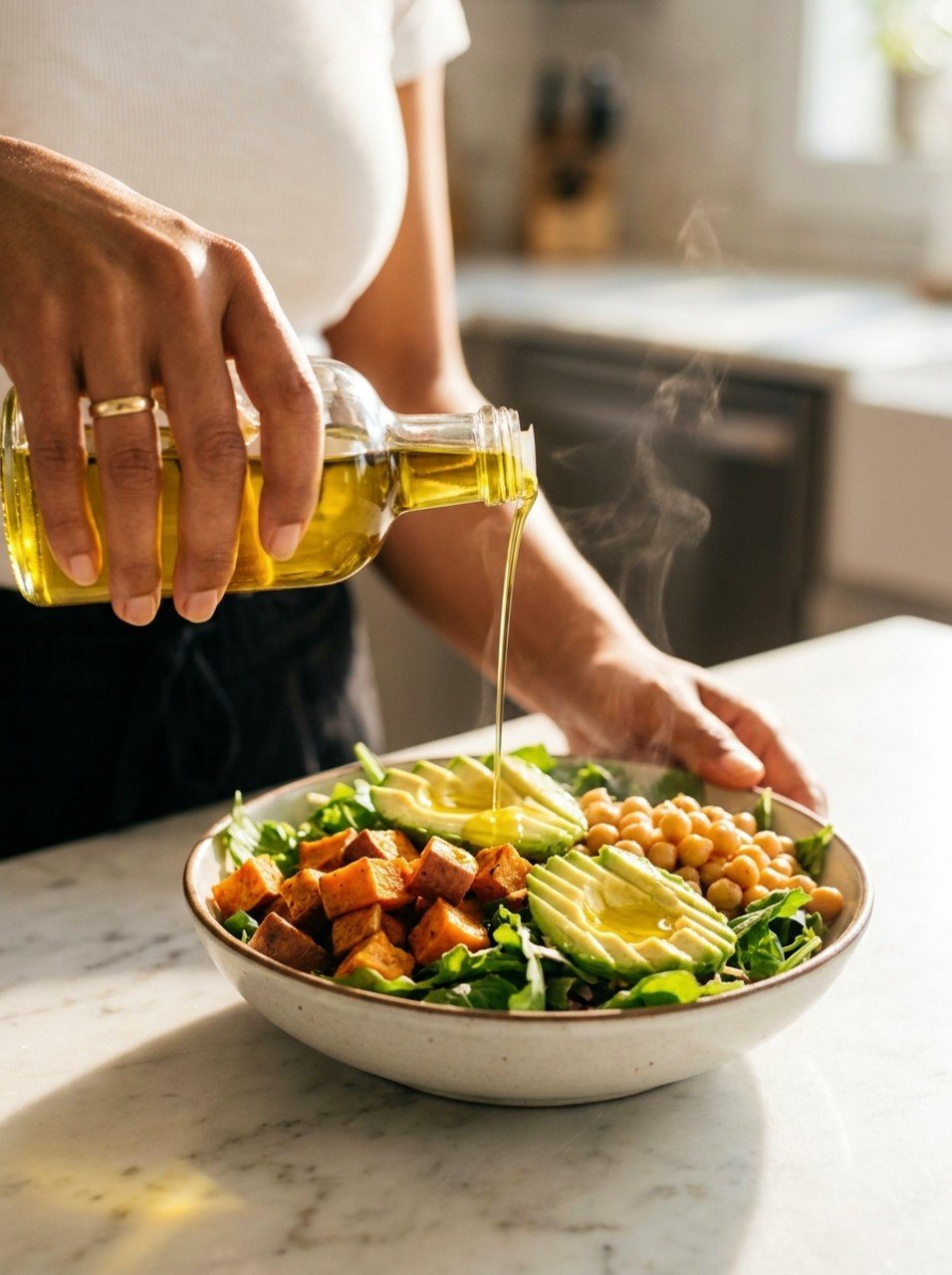
- Lunch: one thumb-length drizzle of olive oil on a salad or grain bowl.
- Dinner: a palm-sized portion of fatty fish covers your omega-3s without any added oil.
- Snacks: one thumb of almonds or a tablespoon of chia seeds stirred into yogurt.
This isn’t a clinical tool, and it won’t replace a registered dietitian’s individualized plan. It’s a rule of thumb (literally) for the days you don’t want to measure anything, and it’s served the women in my community well precisely because it’s something you can actually remember at 7 am.
Join Our Mailing List
Join thousands of women inside our community and receive our free guide, 10 Actions That Support Permanent Weight Loss — the exact behavioural shifts that make the difference between a two-week attempt and a lasting transformation.
No restriction plans. No guilt. Just what actually works — for real women with real lives.
Real Talk: Overcoming Fat Fear
I spent years buying the “fat-free” version of everything, and I distinctly remember the confusion of eating fat-free yogurt, fat-free dressing, fat-free everything, and still not seeing the scale move the way the box promised.
It wasn’t until I started actually reading the research instead of the marketing that I understood why: those products were often higher in sugar to make up for the lost flavor, and I was quietly missing out on the fullness and nutrient absorption that real fat provides.
If that frustration sounds familiar, you’re not doing anything wrong. You were handed thirty years of well-intentioned advice that the data itself doesn’t support. Letting go of fat fear isn’t a cheat; it’s catching up to where the evidence already is.
Common Mistakes That Sabotage Your Fat-Loss Results
- Treating “healthy” as unlimited. Olive oil is still 120 calories a tablespoon, and it’s easy to pour three or four “glugs” into a pan without measuring. Free-pouring it undoes the caloric-density advantage fast, and the calories add up exactly the same as any other fat.
- Chasing fat-free packaged foods. Many replace fat with added sugar and refined starch to keep the flavor and texture acceptable, the exact swap the Women’s Health Initiative data argues against, and often more calorie-dense per bite than the full-fat original.
- Making peace with fat doesn’t mean ignoring saturated fat entirely because “fat is fine now.” Quality still matters; the goal is a shift toward unsaturated sources, not permission to abandon moderation on butter, fatty cuts of meat, or fried food.
- Skipping fat around vegetables. A dry salad might feel virtuous, but you’re very likely absorbing only a fraction of its vitamins and antioxidants. A drizzle of olive oil is doing real nutritional work, not just adding flavor.
- Start with MCT or coconut oil at a teaspoon, not a tablespoon. Overdoing it in one sitting can cause real digestive discomfort, and building up gradually gives your system time to adjust.
- Assuming all vegetable oils are interchangeable. Highly processed seed oils used in deep-frying and packaged snacks behave very differently in the body than a cold-pressed extra virgin olive oil, even though both are technically “unsaturated.”
Keto, Mediterranean, Or Something In Between?
You don’t need to adopt a single named diet to apply any of this. The Mediterranean pattern (heavy on olive oil, fish, and nuts) has the strongest cardiovascular trial evidence behind it. Keto-friendly fats (MCT oil, grass-fed butter, avocado) can work within a very-low-carbohydrate approach if that’s your preference.
What both patterns share, and what the evidence actually supports, is prioritizing unsaturated and MCT sources over highly processed vegetable oils and trans fats, while keeping total intake inside the 20–35% range. Pick the framework that fits your life; keep the fat-quality principle no matter which one you choose.
Reading about fat quality is one thing. Building a week of meals around it without overthinking every label is another. If you want the exact framework my community uses to make these choices automatic, grab my free guide: 10 Actions That Support Permanent Weight Loss, evidence-based, sustainable habits written for real women with real schedules, not restrictive rules you’ll abandon by Thursday.
The Bottom Line
Healthy fats in weight loss aren’t a loophole or a trend. They’re backed by some of the most rigorous nutrition science available, from the Women’s Health Initiative’s inconvenient null results to PREDIMED’s 31% cardiovascular risk reduction on a higher-fat Mediterranean pattern.
Monounsaturated fats, polyunsaturated fats, and omega-3s regulate hunger, support hormone balance, improve insulin sensitivity, and unlock fat-soluble vitamins your body can’t use without them.
Aim for 20–35% of your calories from fat, favor quality over elimination, and let go of the fat-free habits that never delivered on their promise in the first place. The goal was never to fear fat. It was to get selective about it.
Glossary Of Key Terms
- Monounsaturated Fats (MUFA): Healthy fats found in foods like olive oil and avocados that improve insulin sensitivity and support cardiovascular health.
- Polyunsaturated Fats (PUFA): Fats found in walnuts and fatty fish that support healthy lipid profiles and reduce the risk of cardiovascular events.
- Omega-3 Fatty Acids: A type of polyunsaturated fat (including ALA, EPA, and DHA) essential for hormone balance and reducing inflammation.
- Medium-Chain Triglycerides (MCT): Fats typically found in coconut oil that are rapidly metabolized by the liver for energy rather than being stored as fat.
- Satiety: The feeling of fullness and satisfaction after eating, which is extended by the slow digestion of dietary fats.
- Insulin Sensitivity: The body's efficiency in using glucose for energy; this is impaired by saturated fats but maintained by monounsaturated fats.
- Fat-Soluble Vitamins: A group of essential nutrients (Vitamins A, D, E, and K) that require dietary fat to be absorbed by the body.
- Women's Health Initiative (WHI): One of the largest randomized trials which concluded that low-fat diets did not significantly protect against heart disease or weight gain.
- PREDIMED Trial: A major study demonstrating that a higher-fat Mediterranean diet significantly reduced cardiovascular risk compared to a low-fat diet.
- Caloric Density: The number of calories per gram of food; fat is highly calorie-dense (9 calories per gram), making portion awareness important.
FAQ
Does Eating Fat Actually Make You Fat?
No. According to Harvard’s own research summary of the Women’s Health Initiative, cutting dietary fat didn’t produce a meaningful long-term weight advantage over normal eating. Weight gain is driven by sustained calorie surplus, not by fat as a macronutrient, which is why quality and portioning matter more than blanket avoidance.
What Are The Best Healthy Fats For Weight Loss?
Monounsaturated fats (olive oil, avocado, almonds), polyunsaturated omega-3s (salmon, chia, walnuts), and MCT oil in small amounts are the most evidence-backed choices, each supporting a different mechanism, from satiety to insulin sensitivity.
How Much Fat Should I Eat Per Day To Lose Weight?
Most women should aim for 20–35% of total daily calories from fat, roughly 44–78 grams on a 2,000-calorie diet, with saturated fat kept under 10% of calories.
Are Healthy Fats Keto-Friendly?
Yes. Avocado, olive oil, MCT oil, nuts, and fatty fish are staples of ketogenic eating, though keto diets typically use a higher overall fat percentage than the general 20–35% range recommended for the broader population.
Can I Lose Weight Without Cutting Fat At All?
Yes, as long as total calorie intake still creates the deficit your body needs. Fat quality and portion size matter more for weight loss than eliminating fat, and completely removing it risks impaired vitamin absorption and hormone disruption.
Why Did I Gain Weight On A Low-Fat Diet?
Low-fat products are frequently higher in refined carbohydrates and added sugar to compensate for lost flavor and mouthfeel, and without fat’s satiety effect, it’s easier to overeat those replacement calories without noticing.
Is Saturated Fat Ever Okay?
In moderation, yes. The guidance is to keep it under 10% of daily calories (5–6% if you’re managing cholesterol), not to eliminate it. The priority is shifting the balance toward unsaturated sources, not achieving zero saturated fat.