
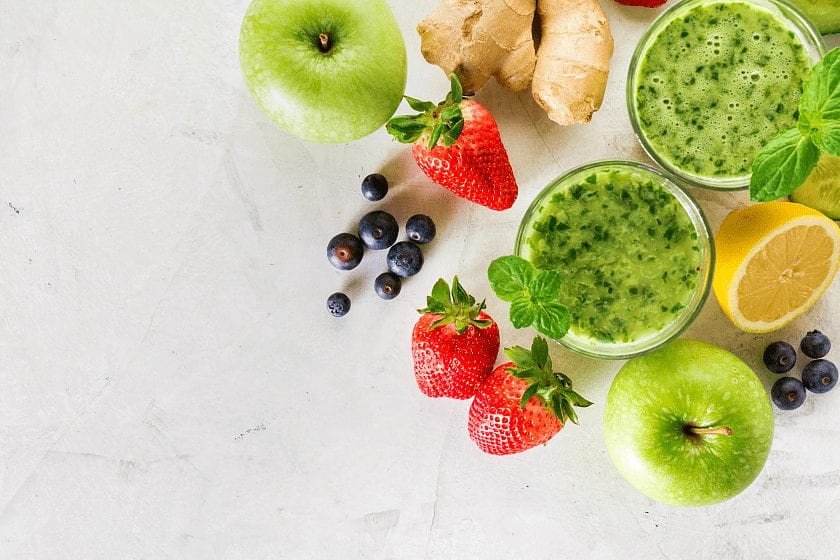
Natural Smoothie Recipes for Women: A Dietitian-Style Guide to Blends That Actually Fill You Up
Your No-Fuss Natural Smoothie Formula For Real Satiety, Not A Sugar Rush
Steve Maraboli
Radio commentator & speaker
By choosing healthy over skinny, you are choosing self-love over self-judgement.
Summary (TL;DR)
A natural smoothie is a whole-food drink — fruit, vegetables, a protein, a healthy fat, and a liquid base, blended with nothing added that you wouldn't add in your own kitchen.
Done right, it's one of the easiest ways for busy women to eat the fibre, protein, and greens they usually skip. Done wrong, it's a fruit-juice sugar bomb that leaves you hungry an hour later. The difference comes down to ratio, not recipe — and that's exactly what this guide fixes.
After personally testing 17 different blends over two weeks, the pattern was obvious: the smoothies that kept me full past mid-morning all followed the same four-part structure. The pretty ones I copied off Instagram mostly didn't.
Here's the thing nobody tells you when you start: most of us don't eat anywhere near enough fruit and vegetables, and the prep is usually the reason. By the time you've washed, chopped, and cooked, getting takeout starts to sound very reasonable.
A natural smoothie quietly solves that. You throw whole ingredients in a blender, press a button, and you've eaten a serving of greens before you've even sat down.
But — and this is the part that gets glossed over in glossy recipe posts — not every smoothie is "healthy" just because it came out of a blender instead of a drive-through. A natural smoothie can absolutely support fat loss and steady energy, or it can spike your blood sugar and leave you raiding the biscuit tin by 10 am. Same blender, completely different outcome.
If you've ever felt intimidated by drinking greens, frustrated that your smoothie didn't keep you full, or simply confused by the 400 conflicting recipes online, this guide is the reset. No fancy gear, no exotic powders — just a simple framework, the real evidence, and three video recipes to copy.
Medical & Referral Disclaimer
This article is for informational and educational purposes only. It is not a substitute for professional medical advice, diagnosis, or treatment. Always consult your physician or qualified health provider before starting any new diet or exercise program.
Key Takeaways
- A natural smoothie uses whole ingredients you can identify and would add yourself — no strained pulp, no syrup, no mystery "boosters."
- Satiety comes from the structure, not the flavour: liquid + fibre-rich fruit + protein + a healthy fat is the combination that actually holds you.
- Blending whole fruit does not automatically spike blood sugar — in a controlled trial, blended fruit produced a lower glucose response than the same fruit eaten whole. The sugar problem comes from added juice and sweeteners, not the blender.
- Protein and viscous fibre are the two ingredients with the strongest evidence for reducing hunger and next-meal eating.
- Greens are nearly free, calorie-wise — a cup of raw spinach is roughly 7 calories — so they're the cheapest way to bulk up nutrition without bulking up the calories.
What Counts As A "Natural" Smoothie?
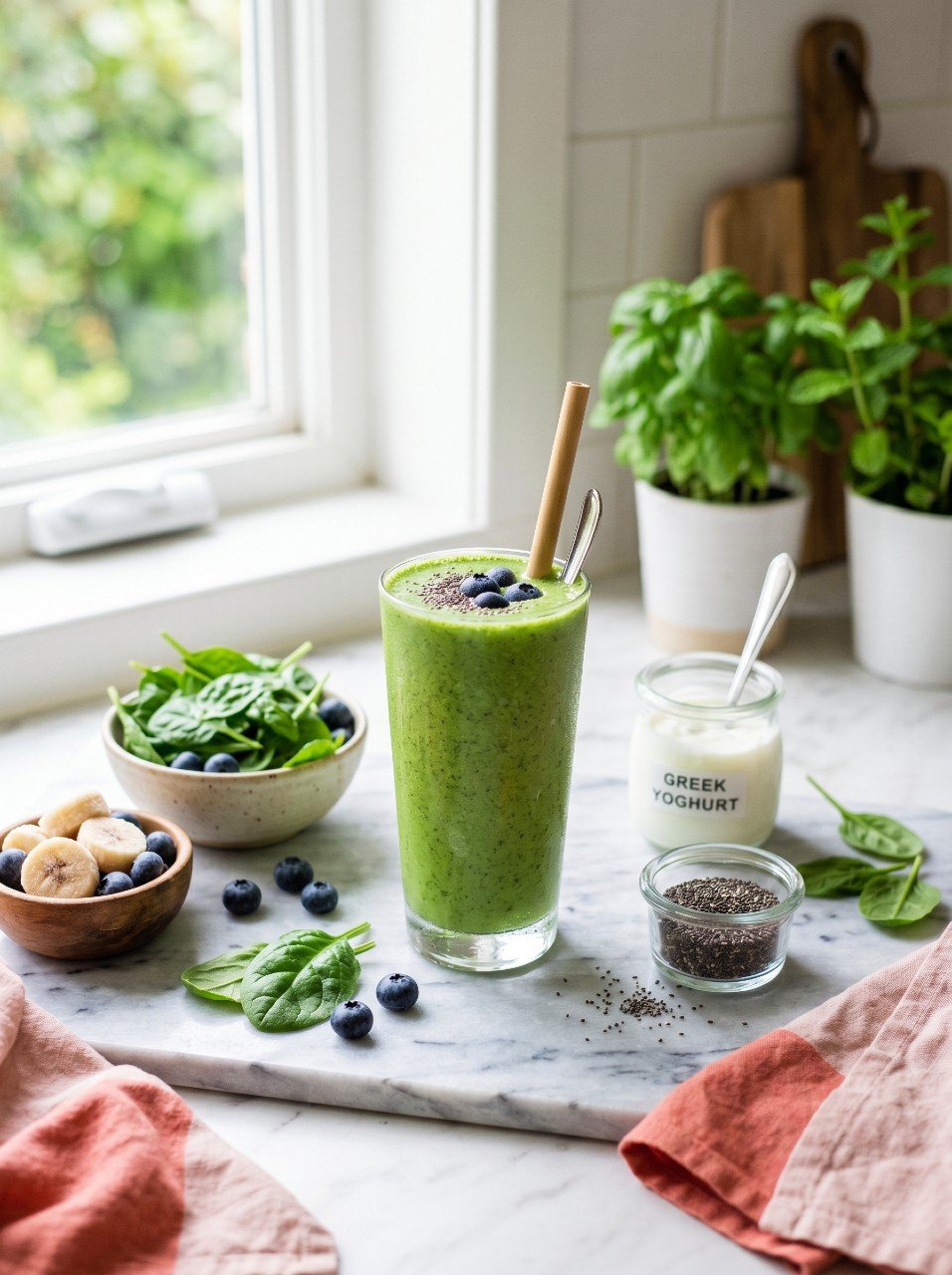
A natural smoothie is a chilled, blended drink made from whole ingredients you could name and measure yourself — not a commercial blend built around strained juice and added sugar. That single distinction is what separates a nourishing meal from a dessert in a cup.
Commercial and café smoothies often start with a sweetened fruit-juice base, sorbet, or "concentrate," then layer fruit on top. The result tastes great and behaves like soda. A natural version starts the other way around: whole fruit, vegetables, and a real protein come first, and the liquid is just enough to make the blades turn.
You don't need a recipe to make one. You need a ratio. As long as you understand the basic building blocks, the flavours are yours to play with.
The 4-Part Balanced Blend Method (My Framework)
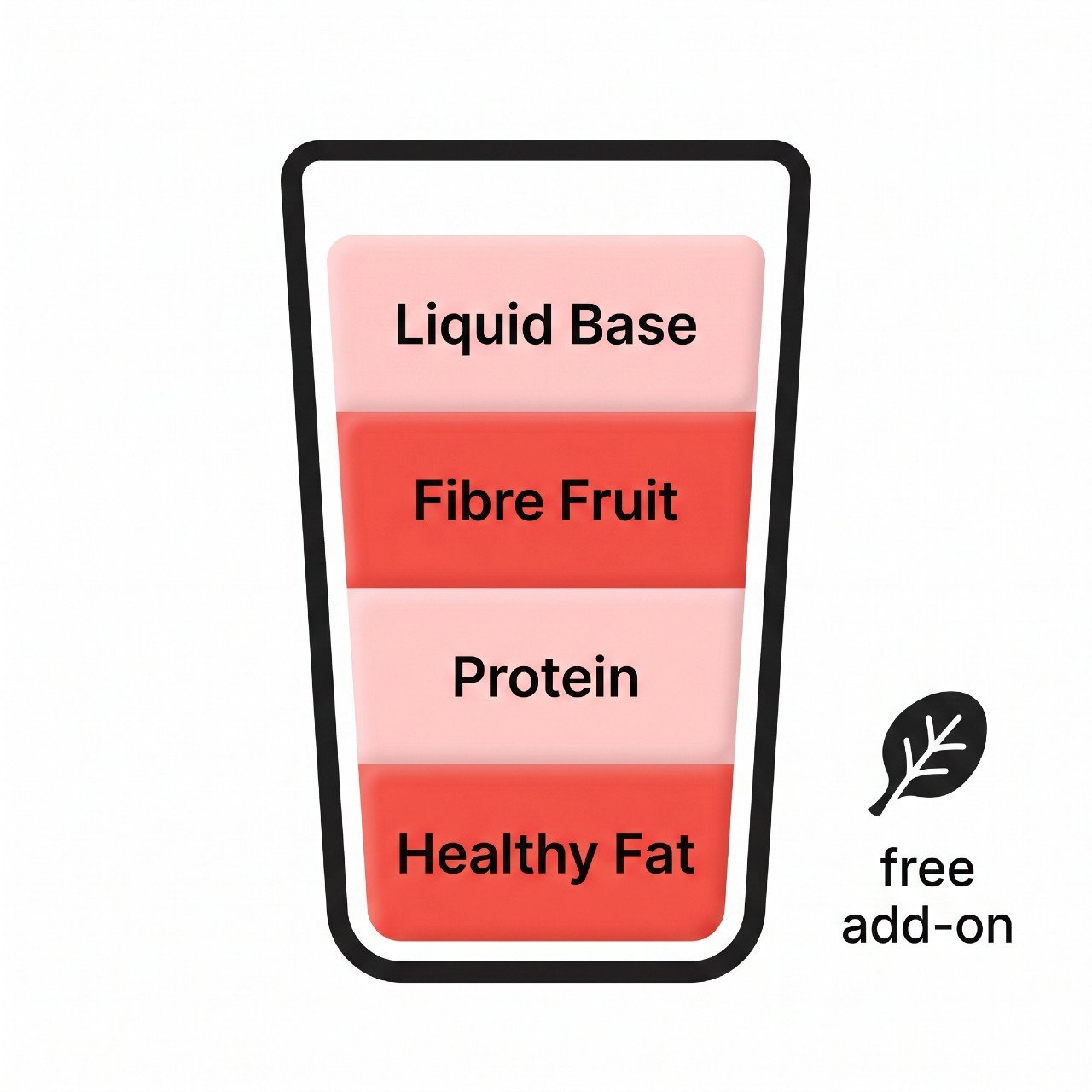
The smoothie that keeps you full follows a four-part structure: a liquid base, a fibre-rich fruit, a protein, and a healthy fat. Miss the protein or the fat, and you've made a juice; nail all four, and you've made a meal.
This is the framework I landed on after testing 17 blends over two weeks. The first week, I made "pretty" smoothies — all fruit and juice — and I was starving within an hour every single time.
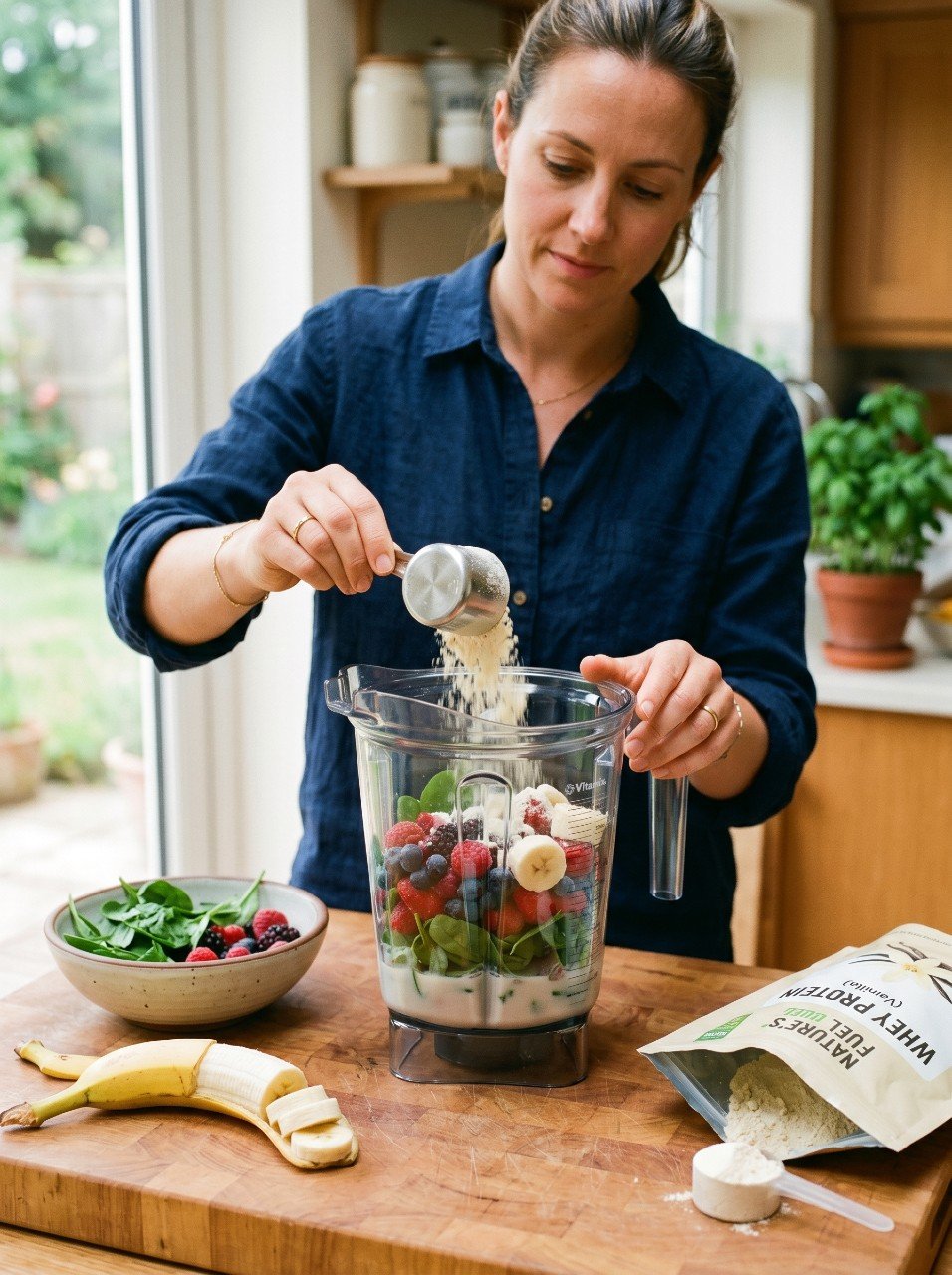
The second week, I rebuilt every blend around these four roles, and the difference in how long I stayed full wasn't subtle. It was the protein and the fat doing the heavy lifting, and the evidence backs up exactly why.
Here's the method in one table you can stick on the fridge:
| Role | What it does | Easy picks | Rough amount |
|---|---|---|---|
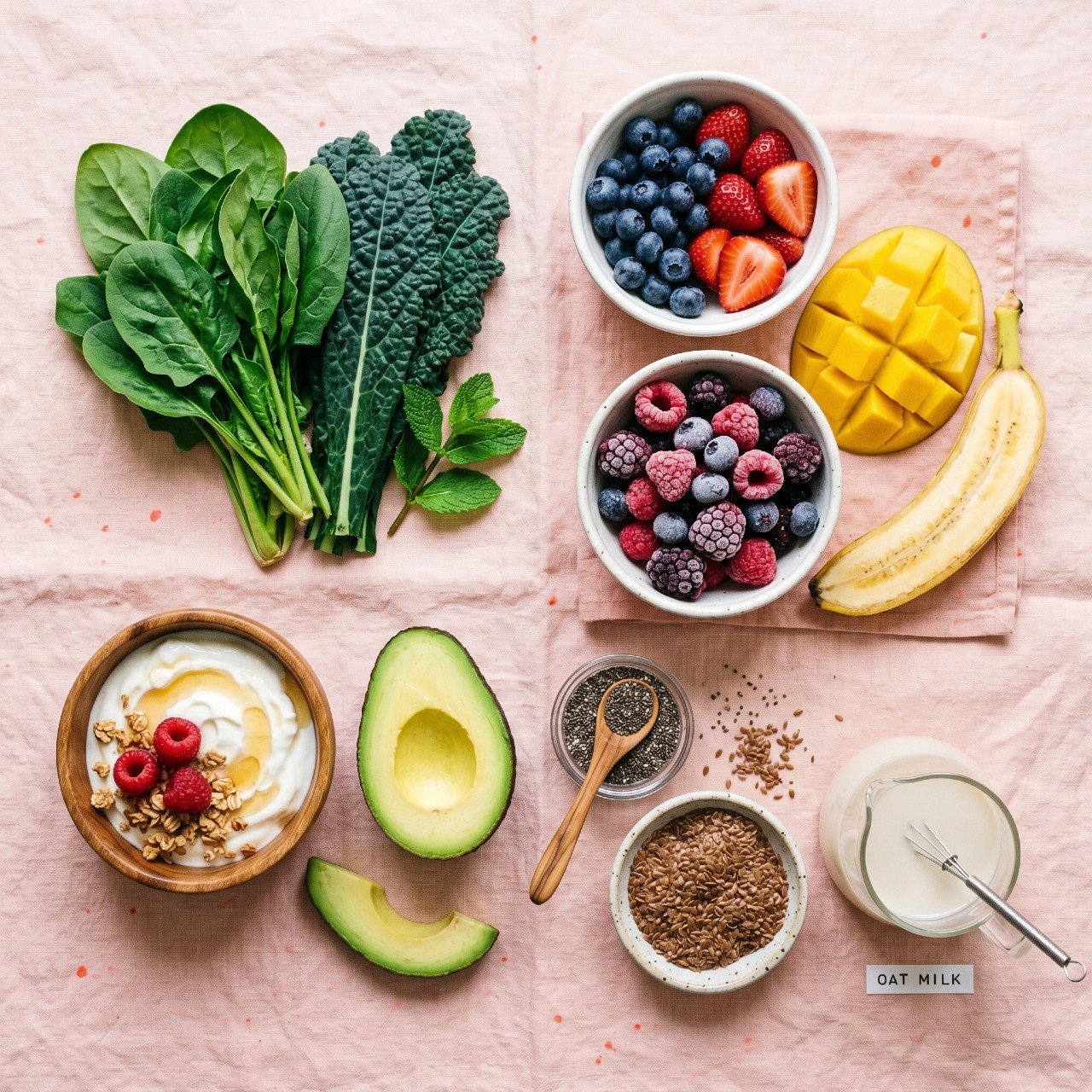
| 1. Liquid base | Gets the blades moving; keep it unsweetened | Water, unsweetened almond/soy milk, plain milk | ½–1 cup |
| 2. Fibre-rich fruit | Sweetness + slow-release carbs + fibre | ½ frozen banana, berries, ½ apple | ¾–1 cup |
| 3. Protein | The satiety anchor — keeps you full | Greek yoghurt, whey or plant protein, silken tofu | 15–25 g |
| 4. Healthy fat | Slows digestion, helps absorb nutrients | ½ avocado, 1 tbsp chia, 1 tbsp nut butter, ground flax | 1 tbsp |
| (Free add-on) | Nutrition for almost no calories | A handful of spinach or kale | 1–2 cups |
Why this order matters: protein has stronger satiety effects than fat or carbohydrate and raises the fullness hormones GLP-1 and PYY, which is why a protein-anchored smoothie holds you, and a fruit-only one doesn't. Add a tablespoon of fat, and you slow the whole thing down further.
The Contrarian Bit: Smoothies Don't Automatically Spike Your Blood Sugar
The popular warning that "blending fruit destroys the fibre and spikes your blood sugar" is mostly wrong — and the evidence is surprisingly clear. In a controlled crossover trial in healthy adults, blended fruit produced a lower peak glucose and a lower glucose area-under-the-curve than the same fruit eaten whole. Blending tore open the cell walls and seeds, releasing more accessible fibre, not less.
So where does the sugar-bomb reputation come from? Added juice, sorbet, sweetened yoghurt, and honey — the stuff commercial smoothies pile in. The blender isn't the villain. The shopping list is.
This matters emotionally, too. A lot of women avoid smoothies entirely because they've been told they're "just sugar." You don't have to. A natural smoothie built on the 4-part method is a genuinely blood-sugar-friendly meal — especially if you add a tablespoon of ground seeds, which have been shown to blunt the glucose response further.
Smoothie-Making Guidelines
The best natural smoothie is a homemade one, and getting it right comes down to a few small habits more than any single recipe. If you're a purist, it has to be made yourself — and the good news is you really don't need any fancy recipes to start.
A few simple but important tips:
- A decent blender is the one piece of kit that actually matters — a weak motor leaves you with chunks and gives up on frozen fruit.
- If you're watching your sugar or calorie intake, limit the fruit. Even half a frozen banana is enough to sweeten the whole thing.
- Add your liquid base and ice last, in small increments, until the consistency is right. Pour it all in at once, and you've got soup.
- Frozen fruit thickens a smoothie without watering it down the way ice does.
- New to greens? Start with spinach. You can hide a surprising amount in the blender before you taste it — it turns things green long before it turns things grassy.
The Benefits, Backed by Evidence
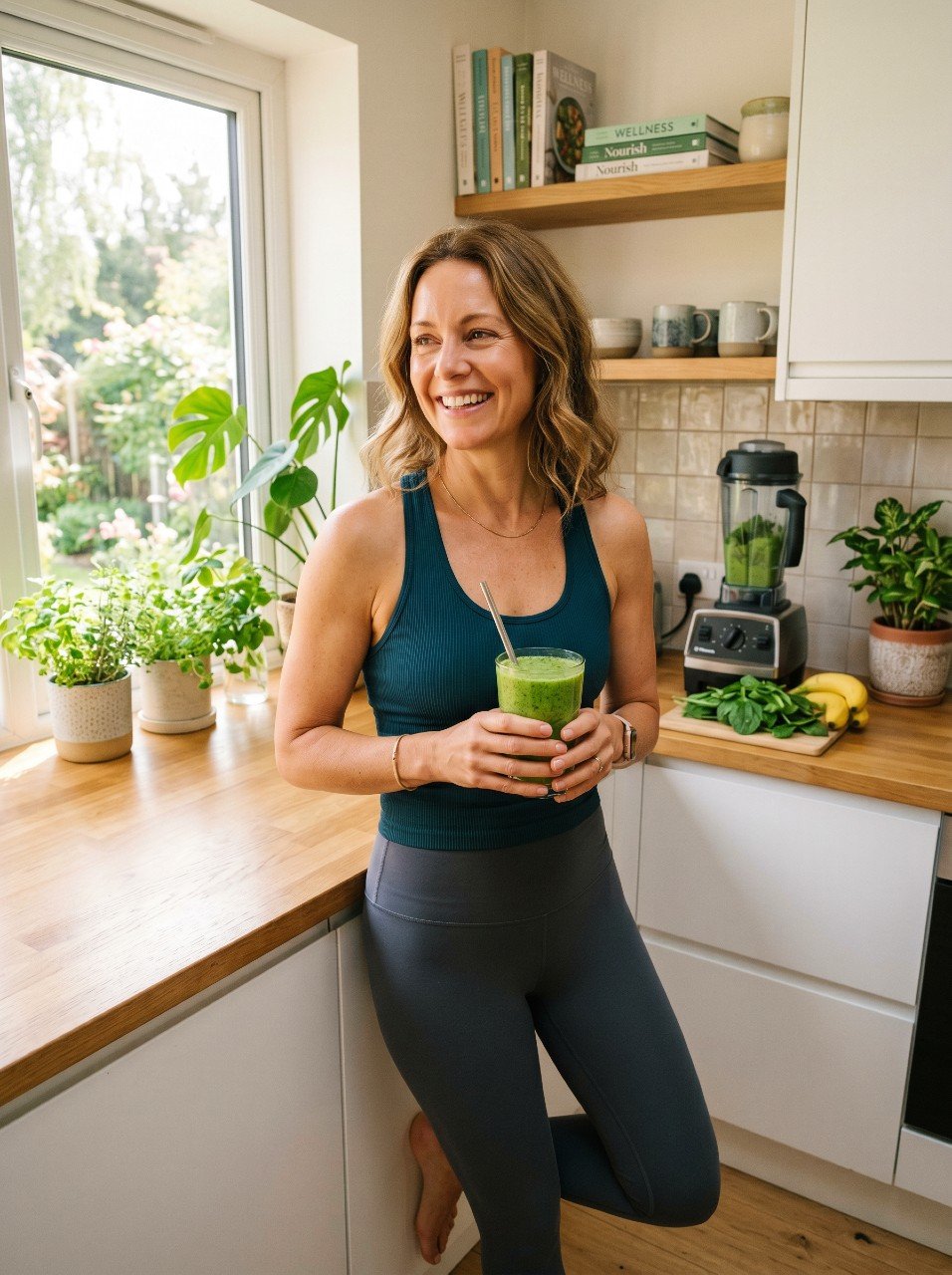
The real benefit of a natural smoothie is that it lets you eat foods you'd otherwise skip — greens, seeds, protein — in a form that's fast, portable, and genuinely enjoyable. It's nutrition by stealth.
A few specifics worth knowing:
- Fibre keeps you full. A systematic review of randomised controlled trials found that viscous fibres reduced appetite and lowered subsequent energy intake far more often than non-viscous ones. Berries, chia, and flax bring exactly that kind of fibre.
- Greens are almost free. Dark leafy greens are, in the USDA's words, low in calories and carbohydrates with a low glycemic index — ideal for reaching and keeping a healthy weight. A cup of raw spinach is around 7 calories, so it's the cheapest nutritional upgrade you can make.
- Protein makes it a meal, not a snack. Because higher-protein meals increase satiety and tend to reduce how much you eat later, the protein scoop is what turns your blend from "hungry in an hour" into "fine until lunch."
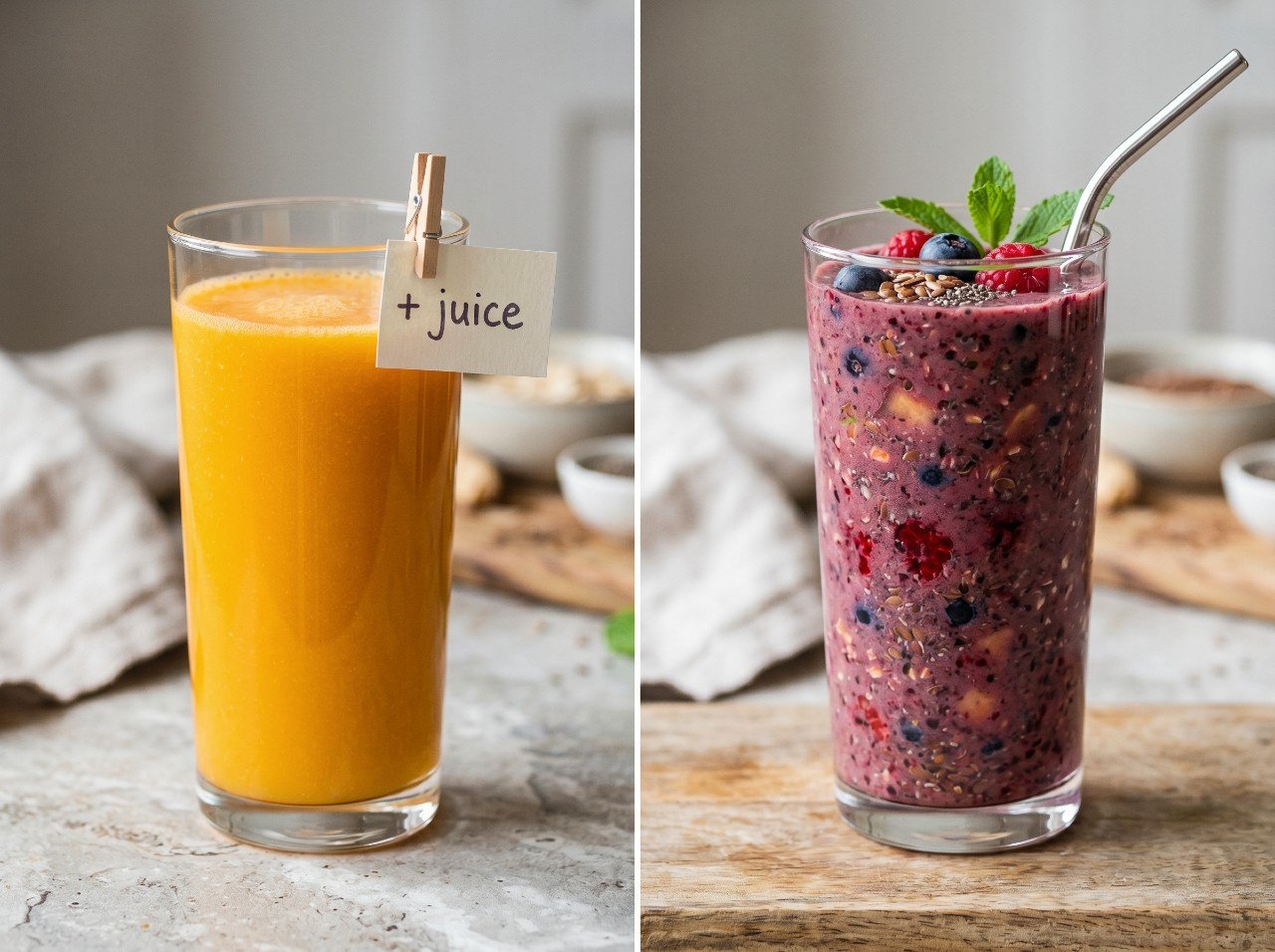
A quick reality check on portions — here's how a fruit-only blend compares to a 4-part one:
| Fruit-only "juice" smoothie | 4-Part balanced smoothie | |
|---|---|---|
| Typical build | Banana, mango, orange juice | Banana, berries, Greek yoghurt, chia, spinach, water |
| Protein | ~2 g | ~18 g |
| Fibre | Low–moderate | High |
| Keeps you full? | ~1 hour | Until the next meal |
| Blood-sugar curve | Sharp rise | Steadier |
Natural Smoothie Video Recipes
Watching a recipe done well removes the guesswork that text instructions leave behind — you see the exact order ingredients go in, how thick the final blend should look, and what a sensible portion actually is.
Here are three to copy:
- 5 Healthy Breakfast Smoothies — morning blends built for sustained energy.
- 12 Healthy Smoothies — a variety pack to keep things interesting.
- My Top 3 Weight-Loss Smoothies — higher-protein, lower-sugar builds.
Want The Habits Behind Lasting Weight Loss? Get the free guide: 10 research-backed habits that help women lose body fat and keep it off, with no extreme diets. Send Me The Free Guide.
The Bottom Line
A natural smoothie is one of the simplest, most forgiving healthy habits you can build — but only if you treat it as a meal and not a milkshake.
Get the four parts right (liquid, fibre-rich fruit, protein, healthy fat), and you've got a drink that's blood-sugar-friendly, keeps you full, and sneaks in the greens you'd otherwise never eat. Skip the protein and fat, lean on juice, and you've made a sugar rush with a halo.
The best ones use whole, organic, where-possible ingredients you can see in front of you — made by you, in your kitchen, on your terms.
Glossary Of Key Terms
- Natural Smoothie: A blended beverage composed exclusively of whole-food ingredients such as fruit, vegetables, protein, and healthy fats, with no added sugars or concentrates.
- Satiety: The state of feeling full and satisfied after eating, which prevents premature hunger and snacking between meals.
- Viscous Fiber: A type of fiber found in foods like chia, flax, and berries that thickens when mixed with liquid; it is scientifically linked to reduced appetite.
- GLP-1 and PYY: Fullness hormones released by the body in response to protein consumption that signal the brain to feel satisfied.
- Protein Anchor: The component of a smoothie (15–25g) responsible for providing lasting fullness and preventing blood sugar spikes.
- Liquid Base: The fluid—such as water or unsweetened almond milk—used to facilitate blending; the guide recommends adding this last in small increments.
- Glycemic Index: A system that ranks foods by how quickly they affect blood sugar levels; leafy greens are noted for having a low glycemic index.
- Crossover Trial: A type of scientific study cited in the text to prove that blended fruit does not spike blood sugar more than whole fruit.
- Healthy Fat: An ingredient like avocado or nut butter that slows down the digestion of the smoothie and assists the body in absorbing nutrients.
- Nutritional Stealth: The practice of adding high-nutrient, low-calorie ingredients (like spinach) to a blend where they cannot be easily tasted but provide significant health benefits.
FAQ
What Is A Natural Smoothie, Exactly?
A natural smoothie is a blended drink made only from whole ingredients you can name — fresh or frozen fruit, vegetables, a protein, a healthy fat, and an unsweetened liquid. It contains no juice concentrate, added syrup, or sorbet. The simplest test: if you wouldn't add an ingredient by hand in your own kitchen, it's not a natural smoothie.
Are Natural Smoothies Good For Weight Loss In Women?
Yes — when they're built as a balanced meal rather than a fruit-juice treat. A smoothie with protein and viscous fibre helps curb cravings and keep you full, because protein and viscous fibre both have strong, evidence-backed satiety effects. The key is avoiding added sugars and excess juice, which spike insulin without filling you up. Build it on whole ingredients, and a natural smoothie supports a calorie deficit without leaving you hungry.
Does Blending Fruit Spike Your Blood Sugar?
Not on its own. In a controlled trial, blended whole fruit actually produced a lower glucose response than the same fruit eaten whole, because blending releases more fibre from the pulp and seeds. The blood-sugar spikes people worry about come from added juice, sorbet, and sweeteners — not from the blender itself. Add a tablespoon of ground seeds to blunt the response even further.
What Are The Best Ingredients For A Natural Smoothie?
The best builds prioritise whole foods that deliver fibre, protein, and micronutrients. Leafy greens like spinach are an ideal low-calorie, low-glycemic base; berries add antioxidants and sweetness without much sugar; Greek yoghurt or a protein powder anchors satiety; and avocado, chia, or flax provide the healthy fat that slows digestion and aids nutrient absorption.
When Is The Best Time To Drink A Smoothie?
It depends on your goals, but two windows work best for most women. A protein-rich smoothie at breakfast steadies energy through the morning and reduces mid-morning snacking. A smoothie after a workout speeds recovery, because the liquid form absorbs quickly to replenish energy and repair muscle. Consistency matters more than timing — pick the slot that fits your day.
Can I Use A Natural Smoothie As A Daily Meal Replacement?
Yes, if it's nutritionally complete — protein, healthy fat, and fibre-rich carbohydrate, not just fruit. It's best to replace only one meal a day (usually breakfast or lunch) rather than living on liquids, since chewing solid food matters for digestion and fullness signals. Integrated into a varied diet, a daily smoothie is a sustainable habit.
How Do Cooking Videos Help You Make Better Smoothies?
Videos show what text can't: the right order to add ingredients (which protects the blender blades and avoids chunks), realistic portion sizes for calorie-dense add-ons like nut butter, and the colour and thickness to aim for. Seeing the finished blend gives you a target, which makes it far easier to repeat a good result and stick with the habit.