

The 4 Most Effective Ways To Avoid Common Workout Injuries Before They Happen
Jim Rohn
Author & Motivational Speaker
Take care of your body. It's the only place you have to live.
Summary (TL;DR)
Many workout injuries are preventable, despite being common among women due to anatomical and hormonal factors. Prioritizing dynamic warm-ups, correct weightlifting form, and proper cool-down routines is essential.
Avoid overtraining syndrome by listening to your body and addressing muscle imbalances with targeted exercises. Common injuries include muscle strains, ligament sprains, tendonitis, knee pain, and lower back issues, often stemming from progressing too quickly without proper preparation.
You set your alarm for 6 a.m. Laced up your shoes. Made the commitment.
Then your knee sent a sharp protest on day three — and suddenly the couch felt a lot safer than the squat rack.
If that sounds familiar, you're not alone. According to the American College of Sports Medicine, musculoskeletal injuries are among the most common barriers to regular exercise. And women face unique risk factors: anatomical differences, hormonal fluctuations, and a deeply ingrained tendency to push through warning signs rather than pause and listen.
But here's what you need to hear: most common workout injuries are completely preventable. They're not bad luck. They're the result of skipping fundamentals that take just minutes to establish.
This guide gives you four evidence-based pillars to keep you training consistently, moving confidently, and building the lean, strong body you're working toward — without the painful setbacks that derail so many women before they ever see results.
If you're still working up the courage to get to the gym at all, start with this guide first: How to Get Started at the Gym Without Feeling Intimidated as a Woman. Then come back here.
Medical & Referral Disclaimer
This article is for educational and informational purposes only. It does not constitute medical advice and is not intended to diagnose, treat, cure, or prevent any injury or health condition. If you are experiencing pain, have a pre-existing condition, or are returning to exercise after an injury, consult a qualified healthcare provider, sports medicine physician, or licensed physical therapist before beginning or modifying any exercise program.
Key Takeaways
- The most common workout injuries — muscle strains, tendonitis, and ligament sprains — are almost entirely preventable with proper preparation.
- Dynamic warm-up exercises (not static stretching on cold muscles) raise core temperature and prime joint health before every training session.
- Correct weightlifting form and body alignment protect your spine, knees, and shoulders more than any amount of protective gear.
- Overtraining Syndrome is real — and women are disproportionately affected, especially during the luteal phase of the menstrual cycle.
- A cool-down routine and adequate athletic recovery are not optional extras; they are where injury prevention actually happens.
- Muscle imbalance is the hidden driver behind most repetitive stress injuries — and it can be corrected with targeted corrective exercise and mobility work.
What Are the Most Common Workout Injuries?
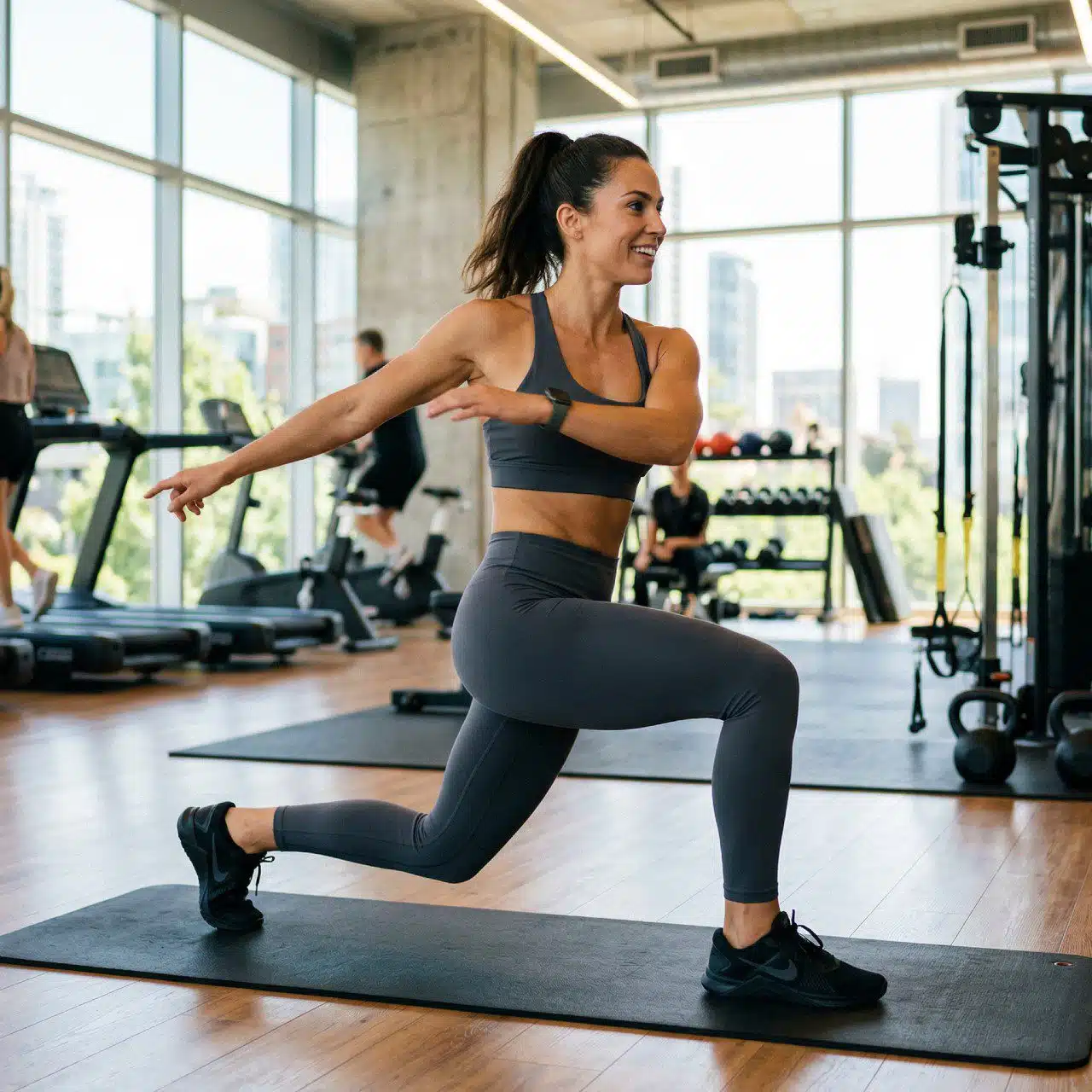
Common workout injuries include muscle strains, ligament sprains, tendonitis, knee pain, and lower back injuries. Most occur when women progress too hard, too fast — skipping warm-up exercises, using poor weightlifting form, or ignoring the early warning signals their body sends.
According to a 2021 review in the British Journal of Sports Medicine, up to 65% of recreational exercisers experience at least one training-related injury per year. The most frequently reported injuries among women specifically include:
- Muscle strains — overstretched or torn muscle fibers, most common in the hamstring, hip flexor, and lower back.
- Ligament sprains — ankle and knee ligaments, frequently injured during HIIT, jumping, and treadmill use.
- Tendonitis — inflammation from repetitive stress injury; most common in the Achilles, patellar tendon, and rotator cuff.
- Knee injuries — particularly ACL tears and patellofemoral pain syndrome; women experience ACL injuries at 2–8× the rate of men due to anatomical differences in hip-to-knee alignment.
- Lower back pain — typically caused by poor body alignment and weak core activation during safe lifting.
Each of these is preventable. Here's your four-pillar system.
TABLE #1 — Common Workout Injuries: Triggers, Symptoms & Prevention Strategies
| Injury Type | Most Affected Area | Common Trigger | Prevention Strategy |
|---|---|---|---|
| Muscle Strain | Hamstring, hip flexor, lower back | Cold muscles, skipping warm-up | Dynamic stretching routine + mobility work |
| Ligament Sprain | Ankle, knee | Sudden direction change, uneven surface | Stabilizer strengthening, proprioception drills |
| Tendonitis | Achilles, patellar, rotator cuff | Repetitive stress injury, overuse | Gradual 10% progression rule, eccentric loading |
| Patellofemoral Pain (Knee) | Kneecap, quad tendon | Muscle imbalance, poor squat form | Knee protection exercises, glute/quad activation |
| Lower Back Strain | Lumbar spine, erector spinae | Poor body alignment under load | Core bracing, corrective exercise, safe lifting cues |
| Shoulder Impingement | Rotator cuff, bursa | Overhead lifting with limited range of motion | Scapular stability work, external rotation exercises |
Sources: American Physical Therapy Association; sports medicine clinical data
How To Warm Up Correctly To Prevent Common Workout Injuries
The single most effective way to prevent common workout injuries is a proper warm-up with dynamic movement for 5–10 minutes before training. Dynamic warm-up exercises raise muscle temperature, increase joint range of motion, and prime your nervous system for safe lifting — reducing injury risk by up to 54%.
This is the step most women skip when time is tight. It's also the one that makes the biggest difference.
A 2019 review in the Journal of Strength and Conditioning Research found that a structured warm-up routine reduces injury risk by up to 54% — more than any other single intervention. Not a rounding error. That's a 54% reduction in the thing you're trying to avoid.
Dynamic vs. Static Stretching: What's The Difference?
Here's what trips most women up: static stretching — holding a stretch for 30+ seconds — on cold muscles actually increases your injury risk. Research from the American College of Sports Medicine shows it can temporarily reduce muscle strength and power by up to 8%, leaving you weaker right when your workout demands the most from you.
Static stretching belongs in your cool down routine. Not before training.
Before training, go dynamic: controlled, active movements that take your joints through their full range of motion under muscular control.
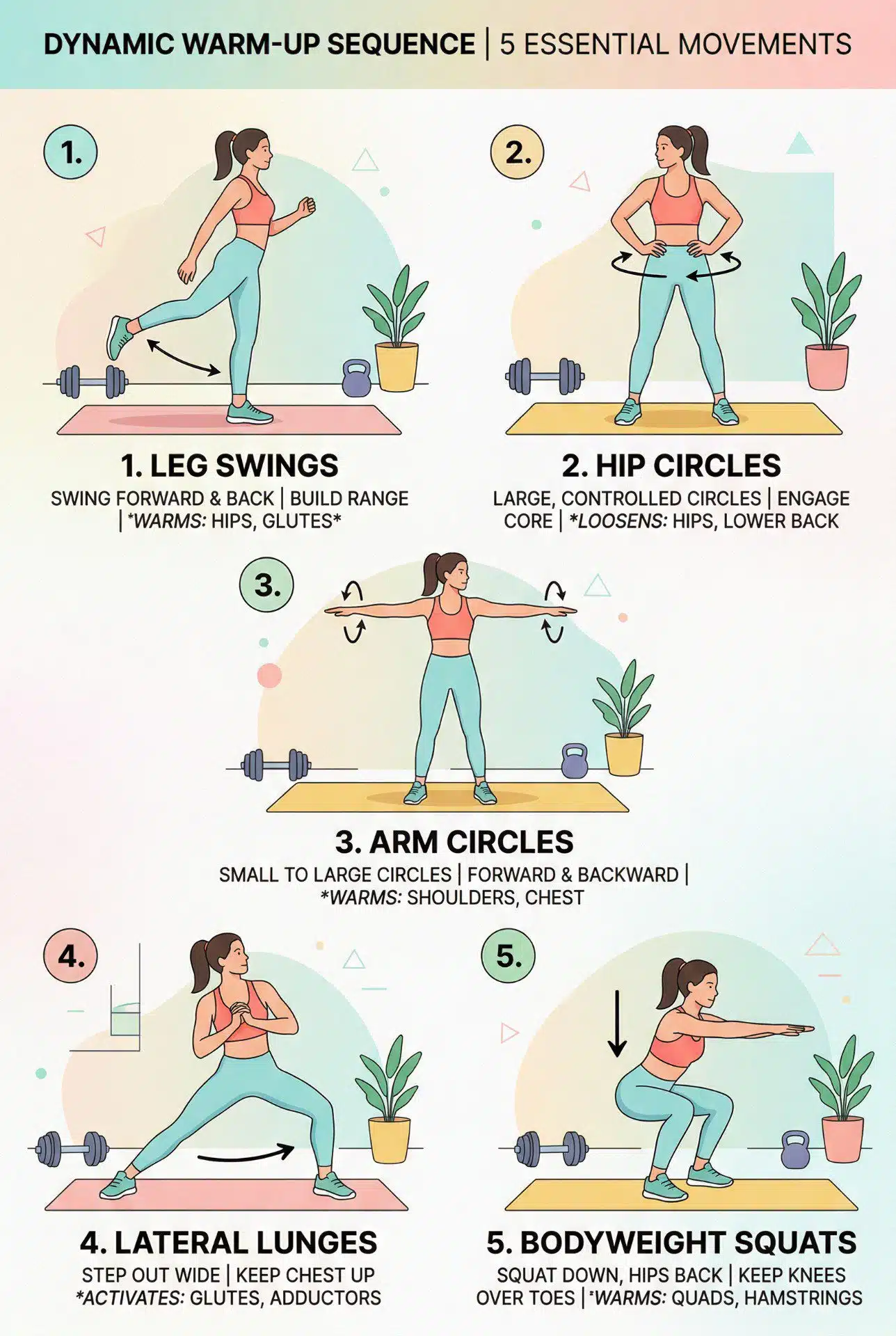
Your 10-Minute Dynamic Warm-Up Routine
Phase 1 — Cardiovascular Activation (3 minutes)
- Light jog, marching in place, or brisk walking to raise heart rate
- Optional: jump rope for 60–90 seconds
Phase 2 — Joint Mobility Work (4 minutes)
- Leg swings — forward/back and side-to-side, 10 reps each leg
- Hip circles — 10 each direction
- Arm circles and shoulder rolls — 10 each direction
- Ankle circles — 10 each direction
Phase 3 — Muscle Activation (3 minutes)
- Bodyweight squats — 10 reps
- Glute bridges — 10 reps
- Lateral band walks — 10 steps each direction
Pro tip from sports medicine: If you're lifting weights, finish your warm-up with 1–2 sets of your first exercise at 50% of your working weight. This primes the exact movement patterns you're about to load — and is one of the most-recommended physical therapy tips for back safety and knee protection.
How Does Proper Weightlifting Form Prevent Common Workout Injuries?
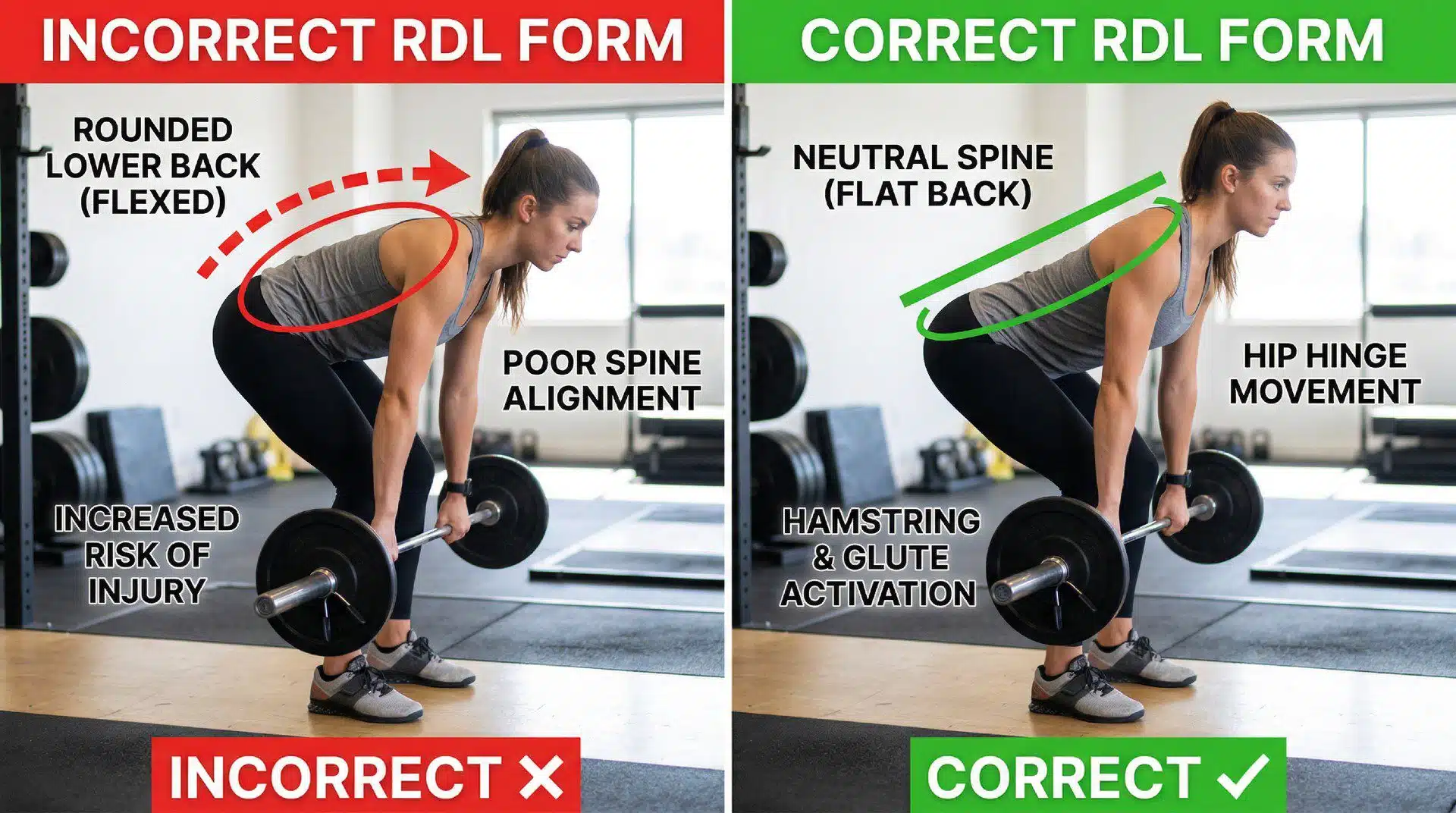
Correct weightlifting form is the most powerful injury prevention tool available to you. It ensures force is distributed across your target muscles — not dumped onto joints, ligaments, or your spine. The majority of common workout injuries trace directly back to compromised body alignment under load, not the exercises themselves.
This matters especially for women who are new to strength training or who learned their form by watching others. Most people in your gym have mediocre technique — and copying it will cost you eventually.
The Highest-Risk Exercises And How To Do Them Right
TABLE #2 — High-Risk Exercises: Injury Risk, Form Cues & Safer Alternatives
| Exercise | Primary Injury Risk | Correct Form Cue | Safer Alternative to Build First |
|---|---|---|---|
| Overhead Squat | Shoulder impingement, lower back strain | Chest tall, elbows pointed down, knees tracking toes | Goblet squat with lighter load |
| Romanian Deadlift | Hamstring tear, lumbar strain | Hinge at hips, bar close to shins, neutral spine | Dumbbell RDL — lighter, more controlled range |
| Kettlebell Swing | Lower back rounding, wrist strain | Drive with hips, spine neutral throughout, brace core | Dumbbell deadlift to develop hip hinge pattern |
| Behind-Neck Lat Pulldown | Cervical spine compression | Pull to chest, not behind head | Standard lat pulldown to collarbone |
| Seated Leg Extension | Patellar tendon overload | Limit top range of motion, avoid lockout | Leg press or split squat instead |
| Bicycle Crunch | Neck strain from pulling | Elbows wide, rotation from obliques only | Dead bug or pallof press |
| Bent-Over Row | Lower back rounding under fatigue | Brace core, flat back, pull to hip | Chest-supported dumbbell row |
Consider investing in even one session with a certified personal trainer to set your form foundation. It's one of the highest-return investments in fitness fundamentals you can make.
If you're dealing with muscle imbalance patterns that make correct technique harder to achieve, this guide walks you through exactly how to address it: How to Fix Muscle Imbalances and Poor Form as a Female Beginner.
Physical therapy tip: Distinguish between muscle fatigue (burn, pump, heaviness — normal) and joint or sharp pain (shooting, stabbing, clicking — stop immediately). Pushing through fatigue builds strength. Pushing through pain builds injuries.
How Should You Progress Weights Safely To Avoid Injury?
To avoid common workout injuries, increase training load — whether weight, volume, or session frequency — by no more than 10% per week. This "10% Rule" from sports medicine gives your tendons, ligaments, and connective tissue time to adapt at the same rate as your muscles, closing the gap where most repetitive stress injuries occur.
Your muscles get stronger faster than your tendons and ligaments do. That gap is precisely where injuries happen. The gym culture of loading up fast, chasing PRs on week two, and grinding through fatigue sounds motivating — but it's a fast track to weeks off training.
Your 3-Step Progressive Overload Plan For Safe Lifting
Step 1 — Start Light
Begin every new exercise at 50–60% of your estimated working weight. Use these early sessions to master body alignment, establish your breathing pattern (exhale on the effort, inhale on the return), and feel how the movement should flow. Spend at least 1–2 weeks here before adding load.
Step 2 — Progress Gradually
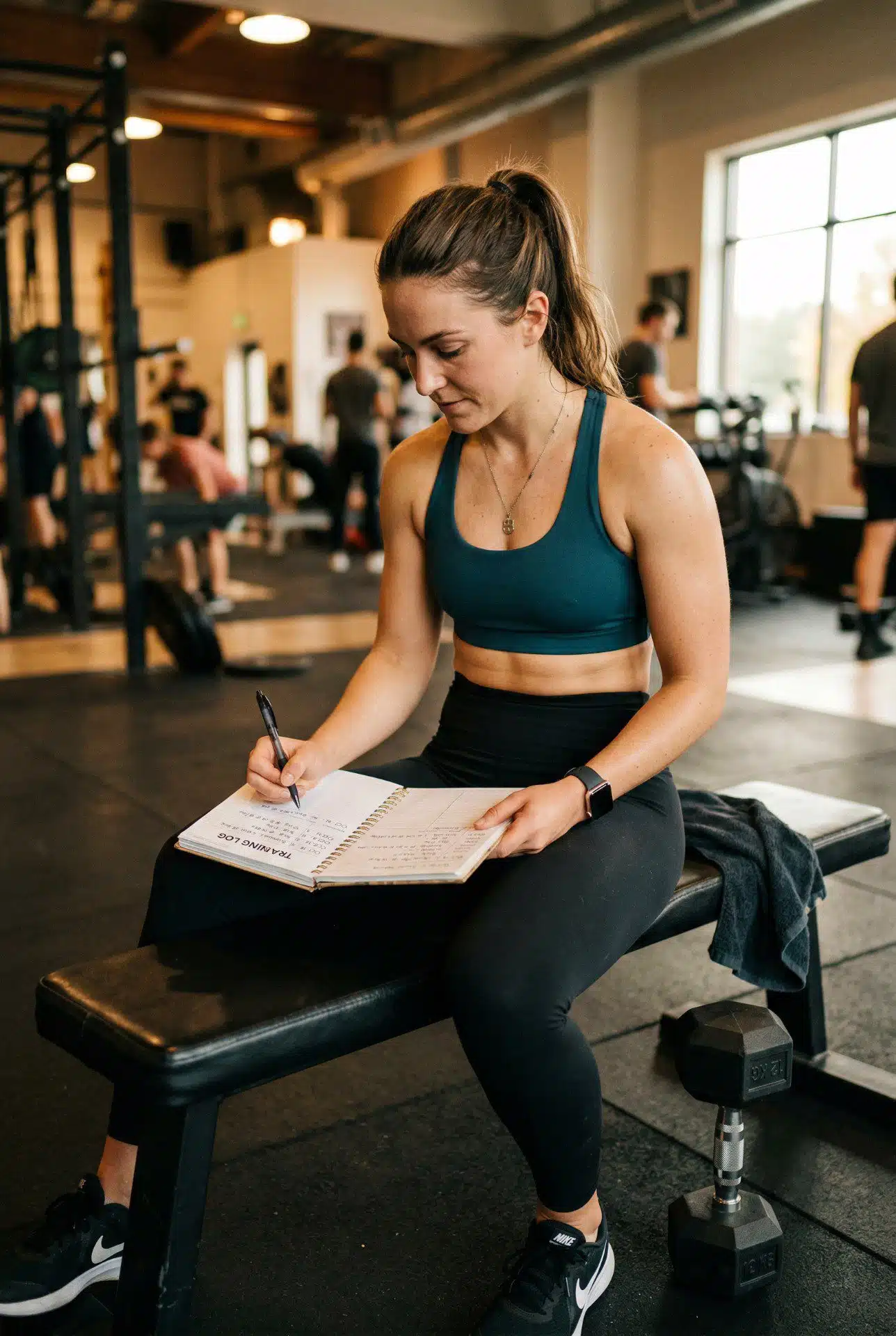
Apply the 10% rule: increase weight, reps, or sets by no more than 10% per week. Keep a simple training log — even a notes app works. This is fitness fundamentals 101, and it's what separates women who train for decades from those who cycle through injury and restart.
Step 3 — Maintain Strict Control
Every rep should move under muscular control — in both directions. If you can't control the lowering phase (the eccentric), the weight is too heavy. Momentum, bouncing, and dropping weights are red flags that load has outpaced capacity.
On protective gear: Weightlifting belts, knee sleeves, and wrist wraps are legitimate tools for safe lifting — but they supplement correct technique, not replace it. Think of them as your backup system, not your foundation.
How Do You Recognize And Avoid Overtraining Syndrome?
Overtraining Syndrome (OTS) develops when cumulative training stress consistently exceeds your body's capacity to recover. The hallmark signs are persistent fatigue, declining performance, disrupted sleep, and loss of motivation lasting more than two weeks. The solution is structured rest — not more effort.
Here's the counterintuitive truth about strength training safety: you don't get stronger during your workout. You get stronger during recovery.
Training creates controlled micro-damage to muscle fibers. The adaptive process — rebuilding them stronger and more resilient — happens in the 24–72 hours afterwards. Train without adequate recovery, and you're breaking tissue down faster than your body can rebuild it. That's the mechanism behind Overtraining Syndrome, and it's the reason smart athletic recovery is non-negotiable.
Signs You're Overtraining
Watch for these red flags — especially if more than three appear simultaneously:
- Persistent fatigue that a full night's sleep doesn't resolve
- Decreasing performance — weights feel heavier, reps decrease for no apparent reason
- Disrupted sleep or insomnia despite physical exhaustion
- Loss of appetite or sudden shifts in hunger patterns
- Mood changes — elevated irritability, anxiety, or apathy toward training
- Muscle soreness that doesn't resolve within 72 hours
- Frequent illness — a sign of suppressed immune function
- Recurring joint pain or tendonitis flare-ups
Why Women Are More At Risk For Overtraining
For women, these symptoms amplify during the luteal phase (days 15–28 of the menstrual cycle), when serotonin naturally drops and fatigue increases. Pushing full training intensity during this phase without adjusting volume is one of the most common — and most overlooked — triggers for workout injury and burnout in women.
This doesn't mean training less. It means training smarter, in sync with your body's natural rhythms.
How To Recover From Overtraining Syndrome
- Take at least one full rest day or active recovery day per week (light walking, gentle yoga, swimming)
- Reduce training volume by 30–50% for at least one week when symptoms appear
- Prioritize 7–9 hours of sleep — this is where athletic recovery actually happens
- Increase protein to 0.7–1g per pound of bodyweight to support muscle repair
- Schedule a deload week every 4–6 weeks — planned lighter training to allow full systemic recovery
Yoga is one of the best active recovery tools available — and it builds the mobility work your joints need. Learn how to use it safely here: Tips for Avoiding Yoga Injuries.

What Are The Women-Specific Workout Injury Risks No One Talks About?
Women face higher rates of specific injuries — ACL tears (2–8× more likely than men), stress fractures, and patellofemoral pain — due to anatomical differences, hormonal fluctuations during the menstrual cycle, and muscle imbalance patterns that are specific to the female body.
This isn't about fragility. It's about physiology. Understanding your specific risk factors is how you train smarter — not just harder.
Wider Q-Angle and Knee Protection
Women's wider hips create a greater angle between hip and knee — called the Q-angle. This places additional lateral stress on the kneecap during squats, lunges, and running. The evidence-based solution: strengthen your glutes and hip abductors to keep knees tracking properly over the second toe.
If lower body training concerns you, this guide on how to strength train without making your thighs bigger covers exactly how to train your legs with proper alignment for joint safety.
Hormonal Fluctuations And Ligament Safety
Estrogen affects ligament elasticity. Research published in the Journal of Athletic Training shows that ligament laxity peaks near ovulation — temporarily elevating injury risk for activities involving cutting, jumping, and pivoting. This doesn't mean avoiding training during this phase. It means dialing back high-impact plyometrics when laxity is elevated, and prioritizing form over intensity.
Muscle Imbalance: The Hidden Root Cause
Most women develop muscle imbalances through daily life — prolonged sitting tightens hip flexors, weakens glutes, and creates anterior pelvic tilt. These imbalances transfer directly into training, placing stress on joints that were never designed to absorb it.
Targeted corrective exercise — hip thrusts, clamshells, dead bugs, and split squats — addresses the root cause before it escalates into a repetitive stress injury. See our full guide: How to Fix Muscle Imbalances and Poor Form as a Female Beginner.
Join Our Mailing List
Join thousands of women inside our community and receive our free guide, 10 Actions That Support Permanent Weight Loss — the exact behavioural shifts that make the difference between a two-week attempt and a lasting transformation.
No restriction plans. No guilt. Just what actually works — for real women with real lives.
TABLE #3 — Summary And Key Takeaways
| Safety Pillar | Core Action | Time Investment |
|---|---|---|
| Warm-Up Exercises | Dynamic warm-up before every session — never static on cold muscles | 5–10 minutes |
| Weightlifting Form & Body Alignment | Learn correct technique before adding load; use corrective exercise for imbalances | Ongoing; 1 PT session recommended |
| Safe Lifting Progression | Apply the 10% Rule — never increase load by more than 10% per week | Track weekly in a log |
| Athletic Recovery & Overtraining Prevention | Deload every 4–6 weeks; prioritize 7–9 hours of sleep per night | Built into weekly schedule |
Ready to build a strong foundation from the ground up? Our free guide gives you 10 research-backed actions that support permanent weight loss — written specifically for women's bodies, not recycled from men's programs.
Related Articles
The Bottom Line
Getting injured isn't just physically painful — it breaks momentum, kills motivation, and can set your progress back by weeks or months. And most of the time, it simply didn't have to happen.
The four pillars in this guide — proper warm-up exercises, correct weightlifting form, gradual weight progression, and smart recovery from overtraining — are not complicated. They're just consistent. And consistency is what separates women who build lasting fitness from those who keep starting over.
You're not fragile. You're not bad at this. You just need a system that respects how your body actually works. Build that system. Protect it. And keep going.
Glossary Of Key Terms
FAQ
Repeated workout injuries typically come down to three root causes: skipping a proper warm-up routine (especially relying on static stretching before training), advancing weight or intensity too quickly without following a progressive overload plan, or training with unaddressed muscle imbalances that shift load onto vulnerable joints. Women also face unique biological risk factors — including hormonal fluctuations that affect ligament laxity and an anatomical Q-angle that increases knee stress. Implementing the four pillars in this guide — dynamic warm-up, correct form, gradual progression, and strategic recovery — resolves most recurring injury patterns.
Never do these during a workout session:
- Hold your breath during exertion (exhale on the effort)
- Let your knees cave inward during squats or lunges
- Work through sharp, shooting, or joint pain (vs. normal muscle fatigue)
- Use momentum or bouncing to complete a rep
- Stop abruptly on a treadmill at high speed
- Attempt a heavy lift without a spotter when needed
- Perform static stretching on cold muscles before training
When performed with poor form, the highest-injury-risk exercises are: overhead squats, Romanian deadlifts, kettlebell swings, behind-the-neck lat pulldowns, seated leg extensions, bicycle crunches, bent-over rows, and pull-ups. These are all excellent exercises performed correctly. The solution isn't to avoid them — it's to master proper technique and body alignment with lighter loads before progressing to heavier weights or more demanding variations.
Overtraining Syndrome (OTS) is a state of accumulated fatigue where training stress chronically exceeds recovery capacity. Unlike normal post-workout soreness, OTS symptoms — persistent fatigue, declining performance, disrupted sleep, loss of motivation, and recurring joint pain — persist for weeks. Recovery requires 1–2 weeks of significantly reduced training volume, prioritized sleep (7–9 hours), and adequate protein intake (0.7–1g per pound of bodyweight). Severe OTS can take 4–12 weeks to fully resolve.
The most common workout injuries for women are ACL tears, patellofemoral pain (runner's knee), rotator cuff strain, lower back strain, Achilles tendonitis, and ankle sprains. Prevention requires five strategies applied consistently: dynamic warm-up routines, correct weightlifting form and body alignment, gradual progressive overload using the 10% Rule, targeted corrective exercise to address muscle imbalances, and adequate recovery — especially during the luteal phase of the menstrual cycle, when injury risk naturally elevates.
Healing timelines vary significantly by injury type and severity. Mild muscle strains typically resolve in 3–5 days with rest and gentle movement. Uncomplicated ankle sprains heal in 5–14 days. Tendonitis requires 6–12 weeks with exercise modification and proper loading protocols. Ligament injuries such as ACL tears may require surgical intervention and 6–12 months of rehabilitation. If pain persists beyond 72 hours, worsens with rest, or includes swelling and loss of range of motion, consult a sports medicine physician or licensed physical therapist rather than attempting to train through it.
Correct weightlifting form distributes load across the muscles you intend to train — protecting joints, tendons, and ligaments from absorbing forces they were never designed to handle. Poor body alignment during even moderate-intensity exercises creates cumulative mechanical stress that eventually exceeds tissue tolerance. A 20-pound dumbbell with poor technique can cause more damage than a 60-pound dumbbell lifted correctly. This is why learning the movement pattern always comes before loading the movement.