
Beyond The "Diet": Science-Backed Secrets To Lose Weight Without Starving

Be the change you want to see. A LadyBoss is in control of her destiny, her situation, her health, her body, and in turn, her life.
Kaelin Tuell Poulin
Achieving sustainable weight loss requires a departure from restrictive calorie counting toward a holistic approach focused on metabolic health and mindful eating. This comprehensive guide explores how to lose weight without dieting by prioritizing nutrient density, hormonal balance, and consistent lifestyle shifts.
By understanding the science of satiety and physical activity, women can foster a healthy relationship with food while achieving their body composition goals. These evidence-based strategies ensure long-term success without the cycle of deprivation common in traditional weight loss programs.
For many women, the word "diet" is synonymous with deprivation, restriction, and an inevitable sense of personal failure. However, as a behavioral health educator, I want to start by shifting the perspective: the struggle to manage weight is rarely about a "lack of willpower."
Instead, we must acknowledge that our modern environment is designed, in practice, for weight gain. Between the saturation of ready-made meals high in saturated fats and salt, the convenience of the digital age, and the shift toward sedentary work-from-home lifestyles, the odds are often stacked against our biology.
The "Slow and Steady" philosophy is not a compromise; it is an evidence-based framework that respects your psychology and your schedule. By focusing on small, high-leverage wins, we can bypass the "all-or-nothing" cycle, build metabolic health, and lose weight that lasts a lifetime.
Guiding Principle: Sustainable health is born from consistency, not perfection. It is the result of making small, achievable adjustments to your daily rhythm that compound into significant long-term transformation.
Before we address the specific nutrients on your plate, we must first understand the internal mechanics of how your brain and body experience the act of eating.
Medical & Referral Disclaimer
This article is for informational purposes only. It is not intended to be a substitute for professional medical advice, diagnosis, or treatment. Always seek the advice of a physician or other qualified health provider with any questions you may have regarding a medical condition. Do not disregard professional medical advice or delay in seeking it because of something you have read in this article. This content is supported by the referenced studies, which provide the evidence base for these strategies.
Key Takeaways
- Consistency Over Perfection: Lasting transformation is achieved through small, sustainable daily adjustments that compound over time, rather than falling into the "all-or-nothing" cycle of restrictive dieting.
- Master Mindful Eating: By slowing your eating pace and eliminating environmental distractions like phones or TV, you allow your brain’s "fullness gap" to catch up, naturally preventing overconsumption.
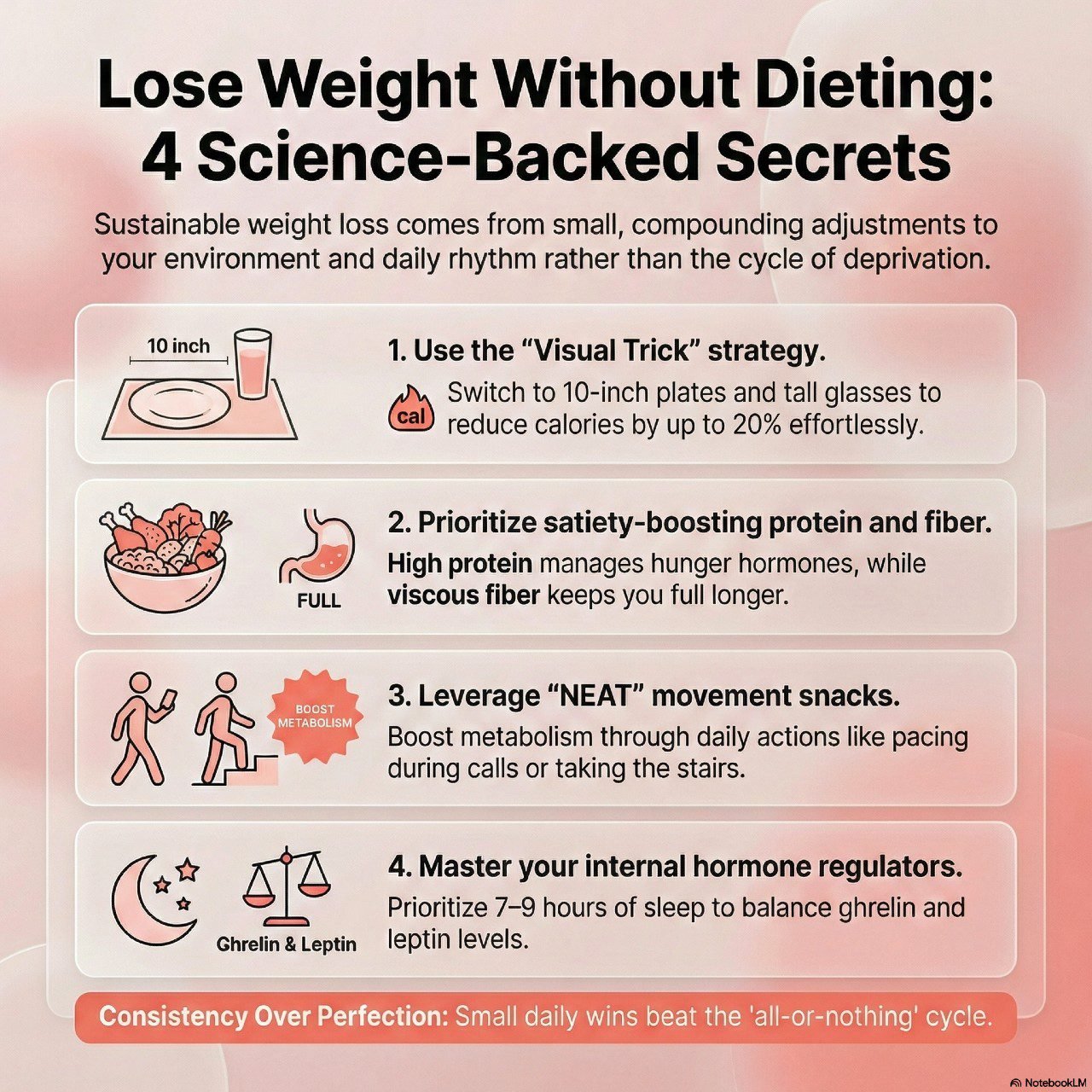
- Leverage Environmental Design: Use visual "hacks" like switching to 10-inch plates or tall, thin glasses to trick your brain into feeling satisfied with up to 20% fewer calories without a sense of deprivation.
- Prioritize Satiety-Boosting Nutrients: Focus on high-protein foods and viscous fiber (found in beans, oats, and leafy greens) to stay full longer, boost metabolism, and preserve lean muscle mass.
- Embrace Lifestyle Movement (NEAT): Boost your metabolic health by incorporating "movement snacks"—such as taking the stairs or pacing during phone calls—rather than relying solely on grueling gym sessions.
- Manage Internal Hormones: Prioritise 7–9 hours of sleep and stress-management techniques to keep hunger-triggering hormones like ghrelin and cortisol in check, which prevents cravings and abdominal fat storage.
Video Overview
Why Everything You’ve Been Taught About Weight Loss Is Wrong
Have you ever spent weeks "eating clean" only to find the scale hasn't budged an inch? You aren't alone. Most women are trapped in a cycle of restriction and burnout because they’ve been told that weight loss is a battle of willpower.
It isn't.
If you are tired of the "all or nothing" mentality, it’s time to stop dieting and start designing your environment. In this guide, we are moving past the fad diets to look at the biological and psychological "shortcuts" that allow you to lose weight sustainably, without ever feeling like you are missing out.
The Science Of Mindful Eating
There is a significant "fullness gap" in our physiology: it takes the stomach and hormones time to transmit satiety signals to the brain. In our fast-paced world, we often finish a meal before these signals arrive, leading to overconsumption. Mindful eating is the practice of slowing down to let your internal "hunger switch" catch up.
Beyond simple pacing, practices like yoga can be transformative here. Yoga isn’t just exercise; it develops a calm self-awareness and a "careful approach to eating" that helps you recognize when you are full and resist the urge to overeat.
Mindful Eating Toolkit
- Chew Thoroughly: Try counting your chews for each bite. This slows the pace and physically aids digestion, giving the brain time to register fullness.
- Use Your Non-Dominant Hand: If you are right-handed, try eating with your left. This breaks the "autopilot" mode of eating and forces you to be present with every bite.
- Eliminate Environmental Distractions: Turn off the TV and put away your phone. Research shows that distracted eating impairs our sensory experience, leading to delayed fullness and a higher likelihood of snacking later.
- Embrace Intuitive Cues: Use your internal hunger and fullness signals as your primary guide, rather than external rules or the desire to "clean the plate."
While behavior is the foundation, we can also use "visual tricks" in our physical environment to support our goals without requiring extra mental effort.
The "Smaller Plate" Optical Illusion: Trick Your Brain into Fullness
In our modern world, portion and plate sizes have grown significantly over the decades, often leading us to consume more than we realize. Because our brains often rely on visual cues rather than physical hunger signals to decide when we are done, we can use environmental design to our advantage.
Research shows that simply switching from a 12-inch dinner plate to a 10-inch one can reduce your intake by 20%, potentially cutting 100–200 calories daily without any sense of deprivation. You can also play with color; choosing a plate that contrasts sharply with your food helps you become more mindful of portion sizes.
To manage liquid calories, try using a tall, thin glass instead of a short, wide one, which can reduce your consumption by 25–30%.


TIP: Doing something as simple as replacing one serving of soda a day with water or another low-calorie or no-calorie drink can help you drop those extra pounds.
Environmental Design: The "Visual Trick" Strategy
Our brains are easily influenced by the size and color of the tools we use. By making minor adjustments to your kitchen environment, you can trigger the "Delboeuf Illusion"—a psychological phenomenon where the brain misinterprets portion sizes based on the surrounding space.
Environmental Hacks For Portion Control
Environmental Cue | The Small Change | The Result/Benefit |
Plate Size | Swap a 12-inch dinner plate for a 10-inch lunch plate. | Reduces food intake by up to 20% (approx. 100–200 calories) without feeling deprived. |
Glass Shape | Use a tall, thin glass instead of a short, wide one. | A visual trick that leads to consuming 25–30% less liquid calories from juice or alcohol. |
Visual Contrast | Choose a plate color that contrasts sharply with your food. | The Contrast Effect: Research shows people overserve and eat more when food is the same color as the plate. |
Once your environment is set to support you, we can turn our attention to "Nourishment Balance"—the art of choosing foods that keep hunger at bay.
Nutritional Foundations: Satiety Over Restriction
Effective weight management is not about cutting calories into a state of deprivation; it is about managing "Energy Density." By choosing nutrient-dense whole foods, you can stay satisfied while naturally lowering your intake. A great goal is to prioritize home-cooked meals at least five days a week, utilizing shortcuts like pre-cut veggies or rotisserie chicken to keep it manageable.
Join Our Mailing List
See how easily you can get fitter.
Sign up to get your free PDF report on 10 Actions That Support Weight Loss sent to your inbox!

The Satiety Secret: Why Protein Is Your Best Friend
Protein isn't just for bodybuilders; it is the most effective tool for managing hunger hormones like ghrelin. When you prioritize protein, you naturally eat fewer calories without tracking them.
- Pro-Tip: Aim for 25–30 grams per meal. If you aren't sure where to start, check out our High-Protein Meal Prep Guide to see how easy it is to hit these targets.
- The Fiber Factor: Pairing your protein with high-fiber greens slows down digestion even further. This is a strategy we often recommend for women with specific fitness goals or injuries because it manages energy levels without requiring high-intensity exercise.
- Key Sources: Greek yogurt (excellent for breakfast to curb later cravings), lean meats, oily fish, and plant-based powerhouses like lentils and quinoa.
The Viscous Fiber Factor
Not all fiber is created equal. Viscous Fiber forms a thick gel in your gut, which slows down stomach emptying and increases the time it takes to absorb nutrients, keeping you full for much longer.
- Where to find it: Focus on Brussels sprouts, asparagus, oranges, flaxseed, and oat cereals.
- Checklist for Daily Volume: Leafy greens and berries allow you to "pile on the volume" for very few calories.
Nourishing Whole Foods To Fill Your Plate
- Lentils, Beans, and Chickpeas: Exceptional sources of both protein and plant-based viscous fiber.
- Greek Yogurt or Cottage Cheese: Easy, high-protein options that support fullness.
- Quinoa and Oats: Complex carbohydrates that provide steady energy.
- Asparagus, Brussels Sprouts, and Oranges: Specific plant foods rich in viscous fiber.
- Lean Proteins: Chicken breast, fish, and tofu to reach your daily protein goals.
Precision Hydration
Proper hydration is one of the simplest tools for Calorie Management, yet it is frequently overlooked. Our bodies often mistake the signals for thirst as hunger, leading to unnecessary snacking when all we really need is a glass of water. Improving your Hydration Benefits can directly impact how much you eat at your next meal.
Thirst is frequently misinterpreted by the brain as hunger. A powerful strategy is to drink 1 pint (568 milliliters) of water roughly 30 minutes before your meals. This simple habit has been shown to increase satisfaction and significantly decrease the number of calories consumed during the meal.
Beginner'S Guide To Natural Weight Loss
In a beginner's guide to natural weight loss, you will learn 10 healthy tips to help you achieve your weight loss goals in a kind, sane and sustainable way. Say goodbye to crazy diets — these simple, practical tips will help you transform your relationship with food, your body and your weight!
Smart Swaps: Eat This, Not That
Sometimes, weight loss isn't about eating less, it's about eating smarter. Use this table to swap high-density, low-satiety foods for options that keep you full and energized.
Instead of This... | Try This Instead! | The "Lean Body" Benefit |
|---|---|---|
Fruit Juice/Soda | Sparkling Water with Lemon | Saves 150+ calories and prevents insulin spikes. |
Flavored Yogurt | Greek Yogurt with Berries | Doubles the protein while cutting sugar by 60%. |
White Toast | Smashed Avocado on Sourdough | Healthy fats and fiber keep you full for 3+ hours. |
Potato Chips | Air-Popped Popcorn or Almonds | Provides a satisfying "crunch" with more volume and nutrients. |
Movement As Lifestyle: The Power of NEAT
You don’t need a grueling gym schedule to change your metabolic health. While formal exercise is excellent, NEAT (Non-Exercise Activity Thermogenesis)—the energy you burn during everyday movement—is a massive, often overlooked contributor to weight loss.
10-Minute Movements
- Brisk Walking: A simple, high-impact win (walking one mile burns approximately 100 calories).
- The Stair Choice: Opt for stairs over the elevator to inject short bursts of intensity.
- Active Chores: Gardening, weeding, or vigorous house cleaning.
- "Phone Pacing": Stand and walk while taking calls rather than sitting.
A Sustainable Goal: The CDC and NHS recommend 150 minutes of moderate-intensity activity per week. Don’t look at the total; break it into 10-minute chunks throughout your day. It all adds up.

The Internal Regulators: Sleep, Stress, And Hormones
Nutrition and movement are only two-thirds of the story. Your internal hormones act as the master regulators of your weight. Leptin signals fullness, Ghrelin triggers hunger, and Cortisol—the stress hormone—is specifically linked to increased abdominal fat storage.
Sleep Loss (<7 hours) = Higher Ghrelin + Lower Leptin = Increased Cravings.
The Sleep-Weight Connection: Research shows that simply sleeping one extra hour a night can help you lose up to 14 pounds in a year without changing anything else.
To keep these "hunger switches" in balance, prioritize 7–9 hours of sleep and utilize stress-management tools like deep breathing or yoga to keep cortisol levels—and abdominal fat storage—in check.
Realistic Timelines And Success Strategies
Sustainable weight loss is a marathon, not a sprint. Aiming for 1–2 pounds per week is the "Gold Standard" for safety and longevity.
A Primary Win: If you have a significant amount of weight to lose, focus on the first 10%. Losing just 10% of your body weight can lead to transformative health outcomes, including a 50% reduction in joint pain and drastically improved mobility.
The "Small Win" Sidebar |
Pizza Night: Swap meat toppings for extra veggies to save 100 calories per slice. |
The Snacking Urge: Pop in a piece of sugarless mint gum when cravings hit to keep your mouth busy and curb the urge to graze. |
Join Our Mailing List
Are you ready to get in shape? Join us and get the list of top 10 actions that support PERMANENT weight loss and make you look and feel better without being hungry in the process!
Your Success Checklist
- Consistency over Perfection: Focus on what you can do daily, not on being perfect.
- The "Body Double" Effect: Team up with a friend or join a support group. Working with others increases your success rate by 20%.
- One Step at a Time: Don’t overhaul everything. Start by swapping one soda for water or switching to a 10-inch plate.
- Celebrate Non-Scale Victories: Are you sleeping better? Is your mood more stable? Do you have more energy? These are the real markers of health.
By embracing the "Slow and Steady" path, you aren't just losing weight—you are reclaiming your metabolic health and building a lifestyle where wellness happens naturally.
Related Articles
The Bottom Line
Losing weight is all about using up the calories you take in every day. By trying these tips for eating less and moving more, you'll lose weight without going on a dreaded diet.
True wellness is a "slow and steady" lifestyle approach, not a temporary challenge. By adopting a Mediterranean-inspired model—prioritizing whole Foods, healthy fats, and consistent movement—you honor your body’s biological needs. When we align our habits with our hormones and environment, health becomes a natural byproduct of how we live.
This is your invitation to move away from the "all-or-nothing" mentality and embrace a gentler path. You don't have to change everything at once to see a difference in how you feel. Which one small, non-diet change will you choose to honor your body with today?
Embrace Inspiration
Like What You Read? Be Sociable, Comment, And Share It! Thanks.
Glossary Of Key Terms
• Cortisol: A stress hormone linked to increased abdominal fat storage when levels remain chronically elevated.
• Delboeuf Illusion: A psychological phenomenon where the brain misinterprets the size of a portion based on the size of the plate or the space surrounding the food.
• Energy Density: The amount of energy (calories) per gram of food; choosing low-energy-density, nutrient-rich foods allows for larger portions with fewer calories.
• Ghrelin: The "hunger hormone" that triggers the urge to eat; levels typically increase when an individual is sleep-deprived.
• Leptin: The "fullness hormone" that signals to the brain that the body has had enough to eat; its production can be suppressed by lack of sleep.
• Mindful Eating: The practice of slowing down and removing distractions during meals to better recognize internal hunger and satiety cues.
• NEAT (Non-Exercise Activity Thermogenesis): The energy expended for everything we do that is not sleeping, eating, or sports-like exercise, such as walking to the car or cleaning.
• Non-Scale Victories (NSVs): Markers of health progress that are not related to body weight, such as improved sleep quality, stable mood, or increased energy levels.
• Satiety: The physical feeling of being full and satisfied after eating, which helps suppress the urge to consume more food.
• Thermogenesis: The process of heat production in the body, which can be boosted by the consumption of protein, leading to more calories burned during digestion.
• Viscous Fiber: A type of soluble fiber that turns into a gel-like substance in the digestive tract, slowing digestion and prolonging fullness.
• Visual Trick Strategy: Using environmental changes, such as smaller plates or taller glasses, to influence the brain’s perception of consumption without a sense of deprivation.
FAQ
Absolutely! While traditional diets often involve restrictive eating and calorie counting, there are effective methods to shed pounds without compromising your overall health and well-being. By adopting lifestyle changes that promote balanced nutrition, regular physical activity, and stress management, you can achieve sustainable weight loss without the drastic measures of restrictive dieting.
The key to losing weight without dieting is to focus on nutrient-dense foods that provide sustained energy and promote satiety. Prioritize whole grains, fruits, vegetables, lean proteins, and healthy fats, ensuring your meals are packed with flavor and variety. By making mindful choices and listening to your body's hunger cues, you can avoid overeating and maintain a feeling of fullness throughout the day.
Absolutely! Exercise plays a crucial role in weight management, even when not accompanied by strict calorie restriction. Regular physical activity helps burn calories, build muscle, and improve metabolism, all of which contribute to achieving and maintaining a healthy weight. Aim for at least 30 minutes of moderate-intensity exercise most days of the week to reap the benefits of exercise for weight loss.
Sleep deprivation can disrupt hormones that regulate appetite and metabolism, making it harder to lose weight and more likely to gain weight. Aim for 7-8 hours of quality sleep each night to optimize hormone balance, promote healthy eating habits, and enhance weight loss efforts.
Chronic stress can elevate cortisol levels, a hormone that promotes fat storage and hinders weight loss. Effective stress management techniques, such as mindfulness meditation, yoga, or deep breathing exercises, can help lower cortisol levels, promote relaxation, and support your weight loss journey.
Challenging negative thought patterns and adopting a positive mindset are crucial for successful weight loss without dieting. Instead of focusing on weight loss as a punishment or restriction, view it as a journey towards overall well-being and personal growth. Celebrate your progress, no matter how small, and embrace the process of creating healthy habits that will last a lifetime.
Losing weight without dieting involves making sustainable lifestyle changes rather than restricting calories severely. Focus on mindful eating, which means listening to your body's hunger cues and stopping when satisfied. Incorporate whole, unprocessed foods like vegetables, lean proteins, and healthy fats into your meals. Staying hydrated is crucial, as thirst is often mistaken for hunger.
Additionally, prioritize quality sleep and manage stress levels, as cortisol can lead to weight gain. By adopting these healthy habits, you create a calorie deficit naturally without the psychological burden of dieting. This holistic approach leads to long-term weight management success and fosters a much healthier, more intuitive relationship with food and your body.
Increasing protein intake is a fundamental strategy for losing weight naturally because it impacts satiety and metabolism. Protein reduces levels of the hunger hormone ghrelin while boosting the appetite-reducing hormones GLP-1 and cholecystokinin. This leads to an automatic reduction in calorie intake because you feel fuller for longer periods.
Furthermore, protein has a high thermic effect, meaning your body burns more calories digesting it compared to fats or carbohydrates. Consuming adequate protein also helps preserve lean muscle mass during weight loss, which is essential for maintaining a healthy metabolic rate. Aim to include a source of high-quality protein, such as eggs, lean meats, or legumes, at every meal to maximize these benefits.
Yes, drinking water is a scientifically proven method to assist with weight loss without the need for strict dieting. Consuming water before meals can act as an appetite suppressant, helping you feel fuller and effectively reducing your calorie intake during that meal. Staying hydrated also boosts your resting energy expenditure, allowing your body to burn more calories throughout the day.
Often, the brain confuses thirst signals with hunger, leading to unnecessary snacking; drinking water first can resolve this issue. Replacing high-calorie sugary beverages like sodas and juices with water drastically cuts down your daily sugar and calorie consumption. This simple switch creates a healthier environment for your body to shed excess fat naturally.
Join Our Mailing List
See how easily you can get fitter.
Sign up to get your free PDF report on 10 Actions That Support Weight Loss sent to your inbox!