
What the Research Really Says About Why Lack Of Exercise Is Deadlier Than Obesity
Edward Stanley
Earl of Derby, The Conduct of Life
Those who think they have no time for bodily exercise will sooner or later have to find time for illness.
The Executive Summary
Research indicates that physical inactivity is more dangerous than obesity, contributing to twice as many deaths, according to a study of over 334,000 people. The study found that even a small amount of daily movement significantly reduces the risk of premature death.
Lack of exercise leads to physiological deterioration, impacting cardiovascular health and increasing the risk of diseases such as type 2 diabetes and certain cancers. For women, sedentary lifestyles can also amplify hormonal health risks.
You have heard the warnings about obesity for decades. The headlines, the health campaigns, the BMI charts on the doctor's wall. And yet, one of the most significant public health findings of the last twenty years has received a fraction of the attention it deserves.
A landmark study of 334,161 European men and women — one of the largest of its kind — found that physical inactivity kills twice as many people as obesity. Not slightly more. Twice as many.
You do not have a weight problem. You have a movement deficiency problem. And that is a problem with a far simpler solution than the diet industry wants you to believe.
This article walks you through exactly what the research found, what inactivity does to a woman's body, and — most importantly — the minimum effective dose of movement required to dramatically reduce your risk of premature death.
Medical & Referral Disclaimer
This article is for informational and educational purposes only. It is not a substitute for professional medical advice. Consult your healthcare provider before beginning any new exercise programme, particularly if you have existing health conditions.
Key Takeaways
- Physical inactivity causes twice as many deaths as obesity, according to a major European study of 334,000+ people.
- Even a 20-minute daily brisk walk reduces premature death risk by 16-30% in previously sedentary people.
- Sitting for more than 8 hours per day is independently associated with significantly elevated mortality — even in people who exercise.
- Cardiorespiratory fitness level is a stronger predictor of longevity than body weight or BMI.
- Physical inactivity raises the risk of heart disease, type 2 diabetes, certain cancers, and metabolic syndrome.
- Women face specific inactivity risks related to hormonal health, bone density, and mental wellbeing.
- The threshold for meaningful health protection is lower than most people think — small amounts of daily movement make a significant difference.
What Did The Landmark Research Actually Find?
The landmark research on physical inactivity and mortality, led by Professor Ulf Ekelund of Cambridge University and published as part of the EPIC study (European Prospective Investigation into Cancer and Nutrition), followed 334,161 men and women across Europe for 12 years.
It found that the number of deaths attributable to physical inactivity was approximately double the number attributable to obesity, making inactivity one of the leading preventable causes of premature death in the developed world.
[VISUAL: Infographic showing comparative mortality data — a simple visual bar chart contrasting deaths attributable to physical inactivity vs. obesity from the EPIC study. Bold, clean design with citation. Caption: "Inactivity: the silent risk nobody talks about."]
The researchers calculated that eliminating physical inactivity would reduce deaths in Europe by 7.35% — compared with a 3.66% reduction if obesity were eliminated. The conclusion, in the words of the study authors: "The greatest risk reduction came from moving from completely inactive to moderately inactive."
This last point is critical. The most dramatic health gains do not come from elite athleticism. They come from moving at all — from zero to something. That is the threshold that saves lives.
What "Physical Inactivity" Actually Means
The study defined physical inactivity as reporting no recreational physical activity. Not running marathons. Not as achieving optimal fitness. Simply: doing nothing beyond daily incidental movement.
If you are walking to your car, taking the stairs occasionally, and doing light housework — but no dedicated physical activity — you are in the moderate-inactive category, not the completely inactive one. Moving from completely inactive to even this moderate level produced the most significant mortality risk reduction in the study.
This is genuinely encouraging news. You do not need to become a fitness devotee. You need to move.

What Happens To Your Body When You Stop Moving?
Physical inactivity triggers a cascade of physiological deterioration that begins within days of reduced activity and compounds over months and years. The consequences include muscle atrophy, joint stiffness, reduced cardiovascular efficiency, metabolic dysregulation, impaired immune function, and measurable cognitive decline. This progressive deterioration is sometimes called "sitting disease" in the scientific literature.
The human body was designed for movement. Every major biological system — circulatory, lymphatic, skeletal, muscular, endocrine — functions optimally under conditions of regular physical demand. Remove that demand, and the systems downregulate. Capacity decreases. Vulnerability to disease increases.
The Timeline Of Inactivity's Effects
| Timeframe of Inactivity | Physiological Effect |
|---|---|
| 24-48 hours | Reduced insulin sensitivity; blood glucose regulation begins to impair |
| 1-2 weeks | Measurable decline in aerobic capacity (VO₂ max); muscle protein synthesis reduces |
| 3-4 weeks | Noticeable muscle mass loss begins (sarcopenia acceleration) |
| 2-3 months | Significant cardiovascular deconditioning; resting heart rate rises |
| 6-12 months | Bone mineral density begins to decline; postural muscle weakness becomes visible |
| Years | Increased chronic inflammation markers; elevated risk of metabolic syndrome, type 2 diabetes, cardiovascular disease |
For women specifically, this timeline is compressed by hormonal changes during perimenopause and menopause — when oestrogen decline already accelerates bone density loss, cardiovascular risk, and muscle mass reduction. Inactivity during these years amplifies processes already in motion.
Is Physical Inactivity Really More Dangerous Than Being Overweight?
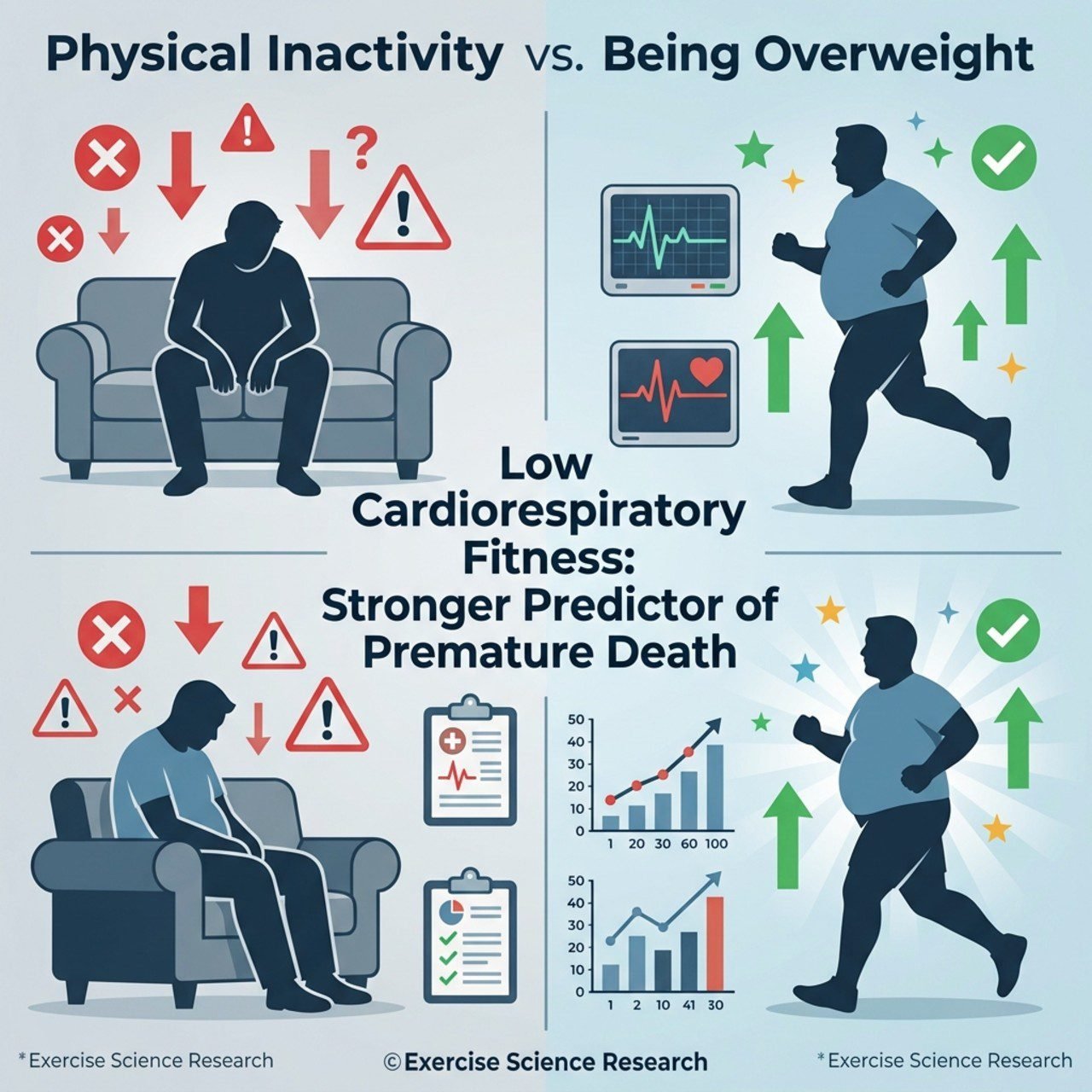
Yes — according to the current body of exercise science, low cardiorespiratory fitness is a stronger predictor of premature death than high body weight. The "fitness over fatness" research paradigm, developed extensively by exercise scientists including Dr. Steven Blair at the Cooper Institute, demonstrates that physically fit individuals at higher body weights live longer, on average, than unfit individuals at lower body weights.
This does not mean body composition is irrelevant to health. It means that when researchers control for fitness level, the independent health risk attributed to higher body weight is significantly smaller than the risk attributed to low aerobic capacity.
The American College of Sports Medicine has cited cardiorespiratory fitness as one of the most powerful independent predictors of all-cause mortality — stronger than smoking, hypertension, high cholesterol, or BMI in some study cohorts.
Why This Matters For Women
Weight-centric health messaging has led millions of women to believe that their weight is their primary health risk. The research says otherwise. A woman who is moderately overweight and exercises regularly has dramatically better health outcomes than a woman of "normal" weight who is sedentary.
This is not an excuse to ignore nutrition or body composition entirely. It is a reframe: movement is not the reward for losing weight. Movement is the medicine that makes weight loss more likely — and that protects your health regardless of what the scale says.

What Are The Specific Health Risks Of A Sedentary Lifestyle For Women?
A sedentary lifestyle significantly elevates women's risk of cardiovascular disease, type 2 diabetes, certain cancers (particularly breast and colon), metabolic syndrome, osteoporosis, depression, anxiety, and cognitive decline. These risks are independent — meaning they occur even in women whose weight falls within a "healthy" BMI range.
Cardiovascular Health
Physical inactivity is the fourth leading risk factor for cardiovascular disease globally, according to the World Health Organization. Sedentary behaviour and heart disease are linked through multiple mechanisms: reduced HDL cholesterol, elevated LDL, increased resting blood pressure, impaired endothelial function, and chronically elevated inflammatory markers.
For women, post-menopausal cardiovascular risk rises sharply — and exercise is one of the most evidence-backed strategies for managing this transition. The American Heart Association recommends at least 150 minutes of moderate aerobic activity per week for cardiovascular disease prevention — equivalent to 21 minutes per day.
Type 2 Diabetes And Metabolic Syndrome
Physical inactivity impairs glucose metabolism and insulin sensitivity — meaning that inactive muscle tissue becomes less efficient at clearing glucose from the bloodstream. Over time, this contributes directly to metabolic syndrome (a cluster of conditions including high blood sugar, excess abdominal fat, abnormal cholesterol, and elevated blood pressure) and type 2 diabetes.
Research published in Diabetologia found that each additional hour of sedentary time per day was associated with a 22% increased risk of type 2 diabetes.
Cancer Risk
Exercise and cancer risk reduction is one of the most compelling findings in recent preventative health research. According to the National Cancer Institute, regular physical activity is associated with a reduced risk of at least 13 different cancer types — including breast cancer (the most common cancer in women), colon cancer, endometrial cancer, and ovarian cancer.
The protective mechanisms include reduced inflammation, improved immune surveillance, better hormone regulation (particularly oestrogen, which drives several gynaecological cancers), and reduced insulin-like growth factor levels.
Mental Health And Cognitive Decline
Inactivity and mental health decline are bidirectionally linked: sedentary behaviour increases the risk of depression and anxiety, while depression and anxiety increase sedentary behaviour. For women, who experience depression at approximately twice the rate of men, this feedback loop has significant real-world consequences.
Regular physical activity triggers neuroplasticity — the brain's capacity to form new connections and maintain existing ones. A Harvard Health review found that exercise can be as effective as antidepressant medication for mild-to-moderate depression in some populations — and without the side-effect profile.
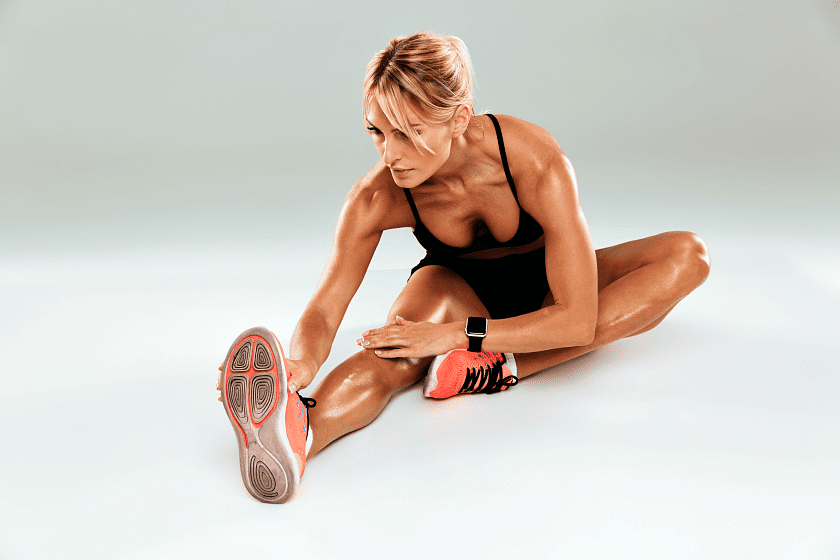
TIP: Doctors have experimented with patients and have left on an ending note that patients with more movement are, in fact, burning more calories and are more likely to live longer than their peers who don’t do any physical activity.
How Much Exercise Does It Actually Take To Make A Difference?
The most significant mortality risk reduction from exercise comes from moving from complete inactivity to light-to-moderate daily movement, as little as 20 minutes of brisk walking per day. This modest threshold reduces premature death risk by 16-30% in previously sedentary individuals. You do not need to run, lift heavy, or commit to an hour daily. You need to move every day.
This finding — from the same EPIC study and supported by multiple subsequent analyses — is the most important practical takeaway from the exercise science literature on inactivity and mortality risk.
Exercise Dose vs. Health Benefit: What The Evidence Shows
| Activity Level | Daily Time Equivalent | Mortality Risk Reduction vs. Sedentary | Additional Health Benefits |
|---|---|---|---|
| Completely sedentary | 0 minutes | Baseline (highest risk) | — |
| Lightly active | 20 min brisk walk | 16-30% reduction | Improved insulin sensitivity, mood |
| Moderately active | 30-60 min mixed activity | 30-45% reduction | Cardiovascular benefit, weight management |
| Active | 60-90 min mixed | Up to 50% reduction | Significant chronic disease protection |
| Very active | 90+ min daily | Diminishing returns beyond this point | Elite health metrics |
The critical insight: the curve is steepest at the bottom. Going from zero to 20 minutes daily produces far greater health gains than going from 60 minutes to 90 minutes. This is the most encouraging finding in exercise science for previously inactive women — the bar to meaningful protection is far lower than the fitness industry implies.
The WHO Guidelines: What "Enough" Looks Like
The World Health Organization recommends for adults:
- 150-300 minutes of moderate-intensity aerobic activity per week (e.g. brisk walking, cycling, swimming), OR
- 75-150 minutes of vigorous-intensity aerobic activity per week (e.g. running, HIIT), OR
- An equivalent combination of both
Plus: muscle-strengthening activities at moderate intensity or above on 2 or more days per week.
These are targets, not minimums. Any movement is protective. These numbers represent the threshold for optimal health protection.
What Are The Dangers Of A Desk Job For Women's Long-Term Health?
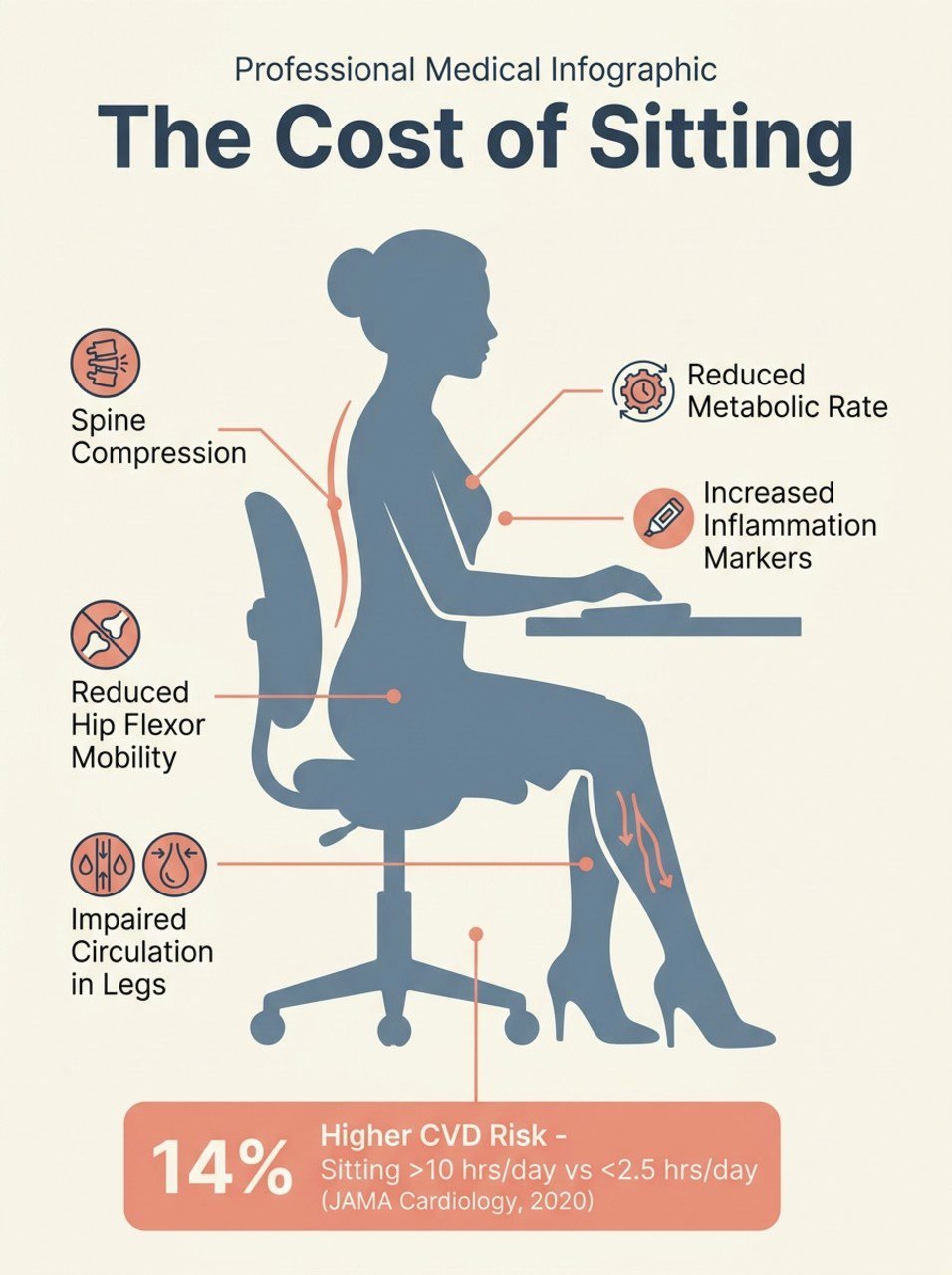
"Sitting disease" is the colloquial term for the independent health risks of prolonged sedentary behaviour, which research shows are not fully offset by exercise sessions, even for active individuals. Women in desk-based jobs who sit for more than 8 hours per day face an elevated risk of cardiovascular disease, metabolic dysfunction, and musculoskeletal problems, regardless of whether they exercise outside work hours.
[VISUAL: Infographic — "The Cost of Sitting" showing a side silhouette of a woman at a desk, with callout labels indicating the physiological effects of prolonged sitting on different body systems: spine compression, reduced hip flexor mobility, impaired circulation in legs, reduced metabolic rate, increased inflammation markers.]
A 2020 analysis published in JAMA Cardiology found that sitting for more than 10 hours per day is about 14% more likely to develop cardiovascular disease risk compared with sitting fewer than 2.5 hours — even when controlling for exercise levels outside work.
Practical Strategies To Sit Less At Work
The evidence-based approach to reducing sitting disease risk is "movement snacks" — brief bouts of activity distributed throughout the working day:
- Stand up every 30-45 minutes: Set a silent timer. Even standing for 2 minutes reactivates circulation and partially offsets the metabolic effects of prolonged sitting.
- Walk during phone calls: A simple habit that can add 20-40 minutes of light movement to most working days with zero scheduling required.
- Walk-and-talk meetings: Replace seated meetings with walking meetings where content does not require a screen.
- Desk stretches: Shoulder rolls, hip flexor stretches, and spinal twists performed at your desk every hour maintain musculoskeletal health without leaving the workspace.
- Daily steps target: Aiming for 7,000-10,000 steps daily provides meaningful cardiovascular and metabolic benefit — trackable via any smartphone or fitness device.



TIP: If walking, swimming and/or running is not for you, try a different alternative to physical activity that is correlated to exercise activities; yoga happens to be a perfect alternative!
What Are The Best Exercise Options When You Think You Have No Time?
The most effective exercise strategies for time-constrained women are those with the lowest entry barrier, highest consistency potential, and sufficient intensity to trigger cardiovascular and metabolic benefit. Walking, cycling, swimming, and yoga all qualify — and 20-30 minutes of any of these, performed consistently, delivers the health protection the research supports.
The barrier to exercise is rarely physical. It is architectural: not enough time, no convenient facility, uncertainty about where to start, or the belief that anything less than an hour "doesn't count."
It counts. All of it.
Movement Options For Every Situation
For the time-pressed woman:
- 20-minute brisk walk during lunch — the single most accessible intervention for previously sedentary women.
- 10-minute morning movement routine (bodyweight squats, lunges, stretching) before the day begins.
- Two 15-minute sessions split across the day — research shows split sessions deliver comparable benefit to single continuous sessions.
For the low-energy or low-mood day:
- Gentle yoga: combines movement, breathwork, and stress reduction in one session — particularly valuable for matching movement to your mood.
- A 15-minute walk outside: the combination of movement and nature exposure measurably reduces cortisol and improves mood.
For the woman building from zero:
- Start with 10 minutes of walking daily. Literally. The research shows that the first 20 minutes are where most of the mortality benefit is concentrated.
- Add 5 minutes every two weeks until you reach 30 minutes continuously.
- Then consider adding fat-burning workout sessions once or twice a week for body composition benefits.
For variety and sustainability:
- Swimming is one of the most joint-friendly, whole-body cardiovascular options available — ideal for women with joint pain, back issues, or recovering from injury.
- Yoga offers cardiovascular, strength, and flexibility benefits in one session — with a safety-first approach ensuring long-term consistency.

How Do You Become More Active When Depression Or Fatigue Is A Factor?
When physical inactivity and mental health decline create a mutual reinforcing cycle — low mood reduces motivation to move, and reduced movement deepens low mood — the most effective entry point is the smallest possible movement that feels accessible. The goal is not fitness. It is an interruption of the sedentary cycle.
This is not a weakness. This is neuroscience. Depression suppresses dopamine and reduces the capacity for initiation, which makes starting exercise feel disproportionately hard compared to people without these conditions.
Evidence-based strategies for breaking the inactivity-mood cycle:
- Remove the decision: Choose a time, route, and duration in advance. Decision fatigue is a real barrier — eliminating it reduces friction at the moment of action.
- Set a 10-minute rule: Commit only to the first 10 minutes. In most cases, the neurochemical shift that occurs in the first few minutes of movement carries you beyond the initial resistance.
- Social accountability: A walking partner, a fitness class, or simply telling someone your plan increases follow-through significantly.
- Track progress visually: A simple calendar with an X for each day you moved creates the psychological momentum of a "streak" that makes consistency self-reinforcing.
Understanding the relationship between how low mood affects weight and activity provides important context for women navigating this cycle — it is a physiological pattern, not a personal failing.
Join Our Mailing List
Join thousands of women inside our community and receive our free guide, 10 Actions That Support Permanent Weight Loss — the exact behavioural shifts that make the difference between a two-week attempt and a lasting transformation.
No restriction plans. No guilt. Just what actually works — for real women with real lives.
Your Next Step: Build The Foundation Your Health Deserves
You now know the evidence. Physical inactivity is not a minor inconvenience — it is one of the most consequential choices any woman makes about her long-term health. And the fix begins with a single 20-minute walk.
The Lean Body Formula Special Report takes this one step further: combining the movement principles from this article with the nutrition strategy, hormonal context, and mindset tools that create lasting transformation — written specifically for women's bodies.
Join thousands of women in our free community and claim your copy — 10 research-backed actions that support permanent weight loss, starting today.
No extreme plans. No guilt. Just what the science actually supports — for real women.
Related Articles
The Bottom Line
Movement is non-negotiable — and the minimum is lower than you think. The research has spoken. Physical inactivity is not merely inconvenient or vaguely unhealthy. It is one of the leading preventable causes of premature death in the modern world, responsible for twice as many deaths as obesity in a major European study.
The good news — and it is genuinely good news — is that the threshold for meaningful protection is remarkably accessible. Twenty minutes of brisk walking per day reduces the risk of premature death by up to 30% in previously sedentary women. That is not a marathon. That is a lunch break.
You do not need to overhaul your life. You do not need a gym membership, a meal plan, or a structured programme to begin receiving the life-extending benefits of physical activity. You need to move. Today. A little more than yesterday.
For women working toward weight-loss goals alongside health protection, pairing consistent daily movement with evidence-based, sustainable weight-loss strategies creates a compound effect that transforms not just the body — but the entire trajectory of long-term health.
The choice is not between being fit and being unfit. It is between moving and not moving. And the stakes are as high as they get.
Embrace Inspiration:
Like What You Read? Be Sociable, Comment, And Share It! Thanks.
Glossary Of Key Terms
FAQ
Yes, according to the EPIC study, one of the largest prospective health studies conducted in Europe, following 334,161 participants for over 12 years. Researchers found that physical inactivity was associated with approximately twice as many deaths as obesity. The study's authors concluded that eliminating physical inactivity would save nearly twice as many lives as eliminating obesity. This finding is consistent with the broader "fitness over fatness" body of research showing cardiorespiratory fitness is a stronger predictor of longevity than body weight.
Physical inactivity increases the risk of cardiovascular disease, type 2 diabetes, metabolic syndrome, breast and colon cancers, osteoporosis, depression, anxiety, and cognitive decline. At the physiological level, inactivity impairs insulin sensitivity, reduces aerobic capacity, accelerates muscle loss, increases resting heart rate, elevates inflammatory markers, and contributes to bone mineral density decline. For women, these effects are amplified during perimenopause and menopause when hormonal changes already compromise many of the same systems.
The most significant risk reduction comes from moving from completely sedentary to lightly active — as little as 20 minutes of brisk walking per day has been shown to reduce premature death risk by 16-30% in previously sedentary people. The WHO recommends 150-300 minutes of moderate-intensity aerobic activity per week as a target for comprehensive health protection, but meaningful benefit begins well below this threshold. Any movement is better than no movement.
Yes — the "fitness over fatness" research consistently demonstrates that physically fit individuals at higher body weights have better health outcomes than unfit individuals at lower body weights. Cardiorespiratory fitness level is a stronger predictor of longevity than BMI in multiple major study cohorts. This does not mean body composition is irrelevant to health — it means that the focus on weight as the primary health metric significantly underestimates the importance and protective power of physical activity.
Within the first month of complete inactivity, measurable changes include: reduced insulin sensitivity (within 24-48 hours), detectable decline in aerobic capacity within 1-2 weeks, beginning of muscle mass loss around weeks 3-4, and rising cardiovascular deconditioning, including elevated resting heart rate. These changes are reversible with resumed activity, but recovery time scales with the duration of inactivity. The good news: reconditioning from a month of inactivity typically takes 2-4 weeks of resumed training to largely restore.
The best starting exercise for a completely sedentary woman is brisk walking — specifically because it requires no equipment, no skill acquisition, no gym access, and can be performed at any intensity level. Starting with 10-15 minutes daily and adding 5 minutes every two weeks is a genuinely evidence-backed protocol for building sustainable activity habits. Once a 30-minute daily walk is established, swimming, yoga, and gentle cycling are excellent next options that expand fitness capacity while remaining low-injury-risk.
When energy is genuinely low, the most effective strategy is dramatically lowering the entry bar: commit to just 10 minutes and give yourself full permission to stop after 10 minutes if you still want to. In most cases, the physiological shift that occurs in the first minutes of movement (increased circulation, early endorphin release) carries motivation beyond that initial threshold. Scheduling movement at a fixed time each day removes the daily decision burden, and social accountability — a walking partner or class commitment — increases follow-through significantly.
You Know Why. Now Learn Exactly How
Join thousands of women inside our community and receive our free guide: 10 Actions That Support Permanent Weight Loss — the practical, sustainable habits that translate everything you just read into real, lasting results.
No fad diets. No extreme plans. Just what the research actually supports — written for real women.