
Evidence-Based, Hormone-Aware Strategies To Reduce Stubborn Belly Fat Without Extreme Diets or Quick Fixes
Hippocrates
The Healer Within
Natural forces within us are the true healers of disease.
The Executive Summary
Discover evidence-based strategies tailored for women to naturally reduce stubborn belly fat without extreme diets. This guide addresses hormonal, metabolic, and physiological factors unique to women, often overlooked in generic advice. Learn how declining estrogen, elevated cortisol, and lifestyle factors contribute to visceral fat.
Effective approaches involve dietary changes, strength training, sleep optimization, and stress reduction. Understand that sustainable fat loss happens over time, not through quick fixes, by targeting root causes like gut health and inflammation for lasting results.
You've done the crunches. You've tried the "seven-day flat stomach" challenges. You've drunk the lemon water. And yet — there it is. Still there. Sitting exactly where it always was, seemingly unmoved by your efforts.
Here's what nobody told you: the strategies that get rid of belly fat in women are fundamentally different from the generic advice designed for everyone. The female body has specific hormonal, metabolic, and physiological realities that mean generic belly fat approaches don't just underperform — they sometimes actively work against you.
This guide covers the real, evidence-based picture: what belly fat actually is in the female body, what's driving it, and the natural strategies — food, movement, sleep, stress, and gut health — that create measurable, lasting results.
No extreme plans. No pills. No promises of results in a week. Just what the research actually shows, written for women who are done wasting effort on the wrong approach.
Medical & Referral Disclaimer
This article is for informational and educational purposes only. It is not a substitute for professional medical advice. Always consult your physician before beginning any new diet or exercise programme, particularly if you have any underlying health conditions.
Key Takeaways
- Belly fat (visceral fat) is hormonally active — it produces inflammatory chemicals that affect health beyond appearance.
- Women store belly fat differently than men due to estrogen, cortisol, and life-stage hormonal shifts, including perimenopause and menopause.
- The most effective natural approach combines dietary change, strength training, cardio, sleep optimisation, and stress reduction simultaneously — not sequentially.
- "Spot reduction" is a myth — belly fat is lost through whole-body strategies, not targeted abdominal exercises.
- Gut health, chronic inflammation, and sleep disruption are underappreciated drivers of belly fat that most plans ignore.
- Natural remedies (ACV, herbal supplements) have a limited but real evidence base — they work as part of a comprehensive plan, not as standalone fixes.
- The first week of any plan typically shows water weight loss, not fat loss — sustainable belly fat reduction happens over months, not days.
What Is Belly Fat — And Why Is It Different for Women?
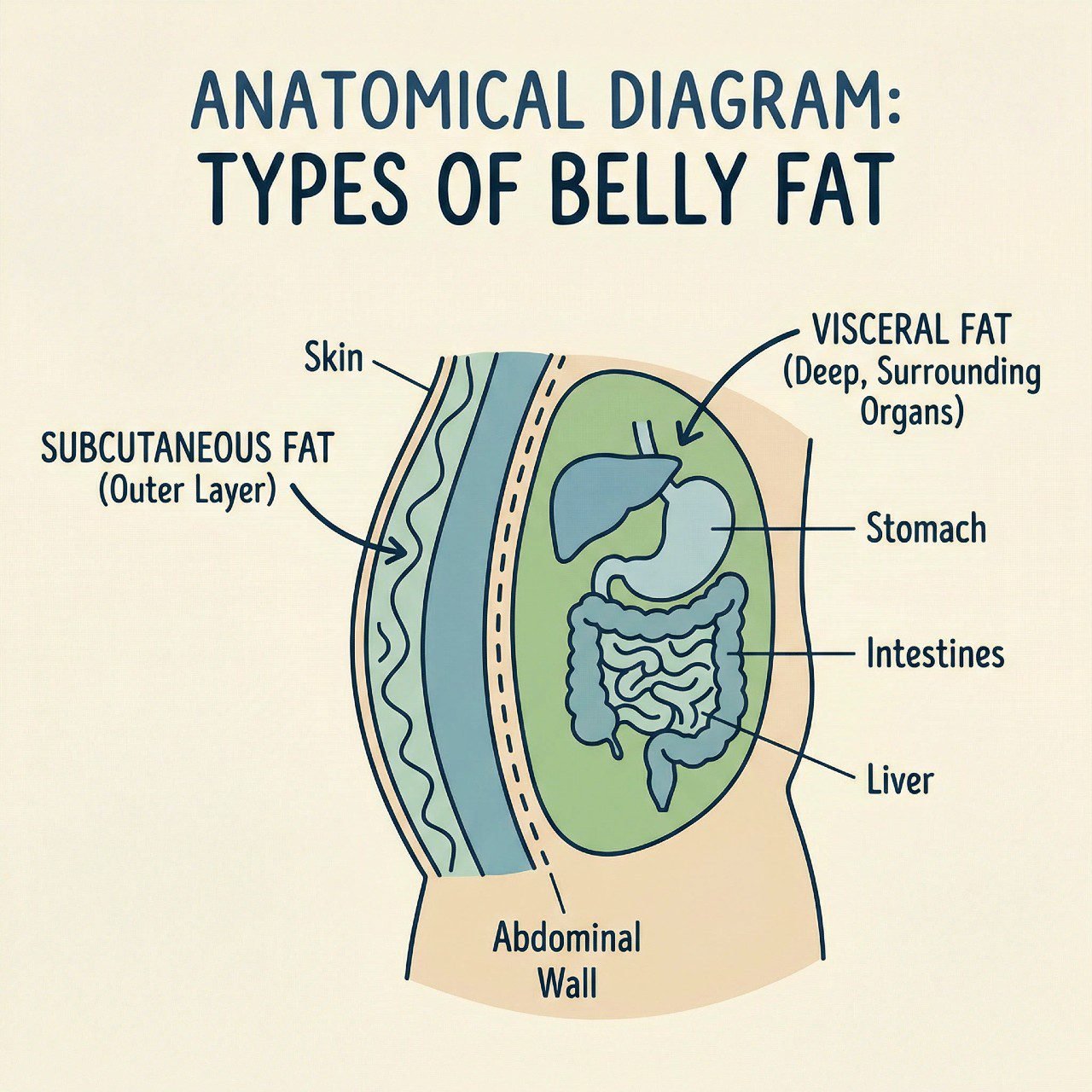
Belly fat in women exists in two forms: subcutaneous fat (under the skin, pinchable) and visceral fat (deep inside the abdominal cavity, surrounding organs). Visceral fat is the medically significant type — it is metabolically active, producing inflammatory signals that affect heart health, insulin regulation, and hormonal balance.
What Is the Difference Between Visceral Fat and Subcutaneous Fat?
Most women trying to lose belly fat are actually concerned with both types — but for different reasons. Subcutaneous fat is the soft, visible fat you can feel. Visceral fat is invisible but carries greater health implications.
According to Harvard Medical School, visceral fat is associated with increased risk of type 2 diabetes, cardiovascular disease, and metabolic syndrome — regardless of a person's total body weight. A woman with a "normal" BMI but high visceral fat carries a meaningful health risk.
The important piece of good news: visceral fat is metabolically responsive — it responds to diet and exercise changes more readily than subcutaneous fat. When you lose belly fat naturally through the strategies in this guide, visceral fat is typically reduced first.
Why Do Women Accumulate More Belly Fat Than Men?
The short answer: biology, not failure.
Men tend to store fat in the abdominal region from an earlier age. Women typically store fat preferentially in the hips, thighs, and buttocks during reproductive years — estrogen directs fat away from the visceral region. But as estrogen fluctuates and eventually declines with perimenopause and menopause, this protective effect reduces, and fat distribution shifts toward the abdomen.
This is not a lifestyle problem. This is a hormonal reality that most belly fat guides written for a general audience completely overlook.
For the full hormonal picture: How Hormones Affect Weight Loss in Women →
What Causes Stubborn Belly Fat in Women?
Stubborn belly fat in women is driven by multiple overlapping factors — declining estrogen, elevated cortisol from chronic stress, insulin resistance, disrupted sleep, gut microbiome imbalance, and chronic low-grade inflammation. Addressing these root causes, not just diet and exercise, is what produces lasting results.
How Do Hormones Drive Belly Fat Storage in Women?
The two hormones most directly responsible for belly fat accumulation in women are estrogen and insulin.
- When estrogen declines (in the luteal phase of the cycle, during perimenopause, or post-menopause), visceral fat storage increases. This is why many women notice belly fat appearing or worsening in their late 30s and 40s, even without significant lifestyle changes.
- Insulin is the fat-storage hormone. When insulin is chronically elevated — from a high-sugar diet, irregular eating, or poor sleep — the body converts excess glucose to fat preferentially stored in the abdominal region.
- Progesterone fluctuations can cause significant bloating and water retention in the luteal phase (days 15–28 of the cycle), which is often mistaken for fat gain.
What Is Cortisol Belly Fat — and Is Stress Really Making You Store Fat?
Yes — and this is one of the most underappreciated drivers of belly fat in women.
Cortisol (the primary stress hormone) directly instructs the body to store fat in the visceral region when levels are chronically elevated. This evolutionary mechanism — storing energy near the core for fight-or-flight readiness — is precisely the wrong response to the modern stress women face.
The result is what's commonly called "stress belly" — disproportionate abdominal fat accumulation in women who are otherwise eating and exercising reasonably well but managing high levels of chronic stress.
Signs cortisol may be driving your belly fat:
- Belly fat that's disproportionate to the rest of your body
- Strong cravings for sugar and salt, particularly in the evenings
- Difficulty sleeping despite fatigue
- Feeling "wired but tired" regularly
- Belly fat that doesn't respond to the usual diet and exercise approaches
Why Does Menopause Cause Belly Fat?
During perimenopause and menopause, the decline in estrogen removes its protective effect against visceral fat storage. Simultaneously, metabolic rate decreases, insulin sensitivity worsens, and sleep disruption (a hallmark of menopause) elevates cortisol and hunger hormones. The combination is physiologically potent.
The natural strategies in this guide — particularly strength training, protein prioritisation, stress reduction, and sleep optimisation — are specifically effective during this life stage.
What Foods Actually Burn Belly Fat Naturally?
The most effective dietary approach for natural belly fat reduction in women combines high protein, adequate fibre, anti-inflammatory whole foods, and controlled refined carbohydrate intake — while specifically avoiding the foods that drive visceral fat storage through hormonal and inflammatory pathways.
What Should Women Eat to Reduce Belly Fat?
Rather than a restrictive diet, think of this as building a food environment that works with your hormones rather than against them.
The natural belly fat reduction food framework:
| Food Category | Best Sources | Why It Fights Belly Fat |
|---|---|---|
| Lean protein | Chicken, fish, eggs, Greek yoghurt, legumes | Builds muscle, reduces hunger hormones, supports metabolism |
| Soluble fibre | Oats, beans, lentils, Brussels sprouts, apples, flaxseeds | Feeds beneficial gut bacteria; reduces visceral fat specifically |
| Omega-3 fats | Salmon, mackerel, sardines, walnuts, flaxseeds | Reduces chronic inflammation that promotes fat storage |
| Cruciferous vegetables | Broccoli, cauliflower, kale, cabbage | Supports estrogen metabolism; high in fibre |
| Fermented foods | Greek yoghurt, kefir, sauerkraut, kimchi | Support gut microbiome linked to belly fat reduction |
| Green tea | Brewed green tea (2–3 cups daily) | Catechins shown to specifically reduce visceral fat in research |
| Whole grains | Oats, quinoa, brown rice, barley | Lower glycaemic index supports insulin regulation |
A landmark study in the Annals of Internal Medicine found that adding 30g of fibre daily — without any other dietary restriction — reduced belly fat and improved metabolic markers over 12 weeks.
What Foods Drive Belly Fat Accumulation?
Equally important is reducing the foods that specifically promote visceral fat storage through hormonal and inflammatory pathways:
- Sugar-sweetened drinks — liquid fructose is converted directly to liver fat (the foundation of visceral fat accumulation) with minimal satiety signal.
- Trans fats and hydrogenated oils — directly associated with visceral fat increase in multiple controlled trials.
- Refined carbohydrates (white bread, processed cereals, pastries) — spike insulin, promoting fat storage in the abdominal region.
- Alcohol — particularly beer and sweet cocktails; the body prioritises metabolising alcohol over burning fat, and excess is converted to visceral fat.
- Artificial sweeteners — emerging research suggests they may disrupt gut bacteria in ways that impair glucose metabolism.
Build your weekly food plan around these principles: Weight Loss Meal Prep Ideas for Women →

What Exercises Get Rid of Belly Fat Naturally for Women?
The most effective exercise combination for natural belly fat reduction is strength training (2–3 sessions weekly) plus moderate cardio (150+ minutes weekly) — not endless ab exercises. Muscle tissue burns fat at rest; building it is the most powerful metabolic investment you can make.
Is Cardio or Strength Training Better for Belly Fat in Women?
Both, and the research is clear that combining them outperforms either approach alone.
- Aerobic exercise (brisk walking, cycling, swimming, rowing) is particularly effective at reducing visceral fat, specifically, separate from its general calorie-burning effect. A 2011 study in the American Journal of Physiology found aerobic exercise reduced visceral fat by 7%, versus no significant reduction in the resistance-training-only group.
- Strength training builds lean muscle — the metabolic engine that burns calories around the clock. Women who strength train have measurably higher resting metabolic rates and improved insulin sensitivity.
- HIIT (High-Intensity Interval Training) has shown strong evidence for visceral fat reduction in shorter time commitments — 20–30 minute sessions outperforming steady-state cardio in some studies.
The persistent myth to discard: Doing hundreds of crunches will not reduce belly fat. Abdominal exercises strengthen core muscles but do not burn visceral fat. Fat is lost through whole-body calorie deficit and hormonal regulation, not targeted exercise.
What Does an Effective Natural Belly Fat Workout Week Look Like?
| Day | Activity | Duration | Primary Belly Fat Benefit |
|---|---|---|---|
| Monday | Strength training (lower body) | 45 min | Muscle building; insulin sensitivity |
| Tuesday | Brisk walk or light cardio | 30–40 min | Cortisol reduction; fat mobilisation |
| Wednesday | Strength training (upper body + core) | 45 min | Muscle building; metabolic rate |
| Thursday | Moderate cardio (cycling, swimming) | 40–45 min | Visceral fat reduction |
| Friday | Strength training (full body) | 45 min | Compound calorie burn |
| Saturday | HIIT or active class (yoga, Pilates) | 25–30 min | Hormonal balance; core strength |
| Sunday | Rest or gentle walk | 20 min | Cortisol recovery |
Build your workout foundation: Fat-Burning Workouts That Melt Stubborn Fat →

How Does Sleep Affect Belly Fat in Women?
Poor sleep directly increases belly fat by elevating cortisol, raising the hunger hormone ghrelin by up to 15%, reducing the satiety hormone leptin, and impairing insulin sensitivity — creating a four-way physiological push toward abdominal fat storage that no diet can fully overcome.
Research from the University of Chicago found that sleep-deprived participants stored significantly more fat in the abdominal region compared to well-rested participants — even on identical calorie intakes.
Sleep strategies specifically effective for belly fat reduction:
- Consistent sleep and wake times — anchors the circadian rhythm, which governs cortisol and hunger hormone cycles.
- 7–9 hours per night — the range consistently associated with an optimal hormonal fat-loss environment.
- Dark, cool bedroom — supports melatonin production, which regulates cortisol overnight.
- No screens 60 minutes before bed — blue light suppresses melatonin and delays sleep onset.
- Limit alcohol within 3 hours of sleep — alcohol significantly fragments sleep architecture even when it feels sedating.
For women in perimenopause, where night sweats and sleep disruption are common, addressing sleep quality is arguably the single highest-leverage belly fat intervention available.
Can Gut Health Affect Belly Fat?
Yes, significantly. Research published in Nature established that the composition of gut bacteria (the microbiome) directly affects how the body processes food, regulates inflammation, and manages fat storage — with specific bacterial imbalances (dysbiosis) independently associated with increased visceral fat.
The gut–belly fat connection works through several pathways:
- Short-chain fatty acids (SCFAs) — produced by beneficial bacteria fermenting fibre. SCFAs improve insulin sensitivity and signal fullness to the brain.
- Inflammation — dysbiosis produces lipopolysaccharides (LPS) that cross the gut wall and trigger systemic inflammation, a direct driver of visceral fat accumulation.
- Estrogen recycling — the gut microbiome plays a role in estrogen reabsorption. A disrupted microbiome can impair estrogen regulation, promoting hormonal belly fat.
Natural gut health strategies for belly fat reduction:
- Eat 30+ different plant foods per week — diversity feeds diverse beneficial bacteria.
- Include fermented foods daily (yoghurt, kefir, sauerkraut, kombucha).
- Prioritise prebiotic foods (garlic, onions, leeks, asparagus, bananas) that feed existing beneficial bacteria.
- Reduce antibiotic use to when medically necessary — antibiotics significantly disrupt microbiome diversity.
- Manage stress — chronic cortisol disrupts gut barrier function.
Natural Belly Fat Remedies — What the Evidence Actually Shows
Natural belly fat remedies range from genuinely useful (with evidence) to complete myths. Understanding the difference saves you money, time, and the disappointment of another strategy that doesn't work.

Does Apple Cider Vinegar (ACV) Reduce Belly Fat?
Verdict: Modest evidence — not a miracle, but not a myth.
A 2009 study published in Bioscience, Biotechnology, and Biochemistry found that participants who consumed 1–2 tablespoons of apple cider vinegar daily for 12 weeks had significantly lower visceral fat, waist circumference, and BMI compared to the placebo group. The effect was modest but measurable.
The likely mechanism: ACV improves insulin sensitivity and slows gastric emptying, reducing post-meal blood sugar spikes that drive fat storage.
Practical use: 1 tablespoon diluted in a large glass of water, 20 minutes before a meal. Never undiluted — the acidity damages tooth enamel and the oesophagus.
Does Intermittent Fasting Work for Natural Belly Fat Loss in Women?
Verdict: Yes, with important caveats for women.
Several studies support intermittent fasting (IF) as effective for visceral fat reduction. A 2020 review in The New England Journal of Medicine confirmed IF produces metabolic benefits, including reduced visceral fat beyond simple calorie restriction.
However, women respond differently to IF than men:
- Extended fasting (16+ hours) can elevate cortisol and disrupt hormonal balance in some women, particularly those with thyroid issues or in perimenopause.
- A 12:12 or 14:10 window (fasting for 12–14 hours, including sleep) is often better tolerated by women
- IF should not be used during pregnancy or breastfeeding
What Herbal Remedies Show Evidence for Belly Fat?
| Remedy | Evidence Level | Mechanism | Practical Use |
|---|---|---|---|
| Green tea (EGCG catechins) | Strong | Increases fat oxidation; reduces visceral fat specifically | 2–3 cups brewed daily |
| Ginger | Moderate | Anti-inflammatory; improves insulin sensitivity | Fresh food, or ginger tea |
| Turmeric (curcumin) | Moderate | Reduces inflammation, driving fat storage | With black pepper (improves absorption) |
| Apple cider vinegar | Moderate | Improves insulin sensitivity; reduces blood sugar spikes | 1 tbsp diluted, before meals |
| Cinnamon | Moderate | Lowers blood sugar; improves insulin sensitivity | Added to oats, smoothies, coffee |
| Berberine | Emerging | Activates AMPK similarly to metformin; reduces visceral fat | Supplement (consult doctor first) |
Note: None of these is a standalone solution. All work best as part of a comprehensive lifestyle approach.
Join Our Mailing List
Ready to finally ditch those crunches and discover the hormone-aware strategies that actually work for reducing stubborn belly fat?
It's time to unlock your body's natural ability to heal and transform. Grab your free guide here and start your journey to a leaner, healthier you!

How to Lose Belly Fat After Menopause Naturally
Belly fat after menopause responds to the same natural strategies as pre-menopause — but requires emphasis on strength training, protein intake, stress management, and sleep quality, which become more critical as estrogen declines and metabolic rate naturally decreases.
The menopause-specific belly fat protocol:
- Strength training becomes non-negotiable — muscle loss accelerates post-menopause, and muscle is the primary driver of metabolic rate. Aim for 3 sessions per week minimum.
- Protein target increases — post-menopausal women may need 1.8–2.2g per kg of bodyweight (vs 1.6g for younger women) to maintain muscle and manage hunger.
- Prioritise sleep aggressively — hot flashes, night sweats, and anxiety commonly disrupt sleep. Cooling bedding, evening exercise (not too close to sleep), and magnesium supplementation are evidence-supported strategies.
- Reduce alcohol — liver function changes with age affect alcohol metabolism, and its impact on sleep and visceral fat storage intensifies post-menopause.
- Consider phytoestrogens — soy isoflavones, flaxseeds, and chickpeas contain plant-based estrogen-like compounds with emerging evidence for belly fat and metabolic support during menopause.

Your 5-Step Natural Belly Fat Reduction Protocol
Breaking down the above into five daily priorities creates a sustainable, integrated approach to natural belly fat loss that addresses all root causes simultaneously.
Natural belly fat loss follows a clear, five-priority framework: protein and fibre-first nutrition, progressive strength training, daily stress reduction, sleep optimisation, and gut health support. These five elements work synergistically — each one makes the others more effective.
Step 1: Eat protein and fibre at every meal
25–30g of protein and at least 8–10g of fibre at each meal help regulate hunger hormones, support muscle, and directly reduce visceral fat.
Step 2: Strength train at least 2–3 times per week
Build the metabolic engine. Focus on compound movements (squats, deadlifts, rows). Muscle built today burns fat next week, next month, next year.
Step 3: Move every day — not just on workout days
A 20–30 minute walk reduces cortisol, supports insulin sensitivity, and compounds over time. Daily movement is not optional; it is a biological necessity.
Step 4: Treat sleep as a fat-loss strategy
7–9 hours. Consistent schedule. Dark, cool room. Sleep is when your hormones reset, your muscles repair, and your fat-burning environment rebuilds.
Step 5: Manage stress actively and daily
10 minutes of meditation, breathwork, or journalling. This is not soft advice — it is a direct intervention on the cortisol pathway that is driving your belly fat.

A New Perspective on Your Belly
Here's what I want you to take away from this: the belly fat you're frustrated by is not a character flaw. It's a physiological signal. It's telling you that your cortisol needs support. That your hormones are shifting. That your gut microbiome wants more variety.
Your sleep architecture needs attention. These are all workable problems — and every single one of them can be addressed naturally, without extreme restriction, without punishing exercise programmes, and without giving up the foods you love.
You don't have a willpower problem. You have a systems gap that we just filled.
Related Articles
The Bottom Line
Getting rid of belly fat naturally — and keeping it off — comes down to five integrated strategies working together:
- Food quality — protein, fibre, omega-3s, whole foods; reduced sugar, trans fats, and refined carbs
- Exercise mix — strength training builds the metabolic engine; cardio specifically reduces visceral fat
- Sleep — the hormonal reset that makes everything else work
- Stress management — the cortisol intervention your belly fat has been waiting for
- Gut health — the often-missing piece in standard belly fat advice
This is not a quick fix. It is a whole-body upgrade. And for women specifically — women navigating the hormonal complexity of the menstrual cycle, perimenopause, menopause, and the particular stresses of modern life — this systems approach is the only one that genuinely delivers.
Embrace Inspiration:
Did this help you understand your belly differently? Share it with a woman in your life who's been fighting the wrong battle.
Glossary Of Key Terms
FAQ
Sustainable visceral fat reduction typically becomes measurable after 4–8 weeks of consistent effort across diet, exercise, sleep, and stress management. Visible changes in waist circumference often appear within 6–12 weeks. The first week of any programme typically shows water weight reduction, not fat loss — expect 0.5–1 lb of genuine fat loss per week on a well-designed plan.
Diet changes alone can reduce visceral fat, but significantly less effectively than combined diet and exercise. Research consistently shows the combination of aerobic exercise plus strength training produces 2–3x greater visceral fat reduction than diet alone. For women, strength training in particular is essential for the metabolic changes needed for lasting belly fat reduction.
Persistent belly fat despite diet and exercise typically points to one of four overlooked factors: elevated cortisol from chronic stress, poor sleep quality disrupting hunger hormones, an imbalanced gut microbiome, or hormonal shifts from perimenopause/menopause. Addressing just diet and exercise while these other drivers remain active severely limits results.
Yes — adequate hydration (2–2.5 litres daily) supports every metabolic process involved in fat burning, reduces hunger confusion (thirst is frequently misread as hunger), and supports kidney function that helps flush the by-products of fat metabolism. Water before meals has also been shown to reduce calorie intake by up to 13% in some studies.
In women, belly fat is primarily driven by hormonal factors — estrogen fluctuation during the menstrual cycle and menopause, elevated cortisol from chronic stress, and insulin resistance from high-sugar diets. Women's biology is designed to store fat in the hips and thighs during reproductive years; when estrogen declines, fat shifts to the abdomen. This is why women-specific strategies targeting these hormonal pathways outperform generic advice.
No, and understanding the difference is important. Bloating is temporary abdominal distension from gas, water retention, or digestive activity. It fluctuates throughout the day and across the menstrual cycle. Belly fat is persistent, doesn't fluctuate with time of day, and is located deeper in the abdominal cavity. Many women experience both, and strategies for each overlap but differ — gut health interventions (fermented foods, reduced FODMAPs) most directly address bloating.
You Know Why. Now Learn Exactly How
Join thousands of women inside our community and receive our free guide: 10 Actions That Support Permanent Weight Loss — the practical, sustainable habits that translate everything you just read into real, lasting results.
No fad diets. No extreme plans. Just what the research actually supports — written for real women.