
Why Cycle Syncing For Weight Loss Is The Smartest Strategy Women Aren't Using Yet
Lao Tzu
Work With Your Nature, Not Against It
Nature does not hurry, yet everything is accomplished.
The Executive Summary
Cycle syncing aligns diet and exercise with the four phases of the menstrual cycle, working with rather than against hormonal shifts. This approach may lead to more sustainable fat loss and a more maintainable workout routine.
Each phase—menstrual, follicular, ovulation, and luteal—affects metabolism and energy levels. Adjusting habits to match these phases, driven by hormones like estrogen and progesterone, can help women burn fat more efficiently. Remember that cortisol management is also key.
Have you ever had a week where your workouts felt effortless, your food choices were spot-on, and weight seemed to drop without much struggle — and then, two weeks later, felt like a completely different person? Bloated, exhausted, craving everything in sight, and wondering what went wrong?
Nothing went wrong. That's your cycle talking.
You don't have a willpower problem. You have a timing problem. Your hormones shift dramatically across the four phases of your menstrual cycle, changing your metabolism, energy, recovery capacity, and even your food preferences. Trying to eat and train the same way every single day is like planting seeds in winter and wondering why they won't grow.
Cycle syncing for weight loss is the strategy of aligning your nutrition and exercise with those hormonal shifts — so instead of fighting your biology, you work with it. The result? Fewer energy crashes, less bloating, more sustainable fat loss, and a workout routine you can actually maintain.
This guide breaks down exactly how to do it — phase by phase, meal by meal, rep by rep.
Medical & Referral Disclaimer
This article is for informational and educational purposes only. It is not intended as medical advice and should not replace consultation with a qualified healthcare provider. Individual hormonal patterns vary significantly. Women with conditions such as PCOS, endometriosis, thyroid disorders, or irregular cycles should consult a physician or registered dietitian before making changes to their diet or exercise routine. Cycle syncing is a complementary wellness approach, not a medical treatment.
Key Takeaways
- Your menstrual cycle has four phases — menstrual, follicular, ovulation, and luteal — each driven by distinct hormonal shifts that affect metabolism, energy, and fat loss.
- Cycle syncing is not a diet; it's a framework for aligning your existing habits with your biology.
- Estrogen (high in follicular/ovulation) supports fat burning and high-intensity training. Progesterone (high in luteal) increases cravings and water retention — neither means you're failing.
- Your metabolism burns up to 279 more calories per day in the late luteal phase — do not aggressively restrict calories then.
- Cortisol management (sleep, stress, training load) is foundational — without it, cycle syncing delivers limited results.
- The 2–5 lbs you gain before your period is water, not fat — driven by progesterone-induced fluid retention. It resolves within days of your period starting.
- Perimenopause requires symptom-based tracking rather than calendar-based tracking, but the principles remain valid.
- Allow 3 full cycles to assess results before judging the approach.

What Is Cycle Syncing For Weight Loss?
Cycle syncing for weight loss is the practice of adjusting your diet and exercise routine to match the four hormonal phases of your menstrual cycle. Since estrogen, progesterone, and cortisol fluctuate throughout the month, aligning your habits with these shifts helps your body burn fat more efficiently.
The term was popularized by functional nutritionist Alisa Vitti, author of WomanCode, who argues that women have a second biological clock — the infradian rhythm — that governs a 28-day cycle of hormonal change. Unlike the circadian rhythm (24 hours), the infradian rhythm is largely ignored by mainstream fitness advice, which is designed around male hormonal patterns.
The four phases are:
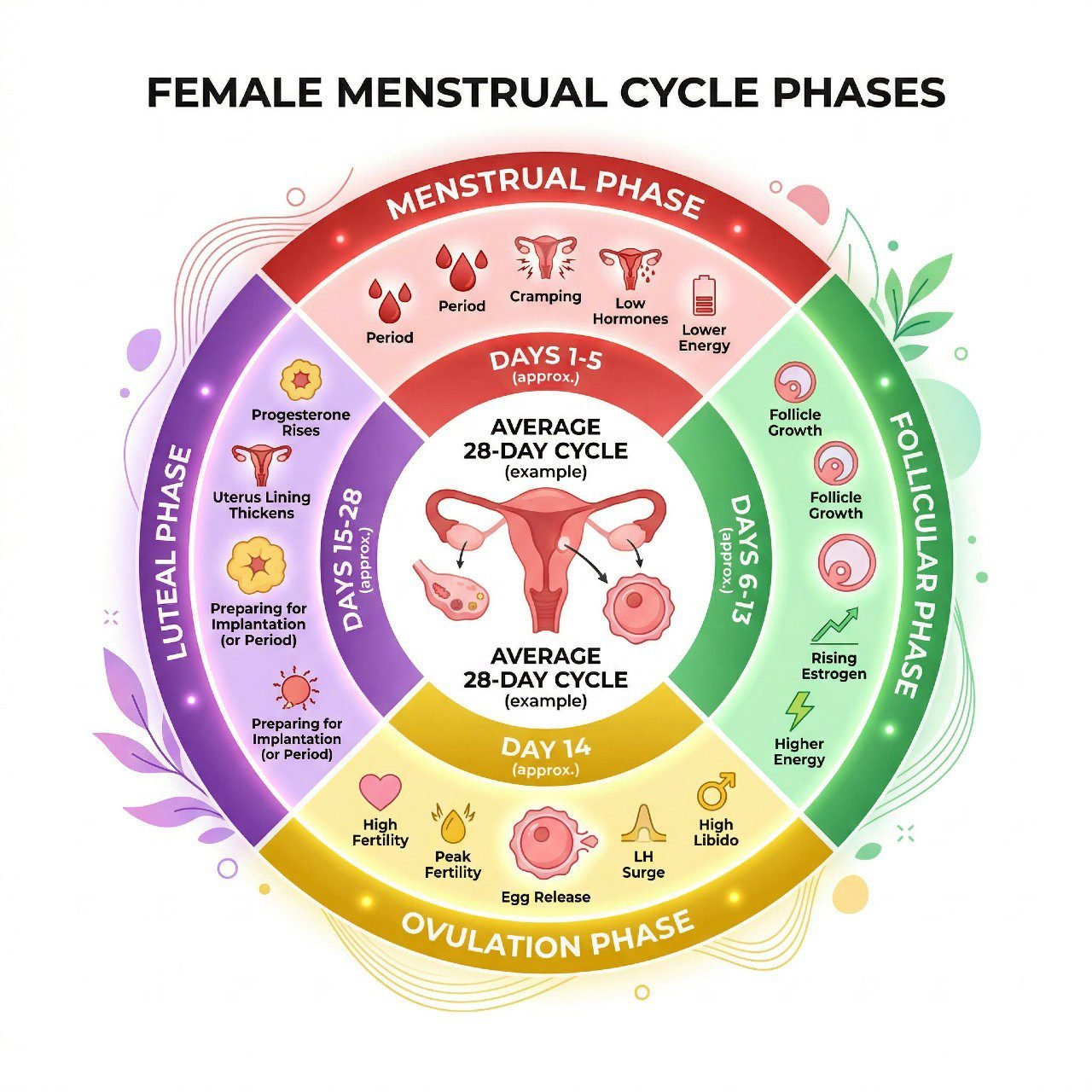
- Menstrual phase — Days 1–5 (your period).
- Follicular phase — Days 6–13.
- Ovulation phase — Days 14–16.
- Luteal phase — Days 17–28.
Each phase brings distinct shifts in estrogen, progesterone, insulin sensitivity, metabolism, and energy — all of which directly affect how easily you lose fat, how hard you can train, and what your body actually needs to function.
What Is The Infradian Rhythm And Why Does It Affect Fat Loss?
The infradian rhythm is a biological clock operating on a roughly 28-day cycle, driven by fluctuating reproductive hormones. In women, it regulates metabolism, immune function, cortisol levels, and brain chemistry — making it a central factor in sustainable weight loss.
Research published in the European Journal of Nutrition found that resting metabolic rate varies by up to 279 calories per day across the menstrual cycle, with the highest burn rate in the late luteal phase. Yet most women eat and train identically every day.
Ignoring the infradian rhythm means:
- Pushing hard workouts when your body needs recovery (leading to cortisol spikes).
- Eating in a caloric deficit during phases when cravings are highest (leading to bingeing).
- Attributing normal hormonal weight fluctuations (2–5 lbs of water weight) to "failing".
Understanding your hormones and their effect on weight loss is the first step toward making cycle syncing work for you.
How Do Hormones Affect Weight Loss In Women?
Hormonal fluctuations directly impact fat storage, appetite, energy, and insulin sensitivity throughout the menstrual cycle. Estrogen supports fat metabolism, progesterone drives water retention and cravings, and cortisol — when chronically elevated — actively blocks fat loss.
Here's a breakdown of the key players:
| Hormone | Role in the Cycle | Effect on Weight Loss |
|---|---|---|
| Estrogen | Rises in follicular phase, peaks at ovulation | Supports insulin sensitivity, boosts fat burning, improves mood and energy |
| Progesterone | Rises in luteal phase | Increases appetite and cravings, raises body temperature slightly, causes water retention |
| Cortisol | Stress hormone, rises under poor sleep/over-training | Promotes fat storage (especially belly fat), breaks down muscle tissue |
| Insulin | Blood sugar regulator | Sensitivity is highest mid-follicular; lower in luteal phase — affects carb tolerance |
| Testosterone | Peaks near ovulation | Supports muscle building, increases libido and motivation |
| Serotonin | Drops in luteal phase | Triggers carb cravings as the body seeks a serotonin boost from sugar |
Understanding this table transforms your relationship with your body. That luteal phase craving for pasta and chocolate? That's your serotonin dipping and your progesterone asking for more complex carbohydrates. It's biology — not weakness.
How To Work Out During Each Phase Of Your Menstrual Cycle
The Menstrual Phase (Days 1–5): Rest, Restore, Release
During your period, estrogen and progesterone are at their lowest. Energy drops, inflammation is higher, and your body is doing real physiological work. This is the time to reduce workout intensity, prioritize recovery, and eat warming, iron-rich foods.
Best Workouts During Your Period
Your nervous system is in a more parasympathetic (rest-and-digest) state. Forcing high-intensity exercise now elevates cortisol, increases inflammation, and depletes the iron your body is already losing through menstruation.
Recommended movement:
- Yin or restorative yoga — supports hormonal balance and reduces cramping.
- Walking — gentle cardiovascular activity without taxing adrenals.
- Light stretching or foam rolling — aids circulation and reduces bloating.
- Low-impact Pilates — maintains core strength without strain.
Avoid: heavy lifting, HIIT, high-volume cardio. Your body will thank you — and you'll actually perform better the following week because you rested properly.
For evidence-based guidance on working out during your period and why low-impact exercise matters, the key principle is honoring your energy, not overriding it.
Menstrual Phase Diet: What To Eat During Your Period
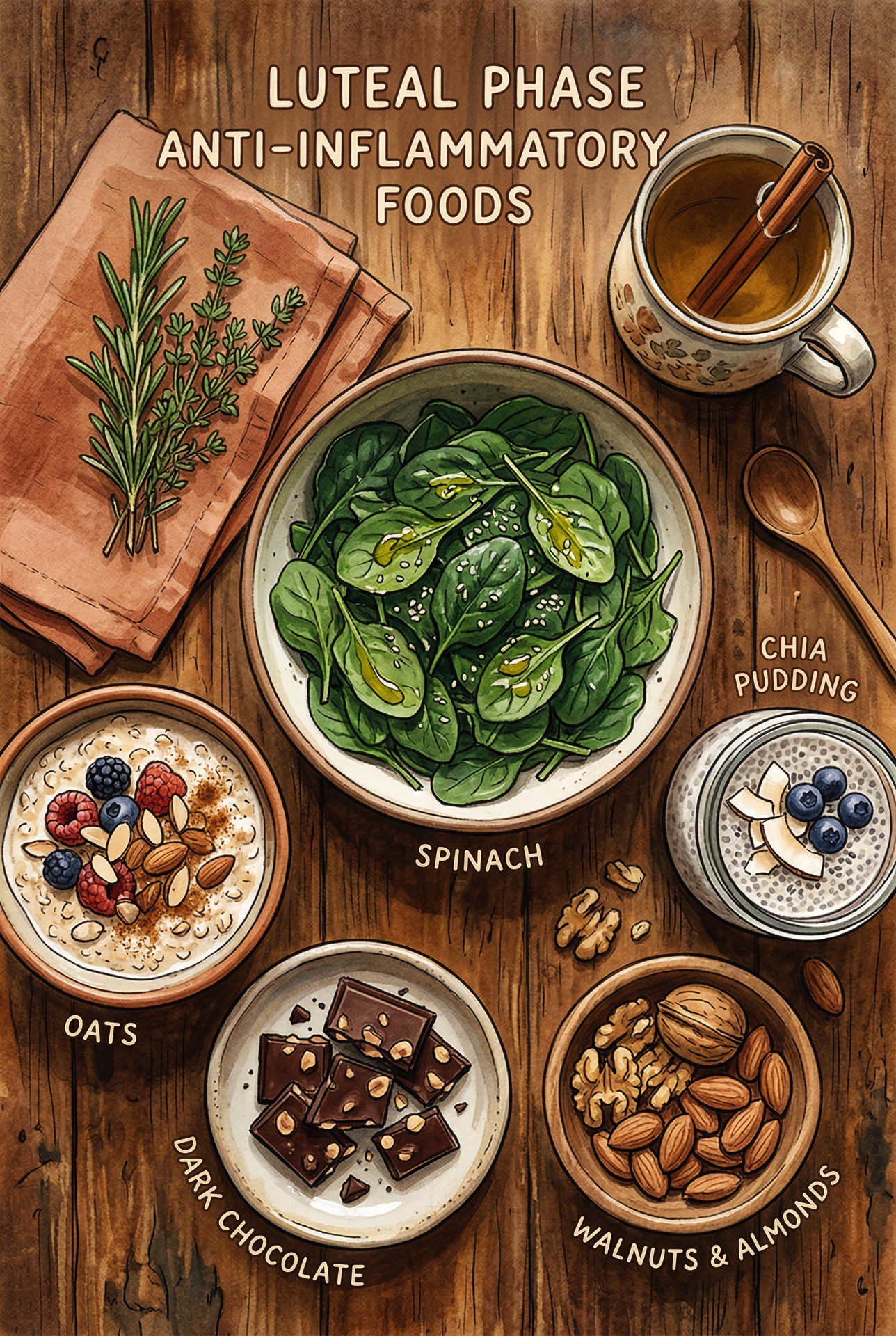
Focus on: Iron-rich foods (spinach, lentils, grass-fed red meat), omega-3 fatty acids to reduce inflammation (salmon, walnuts, flaxseed), magnesium-rich foods for cramps (dark chocolate, pumpkin seeds, avocado), and warming complex carbohydrates.
Reduce: Excess sodium (worsens bloating), alcohol (disrupts sleep and liver function), processed sugar (drives inflammation).
Hydration tip: Add electrolytes to your water — sodium, potassium, and magnesium are all depleted during menstruation.
The Follicular Phase (Days 6–13): Build, Plan, Go
The follicular phase begins after your period ends and runs until ovulation. Rising estrogen improves mood, energy, insulin sensitivity, and cognitive clarity. This is your body's green light to train harder, eat lighter, and take on ambitious fitness goals.
Follicular Phase Diet And Exercise Tips
Estrogen is rising, and so is your pain tolerance, strength output, and motivation. Your insulin sensitivity is at its peak — meaning your body processes carbohydrates more efficiently now than at any other time of the month.
Best workouts for the follicular phase:
- Strength training — take advantage of peak recovery capacity and high pain tolerance.
- HIIT cardio — your nervous system can handle the intensity.
- New fitness classes or challenges — your brain is primed for learning new movement patterns.
- Running or cycling — cardiovascular endurance is strong.
Follicular Phase Nutrition:
- Lean proteins to support muscle synthesis: chicken, turkey, eggs, and Greek yogurt.
- Lighter, fresher foods: salads, fermented foods (support estrogen detoxification).
- Moderate complex carbs: oats, quinoa, sweet potato.
- Cruciferous vegetables (broccoli, cauliflower) help the liver metabolize excess estrogen.

Seed syncing: Many practitioners recommend adding 1 tablespoon of ground flaxseeds and pumpkin seeds daily during the follicular phase to support estrogen metabolism. These seeds contain lignans and zinc, which help prime the body for ovulation.
Learning what to eat in the morning for hormone balance and fat loss is particularly powerful during this phase, when your morning meals set the metabolic tone for the entire day.
The Ovulation Phase (Days 14–16): Peak Power, Peak Energy
At ovulation, estrogen peaks and testosterone surges. This is your highest-energy window of the month — the phase where you feel your most confident, strong, and socially connected. Leverage it for your hardest workouts and calorie-optimized eating.
Ovulation Phase Workout And Nutrition
Best workouts at ovulation:
- Heavy compound lifts — squats, deadlifts, bench press.
- High-intensity interval training (HIIT).
- Competitive or group fitness activities — testosterone makes you crave challenge.
- Metabolic conditioning circuits.
Your strength training for women's potential peaks here. If you're going to attempt a new personal best, this is the window.
Ovulation nutrition:
- Higher protein intake to support muscle building.
- Anti-inflammatory foods: berries, leafy greens, turmeric.
- Lighter on dense carbohydrates — insulin sensitivity begins to shift.
- Adequate zinc (pumpkin seeds, oysters, beef) to support ovulation.
One caveat: Estrogen at its peak can increase ligament laxity (looseness), which slightly raises injury risk in explosive movements. Warm up thoroughly.
The Luteal Phase (Days 17–28): Ease Up, Nourish Deep
In the luteal phase, progesterone rises while estrogen gradually falls. Metabolism increases slightly (burning up to 279 more calories per day), but so do cravings, fatigue, and water retention. This is the phase where most women feel like they're "failing" — but they're actually just under-fueled and under-rested.
Luteal Phase Weight Gain Solutions
The 2–5 lbs you gain in the luteal phase is overwhelmingly water weight, driven by progesterone-induced fluid retention and reduced kidney function. It is not fat gain.
PMS and weight fluctuation solutions:
- Do not restrict calories aggressively — your metabolism is running higher, and deprivation raises cortisol.
- Prioritize sleep — progesterone supports sleep, but poor sleep raises ghrelin (hunger hormone) and worsens cravings.
- Manage sodium: avoid processed foods, which exacerbate bloating.
- Eat more magnesium: reduces PMS severity in multiple clinical studies.
Luteal Phase Workouts: What Exercise Works Best
Recommended movement:
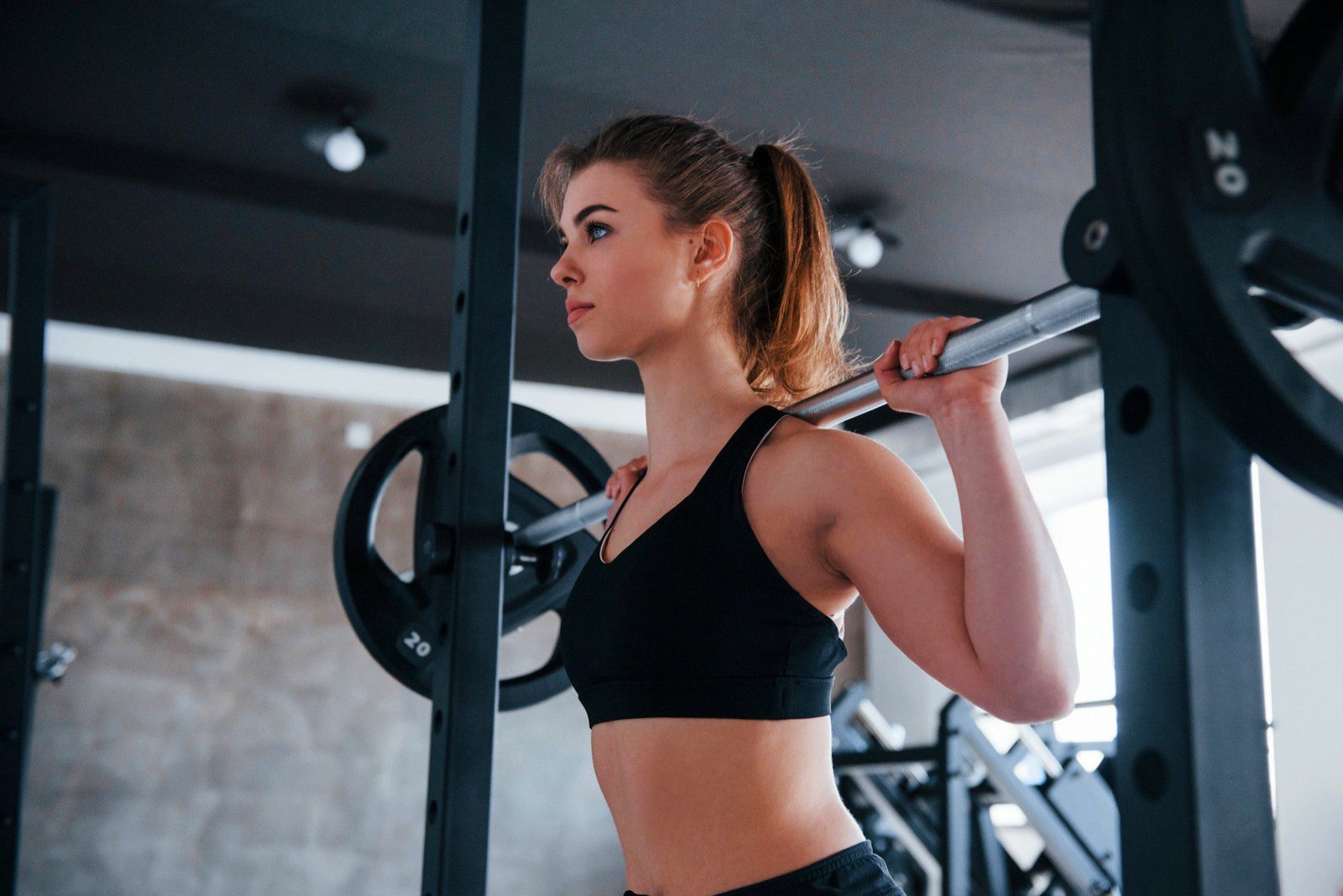
- Moderate strength training — reduce load and volume from ovulation peak.
- Yoga — specifically hip-openers and twists — supports progesterone balance and nervous system regulation.
- Long walks or hiking — maintains caloric output without taxing recovery
- Cycling at moderate intensity.
- Pilates or barre — controlled resistance without cortisol stress.
Avoid: Marathon HIIT sessions, back-to-back heavy lifting days, and under-sleeping to "make up" missed workouts.
Anti-Inflammatory Foods For The Luteal Phase
Progesterone increases prostaglandin production (inflammatory compounds that cause cramping and mood shifts). Counter this with:
- Omega-3s: Fatty fish, chia seeds, walnuts.
- Magnesium-rich foods: Spinach, almonds, dark chocolate (70%+).
- Complex carbohydrates: Brown rice, oats, lentils — these raise serotonin naturally, reducing cravings.
- Fiber: Supports healthy estrogen clearance via the gut.
Seed syncing in the luteal phase: Shift to 1 tablespoon each of ground sesame seeds and sunflower seeds daily. These contain lignans and vitamin E to support progesterone production.
Cycle Syncing Meal Plan For Weight Loss: Phase-By-Phase Guide
Use this table as your master reference. These aren't rigid rules — they're templates that flex around your life.
| Phase | Days | Key Hormones | Focus Foods | Foods To Limit | Best Workout Style |
|---|---|---|---|---|---|
| Menstrual | 1–5 | Estrogen ↓ Progesterone ↓ | Red meat, lentils, spinach, salmon, dark chocolate, warming soups | Alcohol, excess salt, refined sugar | Yin yoga, walking, light stretching |
| Follicular | 6–13 | Estrogen ↑ | Eggs, salads, fermented foods (kimchi, kefir), light grains, flaxseed | Heavy processed foods | Strength training, HIIT, new classes |
| Ovulation | 14–16 | Estrogen peak, Testosterone ↑ | Lean protein, berries, leafy greens, turmeric, zinc-rich foods | Dense starchy carbs in excess | Heavy lifts, HIIT, competitive sports |
| Luteal | 17–28 | Progesterone ↑ | Oats, brown rice, magnesium foods, omega-3s, sesame seeds, sunflower seeds | High sodium, caffeine excess, skipped meals | Moderate lifting, yoga, walking, Pilates |
Mary's note: I spent years eating the same 1,400-calorie meal plan seven days a week and wondering why I binged every two weeks. Once I understood that my body needed more complex carbs in the luteal phase — not willpower — everything changed. The bingeing stopped. The guilt stopped. The weight started moving.
Does Seed Syncing Work For Hormone Balance?
Seed syncing is the practice of eating specific seeds in each half of the menstrual cycle to support estrogen and progesterone production. While large clinical trials are limited, seed compounds (lignans, zinc, vitamin E) are well-documented to influence hormone metabolism, making it a low-risk, nutrient-dense addition to any cycle syncing plan.
- Follicular phase (Days 1–14): 1 tbsp ground flaxseeds + 1 tbsp pumpkin seeds.
- Luteal phase (Days 15–28): 1 tbsp ground sesame seeds + 1 tbsp sunflower seeds.
Add them to smoothies, oatmeal, yogurt bowls, or salads. They're not magic — they're micronutrient support that complements the broader strategy.

How Does Cortisol Affect Cycle Syncing And Weight Loss?
Cortisol — the primary stress hormone — disrupts cycle syncing by suppressing sex hormone production, driving belly fat storage, and worsening insulin resistance. Managing cortisol is non-negotiable for women who want cycle syncing to actually work.
Chronic cortisol elevation causes:
- Elevated insulin — drives fat storage, especially around the abdomen.
- Disrupted sleep — raises ghrelin (hunger) and lowers leptin (fullness).
- Suppressed progesterone — worsens PMS, lengthens luteal phase symptoms.
- HPA axis dysregulation — can cause irregular cycles, making syncing harder.
Cycle syncing and cortisol management strategies:
- Avoid training fasted in the luteal phase (cortisol spikes the highest then).
- Prioritize 7–9 hours of sleep — this is not optional, it's metabolic.
- Reduce caffeine after 12 pm in the week before your period.
- Practice parasympathetic activation daily: deep breathing, yoga, walking in nature.
- Avoid back-to-back high-intensity training days.
For a deeper dive into how stress and cortisol contribute to weight gain, the connection between emotional state and hormonal balance is more direct than most programs acknowledge.
Cycle Syncing And Perimenopause: Can It Still Work?
Yes — cycle syncing remains beneficial in perimenopause, though the approach must adapt. As cycles become irregular and estrogen fluctuates more unpredictably, symptom tracking replaces calendar tracking, and anti-inflammatory nutrition becomes even more critical for managing weight and energy.
Perimenopause typically begins in the mid-40s and is characterized by:
- Irregular cycle lengths (24–38+ days).
- Unpredictable estrogen surges and drops.
- Increased insulin resistance.
- Shifts in fat distribution (more central/abdominal).
- Sleep disruption and cortisol sensitivity.
Adapting cycle syncing for perimenopause:
- Track symptoms daily using a period/symptom app rather than calendar days.
- Follow the nutritional principles of each phase based on how you feel, not what day it is.
- Prioritize strength training year-round — muscle mass protects metabolic rate as estrogen declines.
- Anti-inflammatory and magnesium-rich eating becomes baseline, not phase-specific.
- Consider working with a functional medicine provider to assess hormone levels.
Our complete guide on how to lose weight during perimenopause without starving yourself covers this in detail — including why the caloric restriction approach backfires for perimenopausal women.
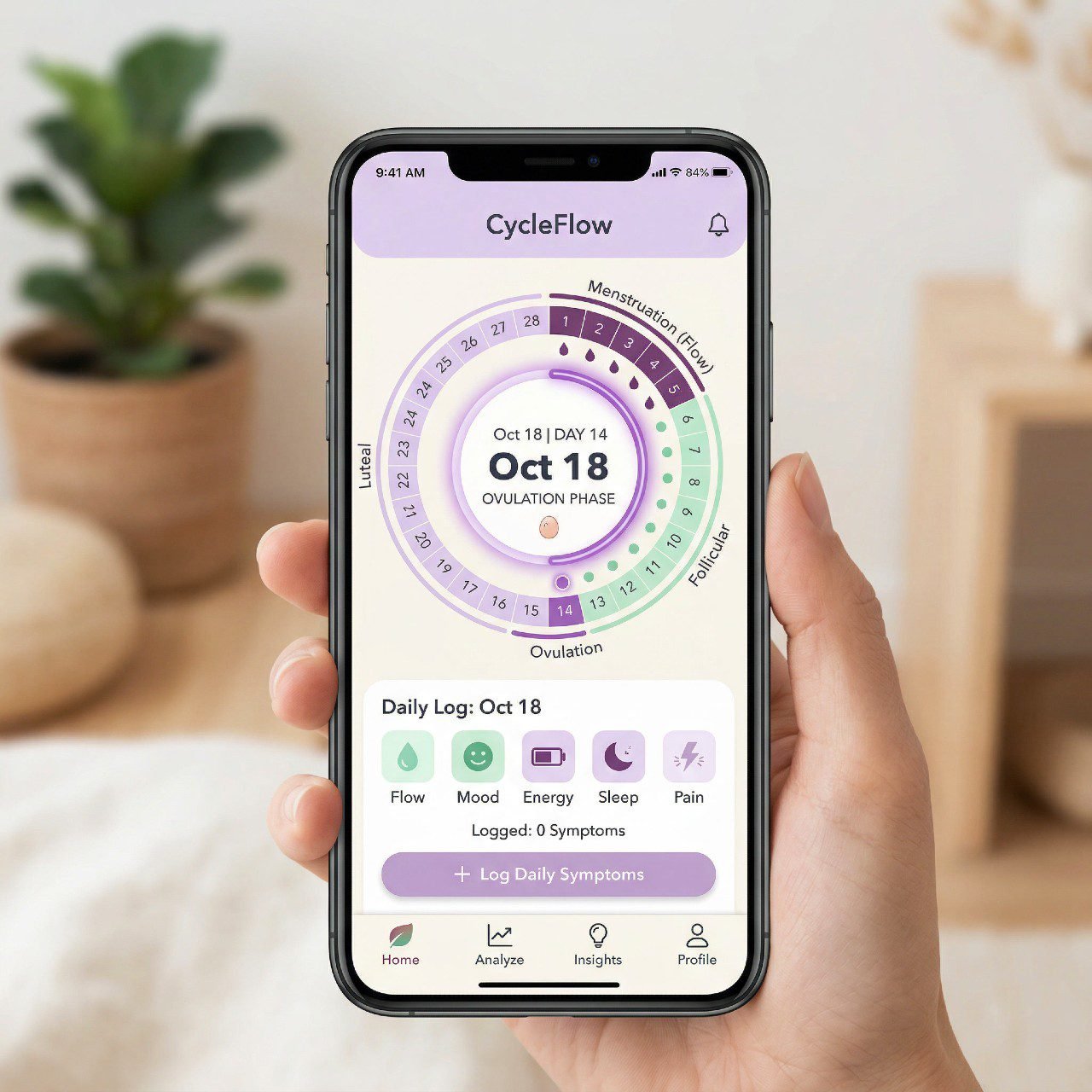
Best Fitness Tracking Apps For Cycle Syncing
Knowing your phase is the first step. These apps help:
| App | Best For | Key Feature |
|---|---|---|
| Clue | Cycle tracking + symptom logging | Science-based predictions, PMS tracking |
| Flo | Beginners to cycle syncing | AI health insights, nutrition tips by phase |
| MyFLO (Alisa Vitti) | Dedicated cycle syncing | Workout and food recommendations by phase |
| Natural Cycles | Basal body temperature tracking | FDA-cleared, uses BBT to confirm ovulation |
| Oura Ring | Wearable biometric tracking | Heart rate variability, temperature trends |
Tracking your basal body temperature (BBT) — your resting temperature first thing in the morning — is a reliable way to confirm ovulation. After ovulation, progesterone causes a slight temperature rise (0.2–0.5°F) that persists through the luteal phase.
How To Start Cycle Syncing For Weight Loss: Beginner Steps
Start cycle syncing in four simple steps: track your cycle for one full month, identify your current phase, adjust one variable (food or exercise) at a time, and build from there. Trying to change everything at once is the fastest route to giving up.
Step 1: Track Your Cycle
Download a tracking app and log the first day of your period. After 2–3 months, you'll have a clear picture of your cycle length and phase transitions.
Step 2: Know Your Current Phase
Use the day-range guidelines above as your starting point. Apps like Flo or Clue will automate this once you have tracking data.
Step 3: Start With Nutrition Changes
Food changes are easier to implement than workout restructuring. Begin by adding more iron and omega-3s during your period week, and more complex carbs in the luteal phase.
Step 4: Adjust Your Workouts
Once nutrition feels natural, start shifting your exercise intensity. The key shift: plan your hardest workouts in follicular and ovulation, and ease off in the luteal and menstrual phases.
Step 5: Track Results Over 3 Cycles
Don't evaluate after one month. Hormonal adaptation takes time. Look for reduced bloating, more consistent energy, fewer cravings, and steadier weight trends — not just the scale.
Avoiding common weight loss mistakes women make is especially important during this transition — particularly the trap of under-eating in the luteal phase when your body genuinely needs more fuel.
Ready to go deeper? Download the Lean Body Formula Special Report — a free, women-specific guide to the 10 evidence-based actions that support permanent weight loss, including how female hormones affect your results.
Related Articles
The Bottom Line
Cycle syncing for weight loss works because it stops treating your body like a problem to be overridden and starts treating it like the intelligent system it is. Your hormones are not your enemy — they're a signal. The menstrual craving for complex carbs, the luteal fatigue that asks for lighter workouts, the follicular energy surge that invites challenge: all of it is data.
Most women blame themselves for inconsistency. The truth is that they've been following a system designed around a male hormonal pattern that operates on a 24-hour cycle. Of course, it doesn't stick.
This is not about perfection. It's about direction. Even small shifts — adding iron foods during your period, scaling back HIIT intensity the week before it — compound into a different relationship with your body over time.
Start where you are. Track your cycle. Adjust one thing. And give yourself three months to feel the difference.
Embrace Inspiration
Like What You Read? Be Sociable, Comment, And Share It! Thanks.
Glossary Of Key Terms
FAQ
Cycle syncing for weight loss means adjusting your diet and exercise to match the four hormonal phases of your menstrual cycle — menstrual, follicular, ovulation, and luteal. Aligning with estrogen and progesterone shifts helps optimize fat burning, reduce cravings, and improve workout performance.
Resting metabolic rate increases by up to 279 calories per day in the late luteal phase due to progesterone elevation. Estrogen in the follicular phase improves insulin sensitivity and fat metabolism. These shifts mean the same caloric intake affects weight differently throughout the month.
Menstrual phase: yoga and walking. Follicular phase: HIIT and strength training. Ovulation phase: heavy lifting and high-intensity training. Luteal phase: moderate lifting, Pilates, and walking. Matching exercise intensity to hormonal energy prevents cortisol overload and improves recovery.
Reduce sodium and refined sugar. Eat magnesium-rich foods (spinach, dark chocolate, almonds), omega-3 fatty acids (salmon, walnuts, chia seeds), and complex carbohydrates (oats, brown rice, lentils) to reduce inflammation, raise serotonin, and counter progesterone-driven water retention.
Yes. During perimenopause, when cycles become irregular, cycle syncing shifts from calendar-based to symptom-based tracking. The nutritional principles remain valid — anti-inflammatory eating, strength training, and cortisol management become even more important as estrogen fluctuates more unpredictably.
Seed syncing involves eating ground flaxseeds and pumpkin seeds in the follicular phase and sesame seeds and sunflower seeds in the luteal phase. The lignans, zinc, and vitamin E in these seeds support estrogen and progesterone metabolism, respectively. Evidence is emerging, but the approach is safe and nutrient-dense.
The infradian rhythm is a biological cycle longer than 24 hours, governed by the roughly 28-day hormonal fluctuation of the female menstrual cycle. It regulates metabolism, immune function, cortisol, and brain chemistry in women — and is largely ignored by fitness programs designed around the male 24-hour hormonal pattern.
You Know Why. Now Learn Exactly How
Join thousands of women inside our community and receive our free guide: 10 Actions That Support Permanent Weight Loss — the practical, sustainable habits that translate everything you just read into real, lasting results.
No fad diets. No extreme plans. Just what the research actually supports — written for real women.