
Why Sleep Affects Weight Loss In Women: Practical Strategies To Improve It And Unlock Faster Weight Loss Results
Thomas Dekker
English Playwright, The Gull's Hornbook
Sleep is that golden chain that ties health and our bodies together.
Summary (TL;DR)
Poor sleep isn't just making you tired. It's raising the hormone that makes you hungry, lowering the one that makes you feel full, and pushing your body to store fat instead of burning it.
Research shows that women who sleep more than 7 hours per night are 33% more likely to lose weight successfully. This post breaks down the exact science behind the sleep-weight connection, with a practical protocol you can start tonight.
You're doing everything right. You're watching what you eat, showing up to your workouts, and tracking your progress. But the scale keeps stalling, and you can't figure out why.
Sound familiar? Here's something most women never hear from their doctors: how sleep affects weight loss in women is one of the most under-discussed factors in the entire fat loss equation. Sleep isn't a reward for getting your health habits right. It's a biological requirement for those habits to work.
When you're not sleeping enough or sleeping poorly, your body enters a hormonal state that makes fat loss nearly impossible. Your hunger hormones spike, your cravings for high-calorie foods intensify, and your metabolism shifts away from burning fat.
The good news? This is fixable. And it starts with understanding exactly what's happening in your body while you sleep.
Medical & Referral Disclaimer
The information in this article is for educational purposes only and does not constitute medical or nutritional advice. Every woman's body is different, and individual results vary based on health history, hormonal status, and lifestyle. If you have a medical condition affecting your sleep or weight, including insomnia, sleep apnea, or hormonal disorders, please consult a qualified healthcare professional before making changes to your routine.
Key Takeaways
- Women who sleep more than 7 hours per night are 33% more likely to succeed at weight loss.
- Poor sleep reduces leptin (your "I'm full" hormone) by 18% and raises ghrelin (your "I'm hungry" hormone) by 28%.
- Sleep-deprived women consume an average of 270-300 extra calories per day, without any conscious change in their eating.
- Women sleeping just 5.5 hours lost 55% less body fat than women sleeping 8.5 hours, even on the same calorie deficit.
- Deep sleep triggers growth hormone release, which is essential for fat burning and muscle repair overnight.
- Poor sleep raises cortisol, which promotes belly fat storage. This is especially significant for perimenopausal women.
- A consistent sleep schedule, cool bedroom temperature, and a 60-minute screen cutoff are among the most impactful changes you can make starting tonight.

Why Sleep Is The Missing Piece Of Your Weight Loss Puzzle
Most weight loss conversations focus on two things: what you eat and how you move. But there's a third pillar that rarely gets the attention it deserves. And it might be the reason your efforts aren't paying off the way they should.
Sleep is not passive. While you rest, your body is doing critical work. It's regulating your appetite hormones, repairing muscle tissue, releasing fat-burning hormones, and resetting your metabolism for the next day. Skip or shorten that process, and you're starting every day already working against yourself.
Here's the uncomfortable truth. You can eat perfectly and exercise consistently, but if you're regularly sleeping fewer than 7 hours, you're working against your own biology. Research confirms that sleep is as fundamental to metabolic health as diet and exercise combined.
This isn't about being lazy or choosing sleep over effort. It's about understanding that sleep is effort. For women especially, the hormonal effects of poor sleep are direct, measurable, and significant.
What Does Lack Of Sleep Do To Your Hunger Hormones?
Two hormones control your appetite more than any other. Poor sleep drops leptin, your fullness signal, by up to 18% and raises ghrelin, your hunger signal, by up to 28%. The result is that your body tells you you're hungry, even when you've eaten enough. This isn't a willpower problem. It's a measurable hormonal response.
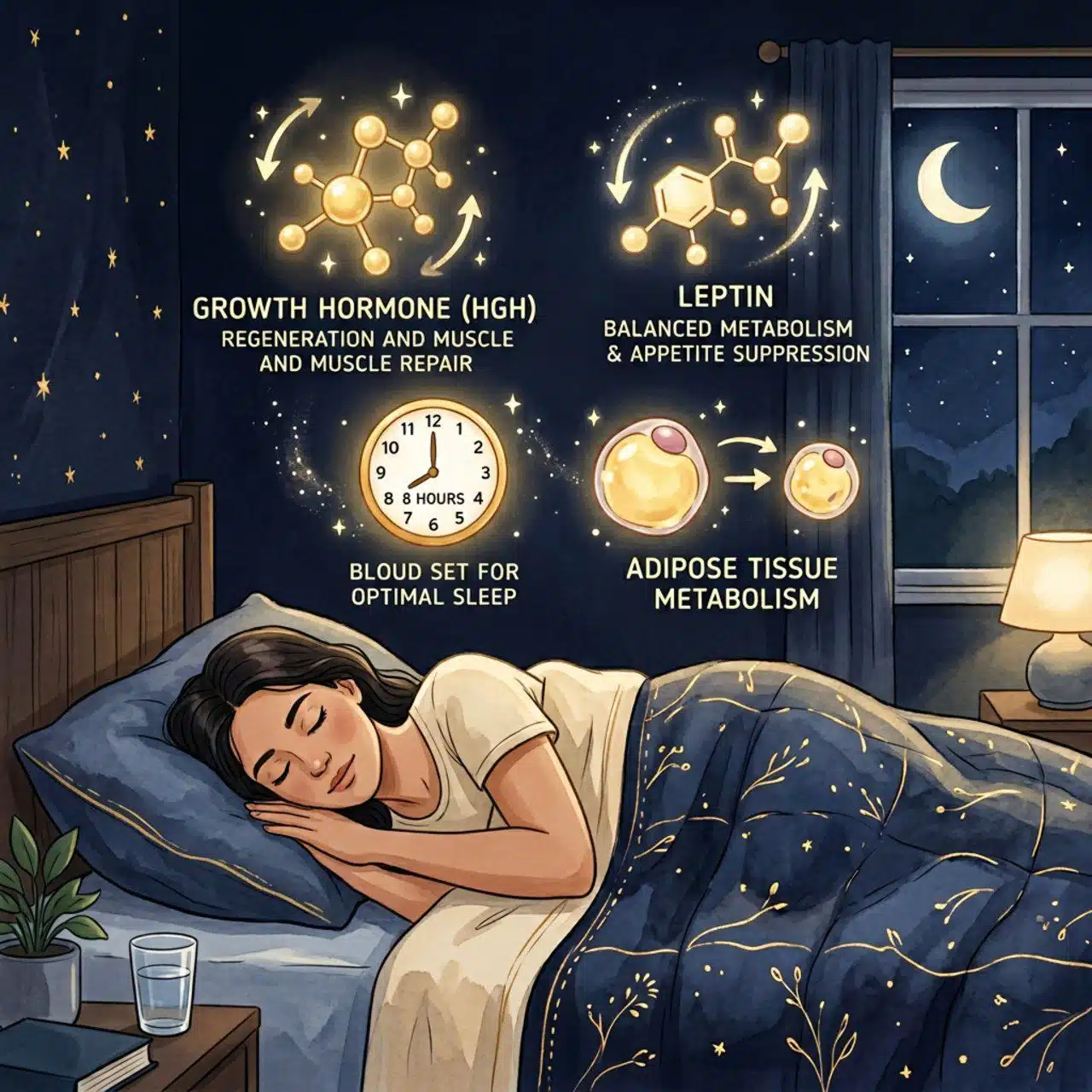
Leptin is released by your fat cells to tell your brain, "We have enough energy stored. You can stop eating." When leptin levels are high, you feel satisfied and in control. When they drop, your brain fires hunger signals regardless of how much you've already eaten.
Ghrelin is the opposite. It's produced in your stomach when it's empty, and it tells your brain to go find food. The higher your ghrelin, the hungrier you feel, and the harder it is to make calm, intentional choices about what you eat.
A landmark study published in PLOS Medicine found that short sleep duration was directly linked to lower leptin, higher ghrelin, and a higher BMI. Crucially, sex-specific analysis showed that the leptin drop was larger in women after sleep deprivation than in men. The hunger-amplifying effect of poor sleep hits us harder, biologically.
The Four Hormones Most Affected By Poor Sleep
| Hormone | What It Does | Effect Of Poor Sleep |
|---|---|---|
| Leptin | Signals fullness to the brain | Drops by up to 18% |
| Ghrelin | Signals hunger to the brain | Rises by up to 28% |
| Cortisol | Stress hormone, fat storage signal | Elevated, promotes abdominal fat storage |
| Growth Hormone | Triggers fat burning and muscle repair | Suppressed during insufficient deep sleep |
This is why you can eat a full dinner and still feel like raiding the kitchen at 10 pm after a bad night's sleep. Your biology is working against you, not your character.
How Sleep Deprivation Makes You Crave Junk Food
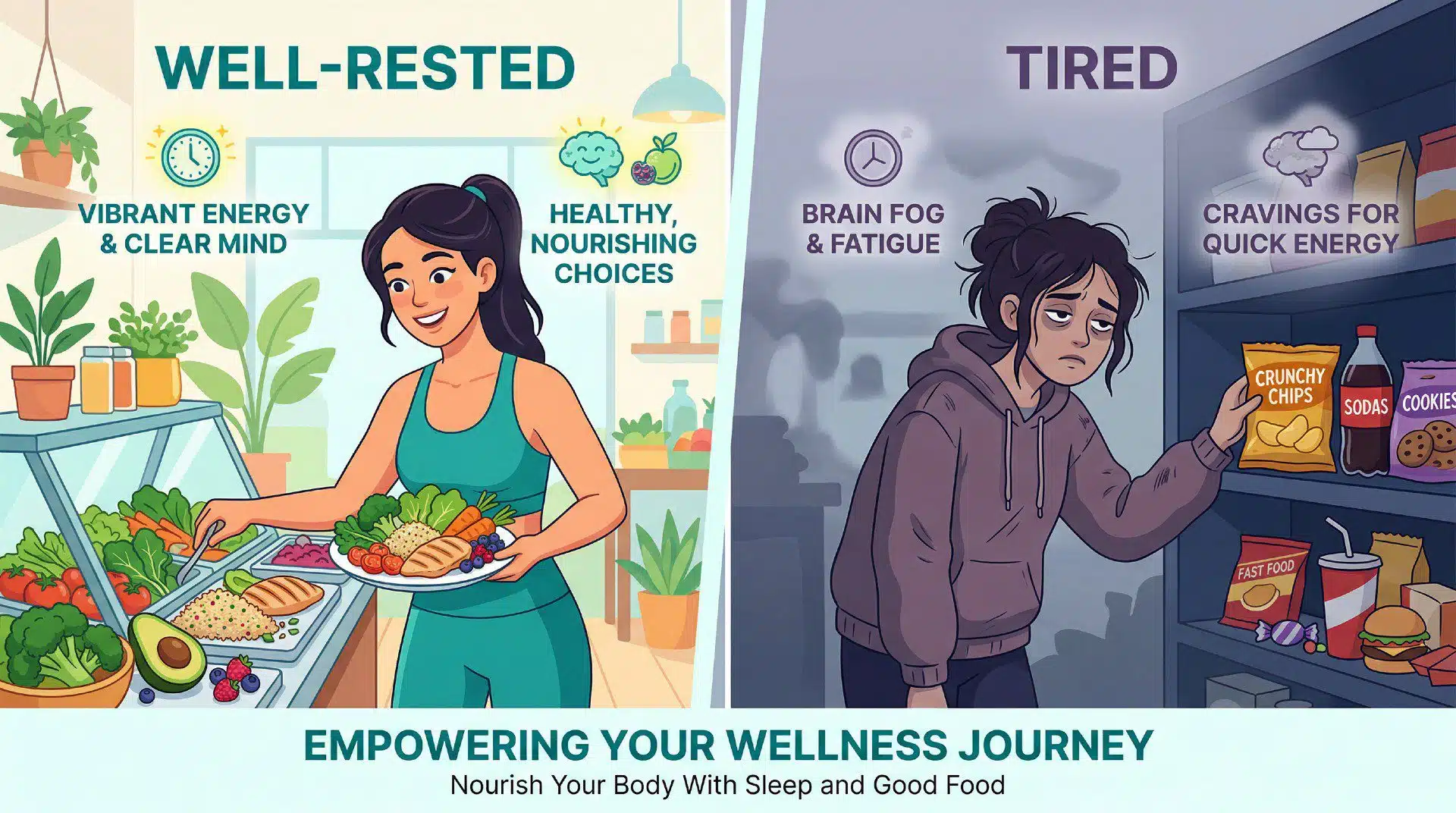
Sleep loss impairs the frontal lobe, the part of your brain responsible for decision-making and self-control, while simultaneously activating your brain's reward centers. The result is that high-calorie, high-fat foods become almost irresistible. This is not a character flaw. It's a measurable and well-documented shift in brain function.
You don't just eat more when you're sleep-deprived. You eat differently.
Researchers at UC Berkeley used brain scans on sleep-deprived adults and found dramatically increased activity in the reward centers when participants were shown images of junk food. At the same time, activity in the frontal lobe was significantly reduced. The prefrontal cortex, the region that helps you make thoughtful choices and override impulsive ones, was effectively offline.
It's the same neural pathway activated by certain addictive substances. Sleep loss essentially makes your brain treat a glazed doughnut like a reward it desperately needs.
A study targeting women specifically found that after a curtailed night of sleep, participants reported significantly increased hunger, more intense food cravings, and consumed more chocolate compared to nights with adequate rest. Not a little more. Measurably, documentably more.
The caloric impact adds up quickly. Research cited by the Sleep Foundation found that adults who extended their sleep by just 1.2 hours consumed an average of 270 fewer calories per day, without any dietary instruction. University of Chicago research found that sleep-deprived participants chose foods providing 50% more calories and twice the fat content compared to their well-rested days.
How Sleep Duration Changes Daily Calorie Intake
| Sleep Duration | Estimated Extra Calories Consumed | Food Preference Shift |
|---|---|---|
| Under 5.5 hours | ~300 extra calories/day | Strong pull toward high-fat, high-sugar foods |
| 6–7 hours | ~150–200 extra calories/day | Moderate increase in cravings, especially at night |
| 7–9 hours | Baseline — no excess | Balanced, intentional food choices |
| +1.2 hours above usual | 270 fewer calories/day | Reduced cravings, better satiety signals |
None of this is about moral failure. It's biology. Once you understand that, you can start working with your body instead of blaming yourself.

Does Poor Sleep Actually Stop You From Burning Fat?
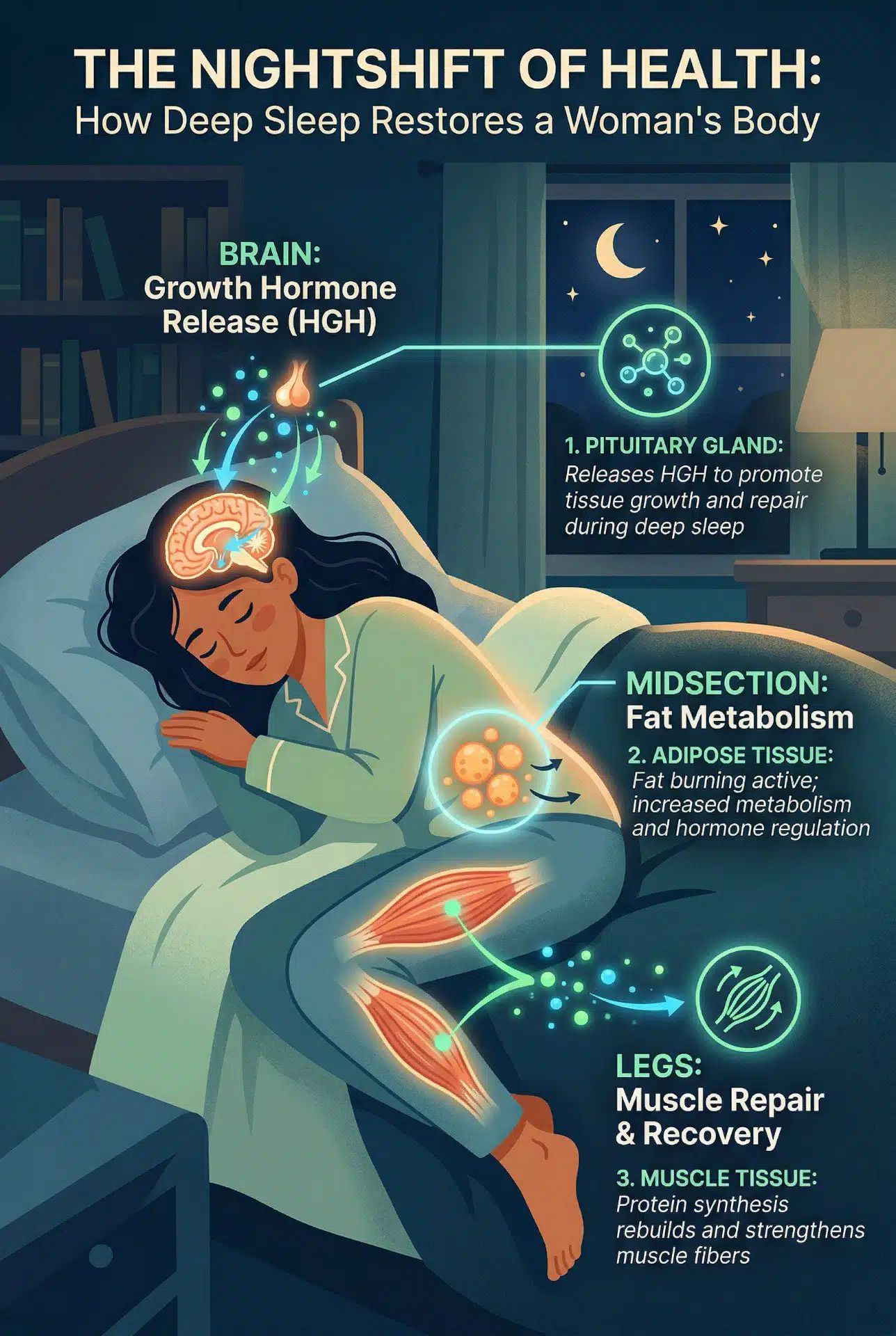
Yes. Women sleeping just 5.5 hours per night lost 55% less body fat than those sleeping 8.5 hours, even when both groups were on the same calorie deficit. Deep sleep is when your body releases growth hormone, the primary driver of fat burning and muscle preservation. Without enough deep sleep, that process is significantly suppressed.
This is the finding that changes everything for most women.
A University of Chicago study placed participants on a calorie-restricted diet and divided them into two groups: one sleeping 5.5 hours per night, the other sleeping 8.5 hours. Both groups lost weight. But the type of weight lost was dramatically different:
- The 8.5-hour group lost predominantly body fat.
- The 5.5-hour group lost 55% less body fat and 60% more fat-free mass (lean muscle tissue).
You were working hard to lose fat, but your body was burning muscle instead. That's the opposite of everything a lean body approach is built around.
Here's why this happens. During deep sleep, your body releases growth hormone, a powerful metabolic hormone that signals the body to burn stored fat for energy and repair muscle tissue. Poor sleep suppresses growth hormone release significantly.
A separate study found that acute sleep deprivation reduced muscle protein synthesis by 18%. If you're training hard and not recovering well, sleep deprivation could be quietly undoing your workouts night after night.
On top of this, poor sleep raises cortisol. Elevated cortisol tells your body to store fat, particularly around your abdomen. A Columbia University study found that women getting fewer than 6 hours of sleep per night were significantly more likely to accumulate abdominal fat, especially during perimenopause, when estrogen is already declining.
If you've been working hard to reduce belly fat and feel like nothing sticks, your sleep quality deserves a serious look.
Sleep Duration vs. Body Composition Outcomes
| Sleep Duration | Body Fat Lost | Lean Muscle Preserved | Cortisol Level |
|---|---|---|---|
| 5.5 hours/night | 55% less than target | Significant lean mass loss | Elevated |
| 8.5 hours/night | Primarily fat loss | Lean mass largely preserved | Normalized |
| Fewer than 6 hours (perimenopausal women) | Increased abdominal fat accumulation | Reduced | Elevated |
The Hidden Sleep-Dieting Trap Women Fall Into
Here's an irony that most weight loss programs don't address: trying to lose weight can make your sleep worse. And worse sleep makes weight loss harder. It's a cycle that traps a lot of women, and almost none of them realize what's happening.
New NIH research published in 2025 found that women on a reduced-calorie diet woke up more frequently during the night and stayed awake longer compared to women on a weight-maintenance diet. The disruption was most pronounced in the days leading up to their period.
Caloric restriction during the luteal phase (roughly days 15-28 of your cycle) amplified sleep disruption significantly. This isn't weakness or poor discipline. It's biology.
The cycle works like this:
- You cut calories aggressively to lose weight faster
- Your sleep gets disrupted, especially in the premenstrual window
- Sleep loss raises ghrelin and lowers leptin
- You feel hungrier and crave high-calorie foods more intensely
- Your cortisol rises, signaling your body to store fat
- Your weight loss stalls or reverses
- You cut calories harder, and the cycle repeats
If this pattern sounds familiar, it's not a weight loss motivation problem. It's a system problem.
A smarter approach is to work with your hormonal cycle rather than against it. Some women find that a less aggressive caloric approach, like intermittent fasting for fat loss, is easier to sustain without triggering the same degree of sleep disruption. Pairing your dietary approach with the sleep protocol below is one of the most practical ways to break the cycle.
How Many Hours Of Sleep Do You Actually Need To Lose Weight?
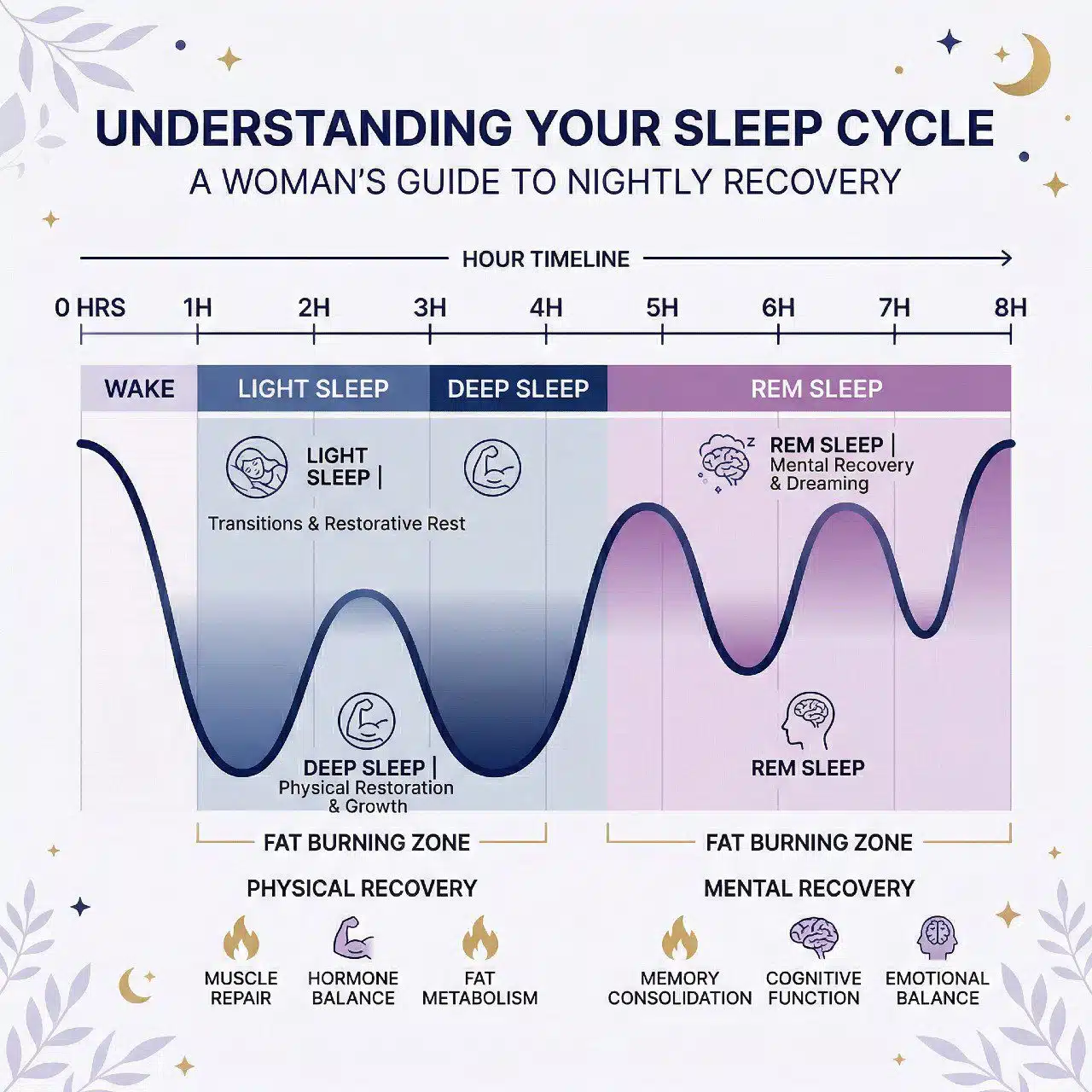
For most women, 7-9 hours per night is the target, and quality matters as much as quantity. A six-month weight loss study found that women who slept more than 7 hours and reported good sleep quality were 33% more likely to achieve successful weight loss outcomes than those who slept less or reported poor sleep quality.
The science is consistent: 7 hours is the floor, and 7-9 hours is the sweet spot for most women.
Here's something that surprises many women: too much sleep can also work against you. A 2025 study in the Journal of Nutrition found that long sleepers, those averaging more than 9 hours, had slightly lower average weight loss than those in the recommended range. The goal isn't the maximum amount of sleep. It's the right amount of restorative sleep.
Quality matters just as much as duration. Good quality sleep looks like this:
- Falling asleep within 20 minutes of lying down
- Staying asleep through the night with minimal waking
- Waking feeling genuinely rested, not groggy or unrefreshed
- Completing full sleep cycles, including deep slow-wave sleep and REM sleep
Your circadian rhythm, the internal body clock that governs when you feel sleepy and alert, also plays a significant role. Research published in Nature Reviews Endocrinology links circadian misalignment, sleeping at irregular times or staying up much later than usual, to obesity risk independent of total sleep hours. Consistency of when you sleep matters nearly as much as how long you sleep.
Your Practical Sleep Protocol For Faster Weight Loss
You don't need a sleep tracker or an expensive supplement stack. The most effective sleep improvements are behavioral, and most of them cost nothing. Here are seven evidence-backed steps you can start building into your routine today.
Step 1: Lock In A Consistent Sleep And Wake Time
Go to bed and wake up at the same time every day, including weekends. This is the single most effective way to stabilize your circadian rhythm. Irregular sleep schedules cause measurable metabolic disruption comparable to working night shifts. Pick your target wake time first, count back 8 hours, and make that your bedtime goal.
Step 2: Keep Your Bedroom Cool
Your body temperature needs to drop slightly to initiate sleep. A cooler bedroom accelerates that process. Research points to 60-67°F (15-19°C) as the optimal range. If you can't control your thermostat, a fan, cooling pillow, or breathable bedding can make a meaningful difference.
Step 3: Set A Screen Cutoff 60 Minutes Before Bed
Blue light from phones and screens suppresses melatonin, the hormone that signals your brain that it's time to sleep. A 60-minute screen-free wind-down period is one of the highest-impact changes you can make. Replace the scroll with something that calms your nervous system rather than stimulating it.
Step 4: Stop Eating 2-3 Hours Before Bed
Late-night eating keeps your digestive system active and raises your core body temperature, both of which interfere with falling into deep sleep. It also sends a "daytime" signal to your circadian system, which delays the hormonal wind-down your body needs. This doesn't mean you can't have an evening snack if you're genuinely hungry. It means finishing eating well before you're trying to sleep.

Step 5: Get Morning Light Exposure
Stepping outside within 30-60 minutes of waking, even for 10 minutes, helps anchor your circadian rhythm. Morning light signals to your brain that the day has started, which in turn sets the clock for when melatonin will rise at night. This is one of the most powerful and free tools for improving sleep quality.
Step 6: Build A Wind-Down Ritual
Your nervous system needs a transition from the demands of the day to rest. This could be 10 minutes of slow breathing, a warm shower (the body cooling that follows helps initiate sleep), light stretching, or reading a physical book. The ritual itself matters as much as what it contains. You're training your body to recognize the cue that sleep is coming.
Step 7: Time Your Exercise Right
Regular exercise is one of the strongest predictors of good sleep quality. Research suggests that working out at 7 am or between 1-4 pm best aligns with circadian rhythms for improved nighttime sleep. High-intensity workouts late at night can delay sleep onset by elevating cortisol and body temperature. If you're looking for the best exercises for women to lose weight that also support good sleep, morning strength training is a strong and well-supported choice.
Building all seven of these into your life at once can feel overwhelming. That's not the goal. Choose one or two to focus on first. Sustainable healthy habits are always built one step at a time, not through a total overhaul.
If you want to stay ahead of the latest science-backed strategies built specifically for women's fat loss and metabolism, join our newsletter below. You'll get practical, evidence-based guidance delivered straight to your inbox, no fads, no extreme approaches. Just real information that works for real women. Sign up here.
Want The Habits Behind Lasting Weight Loss? Get the free guide: 10 research-backed habits that help women lose body fat and keep it off, with no extreme diets. Send Me The Free Guide.
The Bottom Line
Poor sleep isn't a minor inconvenience. For women working toward a leaner, stronger body, it's one of the most powerful variables in the entire equation, and one of the most overlooked.
When you sleep well, your hunger hormones stay balanced. Your brain makes clearer, more intentional food choices. Your body releases the hormones it needs to burn fat and preserve muscle overnight. And your cortisol stays low enough to prevent stress-driven belly fat from accumulating.
When you don't sleep well, the opposite happens across every one of those areas at once. No nutrition plan and no workout routine can fully compensate for that.
Three things to remember: aim for 7-9 hours, keep your schedule consistent, and treat your wind-down routine as seriously as you treat your workouts.
Glossary Of Key Terms
- Circadian Rhythm: The internal 24-hour biological clock that regulates cycles of alertness and sleepiness, influenced by light exposure and consistent schedules.
- Cortisol: A stress hormone that, when elevated due to poor sleep, promotes the storage of abdominal fat and contributes to muscle breakdown.
- Ghrelin: Known as the "hunger hormone," it is produced in the stomach and signals the brain to eat; levels increase significantly during sleep deprivation.
- Growth Hormone: A metabolic hormone released during deep sleep that is essential for repairing muscle tissue and triggering the burning of stored fat.
- Leptin: The "fullness hormone" released by fat cells to signal satisfaction to the brain; levels drop when a person is sleep-deprived, leading to persistent hunger.
- Luteal Phase: The second half of the menstrual cycle (roughly days 15-28), when women are more susceptible to sleep disruption, particularly when following a restricted-calorie diet.
- Melatonin: The hormone responsible for signalling the brain that it is time to sleep; its production can be suppressed by exposure to blue light from screens.
- Prefrontal Cortex: The area of the brain's frontal lobe responsible for complex decision-making and self-control, which becomes less active during sleep deprivation.
- Sleep Banking: The practice of attempting to "catch up" on lost sleep during the weekends, which research suggests does not fully reverse the hormonal and metabolic damage of a week-long sleep deficit.
- Social Jet Lag: The metabolic and circadian disruption caused by having significantly different sleep and wake times on weekends compared to weekdays.
FAQ
Can Sleeping More Help You Lose Weight Without Changing Your Diet?
Increasing your sleep duration alone can make a measurable difference. Research found that adults who extended their sleep by just 1.2 hours consumed an average of 270 fewer calories per day, with no dietary instruction given whatsoever. This happened because balanced sleep hormones naturally reduced appetite and food cravings. That said, sleep works best as part of a complete approach alongside a sensible nutrition strategy and regular movement. Think of it as removing a major invisible obstacle, not as a complete replacement for those other pillars.
Does Napping Count Toward The 7-9 Hour Sleep Target?
Short naps of 20-30 minutes can help offset some of the cognitive and mood effects of a poor night of sleep, but they don't replicate the hormonal benefits of a full uninterrupted night. The growth hormone release that matters most for fat loss and muscle repair happens during extended deep sleep cycles that short naps simply don't reach. A 20-minute nap won't restore leptin and ghrelin to their optimal levels the way a full night will. If you're regularly relying on naps to function through the day, that's a signal to investigate your nighttime sleep quality rather than treating naps as a long-term strategy.
Why Do I Wake Up Hungry After A Bad Night's Sleep?
This is one of the most direct effects of sleep deprivation on your hormones. A poor night of sleep drops your leptin (the hormone that keeps hunger quiet between meals) and raises your ghrelin (the hormone that amplifies hunger signals). By morning, your body is effectively in a hunger state regardless of what you ate the night before. Research focused specifically on women found increased hunger, stronger cravings for calorie-dense foods, and greater food intake following a curtailed night of sleep. It is not in your head, and it is not a lack of discipline. It is measurable, documented biology.
How Does Menopause Affect Sleep And Weight Gain?
Perimenopause and menopause create a compounding hormonal challenge for both sleep quality and body composition. Declining estrogen disrupts your body's natural temperature regulation, leading to night sweats and hot flashes that disrupt sleep. Lower estrogen also reduces leptin, making hunger harder to control. Meanwhile, poor sleep raises cortisol, which accelerates belly fat storage right as your body is already shifting fat distribution toward the midsection due to hormonal changes. A Columbia University study found that perimenopausal women sleeping fewer than 6 hours per night were significantly more likely to accumulate abdominal fat. Prioritizing sleep during this life stage is one of the most evidence-backed strategies for managing midlife weight changes.
What Foods Or Supplements Actually Help You Sleep Better?
A few evidence-backed options are worth considering. Magnesium glycinate (200-400mg) has shown promise in some studies for improving sleep quality, particularly for women with low magnesium levels. Tart cherry juice contains natural melatonin precursors and has modest evidence for improving sleep duration. Foods high in tryptophan, including turkey, eggs, and dairy, support serotonin and melatonin production. On the avoidance side, cutting off caffeine after 2pm is one of the highest-impact dietary changes for sleep. Alcohol is a common trap: it may help you fall asleep faster, but it significantly degrades REM sleep in the second half of the night, leaving you feeling unrestored even after a full 8 hours. Always speak with your doctor before starting any supplement regimen.
Is It Possible To "Catch Up" On Sleep Over The Weekend?
The concept of "sleep banking" is appealing, but the research doesn't fully support it as a strategy. While extra rest on weekends can reduce feelings of fatigue, the hormonal disruption caused by a week of poor sleep, including elevated ghrelin, suppressed leptin, and higher cortisol, does not fully reverse with just two recovery nights. There's also the issue of "social jet lag": sleeping in significantly later on weekends disrupts your circadian rhythm in a way that has its own measurable metabolic consequences. The most effective approach is consistent, adequate sleep throughout the week. If you've accumulated a sleep deficit, weekend recovery rest can help at the margins. But it should complement better weeknight sleep habits, not replace them.
How Quickly Can Better Sleep Improve Weight Loss Results?
Some effects appear almost immediately. After a single better night of sleep, many women notice reduced cravings and more intentional food choices the following day. Hormonal normalization of leptin, ghrelin, and cortisol begins within a few days of consistent adequate sleep. Body composition changes take longer: the University of Chicago research measured significantly different fat loss outcomes over two weeks of consistent sleep differences between groups. For most women following a structured fat loss approach, adding consistent 7-9 hours of quality sleep can meaningfully accelerate results within 2-4 weeks. It won't replace solid nutrition and training habits, but it removes one of the most common and most hidden obstacles standing between you and your goals.