

How To Manage Sugar Cravings When Willpower Alone Keeps Letting You Down

We love salt, fat and sugar. We're hard-wired to go for those flavours. They trip our dopamine networks, which are our craving networks.
Michael Pollan
Summary (TL;DR)
Sugar cravings aren't a willpower problem. They're a biology problem. Your hormones, blood sugar swings, sleep quality, gut microbiome, and stress levels all drive the urge to reach for something sweet. This guide explains exactly why cravings hit, when they're worst in your cycle, and gives you seven practical strategies (including the C.A.L.M. framework) to manage them without white-knuckling it through every afternoon slump.
If you've ever told yourself, "I just need more self-control," you've been solving the wrong problem.
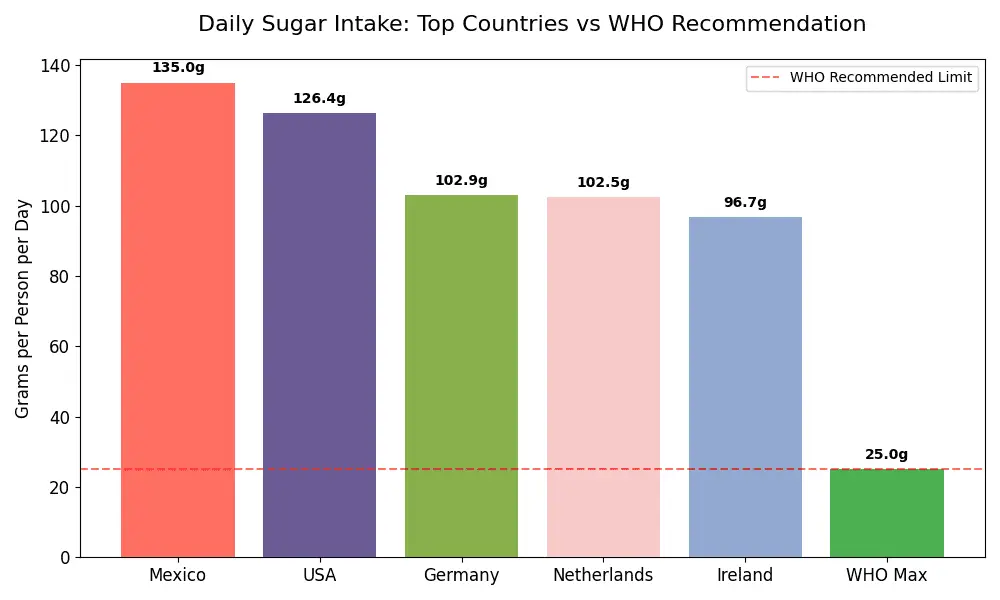
Sugar cravings aren't a character flaw. Three in five Americans already consume more added sugar than current dietary guidelines recommend. Not because half the population has no discipline, but because the modern food environment, stress levels, sleep habits, and hormonal patterns are all working against you.
Here's what's actually happening: every time your blood sugar crashes, your cortisol spikes, your estrogen dips, or your gut bacteria demand a quick energy hit, your brain sends a signal that feels like an urgent, non-negotiable craving. That signal isn't coming from weakness. It's coming from biology.
The strategies that work aren't about saying no more forcefully. They're about changing the conditions that trigger the craving in the first place. That's what this guide covers: the hormonal reasons women experience sugar cravings more intensely than men, and a simple four-step system you can use starting today.
Medical & Referral Disclaimer
This article is for educational and informational purposes only and is not intended as medical advice. The strategies discussed are general wellness recommendations and may not be suitable for everyone. If you have a medical condition, hormonal disorder, or concerns about blood sugar management, please consult a qualified healthcare professional before making changes to your nutrition or lifestyle.
Key Takeaways
- 3 in 5 Americans consume more added sugar than recommended. It's a systems problem, not a willpower problem.
- Women experience sugar cravings more intensely than men due to hormonal fluctuations across the menstrual cycle
- Cortisol (the stress hormone) directly triggers cravings for high-sugar, high-fat foods
- ~95% of serotonin is produced in the gut. Poor gut health can drive sugar cravings by disrupting mood regulation.
- A high-protein breakfast (35g protein) has been shown to reduce post-meal food cravings and dopamine-related reward signals
- One poor night of sleep is enough to increase insulin resistance and intensify sugar cravings the next day
- The C.A.L.M. framework (Cue, Anchor, Lifestyle, Mindful pause) gives you a repeatable system to interrupt the craving cycle
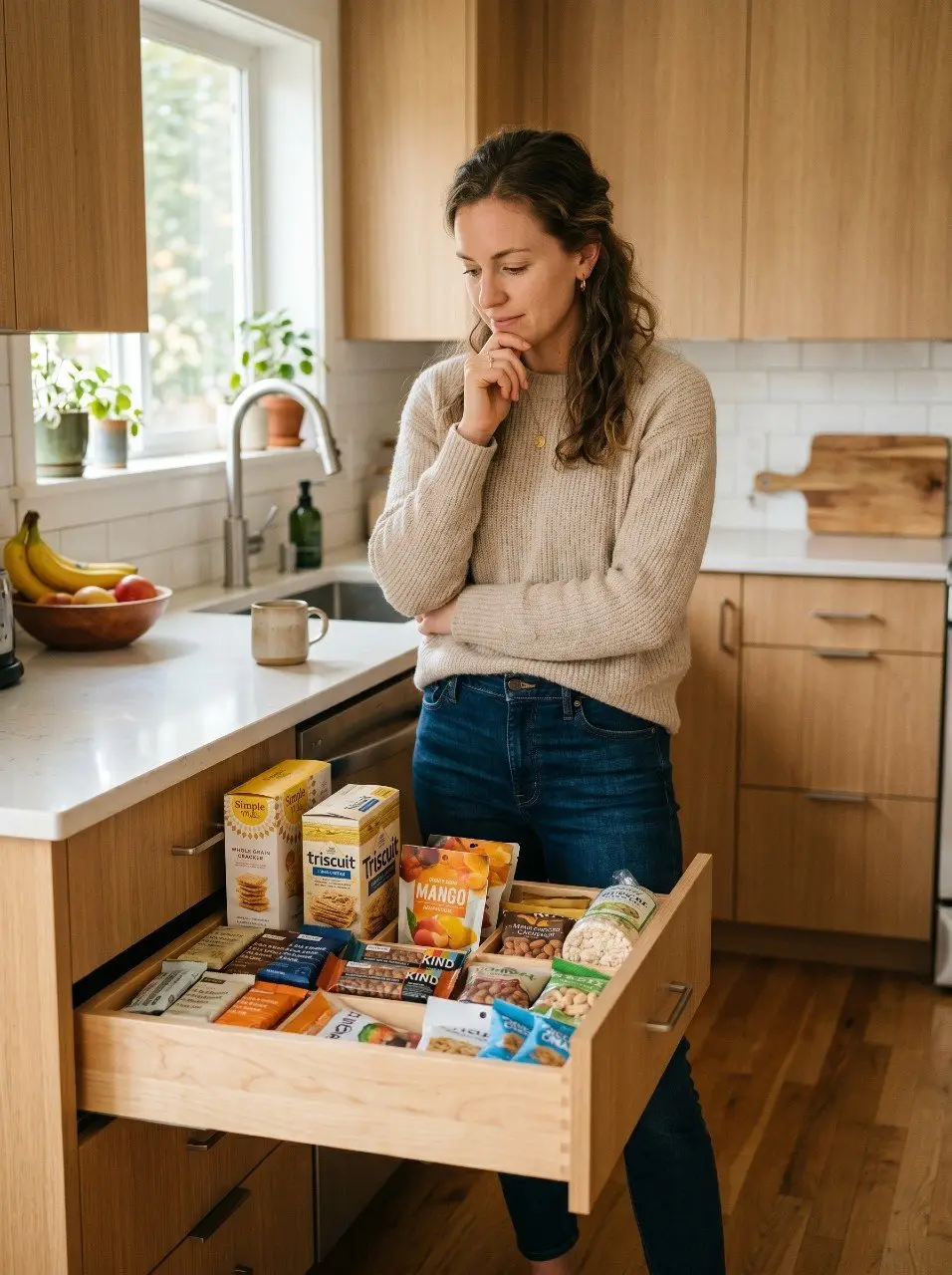
Why Do You Crave Sugar? The Real Reasons Behind The Urge
The short answer: Sugar cravings are your brain and body signalling that something is off. Blood sugar, hormones, sleep, or gut health. They're not a sign of weakness.
When you eat something sweet, your brain releases dopamine, the "reward" neurotransmitter. As Psychology Today explains, this dopamine surge reinforces the behaviour, telling your brain "do that again." Over time, the brain can begin to anticipate the reward, creating a craving before you've eaten a single gram of sugar.
But it doesn't stop at dopamine. Your blood sugar plays a major role, too. When you eat refined carbohydrates or go too long between meals, blood glucose spikes and then drops rapidly. As Veri's research breakdown explains, that drop sends your brain scrambling for the fastest energy source it can find. Sugar tops the list.
Then there's cortisol. When you're stressed, cortisol floods your body with glucose to prepare for "fight or flight." Once that spike drops off, the crash triggers intense cravings for more sweet, fatty, or salty food. The loop goes: stress, cortisol spike, blood sugar crash, craving, eat sugar, repeat.
Once you treat cravings as data (not moral failure), you can actually do something about them.
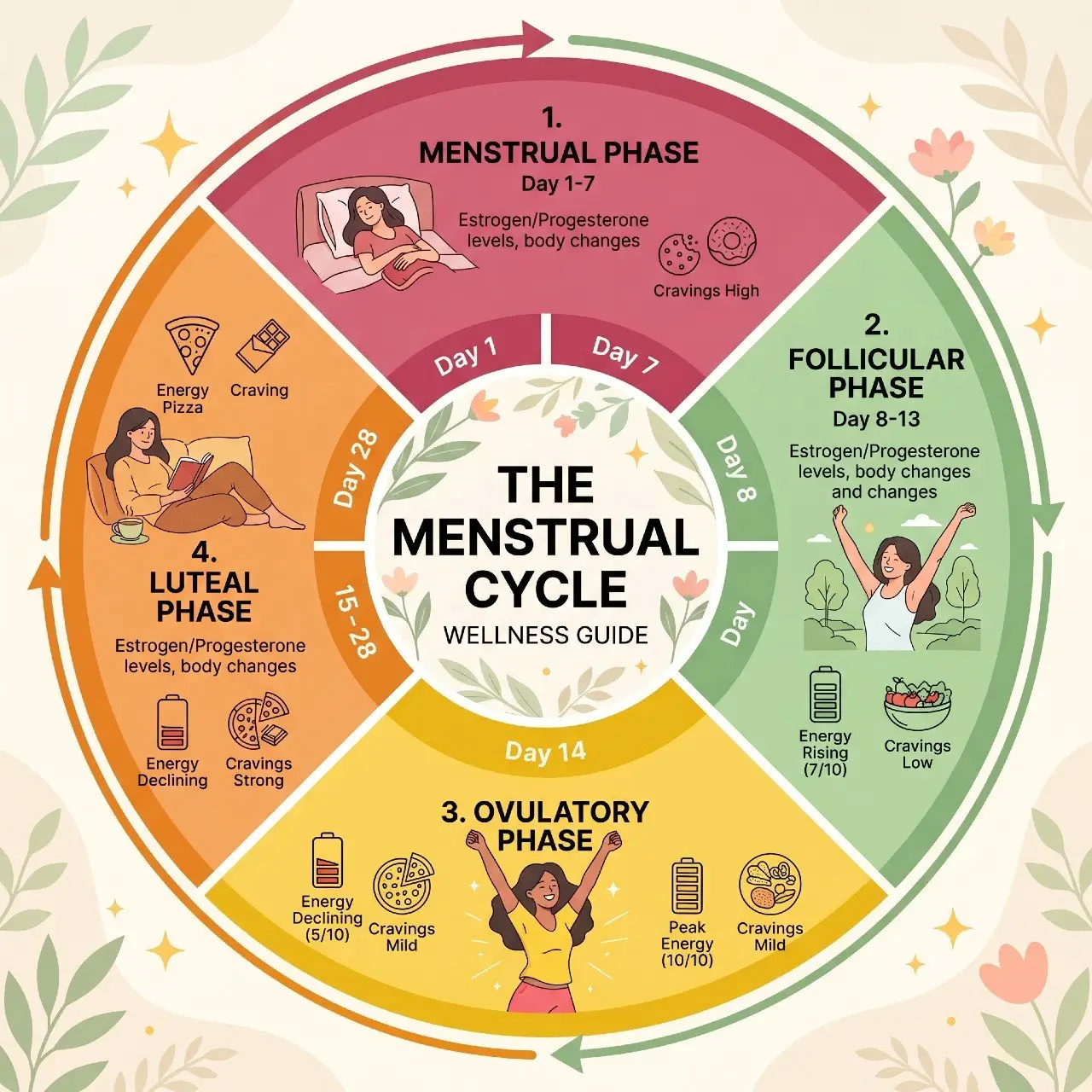
Does Your Menstrual Cycle Make Sugar Cravings Worse?
Yes, and significantly so. During the luteal phase (roughly days 15–28 of your cycle), a drop in estrogen reduces serotonin, while rising cortisol and progesterone increase appetite for fast-energy carbohydrates. Cravings at this phase are hormonal, not habitual.
This is one of the most underreported facts in women's nutrition: your craving intensity is not constant across the month. It shifts with your cycle. Research on hormone-craving connections shows that falling estrogen suppresses serotonin. When serotonin drops, your mood dips, and your brain reaches for the fastest way to lift it: sugar and simple carbs.
In the luteal phase, resting cortisol also increases, making you less resilient to stress and more vulnerable to comfort food cravings. If you're in perimenopause, hormonal fluctuations are even more pronounced, often making cravings more intense and unpredictable.
The practical takeaway? Don't fight your cycle. Work with it. In the luteal phase, slightly increase your protein and fibre intake, and plan for a small, satisfying sweet option (like a square of dark chocolate or a date with nut butter) rather than trying to white-knuckle through the urge.
| Cycle Phase | Hormone Shift | Craving Tendency | Best Strategy |
|---|---|---|---|
| Follicular (Days 1–13) | Estrogen rising | Lower cravings, good energy | Great time to reset eating habits |
| Ovulation (Day 14) | Estrogen peaks | Minimal cravings | Maintain protein-first meals |
| Luteal (Days 15–28) | Estrogen drops, progesterone rises | Strongest sugar/carb cravings | Increase protein + fibre, plan a small sweet |
| Menstruation (Days 1–5) | All hormones low | Moderate cravings, comfort food pull | Prioritise iron-rich foods, rest |
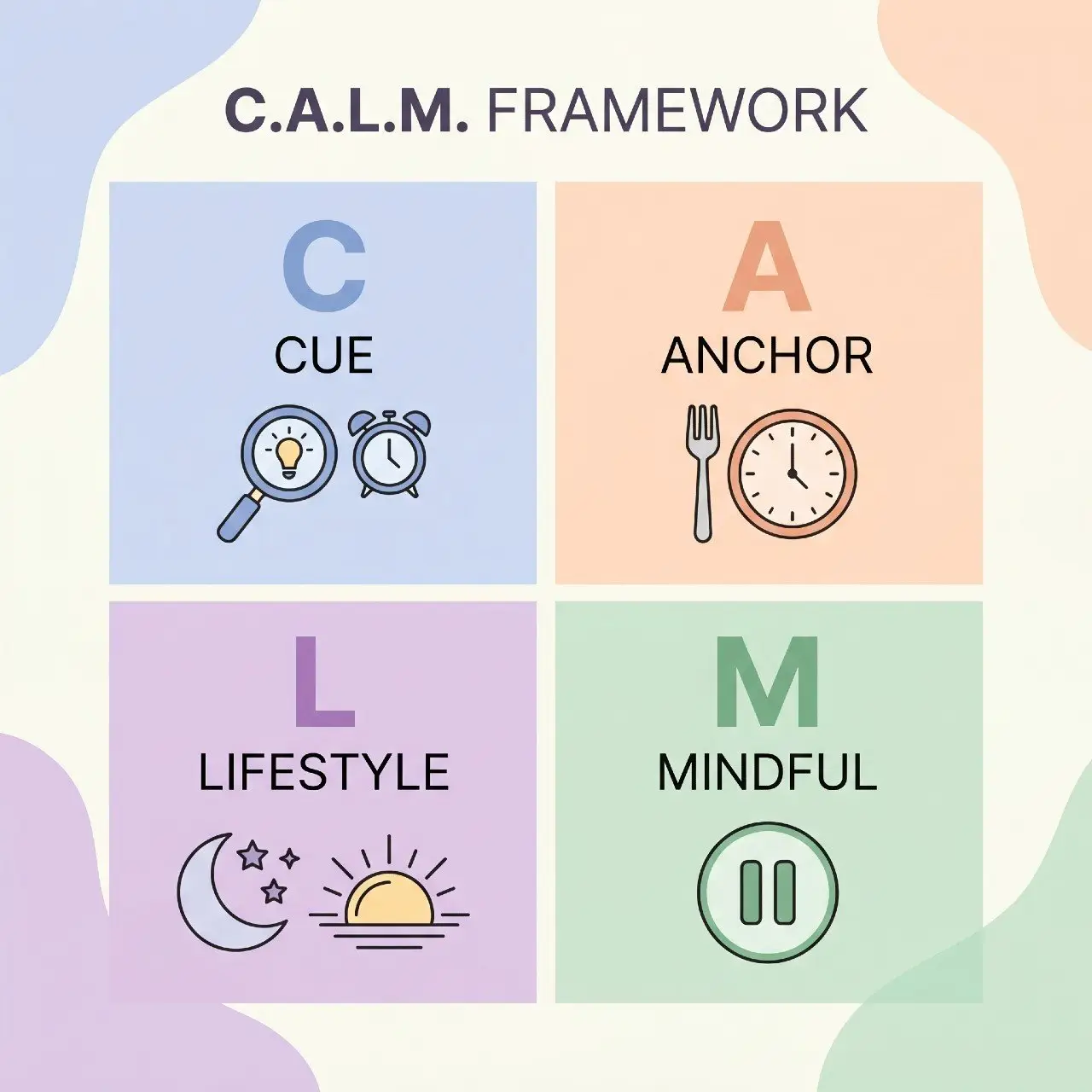
The C.A.L.M. Framework: A Practical System For Managing Sugar Cravings
Willpower is a depleting resource. Systems aren't. The C.A.L.M. framework is a four-step approach designed to interrupt the craving cycle at its root, not just in the moment.
C — Cue Identification. Before you can change a craving, you have to know what's triggering it. Is it 3 pm every afternoon? After a stressful meeting? When you're bored at your desk? Cravings follow patterns. Spend three days noticing when and why you reach for sugar: time of day, emotional state, how long since your last meal. Once you see the cue, you can disrupt the pattern.
A — Anchor Meals (Protein + Fibre First). Build every meal around a protein-and-fibre anchor. A high-protein breakfast has been shown to reduce post-meal cravings and increase dopamine-related satiety signals. Aim for 25–35g of protein per meal, paired with fibre-rich vegetables or legumes. This combination slows glucose absorption, keeps blood sugar stable, and keeps dopamine reward signals satisfied for longer. For a full approach, see this high-protein meal plan for women.
L — Lifestyle Reset (Sleep + Stress). Two lifestyle levers have an outsized impact on cravings: sleep and stress management. One poor night of sleep increases ghrelin (the hunger hormone) and makes your brain crave high-sugar food as a quick energy fix. Chronic stress keeps cortisol elevated, which drives the blood sugar–craving loop described above. Build consistent sleep and stress-reduction habits. Not as "nice to haves." As craving-management tools.
M — Mindful Pause. When a craving hits, pause for 10 minutes before acting on it. Research shows that this brief window is often enough for the intensity of the craving to drop. Use the time to drink a glass of water (mild dehydration often mimics hunger), take five slow breaths, or step outside briefly. This isn't about suppression. It's about creating space between the trigger and the response.
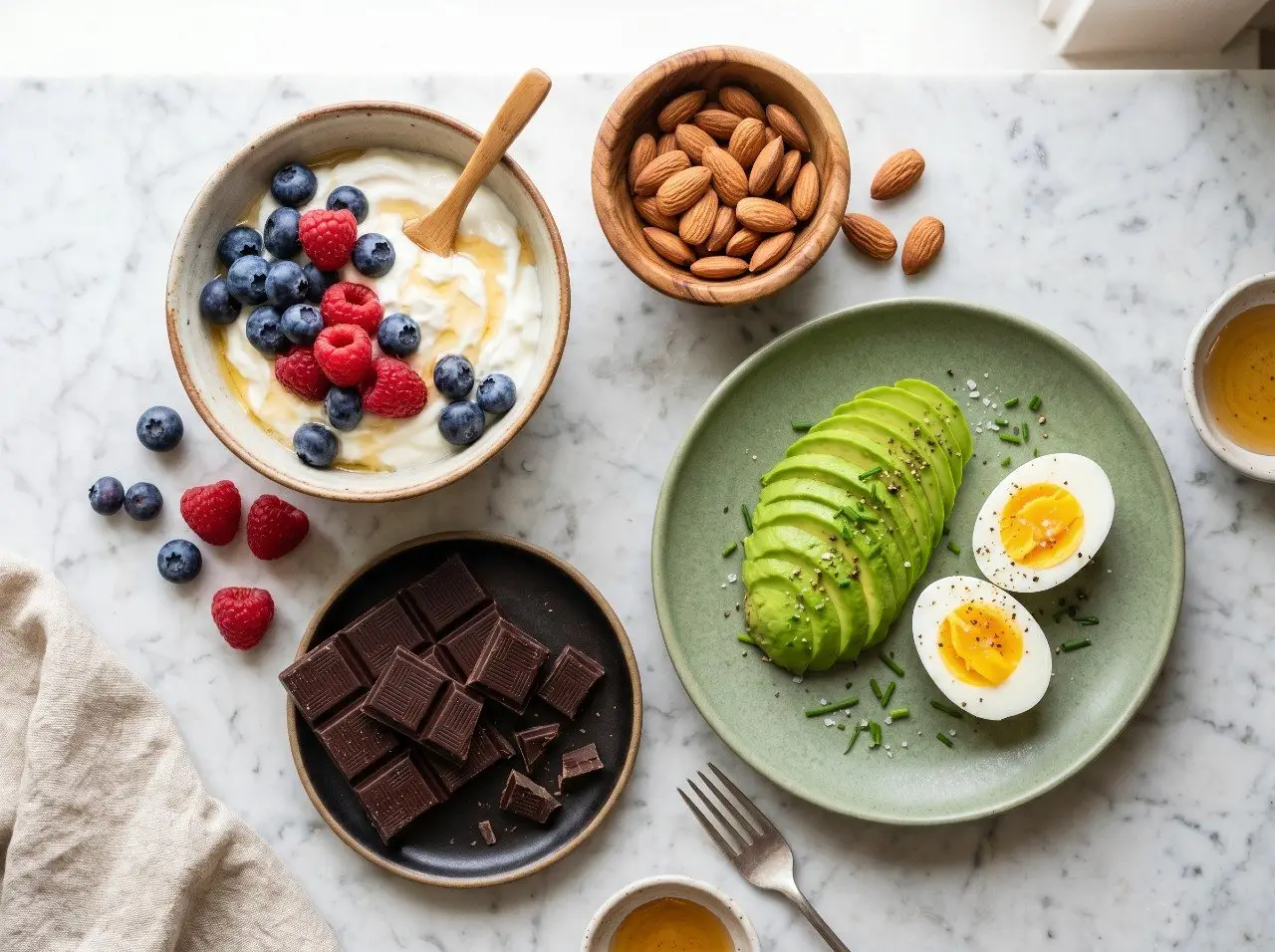
What Should You Eat To Reduce Sugar Cravings?
The most effective foods for reducing sugar cravings are those that stabilise blood sugar and support neurotransmitter production: high-quality protein, fibre-rich carbohydrates, healthy fats, and magnesium-rich foods.
Food is your most powerful tool for managing cravings. But the goal isn't restriction. It's building meals that keep your blood sugar stable, your dopamine satisfied, and your serotonin supported.
Dietary fibre improves insulin sensitivity and promotes satiety by slowing glucose absorption and supporting gut health. When combined with protein, it creates a one-two punch against cravings that no amount of willpower can replicate.
Magnesium is worth a specific mention. Low magnesium levels are associated with impaired insulin activity and increased blood sugar instability, both of which drive cravings. Magnesium glycinate is particularly helpful for women who experience PMS-related cravings. For a broader look at supplements that support fat loss and hormonal balance, that resource goes deeper on the nutrient side of things.
| Food | Craving-Busting Mechanism | Best Time to Eat |
|---|---|---|
| Eggs | 6g protein each; keeps dopamine reward signals stable | Breakfast or snack |
| Greek yogurt (plain) | Protein + probiotics for gut serotonin support | Morning or post-workout |
| Berries | High fibre, low sugar; satisfies sweet taste without a blood sugar spike | With meals or as dessert |
| Almonds / nut butter | Healthy fats + magnesium; slows digestion and blunts cravings | Pre-lunch or 3 pm window |
| Sweet potato | Complex carb with fibre; slow glucose release | Lunch or dinner |
| Dark chocolate (70%+) | Small dose of theobromine + magnesium; satisfies chocolate craving | After dinner, controlled portion |
| Lentils / chickpeas | Fibre + plant protein; excellent for blood sugar control | Lunch |
For a full guide on building meals that fight cravings from the ground up, explore the healthy eating strategies for women hub.
Sugar Cravings? 6 Tips To Help You Eat Less Sugar
Let's talk about sugar cravings! In this video, I’m going to share six simple tips that have helped me to understand my own cravings, adopt healthier eating habits and reduce emotional eating over time.
Does Poor Sleep Make You Crave Sugar?
Yes, and the effect kicks in after just one bad night. Sleep deprivation raises ghrelin (the hunger hormone), suppresses leptin (the satiety hormone), and increases insulin resistance. All of which drive intense cravings for high-sugar foods the next day.
This isn't anecdotal. Research cited by Dr. Jolene Brighten confirms that your body becomes more insulin-resistant after a single night of poor sleep. Glucose can't enter your cells efficiently, your brain signals an energy emergency, and you reach for the fastest fix: sugar.
Sleep is also where ghrelin and leptin reset. Get fewer than 7 hours consistently, and you're walking around in a permanently hungry, craving-amplified state. No matter how disciplined you are.
What actually moves the needle:
- Aim for 7–9 hours per night. Not as a wellness aspiration. As a craving-management strategy.
- Keep a consistent wake time, even on weekends. This anchors your circadian rhythm more than anything else.
- Cut screens 30–60 minutes before bed. Blue light delays melatonin and fragments the sleep you do get.
- Keep the room cool and dark. Your body temperature drops naturally during sleep; a warm room fights that.
- If you wake at 3 am regularly, blood sugar instability is a common culprit. A small protein-fat snack before bed (a handful of almonds or a spoon of nut butter) can help stabilise it overnight.
Can Stress Cause Sugar Cravings?
Yes, and it's one of the most direct biological pathways. When cortisol rises under stress, it floods your bloodstream with glucose. When that glucose drops, your brain demands more. This is the cortisol-craving loop, and it's why stress and sugar consumption track together.
Five Journeys' breakdown of the cortisol-sugar connection explains it clearly: elevated cortisol increases appetite, specifically for high-sugar and high-fat foods, as the body tries to rapidly restore energy reserves after a perceived threat.
For women, this is compounded in the luteal phase, when baseline cortisol is already higher, and stress resilience is lower. Chronic stress in this window can trigger cravings that feel almost impossible to resist. Physiologically, they are intense.
Three things that actually help:
- Structured eating windows. Keeping meals regular (rather than skipping and then bingeing) prevents the blood sugar crashes that amplify stress-driven cravings. Explore how structured eating windows like intermittent fasting can support this rhythm.
- Movement snacks. A 10-minute walk after meals reduces post-meal blood sugar spikes and provides a real outlet for cortisol. You don't need a full workout. Just movement.
- Box breathing. Inhale for 4 counts, hold for 4, exhale for 4, hold for 4. Repeat four times. This activates the parasympathetic nervous system and lowers cortisol within minutes. It sounds too simple. It works.

The Gut–Sugar Connection Most People Miss
Here's a contrarian take backed by science: you may be craving sugar because your gut bacteria are demanding it, not because you lack discipline. Pathogenic bacteria and yeast feed on sugar, and when they overgrow, they can influence your cravings through the gut-brain axis.
January 2024 research from ScienceDaily identified specific gut-brain circuits that respond to sugar and fat intake. These circuits operate independently of taste, through nutrient sensing in the gut lining. Your gut is sending craving signals to your brain in real time, based on its own microbial ecosystem.
Approximately 95% of serotonin and 50% of dopamine are produced in the gut. When your microbiome is imbalanced (from stress, antibiotics, a low-fibre diet, or too much processed food), serotonin production drops, mood dips, and your brain reaches for the fastest compensation it knows: sugar.
Gut health is therefore a direct lever of craving. Here's where to start:
- Add fermented foods to your daily routine: plain yogurt, kefir, kimchi, or sauerkraut.
- Increase prebiotic fibre (oats, garlic, onion, asparagus, banana) to feed beneficial bacteria.
- Reduce ultra-processed foods, which selectively feed pathogenic bacteria.
- Consider a broad-spectrum probiotic if you've recently used antibiotics or notice persistent sugar cravings alongside bloating or irregular digestion.
For more on the hormonal and metabolic side, understanding fat and weight loss is a good companion read to this one. Also, practical, women-focused nutrition guidance browse the WLBF healthy lifestyle resources. No fluff. Just strategies that actually fit real life.
Related Articles
The Bottom Line
Sugar cravings aren't proof that you're failing. They're your body flagging something: a hormonal shift, a blood sugar crash, a few bad nights of sleep, a gut microbiome that needs attention. Once you know what's driving them, you stop fighting a phantom willpower battle and start fixing the actual thing.
The C.A.L.M. framework is a good starting point: identify the cue, anchor your meals with protein and fibre, tackle sleep and stress as craving drivers (not lifestyle extras), and give yourself 10 minutes before acting on an urge. Layer in cycle-aware eating and a few gut-supportive habits, and most women notice a real shift within two weeks.
Glossary Of Key Terms
FAQ
Most people notice a meaningful reduction in sugar cravings within 1–2 weeks of consistently eating protein-and-fibre-anchored meals, stabilising sleep, and reducing ultra-processed foods. The first three days are often the hardest, as your brain's dopamine reward circuits adjust to less frequent sugar hits.
By week two, blood sugar becomes more stable and cravings diminish in intensity. Individual results vary depending on how much processed sugar you currently consume and whether hormonal or gut health factors are at play. Think of it as a recalibration, not a cold-turkey withdrawal. Small, consistent steps compound faster than dramatic restrictions.
Post-meal sugar cravings are usually driven by habit, blood sugar fluctuation, or an insufficient protein intake at that meal. If your meal was carbohydrate-heavy but low in protein or fibre, blood sugar may spike and drop quickly, triggering the brain's reward system to seek more energy.
There's also a habitual component: if you've ended meals with something sweet for years, your brain has built a strong associative loop around that pattern. Rooted in Health's breakdown of dopamine-driven cravings explains how timing and habit interact. Adding 20–35g of protein to your meal and ending with a piece of fruit instead of refined sugar is a practical reset.
It can be. Magnesium, zinc, and chromium deficiencies are all associated with increased sugar cravings because all three minerals play a role in insulin function and blood sugar regulation. When insulin sensitivity drops due to low levels of these nutrients, glucose can't enter cells efficiently, and the brain signals an energy emergency that feels like a sugar craving.
Women who experience strong PMS-related cravings are particularly likely to benefit from magnesium glycinate. That said, cravings are multifactorial. Deficiency is one possible cause among several, including sleep, stress, and gut health factors.
This is the luteal phase effect. In the 10–14 days before your period, estrogen drops, which suppresses serotonin. Lower serotonin makes you moody and drives appetite for carbohydrates, since sugar temporarily boosts serotonin. At the same time, resting cortisol levels increase during the luteal phase, making you more reactive to stress and more likely to reach for comfort food.
Progesterone also rises, increasing overall appetite. This combination creates a perfect storm for cravings. Rather than fighting it, acknowledge it as biology and plan: increase protein and fibre intake, reduce refined carbs, and allow a small planned sweet treat to prevent the all-or-nothing spiral.
Yes. Mild dehydration is commonly mistaken for hunger or cravings because both states produce a similar signal in the brain. Before acting on a craving, drinking 250–350ml of water and waiting 10 minutes often reduces its intensity significantly. This is the simplest version of the "mindful pause" technique in the C.A.L.M. framework.
Sparkling water with a squeeze of lemon or lime can be particularly effective at satisfying the mouth-feel aspect of a craving. Staying consistently hydrated throughout the day (rather than catching up in the afternoon) also supports blood sugar stability and reduces the 3 pm craving window that many women experience.
The quickest evidence-informed strategies are: (1) drink a glass of water and wait 10 minutes, since mild dehydration frequently mimics cravings; (2) eat a protein-fat snack, such as a tablespoon of almond butter or a small handful of nuts, which stabilises blood sugar within 15–20 minutes; (3) take a short walk, which lowers cortisol and regulates blood sugar simultaneously.
If the craving is specifically for something sweet, a small portion of dark chocolate (70%+) provides magnesium and a small theobromine hit that satisfies the craving without the blood sugar spike of refined sugar. The goal is always to address the underlying signal, not just suppress the urge.
Dark chocolate at 70% cacao or above is one of the most practical craving-satisfying options available. It contains magnesium, which supports insulin function; theobromine, a mild stimulant that can improve mood; and relatively low sugar compared to milk chocolate.
A 20–30g portion is enough to satisfy the craving without causing a significant blood sugar spike. The key is portion size and cacao percentage: the higher the cacao, the less sugar and the more beneficial minerals. Dark chocolate does contain caffeine, so eating it late in the evening can interfere with sleep if you're caffeine-sensitive.
Chronic stress is a major biological driver of sugar cravings due to the release of the stress hormone cortisol. When cortisol levels are high, your body mobilizes glucose for the "fight or flight" response, leading to a subsequent drop in blood sugar that triggers an urgent demand for quick replenishment.
Sugary foods provide this rapid energy and also trigger the release of dopamine, a neurotransmitter associated with pleasure and reward, offering temporary emotional relief. This creates a cycle of emotional eating where sweets are used to cope with anxiety.
To manage this, it is crucial to adopt non-food stress management techniques like deep breathing, meditation, or exercise instead of relying on sugar for comfort.
You Know Why. Now Learn Exactly How
Join thousands of women inside our community and receive our free guide: 10 Actions That Support Permanent Weight Loss — the practical, sustainable habits that translate everything you just read into real, lasting results.
No fad diets. No extreme plans. Just what the research actually supports — written for real women.