Unmasking The Truth: Why Squats Have Earned Their Reputation As The Ultimate Women's Exercise

On the Internet, everyone squats. In real life, the squat rack is always empty. You figure out what this means.
Steve Shaw
Summary (TL;DR)
Discover the science-backed benefits of squats for women. This exercise improves bone density and strengthens the pelvic floor. Squats engage multiple muscle groups, including glutes, quads, and hamstrings, leading to enhanced strength.
Research supports 2-3 weekly sessions with progressive loading. Correct form and depth below parallel are crucial for optimal results. Start with bodyweight and gradually increase the load.
I used to skip squats.
I'd walk past the squat rack, do a few machine exercises, and tell myself I'd get to them eventually. Maybe next session. Maybe when I knew what I was doing.
Sound familiar?
Here's the thing: squats kept showing up in every study I read about fat loss, bone health, hormonal balance, and functional strength for women. Not occasionally. Consistently. And once I understood why — not just that I "should" squat, but what was actually happening inside my body when I did — everything changed.
This article breaks down what the science really says about squats for women: what they do, why they work, which variations are worth your time, and how to do them correctly so you get results without injury.
Medical & Referral Disclaimer
This article is for educational and informational purposes only and does not constitute medical or clinical advice. Always consult a qualified healthcare provider or certified fitness professional before beginning a new exercise program, particularly if you have existing injuries, joint conditions, pelvic floor dysfunction, or are pregnant, postpartum, or managing perimenopause symptoms.
Key Takeaways
- Squats are a compound movement recruiting quads, glutes, hamstrings, core, and pelvic floor simultaneously — more muscle engagement per rep than almost any other exercise.
- For bone density, squats and deadlifts combined outperformed hormone replacement therapy alone for preserving lumbar spine BMD in perimenopausal women.
- For glute development, both front and back squats produce similar muscle growth (~4.4–5.1%); back squats produce greater overall strength transfer (37.2% vs 19.6%).
- For fat loss, squats elevate EPOC for at least 14 hours post-workout, build metabolically active muscle, and drive the hormonal environment that supports lean body composition.
- For pelvic floor health, squats activate and strengthen the pelvic floor alongside the posterior chain — provided form is correct.
- 2–3 sessions per week with progressive load is the evidence-supported starting point for most women.
- Depth matters — getting below parallel is what fully activates the glutes and posterior chain.
- Beginners: start with bodyweight, add load progressively after 4–6 weeks of consistent practice.
Are Squats Really Good For Women?
Squats are one of the most effective exercises a woman can do for her body. They build glute and lower-body strength, improve bone density, strengthen the pelvic floor, elevate metabolism, and train the functional movement pattern your body uses dozens of times every day. Science consistently backs it.
You have probably heard "do your squats" more times than you can count. But maybe you have also wondered whether they are actually worth the effort — or whether they will bulk you up, hurt your knees, or just be one more fitness promise that does not deliver for your body.
Here is the honest answer: squats are one of the most well-researched, evidence-backed exercises in existence. And for women specifically, the research is compelling. Whether you are stepping into the weight room for the first time or you want to make your existing training more efficient, this article breaks down exactly what squats do for the female body — from the glutes to the bones to the hormones — and gives you a practical system for getting started.
What Do Squats Actually Do For Your Body?
Squats are a compound movement — meaning they recruit multiple muscle groups simultaneously. A single squat activates your quadriceps, hamstrings, glutes, hip flexors, calves, lower back, and core at once. That multi-muscle engagement is why squats deliver outsized results compared to isolation exercises.
Beyond muscle, squats drive mechanical load through your bones, which is one of the most powerful stimuli for bone mineral density. They mobilize your hips and knees through a full range of motion. And they train the pattern of sitting down and standing up — one of the most fundamental human movements. Every time you pick something up off the floor, climb stairs, or lower yourself into a chair, you are performing a squat pattern.
For women specifically, the muscle groups squats target most — glutes, quads, and the posterior chain — are areas where women often have underdeveloped strength relative to their needs, for both aesthetics and long-term joint health.
The Science-Backed Benefits Of Squats For Women
1. Glute Development And Lower Body Toning
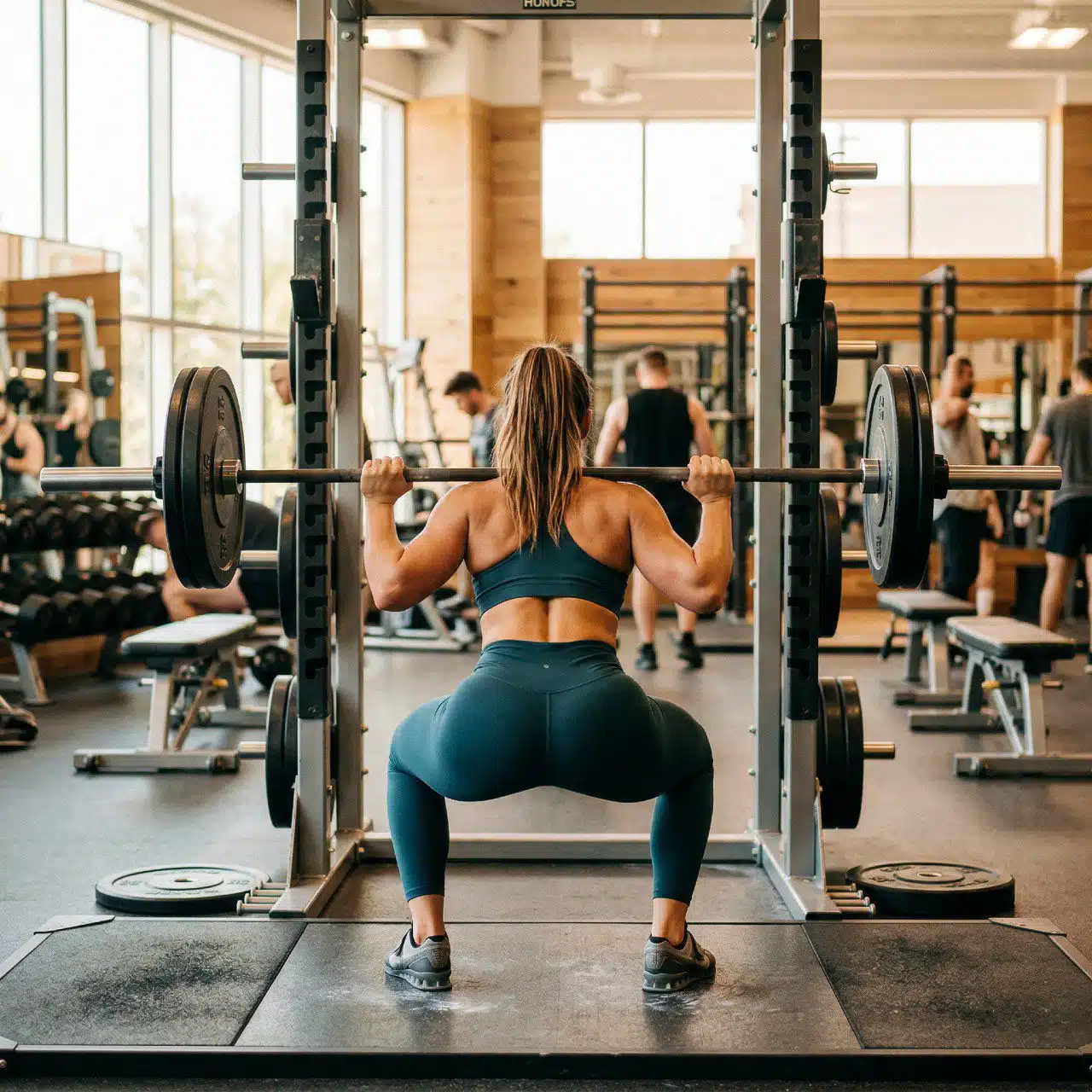
Squats are the most direct path to developing glute strength and muscle for women. When you break parallel — meaning your hips drop below your knee line — the gluteus maximus and gluteus medius are fully recruited alongside the hamstrings. Depth is not optional; it is what makes squats work on the glutes.
A 12-week randomized controlled trial published in the European Journal of Sport Science (Enes et al., 2024) compared front squats and back squats in 24 recreationally trained women. Both variations produced significant muscle thickness increases of 4.4–5.1% across the lateral thigh. Back squats delivered a 37.2% increase in leg press strength versus 19.6% for front squats — meaning back squats also transfer better to overall lower-body strength.
What this means for you: You do not need to overcomplicate your squat variation. Both front and back squats build the muscle that creates a strong, lean lower body. Pick the variation that feels sustainable for your joints and stay consistent.
2. Bone Density — The Benefit Every Woman Over 35 Needs
Squats are one of the most important exercises for women's long-term bone health. By loading the spine and hips with mechanical stress, squats signal the body to deposit new bone mineral, making bones denser and more fracture-resistant over time.
This becomes urgent during perimenopause. As estrogen levels decline — typically from age 45 — bone resorption begins to outpace bone formation. The result is declining bone mineral density (BMD) and rising risk of osteoporosis and fractures. Resistance training is one of the most effective non-pharmacological interventions available.
The research is striking. A 2025 systematic review (PMC) confirmed that resistance training significantly improves BMD at the femoral neck, hip, and lumbar spine in postmenopausal women. In a landmark finding, heavy squats and deadlifts combined were shown to be more effective than menopause hormone therapy alone at preserving lumbar spine BMD in 141 early perimenopausal women.
Maximal strength training specifically increased bone mineral content by 2.9% at the lumbar spine and 4.9% at the femoral neck — the exact sites most vulnerable to osteoporosis. If you are in your 30s, 40s, or beyond: squats are not just about aesthetics. They are long-term bone health insurance — and you cannot buy that elsewhere.
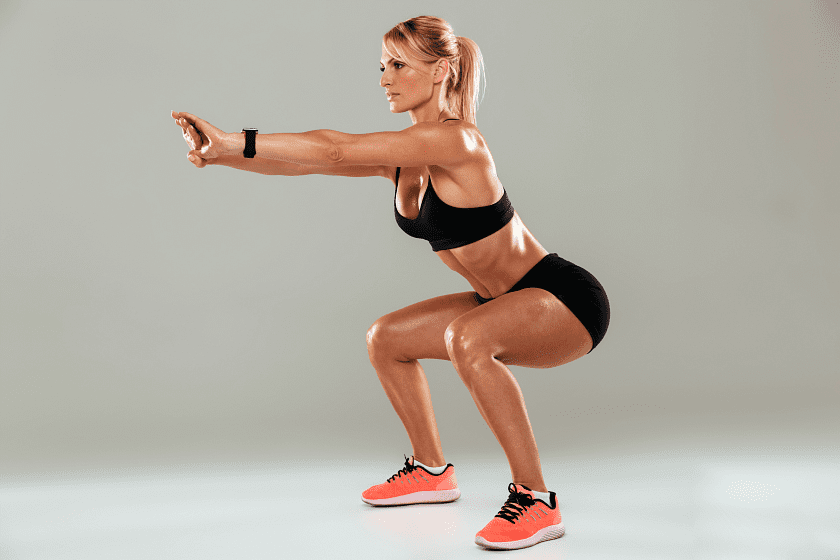
TIP: Squats promote body-wide muscle building, burn fat, improve circulation, help get rid of cellulite, increase flexibility, build core strength and better posture.
3. Core Stability And Pelvic Floor Health
Squats are a full-core exercise, not just a leg exercise. Every single rep requires your transverse abdominis, diaphragm, and pelvic floor muscles to generate and manage intra-abdominal pressure. That level of integrated core activation is something no amount of crunches can replicate.
For women especially, pelvic floor health carries real-world weight. Research shows that properly performed squats activate and strengthen the pelvic floor in a way functionally similar to targeted Kegel exercises — while simultaneously building strength in the surrounding glutes and posterior chain that support pelvic floor function. (Source: Magic City Physical Therapy)
Squats also improve circulation to the pelvic region, aid tissue repair, and help maintain pelvic floor flexibility — relevant for postpartum women (once cleared by a healthcare provider) and for women managing symptoms of urinary leakage or pelvic dysfunction.
The critical caveat: proper form is what makes squats beneficial for the pelvic floor. Poor mechanics — particularly anterior pelvic tilt or knee collapse — can create unnecessary strain. The form guide below covers exactly what to do.
4. Metabolism Boost And Fat Loss
Squats build muscle. Muscle is metabolically expensive tissue — it burns calories even at rest. This is the core mechanism connecting squats to long-term fat loss, and over months, it outperforms steady-state cardio for body composition change.
Here is what the data shows:
- Strength training elevated basal metabolic rate by 4.2% at 16 hours after a single session — equivalent to approximately 60 extra calories burned per workout, without doing anything else.
- EPOC (Excess Post-Exercise Oxygen Consumption — the "afterburn effect") lasts at least 14 hours post-workout and produces a 6–15% increase in total calorie consumption from that session. (Source: PMC — EPOC in aerobically fit women).
- As a large multi-joint movement, squats generate significantly higher EPOC than isolation exercises. The compound effect accumulates meaningfully when you train 2–3 times per week.
This is why fat loss workouts built around compound movements tend to outperform cardio-only approaches for sustained weight loss. Squats are not a fat-burning exercise in the moment — they are a fat-burning exercise across the weeks and months that follow.
5. Hormonal Health And Muscle Protein Synthesis
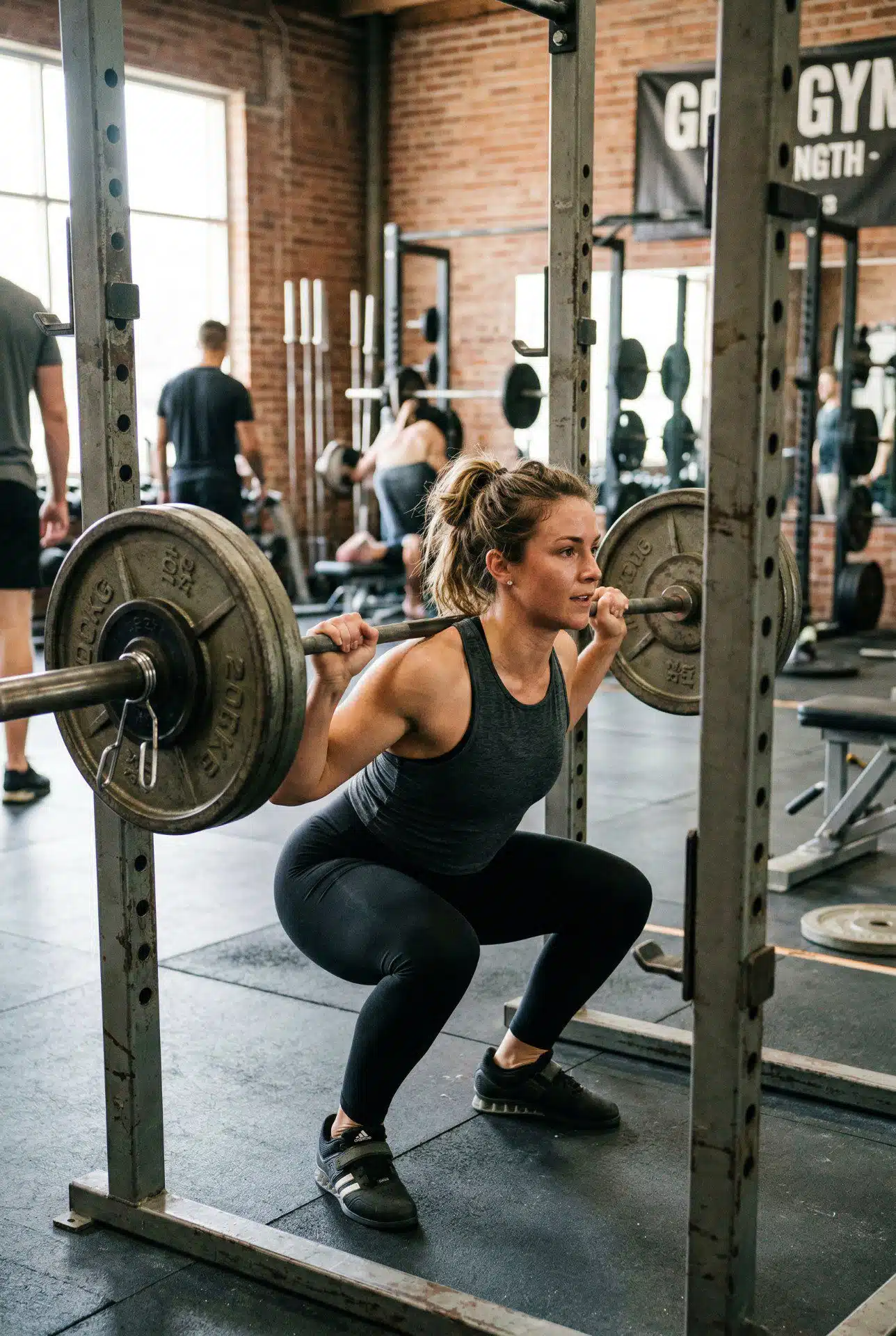
Heavy compound movements like squats trigger a hormonal response that lighter exercises simply do not. A study on barbell squat training (PubMed) found that 6 sets of squats significantly elevated post-exercise growth hormone — the primary anabolic hormone driving muscle repair, lean mass development, and recovery.
Research published in the Journal of Strength and Conditioning found a 16% immediate increase in testosterone after squatting compared to the leg press machine. For women, testosterone plays a real role — even at lower female levels — in muscle protein synthesis, fat metabolism, and energy levels.
For women navigating hormonal changes during perimenopause, this matters practically. As estrogen and progesterone fluctuate, the anabolic signaling from heavy resistance exercise becomes an increasingly important lever for maintaining lean muscle, improving insulin sensitivity, and supporting metabolic health.
6. Functional Movement, Posture, And Joint Health
Squats train the pattern your body uses dozens of times a day. Sitting, standing, lifting groceries, and climbing stairs — all squat-pattern movements. Training the squat makes real life easier and progressively reduces injury risk across decades of use.
Regular squatting also improves hip mobility, ankle dorsiflexion, and knee tracking — three movement qualities that decline rapidly with sedentary lifestyles. A strong squat activates the posterior chain (glutes, hamstrings, lower back) in ways that directly counteract the anterior pelvic tilt and glute inhibition that desk-bound women commonly develop.
Stronger legs and glutes also reduce the load transferred to the knees and lower back during everyday movements — meaning squats protect your joints rather than threatening them, provided your form is correct. For more on correcting movement dysfunction: How to fix muscle imbalances as a female beginner.
Best Squat Variations For Women
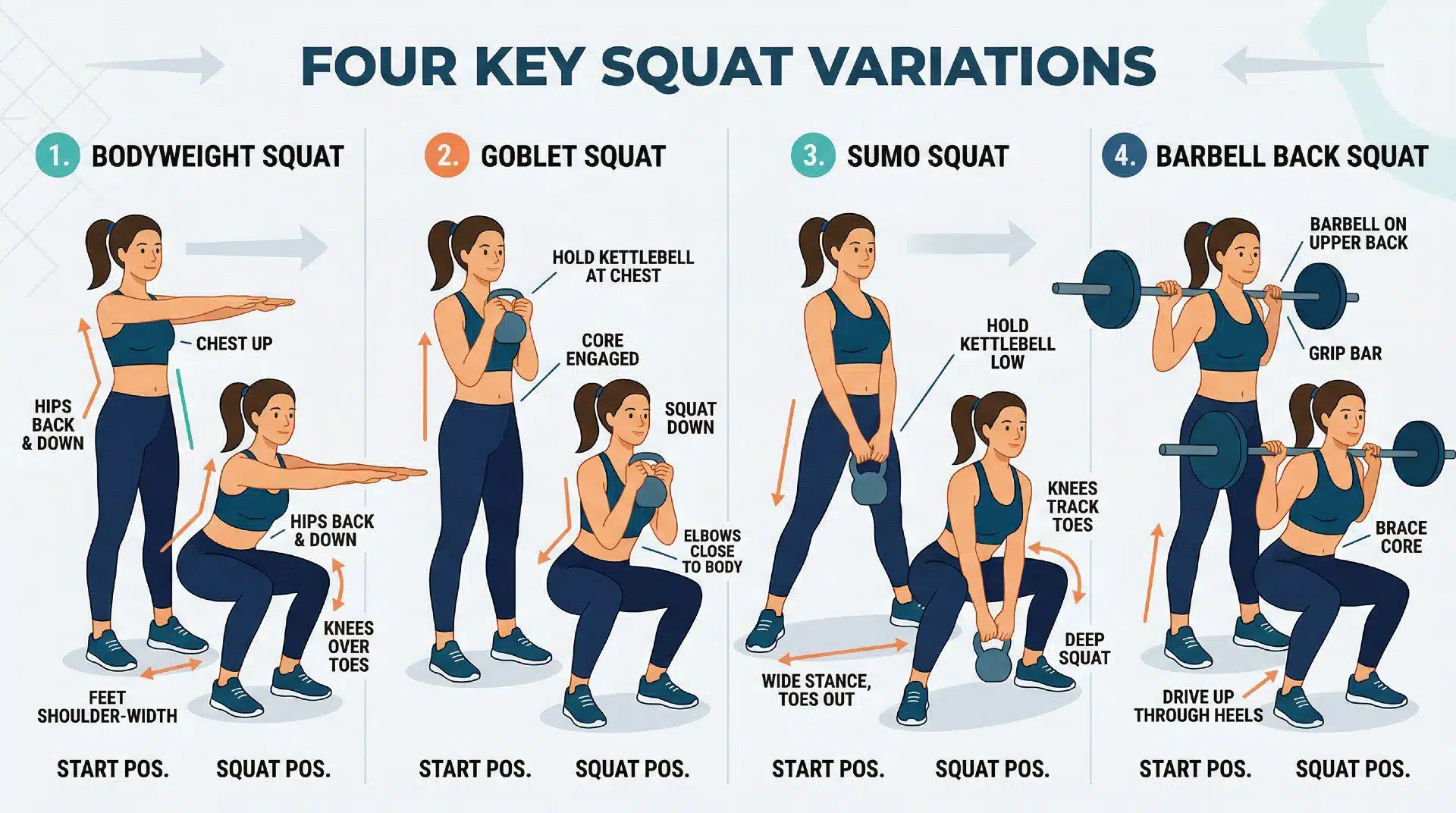
There is no single best squat. Different variations target different muscles, suit different experience levels, and serve different goals. Here is how to choose the right one for where you are right now.
Table 1: Squat Variations for Women — Muscles, Goals, and Difficulty Level
| Variation | Primary Muscles | Best For | Difficulty |
|---|---|---|---|
| Bodyweight Squat | Quads, glutes, core | Learning movement pattern, beginners | Beginner |
| Goblet Squat | Quads, glutes, core, upper back | Building depth, beginner loading | Beginner–Intermediate |
| Sumo Squat | Inner thighs (adductors), glutes | Hip-width variety, glute emphasis | Beginner–Intermediate |
| Back Squat (barbell) | Quads, glutes, posterior chain, core | Strength, hypertrophy, bone density | Intermediate–Advanced |
| Front Squat (barbell) | Quads, upper back, core | Quad emphasis, posture correction | Intermediate–Advanced |
| Bulgarian Split Squat | Glutes, quads, balance | Unilateral strength, imbalance correction | Intermediate–Advanced |
| Pause Squat | Glutes, quads (time under tension) | Hypertrophy, mind-muscle connection | Intermediate–Advanced |
Research note: Both back squats and front squats produce similar muscle growth (4.4–5.1%). Back squats transfer more to overall strength. Choose based on your goal and what feels sustainable for your joints.
How To Do A Squat Correctly: A Beginner Guide For Women
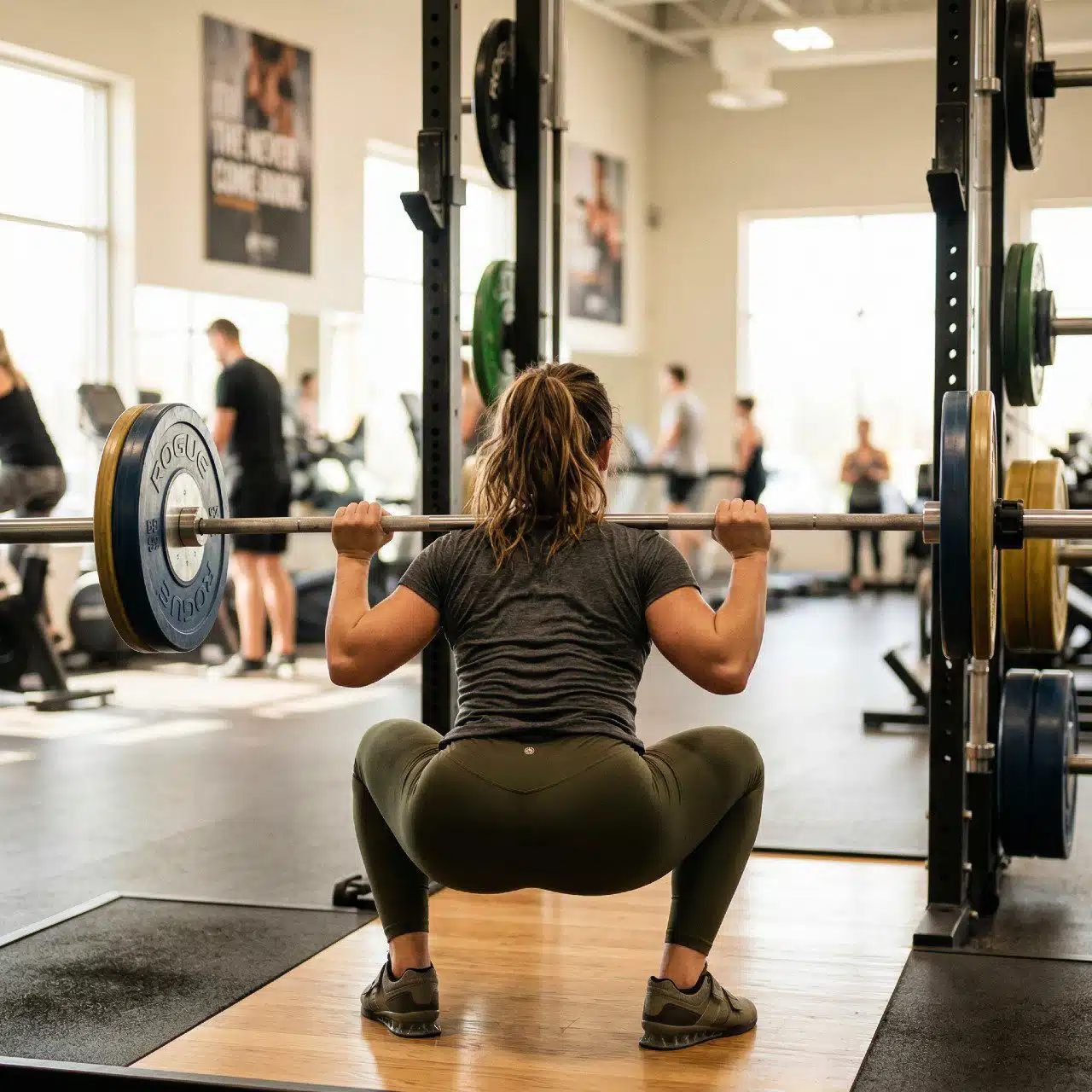
Good squat form protects your knees, activates your glutes properly, and makes every rep count. If you are new to squatting, start here before adding any load.
Step-by-step bodyweight squat:
- Stand with feet shoulder-width apart, toes turned slightly out (10–30 degrees based on your hip anatomy).
- Brace your core — breathe in and create tension through your midsection before you descend.
- Initiate by pushing your hips back and down — not just straight down.
- Keep your chest tall — resist the urge to fold forward at the torso.
- Track your knees over your second and third toes — actively push them out if they cave.
- Descend to parallel or below — hips at or below knee level to fully recruit the glutes.
- Drive through your heels to stand — think "push the floor away from you".
- Squeeze your glutes at the top of the movement to complete the rep.
The four cues to memorize: Chest up. Knees out. Weight in heels. Hips below knees.
Once you can perform 3 sets of 15 bodyweight squats with consistent depth and no knee caving, you are ready to progress to a goblet squat with added load.
Common Squat Mistakes Women Make
Most squat problems come from the same small set of errors. Fixing these will immediately change how your squats feel and which muscles they actually work.
- Knees caving inward (valgus collapse): Usually caused by weak glutes or tight hip flexors. Cue yourself: "push knees out." Resistance bands around the knees during warm-up sets help train this pattern.
- Rising onto toes: Typically, a mobility restriction at the ankles or hips. Fix: slightly elevate your heels on a wedge or small plate until mobility improves with regular practice.
- Not reaching depth: Stopping before parallel means the glutes barely engage. Depth is non-negotiable for posterior chain activation. If depth is limited, work on hip and ankle mobility before loading.
- Excessive forward lean: Normal for some body proportions (long femurs), but if it is extreme, it usually signals a weak core or tight hip flexors. Goblet squats force an upright torso and correct this fast.
- Rushing the descent: Controlling the lowering phase (the eccentric) increases muscle activation and reduces injury risk. A 2–3 second descent is more effective than dropping quickly.
- Looking up aggressively: Keep your gaze neutral — not cranked toward the ceiling. Hyperextending your neck during heavy squats puts unnecessary stress on the cervical spine.
How Many Squats Should A Woman Do Per Week?
For most women, 2–3 weighted squat sessions per week is the evidence-supported starting point. More is not automatically better — muscle growth happens during recovery, not during the workout itself.
Table 2: Squat Volume and Frequency by Goal
| Goal | Sessions/Week | Sets per Session | Reps per Set | Load |
|---|---|---|---|---|
| General fitness and toning | 2–3 | 3 | 12–15 | Bodyweight to moderate barbell |
| Glute development (hypertrophy) | 2–3 | 3–4 | 8–12 | Moderate to heavy |
| Strength and bone density | 2–3 | 3–5 | 4–8 | Heavy (barbell) |
| Beginners | 2 | 2–3 | 10–15 | Bodyweight |
| Perimenopause / bone health | 2–3 | 3–5 | 6–10 | Progressive load, guided form |
Research on hormonal response to barbell squats found 6 sets per session to be the optimal volume for post-exercise growth hormone elevation in trained individuals. Beginners: start at 2–3 sets and progress gradually over 4–6 weeks. For a full beginner program, see: Fat loss workouts for beginners.

TIP: If you have ten minutes while you’re folding laundry, then squat while you’re doing it.
Squats vs Lunges For Women: Which Is Better?
Squats and lunges are both compound lower-body exercises, but they train your body differently — and both belong in a complete program.
Squats develop bilateral (both legs working together) strength, build posterior chain power, and load the spine and hips for bone density adaptation. They build more raw strength and are superior for overall muscle mass development.
Lunges train unilateral (single-leg) strength, balance, and coordination. They are excellent for identifying and correcting left-right strength imbalances, and they challenge glute stability in a different plane of movement than squats.
For women specifically:
- Goal is maximum glute strength and development → prioritize squats, add lunges as a secondary movement.
- Have knee issues or pain during bilateral squats → Bulgarian split squats often feel significantly better.
- Want both symmetry and strength → include both in your weekly programming.
The short answer: you do not have to choose. A well-designed lower-body program includes both, with squats as the primary movement and lunges as a complementary variation.
Squats For Perimenopause Women: Why Now Is The Best Time To Start
If you are in perimenopause, squats are not optional — they are protective. As estrogen declines, you face accelerating bone loss, declining muscle mass (sarcopenia), slowing metabolism, and reduced insulin sensitivity. Heavy compound exercises like squats directly counteract all four of these mechanisms.
Three research findings worth knowing:
- Squats and deadlifts combined were more effective than hormone replacement therapy alone at preserving lumbar spine BMD in early perimenopausal women.
- Strength training during perimenopause improves insulin sensitivity — directly relevant to the abdominal fat accumulation many women experience during this transition.
- Exercise is most effective during early perimenopause — making now the best time to build the habit, not after the transition is complete. (Mayo Clinic source).
You do not need to transform your training overnight. Two sessions per week of progressively loaded squats, consistently applied, is enough to begin generating the bone and muscle adaptations that will protect your body for decades.
Related guides: How to lose weight during perimenopause without starving yourself | Strength training for women over 40.
Bodyweight Squats vs Weighted Squats: What Is Right For You?
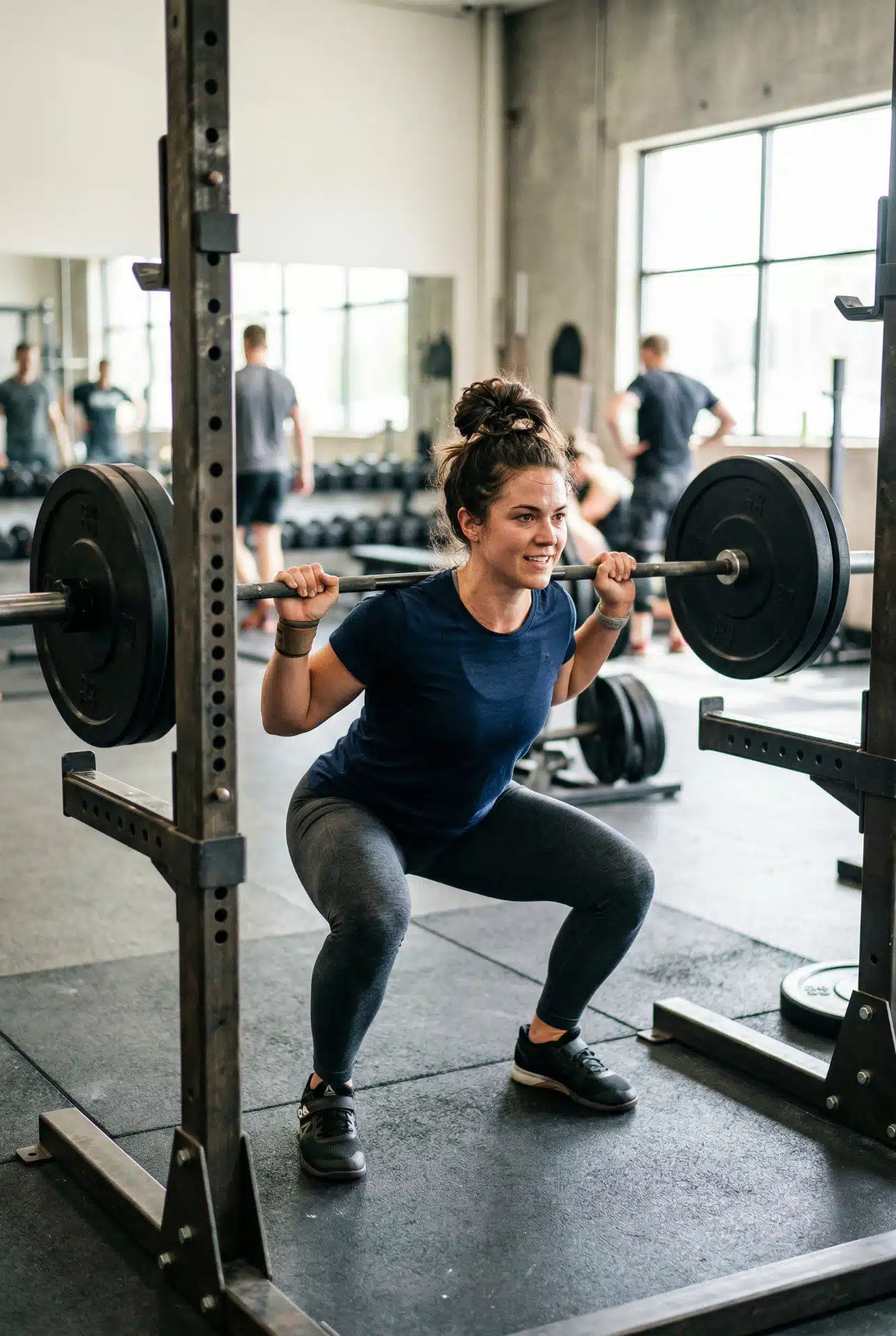
Bodyweight squats and weighted squats serve different purposes — both are valid depending on where you are in your fitness journey.
Bodyweight squats are ideal for:
- Learning the movement pattern before adding load.
- Active recovery sessions between heavier training days.
- Building foundational mobility and stability.
- Beginners who are not yet ready to progress to a barbell.
Weighted squats are necessary for:
- Progressive muscle growth (hypertrophy requires progressive overload).
- Bone density improvement (mechanical load is the stimulus for bone adaptation — bodyweight alone is insufficient over time).
- Strength development.
- Long-term metabolic benefits.
The truth: if bone density and body composition are priorities — and they should be for most women over 30 — bodyweight squats alone will plateau quickly. Your body adapts to the stimulus within a few weeks. Progressive load is what continues driving adaptation. For the full case on why load matters: Why you should lift weights.
Now that you know the good, the bad, and the ugly about squats, are you ready to take your lower body strength to the next level? Consistency is key, and we can help you stay on track with a free guide packed with tips and tricks. Grab your free guide here and let's build those glutes!
The Bottom Line
You do not have a motivation problem. You have a system problem — and squats are one of the most efficient systems your body has access to.
They build the glute and lower-body strength you are working toward. They protect your bones at the exact point in your life when that matters most. They support your pelvic floor, sharpen your metabolism, and improve the movement quality that makes everyday life feel easier.
The science is not ambiguous here. Squats work. They work specifically for the female body. And the only variable that determines whether they work for you is whether you show up, move with good form, add load progressively, and give your body time to adapt. That is not a pep talk. That is biology.
Glossary Of Key Terms
- Compound Movement: An exercise that recruits multiple muscle groups and joints simultaneously to perform a single motion.
- EPOC (Excess Post-Exercise Oxygen Consumption): Also known as the "afterburn effect," this is the increased rate of oxygen intake and calorie burning that occurs following intense exercise as the body recovers.
- Bone Mineral Density (BMD): A measure of the amount of minerals (such as calcium) in a specific volume of bone; high BMD is essential for preventing osteoporosis and fractures.
- Posterior Chain: The group of muscles on the back of the body, including the glutes, hamstrings, and lower back, which are vital for power and posture.
- Valgus Collapse: A movement dysfunction where the knees cave inward toward each other during a squat or lunge, increasing the risk of joint injury.
- Hypertrophy: The enlargement of an organ or tissue (in this context, muscle) from the increase in size of its cells, typically stimulated by resistance training.
- Progressive Overload: The gradual increase of stress placed upon the body during exercise (usually via weight, frequency, or repetitions) to continually drive adaptation.
- Eccentric Phase: The lowering phase of an exercise (e.g., sitting down into a squat) where the muscle lengthens under tension; controlling this phase increases muscle activation.
- Anabolic: Refers to metabolic processes that build up larger molecules from smaller ones, specifically the synthesis of muscle tissue.
- Intra-abdominal Pressure: The pressure created within the abdominal cavity by bracing the core and diaphragm, which stabilizes the spine during heavy lifting.
FAQ
Will Squats Make My Thighs Bigger?
Squats can increase thigh muscle mass if you train at high volume with heavy loads and eat in a caloric surplus. For most women training at moderate intensity, squats will improve tone and definition rather than significantly increase size. Genetics, total calorie intake, and training volume all shape the outcome. See also: How to strength train without making your thighs bigger
Are Squats Safe For My Knees?
When performed with correct form, squats are not only safe for healthy knees — they are protective. Squats strengthen the quadriceps, hamstrings, and glutes that stabilize the knee joint. Poor form — particularly knee valgus (inward collapse) — is what creates problems. If you have an existing knee injury, consult a physiotherapist before loading your squats.
How Quickly Will I See Results From Doing Squats?
Strength adaptations often begin within 2–4 weeks for beginners. Visible muscle change typically appears at 4–8 weeks with consistent training. Body composition change (fat loss alongside muscle gain) depends on nutrition and total training program. Full guide: How long does it take to see results?
Can I Do Squats Every Day?
Weighted squats require 48–72 hours of recovery between sessions — doing them daily with load will impair recovery and results. Bodyweight squats can be performed daily for movement practice and mobility. For optimal results: 2–3 weighted squat sessions per week with full rest days between.
Do Squats Help With Belly Fat?
Squats do not spot-reduce belly fat — no exercise does. But they build muscle (raising resting metabolic rate), elevate EPOC, and improve hormonal health — all of which contribute to overall fat loss, including from the abdominal area, over time with consistent training and appropriate nutrition. Related: How to get rid of belly fat naturally
How Do Squats Affect Hormones?
Heavy barbell squats (6 sets) significantly elevate post-exercise growth hormone — supporting muscle repair and lean mass development. Research also shows a 16% immediate testosterone increase after squatting versus the leg press. For women in perimenopause, this anabolic hormonal signalling becomes especially important for counteracting the muscle and bone loss driven by estrogen decline. Full guide: Hormones and weight loss for women
How Deep Should I Squat For Glute And Leg Benefits?
Go as deep as you can keep a neutral spine and knees tracking over mid-foot—often parallel or slightly below. Partial squats still help when mobility limits depth; improve range gradually rather than forcing a depth you cannot control.