

Benefits Of Ginger: 6 Science-Backed Ways It Can Support Weight Loss
Benefits Of Ginger For Weight Loss — What 2026 Research Actually Shows (Plus Exactly How Much You Need)
Jerlyn Jones, MS MPA RDN LD CLT
Registered dietitian nutritionist
Ginger is one of the oldest spices in the world, and modern science is finally catching up with what traditional medicine has known for centuries.
Summary (TL;DR)
The benefits of ginger for weight loss are real but modest. Clinical research — including a 2026 randomised controlled trial — shows ginger can reduce body fat percentage, support a healthier metabolism, lower LDL cholesterol, improve digestion, curb appetite, and rebalance the gut microbiome in ways that directly affect how your body stores fat. This isn’t a miracle supplement. You still need to eat well and move your body. Think of ginger as a smart addition to your routine, not a replacement for one.
If you’ve ever dropped a chunk of fresh ginger into a morning smoothie or stirred ginger powder into your tea, you already know it adds something unmistakably alive to whatever you’re making.
But here’s what I’ve noticed after doing this consistently for years: it’s not just about the flavour. My digestion feels smoother. My bloating is reduced. And on the days I skip it? The difference is noticeable.
I started digging into the actual research, and what I found was more interesting than expected. Ginger isn’t just a folk remedy passed down through generations of grandmothers. It’s a well-studied bioactive compound with a growing body of clinical evidence.
There’s also a lot of overselling out there — claims that ginger will melt belly fat or work like a metabolism drug. That’s not what the science says, and I’m not going to tell you that.
What I will tell you is this: the benefits of ginger for weight loss are more interesting and more nuanced than most articles let on. Especially if you’re a woman over 40 navigating the metabolic changes that come with perimenopause, there are very specific reasons why ginger deserves a place in your daily routine.
Medical & Referral Disclaimer
This article is for informational and educational purposes only. It is not a substitute for professional medical advice, diagnosis, or treatment. Always consult your physician or qualified health provider before starting any new supplement — especially if you are pregnant, breastfeeding, taking blood-thinning medications, or have a pre-existing health condition.
Key Takeaways
- Ginger contains bioactive compounds — primarily gingerol and shogaol — that support metabolism, digestion, and fat metabolism at a cellular level.
- A 2026 double-blind, placebo-controlled RCT found statistically significant reductions in body fat percentage, BMI, waist circumference, and triglycerides after 12 weeks of ginger supplementation.
- Ginger won’t work as a standalone weight loss solution — but as part of a healthy diet and exercise routine, the evidence is genuinely promising.
- For women in perimenopause, ginger’s anti-inflammatory and insulin-sensitising properties make it particularly relevant.
- The effective dose ranges from 1 to 3 grams per day, with different benefits tied to different forms (tea, fresh, supplement).
- Most studies are short-term; long-term effects need more research.

The Science Inside: What Makes Ginger Work?
Ginger’s weight-related benefits trace back to two powerful bioactive compounds: gingerol (abundant in fresh ginger) and shogaol (more concentrated when ginger is dried or heated).
Together, these compounds drive virtually every mechanism discussed in this article — from thermogenesis to gut microbiome rebalancing. Both are anti-inflammatory and antioxidant, and in the context of weight management, that matters enormously.
Chronic low-grade inflammation is one of the key drivers of insulin resistance and obesity — and it’s exactly what these compounds help to address at a cellular level.
Think of it this way: your body’s ability to burn fat efficiently depends on a clean metabolic environment. Gingerol helps create that environment by calming the inflammatory signals that otherwise interfere with how your cells handle energy.
#1. Ginger Boosts Your Metabolism
Ginger increases the thermic effect of food — the calories your body burns during digestion — by approximately 43 kcal per meal, according to a study published in the journal Metabolism.
A pilot study in overweight men found that a hot ginger drink taken with breakfast significantly enhanced the thermic effect of food compared to a control group, alongside reduced hunger ratings and higher satiety scores.
The thermogenic effect comes from gingerol’s ability to activate brown adipose tissue (the “good” fat that burns energy rather than storing it).
43 kcal per meal might not sound life-changing. But across three meals a day for a year, that adds up to over 47,000 kcal — theoretically enough to support meaningful weight changes, even before accounting for ginger’s other benefits.
When I add fresh ginger to my morning smoothies, I do it first thing — before or during breakfast. The timing is deliberate.

A Dedicated Note For Women In Perimenopause
Oestrogen decline during perimenopause drives chronic low-grade inflammation and worsens insulin resistance — both of which slow your metabolism independently of how well you’re eating or how much you’re exercising. Ginger addresses both of these pathways directly.
This is one of the most frustrating realities of the hormonal transition many women face in their 40s and 50s: you’re doing everything right, and the scales still won’t budge. Inflammation and insulin resistance — not just calorie intake — are often behind it.
Ginger’s anti-inflammatory compounds help quieten the inflammatory signalling that disrupts insulin function, and its thermogenic action gives your metabolism a small but meaningful nudge.
It’s not a fix for perimenopause weight gain on its own. Nothing is. But it’s a genuinely sensible, low-risk tool to have in your kit.
#2. Ginger Improves Gastric Motility
Ginger accelerates the speed at which your stomach empties food into the small intestine — reducing bloating, constipation, and that heavy feeling after meals.
A randomised, double-blind study on patients with functional dyspepsia found that ginger significantly reduced gastric half-emptying time from 16.1 minutes to 12.3 minutes compared to placebo. In plain terms, food moved through the stomach nearly 25% faster.
For anyone who struggles with post-meal bloating — and this is one of the most consistent complaints I hear in the WLBF community — this is probably ginger’s most immediately noticeable effect.
Efficient gastric motility also matters for weight management in a less obvious way: when your gut moves food properly, your hunger signals work correctly, and you’re less likely to overeat out of digestive discomfort.

#3. Ginger Lowers LDL Cholesterol And Triglycerides
A meta-analysis of 26 randomised controlled trials found that ginger supplementation significantly reduced total triglycerides by an average of 12.54 mg/dL and LDL cholesterol by 5.14 mg/dL.
These aren’t just heart health numbers — they matter for weight loss too. High triglycerides and LDL are often signs that your body is struggling with fat metabolism.
When your liver processes dietary fat efficiently — aided partly by ginger’s effect on bile secretion — your body is better positioned to metabolise rather than store excess fat.
The most comprehensive review of this evidence, an umbrella meta-analysis published on PubMed in 2025, confirms consistent lipid improvements across multiple trials — with the strongest effects seen at doses of ≤2 grams per day.
#4. Ginger Supports Digestion And Reduces Gut Inflammation
Ginger reduces gut inflammation by inhibiting NF-κB — a key inflammatory pathway — which helps break the cycle of inflammation that impairs nutrient absorption, disrupts the gut lining, and makes weight loss harder than it needs to be.
Research published in Food Science & Nutrition found ginger effective at reducing symptoms of functional dyspepsia, nausea, and gastrointestinal discomfort — conditions that disrupt normal eating patterns and often lead to poor dietary choices.
The anti-inflammatory angle matters just as much: chronic gut inflammation can impair nutrient absorption, trigger cortisol spikes, and create the physiological conditions that make it genuinely difficult to lose weight even when you’re eating well.
On days when I know I’m eating out or eating heavier than usual, I take a ginger supplement beforehand. Not to undo anything — just to support my system when it needs it most.
Join Our Mailing List
Join thousands of women inside our community and receive our free guide, 10 Actions That Support Permanent Weight Loss — the exact behavioural shifts that make the difference between a two-week attempt and a lasting transformation.
No restriction plans. No guilt. Just what actually works — for real women with real lives.
#5. Ginger Helps Curb Appetite And Reduce Hunger
A study published in the journal Metabolism found that a hot ginger drink significantly reduced hunger ratings and prospective food intake within hours of consumption.
This isn’t about pharmaceutical-style appetite suppression. It’s subtler than that. Ginger — particularly when consumed warm and with a meal — appears to enhance satiety signals, meaning you feel satisfied with less food for longer.
A separate study in obese women taking 2 grams of ginger powder daily for 12 weeks showed significant reductions in appetite alongside measurable reductions in body composition markers.
Practically, this is most useful if you struggle with the mid-morning energy dip and the snacking that follows it. Warm ginger tea with breakfast is a simple, low-effort habit that works with your hunger hormones rather than against them.
#6. Ginger Rebalances Your Gut Microbiome
A 2025 systematic review confirmed that ginger consistently increases beneficial gut bacteria — particularly Akkermansia muciniphila — while reducing the LPS-producing bacteria that drive systemic inflammation and insulin resistance.
This is the benefit that wasn’t in the original version of this article, because the research barely existed yet. The gut microbiome connection to weight management has exploded in recent literature, and ginger sits right in the middle of it.
Here’s why it matters for fat storage: LPS-producing bacteria release lipopolysaccharides that trigger systemic inflammation, worsen insulin resistance, and directly promote fat storage.
Meanwhile, Akkermansia muciniphila — which ginger actively promotes — strengthens the gut lining, reduces “leaky gut,” and is consistently associated with lower body fat percentage in clinical populations.
A January 2026 RCT published in Nutrients (Kwon et al., DOI: 10.3390/nu18020366) tested GGE03 — a steamed ginger extract standardized to the compound 1-dehydro-6-gingerdione (480 mg/day) — against placebo in 80 overweight adults over 12 weeks.
The ginger group showed statistically significant reductions in body fat percentage, BMI, waist circumference, hip circumference, triglycerides, and total cholesterol — all measured by DEXA scan.

The Honest Truth About Ginger (What Most Articles Won’t Tell You)
Most ginger weight loss articles oversell it. The majority of the most dramatic results come from animal studies. Human trials show real but modest effects — and that’s the honest picture.
A 2024 meta-analysis of 27 human studies in Nutrition Reviews found evidence that ginger reduces body weight and BMI — but the authors were careful to note that more high-quality, long-term trials are needed before firm conclusions can be drawn. That’s not a knock on ginger. It’s just an honest reading of where the science currently sits.
This doesn’t mean ginger doesn’t work. It means it works the way most real nutritional interventions work: through small, consistent improvements across multiple metabolic pathways that compound over time — especially when the foundations are already in place.
The mistake is treating it as a shortcut. It isn’t. It’s a supporting player in a bigger strategy.
How To Add Ginger To Your Diet: A Dose And Form Guide
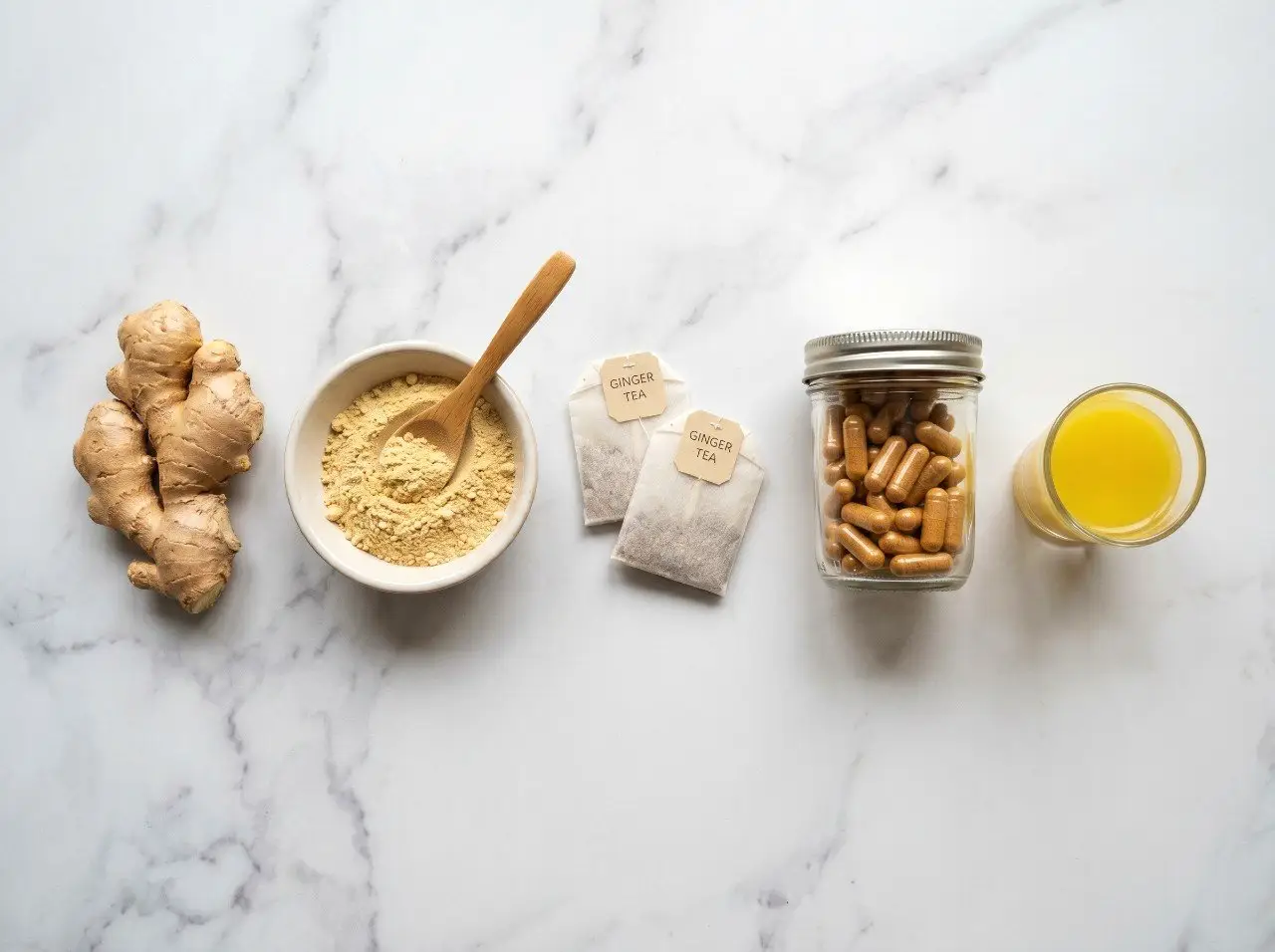
Incorporating ginger consistently is easier than most people think. Here’s a practical breakdown of the different forms, what each is best for, and what the evidence actually supports:
| Form | Dose | Best For | Evidence Level |
|---|---|---|---|
| Fresh ginger (grated) | 5–10g per meal | Digestion, thermic effect | Moderate |
| Ginger tea (brewed) | 1–2g per cup | Appetite, satiety, morning routine | Moderate |
| Dried ginger powder | 1–3g/day | Daily smoothies, cooking | Moderate–Strong |
| Ginger supplement (capsule) | 480–1,000 mg/day | Body fat, lipids, consistent dosing | Strongest (RCT-backed) |
| Ginger shots | Varies (typically 1–2g) | Acute digestion support | Anecdotal |
From personal experience:
- A thumb-sized piece of fresh ginger blended into a morning smoothie (spinach, banana, protein powder) is the easiest daily habit to sustain.
- If you use capsules, look for standardised extracts — specifically those listing [6]-gingerol or 1-dehydro-6-gingerdione content. That’s what the clinical trials actually used.
- Avoid ginger beer or ginger ale for weight loss purposes. The sugar content cancels out the benefits.
- If you’re on blood thinners, diabetes medication, or blood pressure medication, talk to your doctor first. Ginger can interact with all three.
Ginger vs. Other Natural Metabolism Boosters
| Natural Booster | Primary Mechanism | Evidence For Weight Loss | Best Used As |
|---|---|---|---|
| Ginger | Thermogenesis, gut microbiome, anti-inflammatory | Moderate–Strong (2026 RCT) | Daily food/supplement habit |
| Green tea (EGCG) | Thermogenesis, catechins | Moderate (multiple RCTs) | Daily drink |
| Cayenne pepper (capsaicin) | Thermogenesis, appetite | Moderate (short-term) | Meal addition |
| Cinnamon | Blood sugar regulation | Moderate (insulin sensitivity) | Food addition |
| Turmeric (curcumin) | Anti-inflammatory | Emerging (limited human RCTs) | Food/supplement |
Ginger is one piece of a much bigger picture. If you want the complete, science-backed framework — including how to combine the right foods, habits, and strategies for lasting results — grab my free guide. It’s built specifically for women, and it works.
Related Articles
The Bottom Line
The benefits of ginger for weight loss are genuine, and the research behind them is getting stronger every year. A 2026 clinical trial showing measurable reductions in body fat, waist circumference, and triglycerides — via DEXA scan, not just a tape measure — is hard to dismiss.
So is the growing body of gut microbiome research that now explains why ginger works at a mechanistic level that scientists are only just beginning to map.
But it won’t do the heavy lifting for you. It’s not supposed to. Think of ginger as a metabolic assistant: something that supports your body’s systems, reduces the internal friction that makes weight loss harder than it needs to be, and compounds quietly in the background over time.
For women in perimenopause, especially dealing with hormonal shifts that make every metabolic process feel slower and harder — ginger offers a low-risk, evidence-backed way to support the changes you’re already making.
Give it a consistent try for 12 weeks. That’s how long the best clinical trials run. Your body will tell you the rest.
Glossary Of Key Terms
FAQ
Ginger supports weight loss through six main mechanisms: it boosts metabolism via thermogenesis, improves gastric motility, lowers LDL cholesterol and triglycerides, reduces gut inflammation, curbs appetite and increases satiety, and rebalances the gut microbiome to reduce inflammation-driven fat storage. The evidence for each is documented in peer-reviewed clinical research, including a 2026 randomised controlled trial.
Clinical trials typically use 1–3 grams per day for metabolic benefits, with the strongest body composition results seen at 480 mg of standardised ginger extract taken daily for 12 weeks. For everyday use, a thumb-sized piece of fresh ginger or 1–2 cups of brewed ginger tea delivers meaningful benefits. If you opt for capsules, up to 1,000 mg per day is considered safe for general use.
Yes — but modestly. A pilot study in the journal Metabolism found that a hot ginger drink increased the thermic effect of food by approximately 43 kcal per meal. That’s real and measurable, but ginger isn’t a metabolism drug. The effect is consistent, not dramatic.
Ginger addresses two of the key drivers of perimenopause weight gain: chronic inflammation and insulin resistance. Both worsen as oestrogen declines. While ginger can’t substitute for hormonal management or lifestyle changes, its anti-inflammatory and insulin-sensitising properties make it a sensible, evidence-backed addition to a perimenopause weight management strategy.
Both work, but for different things. Fresh ginger is best for appetite, digestion, and the thermic effect during meals. Standardised ginger supplements — those specifying [6]-gingerol or 1-dehydro-6-gingerdione content — are what clinical trials use for body composition outcomes. If measurable fat loss is your goal, standardised supplements offer more consistent dosing. For day-to-day digestive support, fresh ginger works well.
Ginger is safe for most people at normal doses, but higher amounts can cause heartburn or mild digestive upset. Importantly, ginger can lower blood pressure and blood sugar, increase bleeding risk, and interact with blood-thinning medications like warfarin. Always consult your doctor before starting a ginger supplement if you’re on any medications.
Most clinical trials run for 8–12 weeks before seeing statistically significant results in body composition. Digestive and appetite benefits tend to appear much faster — often within days of consistent use. The keyword is consistent: daily use at an effective dose is what the evidence supports.