

The Complete Gluten-Free Diet Guide For Women: What To Eat, What To Avoid, And Why It Actually Works
Your No-Nonsense Gluten-Free Diet Roadmap: Eat Well, Avoid The Pitfalls, And Make It Stick

Most people don't realize this, but you can eat organic, all natural, gluten-free food without telling everyone around you.
Chris Rock
Summary (TL;DR)
A gluten-free diet removes wheat, rye, and barley from your meals. It's medically essential for the roughly 1% of people with coeliac disease, and increasingly relevant for women over 40 whose gut health shifts during perimenopause. Done right, it's nutritionally complete and genuinely satisfying. Done wrong — by leaning on packaged "gluten-free" replacements — it can leave you with nutrient gaps and more frustration than you started with. This guide walks you through both sides.
Starting a gluten-free diet can feel a bit like learning a secret language. The first time you flip over a packet of soup and find wheat starch hiding in the ingredients, you get that sinking feeling — how many other things have I been eating without realising?
That feeling is completely normal. And it does pass.
Here's what most people discover after a few weeks: a gluten-free diet is far less complicated than the gluten-free product industry would have you believe. Most of your plate — meat, fish, eggs, dairy, vegetables, fruit, rice, potatoes, legumes — is already naturally gluten-free. What you're really doing is removing a handful of grains and learning to spot where they hide.
One of our readers, Sarah, put it perfectly after her first three weeks: "Within 3 weeks, the bloating was gone. That alone made every awkward restaurant conversation worth it." That kind of result isn't unusual — but it's also not automatic. How you approach the transition makes all the difference.
This guide gives you the complete picture: what gluten actually is, who really needs to avoid it, what perimenopause has to do with it (more than most articles will admit), what to eat, what to watch for, and how to make a gluten-free week feel genuinely manageable rather than like a life sentence.
Medical & Referral Disclaimer
This article is for informational and educational purposes only. It is not a substitute for professional medical advice, diagnosis, or treatment. Always consult your physician or a qualified health provider before starting any new diet — especially if you suspect coeliac disease or gluten sensitivity.
Key Takeaways
- Coeliac disease affects roughly 1% of people worldwide, but non-coeliac gluten sensitivity may affect far more — Beyond Celiac estimates 18 million Americans have some form of gluten sensitivity.
- Women are diagnosed with coeliac disease more frequently than men, possibly because oestrogen influences both immune response and gut function.
- Perimenopause can shift gut permeability and microbiome composition — making gluten sensitivity appear to arrive "out of nowhere" after 40. There's a real physiological reason for this.
- Naturally gluten-free whole foods — vegetables, fruit, meat, fish, eggs, rice, quinoa, legumes — are the foundation of a genuinely healthy gluten-free diet. Not the packaged aisle.
- Hidden gluten in sauces, condiments, oats, and processed foods is the most common reason women don't feel better after going gluten-free.
- Cross-contamination at home is a real and underestimated risk; separate utensils and clean surfaces genuinely matter.
Understanding Gluten And Its Effects On Health
Gluten is a group of proteins — primarily gliadin and glutenin — found in wheat, barley, rye, and triticale. In baking, it's what gives bread its chew and structure. In your digestive system, whether that's a problem depends entirely on how your immune system responds to it.
For most people, gluten is completely harmless. For a meaningful minority, it triggers anything from serious intestinal damage to a constellation of symptoms — fatigue, brain fog, joint pain — that can take years to trace back to what's on their plate.
What Is Gluten?
Gluten is more than just a protein. It's the ingredient that defines the texture of most Western baked goods. Oats are naturally gluten-free, according to the Celiac Disease Foundation, but they're frequently processed on the same equipment as wheat, which means contamination is common unless the label specifically says "certified gluten-free."
Quick Answer: What does "gluten-free" actually mean on a label? In most countries, it means the product contains fewer than 20 parts per million (ppm) of gluten — the threshold considered safe for most people with coeliac disease. "Wheat-free" does not mean the same thing. A product can be wheat-free and still contain gluten from barley or rye.
Health Conditions Related To Gluten
The StatPearls clinical review on coeliac disease describes it as an autoimmune condition where gliadin peptides trigger an immune response that gradually destroys the small intestine's villi — the tiny projections responsible for absorbing nutrients. Left unmanaged, this leads to malabsorption of iron, folate, vitamin B12, calcium, and vitamin D.
Coeliac disease isn't the only reason to consider a gluten-free diet, though. Here's the full picture:
| Condition | Mechanism | Key Characteristic |
|---|---|---|
| Coeliac Disease | Autoimmune — intestinal damage | Positive blood antibodies; villi atrophy on biopsy |
| Non-Coeliac Gluten Sensitivity (NCGS) | Not autoimmune; mechanism still debated | Symptoms without antibodies or intestinal damage |
| Wheat Allergy | IgE immune response | Rapid allergic reaction; positive IgE test |
| Gluten Ataxia | Autoimmune — neurological | Coordination and muscle control issues |
Beyond Celiac notes that NCGS does not cause the same intestinal permeability seen in coeliac disease — the gut damage mechanism is different. But the lived experience of symptoms like bloating, brain fog, fatigue, and joint pain can feel remarkably similar. That overlap is precisely why getting properly tested matters before you start eliminating things.

The Emotional Reality Of Going Gluten-Free
Let's be honest about something most gluten-free guides skip over entirely: the first few weeks can be genuinely frustrating.
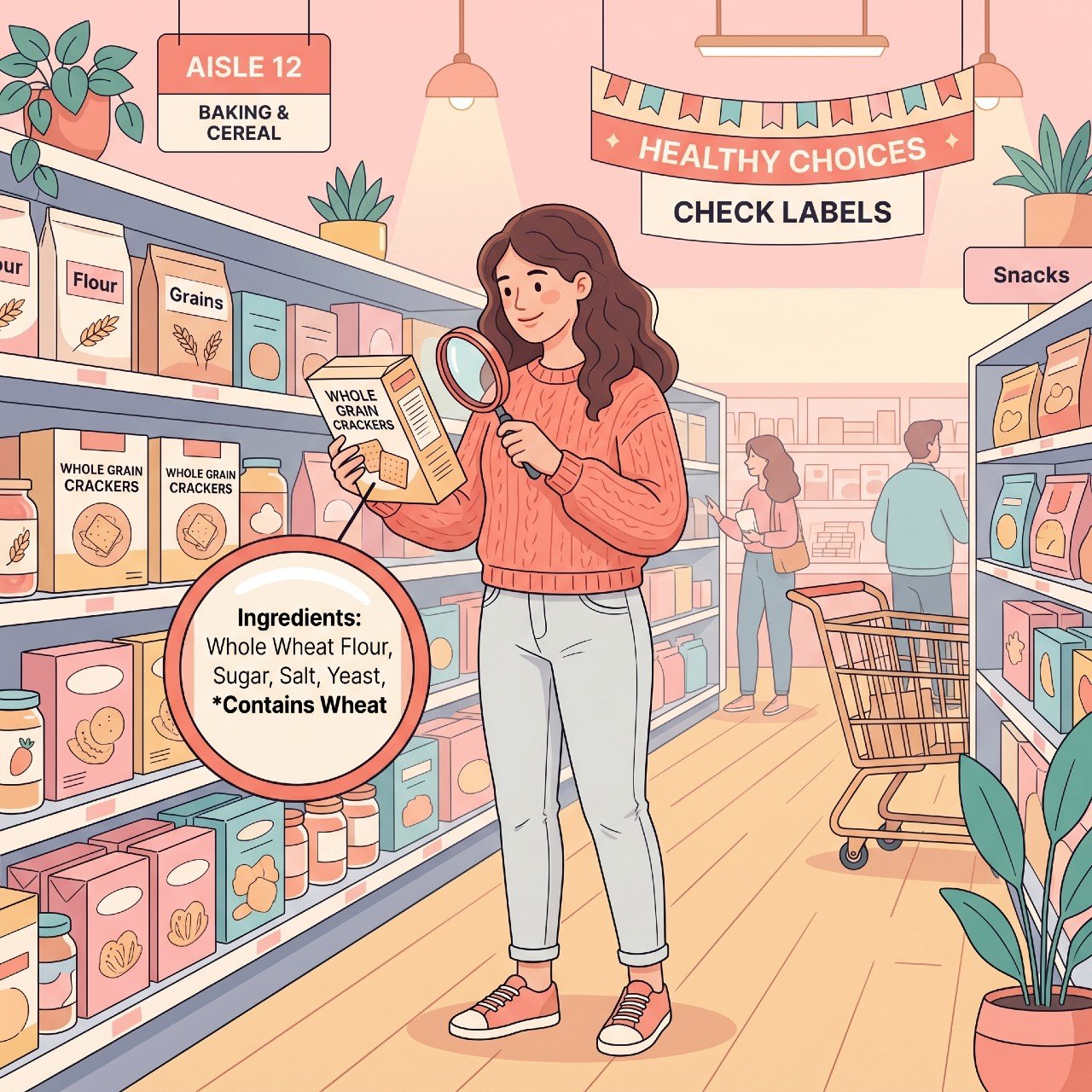
You read every label. You discover your favourite soy sauce contains wheat. You ask about the pasta sauce at a restaurant and get a blank look. You spend twice as long in the supermarket. And sometimes, despite all that effort, you still feel off — and have no idea why.
This frustration usually comes from one of three places: not yet knowing where hidden gluten lives, being confused by misleading labelling, or expecting results faster than the gut can actually heal.
According to the StatPearls clinical review, mucosal healing in adults with coeliac disease can take anywhere from six to twenty-four months of strict gluten-free adherence, depending on the severity of intestinal damage at diagnosis. That's not a failure — that's just biology.
What helps is shifting the frame. Instead of cataloguing everything you're giving up, focus on what you're building: a diet grounded in whole, naturally gluten-free foods that nutrition experts would recommend to anyone, regardless of their gluten status. The restriction starts to feel much less restrictive when the food is genuinely good.
Sarah — the reader we mentioned earlier — described her first week as "a bit chaotic, honestly. I kept finding gluten in things I assumed were safe." By week three, the bloating she'd lived with for years had disappeared. That's the arc most people experience: initial confusion, then clarity, then a new normal that feels better than the old one.
Gluten-Free Diet: What You Need To Know
A gluten-free diet means consistently avoiding wheat, barley, rye, and most oats (unless certified gluten-free), along with any product made with them. That sounds straightforward until you start reading ingredient lists in earnest.
Who Should Follow A Gluten-Free Diet?
People with diagnosed coeliac disease must follow a strict gluten-free diet for life. It's the only currently effective treatment, and the 2023 American College of Gastroenterology guidelines are clear that strict adherence is essential to prevent serious long-term complications — including osteoporosis, anaemia, and a small but real increased risk of intestinal lymphoma.
People with non-coeliac gluten sensitivity often feel significantly better on a gluten-free diet even without a formal diagnosis of intestinal damage. If you suspect gluten is causing your symptoms, see your GP before eliminating it — testing for coeliac disease requires you to still be eating gluten to get an accurate result.
The WLBF Three-Question Framework: Should You Try A Gluten-Free Diet?
Before committing to a full elimination, ask yourself these three questions honestly:
- Have I been tested for coeliac disease? If not, get tested first — while still eating gluten. A negative result doesn't rule out NCGS, but it gives you a proper baseline.
- Are my symptoms digestive, systemic, or both? NCGS often shows up as brain fog, joint pain, and fatigue alongside gut symptoms — not just bloating.
- Am I in perimenopause or beyond? If yes, there's a specific physiological reason why your gluten tolerance may have shifted. See the next section.
Nutritional Considerations For A Gluten-Free Diet
Switching to a gluten-free diet does require nutritional attention. The StatPearls review notes that malabsorption in coeliac disease commonly depletes iron, calcium, folate, zinc, vitamin D, and vitamin B12. Even after going gluten-free, replenishing these takes time.
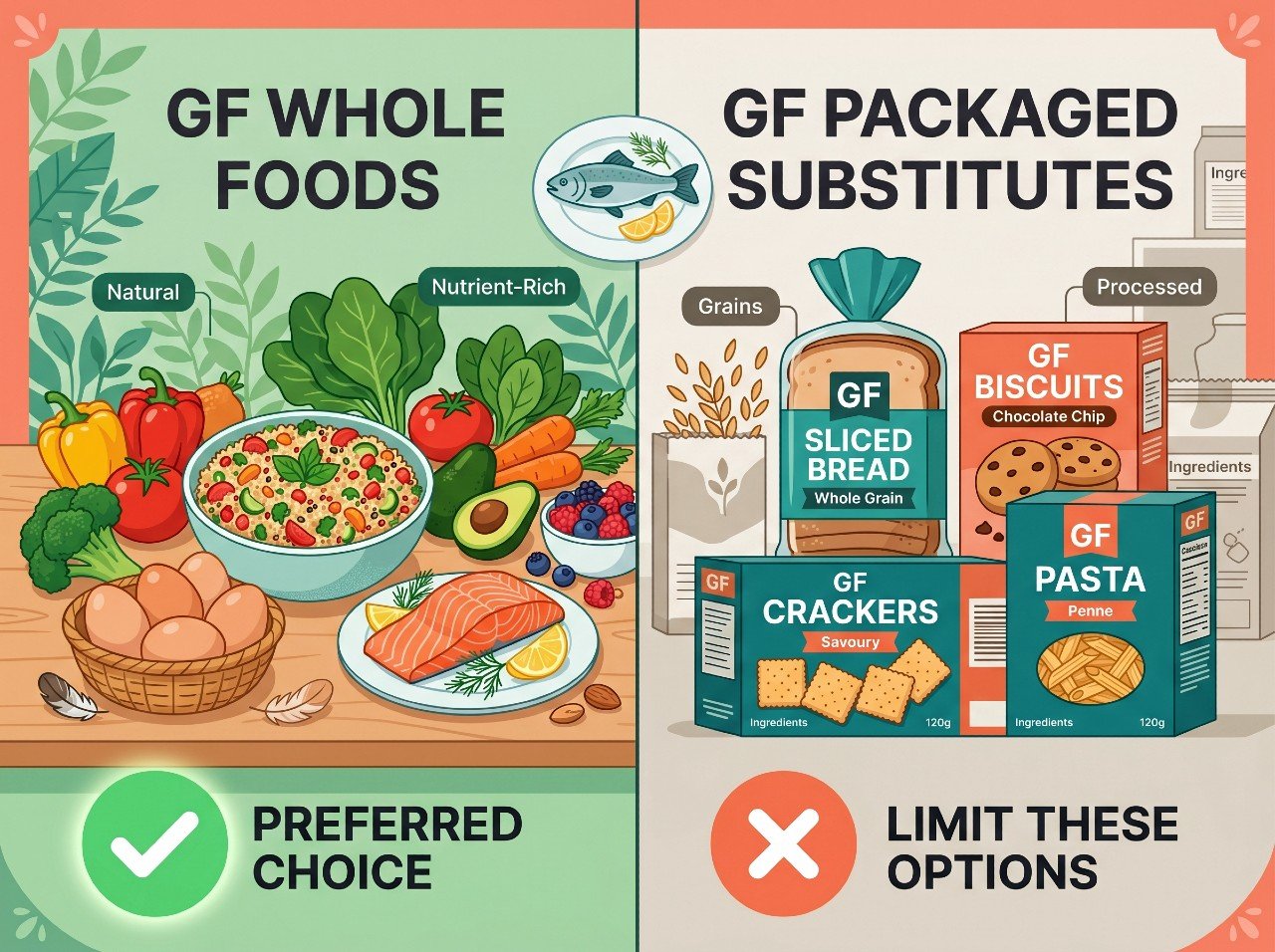
The second nutritional trap is over-relying on processed gluten-free substitutes. Gluten-free bread, pasta, and biscuits are often higher in sugar, sodium, and refined starches than their wheat-based equivalents — and lower in fibre. They solve the gluten problem while quietly creating a different one.
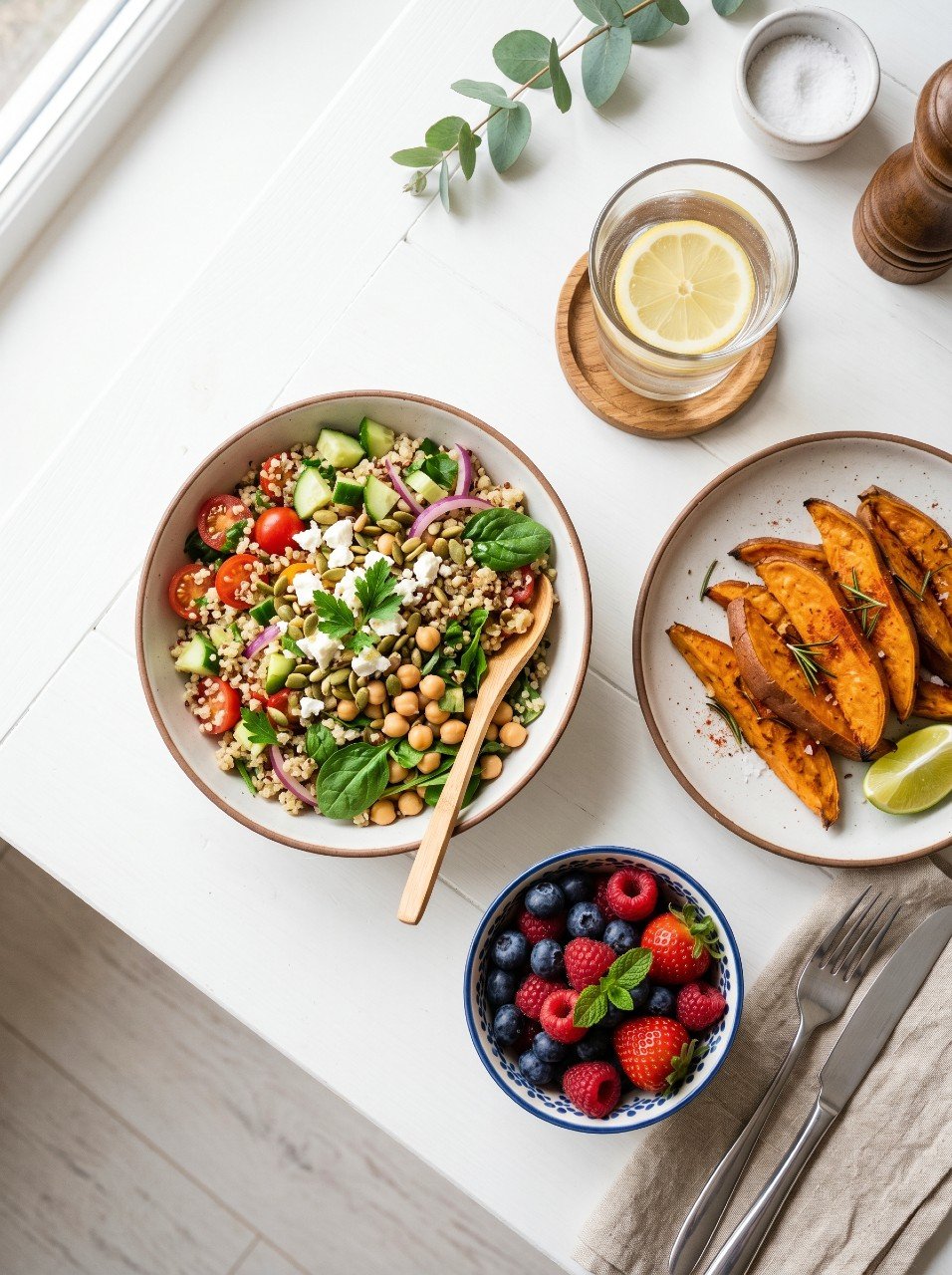
The fix is simple: build meals around naturally gluten-free whole foods first. Use packaged substitutes for occasional convenience, not as a daily staple.
Perimenopause And Your Gluten-Free Diet: Why This Matters More Than You Think
This is the section most gluten-free guides miss — and for women over 40, it may be the most relevant part of this article.
Perimenopause brings significant hormonal fluctuation, particularly in oestrogen. What many women (and their doctors) don't connect is that oestrogen has a direct role in gut function. As oestrogen levels decline and shift during perimenopause, several things happen that can make gluten sensitivity appear to emerge seemingly out of nowhere:
- Gut permeability may increase. Oestrogen helps maintain the tight junctions of the intestinal lining. As levels fluctuate, the gut barrier can become more permeable — not the same as coeliac disease, but enough that proteins like gliadin can provoke a greater immune response than they did in your 30s.
- The gut microbiome shifts. Oestrogen influences microbial composition. The StatPearls clinical database notes that physiological changes — including hormonal shifts — are among the environmental triggers that can activate latent gluten intolerance in genetically predisposed individuals.
- Background inflammation is already higher. Perimenopause is associated with increased systemic inflammation. Gluten can add to that inflammatory load in sensitive women, which is why symptoms like joint pain, brain fog, and fatigue that you've blamed on "just getting older" may actually have a dietary component worth investigating.
- Women are already diagnosed with coeliac disease at higher rates than men. The StatPearls epidemiology section attributes this in part to "hormonal influences and genetic susceptibility" — suggesting that hormonal status genuinely influences how the disease expresses itself.
None of this means every perimenopausal woman needs to go gluten-free. What it does mean is that if you're 40+ and suddenly struggling with bloating, fatigue, or brain fog that wasn't a problem a few years ago, gluten sensitivity is a legitimate lead, not a wellness trend to dismiss.
Quick Answer: Can perimenopause trigger gluten sensitivity? Yes, it can. Declining oestrogen affects the gut lining and microbiome in ways that can increase reactivity to dietary proteins, including gluten. If your symptoms are new or worsening in your 40s, speak to your GP about coeliac and NCGS testing before making any dietary changes.
Where Gluten Hides: The Hidden Gluten Danger List
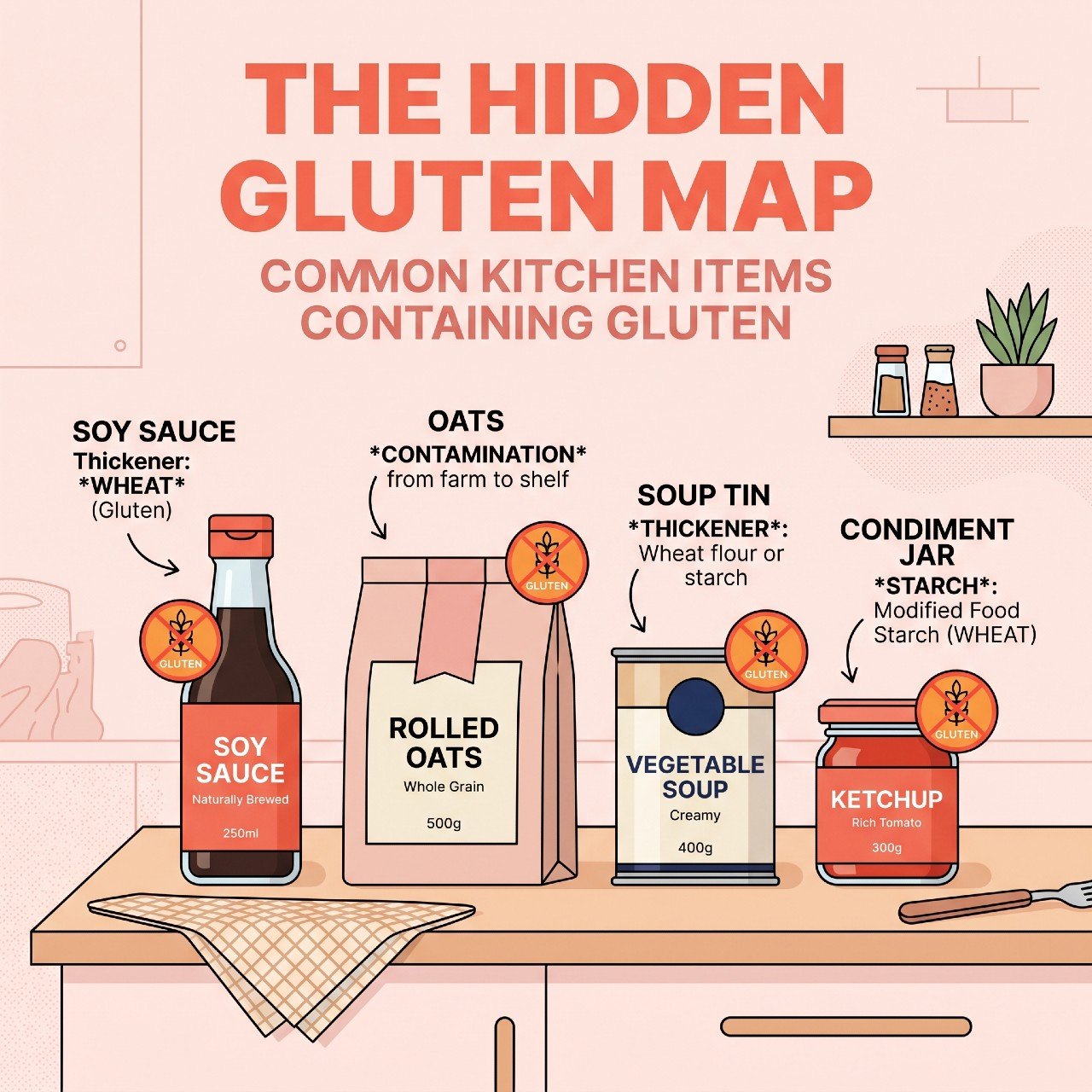
Knowing the obvious culprits — bread, pasta, pizza, cakes — is the easy part. Staying genuinely gluten-free means knowing where it lurks.
| Food Category | Common Gluten Sources To Watch |
|---|---|
| Sauces & Condiments | Soy sauce, teriyaki sauce, malt vinegar, some mustards, and some ketchup brands |
| Soups | Most tinned and packet soups use wheat as a thickener |
| Processed Meats | Some sausages, deli meats, and burgers contain breadcrumb fillers |
| Grains | Regular (non-certified) oats, couscous, bulgur wheat, spelt, kamut |
| Alcohol | Regular beer, lager, ale; malt beverages |
| Snacks | Some flavoured crisps, pretzels, crackers, rice cakes with malt extract |
| Medications & Supplements | Some tablets use wheat starch as a binder — worth checking |
| Dairy Alternatives | Some oat milks are made from non-certified GF oats |
The Celiac Disease Foundation specifically flags soups and sauces as "one of the biggest sources of hidden gluten" — and in practice, this is where most accidental exposures happen.
Safe Kitchen Practices That Actually Make A Difference
Cross-contamination is consistently underestimated. If you share a kitchen with gluten eaters, here's what actually matters:
- Toasters — breadcrumbs contaminate everything they touch. Keep a separate toaster, or use toaster bags.
- Wooden utensils and cutting boards — wood is porous and holds gluten residue even after washing. Dedicate separate ones, or switch to glass or stainless steel.
- The colander — pasta water and gluten particles cling to mesh. Use a dedicated colander for gluten-free cooking.
- Shared condiment jars — double-dipping a knife from gluten-containing bread into butter, jam, or nut butter contaminates the whole jar for everyone.
Benefits Of A Gluten-Free Lifestyle
Going gluten-free does more than remove a trigger. Done well, it tends to raise the overall quality of your diet, because cutting out gluten-containing processed foods usually means eating more whole foods — something that benefits most people regardless of sensitivity.
For people with coeliac disease, the benefits are medically significant. The NHS notes that symptoms typically improve on a gluten-free diet as the intestinal lining gradually heals over months. Energy levels, digestion, bone density, and long-term complication risk all improve with strict, sustained adherence.
For people with NCGS, the benefit is primarily symptomatic — less bloating, better energy, clearer thinking — without the underlying intestinal healing component.
For women in perimenopause exploring whether gluten is contributing to new or worsening symptoms, a well-structured elimination trial (typically three months, strictly observed) gives you a meaningful, real-world answer. If symptoms significantly improve, you have your answer. If they don't, you haven't lost much — and you've ruled out a legitimate variable.
Your First Gluten-Free Week: A Sample Meal Plan
The best way to make a gluten-free diet feel manageable is to see it laid out as real meals. Here's a realistic week built around naturally gluten-free whole foods, not packaged substitutes:
| Day | Breakfast | Lunch | Dinner |
|---|---|---|---|
| Monday | Greek yoghurt with berries and certified GF oats | Quinoa salad with roasted vegetables and grilled chicken | Baked salmon, sweet potato, steamed broccoli |
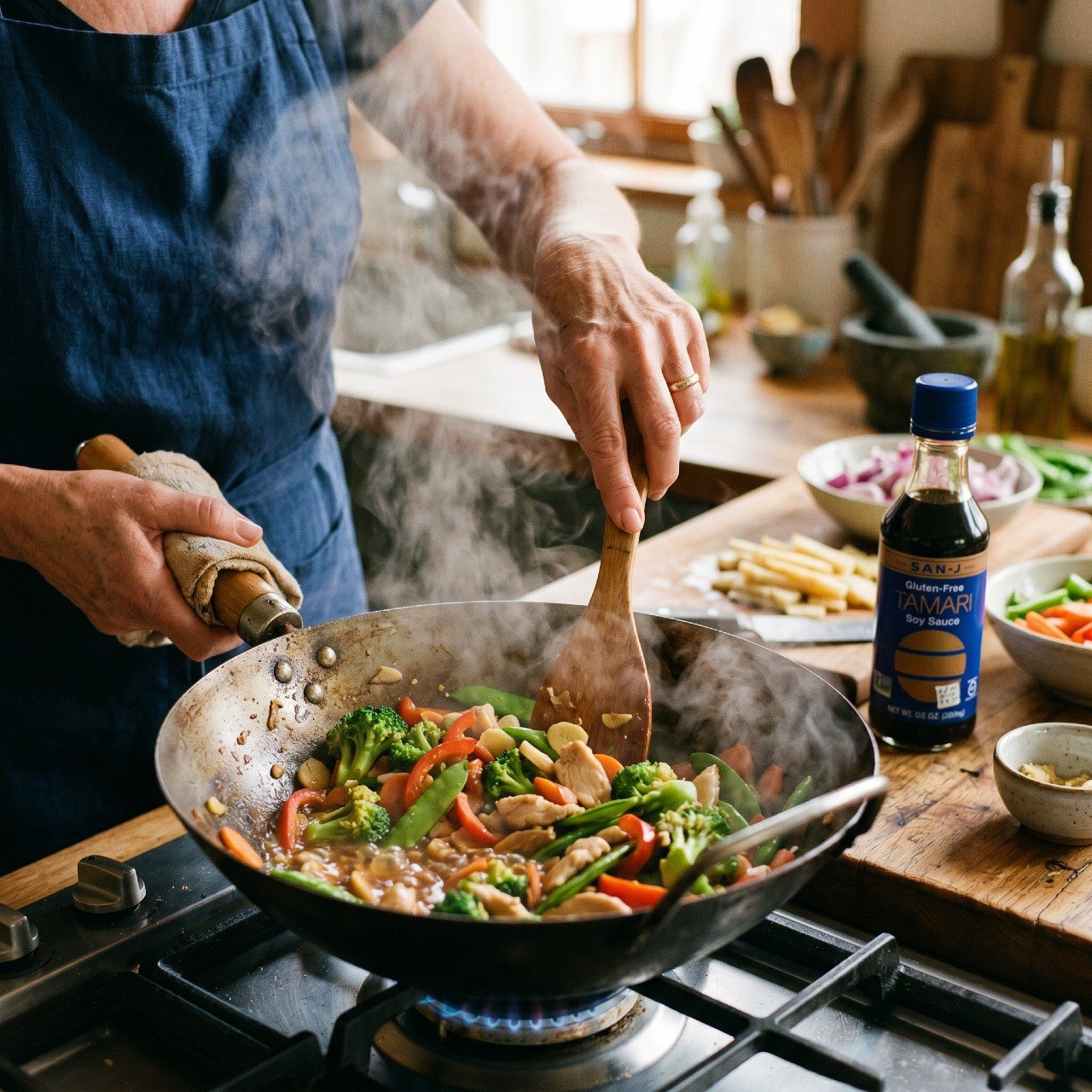
| Tuesday | Scrambled eggs with spinach on GF toast | Leftover salmon with green salad and olive oil dressing | Beef and vegetable stir-fry with rice noodles (use tamari, not soy sauce) |
| Wednesday | Smoothie: banana, spinach, almond milk, GF protein powder | Home-made lentil soup (or label-checked tinned) | Roast chicken thighs with roasted root vegetables |
| Thursday | Overnight rice pudding with mango | Tuna, avocado, and cucumber rice paper rolls | Lamb mince with tomatoes, courgette, and rice |
| Friday | Poached eggs and avocado on GF sourdough | Large Greek salad with feta and chickpeas | Prawn and vegetable curry with basmati rice (check curry paste label) |
| Saturday | GF pancakes with maple syrup and berries | Sweet potato and black bean bowl with lime-tahini dressing | Slow-cooked beef with polenta and green beans |
| Sunday | Full GF fry-up (GF sausages, eggs, tomatoes, mushrooms, GF toast) | Roast chicken leftovers in GF wrap with hummus | Baked sea bass with capers, olives, and green salad |
A few things to keep in mind: Swap regular soy sauce for tamari throughout. Buy only certified gluten-free oats if using oats. Check all condiments, stock cubes, and curry pastes before you buy — these are consistently the biggest source of accidental gluten.
Nutritional Gaps To Watch On A Gluten-Free Diet
One area where a gluten-free diet can genuinely fall short, if you're not paying attention, is fibre. Wheat is a major fibre source in most Western diets, and gluten-free bread and pasta are often lower in fibre than the originals.
Build your fibre intake from naturally gluten-free sources: legumes, vegetables, fruit, quinoa, and buckwheat are all excellent. Quinoa and buckwheat also provide complete or near-complete amino acid profiles, which is particularly useful if you're also reducing meat intake.
Nutrients worth monitoring — especially in the first year after a coeliac diagnosis:
- Iron — commonly depleted in untreated coeliac disease; red meat, lentils, and dark leafy greens are your best GF sources.
- Vitamin B12 — found in meat, fish, and dairy; if you're plant-based, supplementation is often necessary.
- Vitamin D and calcium — absorption improves as the gut heals, but worth discussing a supplement with your GP in the short term.
- Folate — found in leafy greens, beans, and fortified GF products.
- Zinc — shellfish, pumpkin seeds, and beef are reliable GF sources.
Ready to move forward and learn more? Download the free guide and discover the research-backed actions that help women shed body fat and keep it off — without hunger, extreme diets, or the guilt of another failed attempt.
The Bottom Line
A gluten-free diet is neither a trend to try on a whim nor a punishment to endure. For women with coeliac disease, it is a medical necessity that, when followed strictly, genuinely protects long-term health. For women with NCGS — or those in perimenopause noticing new digestive and systemic symptoms — it can be a genuinely transformative change.
The key distinction is this: a gluten-free diet built around whole, naturally gluten-free foods is a healthy, complete, and satisfying way to eat. A gluten-free diet built around packaged substitutes is not. That difference largely determines whether you feel better or just different.
If you're considering the switch, get tested for coeliac disease first — while still eating gluten. Then speak to a registered dietitian who specialises in this area.
And if you're in perimenopause and your symptoms have shifted unexpectedly, bring that context to your GP conversation. The gut-hormone connection is real, it's well-documented, and it deserves to be part of the discussion.
Glossary Of Key Terms
- Gliadin: A specific protein fraction of gluten that triggers the immune response in individuals with coeliac disease.
- Villi: Tiny, finger-like projections in the small intestine responsible for nutrient absorption; these are destroyed by the immune system in coeliac patients.
- Coeliac Disease: A serious autoimmune condition where the ingestion of gluten leads to damage in the small intestine.
- Non-Coeliac Gluten Sensitivity (NCGS): A condition where individuals experience symptoms similar to coeliac disease but lack the associated antibodies and intestinal damage.
- Cross-Contamination: The accidental transfer of gluten to gluten-free food through shared surfaces, utensils, or processing equipment.
- Parts Per Million (ppm): The measurement used to determine gluten concentration; 20 ppm is the standard threshold for a product to be legally labeled "gluten-free" in most countries.
- Gut Permeability: The degree to which the intestinal lining allows substances to pass through; increased permeability is often colloquially referred to as "leaky gut."
- Tamari: A naturally gluten-free alternative to traditional soy sauce, which is typically made with wheat.
- Triticale: A grain that is a cross between wheat and rye, which must be avoided on a gluten-free diet.
- Malabsorption: The body's inability to absorb nutrients, minerals, and vitamins from the diet, often a consequence of intestinal damage from gluten exposure.
FAQ
What Is A Gluten-Free Diet?
A gluten-free diet means removing all foods containing wheat, barley, rye, and most oats (unless certified gluten-free) from your meals. It's medically essential for coeliac disease and often beneficial for non-coeliac gluten sensitivity.
What Are The Symptoms Of Gluten Intolerance?
Symptoms vary widely. Gut symptoms include bloating, abdominal pain, diarrhoea, and constipation. Non-gut symptoms — particularly common in NCGS — include brain fog, fatigue, joint pain, and headaches. The NHS notes that coeliac symptoms can range from mild to severe and often come and go.
Should I Get Tested Before Going Gluten-Free?
Yes. Testing for coeliac disease requires you to be eating gluten — stopping first produces a false negative. Get tested first, then make dietary decisions based on actual results. If coeliac is ruled out, you can still trial a gluten-free diet for NCGS under dietitian guidance.
Can Perimenopause Cause Gluten Sensitivity?
It can activate latent gluten sensitivity in women who are genetically predisposed. Declining oestrogen affects gut permeability and the microbiome in ways that can make previously tolerated foods — including gluten — problematic. If symptoms have appeared or worsened in your 40s, it's genuinely worth investigating.
What Grains Can I Eat On A Gluten-Free Diet?
Plenty. According to the Celiac Disease Foundation, naturally gluten-free grains include rice, quinoa, buckwheat, millet, amaranth, sorghum, teff, corn, and certified gluten-free oats.
How Do I Avoid Cross-Contamination At Home?
Use separate toasters, wooden utensils, and colanders for gluten-free cooking. Clean shared surfaces thoroughly before preparing gluten-free food. Designate specific condiment jars as "gluten-free only" to avoid double-dipping contamination.
Can I Eat Out On A Gluten-Free Diet?
Yes, with a little planning. Call ahead, explain your requirements clearly — and make it clear whether it's a medical necessity or a preference, because it affects how carefully kitchens respond — and ask specifically about cross-contamination. Many restaurants now have GF menus, but a quick conversation about kitchen practices still matters.