

Blueberries And Weight Loss: What The Science Actually Says (Especially After 40)
The Truth About Blueberries And Weight Loss — Backed By Real Science, Not Hype
Thomas Edison
American inventor & businessman
The doctor of the future will no longer treat the human frame with drugs, but rather will cure and prevent disease with nutrition.
Summary (TL;DR)
Blueberries won't melt fat on their own, but three randomised controlled trials show they reduce blood pressure, lower oxidised LDL cholesterol, and improve insulin sensitivity in women with obesity and metabolic syndrome. A fourth trial found a related bone-protective effect in postmenopausal women. For women over 40 dealing with hormonal shifts, none of these is a minor footnote. One cup a day (about 150 g) is a practical, evidence-backed starting point.
Here's the honest version nobody writes: blueberries aren't magic. You can't out-eat a poor diet by adding a handful to your porridge. But if you're already eating reasonably well and wondering which foods actually earn their superfood label, not just from Instagram, but from actual clinical trials, blueberries are one of the very few that deliver.
You've probably already read five other “are blueberries good for weight loss” articles this year, and they all say roughly the same three things: antioxidants, fibre, low calories, done.
That repetition isn't your imagination: it's one of the most rehashed topics in health content, which is exactly why most of it tells you nothing you can actually use. This one is built differently: named trials, the actual numbers those trials produced, and an honest answer on where blueberries stop helping.
The reason matters more for women over 40. Once oestrogen starts fluctuating during perimenopause, fat distribution shifts (hello, belly), insulin sensitivity drops, and cardiovascular risk climbs.
Blueberries have been specifically tested on postmenopausal and perimenopausal women in double-blind RCTs. That's not a small thing. Most “superfood” claims are backed by rat studies or vague observational data. This one has real human trials.
I know the frustration of reading yet another “eat more blueberries” article that tells you nothing useful. So let's get specific: what they contain, what the studies actually showed, how much you need, and where people get it wrong.
Medical & Referral Disclaimer
This article is for informational and educational purposes only. It is not a substitute for professional medical advice, diagnosis, or treatment. Always consult your physician or qualified health provider before starting any new diet or exercise programme, particularly if you have an existing health condition such as diabetes or hypertension.
Key Takeaways
- Blueberries contain anthocyanins, the pigments responsible for their blue colour, which improve cholesterol levels in humans, raising HDL by 13.7% and lowering LDL by 13.6% over 12 weeks.
- A double-blind RCT in postmenopausal women found daily blueberry consumption reduced systolic blood pressure by 5.1% and diastolic by 6.3% in just 8 weeks.
- An Oklahoma State University RCT in obese women with metabolic syndrome showed that blueberries reduced oxidised LDL (a key inflammatory marker) by 28%, significantly more than in controls.
- A randomised crossover trial in healthy postmenopausal women found that moderate daily blueberry powder intake (17.5–35 g, roughly 0.75–1.5 cups fresh equivalent) increased net bone calcium retention, a genuinely new angle on why this fruit matters after menopause.
- Blueberries are low in calories (about 57 calories per 100 g), high in soluble fibre, and have a low glycaemic index, making them genuinely diet-friendly, not just marketing-friendly.
- One cup a day (roughly 150 g fresh, or 22 g freeze-dried powder) is the dose used in most successful trials.
- Fresh, frozen, and freeze-dried blueberries all work. The clinical trials used freeze-dried powder, so don't let frozen put you off.
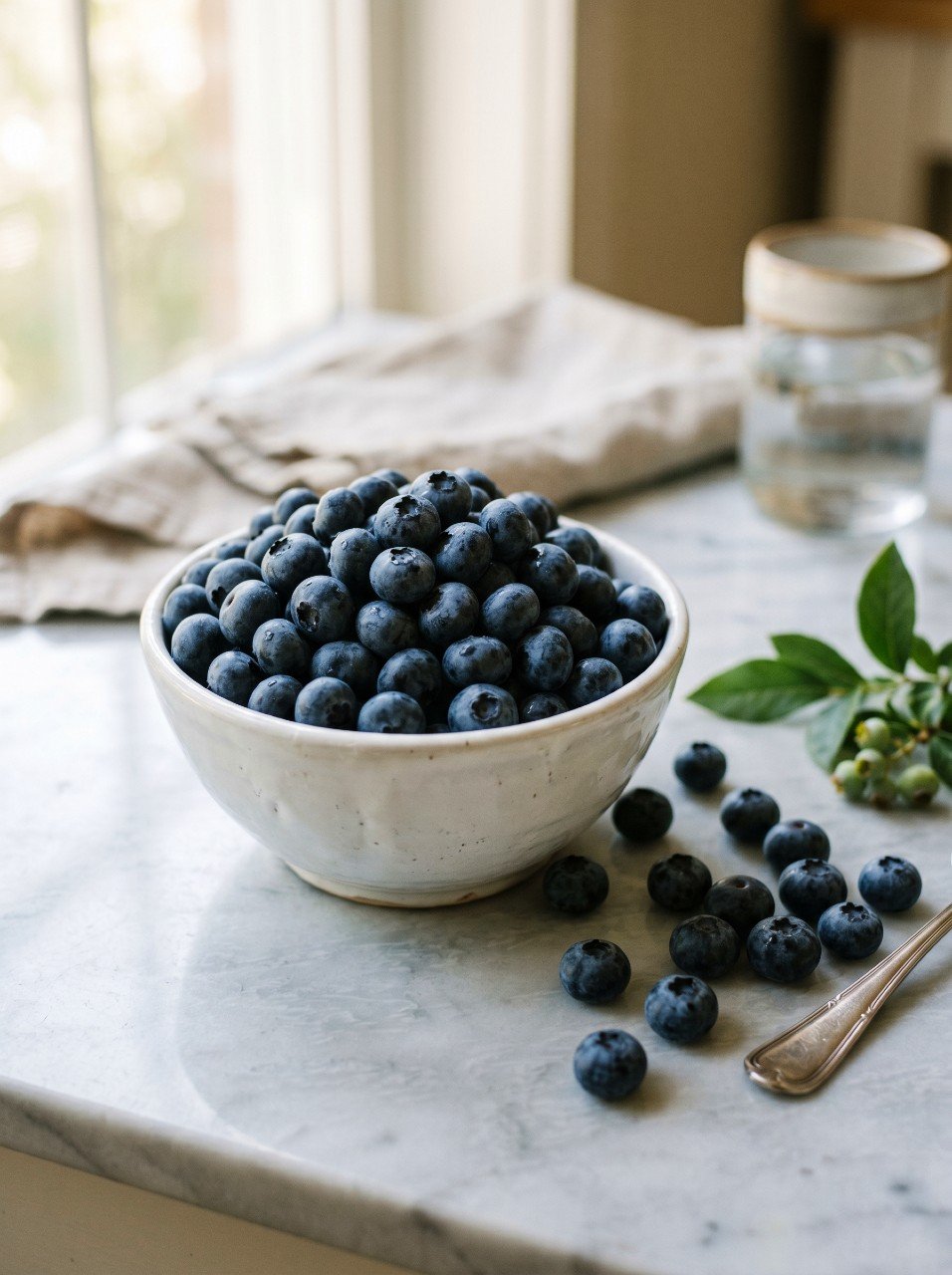
The Perimenopause Factor: Why Blueberries Matter More After 40
Do Blueberries Help With Weight Loss?
Yes, but indirectly. Blueberries won't directly burn fat, but clinical trials in women show they reduce inflammation, improve insulin sensitivity, lower blood pressure, and help with satiety through soluble fibre. For women over 40, where these factors directly affect weight gain, that makes blueberries a genuinely useful dietary tool.
Most blueberry articles skip past the most relevant part for WLBF readers. After 40, weight loss isn't just about calories in versus calories out. Oestrogen affects where your body stores fat, how sensitive your cells are to insulin, how well your blood vessels function, and, less talked about, how well your bones hold onto calcium. When oestrogen drops, all four can worsen.
That's not pessimism. It's biology. And it's exactly why the Johnson et al. 2015 trial matters so much. It wasn't conducted on 25-year-old athletes. It was a double-blind, randomised, placebo-controlled trial in 48 postmenopausal women with pre-hypertension, precisely the demographic who visits this site.
Eight weeks of daily blueberry powder (equivalent to about 1 cup of fresh berries) reduced systolic blood pressure from 138 to 131 mmHg and diastolic from 80 to 75 mmHg. It also increased nitric oxide levels by 68%, meaning blood vessels relaxed and widened, improving circulation.
Why does blood pressure matter for weight loss? Because when you're trying to exercise more and eat less, cardiovascular strain is a real barrier. Lower blood pressure means more comfortable workouts, better recovery, and less fatigue. That's not a trivial side effect.
The bone angle is newer and worth taking seriously if osteoporosis risk is on your mind, a genuine, common source of quiet anxiety once oestrogen starts dropping.
A randomised crossover trial in healthy postmenopausal women tracked calcium retention directly using a radioisotope method and found a “hormetic” pattern: moderate daily intake (17.5–35 g of freeze-dried powder, roughly 0.75–1.5 cups fresh) increased net bone calcium retention by 4–6% compared with no treatment, while a much higher dose (70 g) did not.
In plain terms: more isn't better here, and the effective range overlaps almost exactly with the same one-to-two-cup dose already used for blood pressure and cholesterol. That's not a coincidence worth ignoring. It's a reason to stop treating blueberries as a vague “good for you” food and start treating the dose itself as the point.
What Happens In Your Body When You Eat Blueberries Daily?
Anthocyanins are absorbed in the gut and circulate in the bloodstream, where they reduce the mass and activity of an enzyme called CETP (cholesteryl ester transfer protein) by roughly 10% and 6%, respectively. This raises HDL (good cholesterol) and lowers LDL (bad cholesterol). Simultaneously, they stimulate nitric oxide production in blood vessel walls, reducing arterial stiffness. Together, these effects mean better cardiovascular function and lower systemic inflammation, and both of those make fat metabolism genuinely easier.
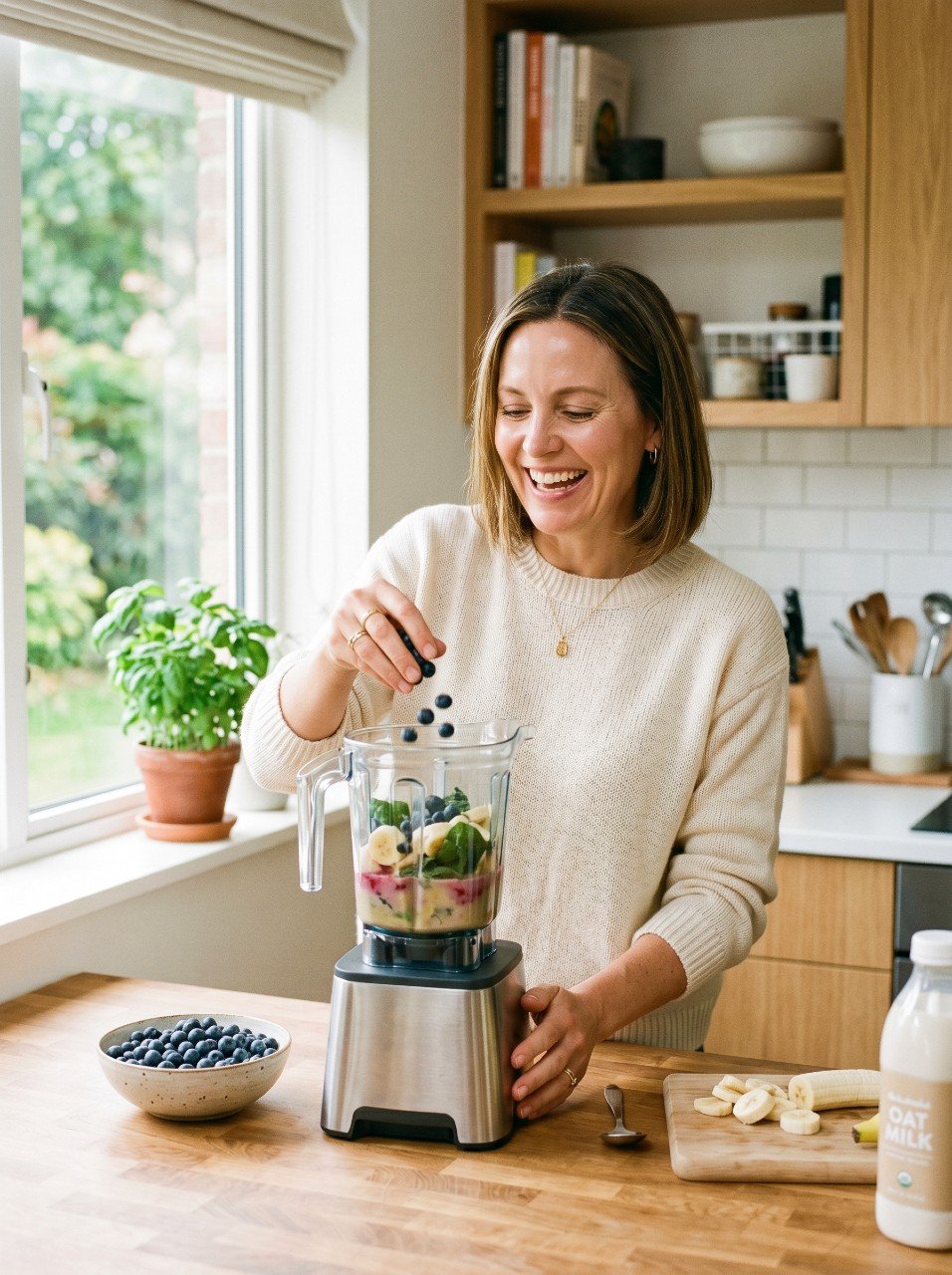
What Blueberries Actually Contain (And Why It Matters)
Anthocyanins: The Active Ingredient
The dark blue-purple pigment in blueberries is anthocyanin, a flavonoid compound with unusually strong effects on cholesterol in human trials.
A 12-week double-blind RCT published in the American Journal of Clinical Nutrition found that anthocyanin supplementation (equivalent to a meaningful daily serving of berries) raised HDL cholesterol by 13.7% and lowered LDL by 13.6% in adults aged 40–65 with dyslipidaemia.
The mechanism: anthocyanins measurably reduce CETP mass and activity, the protein that would otherwise transfer cholesterol from HDL to LDL. Suppress CETP, and your lipid profile improves.
For context: statins typically lower LDL by 20–50%, so blueberries aren't a drug replacement. But a 13.6% improvement from food alone, without side effects, in 12 weeks? That's genuinely notable.
Catechins: The Belly Fat Connection
Do Blueberries Target Belly Fat Specifically?
Catechins in blueberries activate AMPK, an enzyme that promotes fat burning and switches off fat storage in visceral (belly) tissue. The direct human trial evidence for belly fat specifically is still emerging, but the mechanism is the same one behind green tea's belly fat research. Combined with the inflammation reduction shown in women's RCTs, blueberries are one of the better food-based tools for this particular problem.
Blueberries also contain catechins, the same class of polyphenols found in green tea. Research has shown that catechins activate AMPK (AMP-activated protein kinase), an enzyme that switches on fat-burning pathways and switches off fat storage, particularly in visceral (belly) fat tissue.
This is the mechanistic basis for the belly fat reduction often observed with regular green tea consumption, and blueberries share the same underlying chemistry.
To be clear: the belly fat research is still emerging for blueberries specifically, and most of the strongest data comes from animal models. But the mechanistic pathway is real, and the cholesterol and inflammation data from human trials support a plausible fat-metabolism benefit.

Soluble Fibre: The Satiety Driver
One cup of blueberries (about 150 g) contains 2.4 g of fibre, much of it soluble. Soluble fibre slows gastric emptying, meaning you feel fuller for longer, and it feeds beneficial gut bacteria linked to healthier body weight.
It also helps regulate blood sugar by slowing glucose absorption, which means fewer energy crashes and less subsequent overeating.
And the calorie count? About 85 calories per cup. You'd be hard-pressed to find a more filling, nutrient-dense option at that calorie load.
Blueberry Nutrition At A Glance
| Nutrient | Per 100 g (Fresh) | Per 1 Cup (150 g) | Why It Matters For Weight Loss |
|---|---|---|---|
| Calories | 57 kcal | 85 kcal | Low energy density, high volume for few calories |
| Fibre | 2.4 g | 3.6 g | Satiety, blood sugar regulation, gut health |
| Vitamin C | 9.7 mg (11% DV) | 14.5 mg | Supports collagen, immune function, iron absorption |
| Anthocyanins | ~163 mg | ~245 mg | Cholesterol improvement, cardiovascular protection |
| Glycaemic Index | 53 (low) | – | Slow glucose release, no blood sugar spike |
| Water content | 84% | – | Contributes to hydration and fullness |
Source: USDA FoodData Central, 2024. Anthocyanin content varies by variety and ripeness.
The Contrarian Take: What Blueberries Won't Do
Here's where I'll push back on what you'll read elsewhere. The claim that “blueberries help you lose 4 pounds a month” is not backed by any study I can find, and I've looked.
The Oklahoma State RCT that used 50 g of freeze-dried blueberries daily (equivalent to roughly two cups of fresh berries) found improvements in blood pressure and inflammation markers, but did not report significant weight loss or changes in BMI over 8 weeks.
That doesn't mean blueberries aren't useful for weight loss. It means they work as a supporting player, not a solo act. They reduce inflammation that makes fat loss harder.
They improve the cardiovascular metrics that make exercise more sustainable. They satisfy sugar cravings for under 90 calories. Those are real, compounding benefits, just not the dramatic fat-melting claim you'll see on some sites.
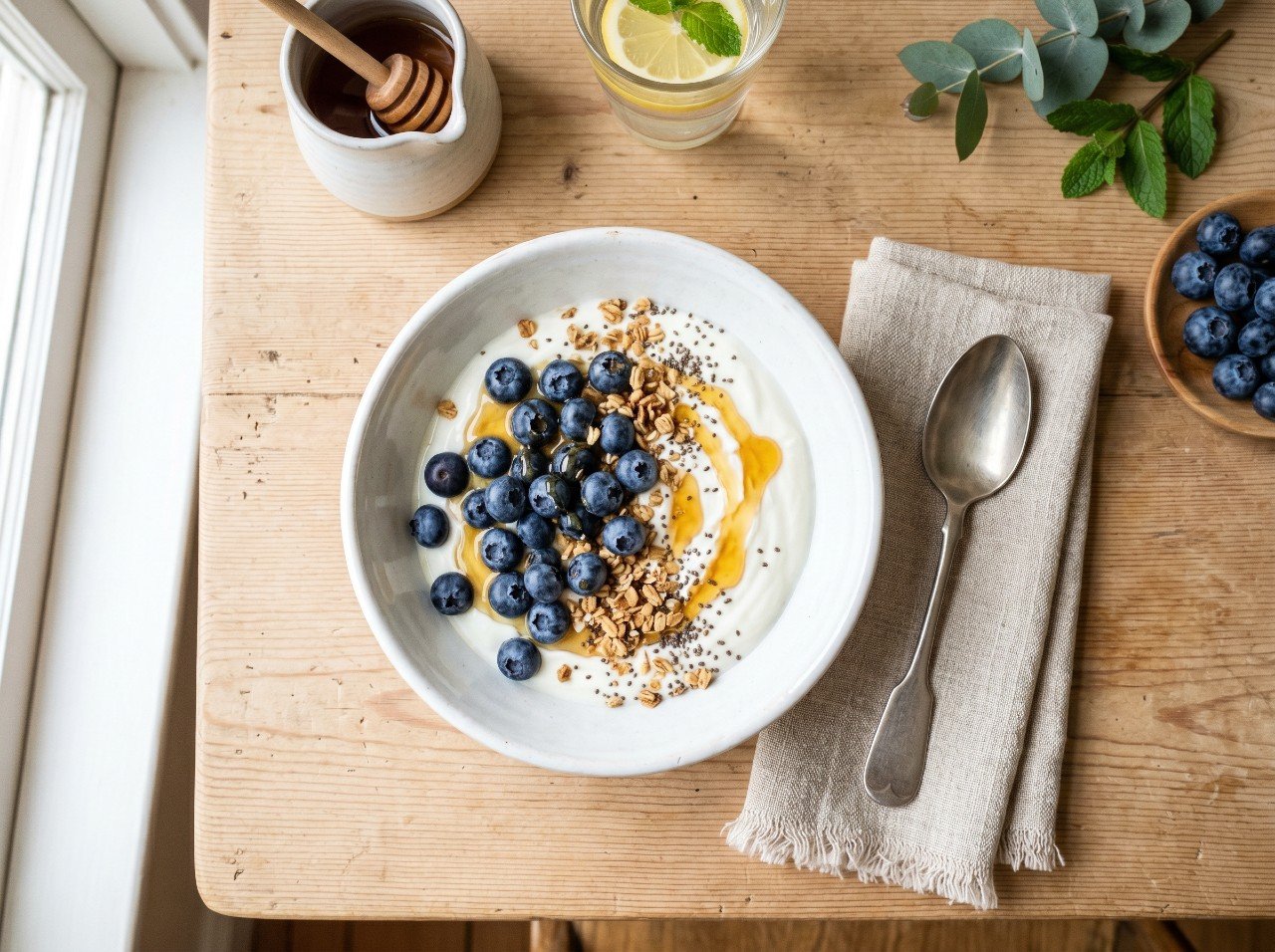
The WLBF Blueberry Framework: How To Think About This
- Tier 1 (Direct fat loss): Blueberries don't directly cause fat loss in humans (no RCT evidence).
- Tier 2 (Enabling fat loss): They reduce inflammation, improve insulin sensitivity, and lower blood pressure, all of which make fat loss easier and exercise more effective.
- Tier 3 (Supporting adherence): Low calorie, sweet, versatile. They satisfy cravings without derailing a calorie deficit.
Use blueberries as a Tier 2–3 tool: they clear the path; they don't walk it for you.
How Many Blueberries Do You Actually Need?
The clinical trials used doses ranging from 17.5–22 g of freeze-dried powder (equivalent to about 0.75–1 cup of fresh berries) to 50 g of freeze-dried powder (equivalent to about 350 g / roughly 2–2.5 cups).
The postmenopausal blood pressure trial used the lower dose and still got significant results after 8 weeks; the bone-retention trial found its benefit at a similar low-to-moderate dose and actually lost the effect at the highest dose tested.
Practically: one cup a day is a reasonable, evidence-aligned starting point that lines up with three separate trials' effective range. Two cups provides a more robust anthocyanin dose if you're specifically targeting cholesterol or blood pressure.
Eating more than that won't hurt, but based on the bone-retention data specifically, you're not just hitting diminishing returns. You may be past the point where the benefit was even measured.
One thing that surprised me: frozen blueberries retain their anthocyanin content well. The trials used freeze-dried powder specifically for standardisation, not because it's superior. Fresh and frozen both work. Just skip the blueberry-flavoured products (muffins, yoghurt, jams). The processing and sugar content eliminate most of the benefit.
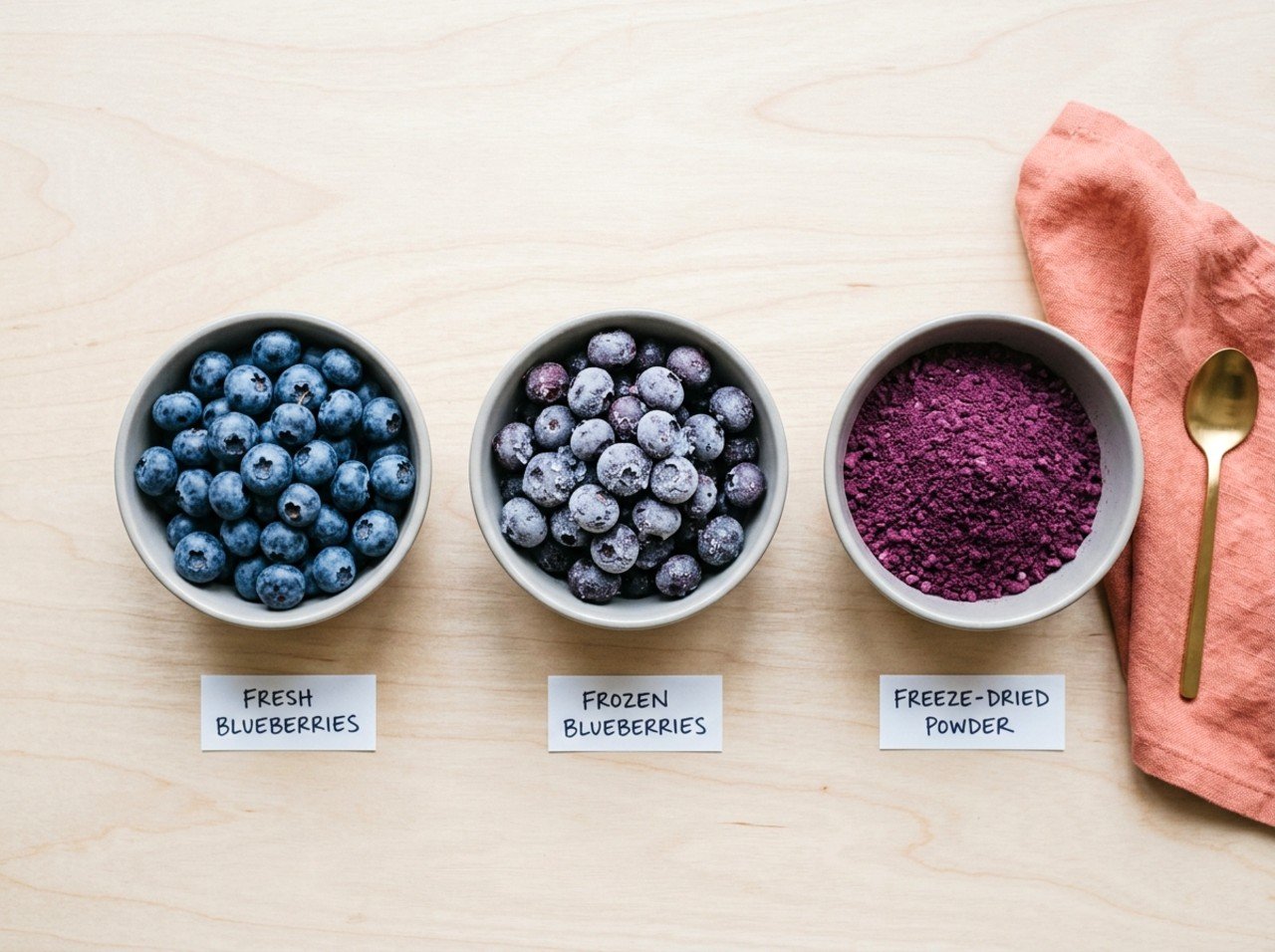
Fresh vs. Frozen vs. Freeze-Dried Blueberries: What's Best?
| Form | Anthocyanin Retention | Convenience | Cost | Best For |
|---|---|---|---|---|
| Fresh (in season) | Highest | Moderate | Higher (seasonal) | Snacking, salads, garnishing |
| Frozen | High (minimal loss) | Very high | Lower year-round | Smoothies, porridge, baking |
| Freeze-dried powder | High (concentrated) | Very high | Higher per serving | Supplements, adding to drinks |
| Blueberry jam/syrup | Low (heat-degraded) | High | Variable | Flavouring only, not for health benefits |
| Blueberry juice | Moderate | High | Moderate | Avoid if watching sugar, lacks fibre |
Easy And Delicious Ways To Eat Your Daily Blueberries
Sticking with any new habit comes down to not getting bored. Here are five ways that actually work in a real, busy life:
- Morning smoothie base: Blend 1 cup of frozen blueberries with unsweetened Greek yoghurt, a handful of spinach, and a tablespoon of flaxseed. High protein, high fibre, takes 3 minutes.
- Porridge topper: Add a generous handful (fresh or frozen, thawed) to warm oats. The natural sweetness means you won't need added sugar.
- Afternoon snack swap: A cup of fresh blueberries at 85 calories replaces a biscuit at 150–250 calories. Over a week, that swap alone is meaningful.
- Salad colour bomb: Blueberries pair surprisingly well with a spinach, feta, and walnut salad. Drizzle with balsamic. It brings out their tartness.
- Overnight oats: Mix rolled oats, chia seeds, almond milk, and a handful of blueberries the night before. Ready to grab in the morning, no cooking needed.
And if recipe inspiration is what you need, the NutriCraft recipe generator will build you a personalised blueberry recipe based on what's actually in your fridge.
Join Our Mailing List
Join thousands of women inside our community and receive our free guide, 10 Actions That Support Permanent Weight Loss — the exact behavioural shifts that make the difference between a two-week attempt and a lasting transformation.
No restriction plans. No guilt. Just what actually works — for real women with real lives.

Mary's Take: What I've Actually Noticed
I've been eating blueberries consistently for years, usually frozen, usually in a morning smoothie, sometimes just a handful as an afternoon snack when I'm trying not to reach for something worse.
The truth is I didn't start eating them to lose weight. I started because they were convenient and genuinely satisfying in a way that didn't leave me hungry again 20 minutes later.
What I've noticed: on the days I eat them, I tend to eat less overall by mid-afternoon. Whether that's the fibre, the low glycaemic impact, or just the satisfaction of something sweet that isn't junk, I can't say for certain. But the pattern is consistent enough that I keep going. And now I know the RCT data backs what I've been doing intuitively, which is always reassuring.
The perimenopause angle hits differently when you're actually in it. Knowing that a daily cup of blueberries has measurable blood pressure benefits in postmenopausal women, not just theoretical benefits but actual numbers from a clinical trial, changes how I think about a small daily habit. Small habits compounded over months are where real change happens.
Want more science-backed habits like this? Join thousands of women who've downloaded our free guide: 10 Actions That Support Permanent Weight Loss — without hunger, without extreme dieting, and built around how women's bodies actually work after 40.
The Bottom Line
Blueberries are one of the most evidence-backed foods you can add to a weight loss diet, not because they directly burn fat, but because they address the underlying conditions that make fat loss harder, especially after 40.
Four separate randomised controlled trials in women show improved blood pressure, reduced inflammation, better cholesterol profiles, and even bone calcium retention from daily consumption. At roughly 85 calories per cup, with 3.6 g of fibre and one of the highest antioxidant loads of any fruit, they're genuinely difficult to argue against.
One cup a day, consistently, is a realistic and evidence-aligned target. Fresh, frozen, or freeze-dried: all three work. The form you'll actually keep eating is the right one.
Don't let the fact that they're not a magic bullet put you off. Nothing is. But as a daily habit that costs almost nothing, takes no cooking, and has real clinical support? Blueberries earn their place on your shopping list.
Glossary Of Key Terms
- AMPK (AMP-activated protein kinase): An enzyme that acts as a metabolic master switch, promoting fat burning and inhibiting fat storage.
- Anthocyanins: The blue-purple pigments in blueberries; flavonoid compounds that improve cholesterol and provide cardiovascular protection.
- Catechins: A class of polyphenols also found in green tea that can activate fat-burning pathways.
- CETP (Cholesteryl Ester Transfer Protein): A protein that transfers cholesterol from "good" HDL to "bad" LDL; its inhibition helps improve lipid profiles.
- Glycaemic Index (GI): A ranking of how quickly foods raise blood glucose levels; blueberries have a low GI of 53.
- Nitric Oxide: A molecule that signals blood vessels to relax and widen, improving circulation and reducing arterial stiffness.
- Oxidised LDL: A specific form of LDL cholesterol that serves as a key marker for systemic inflammation.
- Perimenopause: The transitional phase leading up to menopause characterized by fluctuating oestrogen levels and shifts in fat distribution.
- Randomised Controlled Trial (RCT): A high-quality scientific study design used to test the effectiveness of an intervention, such as blueberry consumption, in humans.
- Soluble Fibre: A type of fibre that dissolves in water to form a gel-like substance, slowing digestion and helping to regulate blood sugar.
FAQ
How Many Blueberries Should I Eat For Weight Loss?
One cup (about 150 g) a day is the dose used in the most relevant clinical trial for postmenopausal women and produced measurable blood pressure reductions in 8 weeks. Two cups provide more anthocyanins and were used in the metabolic syndrome trial that showed a 28% reduction in oxidised LDL. Start with one cup and see how you get on before doubling up.
Do Frozen Blueberries Work As Well As Fresh?
Yes. Freezing preserves anthocyanin content well. The clinical trials actually used freeze-dried powder, not fresh berries. The biggest predictor of benefit is consistency — the form you'll actually eat every day is the best form.
Can Blueberries Help Reduce Belly Fat After Menopause?
The direct evidence in human trials is limited, but the mechanistic case is reasonable. Catechins in blueberries activate fat-burning pathways (AMPK), and the inflammation reduction shown in RCTs addresses a key driver of visceral fat accumulation post-menopause. What the trials do confirm clearly: significant reductions in blood pressure and inflammatory markers in this demographic, both of which are closely linked to belly fat.
Are Blueberries Safe For Women With Diabetes Or Pre-Diabetes?
Generally yes. Blueberries have a low glycaemic index (GI ~53) and their fibre content helps regulate blood glucose. One RCT specifically found benefits in women with metabolic syndrome, which overlaps significantly with pre-diabetes. That said, individual responses vary — check with your GP or dietitian if you're managing blood sugar actively.
What's The Best Time Of Day To Eat Blueberries?
There's no conclusive evidence that timing matters significantly. The trials didn't control for time of day. Practically: morning tends to work best for most people — in porridge or a smoothie — because you're building the habit at the start of the day rather than trying to remember it later.
Can I Take A Blueberry Supplement Instead Of Eating The Fruit?
Supplements exist (typically standardised anthocyanin extracts), and the RCT evidence on anthocyanins is partly derived from concentrated supplements. However, whole blueberries also provide fibre, water, and a range of other polyphenols that supplements don't replicate. If you genuinely can't eat blueberries regularly, a standardised anthocyanin supplement is a reasonable alternative — but whole fruit is preferable where possible.
Do Blueberries Interact With Any Medications?
Blueberries are not known to interact significantly with most common medications at typical dietary doses. However, their blood-pressure-lowering effect is real and clinically measured — if you're on antihypertensive medication, discuss any significant dietary changes with your GP. Very high doses may theoretically affect anticoagulant activity, though evidence for this at food levels is not established.