
The Real Benefits Of Bananas For Women Who Want To Lose Weight
Benefits Of Bananas: The One Fruit That Works Harder Than You Think
JENNA WOLFE
Journalist & fitness expert
You didn't gain all your weight in one day; you won't lose it in one day. Be patient with yourself.
Summary (TL;DR)
Bananas are genuinely good for weight loss. They're low in calories (around 105 for a medium one), high in fibre that keeps you fuller for longer, and contain resistant starch — especially in greener bananas — that helps stabilise blood sugar and supports fat burning. They also deliver potassium, vitamin B6, and magnesium, which matter even more as you get older. If you've been avoiding bananas because someone told you they're "too sugary," this article will change your mind.
Here's something that happens to so many women I hear from: you've cleaned up your diet, you're eating more fruit and veg, you feel like you're finally doing things right — and then someone tells you bananas are basically candy. A friend. A fitness influencer.
Someone in a Facebook group who sounds very certain about everything. So you stop eating them. You swap in a handful of nuts or a rice cake instead. And every time you walk past the fruit bowl, there's this mild, nagging guilt about a piece of fruit. A piece of fruit.
Sound familiar? Yeah. It's a lot.
The banana has been unfairly picked on for years — lumped in with "high-sugar foods" that supposedly wreck your diet. But here's what the actual science says: bananas are a really solid weight-loss food. Not in a "they'll magically melt fat" way, but in the way that genuinely matters — they fill you up, they stabilise your blood sugar, and they give your body a heap of nutrients for very few calories.
Certain foods really do make weight loss easier. Bananas are one of them. They're cheap, require zero preparation, come in their own wrapper, and taste good. That combination is rarer than you'd think when you're trying to eat well consistently.
Here's what you need to know about the real benefits of bananas — and why I'd recommend adding one to your daily routine without a second thought.
Medical & Referral Disclaimer
This article is for informational and educational purposes only. It is not a substitute for professional medical advice, diagnosis, or treatment. Always consult your physician or qualified health provider before starting any new diet or exercise programme.
Key Takeaways
- A medium banana contains around 105 calories, 3.07 g of fibre, and meaningful amounts of potassium, B6, and magnesium.
- Greener bananas are higher in resistant starch, which acts like soluble fibre in the body and supports fat burning and blood sugar control.
- Dietary fibre intake is strongly linked to reduced body weight and lower cardiovascular disease risk.
- Bananas have a low to medium glycaemic index (42–62, depending on ripeness) — they won't spike your blood sugar the way processed foods do.
- The potassium, magnesium, and B6 in bananas are especially valuable for women in perimenopause, when blood pressure, mood, and blood sugar regulation all shift.
- Eating one or two bananas a day as part of a balanced diet is entirely consistent with weight loss goals.
Banana Nutrition Facts At A Glance
One medium banana (approx. 118 g) provides the following nutrients, based on USDA data:
| Nutrient | Amount (medium banana) | % Daily Value |
|---|---|---|
| Calories | 105 kcal | — |
| Carbohydrates | 27 g | 10% |
| Dietary Fibre | 3.07 g | 11% |
| Natural Sugars | 14.4 g | — |
| Protein | 1.3 g | — |
| Fat | 0.4 g | — |
| Potassium | 422 mg | 9% |
| Vitamin B6 | 0.43 mg | 25% |
| Vitamin C | 10.3 mg | 11% |
| Magnesium | 32 mg | 8% |
| Copper | 0.09 mg | 10% |
| Manganese | 0.32 mg | 14% |
Source: USDA FoodData Central, food ID 173944.
Are Bananas Actually Good For Weight Loss?
Yes — genuinely, yes. And it's worth taking a moment to understand why this even became a question.
The banana's reputation problem boils down to one number: 27 g of carbohydrates per medium banana. If you've spent any time on a low-carb plan, that sounds alarming.
But carbs alone don't determine whether a food helps or hinders your weight loss. What actually matters is the type of carbs, the fibre content, the glycaemic response, and — the one that often gets forgotten — how full the food leaves you feeling afterwards.
On all of those measures, bananas hold up well. The Journal of the Academy of Nutrition and Dietetics is clear that adequate dietary fibre — 25 g daily for women — is directly linked to lower body weight and protection against chronic disease.
One medium banana gets you 11% of the way to that target. It also delivers pectin and resistant starch, both of which slow digestion, keep blood sugar stable, and help you feel satisfied for longer than a low-fibre snack would.
The banana was never the problem. The advice to avoid it was.
The Fibre Story — Why This Is The Key Benefit Of Bananas
If I had to pick the single most underappreciated tool in weight management, it would be fibre. Not protein powder. Not intermittent fasting windows. Fibre.
Dietary fibre reduces the risk of cardiovascular disease and supports a healthy body weight by slowing digestion, feeding beneficial gut bacteria, and reducing cholesterol absorption. For weight management, the mechanism is almost embarrassingly simple: fibre fills you up, so you eat less without having to white-knuckle through hunger.
A 2019 study tracking 345 overweight adults on calorie-restricted diets over six months found that increasing daily fibre by around 4 g was independently associated with roughly 1.4–1.5 kg more weight lost — even after accounting for total calories, fat intake, and other dietary factors. Fibre isn't a nice bonus. It's doing real work. (Miketinas et al., Journal of Nutrition, 2019).
One medium banana gives you 3.07 g of fibre. Pair it with a portion of oats and a handful of berries, and you've knocked out close to half your daily target before lunch.
Then there's pectin — a soluble fibre in bananas that forms a gel-like substance in your gut, slowing the rate at which food leaves your stomach. This is why eating a banana leaves you feeling genuinely satisfied, not just technically full.
It's a different sensation to eating the same calories from, say, a rice cake — which does approximately nothing for hunger — and that difference matters enormously over the course of a day.
The Resistant Starch Advantage — Why Green Bananas Are Worth Trying
This is where it gets genuinely interesting, and where most banana articles miss the mark.
Not all bananas are the same, and the ripeness of your banana changes its nutritional profile significantly.
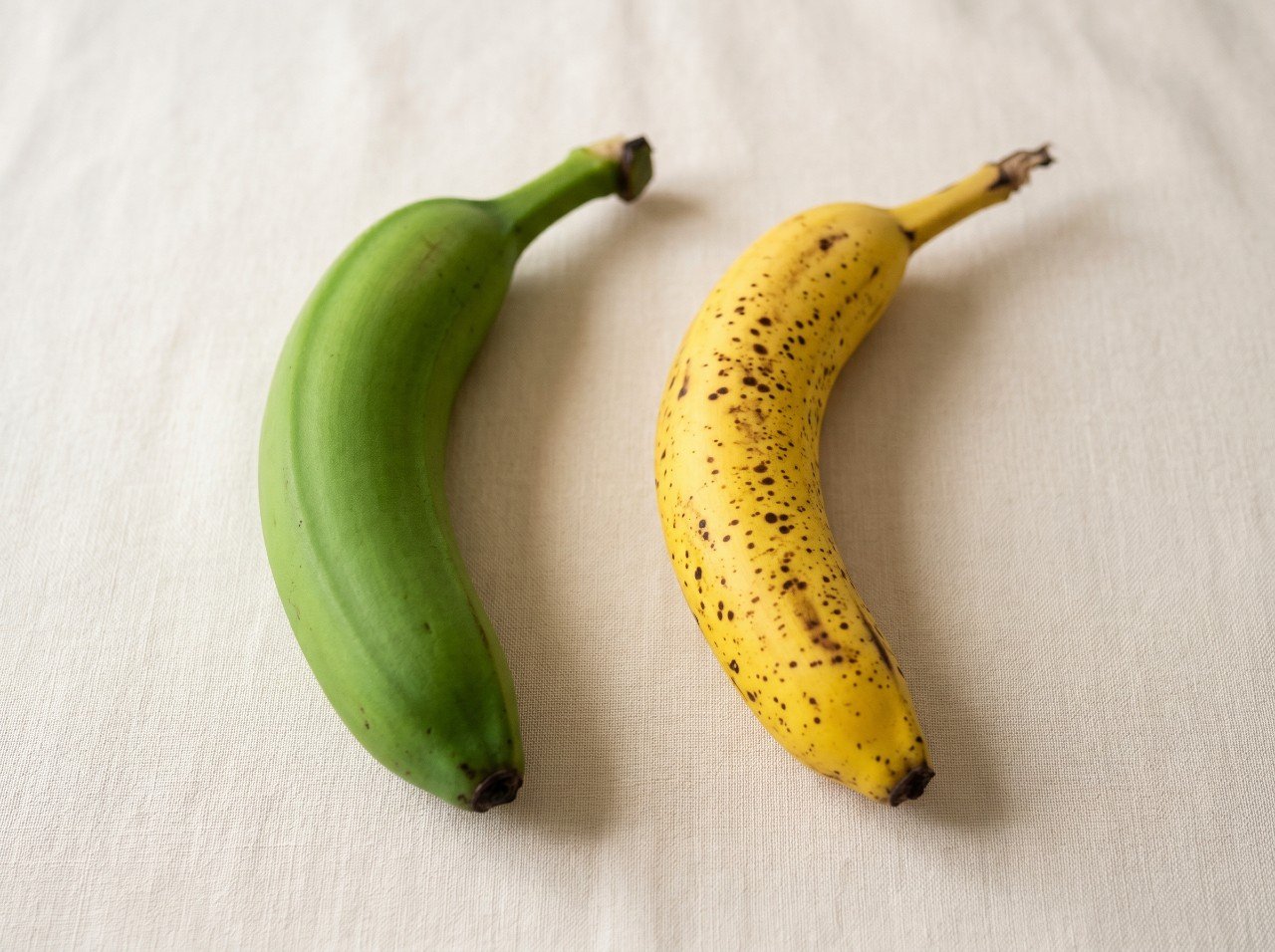
Green (unripe) bananas are high in resistant starch, a type of carbohydrate that your body can't fully digest. A small green banana contains up to 8.5 g of resistant starch. As it ripens to yellow, that figure drops to around 2–5 g as the starch converts to simple sugars.
Here's why resistant starch matters for weight loss: It acts like soluble fibre in your digestive system — fermenting slowly in the colon, feeding beneficial gut bacteria, and producing short-chain fatty acids that have been shown to support fat burning and reduce fat storage. It also slows the absorption of sugar from your meal, which keeps your blood glucose levels stable and prevents the energy crashes that trigger cravings.
The practical takeaway: if you're specifically chasing the weight-management benefits of bananas, choose ones that are slightly less ripe — yellow with a hint of green rather than deeply yellow or spotty. They may be a little less sweet, but they're working harder for you nutritionally.
Green Vs. Yellow Banana — What's The Difference?
| Feature | Green (Unripe) Banana | Yellow (Ripe) Banana |
|---|---|---|
| Resistant Starch | Up to 8.5 g | 2–5 g |
| Natural Sugars | Lower | Higher |
| Glycaemic Index | Lower (~42) | Higher (~62) |
| Digestibility | Slower (acts like fibre) | Faster |
| Best Use | Blood sugar control, satiety | Quick energy, post-workout |
| Taste | Less sweet, slightly starchy | Sweet, soft |
| Best Eaten With | Yoghurt, porridge, smoothies | Straight as a snack, in baking |
The Glycaemic Index — And Why Bananas Won't Spike Your Blood Sugar
One of the most persistent myths about bananas is that they cause a blood sugar spike. It's not true — or at least, it's a significant oversimplification.
The glycaemic index (GI) measures how quickly a food raises blood sugar. A score below 55 is low; 56–69 is medium; 70+ is high. Bananas score between 42 and 62, depending on ripeness — firmly in the low-to-medium range.
For comparison, white bread scores around 75. A sports drink scores around 78. White rice can hit 72. Bananas are not in the same category as these foods.
A small 2014 pilot study gave people with high cholesterol and people with type 2 diabetes 250 g of banana with breakfast daily for 12 weeks. In the high-cholesterol group, daily banana consumption was linked to lower fasting blood glucose and an improved LDL/HDL cholesterol ratio — results that challenge the assumption that bananas inevitably spike blood sugar.
Results in the type 2 diabetic group were less clear-cut, so this finding should be taken as preliminary. (Cressey et al., Indian Journal of Experimental Biology, 2014).
The slower the banana's sugar is absorbed, the more stable your energy levels — and the less likely you are to reach for something genuinely problematic an hour later.
Why Bananas Are Especially Powerful For Women In Perimenopause
Here's the angle nobody else is writing about — and it matters enormously if you're over 40.
As oestrogen declines during perimenopause, three things happen that directly affect your weight and wellbeing: insulin sensitivity drops (making blood sugar harder to regulate), blood pressure tends to creep up, and sleep and mood become more volatile. Bananas address all three.
- Potassium and blood pressure. One medium banana provides 422 mg of potassium — 9% of your daily target. Research consistently shows that higher potassium intake is associated with lower blood pressure, particularly in women. As oestrogen's natural protective effect on blood vessels diminishes, dietary potassium becomes one of the most accessible tools you have.
- Resistant starch and blood sugar. The resistant starch in green bananas slows glucose absorption and reduces post-meal blood sugar spikes. For perimenopausal women dealing with increasing insulin resistance, this is genuinely useful — not a nice-to-have.
- Vitamin B6 and mood/sleep. A medium banana delivers 25% of your daily B6. B6 is involved in the production of serotonin and melatonin — the neurotransmitters that regulate mood and sleep. Women in perimenopause often experience disrupted sleep and low mood; getting adequate B6 from food is a simple, zero-side-effect way to support both.
- Magnesium and muscle function. Bananas provide around 8% of your daily magnesium. Magnesium supports muscle relaxation, sleep quality, and energy production — three things that matter a lot when you're trying to exercise consistently and recover well.
You'll find these nutrients in supplements, of course. But getting them from a whole food that also delivers fibre and resistant starch? That's a much better deal.
Mary's Routine — A Simple Habit That Actually Works
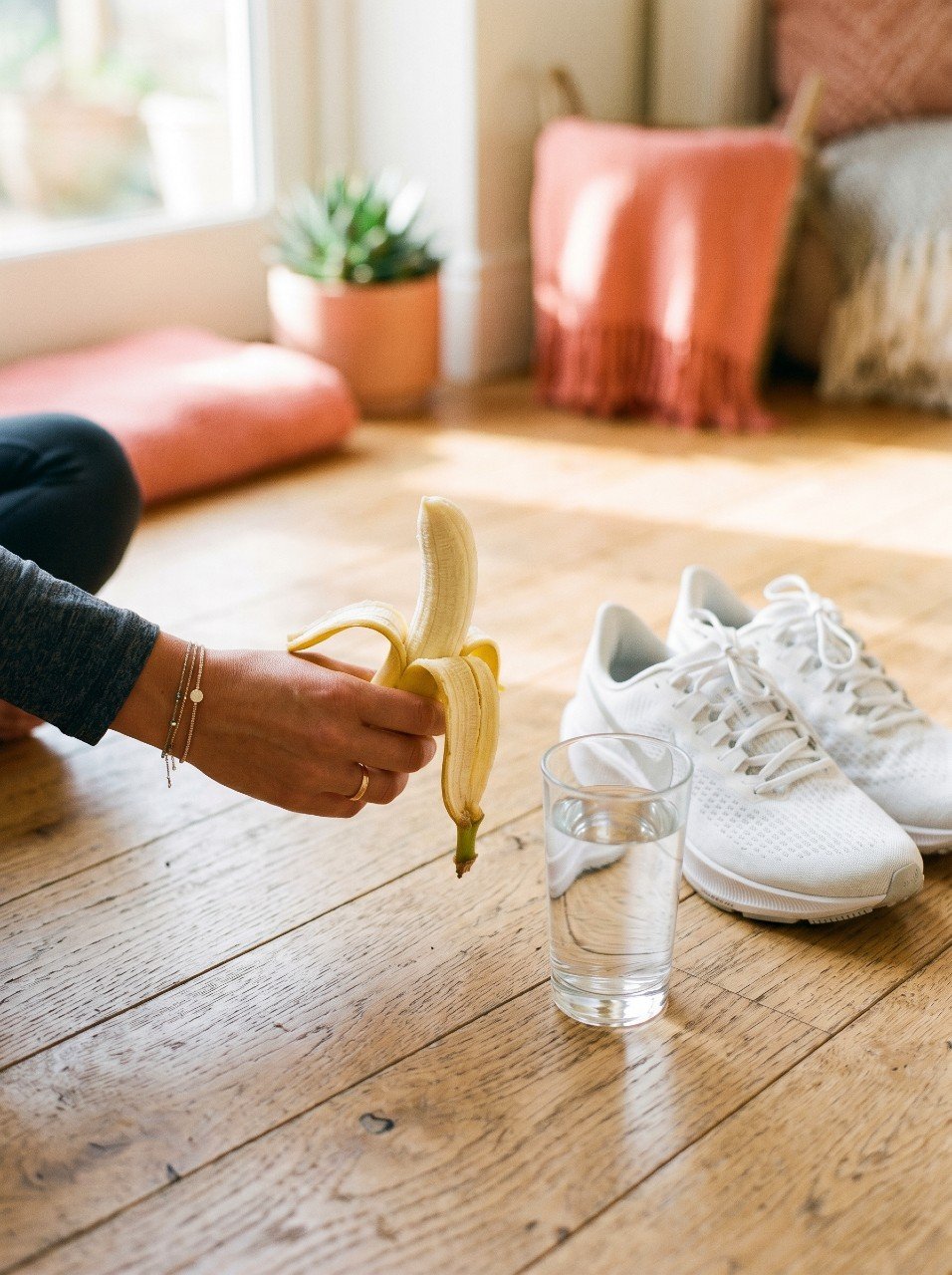
For years now, my pre-workout routine has been embarrassingly simple: a banana. Sometimes with a spoonful of natural yoghurt if I have five minutes, sometimes straight out of the peel while I'm tying my trainers. No special powder, no expensive bars with ingredients I can't pronounce.
What I've found — and this holds up whether I'm doing strength work or a long walk — is that the combination of natural sugars and fibre gives me steady, even energy through the session.
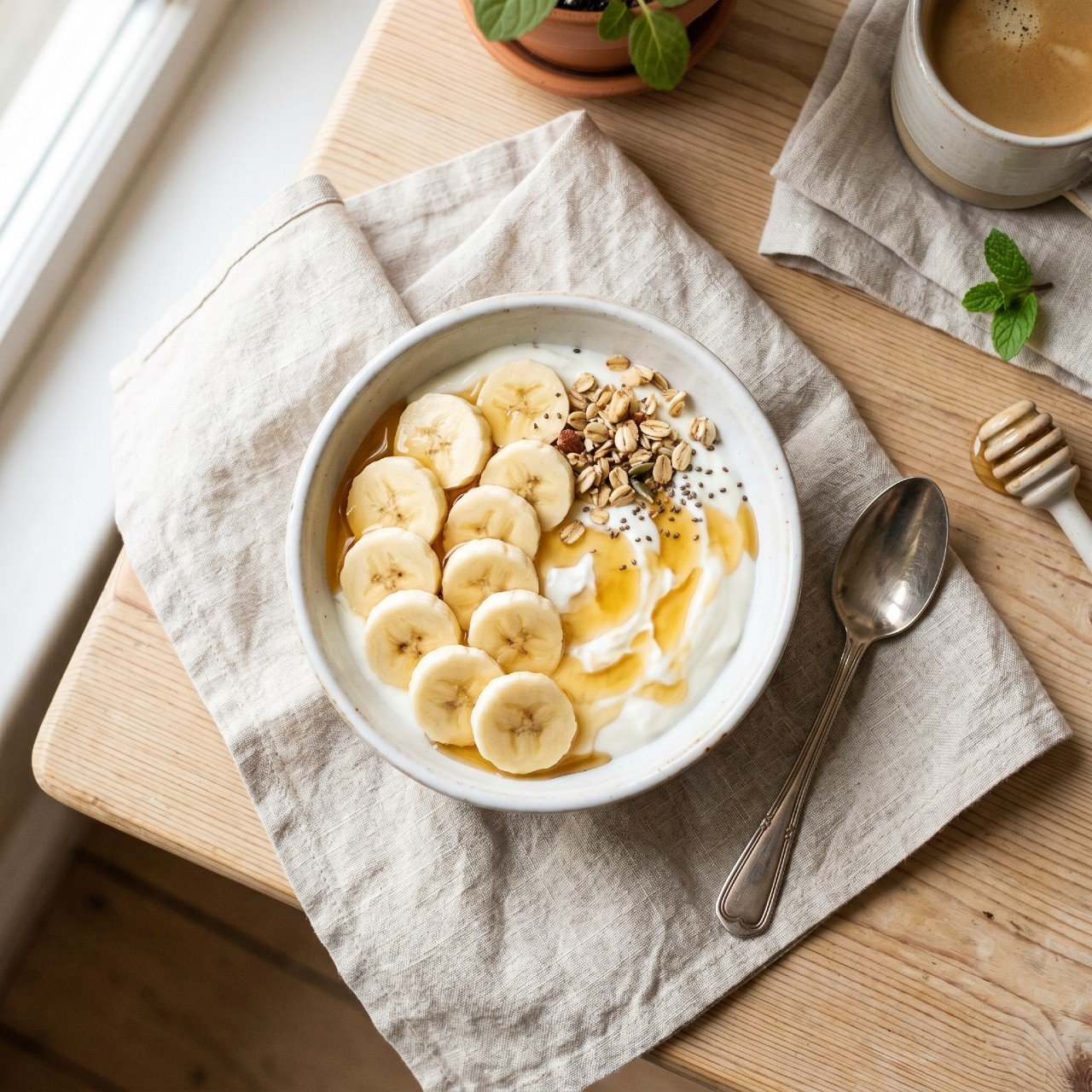
No crash halfway through, no that-wasn't-quite-enough feeling ten minutes in. And on the days I eat one in the morning, I'm consistently less likely to find myself staring into the fridge at 11 am, wondering what went wrong.
That's not a controlled trial. But I've been paying close attention to how food affects my body for a long time, and the banana earns its place every single time.
If you're not sure where to start with this, pick one time of day when you tend to reach for something — mid-morning, pre-workout, or afternoon — and swap it for a banana for two weeks. Just watch how your hunger changes between meals. That's it.
Key Answers At A Glance
What are the main benefits of bananas for weight loss? Bananas support weight loss through high fibre content (3.07 g per medium banana), which promotes fullness and slows digestion. Their resistant starch — especially in greener bananas — helps stabilise blood sugar and supports fat burning. At around 105 calories each, they're a nutrient-dense, low-calorie option that satisfies hunger far better than processed snacks.
Are bananas too high in sugar for a weight-loss diet? No. Despite containing natural sugars, bananas have a low to medium glycaemic index of 42–62, meaning they don't cause rapid blood sugar spikes. Their fibre and resistant starch slow sugar absorption, making them a stable, satisfying choice compared to processed high-sugar foods.
How many bananas should a woman eat per day? The USDA recommends approximately two cups of fruit daily for adults, which equates to roughly one to two medium bananas. This is a reasonable and realistic daily amount as part of a balanced, whole-food diet.
Big Nutritional Bang For A Low Calorie Count
A medium banana: 105 calories. That's the cost of entry. What you get back is 11% of your daily fibre, 25% of your B6, 9% of your potassium, vitamin C, magnesium, copper, and manganese. You'd struggle to find that kind of nutritional return from anything else in the fruit bowl at the same calorie price.
This is what actually makes bananas worth eating for weight loss — not one magical compound, but the whole package working together. You're not trading calories for empty fuel. You're trading 105 calories for something that keeps you full, feeds your gut, supports your hormones, and gives your body the raw materials it needs to run properly.
That's a good deal. A really good deal.
Subscribe For More Real-World Nutrition Advice
If you found this useful, there's plenty more where it came from. Mary James shares practical, science-backed advice for women who want to lose weight sustainably — no fads, no guilt, no generic "eat less, move more" platitudes.
The Bottom Line
Bananas are one of the most practical, affordable, and genuinely effective foods you can add to a weight-loss diet. They're low in calories, high in filling fibre, rich in resistant starch that helps stabilise blood sugar, and packed with nutrients that matter especially for women — particularly those navigating perimenopause.
The "bananas are fattening" myth is based on a misunderstanding of how carbohydrates work. When you look at the actual numbers — the GI score, the fibre content, the calorie-to-nutrient ratio — bananas come out looking very good indeed.
Eat them slightly green for maximum resistant starch. Pair them with yoghurt or a handful of nuts to further slow the glycaemic response. Eat one before a workout for steady energy. And stop feeling guilty about enjoying one of nature's best snacks.
Glossary Of Key Terms
- Resistant Starch: A carbohydrate that resists digestion in the small intestine, acting like fiber to improve insulin sensitivity and support fat burning.
- Glycemic Index (GI): A ranking system for carbohydrates based on how slowly or quickly they increase blood glucose levels.
- Pectin: A type of soluble fiber found in fruits that assists in slowing digestion and promoting the feeling of fullness.
- Potassium: An essential mineral and electrolyte that helps regulate fluid balance and blood pressure.
- Vitamin B6: A water-soluble vitamin necessary for neurotransmitter synthesis, including those that regulate sleep and mood.
- Perimenopause: The transitional phase leading up to menopause, often characterized by changes in insulin sensitivity, blood pressure, and mood.
- Soluble Fiber: Fiber that dissolves in water to form a gel-like material, helping to lower blood cholesterol and glucose levels.
- Short-Chain Fatty Acids: Byproducts of the fermentation of resistant starch in the gut that aid in metabolic health and fat reduction.
- Satiety: The physical feeling of being full and satisfied after eating, which helps prevent overconsumption of calories.
- Magnesium: A mineral found in bananas that supports muscle relaxation, energy production, and overall recovery.
FAQ
What Are The Main Benefits Of Bananas For Women Trying To Lose Weight?
Bananas offer several weight-loss-friendly benefits in one convenient package. Their fibre content — 3.07 g per medium banana — promotes fullness and slows digestion, reducing overall calorie intake. Resistant starch, especially in greener bananas, helps stabilise blood sugar and supports fat burning. At around 105 calories with a low to medium glycaemic index, they're a satisfying snack that won't derail your efforts.
Are Bananas Too High In Sugar To Eat On A Diet?
No. While bananas do contain natural sugars, their glycaemic index of 42–62 puts them firmly in the low-to-medium range — well below white bread, rice cakes, or most processed snacks. Their fibre and resistant starch slow sugar absorption significantly, meaning your blood sugar rises gradually rather than spiking.
Is It Better To Eat A Green Or Yellow Banana For Weight Loss?
If weight management and blood sugar control are your priority, slightly greener bananas are the better choice. They contain up to 8.5 g of resistant starch versus 2–5 g in ripe yellow bananas, along with a lower glycaemic index. That said, ripe bananas are an excellent option for quick energy around workouts.
How Many Bananas Should I Eat Per Day?
One to two medium bananas per day is a sensible and sustainable amount for most women. The USDA recommends roughly two cups of fruit daily for adults. Factor the calorie count (around 105 per medium banana) into your daily intake and you have nothing to worry about.
Can Eating Bananas Every Day Lead To Weight Gain?
Not if you're eating them in reasonable quantities as part of a balanced diet. Like any food, eating dozens of bananas a day would tip your calorie balance — but one or two daily is perfectly compatible with weight loss. The fibre and satiety effects actually make overeating less likely, not more.
Are Bananas Good For Women In Perimenopause?
Yes, particularly so. The potassium in bananas supports healthy blood pressure as oestrogen levels decline. The resistant starch helps manage the increased insulin resistance common in perimenopause. And the vitamin B6 supports serotonin and melatonin production, which can help with the mood changes and sleep disruption that often accompany this life stage.
When Is The Best Time To Eat A Banana?
Before a workout is ideal — the combination of natural sugars and fibre provides steady energy without a mid-session crash. In the morning, yoghurt or porridge is another excellent option, keeping you full through to lunch. There's no bad time, really. The best time to eat a banana is whenever it replaces something less nutritious.