
Protect Your Joints, Prevent Setbacks, And Keep Flowing For Years — With Science-Based Injury Prevention Strategies Built For Real Women
B.K.S. Iyengar
Light on Yoga
Yoga teaches us to cure what needs not be endured and endure what cannot be cured.
Summary (TL;DR)
To avoid yoga injuries, beginners should prioritize safety through mindful practices. Common injuries include hamstring strains and lower back pain, often from pushing too hard. Recognize pain as a signal to stop, and honor daily changes in your body.
Choose instructors with RYT certification who offer modifications and proper alignment cues. Adopt a beginner mindset, focusing on movement quality, and avoid the comparison trap by keeping your eyes on your own mat to ensure a safe, sustainable practice and protect your joint health.
You stepped onto your mat expecting peace. A sanctuary. The soft stretch of muscle and the quiet of a focused mind.
What nobody warned you about: yoga injuries are far more common than the wellness world admits. Research published in the Orthopaedic Journal of Sports Medicine found yoga-related musculoskeletal injuries are a rising concern, with women disproportionately represented in the data.
You don't have a yoga problem. You have a yoga safety problem — and the fix is simpler than you think.
This guide gives you 7 evidence-based strategies to prevent yoga injuries, protect your joint health, and build the kind of mindful movement practice that supports your lean body goals for years to come.
Medical & Referral Disclaimer
This article is for informational purposes only and is not a substitute for professional medical advice, diagnosis, or treatment. If you experience pain or suspect an injury, consult a qualified healthcare professional before continuing your practice.
Key Takeaways
- Listen to your body’s "Stop" signals: Sharp, pinching, or shooting pain is a non-negotiable signal to stop immediately; healthy stretching should only feel like warmth or mild tension.
- Respect daily physical fluctuations: Your range of motion is not static and changes daily based on hormonal cycles, sleep quality, hydration, and stress levels.
- Prioritize a 5-minute warm-up: Always include a brief routine of spinal mobility, wrist prep, and light cardio to make tissues pliable and significantly reduce the risk of muscle tears.
- Use props as performance tools: Yoga blocks, straps, and bolsters are precision instruments that protect your joints and maintain alignment when your current flexibility is limited.
- Select qualified instruction: Ensure your teacher holds at least a registered yoga teacher (RYT) credential and actively offers pose modifications for different body types.
- Vary your yoga styles: To prevent repetitive stress injuries, aim for 3–4 sessions per week and rotate between different styles like hatha, vinyasa, and restorative practices.
What Are the Most Common Yoga Injuries Women Experience?
The most common yoga injuries include hamstring strains, lower back pain, wrist pain, knee strain, and neck injuries. These occur most often when practitioners push beyond their current range of motion, skip warm-ups, or practice without proper alignment cues from a qualified instructor.
Yoga is one of the most beneficial practices for women's long-term health — but it is not inherently injury-proof. Research from the National Center for Complementary and Integrative Health shows that yoga injuries are more common than most practitioners realize, with musculoskeletal strains being the most frequently reported issue.
For women specifically, hormonal fluctuations during the menstrual cycle and perimenopause can temporarily increase joint laxity — making overstretching symptoms more likely at certain times of the month. This is not a reason to avoid yoga. It is a reason to practice it smarter.
The Five Most Common Yoga Injury Sites
| Injury Type | Body Area Affected | Common Cause | Prevention Strategy |
|---|---|---|---|
| Hamstring Strain | Back of upper thigh | Overstretching in forward folds | Use a strap; soften the knee |
| Lower Back Pain | Lumbar spine | Rounding the back; forcing deep folds | Engage core; place blocks under hands |
| Wrist Pain in Yoga | Wrist joint and tendons | Weight-bearing without wrist prep | Spread fingers wide; try fist variations |
| Knee Strain | Medial/lateral ligaments | Incorrect alignment in Warrior poses | Stack joints precisely; avoid torquing |
| Neck Injury | Cervical spine | Unsupported inversions; forward head posture | Never force headstands; keep gaze soft and neutral |
Understanding where yoga injuries happen is the first step in avoiding yoga injuries for good.
When To Stop — No Negotiation
The golden rule of safe yoga practice: sharp, pinching, or shooting pain = stop now. The healthy sensation of a deep stretch is warmth, mild tension, or what some call a "good burn." Anything that feels like tearing, electric current, or joint pressure is a signal your body is at its limit — or past it.
Minor muscle soreness 24-48 hours after class is normal. Pain during a pose is not.
Why Does The "Comparison Trap" Cause Yoga Injuries?
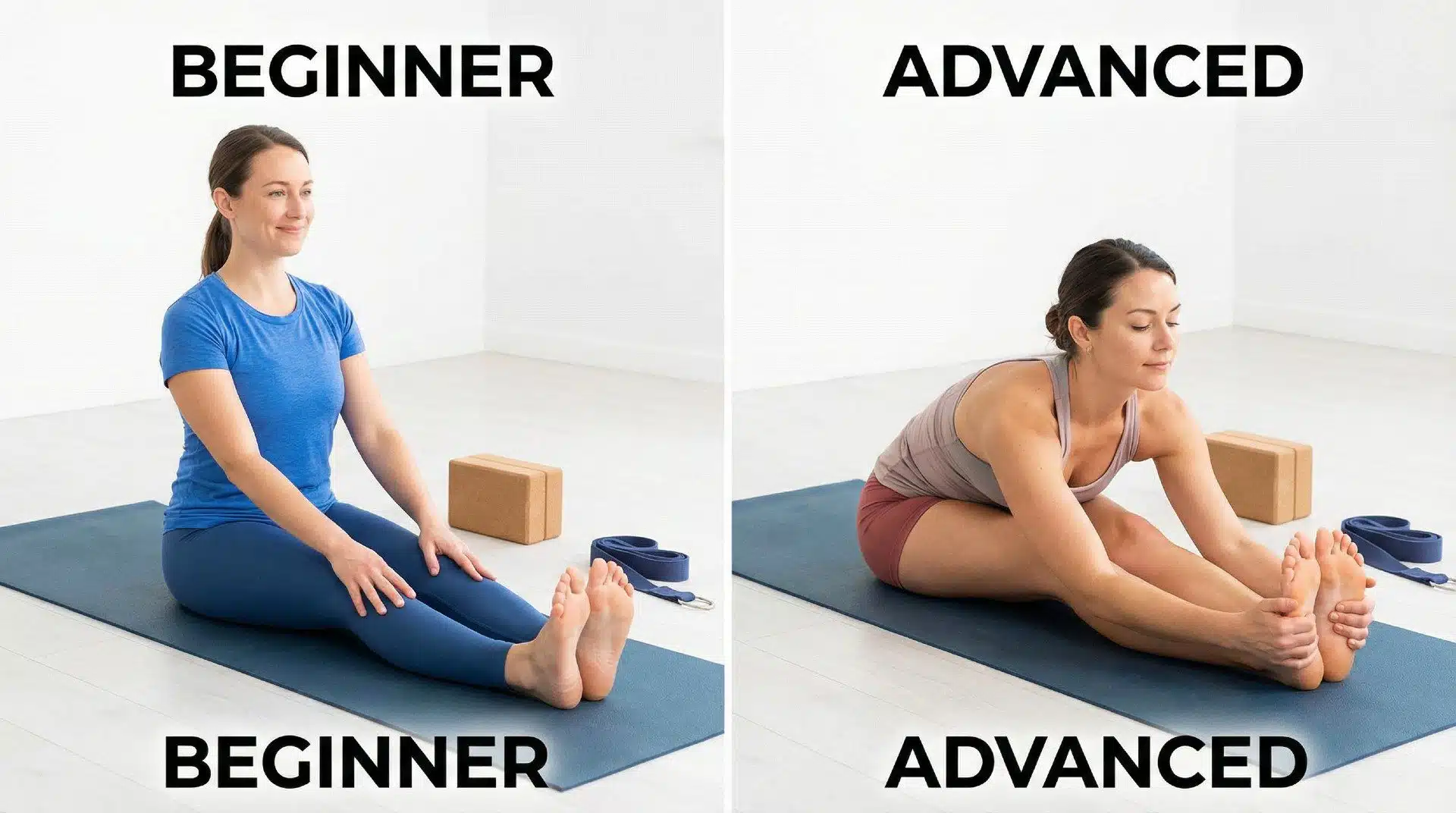
The comparison trap causes yoga injuries because it drives practitioners to attempt poses their bodies aren't prepared for. Your physical limits shift daily based on sleep, stress, hydration, and hormonal cycles. Matching someone else's range of motion — rather than your own — is one of the leading causes of overstretching and soft tissue strain.
You've done it. We all have. You glance sideways at the woman beside you in class, her forehead resting easily on her knee, and you quietly decide to push just a little harder. That decision is where injuries are born.
Your Body Changes Day To Day
Flexibility training is not linear, and your available range of motion is not static. These factors shift how far your muscles and connective tissue can safely stretch on any given day:
- Sleep quality: Poor sleep elevates inflammatory markers and reduces tissue elasticity
- Hydration: Dehydrated connective tissue is more prone to microtears under load
- Stress hormones: Elevated cortisol creates muscle tension that limits the natural range of motion
- Hormonal cycle: Oestrogen fluctuations affect ligament laxity — sometimes increasing injury risk, sometimes significantly reducing available flexibility
For women navigating hormonal shifts, pairing a mindful yoga practice with strategies for supporting hormonal balance naturally can meaningfully improve both recovery and practice quality.
The Fix: Internal Focus Over External Competition
Make one rule for yourself in every class: eyes on your own mat. Your yoga practice is a dialogue between you and your body — not a performance. Progress in yoga is measured by consistency, body awareness, and longevity — not by how close your forehead gets to your shin.

How Do You Choose A Yoga Instructor Who Prioritises Your Safety?
Look for instructors with Registered Yoga Teacher (RYT) status from Yoga Alliance, which requires a minimum of 200 hours of accredited training. A safe instructor offers pose modifications, verbally cues alignment, never physically forces students into positions, and creates an environment where asking questions is actively welcomed.
The explosion of yoga's popularity has created a wide spectrum of instructor quality. At one end: highly trained teachers who understand anatomy, yoga alignment, and injury prevention. At the other end: weekend-certified instructors who lack the depth to safely guide beginners.
What To Look for In A Yoga Teacher
The credential baseline: Yoga Alliance's RYT designation indicates a minimum of 200 hours of accredited training (RYT-200) or 500 hours (RYT-500). An RYT-500 with training in therapeutic or anatomy-focused yoga is ideal for injury-prone students or anyone new to the practice.
Green flags from a qualified instructor:
- Offers modifications for every pose, accommodating multiple body types.
- Walks the room to observe form — not just demonstrating from the front.
- Asks about existing injuries before class begins.
- Encourages props without making students feel lesser for using them.
- Consistently distinguishes between "healthy sensation" and "pain" in their cueing.
Red flags worth walking away from:
- Physically pressing or pushing students deeper into poses.
- Shaming the use of props or modifications.
- No alignment cues beyond "get into position".
- A one-size-fits-all approach in a beginner-level class.
Working with a certified personal trainer — especially one with movement or yoga specialisation — can also give you the one-on-one alignment feedback that group classes cannot always provide.
What Is the "Beginner Mindset" And How Does It Prevent Yoga Injuries?
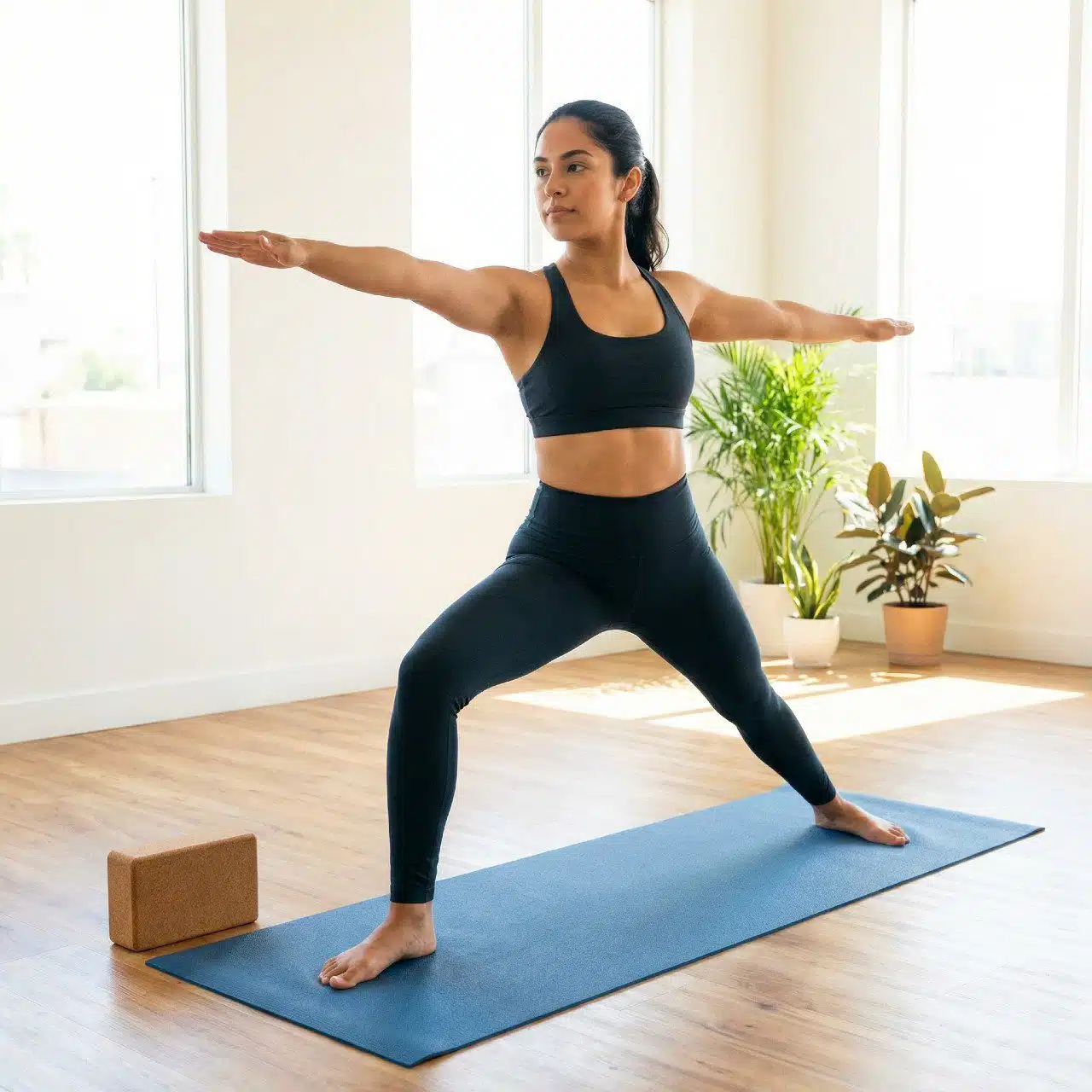
The beginner mindset means approaching each practice session with openness and without ego — regardless of how long you've been practising. It prevents yoga injuries by keeping focus on the quality of movement rather than the depth of pose, and by giving the body time to adapt progressively rather than forcing rapid gains.
Every advanced practitioner you admire started exactly where you are: on a mat, figuring out their feet.
The beginner mindset is not about being a novice. It is about bringing genuine freshness and humility to every single practice — even if you've been flowing for five years. This distinction separates practitioners who stay injury-free for decades from those who spend months recovering from preventable strains.
Proper Pacing: Ease In, Ease Out
The safest way to enter and exit any yoga posture is with slow, deliberate control. Rushing into a pose — or snapping out of one — is when microtears happen. Think of your muscles as warm taffy: they move safely when they're warm and guided, and snap when they're cold or forced.
The "ease in, ease out" framework:
- Inhale to prepare the body and lengthen through the spine.
- Move on the exhale, slowly and with full intention.
- Hold for 3-5 breaths to allow the tissue to adapt.
- Exit on an inhale, with the same controlled pace you entered.
Building A Progressive Practice
For yoga beginners — or anyone returning after a break — foundational strength should precede advanced flexibility training. Consider this phased approach:
- Weeks 1-4: Hatha yoga basics — standing postures, seated folds with props, foundational breath work.
- Weeks 5-8: Introduce gentle Vinyasa flow alignment; add balance poses using wall support.
- Months 3-6: Moderate Vinyasa with appropriate warm-ups; introduce block modifications and strap exercises.
- Month 6+: More advanced inversions and binds — with instructor guidance only.
This progressive approach to yoga for beginners dramatically reduces injury rates while building the core stability and body awareness that protect you long-term.
How Do Yoga Props Actually Prevent Injuries?
Yoga props — blocks, straps, and bolsters — prevent injuries by bringing the floor closer to you, extending your reach safely, and supporting neutral spine alignment when your current flexibility doesn't yet allow the full expression of a pose. They eliminate the need to force depth, which is the primary driver of overstretching symptoms and chronic strain.
Here is the mindset shift that will transform your practice: yoga props are not beginner tools. They are precision instruments used by advanced practitioners to access poses more safely and with greater integrity than unassisted flexibility would allow.
Iyengar yoga — considered one of the most anatomically precise styles in the world — is built on prop use as a foundational principle, not an afterthought for those who "can't do the real thing."
How Each Prop Protects A Specific Body Area
Yoga Blocks:
- Bring the floor to your hands in standing folds, preventing the rounding of the lower back.
- Support the sacrum in reclined hip openers to reduce SI joint stress.
- Elevate the seat in sitting poses to allow a neutral pelvic tilt.
Yoga Straps:
- Act as an extension of your arms in seated forward folds, keeping the spine long and safe.
- Allow a safe bind in shoulder stretches without compressing the shoulder joint.
- Maintain leg extension in reclined poses — critical for hamstring strain prevention.
Bolsters:
- Support the spine in restorative poses, eliminating passive tension in the back muscles.
- Provide chest and hip support in prone backbends for practitioners with wrist pain in yoga.
- Elevate the hips in seated meditation for longer, more sustainable practice.
Picture a strap in seated Paschimottanasana: instead of rounding your lumbar spine to reach your feet — risking disc injury — the strap lets you maintain a long, safe spine at whatever angle your hamstrings allow today. That is injury prevention made tangible.
Why Is the Warm-Up The Most Important Part Of Your Yoga Session?
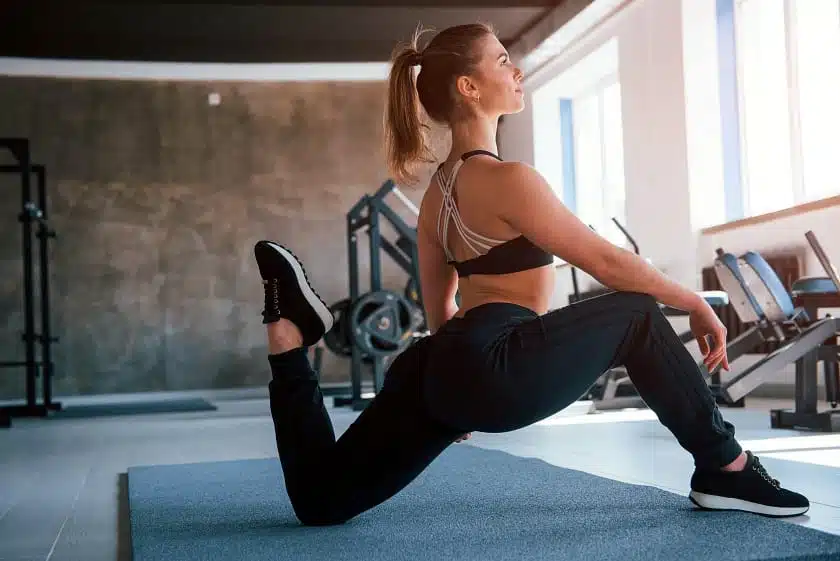
Warming up before yoga prepares muscles, joints, and connective tissue for the demands of your practice by increasing blood flow and tissue temperature. A 5-10 minute warm-up significantly reduces the risk of muscle tears, joint strain, and overstretching by ensuring tissues are pliable before any deep stretching begins.
"Cold" muscles and connective tissue are considerably less pliable than warmed tissue. Beginning a yoga session with deep stretches — no warm-up — is one of the most reliable ways to end up with a pulled hamstring or strained lower back before the second pose.
This is foundational sports medicine: unwarmed tissue has less extensibility and is significantly more prone to microtears when stretched under load.
A 5-Minute Yoga Warm-Up Routine
Complete this sequence before every session — no exceptions:
1. Cat-Cow (1 minute)
On hands and knees, alternate arching and rounding your spine in sync with your breath. Mobilises the entire spine and prepares back muscles for both forward folds and backbends.
2. Wrist Circles and Wrist Extensions (1 minute)
Essential if your practice includes Downward Dog, plank, or any weight-bearing arm balance. Wrist prep exercises are the most consistently skipped warm-up step in yoga — and one of the most consequential to skip.
3. Hip Circles / Controlled Articular Rotations (1 minute)
Standing on one foot, draw slow, deliberate circles with your lifted knee. Lubricates the hip socket and prepares hip flexors for Warriors, low lunges, and deep folds.
4. Light Cardio — March in Place or Gentle Jumping Jacks (2 minutes)
Elevates heart rate, increases blood flow to your extremities, and raises core muscle temperature — giving tissues the elasticity they need for deeper stretching safely.
Post-session muscle recovery: Allow 5 minutes of restorative postures (Child's Pose, Supine Spinal Twist, Legs-Up-The-Wall) before Savasana. Cool-down is not optional — it is where your nervous system registers the work it just did.
How Does Practice Frequency And Variety Protect Long-Term Joint Health?
Practicing yoga consistently while varying styles prevents repetitive stress injuries, caused by repeatedly loading the same joints, tendons, and muscle groups. Cross-training across yoga styles distributes stress load across different tissues, supporting long-term joint health and dramatically reducing overuse injury risk.
The most sustainable yoga practice is built on one principle: consistency over intensity.
Practicing three to four times per week at moderate intensity will build more strength, flexibility, and body awareness than forcing your way through one brutal class a week. And varying your styles ensures you're not repeatedly stressing the same joints, tendons, and muscle groups.
Yoga Style Variety: A Joint Protection Strategy
| Yoga Style | Primary Benefit | Joint Focus | Best For |
|---|---|---|---|
| Hatha Yoga Safety | Foundational alignment | All joints, steady load | Beginners; injury recovery |
| Vinyasa Flow | Cardiovascular strength | Wrists, shoulders, hips | Intermediate practitioners |
| Yin Yoga | Deep connective tissue | Hip, spine, joint capsules | All levels; evening practice |
| Restorative Yoga | Nervous system recovery | Low load; fully supported | Stress recovery; active recovery days |
| Iyengar Yoga | Precision alignment | All joints; prop-supported | Chronic pain management; rehabilitation |
For women over 40, incorporating Yin and Restorative yoga is particularly valuable for preserving joint health and supporting the ageing process — two concerns that intensify during perimenopause and menopause.
Core Stability: The Invisible Injury Shield
One of the most underestimated elements of yoga injury prevention is core stability. A strong, engaged core protects the lower back in every yoga pose — from Downward Dog to Warrior Three to Boat Pose. Without it, the lumbar spine absorbs forces it wasn't designed to manage alone.
Building your core through yoga and complementary fat-burning workouts supports your practice and accelerates your lean body goals simultaneously — two birds, one mat.
Which Yoga Poses Should Women Modify Or Approach With Caution?
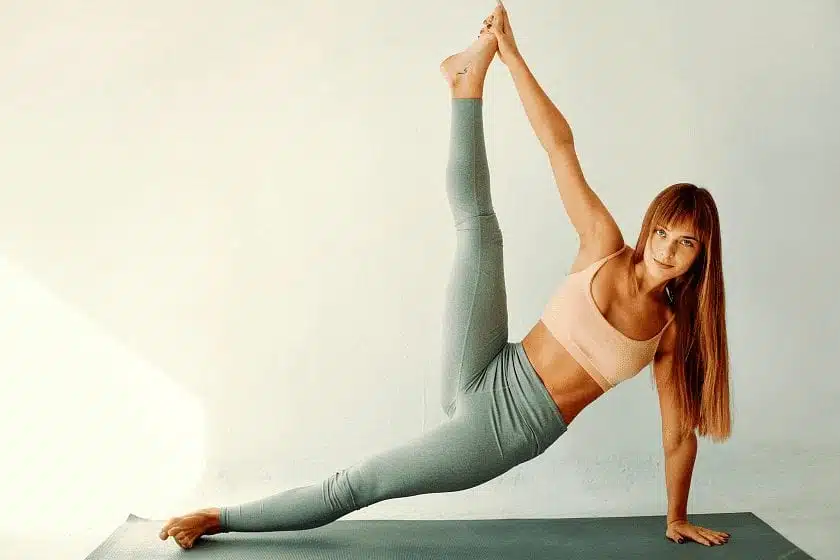
Women with specific health conditions, lower back issues, or limited current flexibility should approach headstands, deep backbends, and intense hamstring stretches with caution and proper preparation. Modifications using yoga props and beginner-friendly variations allow every woman to access the benefits of these poses safely.
Not every pose is appropriate for every body at every moment — and that is not a limitation. It is an invitation to find the variation that serves your body today.
High-Risk Poses And Their Safer Alternatives
Full Headstand (Sirsasana)
- Risk: Cervical spine compression, fall risk without developed shoulder strength.
- Safer alternative: Dolphin pose (forearms on mat) to build shoulder and core foundation; supported headstand against a wall only, with supervision.
Wheel Pose / Urdhva Dhanurasana (Full Backbend)
- Risk: Lumbar spine compression if thoracic mobility is limited; wrist strain.
- Safer alternative: Supported Bridge pose with a block under the sacrum; Supported Fish pose with a bolster.
Standing Forward Fold with Straight Legs
- Risk: Hamstring strain, lumbar rounding, disc stress.
- Safer alternative: Generous knee bend plus strap around feet; blocks under hands.
Pigeon Pose
- Risk: Medial knee stress for practitioners with limited hip external rotation.
- Safer alternative: Reclined Figure-Four (Supta Kapotasana) — all the hip benefits, full spinal support.
These are not workarounds. They are the poses — done in a way your body can access safely now, building toward fuller expression over time.
Physical therapy and yoga share a core philosophy: progressive loading, joint protection, and gradual range-of-motion gains. If you're managing chronic pain management or recovering from an injury, a physical therapist's clearance before resuming yoga is a genuinely smart first step — not an overreaction.

Your Next Step: A Lean Body Built To Last
You now know how to protect yourself on the mat. You understand the risks, the tools, and the mindset that separates a sustainable practice from a painful one.
The next step is building the complete foundation — nutrition, movement, hormones — that supports a lean, strong body long-term.
Join thousands of women inside our free community and receive the Lean Body Formula Special Report — 10 research-backed actions that support permanent weight loss, written specifically for women's bodies and real lives.
No fad diets. No extreme plans. Just what the science actually supports.
Want The Habits Behind Lasting Weight Loss? Get the free guide: 10 research-backed habits that help women lose body fat and keep it off, with no extreme diets. Send Me The Free Guide.
The Bottom Line
Yoga for longevity starts with yoga safety. Yoga is one of the most powerful tools in a woman's fitness toolkit — for flexibility training, core stability, stress management, and mindfulness meditation. But its power is directly proportional to how intelligently you use it.
You don't get yoga injuries because yoga is dangerous. You get them because our culture rewards intensity over intelligence, and speed over sustainability.
The women who flow pain-free for decades are not the most flexible or the most advanced in the room. They are the most consistent, the most mindful, and the most willing to honour what their body needs today — rather than forcing what they want it to do tomorrow.
That is yoga for longevity. Build that practice. Keep flowing.
For a complete approach to sustainable weight loss designed for real women — one that works with your yoga practice rather than competing against it — explore the resources throughout this site.
Glossary Of Key Terms
- Joint Laxity: A condition where ligaments are loose, often influenced by hormonal fluctuations, which can increase the risk of overstretching and joint instability.
- Musculoskeletal Injury: Damage affecting the muscles, ligaments, tendons, or bones; the most common type of injury reported in yoga practice.
- Registered Yoga Teacher (RYT): A credential issued by the Yoga Alliance indicating that an instructor has completed a minimum of 200 or 500 hours of accredited training.
- Prop: Physical tools such as blocks, straps, and bolsters are used to support alignment, extend reach, and prevent the forcing of poses.
- Vinyasa Yoga: A style of yoga characterized by stringing postures together so that you move from one to another, seamlessly, using breath.
- Yin Yoga: A slow-paced style of yoga that targets deep connective tissues, such as the fascia, ligaments, and joints.
- Hatha Yoga: A foundational yoga style focused on steady poses and alignment, often recommended for beginners or those in injury recovery.
- RICE Protocol: A standard first-aid treatment for acute injuries involving Rest, Ice, Compression, and Elevation.
- Repetitive Stress Injury: Damage to the body caused by repeatedly performing the same motion or loading the same joints without adequate variety or recovery.
- Core Stability: The ability of the muscles in the torso to support the spine and pelvis, acting as a protective mechanism during physical movement.
FAQ
What Are The Most Common Yoga Injuries, And How Are They Prevented?
The most common yoga injuries are hamstring strains, lower back pain, wrist pain, and knee strain. Prevention centres on three pillars: consistent warm up exercises before every session, proper form through qualified instruction, and yoga props — blocks, straps, and bolsters — to support alignment rather than forcing depth. Never push through sharp or pinching pain, regardless of what others in your class are doing.
How Do I Know If I'm Overstretching During Yoga?
Overstretching symptoms include sharp, shooting, or stabbing pain (distinct from normal stretch sensation), pain that persists beyond 24-48 hours after class, swelling around a joint, and weakness or instability in the area. Healthy stretching feels like warmth and mild tension in the muscle belly. Pain that is electrical, stabbing, or located inside a joint is a stop signal — exit the pose immediately.
Can I Do Yoga If I Have Lower Back Pain Or A Prior Injury?
In many cases, yes — with modifications and medical clearance. The American College of Sports Medicine and research consistently support gentle yoga as a rehabilitation tool for lower back pain. However, certain poses (deep unsupported forward folds, unsupported backbends, inversions) should be avoided until cleared by a sports medicine physician or physical therapist. Yin yoga and Restorative yoga are frequently recommended starting points for chronic pain management.
How Often Should I Practice Yoga Without Risking Injury?
Three to four sessions per week is the optimal range for most women — enough frequency to build consistency and results, with sufficient recovery time to prevent repetitive stress injuries. Vary your yoga styles across sessions (Vinyasa for energy and strength, Yin for recovery, Hatha for alignment refinement) to distribute load across different joint systems and avoid overuse.
What Should I Do Immediately After A Yoga Injury?
Stop the practice immediately. Apply the RICE protocol (Rest, Ice, Compression, Elevation) for the first 24-48 hours for acute strains. Consult a sports medicine physician or physical therapist if pain persists beyond 48 hours, if you heard a pop at the time of injury, or if you experience significant swelling, bruising, or measurable loss of range of motion. Do not return to yoga practice until you have received medical clearance.
Is Yoga Safe For Beginners With No Prior Flexibility?
Yes — yoga for beginners is appropriate at any starting flexibility level. Flexibility is not a prerequisite for yoga; it is an outcome of consistent, patient practice. Beginners should start with Hatha yoga, use props freely, and seek beginner-specific classes. A qualified RYT instructor will provide modifications matched to your current range of motion.
Should I Use Yoga Props Like Blocks And Straps If I Am A Beginner?
Yes. Blocks, straps, and blankets help you reach alignment without forcing range you do not have yet — which is how many yoga injuries start. Props are training tools, not cheats. Use them whenever a pose feels unstable, pinched, or beyond a comfortable stretch, and reduce them only as control and mobility improve.