
Simple, Sustainable Nutrition Principles Backed By Science And Designed For Real Women Living Real Lives
Michael Pollan
In Defense of Food
Eat food. Not too much. Mostly plants.
The Executive Summary
Clean eating prioritizes whole, minimally processed foods like fruits, vegetables, and lean proteins, improving women's health by supporting hormonal balance and reducing inflammation. Increase produce intake for vital nutrients and fiber, swapping refined grains with whole grains to stabilize blood sugar and boost energy.
Reading food labels helps avoid hidden sugars, while portion control and hydration are also key. Sustainable clean eating emphasizes flexibility over rigid rules for long-term success, focusing on food quality rather than calorie counting.
You have tried cutting carbs. You have tried counting calories. You have tried the plans that promise transformation in 21 days. And somewhere between the meal-replacement shakes and the lists of forbidden foods, eating started to feel like a punishment.
Here is the truth nobody in the diet industry wants you to hear: you do not have a willpower problem. You have a food environment problem. And clean eating — real, sustainable, undramatic clean eating — is the reset that actually works.
Clean eating is not a diet. It is a return to the way food was meant to be eaten: whole, minimally processed, and as close to its natural state as possible. For women navigating busy lives, hormonal shifts, and the relentless pressure of wellness culture, clean eating habits are the antidote to food exhaustion — and the foundation of every lasting transformation.
This guide gives you the five core clean eating habits that nutrition science supports, with practical strategies you can start today.
Medical & Referral Disclaimer
This article is for informational and educational purposes only. It is not a substitute for personalised dietary advice from a qualified healthcare professional or registered dietitian.
Key Takeaways
- Clean eating centres on whole, nutrient-dense foods and reducing ultra-processed options — not perfection.
- More fruits and vegetables provide the vitamins, minerals, and fibre that most women are chronically under-consuming.
- Whole grains provide sustained energy through complex carbohydrates; refined grains cause blood sugar spikes and crashes.
- Hidden sugars, salt, and unhealthy fats in packaged foods undermine health goals — reading labels is a non-negotiable skill.
- Portion awareness — not restriction — supports healthy weight management without deprivation.
- Proper hydration is foundational to every metabolic and cognitive function in your body.
- Clean eating is sustainable precisely because it is flexible, not rigid.
What Is Clean Eating And Why Does It Matter For Women's Health?
Clean eating is a nutrition approach built on consuming whole, minimally processed foods in their most natural form — including lean proteins, complex carbohydrates, healthy fats, fruits, and vegetables — while limiting ultra-processed products high in refined sugar, excess sodium, artificial additives, and low-quality fats. It is not a diet with rules to follow and break; it is a food philosophy that prioritises food quality over calorie counting.
For women specifically, the quality of food consumed has a disproportionate impact on health outcomes compared to men. Research published in journals like the British Medical Journal consistently links ultra-processed food consumption to higher rates of hormonal disruption, inflammatory conditions, and metabolic issues in women.
Hormonal balance and metabolic health in women are both directly influenced by the inflammatory load of the foods you eat daily. Clean eating matters because food is information. Every meal you eat sends biochemical signals that influence your hormones, gut microbiome, energy production, mood, and body composition.
When the food is whole and nutrient-dense, those signals are clear and supportive. When the food is ultra-processed and chemically complex, the signals become noise — and your body responds with fatigue, inflammation, and weight dysregulation.
Clean Eating vs. Ultra-Processed Eating: At A Glance
| Food Category | Clean Eating Examples | Ultra-Processed Alternatives | Key Difference |
|---|---|---|---|
| Grains | Brown rice, oats, quinoa, whole-grain bread | White bread, instant rice, sugary cereals | Fibre, micronutrients, glycaemic impact |
| Protein | Chicken breast, eggs, legumes, tofu | Deli meats, processed sausages, fast-food chicken | Sodium content, additives, hormone exposure |
| Fats | Avocado, olive oil, nuts, seeds | Margarine, seed oils, packaged snacks | Inflammatory vs. anti-inflammatory profile |
| Sweeteners | Whole fruit, raw honey, dates | Refined sugar, high-fructose corn syrup, artificial sweeteners | Blood sugar response, gut microbiome impact |
| Beverages | Water, herbal tea, black coffee | Fizzy drinks, fruit juice, energy drinks | Hydration quality, sugar load, additives |
Habit #1: How Do You Start Eating More Fruits And Vegetables?
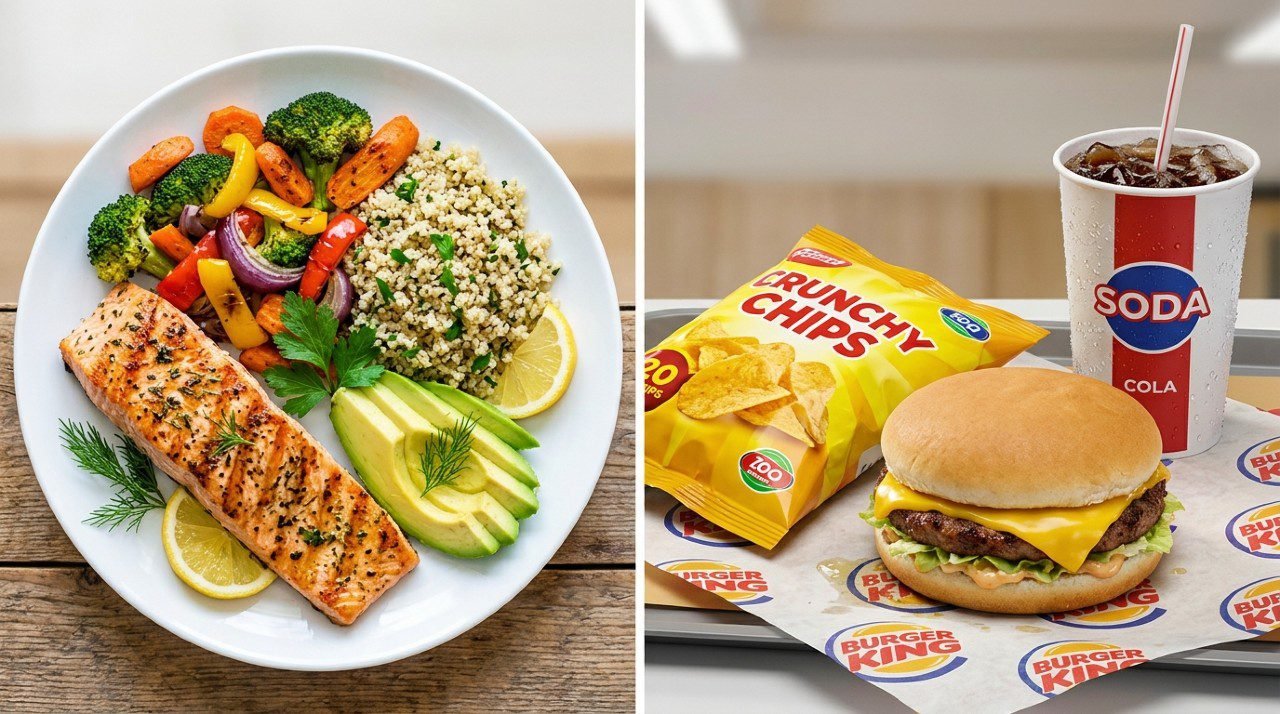
Increasing fruit and vegetable intake is the single most impactful clean eating habit for the majority of women, because most adults consume fewer than half the recommended daily servings. Adding more produce — especially leafy greens, cruciferous vegetables, and whole fruits — delivers the vitamins, minerals, antioxidants, and dietary fibre that support gut health, immune function, and hormonal balance simultaneously.
You do not need to become a salad purist. What you need is a simple system for getting more plants onto your plate without overhauling your entire kitchen.
Why Produce Is The Cornerstone Of Healthy Nutrition
Fruits and vegetables provide the nutrient density that no supplement stack can replicate — because whole foods deliver nutrients within a biological matrix that enhances absorption and synergistic function. Key benefits supported by research include:
- Dietary fibre feeds the gut microbiome, which influences weight regulation, immunity, and mood via the gut-brain axis.
- Antioxidants (polyphenols, carotenoids, flavonoids) combat oxidative stress and support an anti-inflammatory diet profile.
- Micronutrients (magnesium, potassium, B vitamins, and vitamin C) support energy production, cortisol regulation, and sleep quality.
- Water content in produce supports hydration and health without added calories or sugar.
Practical Ways To Eat More Produce Every Day
The barrier to eating more vegetables is rarely knowledge — it is logistics. These strategies remove friction:
- Green smoothies: Add a handful of spinach or kale to any fruit smoothie. You cannot taste it, and you gain significant micronutrient value. This is one of the highest-ROI raw food habits for busy women.
- Double your vegetables at dinner: Whatever portion of vegetables you currently serve, double it. This single change meaningfully increases fibre and micronutrient intake without requiring new recipes.
- Front-load lunch: A large salad or grain bowl with 3-4 different vegetables at lunch delivers the majority of your daily produce requirement before dinner.
- Buy pre-cut and frozen: Frozen vegetables retain up to 90% of their nutritional value and eliminate the prep barrier that causes produce to go to waste.
For women working toward natural belly fat reduction, increasing fibre through vegetables directly supports the gut microbiome balance associated with reduced abdominal fat storage.
Habit #2: Why Should You Replace Refined Grains With Whole Grains?
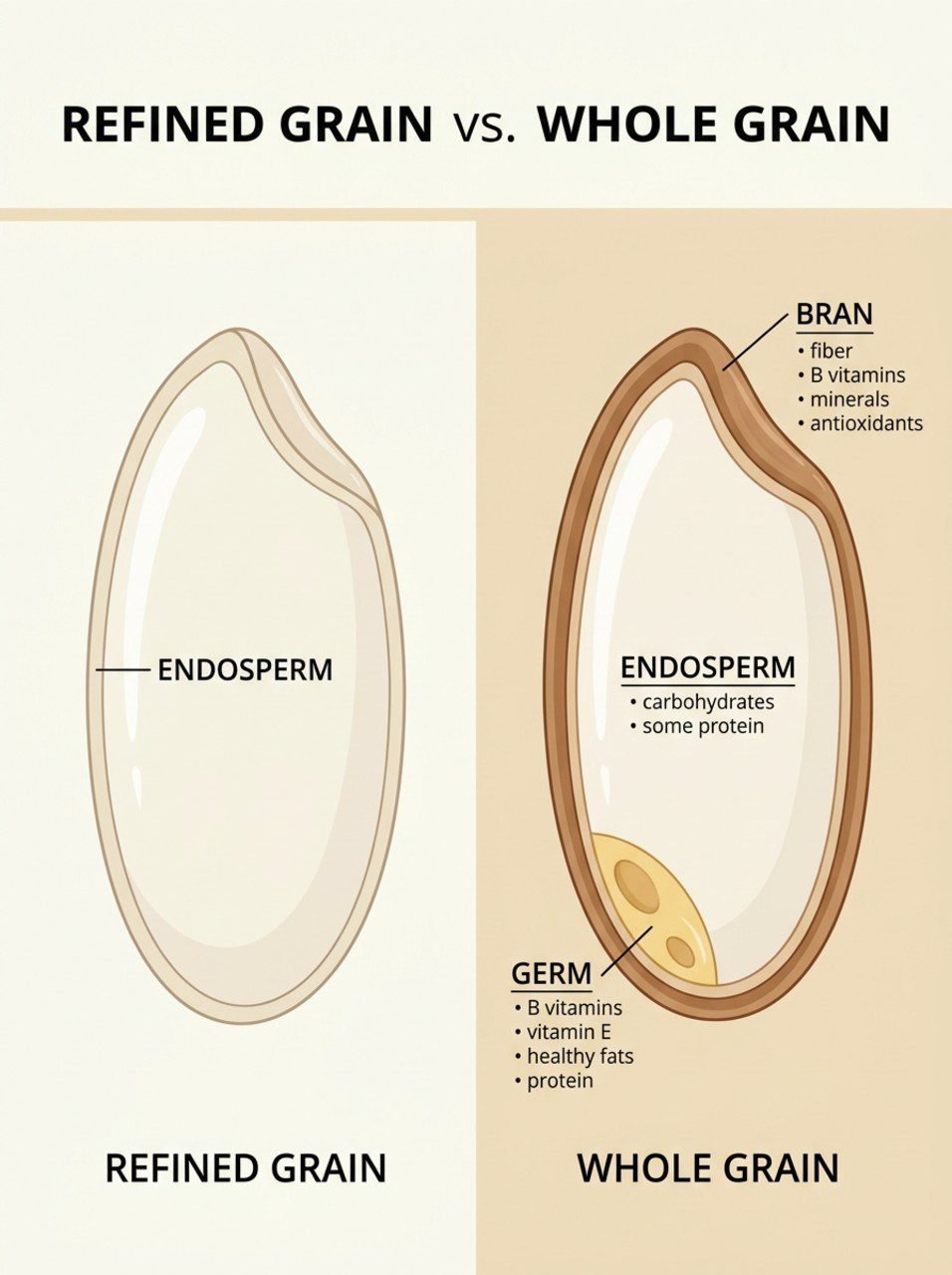
Replacing refined grains (white rice, white bread, white pasta) with whole grains (brown rice, oats, quinoa, whole-grain bread) is a foundational clean eating habit because whole grains retain the bran and germ — the portions stripped during refining — which contain fibre, B vitamins, iron, and essential minerals that support sustained energy, blood sugar regulation, and digestive health.
Refined grains create a predictable cycle that undermines clean eating goals: rapid blood sugar rise → insulin spike → energy crash → hunger → craving. Whole grains interrupt that cycle because their fibre content slows glucose absorption, creating steady energy rather than spikes.
According to the Harvard T.H. Chan School of Public Health, people who eat the most whole grains have a significantly lower risk of heart disease, type 2 diabetes, and digestive cancers — and tend to have a healthier weight long-term.
Whole Grains vs. Refined Grains: Nutritional Comparison
| Nutrient Per 100g (Cooked) | Brown Rice | White Rice | Whole Wheat Bread | White Bread |
|---|---|---|---|---|
| Dietary Fibre | 1.8g | 0.4g | 6.8g | 2.7g |
| Magnesium | 43mg | 12mg | 76mg | 22mg |
| B Vitamins (B3) | 3.0mg | 1.6mg | 5.1mg | 2.6mg |
| Glycaemic Index | 50-55 | 64-72 | 51-58 | 70-75 |
| Satiety Score | Higher | Lower | Higher | Lower |
Simple Whole Grain Swaps
These changes are low-effort and have an immediate nutritional impact:
- White rice → Brown rice or quinoa (quinoa also provides complete protein — a rare plant food advantage).
- White pasta → Whole-wheat or legume-based pasta (add protein and fibre simultaneously).
- White bread → 100% whole-grain bread (check the label: "whole grain" must be the first ingredient).
- Breakfast cereals → Rolled oats or steel-cut oats (dramatically lower sugar and higher fibre).
The transition does not need to be all-or-nothing. Start with one swap per week and allow your palate time to adjust.
Habit #3: How Do You Identify and Eliminate Hidden Sugars, Salt, and Unhealthy Fats?
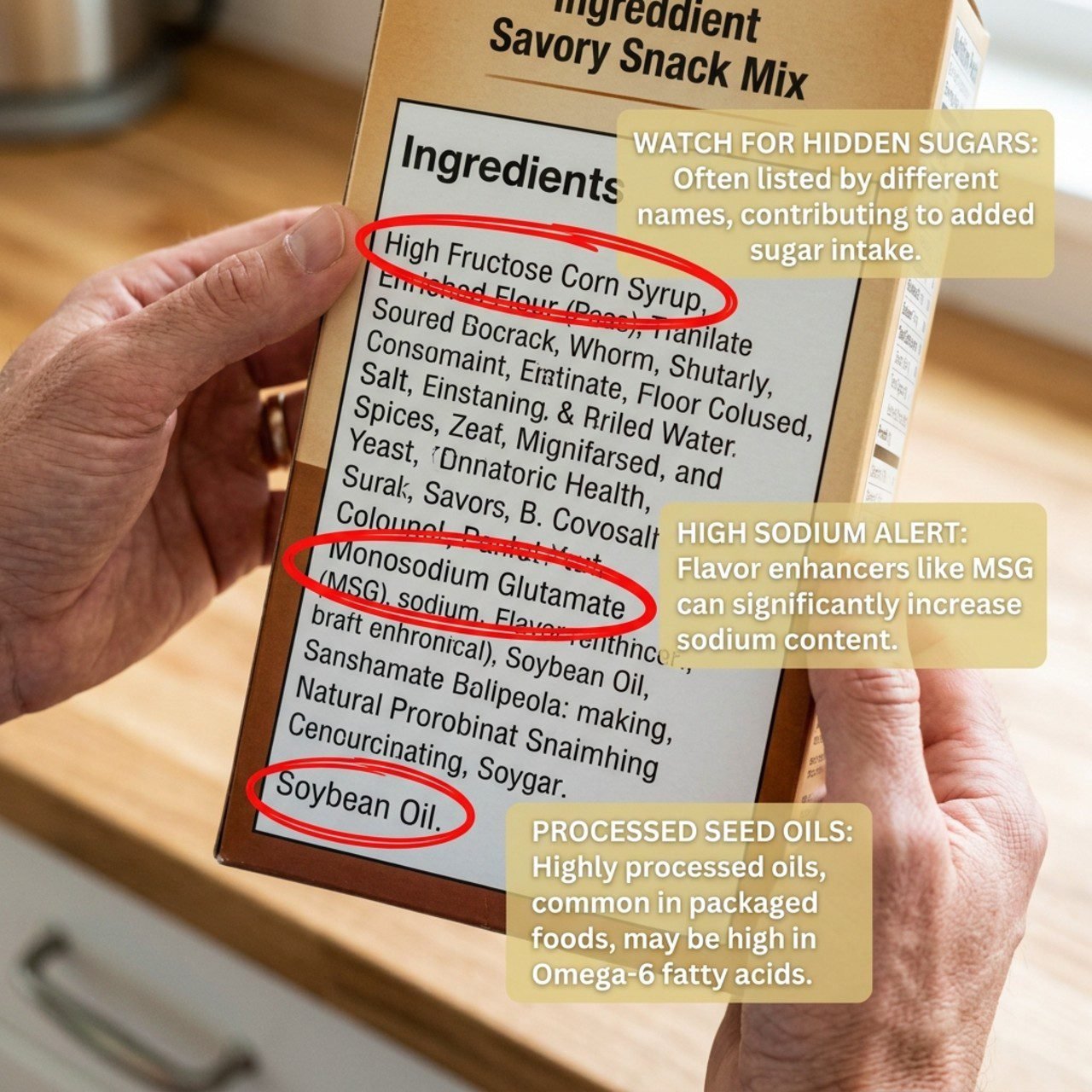
Eliminating hidden sugars, excess sodium, and poor-quality fats from your diet requires one non-negotiable skill: reading food labels. Ultra-processed packaged foods routinely contain quantities of refined sugar, salt, and inflammatory fats that would shock most consumers — often under names designed to obscure their presence.
The average woman consuming a Western diet takes in 17 teaspoons of added sugar per day — more than three times the American Heart Association's recommended maximum of 6 teaspoons for women. The majority of this sugar is not from sweet treats. It is hidden in bread, salad dressings, pasta sauces, flavoured yoghurt, condiments, and "health" products.
The Clean Label Reading System
When evaluating any packaged product against clean eating habits, check these four things:
1. The Ingredients List (most important)
Ingredients are listed in descending order by weight. If any form of sugar appears in the first three ingredients — or if you count more than five total ingredients — the product is likely ultra-processed. Look for these sugar aliases:
- High-fructose corn syrup, agave nectar, maltose, dextrose, sucrose, glucose-fructose syrup, cane juice
2. Added Sugars (not Total Sugars)
The added sugars line on the Nutrition Facts panel tells you exactly how much sugar has been added during processing, separate from naturally occurring sugars in whole ingredients.
3. Sodium Content
A single serving containing more than 600mg of sodium (25% of the daily value) is high. Many packaged foods contain 1,000mg+ per serving — nearly half the daily recommended limit.
4. Fat Quality
Trans fats should be zero. Saturated fats should be moderate (under 10% of daily calories). Prioritise products using olive oil or avocado oil over hydrogenated vegetable or seed oils.
The Simplest Clean Eating Rule For Processed Food
When in doubt: cook from fresh ingredients. Not because packaged food is always dangerous, but because home-cooked meals give you complete control over every ingredient — no label-reading required.
Habit #4: How Does Portion Awareness Support A Clean Eating Lifestyle?
Practising portion awareness — understanding appropriate serving sizes and eating frequency — supports clean eating goals by preventing both overeating and under-fuelling. For women, eating three balanced meals with one or two planned snacks maintains stable blood sugar, reduces impulsive snacking on processed foods, and supports a healthy metabolism without restrictive calorie counting.
Clean eating is not a low-calorie diet. It is a nutrient-quality diet. Which means portion awareness is not about eating less — it is about eating the right amounts of the right foods at the right times.
Why Eating Frequency Matters For Women
The "eat less, move more" approach to weight management consistently underperforms for women because it does not account for hormonal realities. Skipping meals or creating large gaps between eating increases cortisol, promotes muscle catabolism, and often leads to the evening over-eating that undermines consistency.
A more effective pattern for most women:
- Breakfast within 1-2 hours of waking: Prioritise protein (20-30g) to stabilise blood sugar and reduce mid-morning cravings.
- Lunch as the largest meal: Front-loading calories aligns with natural circadian metabolic rhythms.
- A strategic afternoon snack: 150-200 calories of protein + fibre prevents the 4 pm energy crash and reduces dinner over-eating.
- A lighter dinner: Evening meals processed during lower-metabolic-activity periods are stored differently than earlier meals.
The Plate Method: Portion Awareness Made Simple
Rather than weighing food, use the visual plate method recommended by nutritionists and dietitians:
- ½ the plate: Non-starchy vegetables (leafy greens, broccoli, peppers, tomatoes).
- ¼ the plate: Lean proteins (chicken, fish, eggs, legumes, tofu).
- ¼ the plate: Complex carbohydrates (whole grains, sweet potato, legumes).
- A thumb-sized portion: Healthy fats (avocado, olive oil, nuts).
This framework works in restaurants, at home, and anywhere meal prepping for health is not possible. It requires no tracking, no weighing, and no app.
For a comprehensive approach to sustainable weight loss strategies for women that pair with clean eating habits, explore the evidence-backed methods on this site.
Habit #5: Why Is Water The Foundation Of Every Clean Eating Lifestyle?
Water is the single most important component of a clean eating lifestyle because every metabolic process that converts food into energy, eliminates waste, and supports cellular repair requires adequate hydration. Even mild dehydration — as little as 1-2% of body weight in fluid loss — impairs physical performance, reduces cognitive function, increases appetite, and causes food cravings that mimic hunger.
Water is also the ultimate clean eating beverage: zero additives, zero sugar, zero artificial flavours, zero calories. It is the benchmark against which all other beverages should be measured — and most fall significantly short.
How Much Water Do Women Actually Need?
The commonly cited "8 glasses a day" is a useful starting point, but actual needs vary. The National Academies of Sciences, Engineering, and Medicine recommends approximately 2.7 litres (91 oz) of total water per day for women, from both beverages and food combined.
Your individual hydration target increases with:
- Physical activity (add 500-750ml for moderate exercise sessions).
- Hot or humid environments.
- High-fibre diets (fibre requires water to move through the digestive system properly).
- Caffeine consumption (caffeine has a mild diuretic effect).
- Breastfeeding or pregnancy.
Practical Hydration Strategies
The challenge with hydration is not knowledge — it is consistency. These approaches make adequate water intake automatic:
- Start with 500ml before your first coffee: This single habit alone meaningfully improves daily hydration totals and reduces coffee-related dehydration.
- Drink a full glass before each meal: Water before meals reduces appetite by 30% in studies and supports portion awareness naturally.
- Flavour naturally: Add cucumber slices, lemon, mint, or frozen berries to make water more appealing without adding sugar or artificial ingredients.
- Track visually: Keep a water bottle with time markers on your desk. Seeing your progress reduces the friction of remembering to drink.
- Eat water-rich foods: Cucumbers, celery, watermelon, strawberries, and leafy greens all contribute significantly to daily hydration.
Herbal teas (unsweetened) are a clean eating-aligned hydration option that provides antioxidant benefits alongside fluid intake — particularly valuable for women who find plain water difficult to consume in large quantities.
Fruits And Vegetables Can Boost Your Health
How Do You Build Clean Eating Habits That Actually Stick?
Sustainable clean eating habits form through gradual, cumulative change — not dramatic overhauls. Research in behaviour change consistently shows that adding one new habit per week, rather than attempting total dietary transformation simultaneously, produces significantly better long-term adherence.
A 5-Week Clean Eating Starter Plan
| Week | Focus Habit | Specific Action |
|---|---|---|
| Week 1 | Increase produce | Add one extra vegetable serving to lunch and dinner daily |
| Week 2 | Swap refined grains | Replace one refined grain per day with a whole grain alternative |
| Week 3 | Read labels | Check one new packaged product per day; eliminate the worst offender |
| Week 4 | Hydration foundation | Hit 2+ litres of water every day; track for accountability |
| Week 5 | Portion awareness | Use the plate method for every home-cooked meal |
The principle behind this approach: each week's habit builds on the previous one rather than competing with it. By week 5, you are practising all five habits simultaneously — but because you added them incrementally, none of them feels overwhelming.
Meal Prepping For Health: The Clean Eating Accelerator
Meal prepping is the single biggest predictor of clean eating consistency because it removes the primary driver of unhealthy choices: friction at decision time. When a nutritious meal is ready in the refrigerator, the competition with takeaway food is largely eliminated.
A minimal clean eating meal prep session (90 minutes, once per week):
- Wash and chop 3-4 vegetables for the week.
- Cook a large batch of whole grains (brown rice, quinoa).
- Prepare 2-3 lean protein sources (boiled eggs, grilled chicken, cooked lentils).
- Make 1-2 sauces or dressings from scratch (eliminates the need for processed condiments).
Pairing clean eating with consistent fat-burning movement creates the nutritional and energetic conditions for the lean body transformation that restrictive dieting alone never achieves.
What Are The Best Clean Eating Snacks For Women?
Clean eating snacks should combine protein, healthy fats, and dietary fibre to sustain energy between meals without triggering blood sugar spikes or cravings. The best options require minimal preparation and are portable enough for busy lifestyles.
Portable clean eating snacks:
- Apple + almond or peanut butter: Natural sugars + healthy fat + protein = sustained energy, no crash.
- Smashed avocado on whole-grain rice cakes: Healthy fats, complex carbohydrates, and dietary fibre in under 3 minutes.
- Hummus with raw vegetable sticks: Plant-based protein, fibre, and anti-inflammatory compounds from chickpeas.
- Hard-boiled eggs: 6g protein per egg, portable, filling — one of the highest satiety-per-calorie foods available.
- A small handful of mixed nuts and seeds: Healthy fats, magnesium, and plant-based protein — keep portions to 30g to avoid overconsumption.
- Plain Greek yoghurt with berries: 15-20g protein, probiotics for gut health nutrition, and antioxidant polyphenols from the berries.
- Roasted chickpeas: Crunchy, satisfying, high in protein and dietary fibre — a clean label alternative to crisps.
The pattern across all clean eating snacks: each one combines at least two of protein, healthy fat, or fibre — because this combination directly suppresses the appetite hormones (ghrelin) that drive snacking on ultra-processed foods.
Join Our Mailing List
Join thousands of women inside our community and receive our free guide, 10 Actions That Support Permanent Weight Loss — the exact behavioural shifts that make the difference between a two-week attempt and a lasting transformation.
No restriction plans. No guilt. Just what actually works — for real women with real lives.
Your Next Step: Fuel Your Body With What It Was Built For
You now have the five foundational clean eating habits — and the science behind why each one works for real women's bodies.
The next step is combining these nutrition principles with the complete framework for lasting transformation: the movement strategies, hormone-balancing insights, and mindset tools that turn clean eating from a phase into a permanent foundation.
Join thousands of women in our free community and receive the Lean Body Formula Special Report — 10 research-backed actions that support permanent weight loss, written specifically for women.
No calorie counting. No elimination plans. Just what the science actually supports — in plain language, for real life.
Related Articles
- Healthy Eating Habits Lifelong Wellbeing
- Avoid Worst Eating Habits For Metabolism
- Using Mindfulness To Break The Cycle Of Emotional Eating
- Can Diet Really Help With Emotional Eating And Stress Related Weight Gain In Women
- How Many Calories Should You Be Eating
- Top 10 Proven Health Benefits Of Garlic
- Eating Healthy On A Budget Guide
The Bottom Line
Clean eating is not about eating perfectly. It is not about finding foods that are morally "clean" versus "dirty." It is about consistently choosing foods closer to their natural state — and progressively reducing your dependence on the ultra-processed products that dominate modern food environments.
The women who transform their health through clean eating are not the ones who follow the strictest plan for the shortest time. They are the ones who build the most flexible, forgiving, and consistent relationship with whole food — eating well most of the time, adapting when life requires it, and never using one imperfect meal as a reason to abandon the approach.
That is the philosophy. These five habits are the practice.
Start with one. Then add another. Then another. By the time you look back, you will have built something that lasts.
For women navigating the emotional and psychological dimensions of food that affect these patterns, understanding how stress and emotional eating affect weight adds an important layer to any clean eating journey.
Embrace Inspiration
Like What You Read? Be Sociable, Comment, And Share It! Thanks.
Glossary Of Key Terms
FAQ
Clean eating foods are whole, minimally processed ingredients that retain their natural nutritional profile: fruits and vegetables in any form (fresh, frozen, or whole dried), whole grains (oats, brown rice, quinoa, whole-wheat products), lean proteins (eggs, chicken, fish, legumes, tofu), healthy fats (avocado, olive oil, nuts, seeds), and dairy in its least-processed forms (plain yoghurt, aged cheeses). The cleaner eating principle: if a product has more than five ingredients or contains ingredients you cannot picture in their natural form, it is likely ultra-processed.
Yes — and research consistently supports it. Clean eating promotes weight loss not through calorie restriction, but through a shift toward nutrient-dense, high-satiety foods that naturally regulate appetite hormones. High-fibre whole foods, lean proteins, and healthy fats all increase satiety signals, reduce cravings for ultra-processed foods, and support the stable blood sugar that prevents the energy crashes driving most unhealthy eating patterns. Clean eating is also one of the most sustainable approaches to weight management because it does not require counting, tracking, or eliminating entire food groups.
Organic produce is preferred — particularly for the Environmental Working Group's "Dirty Dozen" list of highest-pesticide conventional crops — but it is not a requirement for effective clean eating. If organic is financially out of reach, prioritise organic for thin-skinned produce (strawberries, spinach, apples) where pesticide residue is highest, and buy conventional for thick-skinned items (avocados, pineapples, onions) where residue penetration is minimal. Clean eating built around conventional whole foods far outperforms a diet of organic ultra-processed products.
Begin with the lowest-friction habits first: switch one refined grain for a whole grain, add one extra vegetable serving daily, and drink a glass of water before each meal. Invest in a weekly 60-90 minute meal prep session to remove the "nothing healthy is ready" friction that drives last-minute processed food choices. Clean eating does not require cooking elaborate meals from scratch every night — it requires having whole, minimally processed ingredients available and a simple system for using them.
Clean eating profoundly supports gut health nutrition because whole foods are the primary fuel source for the trillions of beneficial bacteria that form the gut microbiome. Dietary fibre from vegetables, whole grains, legumes, and fruits feeds beneficial bacterial species that produce short-chain fatty acids — compounds associated with reduced inflammation, improved insulin sensitivity, better mood regulation, and a stronger immune response. Conversely, ultra-processed foods feed pathogenic bacteria and disrupt the microbiome balance associated with metabolic and immune health.
Clean eating is an additive philosophy — you focus on adding more whole foods rather than restricting food groups. Restrictive diets (keto, very low-calorie, elimination diets) create rigid rules that often produce short-term results followed by compensatory overeating and long-term weight regain. Clean eating's flexibility is its greatest strength: there are no forbidden foods, no calorie limits, and no failure states. A piece of birthday cake does not "break" a clean eating approach. The overall pattern — not individual meals — determines outcomes.
You Know Why. Now Learn Exactly How
Join thousands of women inside our community and receive our free guide: 10 Actions That Support Permanent Weight Loss — the practical, sustainable habits that translate everything you just read into real, lasting results.
No fad diets. No extreme plans. Just what the research actually supports — written for real women.