

Broccoli For Weight Loss: What 31 Calories A Cup Really Does For Women
How One Of The Cheapest Vegetables In The Shop Quietly Outperforms Half The "Fat-Burning" Foods You've Been Sold

My mother told me, you don't have to put anything in your mouth you don't want to. Then she made me eat broccoli, which felt like double standards.
Sarah Millican ‧ English comedian who won the comedy award for Best Newcomer
Summary (TL;DR)
Broccoli helps with weight loss for one honest reason: it fills you up for almost no calories. One cup of raw broccoli is about 31 calories with 2.4g of fibre (USDA FoodData Central). It will not "burn fat" or "speed up your metabolism," and those claims are exactly why most broccoli articles get ignored. What it actually does is keep you full, so you eat less without trying. Below: the real numbers, what the science says, and the slow-cooker trick that turns broccoli from a sad side into a meal you'll actually finish.
Let's be straight with you. If you've landed here, you've probably already read ten articles telling you broccoli is a "superfood" that "torches belly fat." And somewhere in the back of your mind, you don't quite believe it, because if a green vegetable could melt fat, none of us would have a weight problem.
Good instinct. Hold onto it.
Broccoli is genuinely one of the best foods you can put on your plate when you're trying to lose weight. But not for the magic reasons the internet keeps repeating. The real reason is much simpler, much less exciting, and much more useful. Once you understand it, broccoli stops being the vegetable you eat out of guilt and becomes one you actually reach for.
So what is that reason? It comes down to a single idea nutritionists call energy density, and it's worth thirty seconds of your time because it reframes how you'll see half the food on your plate.
Medical & Referral Disclaimer
This article is for informational and educational purposes only. It is not a substitute for professional medical advice, diagnosis, or treatment. Always consult your physician or qualified health provider before starting any new diet or exercise program.
Key Takeaways
- One cup of raw broccoli is roughly 31 calories and 2.4g fibre — high volume, low energy, the exact combination that curbs hunger.
- Broccoli does not speed up metabolism or burn fat. Its weight-loss power is satiety: fibre keeps you full, so you eat less overall.
- Higher fibre intake predicts greater weight loss and better diet adherence, even when calories are matched.
- Most women give up on broccoli because it's boring or overcooked — not because it doesn't work. Prep is the whole game.
- Try the 3-S Method — Swap, Stack, Steam — to fold broccoli into real meals without choking it down out of duty.
Does Broccoli Actually Help With Weight Loss?
Yes, but through satiety, not fat-burning. Broccoli is high in volume and fibre and very low in calories, so it fills your stomach and curbs hunger without adding much to your daily total. That's the whole mechanism. No metabolism magic required.
Your stomach roughly measures fullness by weight and volume, not by calories. So a big bowl of broccoli sends the same "I'm full now" signal as a far more calorific portion of pasta, for a fraction of the energy.
Do that, swap a few times a week, and the calorie gap adds up quietly in the background, without you ever feeling like you're on a diet. That, not some imaginary fat-burning enzyme, is the real reason broccoli belongs in your weight-loss corner.
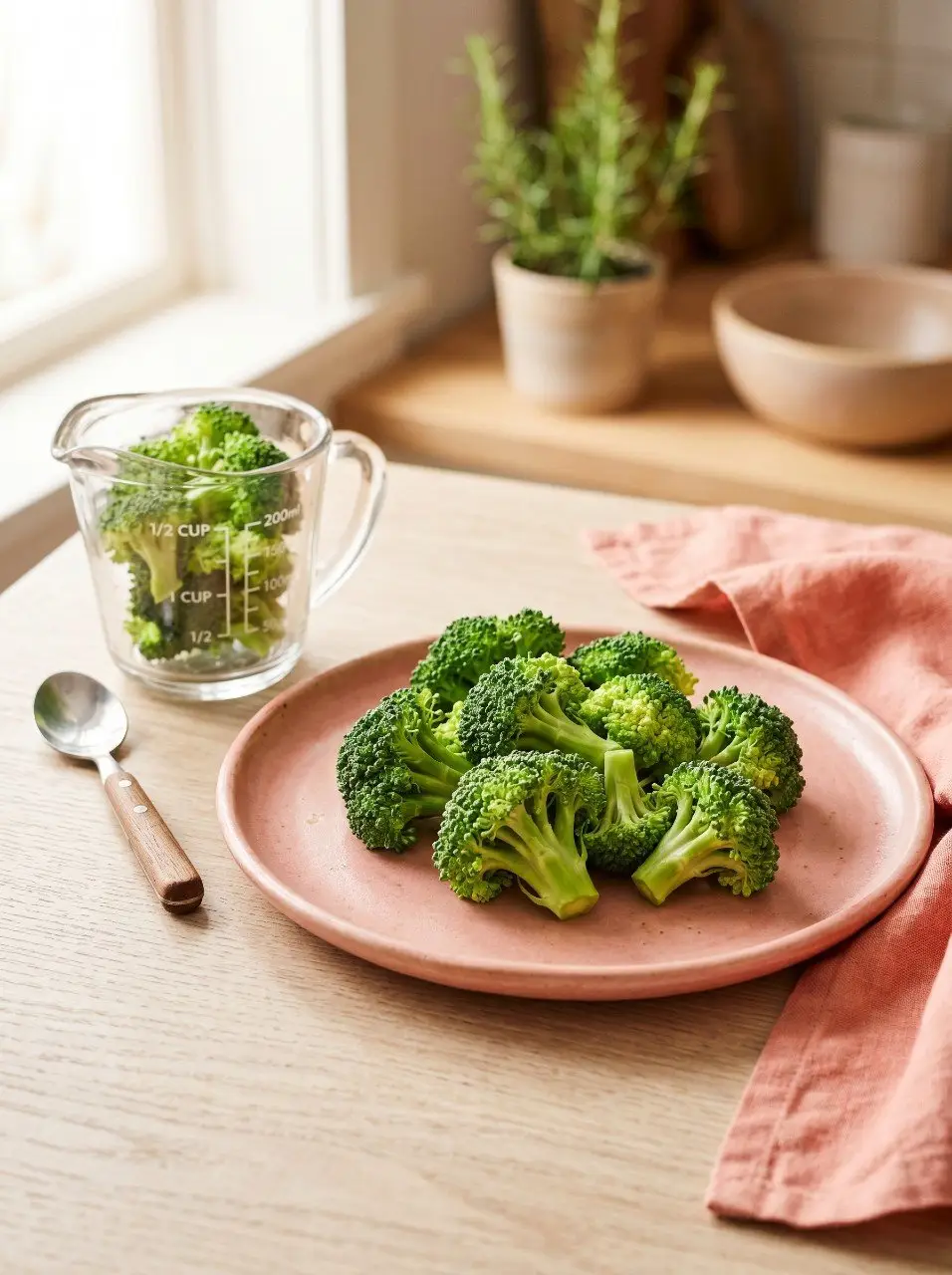
Here's the honest version. A cup of raw broccoli is about 31 calories and carries 2.4g of fibre and 2.6g of protein (USDA FoodData Central). You could eat three full cups and barely crack 100 calories, while feeling like you've actually eaten something.
That "feeling full" part isn't fluff. In the POUNDS Lost trial, which put adults on calorie-matched diets, higher fibre intake predicted both greater weight loss and better adherence — the people who ate more fibre stuck to their diet and lost more on the same calories (POUNDS Lost study, J Nutr).
And in a trial specifically in women with obesity, a higher-fibre diet during calorie restriction improved satiety and lowered hunger-driving hormones like ghrelin (high-fibre diet in women study, PubMed).
So broccoli helps you lose weight the boring way: it makes "eating less" feel less like starving.
The Metabolism Myth (A Quick Contrarian Note)
No, broccoli does not speed up your metabolism or burn fat. You'll see this claim everywhere, and there's no solid human evidence for it. Calling broccoli a "fat-burner" sets you up to feel cheated when the scale doesn't move, which is exactly the wrong relationship to have with a vegetable that's quietly on your side.
If an article promises broccoli "torches fat," that's a tell that the writer is guessing. The fibre-and-fullness story is less thrilling, but it's the one that's true and the one that works.
The Real Numbers: Broccoli Nutrition Per Cup
One cup (91g) of raw broccoli delivers meaningful nutrition for almost no calories — most of your day's vitamin C and vitamin K in a single serving.
Here's what you're really getting, per the USDA:
| Per 1 Cup Raw (91g) | Amount | Why It Matters For You |
|---|---|---|
| Calories | ~31 | Eat volume without the calorie cost |
| Fibre | 2.4g | The satiety engine — keeps you full |
| Protein | 2.6g | Surprisingly high for a green vegetable |
| Carbohydrate | ~6g | Mostly fibre and water, low impact |
| Fat | 0.3g | Negligible |
| Vitamin C | ~81mg (~90% DV) | Immune support, collagen, iron absorption |
Source: USDA FoodData Central, broccoli raw.
That vitamin C number is the standout — one cup covers most of an adult woman's daily need. Vitamin C helps your body make collagen and absorb iron, which matters more for women given how common low iron is (NIH Office of Dietary Supplements, Vitamin C).
Vitamins And Minerals, Without The Hype
Broccoli's headline nutrients are vitamin C, vitamin K, and folate, plus useful potassium and manganese. Vitamin K is the quiet one — it's essential for blood clotting and bone health, and broccoli is one of the better everyday sources.
A single serving makes a real dent in your vitamin K target, which supports normal blood clotting and bone metabolism (NIH Office of Dietary Supplements, Vitamin K). Folate matters especially if you're pregnant or planning to be, since it supports the formation of new cells.
| Vitamins | Minerals |
|---|---|
| Vitamin C | Potassium |
| Vitamin K | Manganese |
| Folate | Calcium |
None of this directly burns fat. But a well-nourished body manages hunger, energy, and cravings better than a depleted one — and that's where these nutrients quietly earn their keep on a weight-loss plan.
What About Sulforaphane? (The Genuinely Interesting Part)
Sulforaphane is a compound that forms when you chop or chew broccoli, and human trials link it to lower inflammation and better blood-sugar markers — though it's a health story, not a weight-loss one.
Let's keep this honest. In clinical studies, broccoli and broccoli-sprout sulforaphane have been tied to reduced inflammatory markers and, in people with type 2 diabetes, improved fasting blood glucose (clinical evidence on broccoli and sulforaphane, PubMed). That's a real, measurable benefit for long-term health.
But notice what I'm not claiming: that sulforaphane melts fat. It doesn't. It's a reason broccoli is good for you, full stop — not a weight-loss shortcut. Keeping those two things separate is exactly what stops this from being another over-promising "superfood" article.
Join Our Mailing List
Join thousands of women inside our community and receive our free guide, 10 Actions That Support Permanent Weight Loss — the exact behavioural shifts that make the difference between a two-week attempt and a lasting transformation.
No restriction plans. No guilt. Just what actually works — for real women with real lives.
How To Cook Broccoli Without Losing Its Properties
Do you cook broccoli like this? You have always done it wrong!
Broccoli is a vegetable full of minerals and vitamins, but did you know that if you cook it in a lot of water, it loses all its nutrients?
Why You Hate Broccoli (And How To Fix It)
If broccoli tastes bitter, mushy, or like punishment, the problem is almost always how it was cooked — not the vegetable. Most women quit broccoli because they boil it to grey mush, not because it doesn't work.
Here's the emotional truth nobody writes about: broccoli isn't intimidating, it's boring. You know you should eat it. You buy it with good intentions. It wilts in the drawer. You feel guilty. Repeat. That cycle has nothing to do with willpower and everything to do with the fact that sad, watery broccoli is genuinely unpleasant to eat.
And one common mistake makes it worse — drowning it. Boiling broccoli in a lot of water leaches out the water-soluble vitamins (like vitamin C) and the flavour along with them. You end up with a plate of pale, nutrient-poor florets and wonder why you bother.
The fix isn't more discipline. It's better prep.
Mary's Slow-Cooker Broccoli (What I Actually Do)
I'll let you in on how I actually eat broccoli, because I gave up on the steamer-and-suffer routine years ago: I do it in the slow cooker. A low, slow cook with a little garlic, a splash of stock and a squeeze of lemon at the end turns broccoli soft, deeply savoury, and — this is the part that matters for weight loss — properly satiating. It stops being a side you push around the plate and becomes filling enough to anchor a meal.
The slow cooker also fits real life. You set it, you forget it, and there's a warm, ready vegetable waiting when you're tired and would otherwise reach for something beige and high-calorie. For a lot of the women I write for, that "it's already done" factor is the difference between eating broccoli and meaning to.
Create Your Perfect Recipe
NutriCraft: A smart web app that provides personalised healthy recipes. Craft your dream body, one bite at a time!
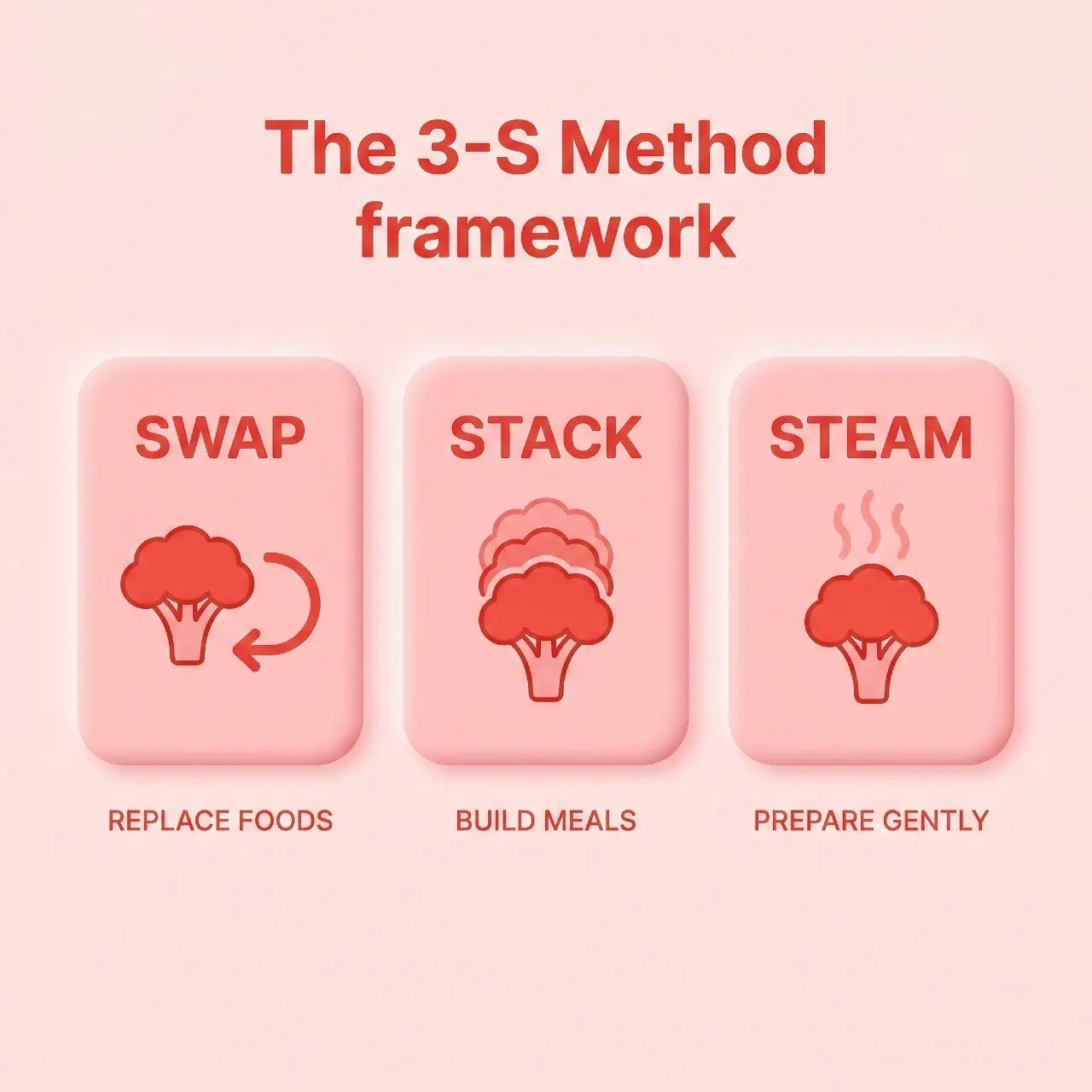
The 3-S Broccoli Method
This is the simple framework I'd give any woman who wants broccoli to actually help — Swap, Stack, Steam (or slow-cook).
| Step | What You Do | Why It Works |
|---|---|---|
| Swap | Replace one high-calorie snack or side (crisps, garlic bread) with broccoli | Cuts calories at the exact moment you'd normally add them |
| Stack | Pile it high — make broccoli the biggest thing on the plate | High volume = full stomach = you eat less of everything else |
| Steam / Slow-cook | Steam briefly or slow-cook gently; never boil to death | Keeps the vitamins, the flavour, and the satiety intact |
Run the 3-S method for two weeks before you decide broccoli "doesn't work for you." Nine times out of ten, the vegetable was never the problem.
Broccoli And Your Gut: The Fibre Bonus
Broccoli's fibre does double duty — it keeps you full and keeps digestion regular by feeding gut bacteria and adding bulk. Good digestion isn't a glamorous weight-loss topic, but feeling light and regular beats feeling bloated.
The same 2.4g of fibre per cup that curbs your appetite also softens and bulks stool, easing things along and feeding the friendly bacteria in your gut. If you've upped your vegetables and felt a bit gassy at first, that's normal — increase gradually and drink water, and your gut adjusts within a week or two.
Want more honest, science-backed strategies built around how women's bodies actually work? Grab the free guide and join thousands of women getting practical, no-hype weight-loss advice straight to their inbox. Get your free WLBF freebie here →
Related Articles
The Bottom Line
Broccoli earns its place on your plate, but for the unglamorous reason: it fills you up for next to nothing. About 31 calories and 2.4g of fibre per cup means you can eat real volume, feel satisfied, and naturally take in less, which is how weight loss actually happens.
It won't rev your metabolism or burn fat, and the moment you stop expecting magic from it, it becomes genuinely useful. Cook it well (slow-cooker, or lightly steamed, never boiled to mush), make it the biggest thing on the plate, and let the fullness do the quiet work. Cheap, simple, and quietly on your side.
Glossary Of Key Terms
FAQ
About 31 calories per cup of raw broccoli, with 2.4g of fibre and 2.6g of protein (USDA). That low number is exactly why it's so useful for weight loss.
No. Broccoli does not burn fat or speed up your metabolism. It helps with weight loss by filling you up for very few calories, so you naturally eat less overall.
There's no magic dose. Aim to make it the biggest thing on your plate at one or two meals a day, swapping it in for higher-calorie sides. Consistency matters more than quantity.
Both work — the calories are similar. Cooked food is often more satisfying and easier to eat in volume. Just avoid boiling it heavily, which leaches out water-soluble vitamins like vitamin C.
That's the fibre fermenting in your gut, and it's usually temporary. Increase your intake gradually and drink plenty of water, and most people adjust within a week or two.
Yes. Its vitamin C aids iron absorption (low iron is common in women), it's rich in folate, and in a trial in women with obesity, a higher-fibre diet improved satiety during calorie restriction (PubMed).
Light steaming or gentle slow-cooking preserves the most nutrients and flavour. Boiling in lots of water is the worst option — it washes vitamin C and taste down the drain.