
5 Best Butt Exercises For Women That Actually Work
Ranked By Science: The 5 Best Butt Exercises For Women That Actually Work

Whatever your situation might be, set your mind to whatever you want to do and put a good attitude in it, and I believe that you can succeed. You are not going to get anywhere just sitting on your butt and moping around.
Bethany Hamilton ‧ Professional surfer & shark attack survivor
Summary (TL;DR)
The 5 best butt exercises for women, ranked by muscle activation research, are the hip thrust, the Bulgarian split squat, the Romanian deadlift, the glute bridge, and the squat, in that order. Every move below starts as a bodyweight exercise you can do in your living room, then shows you exactly how to add load once it gets easy.
Peer-reviewed EMG research places the hip thrust well ahead of the pack for gluteus maximus activation, but a 2025 meta-analysis confirms it’s a mix of these five movements, not one “magic” exercise, that actually builds a stronger, firmer backside over time.
If you’ve spent months doing squats in front of the TV and your backside still looks the same, you’re not imagining it, and you’re not doing anything wrong as a person. You’re just missing two things almost every generic workout list leaves out: the right exercises, in the right order, and the reason your glutes might be “switched off” before you even start.
This guide fixes both. You’ll get the five best butt exercises for women ranked by real muscle-activation data, a beginner-friendly bodyweight version of every single one, and a simple explanation of why your glutes may not be firing the way you think they are - something we’ll call “bum amnesia,” and it’s far more common than most workout advice admits.
No barbell, no gym intimidation, and no more guessing. Just five moves, done well, done consistently.
Medical & Referral Disclaimer
This article is for informational and educational purposes only. It’s not a substitute for professional medical advice, diagnosis, or treatment. Always consult your physician or a qualified health provider before starting any new exercise program, especially if you have an existing injury, joint condition, or medical concern.
Key Takeaways
- Hip thrusts beat back squats for glute activation. A 2015 EMG study found the glutes fired roughly 2–2.5× harder during hip thrusts than squats, across both the upper and lower fibers.
- “Bum amnesia” is real. Prolonged sitting can neurologically dampen glute activation, meaning your glutes may barely engage during a squat even when your legs are burning.
- You don’t need equipment to start. Every exercise in this guide has a bodyweight version that works the same muscles. Equipment is a progression, not a requirement.
- Consistency beats complexity. The American College of Sports Medicine’s (ACSM) 2026 resistance-training guidelines recommend training each major muscle group at least twice weekly, with roughly 10 total sets a week, for visible muscle growth.
- Protein intake matters as much as the workout. The International Society of Sports Nutrition recommends 1.4–2.0 g of protein per kilogram of bodyweight daily to support muscle growth.
- No single exercise builds a butt on its own. A 2025 systematic review found a combination of movements, not one isolated “best” exercise, produced the most consistent gluteus maximus growth.
- Give it time. Most women notice a real difference within a couple of months of training these five moves consistently, two to three times a week.
Why Your Glutes Deserve More Attention Than They Get
Most women never build the backside they’re training for because their glutes aren’t fully activating in the first place, not because they aren’t working hard enough. That gap between effort and results is exactly where frustration creeps in: you show up, you do the reps, and the mirror doesn’t move.
It’s an easy thing to feel discouraged about, and honestly, a little intimidated by too. Between confusing gym equipment, conflicting advice online, and workout lists that assume you already own a barbell, it’s no wonder so many women just default back to squats and hope for the best.
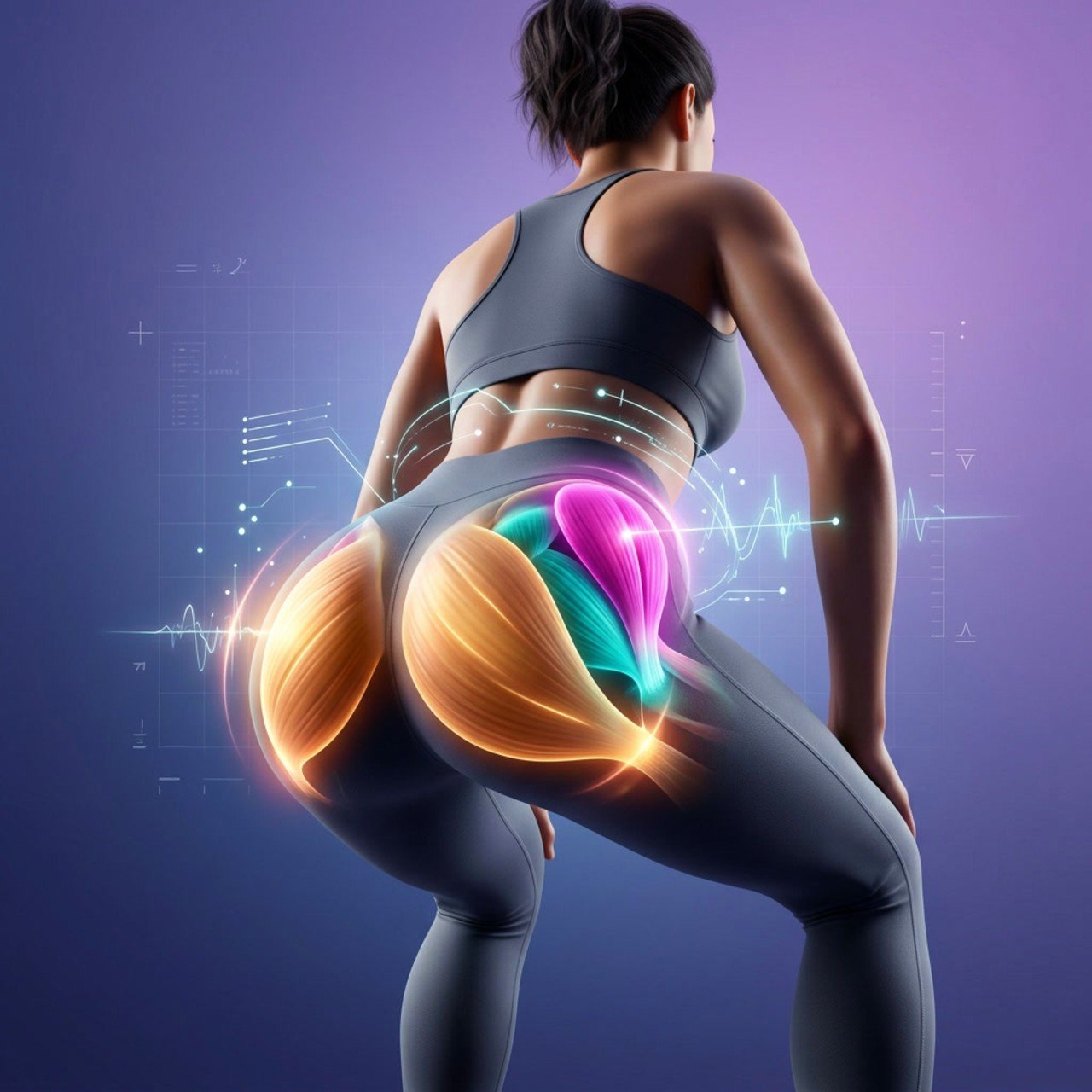
Here’s the more useful way to think about it: your glutes are the largest muscle group in your body, made up of three distinct muscles, the gluteus maximus, gluteus medius, and gluteus minimus, and most workout routines only ever ask one of the three to do any real work.
That’s a training-design problem, not a willpower problem, and it’s entirely fixable with the right five exercises done in the right way. It matters even more once you’re past your mid-30s or into perimenopause, when muscle naturally becomes harder to hold onto, and strength training earns a bigger seat at the table.
The Science Behind This Ranking
This list is ranked using electromyography (EMG) research, which measures how hard a muscle actually contracts during an exercise, cross-referenced against a 2025 systematic review of what produces measurable glute growth over time.
EMG activation isn’t a perfect stand-in for muscle growth on its own. A muscle can fire hard in a single session without necessarily growing the most over months, which is exactly why this list blends both kinds of evidence rather than chasing a single study.
The clearest finding across the research: the hip thrust consistently produces the highest gluteus maximus activation of any common exercise, by a wide margin. A widely cited 2015 study from the Journal of Applied Biomechanics measured this directly.
| Exercise | Upper Glute Activation (% MVIC) | Lower Glute Activation (% MVIC) | Equipment Needed |
|---|---|---|---|
| Hip Thrust | ~69.5% (peak 172%) | ~86.8% (peak 216%) | None to start |
| Back Squat | ~29.4% (peak 84.9%) | ~45.4% (peak 130%) | None to start |
| Bulgarian Split Squat | High (unilateral) | High (unilateral) | None to start |
| Romanian Deadlift | Moderate–High | Moderate–High | None to start |
| Glute Bridge | Moderate | Moderate | None |
Source: Contreras et al., Journal of Applied Biomechanics (2015), measured in thirteen trained women comparing the back squat and barbell hip thrust. MVIC stands for maximum voluntary isometric contraction, the standard way EMG activation is expressed as a percentage.
A more recent 2025 systematic review and meta-analysis in Frontiers in Physiology backs this up from a different angle. It found that resistance training produces a moderate, reliable effect on gluteus maximus growth overall. Full range-of-motion squats work, but shallow half-squats don’t.
And the hip thrust stood out as the single-joint exercise most effective for isolated glute growth, without dragging the quads and hamstrings along for the ride. That same review found combining exercises, rather than relying on one, produced comparably strong results, which is exactly why this list is five moves, not one.
The 5 Best Butt Exercises For Women, Ranked
These five exercises, done consistently two to three times a week, target all three gluteal muscles through the two movement patterns that the research above consistently ranks highest for glute development: hip extension and the hip hinge.
Every exercise starts at the bodyweight level. Add load only once your form feels controlled and unrushed.
1. Hip Thrust (Bodyweight Glute Bridge Hold, Then Loaded)
The hip thrust is the single most effective glute exercise in the current research, and you can start it with zero equipment. It’s simply a glute bridge taken through a fuller range of motion with your upper back elevated, which lets your hips travel further into extension, the exact position where the glutes contract hardest.
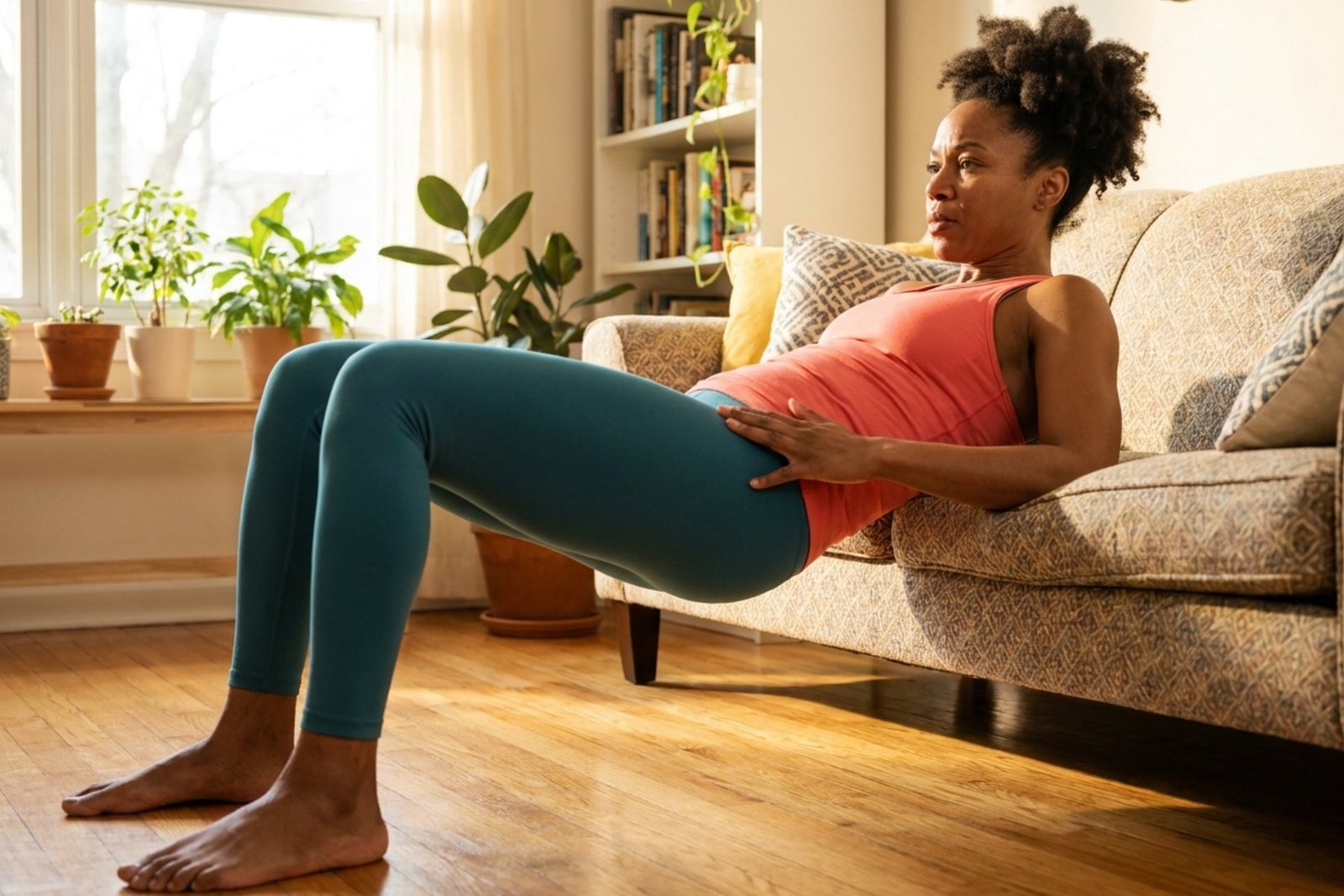
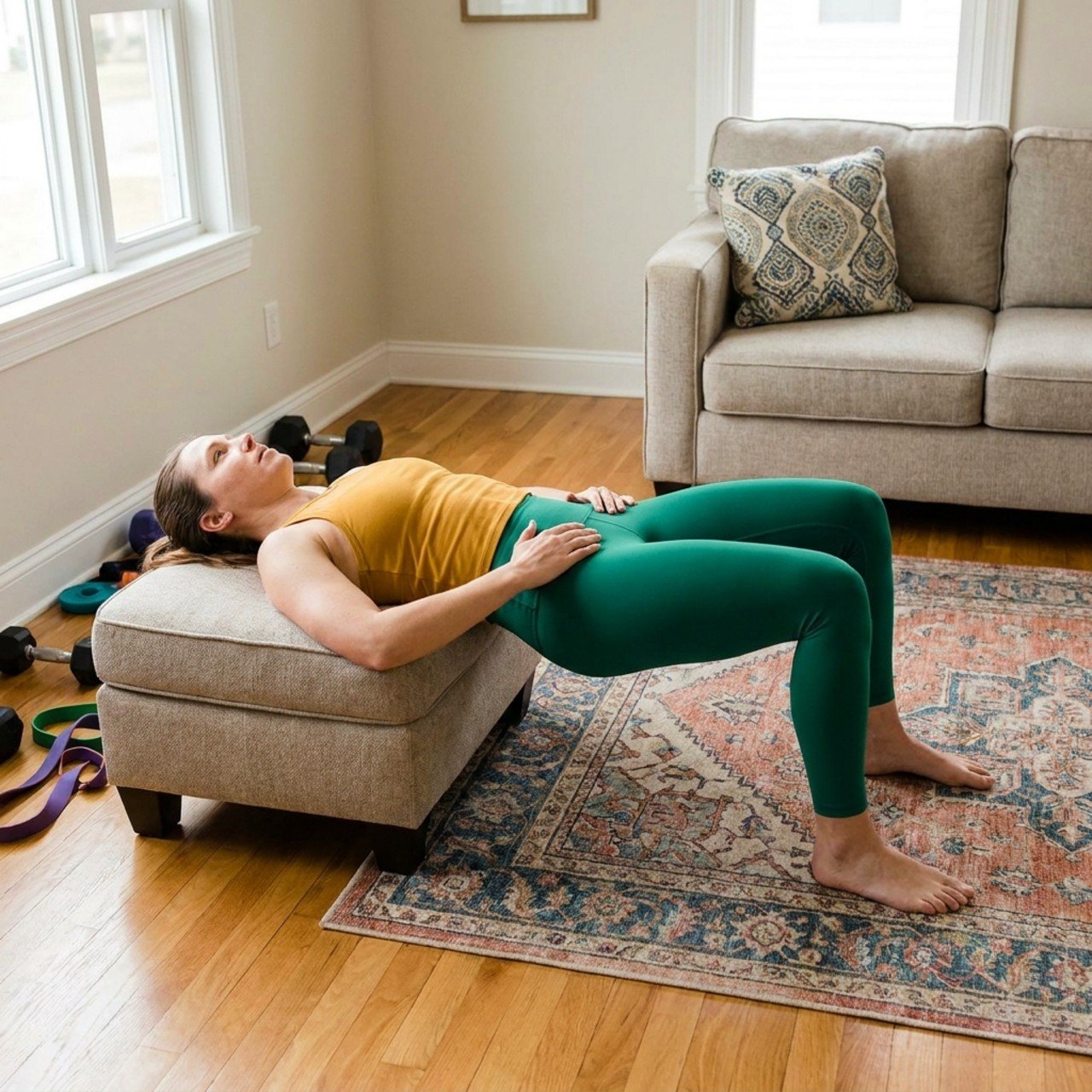
- Bodyweight version: Sit on the floor with your upper back against a sturdy couch or low bench, knees bent, feet flat, hip-width apart. Drive your hips upward until your body forms a straight line from shoulders to knees, squeeze your glutes hard for one full second at the top, then lower slowly.
- Progression: Once 15 clean reps feel easy, rest a filled backpack, a heavy book, or a dumbbell across your hips to add resistance.
- Sets/reps: 3 sets of 10–15 reps.
- Common mistake: Arching your lower back to reach the top instead of squeezing your glutes. You should feel this in your backside, not your spine.
2. Bulgarian Split Squat (Rear-Foot-Elevated Split Squat)
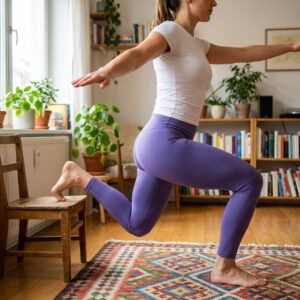
The Bulgarian split squat is a single-leg movement that builds glute size and corrects the strength imbalance between your left and right side that a lot of women never realize they have. Training one leg at a time forces each hip to stabilize and work independently, which standard two-legged squats simply can’t replicate.
- Bodyweight version: Stand a comfortable stride in front of a chair or low couch, and rest the top of one foot on it behind you. Lower your body until your front thigh is close to parallel with the floor, then push through your front heel to rise. Keep most of your weight in that front leg.
- Progression: Hold a dumbbell in each hand, or one against your chest, once bodyweight reps feel controlled.
- Sets/reps: 3 sets of 8–12 reps per leg.
- Common mistake: Leaning too far forward turns this into a quad-dominant exercise. Keep your torso closer to upright and drive through your heel, not your toes.
3. Romanian Deadlift (Single-Leg Balance Version, Then Loaded)
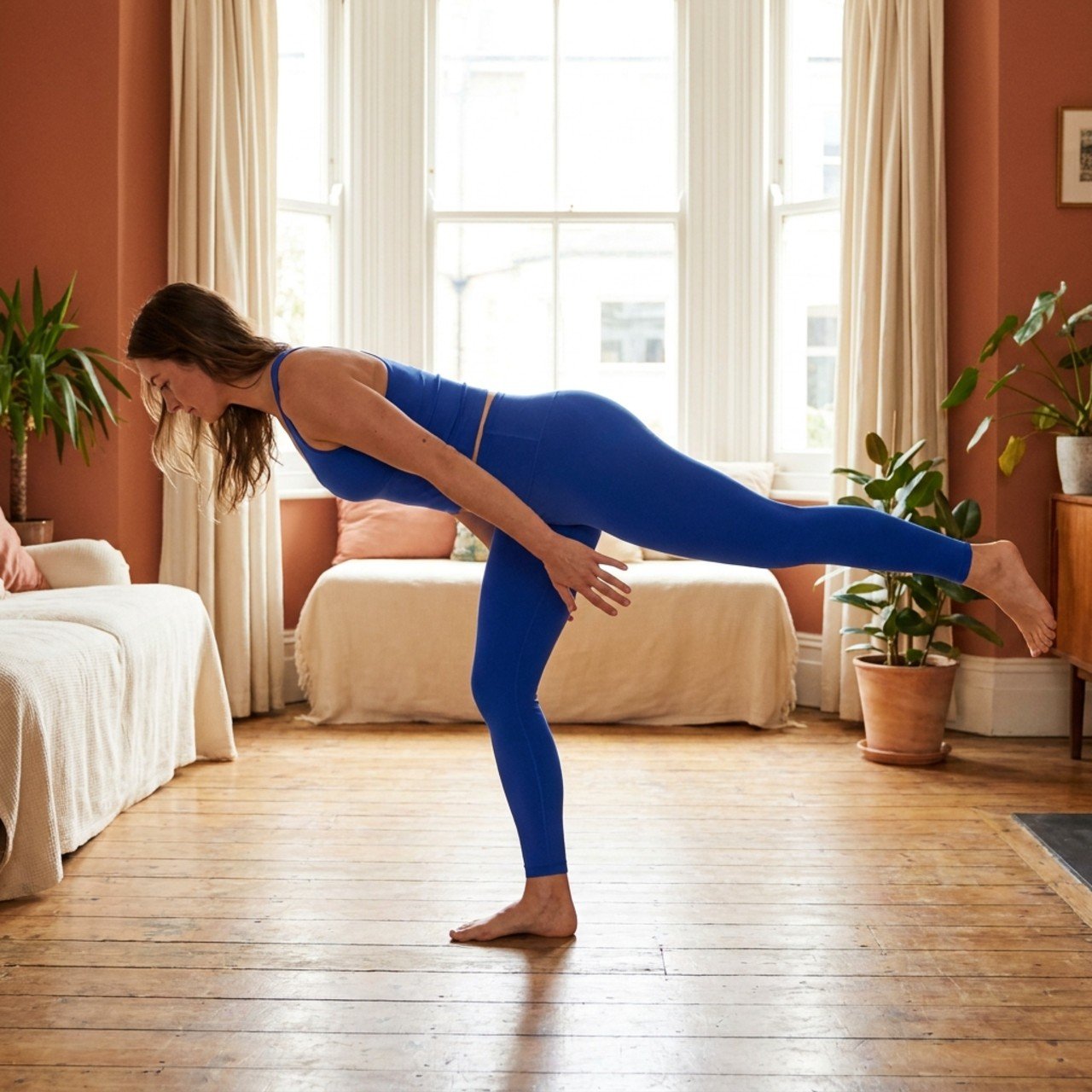
The Romanian deadlift trains the hip-hinge pattern, which builds the lower glutes and hamstrings together and is one of the most underused movements in most women’s routines. Unlike a squat, which bends mostly at the knee, a hinge bends mostly at the hip, a different, complementary stimulus your glutes need.
- Bodyweight version: Stand on one leg, hinge forward at the hips while your free leg extends straight behind you for balance, keeping your back flat, until you feel a stretch through your hamstring and glute. Drive your hips forward to return upright.
- Progression: Hold a single dumbbell in the hand opposite your standing leg once your balance feels steady.
- Sets/reps: 3 sets of 10–12 reps per leg.
- Common mistake: Rounding your lower back to reach further down. A shorter range with a flat back beats a deeper range with a rounded one, every time.
4. Glute Bridge
The glute bridge is the entry point for everything above it, a shorter-range, lower-back-flat activation move that’s ideal as a warm-up or for anyone building initial strength and body awareness. It’s deliberately gentler than the hip thrust, which makes it the right place to start if hip extension is new to you.
- How to do it: Lie on your back, knees bent, feet flat and hip-width apart. Lift your hips until your body forms a straight line from shoulders to knees, squeeze at the top, then lower with control.
- Variation: Add a one- or two-second pause at the top, or try single-leg bridges once double-leg reps feel easy.
- Sets/reps: 3 sets of 15–20 reps.
- Common mistake: Rushing the rep. A slow, controlled lift and lower recruits far more muscle than a fast, bouncy one.
5. Squat
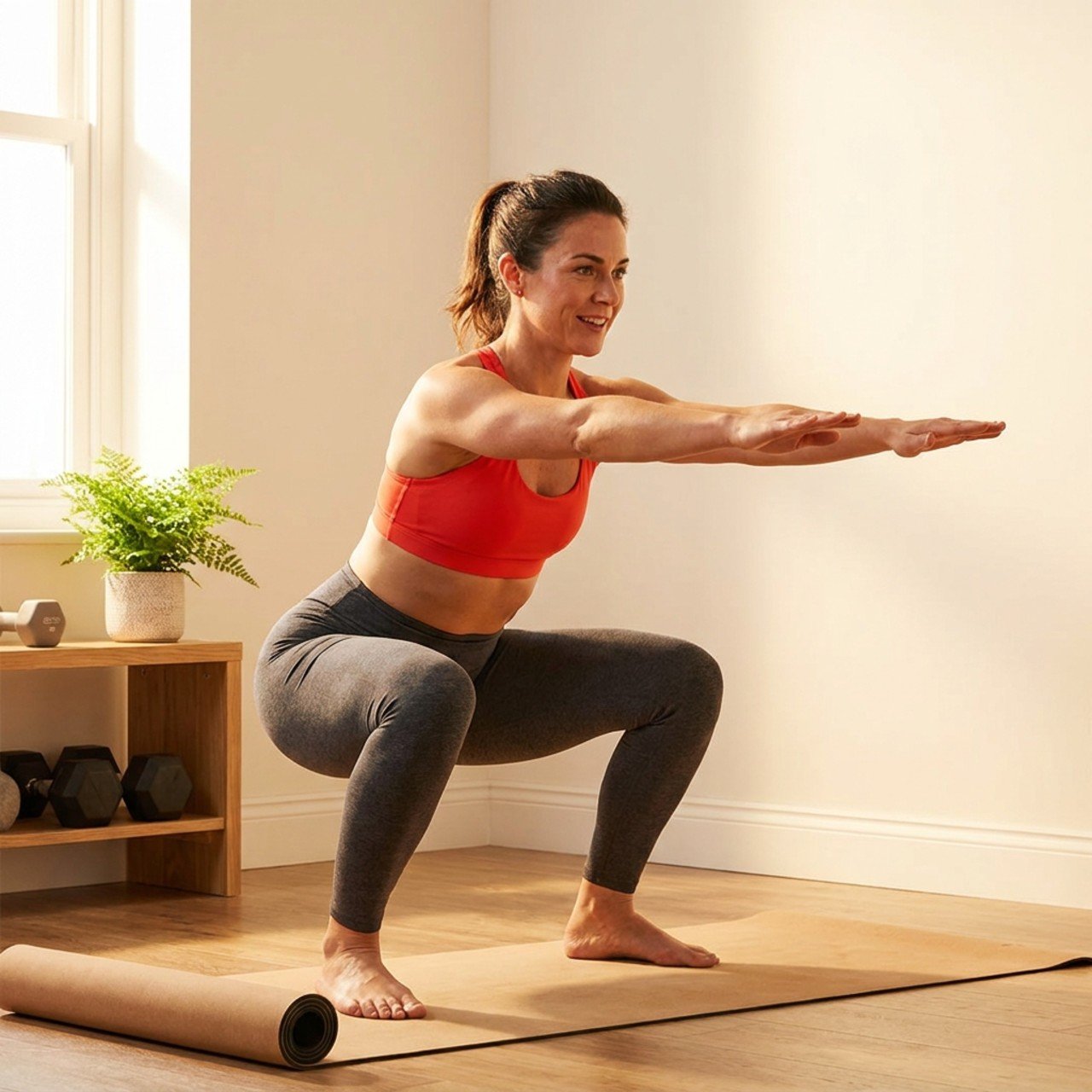
The squat still earns its place in the top five, it just needs to go deeper than most women take it. The 2025 Frontiers in Physiology meta-analysis found that squats performed below parallel meaningfully increased glute involvement compared with shallow half-squats, which is where most at-home squats stop short.
- Bodyweight version: Stand with feet slightly wider than shoulder-width, toes turned out slightly. Sit your hips back and down until they drop below knee height, keeping your chest up, then drive through your heels to stand.
- Progression: Hold a dumbbell or kettlebell at chest height (a goblet squat) once bodyweight depth feels comfortable.
- Sets/reps: 3 sets of 12–15 reps.
- Common mistake: Stopping at parallel out of habit. If your heels are staying flat and your knees feel fine, you likely have room to go lower than you think.
Why “Bum Amnesia” Might Be Why Nothing Has Worked So Far
If you’ve trained consistently and still feel like your quads and hamstrings do all the work while your glutes stay quiet, you may be dealing with what clinicians call gluteal inhibition, sometimes nicknamed “bum amnesia.”
A 2026 clinical review in the Journal of Varna Medical College describes it as reduced neuromuscular activation of the glute muscles caused by prolonged sitting, motor dysfunction, or general inactivity. In plain terms, your brain simply stops sending as strong a signal to muscles it doesn’t use much.
This isn’t a diagnosis to panic over, and it’s common enough that most desk-working women are dealing with some version of it. The practical fix is exactly what this guide already has you doing: before your main sets, spend a minute consciously squeezing your glutes through a slow, controlled glute bridge or two.
Building that mind-to-muscle connection first, before you add load, is what actually lets the exercises above do their job.
How Often Should You Train Your Glutes For Real Results
Train your glutes two to three times a week, with at least one full rest day between sessions, and you’re within the range current research supports for visible muscle growth.
ACSM’s 2026 resistance-training guidelines, the first major update to this guidance in 17 years, recommend training each major muscle group at least twice weekly and accumulating roughly 10 total sets per week for hypertrophy, while stressing that consistency matters far more than a complicated program.
| Day | Focus | Suggested Exercises |
|---|---|---|
| Monday | Full Lower Body | Hip Thrust, Squat, Glute Bridge (warm-up) |
| Tuesday | Rest or Light Walk | – |
| Wednesday | Unilateral Focus | Bulgarian Split Squat, Romanian Deadlift |
| Thursday | Rest | – |
| Friday | Full Lower Body | Hip Thrust, Romanian Deadlift, Glute Bridge |
| Saturday & Sunday | Rest or Active Recovery | Walking, stretching |

What To Eat To Support Glute Growth
No amount of hip thrusts will build muscle without enough protein to rebuild it afterward. The International Society of Sports Nutrition’s position stand recommends 1.4–2.0 grams of protein per kilogram of bodyweight daily for anyone training for muscle growth, spread relatively evenly across the day in doses of roughly 20–40 grams per meal, since your body can only use so much at once.
- Spread it out: Aim for a source of protein at three to four meals or snacks, rather than saving it all for dinner.
- Don’t fear carbs: Your glutes are a large, powerful muscle group that relies on carbohydrate availability to train hard and recover well.
- Simple sources that work: Greek yogurt, eggs, chicken, salmon, lentils, cottage cheese, and a quality protein powder if meals alone fall short.
If you want the fuller picture of building meals around your training, our high-protein diet plan for women breaks down exactly how to structure that by bodyweight.
Want The Complete Training System?
This guide gives you the five highest-value exercises to start with today, in the order the evidence supports. If you’re ready to go further, a full weekly program, advanced progressions, and the complete science of glute training, our in-depth guide on the best exercises for a sexy butt walks through the full system.
And if you’d rather build strength through your whole body rather than one area at a time, our correct-form exercise library for women covers eight foundational movements with full coaching cues.
Ready for a complete plan that takes the guesswork out of every workout, not just this one? Grab our free guide here and join thousands of women getting weekly tips straight to their inbox, built for real women with real schedules, not extreme routines you can’t keep up.
The Bottom Line
You don’t need a gym membership, a barbell, or hours of your week to build a stronger backside. You need the right five exercises, done with real muscle activation, in a routine you can actually stick to.
Start with the hip thrust and glute bridge at bodyweight, add the Bulgarian split squat and Romanian deadlift as your balance improves, and keep the squat in your rotation as your familiar foundation.
Train this list two to three times a week, eat enough protein to support the rebuild, and give it a couple of months before judging the results. That’s the realistic timeline the research, not a marketing page, actually supports.
Glossary Of Key Terms
- Hip Thrust: A glute-focused move where you drive your hips upward against a load (or bodyweight), producing high gluteus maximus activation in EMG research.
- Glute Bridge: A floor-based hip extension that trains the glutes with less setup than a thrust; a strong starting point before adding load or single-leg work.
- Bulgarian Split Squat: A rear-foot-elevated lunge variation that challenges each glute and leg separately while demanding balance and control.
- Romanian Deadlift (RDL): A hip-hinge pattern that loads the glutes and hamstrings as you push the hips back with a soft knee bend.
- Gluteus Maximus: The largest glute muscle; the main target when the goal is a stronger, fuller backside rather than “spot-reducing” fat.
- EMG Activation: Electromyography readings that estimate how hard a muscle is working in a given exercise—used here to rank the five moves.
- Glute Amnesia: Under-use of the glutes in daily sitting and poor exercise form, so other muscles take over and results stall despite lots of squats.
- Progressive Overload: Making a move slightly harder over time (more reps, slower tempo, added weight, or a harder variation) so the glutes keep adapting.
- Mind-Muscle Connection: Deliberately feeling the glutes contract through the full range instead of rushing reps or letting the lower back dominate.
- Training Frequency: How often you hit the glutes each week—typically two to three focused sessions with recovery between hard efforts.
FAQ
What Are The Best Butt Exercises For Women?
Based on current muscle-activation research, the hip thrust, Bulgarian split squat, Romanian deadlift, glute bridge, and squat are the five most effective exercises, together training all three gluteal muscles through both major hip movement patterns.
Can I Do These Butt Exercises Without Any Equipment?
Yes. Every exercise in this guide has a full bodyweight version, and bodyweight training can still meaningfully activate and strengthen the glutes. Added weight is a progression once bodyweight reps feel controlled, not a requirement to start.
How Many Times A Week Should I Train My Glutes?
Two to three times a week, with at least one rest day between sessions, aligns with current resistance-training guidelines for visible muscle growth.
How Long Until I See Results From These Exercises?
Most women notice initial strength and activation improvements within two to four weeks, with visible shape and size changes typically becoming noticeable after a couple of months of consistent training.
Why Do Squats Alone Not Seem To Change My Shape?
Standard squats activate the glutes far less than hip-extension-focused moves like the hip thrust, and many people unintentionally stop above parallel depth, which further reduces glute involvement. Pairing squats with hip thrusts and hinges closes that gap.
Can Cardio Help Tone My Butt?
Cardio supports overall fitness and calorie balance, but it doesn’t build the muscle that gives the backside its shape. Stair climbing, incline walking, and cycling engage the glutes somewhat, but should complement, not replace, the strength exercises in this guide.
Do Strong Glutes Actually Help My Posture?
Strong, well-activated glutes support the pelvis and lower back during standing, walking, and running, which is why clinical literature on gluteal inhibition links weak glute activation to postural strain and recommends targeted reactivation work as part of addressing it.