Why Generic Diet Advice Keeps Failing You (And What Actually Works After 40)
Dr. Susan Albers
Clinical psychologist
Mindful eating replaces self-criticism with self-nurturing. It replaces shame with respect for your own inner wisdom.
Summary (TL;DR)
After 40, declining estrogen, accelerating muscle loss, and a slower metabolism mean the eating strategies that worked in your 30s often stop working now. This guide introduces the H.E.A.L. Framework, a four-pillar nutrition approach built around your changing biology. You'll learn which eating patterns have the strongest clinical evidence, how much protein you actually need, and how to build a sustainable nutrition strategy that fits your real life.
You haven't changed how you eat. So why has your body changed?
If you're nodding right now, you're not imagining things. You're not lazier than you used to be. And you definitely don't have less willpower. What you do have is a body that's running on a different hormonal operating system than it did a decade ago.
I remember the exact moment I realised my old approach had stopped working. I was eating the same salads, doing the same workouts, and still watching my clothes get tighter around the middle. Sound familiar? Here's what nobody tells you: after 40, the body's rules change. And the first step to getting results again is understanding what changed and why.
This isn't a willpower problem. This is a biology problem that needs a systems upgrade. The good news? Once you understand what's driving the shift, you can build an approach to choosing a diet for women over 40 that works with your body instead of constantly fighting it.
Medical & Referral Disclaimer
This article is for educational and informational purposes only and does not constitute medical or nutritional advice. Nutritional needs vary by individual, and health conditions common during perimenopause or menopause may require personalised guidance. Always consult your doctor, registered dietitian, or qualified healthcare provider before making significant changes to your eating habits.
Key Takeaways
- After 40, women lose roughly 0.5 lbs of muscle per year, which directly slows resting metabolism.
- Estrogen decline reduces insulin sensitivity and increases hunger signals.
- Women over 40 need 1.0–1.2 g of protein per kg of body weight daily (significantly higher than standard recommendations).
- The Mediterranean-style nutrition pattern has the strongest clinical evidence for menopausal women.
- A 12–14-hour overnight fast can reduce visceral fat and improve insulin sensitivity without hormonal disruption.
- Metabolism slows by approximately 5% per decade after age 40.
- The H.E.A.L. Framework gives you a personalised structure instead of a one-size-fits-all plan.
- Pairing your nutrition strategy with strength training is the single highest-leverage move you can make after 40.
Why Diets That Worked Before Stop Working After 40
After 40, falling estrogen reduces insulin sensitivity, slows thyroid function, and accelerates muscle loss at roughly 0.5 lbs per year. Your metabolic rate drops by approximately 5% per decade. The same eating plan now produces a different result in a different body. This is not a character flaw. It's biology.
Here's what's happening under the hood. As estrogen declines in perimenopause, your body becomes less efficient at managing blood sugar. Insulin resistance increases, which means more of what you eat gets stored as fat rather than burned as fuel. At the same time, your thyroid function can slow, reducing the rate at which you burn calories at rest.
The muscle mass situation compounds the problem. Women lose an average of 3–8% of muscle mass per decade after age 30, and the rate accelerates after 40. Since muscle burns significantly more calories at rest than fat does, losing it has a compounding effect on your metabolism. Less muscle equals fewer calories burned, even when you're sleeping.
Visceral fat (the deep abdominal fat stored around internal organs) also becomes a growing factor. Research shows visceral fat can increase from 5–8% to 10–15% of total body weight during the perimenopause transition. This isn't just a cosmetic shift. It's a metabolic one that affects cardiovascular and metabolic health. Understanding how female metabolism works at this stage is the foundation for making your nutrition strategy effective.
The H.E.A.L. Framework: Build Your Nutrition Strategy Around Your Biology
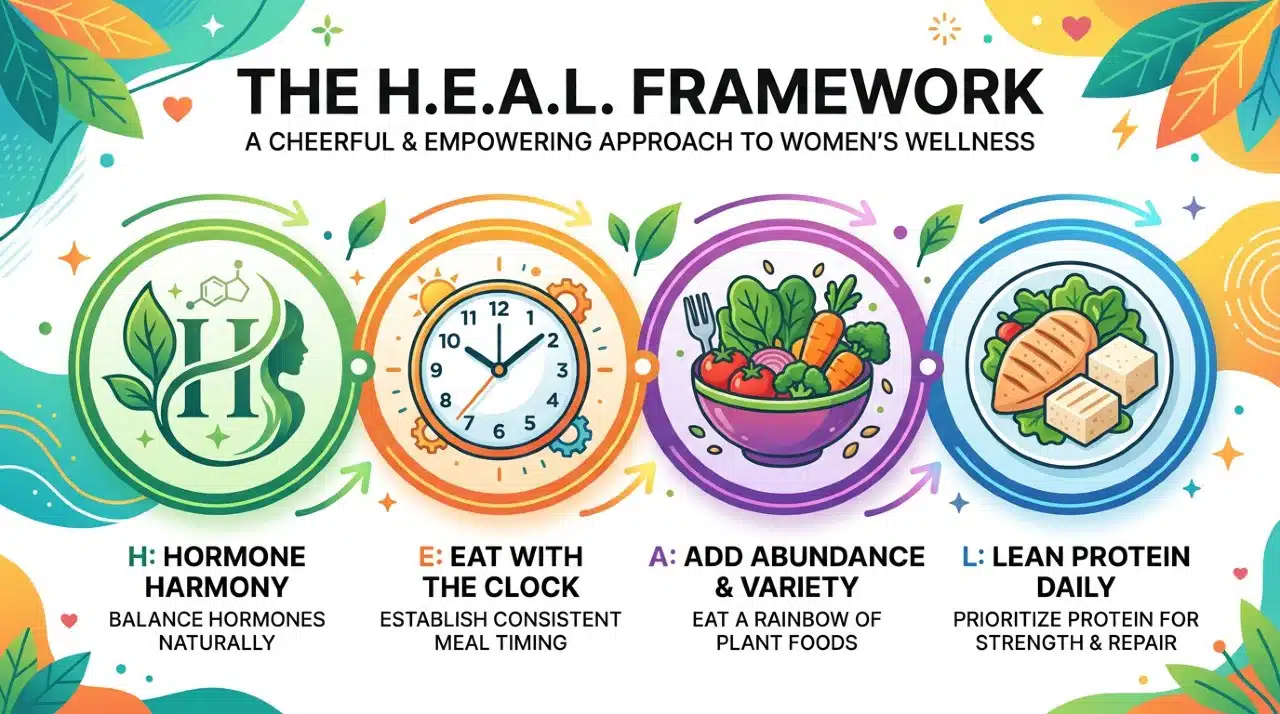
Most "best diet" lists hand you a meal plan and wish you luck. But a single prescribed plan can't account for your hormones, your schedule, your food preferences, or where you are in the perimenopause journey. That's why the H.E.A.L. Framework focuses on principles rather than a rigid menu.
H.E.A.L. stands for four pillars: Hormone-supporting foods, Eating patterns, Anti-inflammatory foundation, and Lean protein targets. When all four are working together, you're eating in a way that actively supports your body's changing needs rather than fighting them.
| H.E.A.L. Pillar | What It Means | Daily Target |
|---|---|---|
| H — Hormone-Supporting Foods | Phytoestrogens (soy, flaxseed), vitamin D, magnesium, omega-3s | 1–2 servings phytoestrogen-rich foods; 320–400 mg magnesium |
| E — Eating Patterns | Meal timing, overnight fast, meal frequency | 3 structured meals; 12–14 hour overnight fast |
| A — Anti-Inflammatory Foundation | Colourful vegetables, berries, olive oil, whole grains, fatty fish | 5+ vegetable/fruit servings; 2+ servings fatty fish per week |
| L — Lean Protein Targets | Adequate protein at every meal to preserve muscle mass | 1.0–1.2 g per kg body weight; 20–30 g per meal |
The "L" pillar is the most underestimated. A 2025 study in Frontiers in Nutrition compared women consuming 0.8 g/kg vs. 1.2 g/kg of protein and found significantly better muscle mass outcomes at the higher intake level. Most women over 40 are still eating at the lower end because that's what the standard RDA recommends. The RDA was set as a minimum to prevent deficiency, not to support body recomposition.
The "A" pillar matters because menopause dramatically increases systemic inflammation. Research published in PMC found that anti-inflammatory micronutrients, particularly omega-3 fatty acids, magnesium, vitamin K, and selenium, play critical roles in counteracting the heightened inflammatory burden that comes with the hormonal transition. Eating an anti-inflammatory diet isn't a trend. It's targeted nutritional support for what your body is going through.
You don't have to do all four pillars perfectly at once. Start with the one that feels most manageable. Even a 70% effort on two pillars will move the needle.
What Should Women Over 40 Actually Eat Each Day?
Women over 40 get the best results from a whole-food, protein-forward nutrition strategy built around plenty of fibre, healthy fats, phytoestrogens, and anti-inflammatory foods. The Mediterranean eating pattern consistently shows the strongest clinical evidence for this demographic. A 2024 systematic review of seven clinical trials found reductions in body weight, triglycerides, LDL cholesterol, blood pressure, and menopausal symptoms in women who followed a Mediterranean-style nutrition plan.
Protein comes first at every meal. Aim for 20–30g per sitting, from sources like eggs, Greek yogurt, chicken, fish, legumes, or tofu. Research confirms that distributing protein evenly across meals (rather than eating most of it at dinner) improves muscle protein synthesis. This is particularly important for women over 40 who are actively trying to preserve lean muscle. Our high-protein nutrition plan gives you a practical daily template to make this easier.
Fibre is your metabolism's best friend. Women over 40 should aim for at least 25 g per day. Berries, legumes, oats, and leafy greens are all excellent sources. Higher fibre intake improves satiety, lowers blood sugar spikes after meals, and supports a healthy gut microbiome, which research increasingly connects to better weight management.
Healthy fats support both hormone production and brain health. Olive oil, avocado, salmon, sardines, walnuts, and flaxseeds are all worth building into your routine. Flaxseeds in particular are rich in lignans, a type of phytoestrogen that can help modulate estrogen activity during perimenopause. Anti-inflammatory micronutrient research also highlights omega-3 fatty acids as especially valuable during the hormonal transition.
For practical guidance on the first meal of the day, our article on morning eating for hormone balance covers exactly what to eat at breakfast to support fat loss and energy throughout the day.
| Nutrient | Daily Target (Women 40+) | Best Food Sources |
|---|---|---|
| Protein | 1.0–1.2 g per kg body weight | Eggs, chicken, fish, tofu, Greek yoghurt, legumes |
| Fibre | 25–31 g | Oats, berries, broccoli, lentils, chia seeds |
| Omega-3 Fatty Acids | 2+ servings fatty fish/week or 1.1 g ALA | Salmon, sardines, walnuts, flaxseed |
| Calcium | 1,000–1,200 mg | Dairy, fortified plant milks, kale, almonds |
| Magnesium | 320–400 mg | Spinach, pumpkin seeds, dark chocolate, avocado |
| Vitamin D | 600–800 IU (test first) | Fatty fish, fortified foods, safe sun exposure |
| Phytoestrogens | 1–2 servings daily | Soy, flaxseed, lentils, chickpeas, edamame |

Is Intermittent Fasting A Good Idea For Women Over 40?
A 12–14-hour overnight fast is a well-supported approach for women over 40. It can lower fasting insulin, reduce visceral fat, and ease hot flashes without disrupting sex hormones or thyroid function. Longer fasting windows (16:8 or beyond) carry real risks for this demographic and need to be approached with care.
A PMC study on time-restricted eating followed pre- and post-menopausal women through 8 weeks of TRE and found that estradiol, estrone, progesterone, and testosterone all remained unchanged. In the same group, 63% of participants reported fewer nightly hot flashes and night sweats by week six. That's a meaningful benefit without hormonal disruption.
Here's the important caution. Research reviewed by the Cleveland Clinic shows that combining a 16:8 fast with vigorous exercise elevated cortisol and suppressed thyroid activity in midlife women. Higher cortisol directly contributes to belly fat accumulation, so a fasting window that looks productive on paper can actively work against fat loss if your overall stress load is already high.
The practical guideline is this: finish eating 2–3 hours before bed and eat your first meal within 10–12 hours of waking. That's an overnight fast most women can maintain comfortably without the cortisol risk. If you want to explore longer windows, read our deeper breakdown of intermittent fasting for fat loss before extending past 14 hours.
Which Named Eating Approaches Work Best? The Evidence Ranked
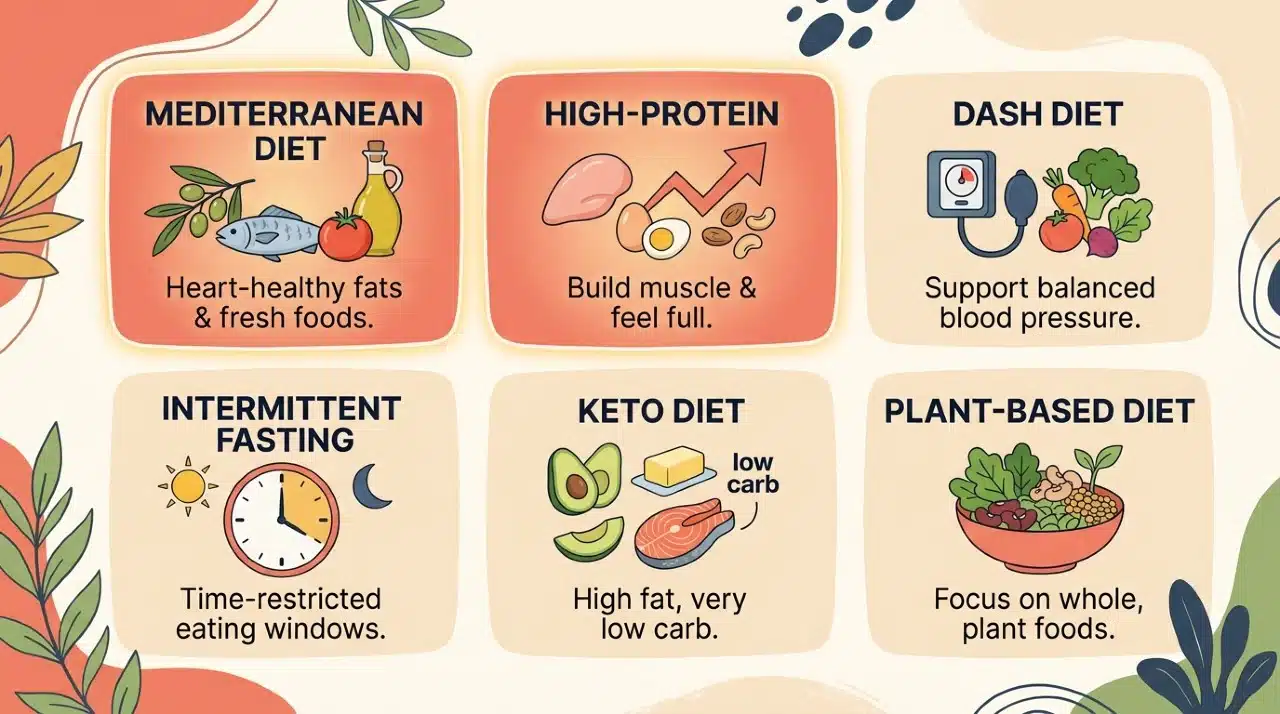
This is where most articles confidently hand you a top-three list. The honest picture is more nuanced. The evidence clearly favours some approaches and is thinner for others, and the right fit depends on your individual health picture, food preferences, and lifestyle.
| Eating Approach | Evidence Level for Women 40+ | Strengths | Watch Out For |
|---|---|---|---|
| Mediterranean | Strong (multiple RCTs) | Reduces weight, LDL, and menopausal symptoms | Requires meal planning; can cost more |
| High-Protein (1.0–1.2 g/kg) | Strong | Preserves muscle, improves satiety, supports fat loss | Protein timing matters; spread it across meals |
| DASH | Moderate | Excellent for blood pressure; fibre-rich | Less targeted to hormonal needs of menopause |
| Intermittent Fasting (12–14h) | Moderate | Reduces visceral fat, improves insulin sensitivity | Risks increase with longer windows and intense exercise |
| Keto / Very Low Carb | Limited for this demographic | Short-term weight loss possible | Can disrupt thyroid function; low fibre; hard to sustain |
| Plant-Based | Moderate | Anti-inflammatory, phytoestrogen-rich | Requires active attention to protein, B12, iron, and calcium |
The strongest combination supported by current evidence is a Mediterranean-style food foundation combined with deliberate protein targets at every meal. That combination is essentially what the H.E.A.L. Framework builds toward. It gives you the anti-inflammatory and cardiovascular benefits of the Mediterranean pattern, plus the muscle-protective benefits of higher protein intake.
Pairing any of these approaches with resistance exercise amplifies the results. Our guide to strength training for women over 40 covers exactly how to start building lean muscle without worrying about bulking up.
The 5 Nutrition Mistakes Women Over 40 Keep Making
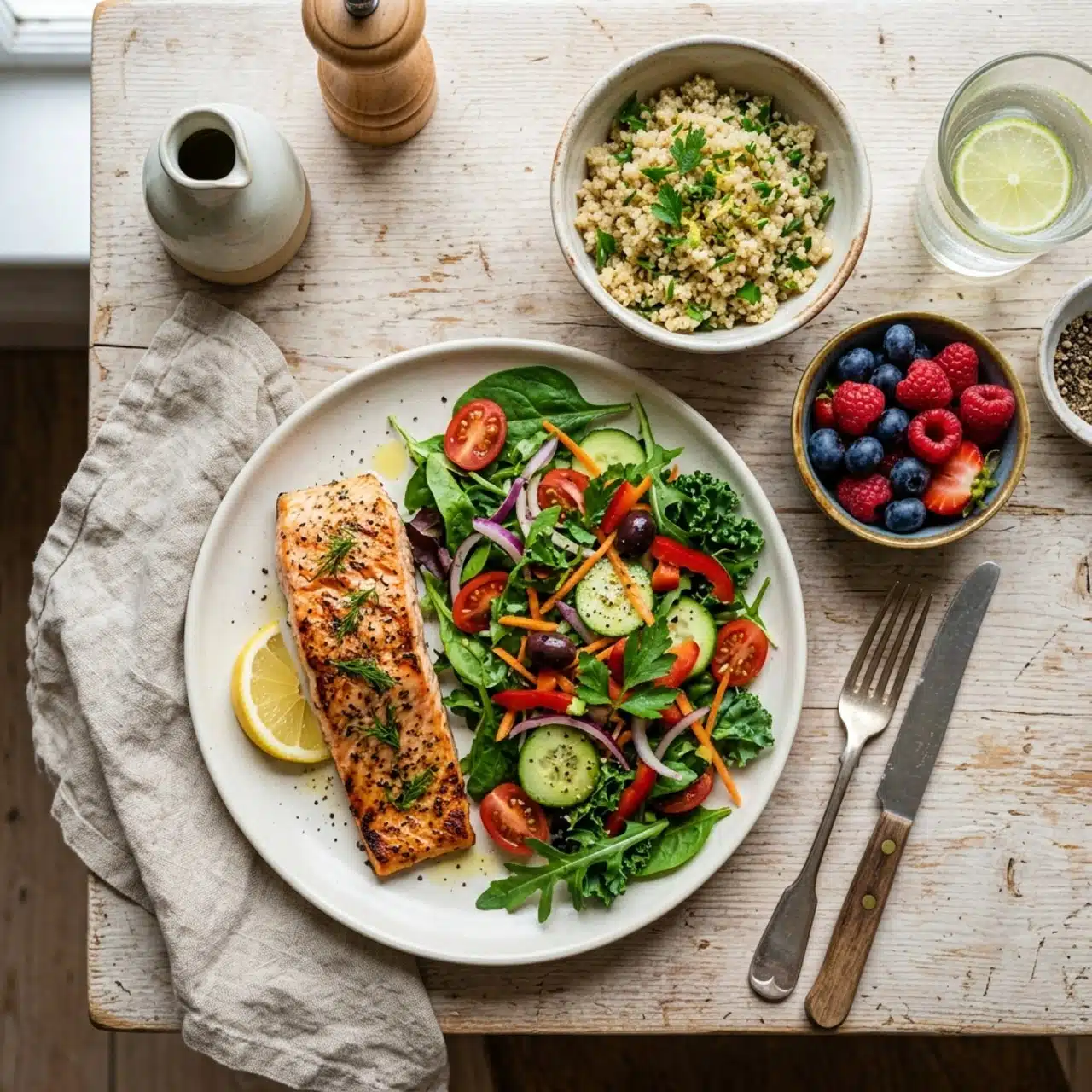
The five most common nutrition mistakes after 40 are: eating too little protein, under-eating total calories, ignoring meal timing, following plans designed for younger women, and treating food and exercise as completely separate systems. Each one quietly undermines results, and each has a clear fix.
Mistake 1: Not eating enough protein
Most women are still hitting the standard RDA of 0.8 g/kg, which was set as a floor to prevent deficiency, not to support active body recomposition. Women over 40 need 1.0–1.2 g/kg daily, with 20–30g at each meal to maximise muscle protein synthesis. The fix: add a quality protein source to every single meal and snack without exception.
Mistake 2: Eating too little overall
Cutting calories aggressively feels logical when fat loss is the goal, but it accelerates muscle loss and triggers the body's conservation response, slowing metabolism further. A moderate deficit of 300–500 calories from your maintenance level is where the evidence points. The fix: use our guide to understanding the female metabolism to find a realistic maintenance number before cutting.
Mistake 3: Skipping meal timing
When you eat matters as much as what you eat after 40. Front-loading calories earlier in the day, with a larger breakfast and lunch and a lighter dinner, aligns with your circadian rhythm and improves insulin sensitivity. The fix: make dinner your smallest meal, not your largest, and aim for at least 20 g of protein at breakfast to set up your hunger hormones for the rest of the day.
Mistake 4: Following plans designed for men or younger women
Generic "eat less, move more" advice ignores perimenopause, hormonal cycling, and the specific muscle-loss pattern that accelerates in women after 40. The fix: the guide to losing weight during perimenopause covers exactly what needs to change in your approach during this stage.

Mistake 5: Treating food and training as separate systems
What you eat around your workouts determines whether those sessions actually build and preserve muscle. Eating 20–30g of protein within two hours of strength training significantly improves muscle protein synthesis outcomes. The fix: check out our high-protein nutrition plan for a practical template that ties your eating to your training.
Want practical strategies delivered straight to your inbox? Join our newsletter for research-backed nutrition and fitness guidance written specifically for women navigating their 40s and beyond. You'll also get immediate access to our full suite of free resources, including meal prep ideas for women and our complete nutrition guides.
The Bottom Line
The best nutrition strategy for women over 40 isn't a named diet from a magazine. It's a personalised approach built around four non-negotiables: supporting your hormones with the right foods, choosing a sustainable eating pattern, building an anti-inflammatory food base, and hitting your protein targets at every meal.
Start where you are. You don't need to overhaul everything at once. Pick one pillar from the H.E.A.L. Framework, apply it consistently for two weeks, then add the next. Small, compounding changes beat dramatic resets every single time.
You're not starting over. You're starting smarter. Your body is ready. Go meet her.
Glossary Of Key Terms
- Visceral Fat: Deep abdominal fat stored around internal organs that increases during perimenopause and impacts cardiovascular and metabolic health.
- Insulin Sensitivity: The effectiveness with which the body uses insulin to manage blood sugar; this typically declines as estrogen levels fall.
- Phytoestrogens: Plant-derived compounds, such as those found in soy and flaxseed, that can mimic or modulate the effects of estrogen in the body.
- H.E.A.L. Framework: A four-pillar nutrition strategy (Hormones, Eating patterns, Anti-inflammatory, Lean protein) tailored to the biological needs of women over 40.
- Muscle Protein Synthesis: The naturally occurring process in which protein is produced to repair muscle damage and build new muscle; it is optimized by regular protein distribution.
- Perimenopause: The transitional phase leading up to menopause, characterized by hormonal fluctuations that affect metabolism, sleep, and fat distribution.
- Mediterranean Eating Pattern: A whole-food nutrition plan emphasizing healthy fats, fiber, and lean proteins, widely considered the gold standard for menopausal health.
- Time-Restricted Eating (TRE): An eating pattern that limits food consumption to a specific window of time, such as a 12–14 hour overnight fast.
- Cortisol: A stress hormone that, when chronically elevated by over-fasting or excessive exercise, can suppress thyroid function and promote belly fat.
- Lignans: A specific type of phytoestrogen found in high concentrations in flaxseeds that assists in balancing hormonal activity.
FAQ
What Is The Best Diet For Weight Loss For Women Over 40?
There's no single "best diet" that works for every woman over 40, and any source claiming otherwise is oversimplifying your biology. The eating patterns with the strongest clinical evidence for this demographic are the Mediterranean diet and a high-protein approach, especially when combined. A systematic review of seven clinical trials found that postmenopausal women following a Mediterranean-style diet experienced reductions in body fat, LDL cholesterol, triglycerides, blood pressure, and menopausal symptoms. The key differentiator from generic diet advice is the emphasis on protein at every meal (1.0–1.2 g/kg daily) to counteract the muscle loss that accelerates after 40. Rather than following a rigid meal plan, focus on the four pillars of the H.E.A.L. Framework: hormone-supporting foods, a sustainable eating pattern, an anti-inflammatory food foundation, and deliberate protein targets. That structure adapts to your preferences and your life.
How Much Protein Do Women Over 40 Actually Need Per Day?
Women over 40 need significantly more protein than the standard RDA of 0.8 g/kg. Current research, including a 2025 study in Frontiers in Nutrition, supports a daily intake of 1.0–1.2 g of protein per kilogram of body weight for women managing muscle mass and body composition after 40. For a 65 kg (143 lb) woman, that means 65–78 g of protein per day. How you distribute that protein matters as much as the total. Eating 20–30g at each meal, rather than concentrating protein at dinner, maximises muscle protein synthesis at each sitting. Good practical sources include eggs, Greek yogurt, chicken breast, salmon, tofu, edamame, and lentils. If you want a full daily template, our high-protein nutrition plan lays it out meal by meal.
Should Women Over 40 Try Intermittent Fasting?
A moderate intermittent fasting approach can work well for women over 40, but the length of the fasting window matters significantly. Research published in PMC found that an 8-week time-restricted eating protocol left sex hormones (estrogen, progesterone, testosterone) unchanged in pre- and post-menopausal women, while 63% of participants reported fewer hot flashes and night sweats. The recommended window for women over 40 is a 12–14-hour overnight fast: finish dinner at 7 pm and eat your first meal between 7–9 am. Longer fasts combined with intense exercise have been shown to raise cortisol and suppress thyroid function in midlife women, which can actively counteract fat loss. Start with a 12-hour window and assess your energy, sleep, and mood before extending it. If you're already dealing with high stress or poor sleep, hold the fasting window here and address those first.
Why Am I Gaining Weight Even Though I Eat The Same As Before?
This is one of the most common and frustrating experiences for women over 40, and the explanation is completely physiological. Declining estrogen increases insulin resistance, making your body less efficient at using glucose for fuel and more likely to store it as fat. Your resting metabolic rate also slows by approximately 5% per decade after 40, which means the same number of calories now produces a caloric surplus where it didn't before. Simultaneously, ongoing muscle loss (roughly 0.5 lbs per year on average) further reduces the number of calories you burn at rest. The fix is not eating less aggressively. It's eating differently: more protein to preserve muscle, better meal timing to support insulin sensitivity, and an anti-inflammatory food base that works with your hormonal changes. This is a system problem, not a personal failing, and it has a systems-based solution.
What Foods Should Women Over 40 Avoid For Belly Fat?
No single food causes belly fat, but certain dietary patterns consistently contribute to visceral fat accumulation after 40. Ultra-processed foods high in refined sugar spike insulin and promote fat storage in an already insulin-resistant system. Alcohol is particularly problematic because it impairs liver function, disrupts sleep quality, and delivers empty calories that displace nutrient-dense food. Highly refined carbohydrates (white bread, pastries, and sweetened cereals) cause rapid blood sugar swings that increase hunger and promote fat storage. Excess sodium contributes less to fat and more to water retention and bloating, but it can obscure real progress on the scale. The more productive framing is to focus on what to add: more fibre-rich foods, more lean protein, more omega-3 fats, and more colourful anti-inflammatory vegetables. Crowding out less helpful choices is a more sustainable strategy than pure restriction.
How Does Perimenopause Affect Weight Loss And What Should I Eat?
Perimenopause, typically beginning in the early-to-mid 40s, triggers a series of hormonal shifts that directly reshape body composition. Estrogen fluctuations reduce insulin sensitivity and shift fat distribution toward the abdomen. Progesterone fluctuations affect water retention, mood, and sleep quality, all of which influence eating behaviour and recovery capacity. Research shows women gain an average of 1.5 kg per year during the perimenopause transition when eating and exercise habits don't adapt to the change. The most effective nutritional response is to prioritise protein (to counter muscle loss), increase fibre (to support blood sugar stability), incorporate phytoestrogen-rich foods like flaxseed and edamame (to help modulate estrogen activity), and reduce alcohol and ultra-processed foods. Our guide on losing weight during perimenopause goes deeper into the full hormonal picture and what to adjust at each stage.
How Long Does It Take To See Results From Changing Your Diet After 40?
Most women over 40 notice improvements in energy levels, bloating, and sleep quality within 1–2 weeks of upgrading their nutrition. Changes in body composition, specifically reduced body fat and improved muscle tone, typically become visible at the 6–12 week mark, depending on consistency and whether strength training is included. This timeline is slower than many women expect, particularly compared to results in their 20s or 30s. The hormonal environment after 40 means the body responds more gradually, but changes achieved through a whole-food, protein-forward approach tend to be far more sustainable than those from aggressive calorie cutting. Progress tracking through measurements, energy levels, and strength performance tends to be more informative than the scale alone. The scale doesn't distinguish between fat, muscle, and water weight. What you're building is a leaner, stronger body that functions better, and that shows up in more ways than a number.