

The Top 7 Calorie Burning Tips That Actually Work For Women

Take care of your body. It's the only place you have to live.
Jim Rohn ‧ Author and motivational speaker
Summary (TL;DR)
Discover seven science-backed calorie burning tips tailored for women's physiology. Increase daily movement (NEAT), build muscle with strength training, and try HIIT for afterburn. Boost metabolism by eating more protein and thermogenic foods.
Optimize hormones with 7–9 hours of sleep. Small changes, like drinking cold water, add up. A moderate calorie deficit of 300–500 ensures sustainable fat loss without extreme measures. Consult a professional before starting any new program.
You've tried cutting calories. You've dragged yourself through cardio sessions. You've followed the "eat less, move more" advice — and still the scale won't budge.
Here's what most advice leaves out: calorie burning for women isn't one-size-fits-all. Hormonal fluctuations, muscle mass differences, age-related metabolic shifts, and lifestyle patterns all shape how your body burns energy — day and night.
The good news? You don't need to work harder. You need to work smarter.
This guide breaks down 7 science-backed, practical calorie burning tips for women — from harnessing your body's hidden daily calorie burn to using thermogenic foods, strength training, and sleep to supercharge your fat loss. Every tip is actionable today, without extreme diets or punishing workout schedules.
Medical & Referral Disclaimer
The information provided in this article is for educational and informational purposes only and is not intended as medical advice, diagnosis, or treatment. Always consult with a qualified healthcare provider or registered dietitian before starting a new exercise program, making significant dietary changes, or if you have any underlying health conditions. Individual results will vary based on factors including age, health status, hormonal profile, and consistency of application.
Key Takeaways
- NEAT is your biggest untapped calorie burner — move more throughout the entire day, not just at the gym.
- Muscle is your metabolic engine — strength training raises resting calorie burn permanently.
- HIIT beats steady cardio for total fat loss due to the 24–48 hour afterburn effect (EPOC).
- Protein is thermogenic — a high-protein diet burns 80–100 extra calories per day through digestion alone.
- Small metabolic triggers stack — cold water, spicy foods, and green tea add up to real weekly calorie burns.
- Sleep is fat-burning medicine — 7–9 hours per night optimizes the hormones that regulate calorie burn.
- Moderate deficits win — 300–500 calorie daily deficits produce sustainable fat loss without metabolic slowdown.
What Are The Most Effective Calorie Burning Tips For Women?
The most effective calorie burning tips for women combine increasing non-exercise activity (NEAT), building lean muscle mass, using HIIT workouts, eating high-protein and thermogenic foods, optimizing sleep, drinking cold water, and maintaining a sustainable calorie deficit. Together, these strategies boost daily calorie burn by 300–600+ calories without extreme restriction.
Why Women Burn Calories Differently Than Men
Before diving into the tips, understanding your unique physiology makes every strategy more effective.
How Women's Metabolism And Hormones Affect Daily Calorie Burn
Women naturally have a lower resting metabolic rate (RMR) than men — primarily because men carry more muscle mass, which burns more calories at rest. According to research published in the Journal of Applied Physiology, women's RMR averages 5–10% lower than men's of comparable size.
Hormonal factors further complicate daily calorie burn for women:
- Estrogen influences fat storage patterns, particularly around the hips and thighs
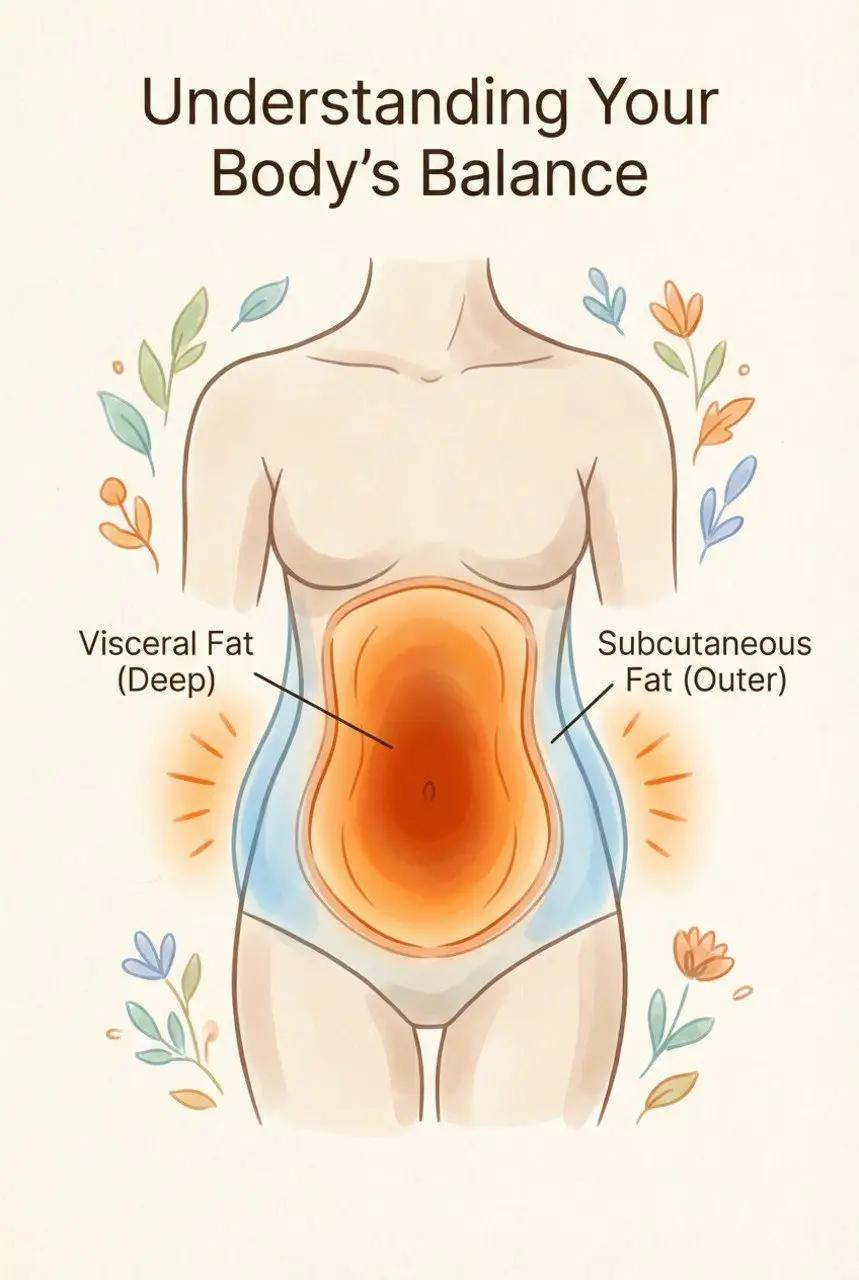
- Cortisol (the stress hormone) promotes abdominal fat storage when chronically elevated
- Thyroid hormones regulate metabolic rate and become increasingly important after age 40
- Insulin sensitivity affects how efficiently the body uses food for fuel versus storing it as fat
Understanding these differences is why generic weight loss advice often fails women — and why the 7 tips below are specifically calibrated for female physiology.
The 7 Best Calorie Burning Tips For Women
Tip #1: Maximize NEAT — Your Hidden Daily Calorie Burn
What is NEAT for weight loss?
NEAT (Non-Exercise Activity Thermogenesis) is the energy your body burns through all physical activity that isn't deliberate exercise — walking, fidgeting, standing, household chores, and even typing. For many women, NEAT accounts for 200–400 additional calories burned per day and is the single most underestimated tool in fat loss.
Most women focus exclusively on gym sessions while spending 8–10 hours sitting. Yet research from the Mayo Clinic shows that individuals with high NEAT burn up to 2,000 more calories per day than sedentary individuals of the same size — without a single formal workout.
How To Boost Your NEAT Starting Today
- Take the stairs instead of the elevator (burns ~3–5 calories per flight)
- Stand or use a standing desk for 2–3 hours of your workday
- Walk during phone calls — a 30-minute call can burn 80–100 extra calories
- Park further away and walk the extra distance
- Do active household chores: vacuuming, gardening, and cleaning all count
- Use a step tracker with a daily goal of 8,000–10,000 steps
| NEAT Activity | Calories Burned (30 min) | Weekly Impact (5x) |
|---|---|---|
| Brisk walking | 120–150 cal | 600–750 cal |
| Standing (vs sitting) | 30–50 cal | 150–250 cal |
| Active cleaning/chores | 100–130 cal | 500–650 cal |
| Taking stairs | 60–80 cal | 300–400 cal |
| Gardening | 110–140 cal | 550–700 cal |
Incidental exercise for weight loss is one of the most sustainable calorie-burning habits because it requires no extra gym time — just a more active approach to your existing day.

Tip #2: Build Lean Muscle To Boost Your Resting Metabolic Rate
How does strength training boost metabolism for women?
Lean muscle tissue burns approximately 6–10 calories per pound per day at rest, compared to fat tissue's 2–3 calories. Adding even 5 lbs of lean muscle can raise your resting metabolic rate by 50–100 calories per day — a permanent, compounding increase in your daily calorie burn.
Many women avoid weight training out of fear of bulking up. This is a myth. Women have significantly lower testosterone levels than men, making it physiologically very difficult to develop bulky muscle. What you will build is a leaner, more metabolically active body. Learn exactly how to strength train as a woman without bulking up.
Cardio vs Strength Training For Calorie Burn: Which Wins?
The answer isn't either/or — it's understanding when each wins.
| Factor | Steady-State Cardio | Strength Training |
|---|---|---|
| Calories burned during the session | Higher | Moderate |
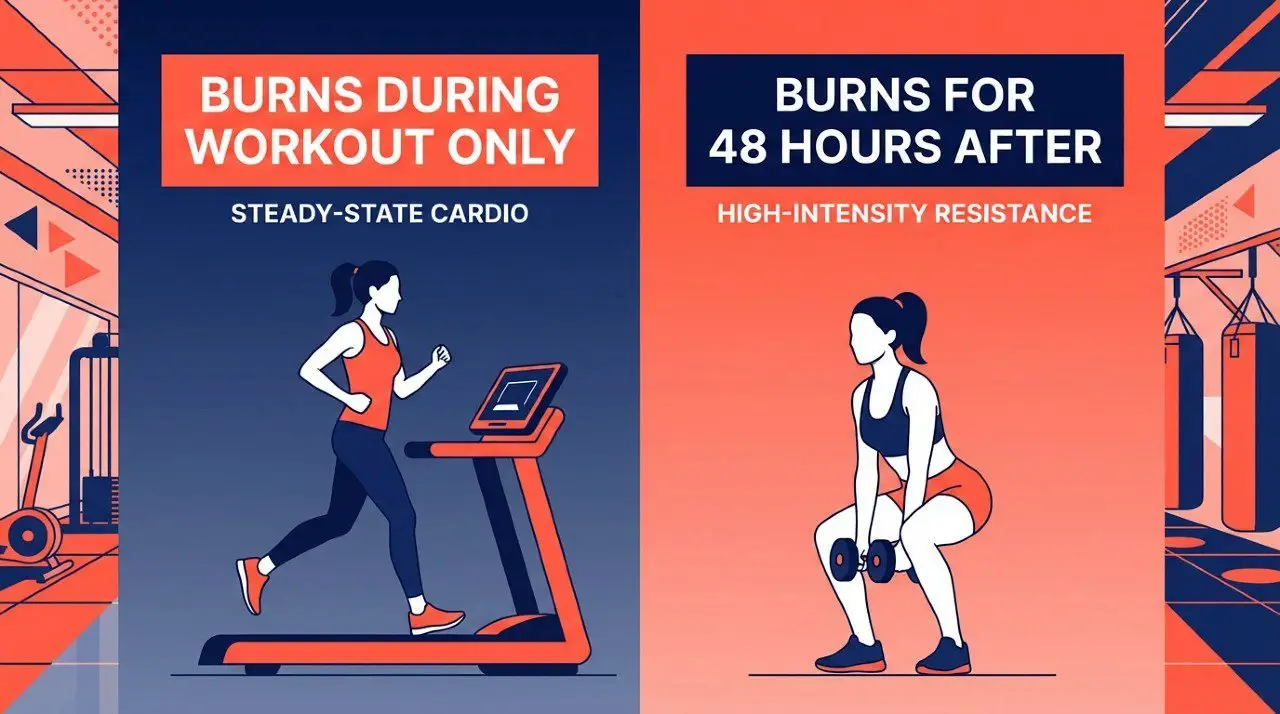
| Afterburn effect (EPOC) | Low (30–60 min) | High (up to 48 hours) |
| Resting metabolic rate impact | Minimal | Significant (lasts for life) |
| Muscle preservation | Low | High |
| Best for | Cardiovascular health | Long-term fat loss |
| Recommended frequency | 2–3x/week | 3–4x/week |
The Afterburn Effect (known scientifically as EPOC — Excess Post-Exercise Oxygen Consumption) means your body continues burning elevated calories for up to 48 hours after a strength session. A 45-minute lifting session that burns 200 calories in the gym may ultimately burn 350–400 total with the afterburn included.
Best Strength Training Exercises To Burn Calories For Women
- Compound lifts (squats, deadlifts, lunges, rows) recruit multiple muscle groups simultaneously for maximum calorie burn.
- Circuit training combines resistance and cardiovascular demand.
- Resistance band workouts are accessible for beginners and highly effective for muscle activation.
- Bodyweight training (push-ups, glute bridges, step-ups) requires no equipment.
Start with 2–3 sessions per week and progressively increase weight to continue challenging your muscles. Why you should lift weights — even if you're a complete beginner.
Tip #3: Use HIIT Workouts For Maximum Calorie Burn In Minimum Time
What Is The Afterburn Effect From HIIT For Women?
High-Intensity Interval Training (HIIT) alternates short bursts of maximum effort (20–40 seconds) with brief recovery periods. This pattern creates a powerful metabolic disturbance that elevates calorie burn for 12–48 hours post-workout — burning 25–30% more total calories than the same duration of steady-state cardio.
A 2015 study in the Journal of Strength and Conditioning Research found that HIIT participants burned significantly more fat over 12 weeks compared to moderate-intensity cardio groups, even with shorter workout durations.
Simple 20-Minute HIIT Routine For Women
- Warm up: 3 minutes of light movement
- Round 1: Jump squats (30 sec on / 15 sec rest) × 3
- Round 2: Mountain climbers (30 sec on / 15 sec rest) × 3
- Round 3: Burpees or modified burpees (30 sec on / 20 sec rest) × 3
- Round 4: High knees or walking high knees (40 sec on / 20 sec rest) × 3
- Cool down: 2–3 minutes of stretching
Frequency: 2–3 HIIT sessions per week is optimal for fat burning without overtaxing the body. More is not better — recovery is where the calorie-burning adaptations occur.
For women over 40, HIIT is especially valuable because it stimulates growth hormone production, which naturally declines with age. This supports both fat burning and lean muscle retention. How metabolism changes for women over 40 and what to do about it.
Tip #4: Eat Thermogenic Foods And A High-Protein Diet
What are thermogenic foods for weight loss?
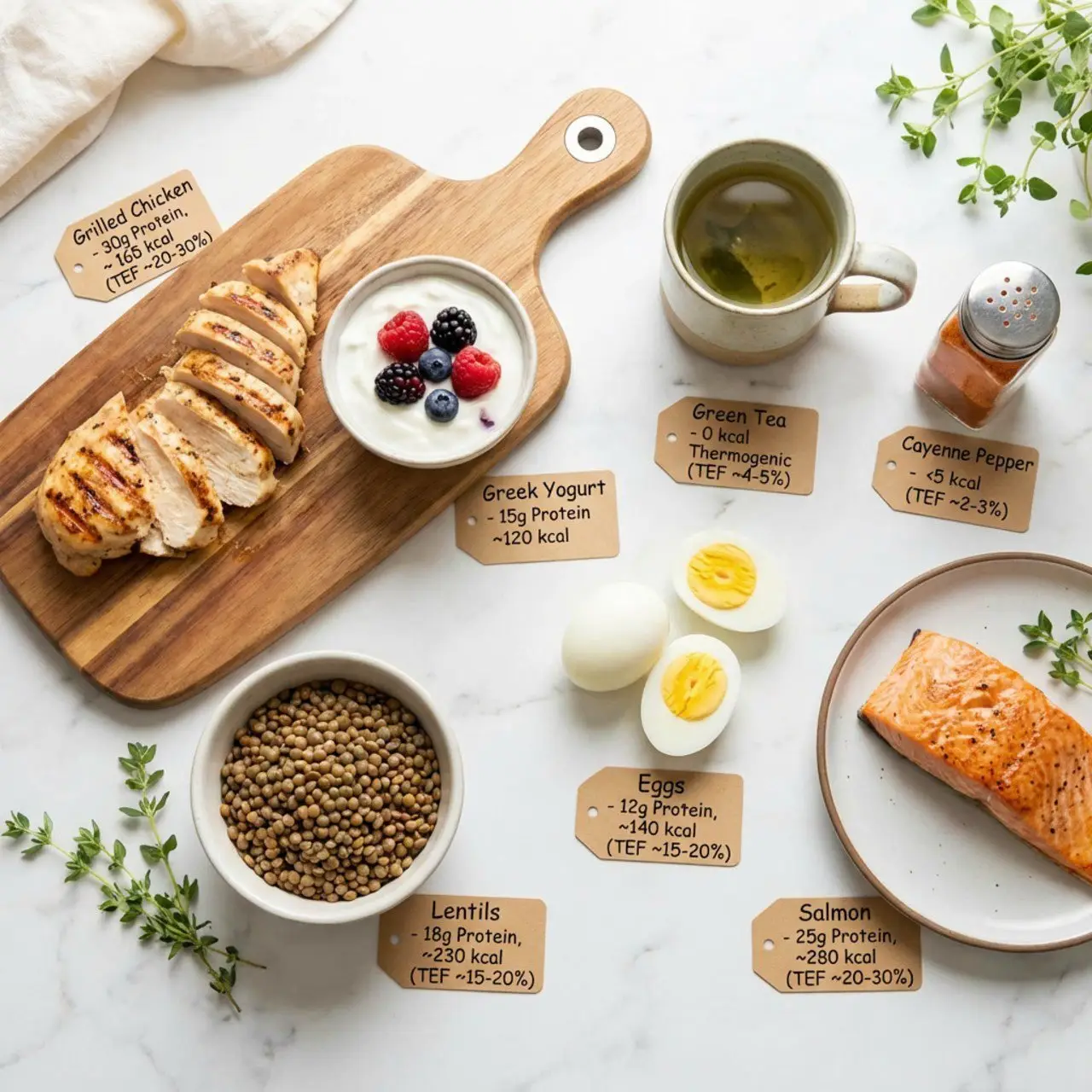
Thermogenic foods increase your body's internal heat production, temporarily raising metabolic rate and calorie burn. The most powerful thermogenic effect comes from protein, which requires 20–30% of its own caloric value just to be digested, compared to only 5–10% for carbs and 0–3% for fats. This is called the Thermic Effect of Food (TEF).
How Protein Accelerates Your Daily Calorie Burn
Switching from a low-protein diet to a high-protein diet can raise your total daily energy expenditure by 80–100 calories per day through TEF alone — without changing anything else. A Harvard T.H. Chan School of Public Health overview on protein and metabolism confirms protein's superior role in both satiety and metabolic rate.
High-protein calorie-burning foods to prioritize:
- Chicken breast, turkey, and lean beef
- Greek yogurt and cottage cheese
- Eggs (especially egg whites)
- Lentils, chickpeas, and edamame
- Tuna and salmon (also provides omega-3s)
Explore the complete high-protein diet plan for sustainable fat loss for women.
Other Thermogenic Foods Worth Adding
- Green tea: Contains EGCG and caffeine; studies show it increases calorie burn by 4–5% per day.
- Cayenne pepper: Capsaicin temporarily raises metabolic rate by 4–5% and fat oxidation by up to 16%.
- Coffee: Caffeine can boost metabolism by 3–11% — most effective before exercise.
- Apple cider vinegar: May improve insulin sensitivity and reduce fat storage.
- Ginger: Anti-inflammatory and mildly thermogenic.
Tip #5: Drink Cold Water And Use Small Metabolic Triggers
Does drinking cold water boost metabolism?
Yes. Your body must expend energy to warm cold water to your core temperature (98.6°F). Research published in the Journal of Clinical Endocrinology and Metabolism found that drinking 500ml (about 17oz) of cold water increased metabolic rate by 30% for approximately 30–40 minutes — burning an extra 24–50 calories per session.
While this isn't a dramatic standalone effect, it stacks powerfully with other tips. Drinking 2–3 liters of cold water daily can add 100–200 extra calories burned per week through thermogenesis alone.
Small Daily Calorie-Burning Habits That Add Up
These micro-habits build into significant weekly calorie burn:
- Drink cold water before meals: Also reduces meal size by ~13% (Harvard Medical School).
- Add cayenne or chilli to meals: Boosts post-meal metabolism for 30–60 minutes.
- Chew gum (sugar-free): Burns ~11 calories per hour and reduces snack cravings.
- Fidget more: Spontaneous movement burns 100–350 extra calories daily in high-NEAT individuals.
- Take 10-minute walks after meals: Reduces blood sugar spikes and improves fat oxidation.
The compound effect of small calorie-burning habits is real. Six small tweaks, each burning 50 extra calories per day, produce a 300-calorie daily increase — 2,100 calories per week — without a single extra gym session.
Tip #6: Optimize Sleep To Unlock Your Body's Overnight Fat-Burning Potential
How does sleep affect calorie burning for women?
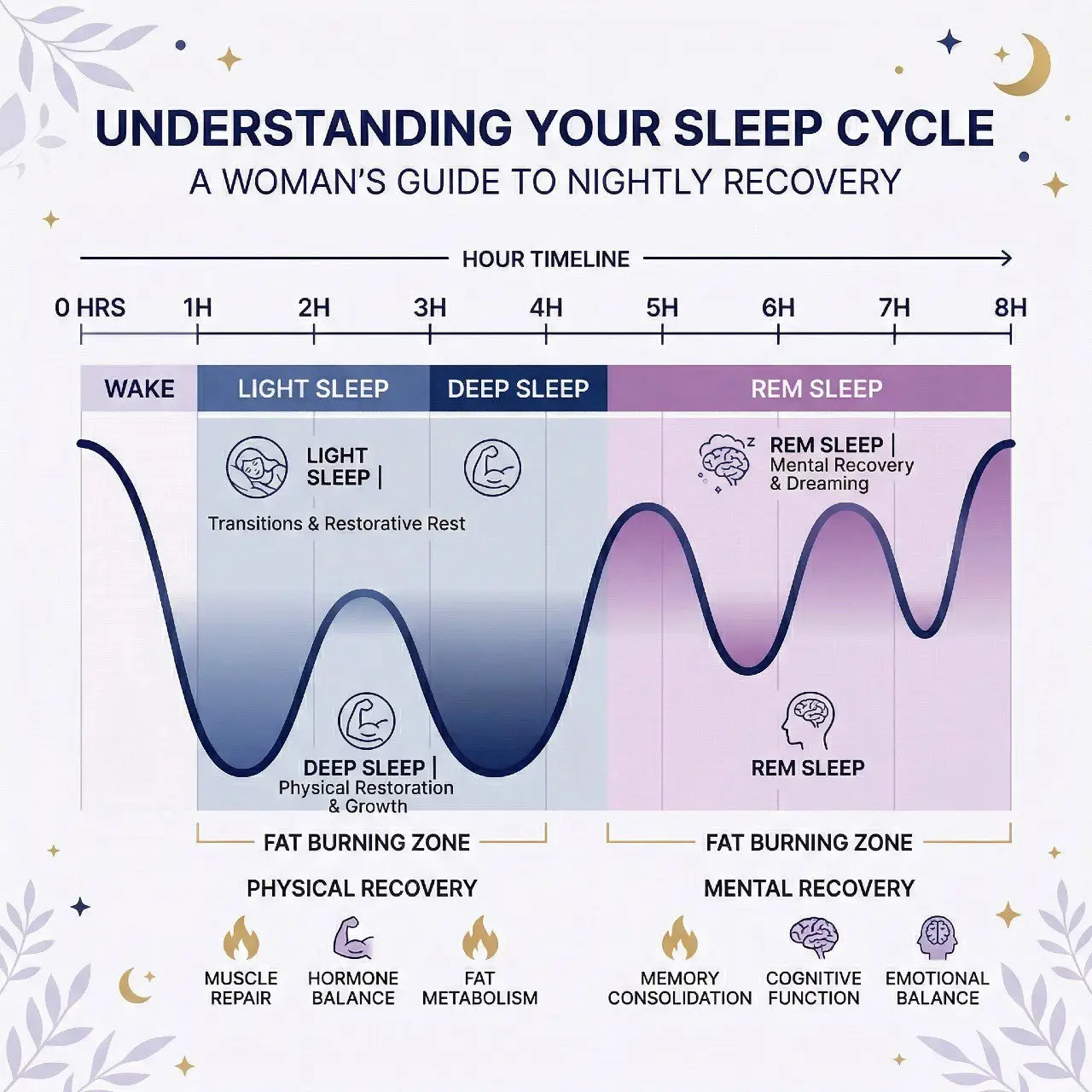
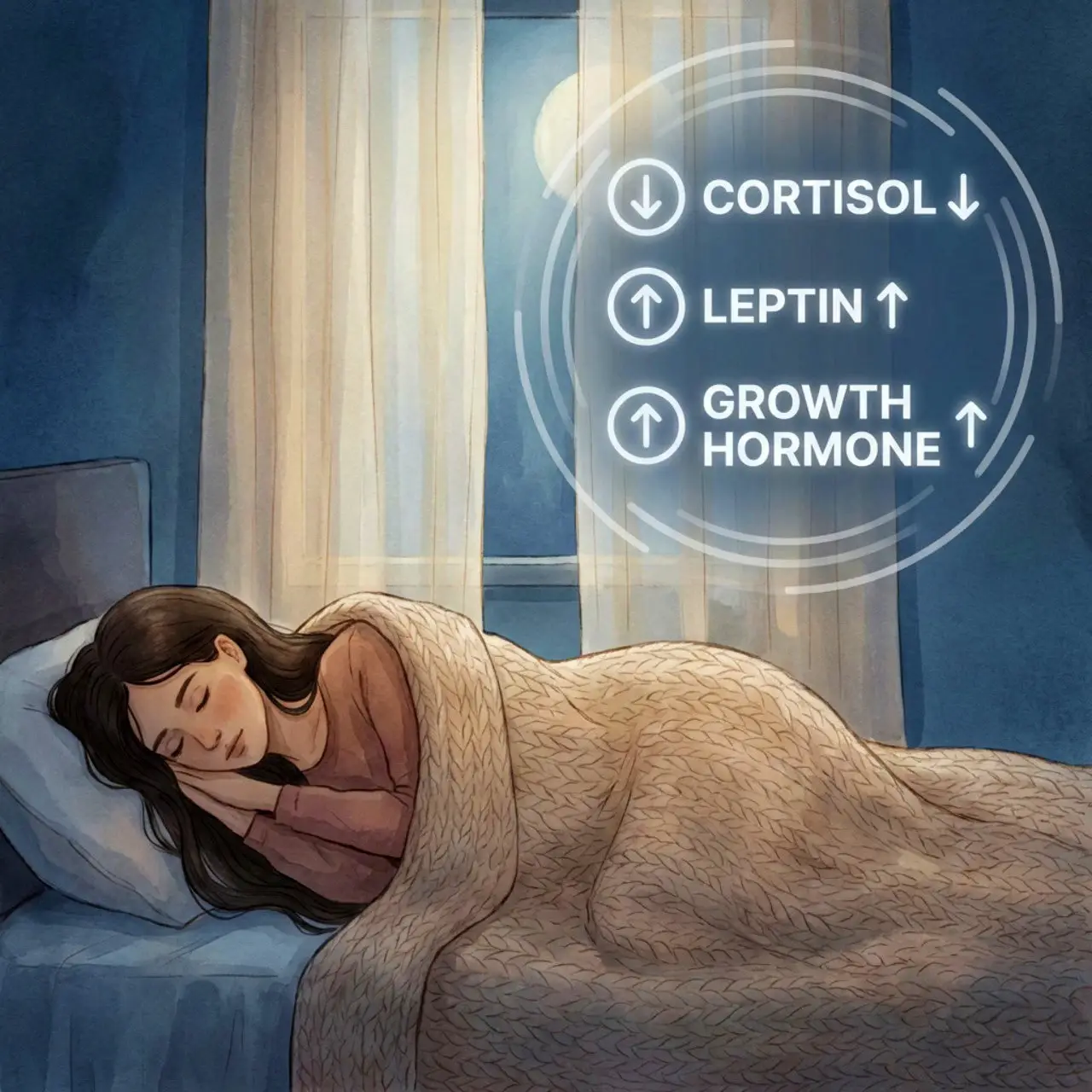
Sleep deprivation directly undermines calorie burning by raising cortisol (which promotes fat storage), suppressing leptin (which signals fullness), and elevating ghrelin (which increases hunger). Women sleeping less than 6 hours per night burn fewer calories during the day and consume an average of 385 more calories due to hormonal disruption.
This is one of the most overlooked calorie burning tips for women — and one of the highest-leverage. Quality sleep doesn't just rest your body; it actively regulates the hormones that govern whether you burn or store fat.
How Poor Sleep Sabotages Your Calorie Deficit
- Cortisol elevation redirects fat storage to the abdominal area (belly fat).
- Reduced insulin sensitivity means more calories are stored as fat.
- Lower growth hormone secretion (which normally occurs in deep sleep) impairs fat metabolism.
- Decreased willpower leads to higher-calorie food choices the next day.
Learn exactly how sleep affects weight loss for women — and what to do about it tonight.
Sleep Optimization Checklist for Better Calorie Burning
- Maintain a consistent sleep/wake time (even weekends)
- Keep your bedroom below 68°F — cooler rooms increase brown fat activity
- Avoid screens 60 minutes before bed (blue light disrupts melatonin)
- Limit alcohol — it fragments deep sleep and elevates cortisol
- Aim for 7–9 hours per night (the CDC-recommended range for adults)
Tip #7: Create A Sustainable Calorie Deficit Without Triggering Metabolic Adaptation
What is a sustainable calorie deficit for women?
A sustainable calorie deficit for women is 300–500 calories below maintenance intake — enough to lose approximately 0.5–1 lb of fat per week without triggering metabolic adaptation. Deficits exceeding 1,000 calories cause the body to reduce resting metabolic rate by up to 15–25%, actively counteracting weight loss over time.
This is the most important calorie burning tip for long-term results: your body adapts to whatever you do consistently. Crash diets teach your metabolism to be more efficient at storing fat. Strategic, moderate deficits teach your body to release stored fat without triggering defence mechanisms.
How To Calculate Your Calorie Deficit Without Slowing Metabolism
- Find your TDEE (Total Daily Energy Expenditure) using an online calculator or the Mifflin-St Jeor equation.
- Subtract 300–500 calories to create your daily deficit target.
- Cycle your intake — eat at maintenance every 3rd or 4th day to prevent metabolic slowdown ("diet breaks").
- Prioritize protein at 0.7–1g per pound of body weight to preserve muscle during the deficit.
- Track trends, not daily fluctuations — weight varies by 2–5 lbs daily due to water; look at weekly averages.
Warning: Drastic cuts backfire. If you dramatically slash calories, your body interprets this as famine and downregulates your thyroid, reduces NEAT spontaneously, and increases appetite hormones. The result: weight loss stalls within weeks. See why crash diets and fad diets are the worst approach for women.
Enjoyed these top calorie-burning tips? Now you can take the next step toward your goals. Grab your free guide for even more strategies to optimize your metabolism and achieve lasting results. Grab your free guide here.
Related Articles
The Bottom Line
There's no single magic tip that burns fat overnight. But there is a system — and the women who get lasting results follow it:
They move more throughout the day (NEAT), they build muscle (strength training), they spike their metabolism with short intense sessions (HIIT), they eat protein-rich thermogenic foods, they sleep enough, and they maintain a moderate — not extreme — calorie deficit.
Each of these seven calorie burning tips for women works on its own. But stacked together, they create a compounding metabolic advantage that grows stronger over time. The goal isn't a 30-day sprint. It's an active lifestyle that burns more calories all day, every day — including while you sleep.
Start with one tip this week. Add another next week. By the end of the month, you'll be running a metabolic system built for sustainable fat loss.
Glossary Of Key Terms
FAQ
Increase your NEAT (Non-Exercise Activity Thermogenesis) by walking more, standing instead of sitting, taking stairs, and doing active household chores. Add thermogenic foods like green tea, protein, and cayenne pepper to your diet. Drink cold water throughout the day. These strategies can add 200–400 extra calories burned daily with no gym required.
HIIT (High-Intensity Interval Training) burns the most total calories for women when you account for the afterburn effect (EPOC). However, strength training wins over the long term because it raises resting metabolic rate permanently. The ideal combination is 2–3 HIIT sessions and 2–3 strength training sessions per week.
Yes, but modestly. Drinking 500ml of cold water raises metabolism by approximately 30% for 30–40 minutes, burning an extra 24–50 calories per session. Over a day of consistent cold water intake, this can add 50–100 extra calories burned. It works best as one of several stacked calorie-burning habits.
Poor sleep raises cortisol and ghrelin, reduces leptin and growth hormone, and decreases insulin sensitivity — all of which promote fat storage and reduce calorie burn. Women sleeping under 6 hours per night have measurably lower fat oxidation rates and consume significantly more calories the following day. Prioritizing 7–9 hours is one of the highest-leverage calorie-burning strategies available.
Yes. Protein has a Thermic Effect of Food (TEF) of 20–30%, meaning your body burns 20–30 calories just digesting every 100 calories of protein consumed. A high-protein diet can raise total daily energy expenditure by 80–100 calories without any other changes. Protein also preserves lean muscle mass during a calorie deficit, protecting your resting metabolic rate.
The afterburn effect (EPOC — Excess Post-Exercise Oxygen Consumption) occurs when your body continues burning elevated calories after a workout to restore oxygen levels, repair muscle tissue, and return to homeostasis. HIIT and strength training produce the strongest EPOC. After an intense session, calorie burn can remain elevated for 12–48 hours — burning 100–300 additional calories beyond the workout itself.
Women over 40 benefit most from: (1) strength training to counteract age-related muscle loss (sarcopenia), (2) protein-rich diets to preserve metabolic rate, (3) sleep optimization for growth hormone production, and (4) avoiding extreme calorie restriction which worsens hormonal balance during perimenopause. Read more on calorie burning and fat loss strategies for women over 40.
You Know Why. Now Learn Exactly How
Join thousands of women inside our community and receive our free guide: 10 Actions That Support Permanent Weight Loss — the practical, sustainable habits that translate everything you just read into real, lasting results.
No fad diets. No extreme plans. Just what the research actually supports — written for real women.